Quick Answer: It depends on which sprocket is smaller. A smaller rear sprocket lowers the final-drive ratio, so the wheel turns more per engine revolution and theoretical top speed rises, provided the engine can pull the taller gearing. A smaller front sprocket raises the ratio, which usually lowers top speed and increases torque at the wheel. Real top speed still depends on engine power, the rev limiter, and aerodynamic drag.
Few drivetrain questions cause more confusion than sprocket size, because the answer flips depending on which sprocket is changed. On a chain final drive, tooth counts set the ratio, but engine power, the rev limiter and drag decide whether a taller ratio actually turns into more speed on the road. The sections below separate the mechanical principle from the real-world result, so you can judge the change for your own vehicle instead of relying on a general rule.
Short Answer: It Depends on Which Sprocket Is Smaller
A chain final drive has two sprockets: the front one, also called the countershaft or drive sprocket, and the rear driven sprocket. Changing either changes the final-drive ratio, and the two changes push the result in opposite directions.
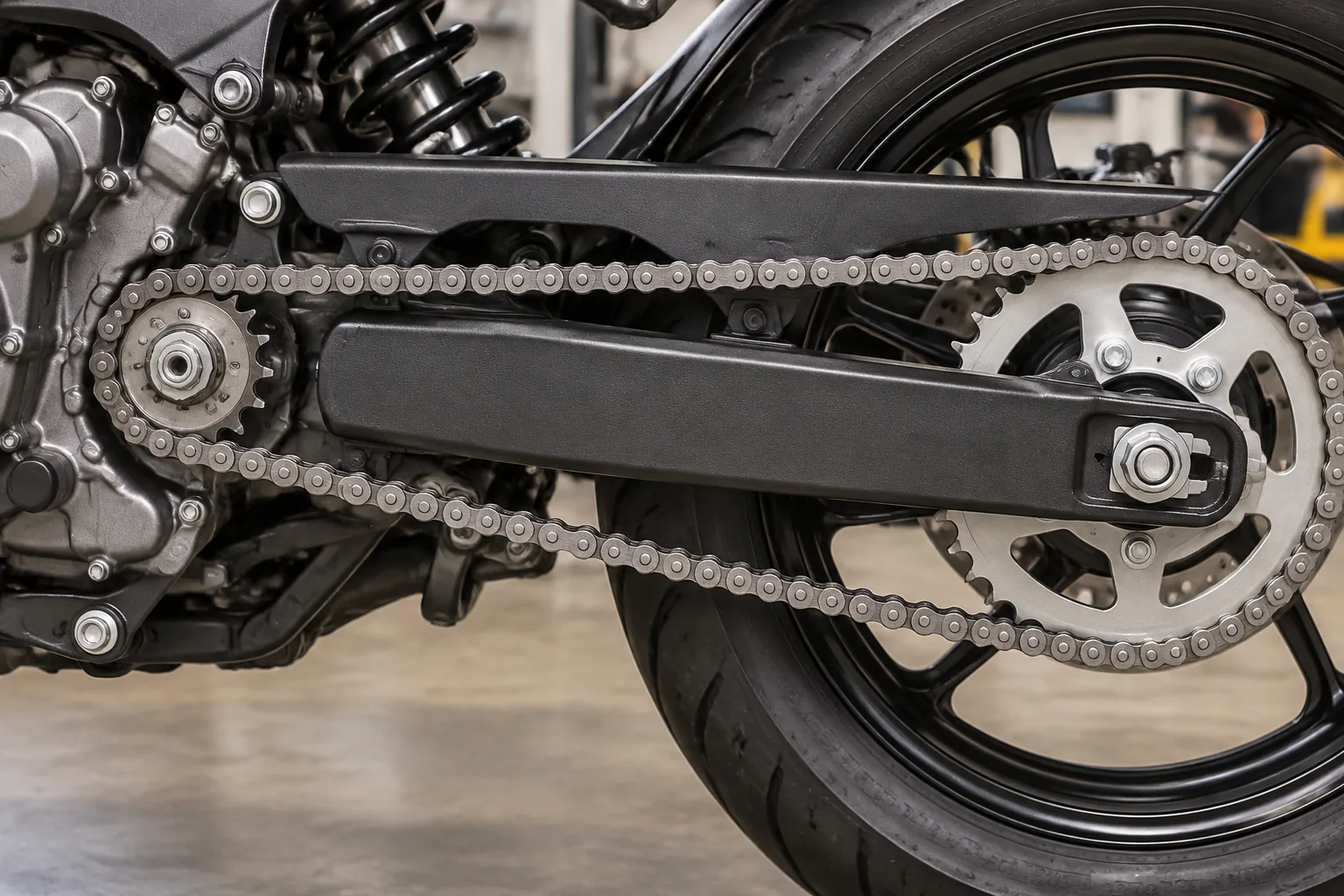
- Smaller rear sprocket: fewer teeth on the driven sprocket lower the final-drive ratio, so the rear wheel turns more times for each turn of the engine. Theoretical road speed at a given engine speed goes up.
- Smaller front sprocket: fewer teeth on the driving sprocket raise the final-drive ratio, so the wheel turns fewer times per engine revolution. Theoretical top speed at the same engine speed goes down, while torque multiplication at the wheel goes up.
Because a smaller sprocket can mean either end of the chain, no single yes or no answer is correct. The change that can raise speed is a smaller rear sprocket, while a smaller front sprocket normally does the reverse.
Even at the rear, a higher calculated speed is not a guarantee. The engine must still reach the rpm needed to pull the taller gearing against real road load, and any electronic or mechanical speed limit still applies.
How Sprocket Size Changes Gear Ratio and Speed
Final-drive ratio is the rear sprocket tooth count divided by the front sprocket tooth count. That number describes how many times the rear wheel turns for each turn of the transmission output, and it links engine speed to road speed through tire circumference.
- Fewer rear teeth lower the ratio and allow more wheel revolutions per engine revolution. That is the mechanism behind a higher theoretical speed for the same engine rpm.
- Fewer front teeth raise the ratio and allow fewer wheel revolutions per engine revolution. The same engine rpm now produces less road speed but more torque at the wheel.
The relationship is mechanical, not a promise of a specific gain. No universal percentage of extra speed exists, because the result depends on the engine power curve, the rev limiter, tire size, rider or vehicle load, and aerodynamic drag.
These relationships assume tire circumference, the selected transmission gear and the primary drive ratio stay unchanged. A different tire size, different internal gearing, or a changed rev limit moves the outcome, and a change that helps on one vehicle can hurt on another.
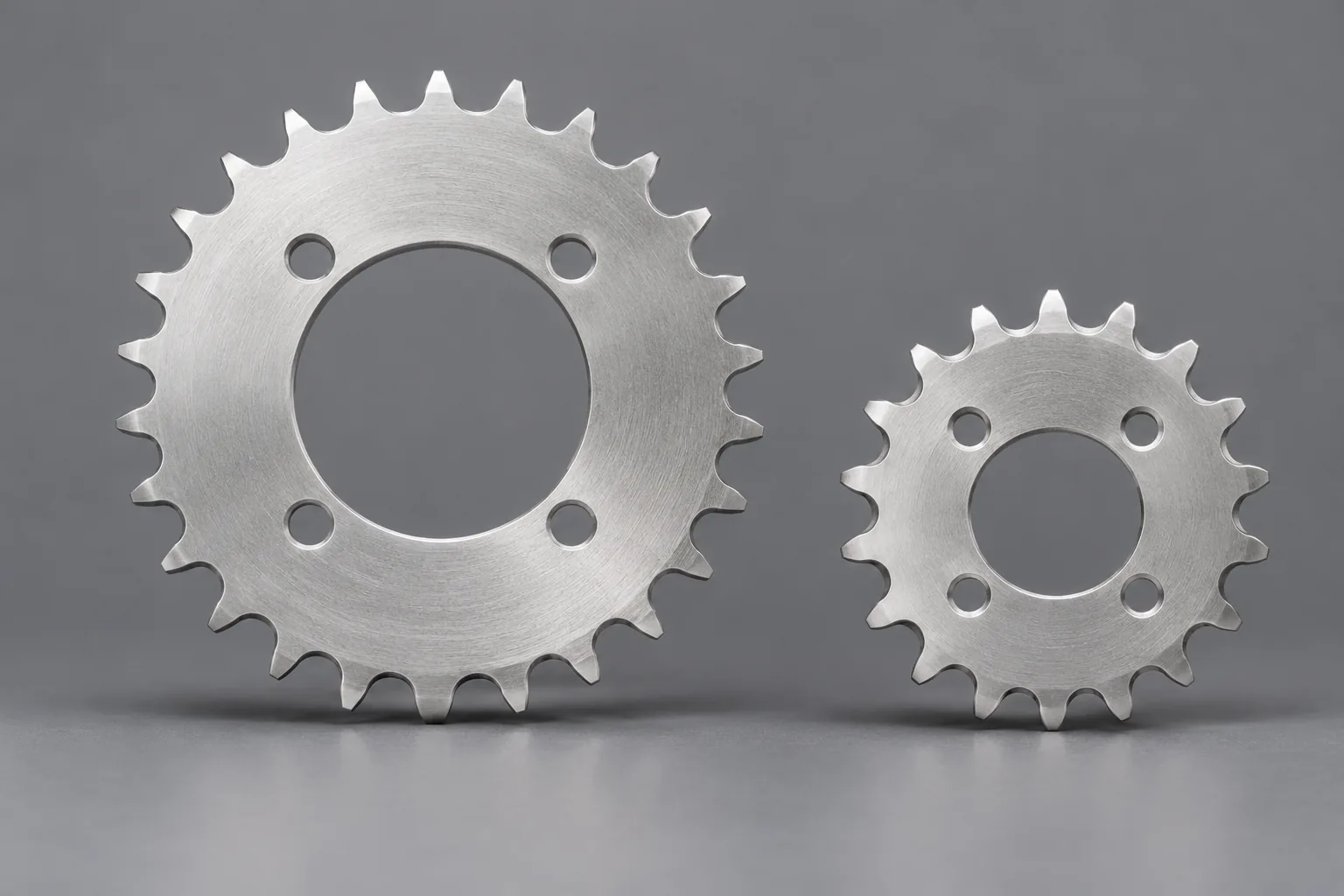
Smaller Rear Sprocket vs Smaller Front Sprocket
The comparison below assumes the same vehicle and the same riding or driving conditions, with only one sprocket changed at a time.
| Change | Final-drive ratio | Theoretical top speed at the same engine speed | Torque multiplication at the wheel |
|---|---|---|---|
| Smaller rear sprocket | Lower | Higher, if the engine can pull it | Usually reduced |
| Smaller front sprocket | Higher | Lower | Usually increased |
Both changes can also affect chain length, the range left in the rear-wheel adjusters, sprocket-to-swingarm and guard clearance, and speedometer or odometer accuracy. Those side effects are decided by the individual vehicle, so they need to be checked before the parts are ordered.
Smaller Rear Sprocket
- Usually lowers the final-drive ratio and raises theoretical top speed at a given engine speed.
- Usually reduces acceleration and torque delivery at the wheel, because the engine has less mechanical advantage.
- May require a different chain length or a different adjuster position, and clearance to the swingarm, chain guard and frame should be confirmed.
- Does not increase real speed if the engine cannot reach its power peak or rev limiter in the new ratio.
Smaller Front Sprocket
- Usually raises the final-drive ratio and increases torque multiplication at the wheel.
- Usually lowers theoretical top speed at the same engine speed.
- Can be the better choice when acceleration, climbing ability or low-speed control matters more than maximum speed.
- Needs extra care on clearance and wear, because a very small driving sprocket increases chordal action, impact and chain noise.
When a Smaller Sprocket May Increase Speed
A speed gain becomes realistic when several conditions line up at once:
- The change is at the rear, so the final-drive ratio actually drops.
- The vehicle is currently limited by gearing or the rev limiter rather than by available power.
- The engine has enough torque to pull the taller ratio without bogging, hesitation or constant downshifting.
- The route is long and open enough, and legal, for the higher speed to be reached at all.
Confirm current tooth counts, the rev limiter setting and real road-load behaviour before expecting a gain. A speed limiter, governor or electronic restriction can hold the vehicle at the same maximum speed no matter what the gearing allows.
When It Won’t Increase Speed or May Hurt Performance
- The engine cannot pull the taller gearing. Top speed can then fall instead of rise, because the engine never reaches the rpm where it makes its best power.
- Acceleration, hill climbing, towing and low-speed response usually get worse with a smaller rear sprocket.
- A smaller front sprocket generally moves performance the opposite way, adding torque multiplication and reducing theoretical top speed.
- Chain length, sprocket clearance, speedometer and odometer accuracy, warranty terms, insurance and local regulations may all be affected by the change.
These effects matter most on heavy vehicles, loaded use, off-road use and low-power engines, where there is little surplus power to spend on taller gearing. Some vehicles respond differently, so vehicle-specific testing or ratio calculation is the only reliable check.
Practical Checks Before Changing Sprocket Size
- Identify the sprocket being changed and calculate the before and after final-drive ratio from the actual tooth counts.
- Check chain length, the remaining rear-wheel adjustment range, sprocket-to-swingarm clearance and chain guard fitment.
- Confirm whether the speedometer or odometer reads from final-drive rotation and what correction, if any, the vehicle needs.
- Check any electronic, warranty or legal limits that apply to gearing changes on that vehicle.
- Keep chain and sprockets matched in pitch and width, and replace worn parts as a set rather than fitting a new sprocket to a stretched chain.
- Confirm sprocket alignment and lubrication, since misalignment and poor lubrication are common causes of rapid chain and sprocket wear.
- Change in small steps and test in a safe, legal environment instead of assuming a fixed tooth change will deliver a fixed result.
General chain-drive guidance commonly suggests keeping the driving sprocket at around 15 teeth or more, because very low tooth counts increase impact, vibration and wear. Treat that as a starting reference, not a substitute for the vehicle manufacturer’s specification.
Conclusion
A smaller sprocket increases speed only when it is the rear sprocket: fewer rear teeth lower the final-drive ratio and raise the theoretical top speed at a given engine speed. A smaller front sprocket raises the ratio, so it usually reduces top speed and adds torque multiplication instead. In both cases the real result is decided by engine power, the rev limiter, drag, load and any electronic restriction, not by tooth count alone. Before buying, identify which sprocket you are changing, calculate the before and after ratio, and verify chain length, clearance, speedometer correction and legal limits for your own vehicle.
FAQs
Q1: Does a smaller rear sprocket increase top speed?
A: In theory yes. Fewer rear teeth lower the final-drive ratio, so the wheel turns more per engine revolution and the same engine speed gives a higher calculated road speed. The gain only appears if the engine has enough power to pull the taller gearing, and it usually costs acceleration; if the engine cannot reach its power peak in the new ratio, top speed can drop.
Q2: Does a smaller front sprocket increase speed?
A: Usually not. A smaller front sprocket raises the final-drive ratio, so the engine turns the wheel fewer times per revolution, which lowers theoretical top speed while increasing torque at the wheel. The opposite result applies only when the smaller sprocket is fitted at the rear, not at the front.
Q3: Does a smaller sprocket increase acceleration?
A: It depends which one. A smaller front sprocket usually increases torque multiplication and therefore acceleration, while a smaller rear sprocket usually reduces it. Actual results also depend on where the engine makes power, on traction and on overall vehicle setup.
Q4: How many teeth should I change?
A: There is no universal number, because the right change depends on the current ratio, the vehicle and whether you want more speed or more response. A one-tooth change at the front alters the ratio far more than a one-tooth change at the rear, so calculate the before and after ratio first and test in small steps.
Q5: Will a smaller sprocket affect the speedometer?
A: It can. If the speed sensor reads final-drive rotation, the reading will no longer match actual road speed after a ratio change, and the odometer is affected the same way. Sensor location and correction methods differ by vehicle, so confirm how the signal is generated and whether recalibration is available before changing tooth counts.