Quick Answer: Polyurethane rollers often outperform rubber rollers in abrasion resistance, cut and tear resistance, load-bearing behavior, oil and chemical resistance, hardness customization, dimensional stability, and lifecycle cost. The advantage is not universal: compound, hardness, load, speed, temperature, chemical exposure, core bonding, and surface finish decide whether polyurethane is the better choice for a specific roller application. Seven practical advantages matter, but each one depends on actual operating conditions.
Rubber rollers remain a practical choice in many machines, and polyurethane rollers are not automatically better in every duty. The useful comparison is application by application: what the roller touches, how much load it carries, how fast it runs, what temperature and chemicals it sees, and how much downtime a replacement causes. The seven advantages below explain where polyurethane rollers commonly earn their place, and where rubber or another compound may still be the safer choice.
Comparison Scope: What Is Being Compared
Polyurethane rollers are rollers with a cast or machined polyurethane cover bonded to a core. Rubber rollers use a natural or synthetic rubber cover. Both are elastomer-covered rollers, and both can be supplied in different hardness grades, surface finishes, and core designs. The difference is not a single material property but the way the cover behaves under a specific set of operating conditions.
The variables that decide whether polyurethane rollers have an advantage include:
- Hardness and compound formulation: two rollers with the same hardness can still behave differently if the polymer chemistry, fillers, or cure differ.
- Load and contact pressure: nip rollers, drive rollers, and idler rollers place different demands on the cover.
- Speed and heat buildup: continuous running and cyclic deformation can raise cover temperature.
- Temperature and chemical exposure: oils, greases, cleaning agents, solvents, acids, bases, hot water, and steam affect compounds differently.
- Surface finish and geometry: diameter, roundness, crown, and finish change contact and tracking.
- Core preparation and bonding: a cover only performs as intended when the bond to the core is sound.
For that reason, every advantage in this comparison is conditional. A polyurethane roller is not automatically better than a rubber roller, and a rubber roller is not automatically better than polyurethane. The correct choice follows the duty, the failure mode, and the supplier’s compound data.
Quick Comparison: Polyurethane vs Rubber Rollers at a Glance
The table summarizes the seven comparison dimensions used in this article. It is a screening guide, not a substitute for application-specific compound data.
| Comparison dimension | Polyurethane rollers | Rubber rollers | What to verify |
|---|---|---|---|
| Abrasion resistance | Often selected for abrasive contact because the cover resists wear and can hold its profile. | Wear rate depends on rubber compound and conditions; some compounds suit high resilience more than abrasion. | Abrasive media, contact pressure, surface speed, and actual wear pattern. |
| Cut and tear resistance | Often resists nicks, edge damage, and chunking in demanding contact. | Can tear or chunk under sharp edges or impact, depending on compound. | Sharp edges, start-stop loads, impact frequency, and core bonding. |
| Load-bearing behavior | Often maintains shape and contact pressure under load when hardness and geometry are correctly specified. | Can deflect more or take compression set depending on compound and duty. | Nip load, continuous compression, heat buildup, and roller geometry. |
| Oil, grease, and chemical resistance | Often more resistant than many rubber rollers to oils, greases, and certain chemicals. | Resistance varies widely; some rubber compounds swell or soften in contact with oils or chemicals. | Exact chemical, concentration, temperature, contact time, and cleaning agents. |
| Hardness and formulation range | Can be produced across a broad hardness range and formulated for grip, wear, cut resistance, color, or non-marking behavior. | Hardness and formulation options depend on the rubber type and supplier. | Required grip, marking risk, wear mode, and supplier capability. |
| Dimensional stability and machining | Can be cast or machined for diameter, roundness, and surface finish, with good core bonding. | Can hold tolerance, but resilience and compression set may change contact under load. | Diameter, roundness, finish, core preparation, and inspection method. |
| Maintenance and lifecycle cost | Longer wear life can mean fewer replacements and less downtime when the environment suits polyurethane. | Lower initial cost can be an advantage in low-duty or short-run applications. | Purchase price, service life, labor, downtime, and replacement interval. |
1. Better Abrasion Resistance and Longer Wear Life
Polyurethane rollers are often selected where the cover meets abrasive media, sliding contact, or continuous rubbing. In these duties, abrasion resistance helps the roller hold its diameter and surface profile instead of wearing unevenly. A cover that keeps its shape supports consistent contact, which can reduce marking, tracking problems, and the frequency of replacement interventions.
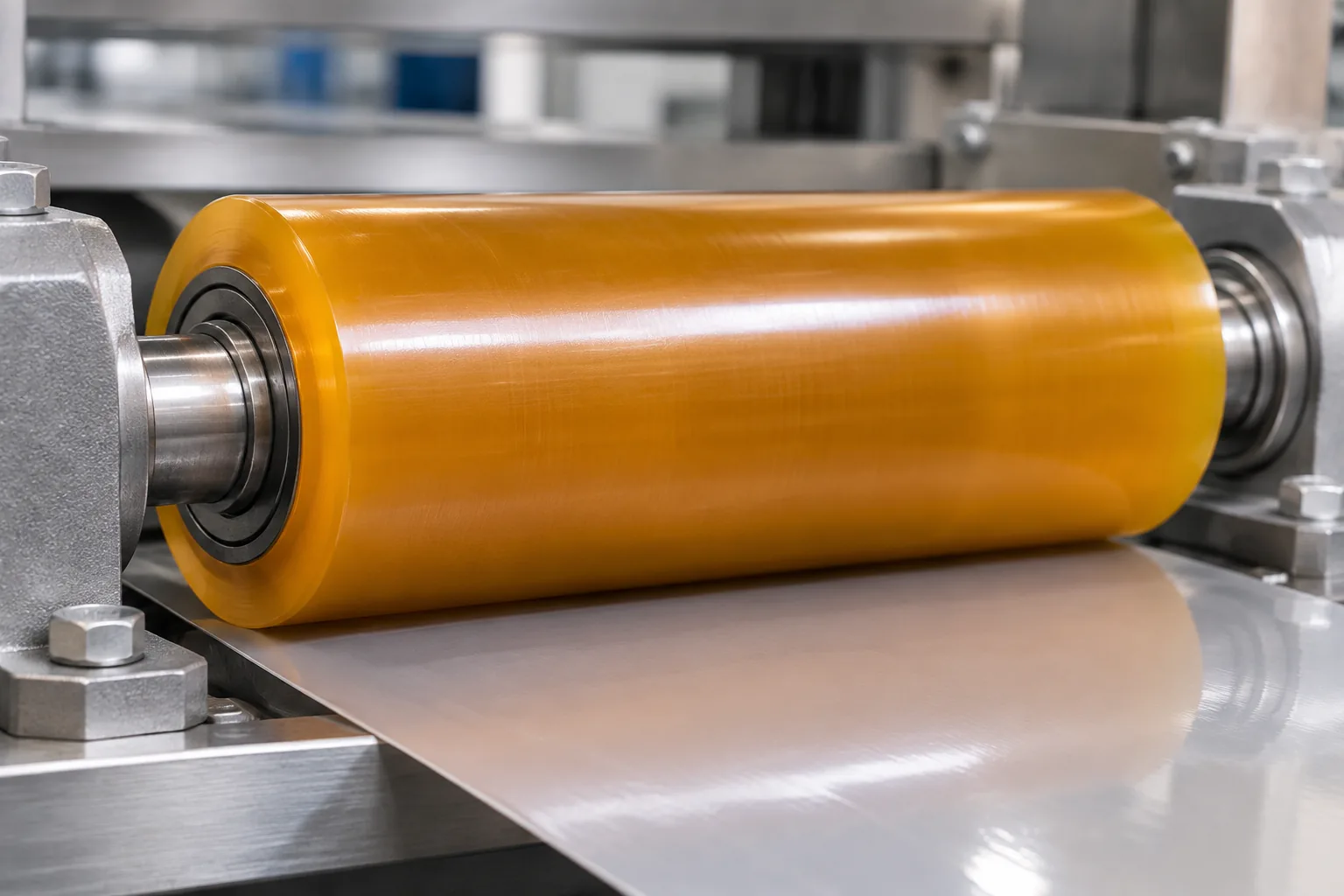
Wear life is not decided by abrasion resistance alone. The practical benefit appears when the polyurethane compound, hardness, and surface finish match the abrasive conditions. A roller running in a clean, light-contact application may not need the same wear resistance as a roller handling abrasive dust, slurry, or a sharp-edged product.
This advantage matters most where rollers see sliding abrasion, continuous contact, or abrasive media. Severe high temperature or certain chemical environments can shorten polyurethane service life, and some rubber compounds remain preferable where specific elastomeric behavior is required.
2. Greater Resistance to Cutting, Tearing, and Chunking
Polyurethane rollers can resist nicks, edge damage, and material chunking in many demanding contact applications. That helps preserve roller geometry and reduces the risk of marking or tracking faults caused by a damaged cover.
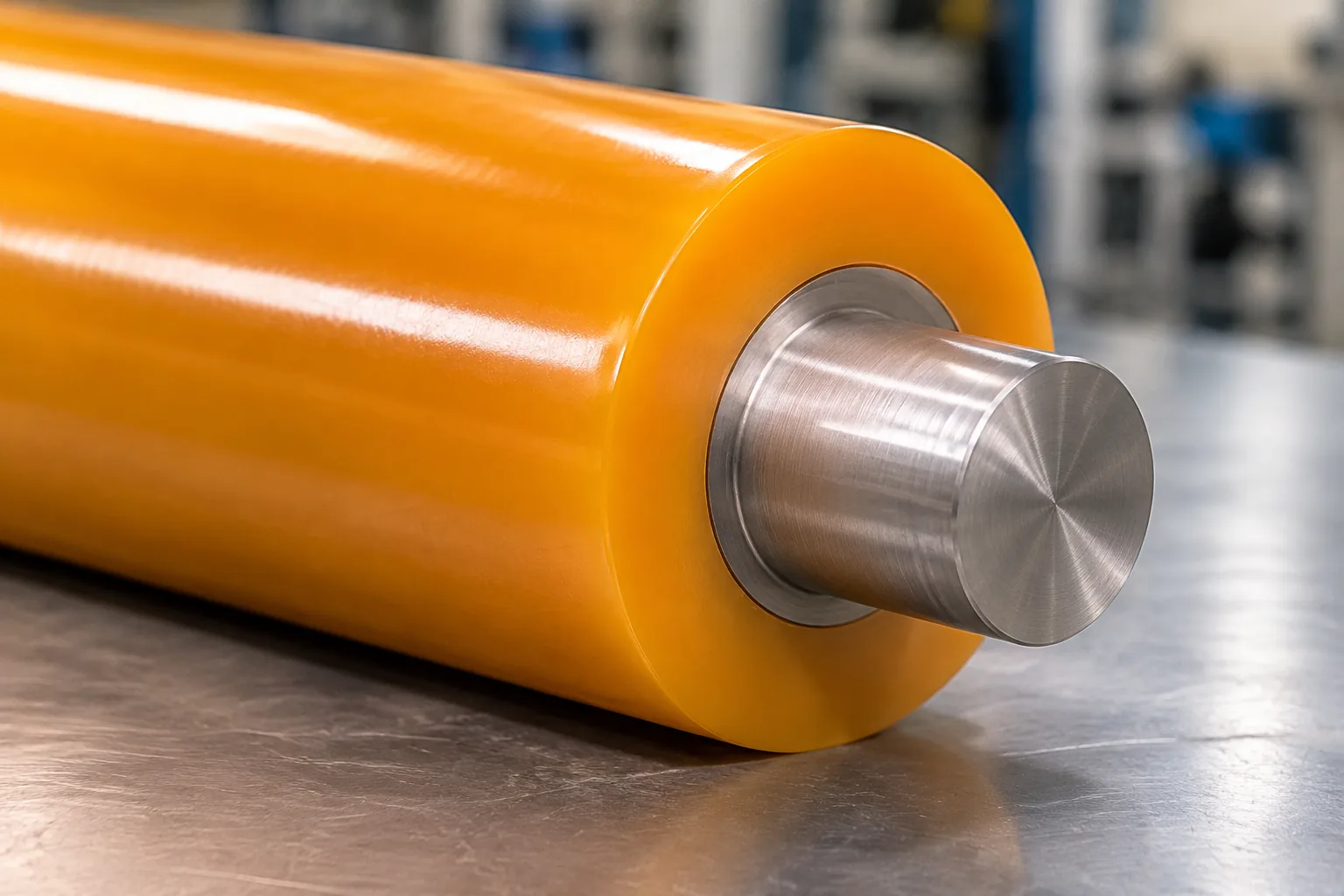
This advantage is most relevant where sharp edges, frequent starts and stops, or intermittent impact are present. It still depends on compound selection and adequate core bonding: a tough cover on a poor bond can fail at the interface rather than resist the cut.
Extreme impact or highly aggressive mechanical damage can still damage polyurethane rollers. Cut and tear superiority should not be assumed for every rubber compound without evidence for the specific duty.
3. Higher Load-Bearing Capacity and Better Compression Set Resistance
Under load, a roller cover must maintain shape and contact pressure without taking permanent set. Polyurethane rollers can perform well in this role when hardness, geometry, core design, speed, and temperature are correctly specified. Compression set resistance helps keep nip pressure consistent, preserves roller roundness, and can reduce the need for repeated readjustment.
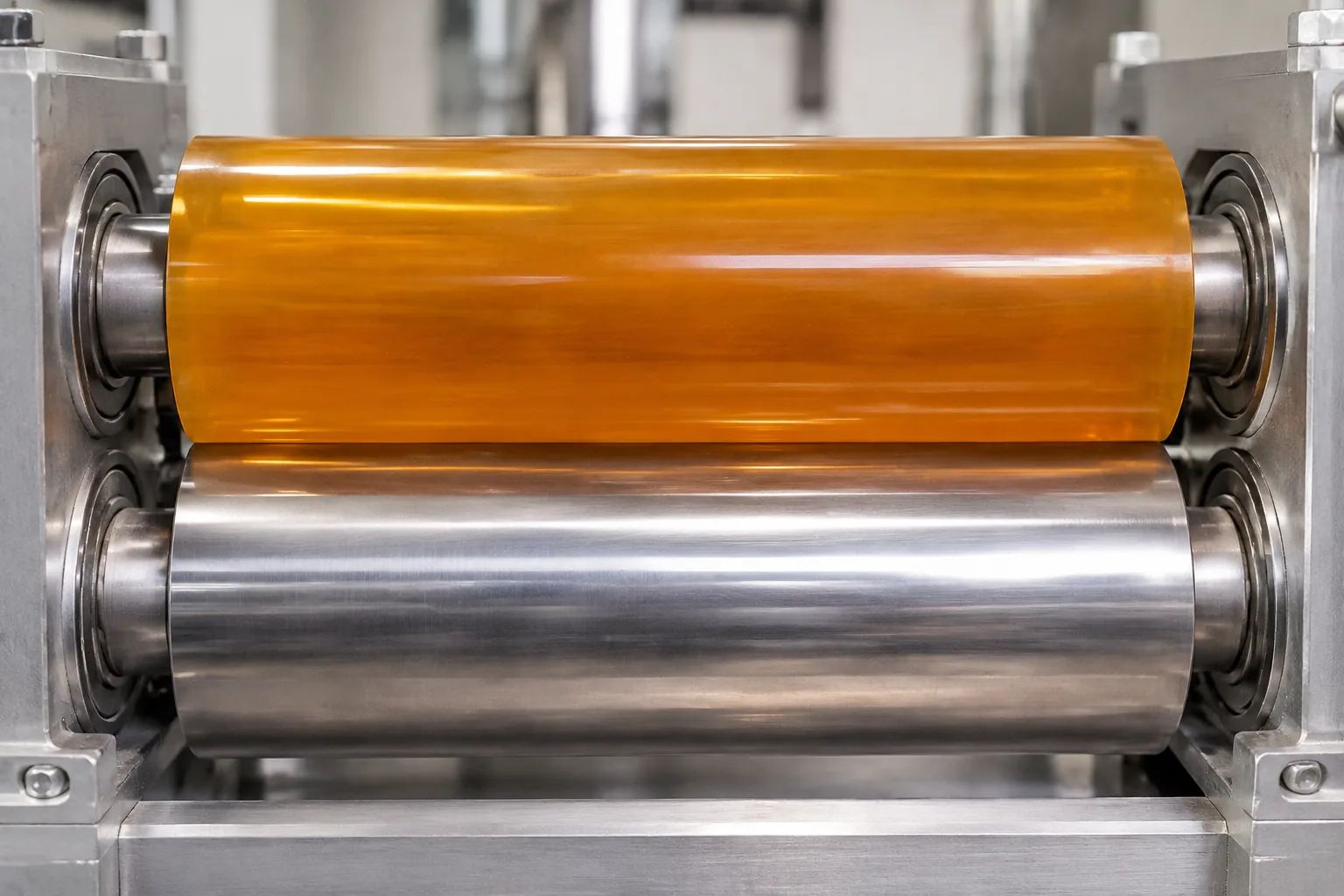
Load capacity is a system property. The roller compound, core stiffness, bearing arrangement, and mounting alignment all affect how much load the roller can carry. A compound change alone does not fix a misaligned or overloaded system.
Excessive heat buildup or overload can still deform a polyurethane roller. Some rubber compounds may be preferred for high-deflection or shock-absorbing duties where resilience matters more than low compression set.
4. Improved Oil, Grease, and Chemical Resistance
Polyurethane rollers are often more resistant than many rubber rollers to oils, greases, and certain chemicals. In practice, that can mean less swelling, less softening, and slower surface degradation when lubricants or process fluids reach the roller.
Chemical resistance must be checked against the exact chemical, concentration, temperature, and contact time. A general claim of oil resistance is not a compatibility approval for a specific compound.
Polyurethane is not universally chemical-resistant. Certain solvents, acids, bases, and hot water or steam can attack it, and hydrolysis resistance varies by formulation and environment.
5. Wider Hardness and Formulation Range for Application Tuning
Polyurethane rollers can be produced in a broad range of hardness and formulations. Formulation choices can support goals such as grip, wear resistance, cut resistance, color, or non-marking behavior. That range is useful when the roller surface must be tuned to the product being handled rather than chosen from a narrow catalog.
Customization has limits. Hardness alone does not define performance; compound chemistry, cure, geometry, and core bonding also matter. The supplier must be able to hold the formulation and machining consistent from lot to lot.
Some specialized rubber compounds may offer advantages in specific temperature or chemical environments. Custom formulation can also affect lead time and cost.
6. Better Dimensional Stability and Machining Tolerance
Polyurethane rollers can be cast or machined to maintain diameter, roundness, and surface finish. In precision nip, guide, feed, and web-handling positions, that dimensional control supports consistent contact, reduced vibration, and reliable material tracking.
The final tolerance depends on the manufacturing process, inspection, and core quality. Core preparation and bonding are part of dimensional performance, not a separate detail. A cover that loses bond under load will not hold tolerance in service even if it measured correctly when new.
Temperature changes, load, and chemical exposure can affect dimensions in service. Rubber rollers may be adequate or preferred where very high resilience or a specific surface behavior is needed.
7. Lower Maintenance Burden and Total Cost of Ownership
Longer wear life, fewer replacements, and reduced downtime can lower total cost of ownership even when the initial roller price is higher. The comparison should include purchase price, service life, maintenance labor, production downtime, and replacement frequency.
A lower purchase price is not a lower lifecycle cost if the roller fails early or forces frequent line stops. Buyers should compare the cost per operating period, not the invoice price alone.
A higher initial polyurethane roller cost may not be justified in low-duty or short-run applications. If the operating environment degrades polyurethane, lifecycle cost may favor rubber or another material.
When Rubber Rollers May Still Be the Better Choice
The seven advantages do not make polyurethane rollers the default answer. Rubber rollers can remain the better choice when:
- High resilience or shock absorption is the main requirement. Some rubber compounds are selected for duties where a more elastic cover is useful.
- The chemical environment attacks the available polyurethane compound. Solvents, acids, bases, hot water, or steam may make a rubber compound or another material safer.
- The duty is low and purchase price dominates. A low-cost rubber roller may be adequate where loads, speeds, and abrasive exposure are mild.
- The application already has a proven rubber surface behavior. Existing service data can be more useful than a material claim.
Material selection should be based on application testing, supplier recommendations, and a clear understanding of the failure mode. Where a specific rubber advantage is not documented for the duty, keep the comparison qualitative and confirm it with the roller supplier.
Selection Checklist for Polyurethane Rollers
Before specifying a polyurethane roller, collect the application inputs that change the recommendation:
- Load and contact pressure: nip force, continuous compression, and peak loads.
- Speed and duty cycle: continuous or intermittent running, starts and stops, and heat buildup.
- Hardness and compound: required grip, deflection, wear resistance, cut resistance, and non-marking behavior.
- Chemical exposure: oils, greases, cleaning agents, solvents, process chemicals, and spillage.
- Temperature: normal operating temperature, startup conditions, and any cleaning or process peaks.
- Surface finish and tolerance: diameter, roundness, crown, finish, and inspection method.
- Core type and bonding: core material, preparation, bond strength, and balance.
Also clarify abrasive media, cut and tear risk, cleaning methods, and any food-contact or regulatory requirement. Food-contact suitability is not established by the phrase food-grade alone; verify the specific compound and jurisdiction.
Confirm compound compatibility and expected service life with the roller supplier before release. A sample trial or controlled production run is often more informative than a generic material comparison.
Key Takeaways
Polyurethane rollers are often advantageous, but the seven advantages are conditional rather than universal.
- Abrasion resistance: can hold profile and extend wear life in abrasive contact.
- Cut and tear resistance: can reduce nicks, edge damage, and chunking when the compound and bond are correct.
- Load-bearing behavior: can maintain shape and nip pressure under load, with compression set resistance.
- Oil and chemical resistance: can reduce swelling and softening, but only for compatible compounds and exposures.
- Hardness and formulation range: supports application tuning, provided the supplier controls the compound.
- Dimensional stability: supports roundness, finish, and tracking in precision roller positions.
- Lifecycle cost: can be lower through longer service life and less downtime, not through purchase price alone.
Use these points to screen options, then confirm the actual compound, hardness, geometry, and service life with the roller supplier. Evaluate application conditions and lifecycle cost before replacing a proven rubber roller with polyurethane.
Conclusion
Polyurethane rollers can offer seven meaningful advantages over rubber rollers: better abrasion resistance, cut and tear resistance, load-bearing behavior, oil and chemical resistance, hardness and formulation range, dimensional stability, and lifecycle cost. Those advantages are not universal. The material only wins when the compound, hardness, core bond, and machined geometry match the load, speed, temperature, chemical exposure, and surface finish of the actual roller position. A safe next step is to define the duty, confirm chemical compatibility, and request a roller specification that states the compound, hardness, tolerance, and expected inspection criteria. Where the environment attacks polyurethane or the duty is light and cost-sensitive, a rubber roller may still be the better choice.
FAQs
Q1: Are polyurethane rollers always better than rubber rollers?
A: No. Polyurethane rollers are often better in abrasive, cut-prone, or oil-exposed duties, but the result depends on compound, hardness, load, speed, temperature, chemical exposure, core bonding, and geometry. Rubber rollers can be the better choice where high resilience, shock absorption, a specific chemical environment, or low initial cost matters more.
Q2: What operating temperatures can polyurethane rollers handle?
A: There is no single temperature limit that applies to every polyurethane roller. The safe range depends on the formulation, hardness, continuous or intermittent operation, heat buildup, and chemical exposure. Ask the supplier for the validated temperature range of the exact compound, and keep the roller within that range rather than relying on a generic material claim.
Q3: Can polyurethane rollers resist oils and chemicals?
A: They are often more resistant than many rubber rollers to oils, greases, and certain chemicals, but they are not universally resistant. Compatibility must be checked against the exact chemical, concentration, temperature, and contact time. Some solvents, acids, bases, hot water, and steam can attack polyurethane, and hydrolysis resistance varies by formulation.
Q4: What hardness should be specified for a polyurethane roller?
A: There is no universal hardness. The specification should follow load, nip pressure, abrasion, cut risk, grip, deflection, tracking, and surface finish. Hardness alone is not enough because compound chemistry, cure, geometry, and core bonding also affect performance. Confirm the hardness and compound together with the roller supplier.
Q5: Are polyurethane rollers suitable for food-contact applications?
A: Suitability depends on the specific compound, the intended contact, cleaning methods, and local regulatory requirements. The phrase food-grade is not a universal regulatory category. Verify the exact compound, supporting documentation, and jurisdiction before use in food-contact service.
Q6: How do I compare the total cost of polyurethane and rubber rollers?
A: Compare purchase price with service life, replacement interval, maintenance labor, production downtime, and inventory needs. A higher-priced polyurethane roller can be cheaper over time if it wears longer and reduces line stops. A lower-priced rubber roller can be cheaper in low-duty or short-run applications where the polyurethane advantage does not appear.