Quick Answer
Engine timing kits group the parts needed to keep crankshaft and camshaft timing accurate during service. A timing belt kit usually includes the belt, tensioner, and idlers, while a timing chain kit may include the chain, guides, tensioner, sprockets, and gaskets. Correct kit selection depends on engine code, model year, original system type, and service procedure.
An engine timing kit is not just a replacement belt or chain. It is a matched service package for the components that keep the engine valve train synchronized. Choosing the wrong kit can create fitment problems, noise, premature wear, oil leaks, or incorrect valve timing.
This guide explains what timing system kits include, how belt kits and chain kits differ, and what buyers should check before ordering parts for repair or distribution.
What The Engine Timing System Does
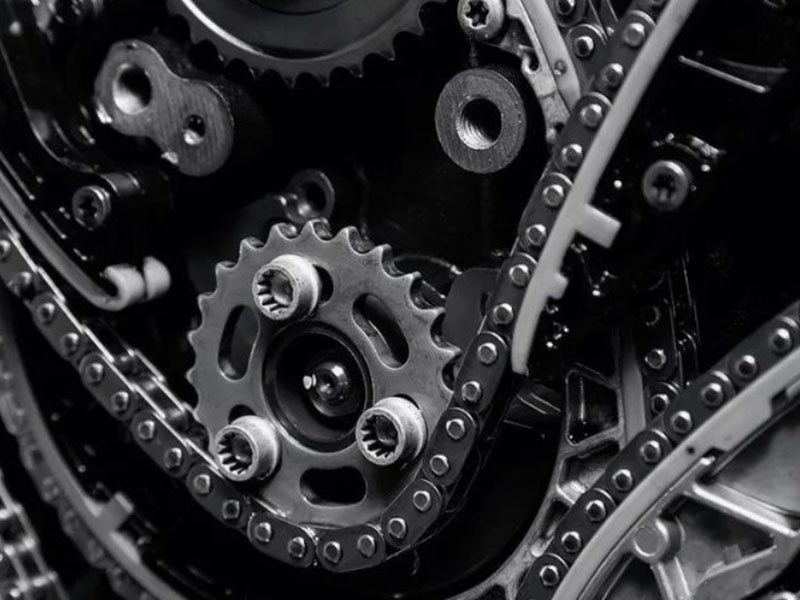
The timing system coordinates crankshaft rotation with camshaft rotation. This keeps intake and exhaust valve movement aligned with piston position. When timing is correct, combustion can happen in the correct sequence. When timing is incorrect, the engine may run poorly, lose power, misfire, or fail to start.
Modern engines may use a timing belt, timing chain, or related drive system depending on design. The kit must match that design exactly.
Main Parts In A Timing Belt Kit
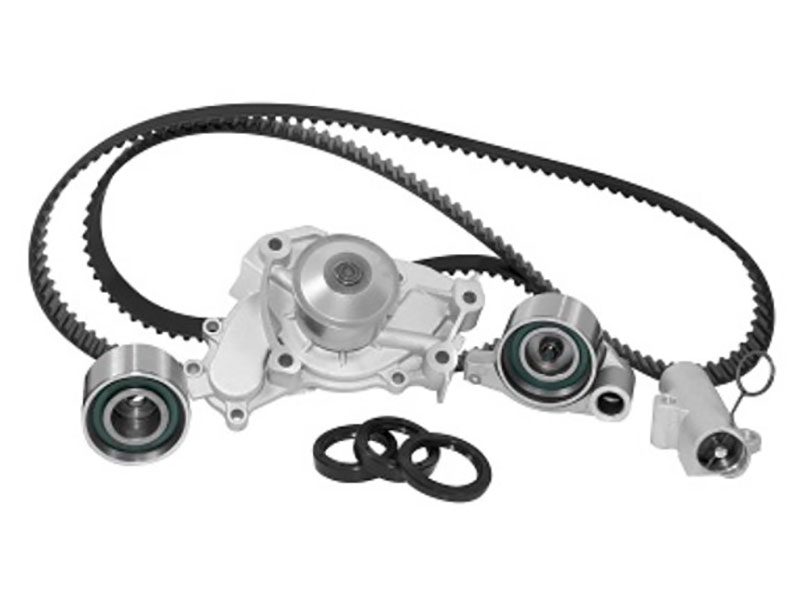
- Timing belt: transfers motion between crankshaft and camshaft sprockets.
- Tensioner: maintains the correct belt tension during operation.
- Idler pulleys: guide the belt and maintain the correct belt path.
- Water pump: included in some kits when it is driven by the timing belt or difficult to access later.
- Seals or hardware: may be included depending on engine layout and kit grade.
A belt kit is often selected when the service manual requires scheduled replacement. The purpose is to replace wear-prone components as a system rather than leaving old pulleys or tensioners to damage a new belt.
Main Parts In A Timing Chain Kit
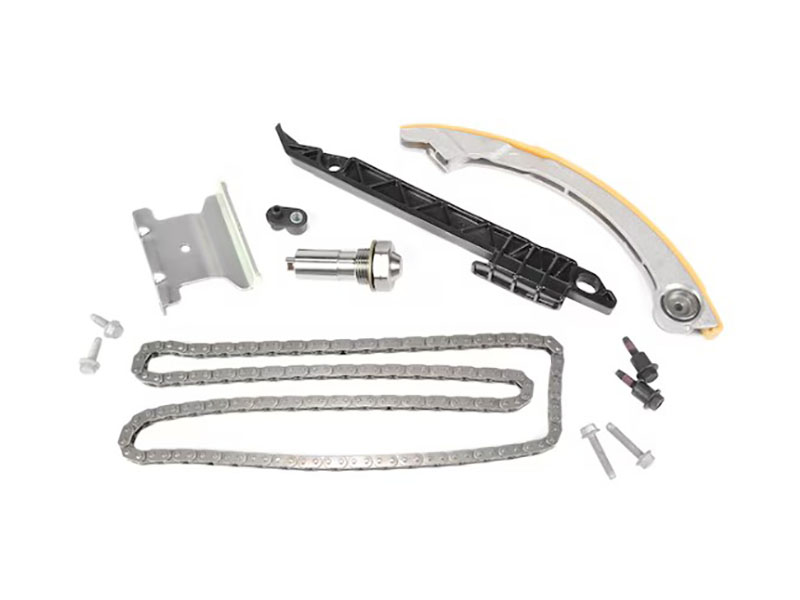
- Timing chain: metal chain that drives camshaft timing.
- Chain guides: guide the chain path and reduce uncontrolled movement.
- Chain tensioner: controls slack and helps maintain timing accuracy.
- Sprockets: may be replaced when tooth wear or design requirement calls for it.
- Gaskets and seals: often needed because chain systems sit behind engine covers.
A timing chain kit is usually more involved than a belt kit because it may require access behind the timing cover and attention to guides, sprocket alignment, and oil-fed tensioners where the engine uses them.
Timing Belt Kit vs Timing Chain Kit
| Item | Timing Belt Kit | Timing Chain Kit |
|---|---|---|
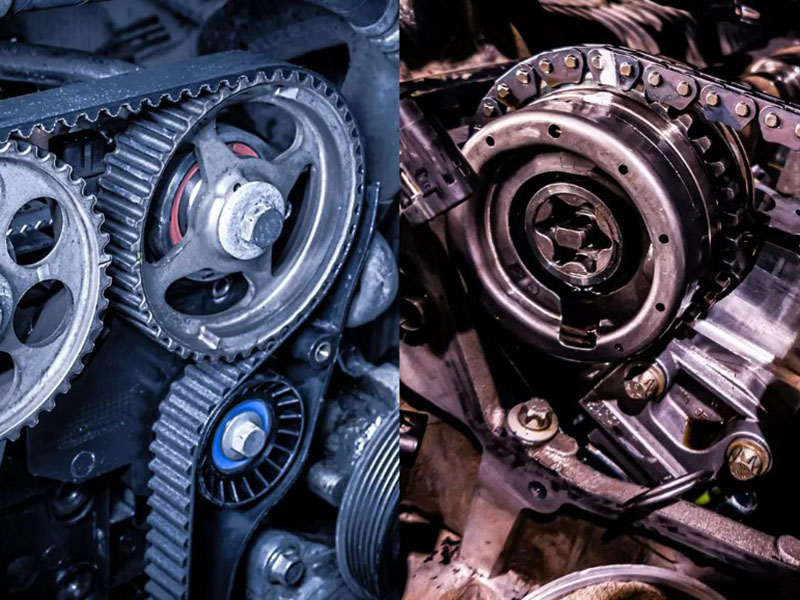
| Drive part | Reinforced belt | Metal chain |
| Common support parts | Tensioner and idlers | Guides, tensioner, and sprockets |
| Lubrication | Usually dry | Usually engine-oil lubricated |
| Service focus | Scheduled replacement and pulley condition | Noise, stretch, guide wear, tensioner function, and oil condition |
How To Select The Correct Kit
Start with the exact vehicle and engine information. Model name alone is not enough because the same vehicle may use different engines, production dates, or timing layouts.
- Confirm engine code, displacement, model year, and production date.
- Check whether the engine uses a belt, chain, or special timing layout.
- Compare sprocket count, pulley shape, tensioner style, and cover requirements.
- Confirm whether water pump, seals, gaskets, bolts, or guides are required.
- Use the vehicle manufacturer’s procedure for alignment marks and locking tools.
Quality Risks During Timing Kit Service
Timing kit repair is sensitive because small alignment errors can affect engine operation. Common risks include wrong belt tooth count, incorrect tensioner setting, reused worn guide, oil-contaminated belt, missing gasket, damaged seal surface, and improper camshaft or crankshaft locking.
For professional service, replacement should include inspection of adjacent parts. Oil leaks, coolant leaks, pulley bearing noise, cracked covers, damaged sprockets, and worn mounting hardware should be corrected before the new kit is installed.
When A Timing System Kit May Need Replacement
A kit may need replacement when the vehicle reaches the manufacturer’s service interval, when related parts are noisy or worn, when the engine has timing fault codes, or when a repair requires access to the timing system. For a chain system, abnormal rattle at startup or idle can also justify inspection.
Do not continue driving a vehicle with severe timing noise, repeated timing fault codes, or signs of belt damage. Diagnosis should confirm whether the issue is the belt, chain, tensioner, guide, oil pressure, pulley bearing, or another engine problem.
Conclusion
An engine timing kit supports accurate valve timing by replacing the drive part and related components as a matched service group. The correct kit matches the exact engine, includes the required support parts, and follows the vehicle manufacturer’s installation procedure.
FAQs
Q1: What is included in a timing belt kit?
A: A timing belt kit usually includes the belt, tensioner, and idler pulleys. Some kits also include a water pump, seals, gaskets, bolts, or other hardware depending on the engine.
Q2: What is included in a timing chain kit?
A: A timing chain kit may include the chain, guides, tensioner, sprockets, gaskets, seals, and hardware. The exact content depends on engine design and kit specification.
Q3: Can a timing belt kit and timing chain kit be interchanged?
A: No. They are built for different engine designs. The correct kit must match the engine code, timing layout, and service procedure.
Q4: Should the water pump be replaced with a timing belt kit?
A: It depends on the engine and service information. When the timing belt drives the water pump, or belt removal is required to reach it, inspect the pump and follow the vehicle manufacturer’s replacement procedure.
Q5: Why are tensioners and idlers often replaced with a timing belt?
A: Their bearings, springs, and damping parts can wear independently of the belt. A worn pulley or tensioner can damage a new belt or change its operating tension. Replace related parts when required by the service procedure or when inspection shows wear.
Q6: Does every engine timing kit include all required parts?
A: No. Kit contents vary by brand, engine, and service level. One kit may contain only the main drive components, while another adds a water pump, sprockets, seals, gaskets, bolts, or other hardware. Compare the contents with the repair procedure before ordering.
Q7: How can I confirm that an engine timing kit fits?
A: Use the engine code, model year, production date, vehicle identification data, and a reliable parts catalog. Then compare the belt or chain layout, tensioner design, sprockets, guides, seals, and included hardware. Vehicle model name alone may not identify the correct kit.
Q8: Can old timing sprockets be reused with a new kit?
A: It depends on the engine, kit scope, sprocket condition, and manufacturer procedure. Inspect teeth, keyways, timing features, and contact surfaces. Replace sprockets when the procedure requires it, when the kit is designed as a matched system, or when wear or damage is found.