Do not drive more than a few miles with a bad U‑joint – just enough to reach a repair shop. A damaged U‑joint typically fails completely after several hundred miles of continued driving, but the exact distance is unpredictable. Every extra mile increases stress on the joint and risks sudden driveshaft detachment, which can cause loss of vehicle control. If you notice squeaking, clunking, or vibration, stop driving and have the U‑joint inspected immediately. Your safety – and the safety of others on the road – is more important than any repair cost.
A failing U‑joint is not a “limp‑home” problem. It can break without warning, especially during acceleration or at highway speeds. If you experience vibration or loud clunking, do not drive the vehicle – arrange for a tow. These symptoms indicate the joint is near total failure, and the driveshaft could drop onto the pavement, locking your rear wheels or damaging fuel or brake lines. Always prioritise safety over convenience.
If you own a rear‑wheel drive or four‑wheel drive vehicle, you have probably heard the term “U‑joint” – short for universal joint. It is a small metal component, but it plays a crucial role in your drivetrain. A vehicle with a faulty U‑joint will not run safely for long. Left unaddressed, a failing joint can damage the driveshaft, transmission seals, brake lines, and even cause a serious collision.
The good news: U‑joints do not fail overnight. There are clear warning signs – squeaking, clunking, vibration – that let you know when service is due. In this guide, we will answer exactly how far you can drive (and why you should not), explain the causes and symptoms, and give you practical advice for safe replacement.
What Does a U‑Joint Do?
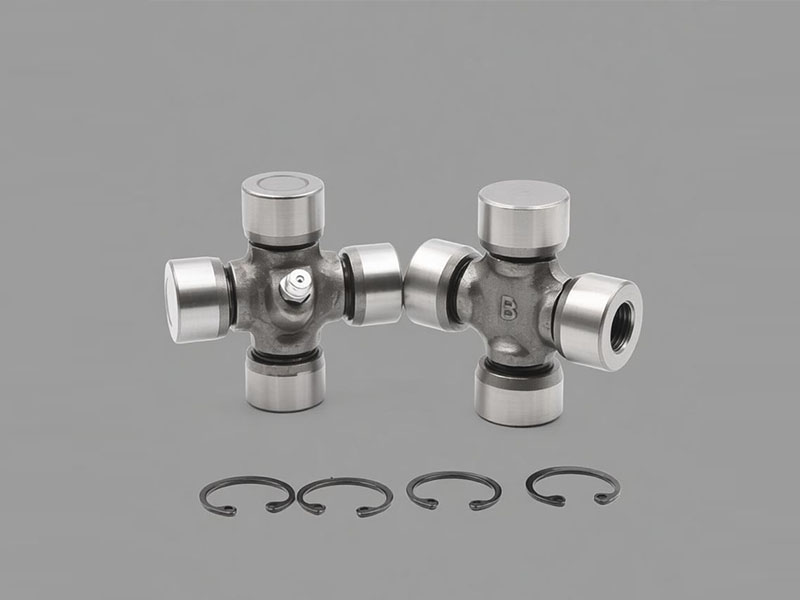
A universal joint is a cross‑shaped bearing assembly that connects the driveshaft to the transmission and the differential. Most rear‑wheel drive and 4×4 vehicles have two U‑joints: one at each end of the driveshaft.
Their primary functions are:
- Compensate for height differences between the transmission output shaft and the rear axle pinion – the two are not perfectly aligned.
- Allow the driveshaft to flex as the rear axle moves up and down over bumps and potholes.
- Transmit engine power smoothly to the drive wheels, even when the suspension articulates.
Because the rear axle moves independently from the vehicle body, a rigid driveshaft would bend or bind. The U‑joint’s flexible bearing action absorbs this movement. Note: Many modern cars use constant‑velocity (CV) joints instead, but U‑joints remain standard on trucks, SUVs, and off‑road vehicles.
How Long Can You Drive With a Bad U‑Joint? The Only Safe Answer
There is no fixed mileage – it depends on how worn the joint is, your driving style, and road conditions. However, here are the facts you need to know:
- Mild symptoms (only a slight squeak): You might be able to drive a very short distance – but even then, we do not recommend more than a couple of miles directly to a workshop. The only safe distance is 2–3 miles at most.
- General estimate: A damaged U‑joint that is not replaced will usually cause complete breakdown after several hundred miles (roughly 150–400 miles, depending on load). This is not a guarantee – it can fail much sooner.
- Never drive if you experience clunking, vibration, or fluid leaks. These indicate imminent failure. Stop immediately and call for a tow.
- Why it is dangerous: U‑joints often fail suddenly under hard acceleration. If the joint breaks, the driveshaft can drop and dig into the road, locking the rear wheels or damaging the fuel tank, brake lines, or exhaust. This can lead to a loss of control – especially at highway speeds.
Bottom line: Do not test your luck. The moment you suspect a bad U‑joint, stop driving and have it inspected. Towing costs are far less than a hospital bill or a new transmission.
Causes of U‑Joint Failure
Understanding why U‑joints wear out helps you prevent premature failure. The most common causes are:
Normal Wear and Tear
U‑joints are designed to last a long time – typically around 100,000 miles (some even last the life of the vehicle). However, they are mechanical parts with needle bearings that eventually wear. Severe usage can cut this lifespan to as low as 50,000 miles.
Lack of Lubrication
Most original‑equipment U‑joints are sealed and “lubricated for life” – but in reality, the grease slowly dries out or gets thrown out of the bearing cups. Once the grease is gone, metal‑on‑metal contact begins. This is what causes the initial squeaking noise. Without intervention, wear accelerates rapidly.
Vehicle Modifications
- Lift kits increase the driveline angle, forcing U‑joints to operate beyond their designed range.
- Engine performance upgrades (more torque) can overwhelm stock U‑joints that are not rated for higher power.
Heavy‑Duty Use
Racing, rock‑crawling, and frequent towing of heavy trailers put extreme stress on the driveshaft and joints, accelerating wear significantly.
Excessive Heat
Under‑vehicle temperatures can exceed 200°F, especially near the exhaust. High heat degrades the grease, causing it to lose its lubricating properties and leading to premature bearing failure.
Symptoms of a Bad U‑Joint in Order of Severity
Pay attention to these signs – they appear in a predictable progression.
Squeaking Noise on Take‑Off
- What you hear: A high‑pitched squeak when you start moving forward or in reverse.
- Why: The bearings have dried out – no grease remains, so metal rubs against metal.
- When it stops: The noise often disappears above 5–10 mph because road and wind noise mask it.
- What to do: This is your earliest warning. Have the joint greased immediately (if it has a Zerk fitting). This can restore protection and extend its life.
Clunk and Ring When Shifting
- What you hear: A distinct “clunk” accompanied by a metallic ring when shifting from Drive to Reverse (or vice versa).
- Why: The bearing clearance has increased, so the driveshaft rotates a few degrees before hitting a hard stop when torque reverses.
- What to do: At this stage, greasing will not reverse the damage – the bearings are already worn. You should plan for replacement very soon.
Vibration Throughout the Vehicle
- What you feel: A buzzing or shaking sensation felt through the seat and floorpan at speed.
- Why: Worn bearings allow the driveshaft to wobble off‑centre, creating an imbalance.
- Key distinction: Driveshaft vibration has a higher frequency than wheel imbalance – because the driveshaft spins 3 to 4 times faster than the wheels.
- What it means: The joint has now damaged the driveshaft’s yokes. It is also hammering the transmission output bearing and differential pinion bearing.
- Action required: Do not drive – arrange a tow. Replacement is mandatory, and driving even a mile can cause thousands in collateral damage.
Transmission Fluid Leak
- What you see: Reddish fluid dripping from the rear of the transmission or transfer case.
- Why: The vibration from the bad joint causes the driveshaft stub to run out‑of‑round, which wears out the rear transmission seal.
- Risk: If fluid levels drop too low, the transmission will overheat and fail – a very expensive repair.
Complete Failure – Vehicle Won’t Move
- What happens: The U‑joint shatters or the bearing caps break. The driveshaft separates from the transmission or differential.
- What you will experience: A loud bang, loss of power, and the vehicle coasts to a stop. The driveshaft may fall and drag on the ground.
- Outcome: You are stranded – and you will need a tow truck plus a full driveshaft repair.
What Happens If You Ignore the Warning Signs?
Continuing to drive a vehicle with a bad U‑joint is not just risky – it is costly. Here is what you are risking:
| Consequence | How It Happens | Estimated Cost |
|---|---|---|
| Transmission failure | Vibration destroys the output shaft seal and bearing; fluid leaks out, and the transmission burns up | $1,500 – $4,000 |
| Differential damage | The pinion seal fails; gears run without lubrication and seize | $800 – $2,000 |
| Driveshaft destruction | The U‑joint breaks, and the spinning driveshaft smashes against the underbody | $400 – $1,200 (shaft + joint) |
| Brake/fuel line rupture | The loose driveshaft strikes and cuts hydraulic or fuel lines – a fire or brake‑failure hazard | Priceless (safety risk) |
| Accident | Sudden rear‑wheel lock‑up or loss of control at highway speed | Potentially fatal |
The message is clear: Act early. The cost of a U‑joint replacement (typically $100–$300 labour plus parts) is a fraction of the damage you will avoid.
Repair and Maintenance Recommendations
If You Need Replacement
- Always choose high‑quality replacement U‑joints with a grease fitting (Zerk fitting) – this allows periodic lubrication, which extends service life.
- For vehicles used off‑road or for towing, consider heavy‑duty or strengthened U‑joints with larger bearings.
- Have the work done by a professional – pressing U‑joints requires special tools; improper installation can cause early failure.
Preventive Maintenance
- Inspect U‑joints every oil change (every 5,000–7,500 miles). Look for rust, play, or missing grease seals.
- For greaseable joints, apply fresh grease every 5,000 miles or after deep water crossings – it forces out old, contaminated grease.
- If your U‑joints are sealed (no fitting), replacement is the only option when they wear out.
What NOT to Do
- Do not attempt to “drive it home” if you feel vibration – call a tow truck.
- Do not add grease to a joint that already clunks or vibrates – it will not help and you will waste time and money.
- Do not ignore squeaking – it is your cheapest opportunity to fix the problem.
Conclusion
A bad U‑joint is a serious safety concern – not just a nuisance. While you might technically be able to drive a few miles to a mechanic, you should never push your luck beyond that. The joint can fail without further warning, turning your vehicle into a hazard for yourself and others.
Key takeaways to remember:
- Maximum safe distance: A few miles – directly to a workshop or a safe pull‑over.
- Typical lifespan: Around 100,000 miles – but severe use shortens this.
- Symptoms progression: Squeak → Clunk → Vibration → Leak → Total failure.
- When to replace: At the first sign of clunking or vibration – immediately.
- Maintenance: Grease every 5,000 miles if possible; check with every oil change.
Our final advice: Safety comes first. If you suspect a bad U‑joint, do not drive – call a professional. A tow is inexpensive compared to the cost of an accident, a blown transmission, or a ruined driveshaft. Protect yourself, your passengers, and your vehicle – get it inspected today.
FAQs
Q: How far can you safely drive with a bad U‑joint?
A: The only safe distance is a few miles – just enough to reach a repair shop or a safe location. Do not drive any further. A damaged U‑joint can break without warning, especially under acceleration.
Q: What happens if a U‑joint breaks while I am driving?
A: The driveshaft can detach, fall to the ground, and dig into the road. This can lock your rear wheels or damage fuel lines, brake lines, and the exhaust. You may lose control – especially at high speed. Stop immediately and call a tow truck.
Q: How long do U‑joints usually last?
A: On average, 100,000 miles – but some fail earlier (50,000–70,000) under heavy towing, off‑roading, or racing. With proper lubrication, some can last the life of the vehicle.
Q: How can I check if my U‑joint is bad?
A:
– Visual: Look for rust, cracked seals, or missing grease around the bearing cups.
– Physical: With the vehicle safely raised, grab the driveshaft near the joint and try to move it up/down and side‑to‑side. There should be zero play – any noticeable movement indicates wear.
– Listening: Shift from Drive to Reverse (with the engine idling and brakes applied) – a clunk means excessive clearance.
– Driving: Pay attention to vibration or squeaking – especially on take‑off.
Q: Will greasing a bad U‑joint fix it?
A: Only if it is in the very early stage – just a squeak. Greasing at that point can restore lubrication and prevent further wear. But if you already have a clunk or vibration, greasing will not fix the worn bearings – replacement is necessary.
Q: Do all vehicles have U‑joints?
A: No. Most rear‑wheel drive and four‑wheel drive vehicles use U‑joints on the driveshaft. Front‑wheel drive cars and many all‑wheel drive crossovers use CV joints (constant‑velocity joints), which are different but serve a similar purpose.
Q: How much does it cost to replace a U‑joint?
A: The cost varies by vehicle and region. Typically, parts run $30–$100 per joint, and labour is around $100–$300 (total roughly $150–$400 for one joint, $250–$600 for both). Always get a written estimate from your repair shop. Remember: the cost of ignoring it – transmission failure, accident, or tow – is far higher.