Quick Answer: Yes, you can remove bearing seals and shields without damaging the bearing. Use a thin tool—dental pick, awl, or utility blade—to gently lift the seal edge evenly around the circumference. For metal shields with a C-clip, push the clip toward the center, not outward. For pressed-in fixed shields, pierce a small hole near the outer diameter to lever it out. Proper technique preserves the bearing and allows seal reuse.
Bearings in automotive and industrial applications rely on seals or shields to retain grease and block contaminants. But sometimes you need to access the internal rolling elements—for cleaning, relubrication, inspection, or converting a sealed bearing to an open design for a specific high-speed application. The challenge is doing this without bending the seal lip, scratching the raceway, or breaking the shield. This guide walks you through safe removal methods for both rubber seals and metal shields, including C-clip retained and fixed pressed-in types. You will learn which tools work, what to avoid, and why careful removal directly affects bearing service life.
Understanding Bearing Closures
Before you remove anything, identify the type of closure on your bearing. Each type requires a slightly different approach.
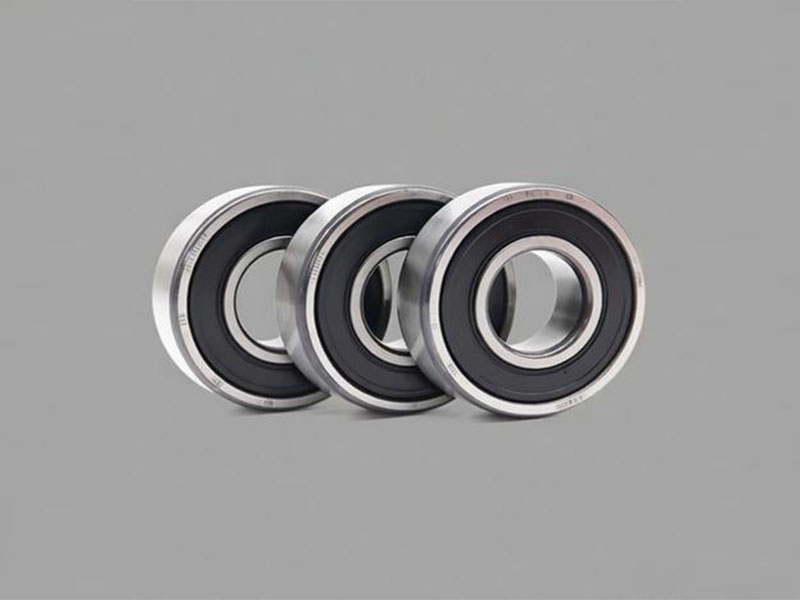
- 2RS (contact rubber seals) – The seal lip touches the inner race. Provides solid protection against moisture and fine dust, but increases torque and reduces maximum speed. Made of nitrile rubber (NBR) bonded to a steel insert.
- 2RU (non-contact rubber seals) – The rubber lip extends close to the inner race without touching. Better protection than metal shields, less torque than 2RS. More delicate during removal.
- ZZ (non-removable metal shields) – Pressed or crimped into the outer ring during manufacturing. Cannot be removed without destroying the shield. Common in standard deep groove ball bearings.
- ZZS (removable metal shields) – Retained by a snap wire or C-clip (typically ~0.5 mm thick). Designed for service access. You can remove, clean, and reinstall them.
Knowing which type you have prevents wasted effort and unnecessary damage.
Tools You Will Need
Gather these items before you start. Most are common household or shop tools.
- Dental pick or fine awl – thin enough to slip under a seal edge.
- Fine flathead screwdriver (jeweler’s size) – for prying after initial access.
- Utility knife blade or X-ACTO knife – to pierce a small hole in fixed shields.
- Needle-nose pliers – for removing C-clips.
- Safety goggles – essential when removing C-clips; they can spring out.
- Clean lint-free cloth and mild soapy water – for cleaning reusable seals.
For professional workshops, specialized tools like the simatool Twin Puller TP 150 or seal ring pullers exist, but they are not required for occasional service.
How to Remove a Rubber Bearing Seal Without Damage
Removing a rubber seal takes patience. Work slowly and evenly.
- Place the bearing on a clean, stable surface.
- Insert a dental pick or awl between the outer circumference of the seal and the outer race. Aim for the inner edge of the outer ring.
- Gently wedge the tool under the seal lip. Do not force it.
- Pry upward slightly, then move the tool about 5 mm along the circumference. Pry again. Repeat this process around the entire seal.
- The seal will gradually lift out evenly. Avoid prying from only one spot—that bends the steel reinforcing ring.
- Once removed, inspect the seal for tears, deformation, or a bent steel ring. If intact, you can clean and reuse it.
Shop tip: Some technicians carve a chisel point into a 1/8-inch-wide plastic coffee stirrer. The rounded plastic tip slides under the seal without piercing the rubber.
If you are removing a non-contact (2RU) seal, apply even less force. The lip is thinner and tears more easily.
How to Remove a Bearing Metal Shield
Metal shield removal methods differ based on how the shield is retained.
Shields Secured with a C-Clip (Removable / ZZS type)
These are the only metal shields designed for removal.
- Put on safety goggles.
- Use an awl or dental pick to trace the gap between the shield and the outer race until you find the end of the C-clip.
- Once located, push the clip toward the center of the bearing – not outward. The clip has a small overhang that catches when pulled outward. Pushing inward releases it from the groove.
- Lift one end of the clip with the awl. Use needle-nose pliers to remove it completely.
- With the C-clip removed, insert your awl into the gap between the inner ring and the shield. Work around the circumference to lever the shield out evenly.
Do not push the tool too far inside. Deep insertion can scratch the raceway or damage the bearing cage.
Fixed Pressed-In Shields (Standard ZZ type)
These shields are not meant to be removed. Once taken out, they cannot be reused. However, if you absolutely need internal access (e.g., to clean old grease from a rare bearing), follow this method without damaging the bearing itself:
- Use a sharp awl or X-ACTO knife to pierce a small hole in the shield. Position the hole as close to the outer diameter as possible – this keeps the puncture away from the rolling elements.
- Place the bearing on a flat solid surface.
- Insert the tool into the hole and use it as a lever to pry the shield upward.
- Work around the circumference gradually. Do not lever against the outer race edge—that can deform the raceway.
- The shield will come out destroyed. Discard it.
After removal, you can run the bearing as an open type (requires frequent relubrication and a clean environment) or source a replacement shield if available.
Why Removing Seals and Shields Without Damage Matters
A damaged seal cannot keep contaminants out. Dust and moisture will enter the bearing, mix with the grease, and turn into an abrasive paste. Rolling elements and raceways wear rapidly. In some cases, a compromised seal halves the bearing’s service life.
Even if you plan to discard the seal or shield, damaging it during removal can push metal burrs or debris into the bearing cavity. One common mistake is prying a shield out without first cleaning the bearing’s exterior. Any dirt on the outer surface gets pushed directly inside.
Proper removal also allows seal reuse. A seal that comes out intact retains its original geometry. In fact, a used seal that has broken in with the inner race may have slightly lower running torque than a brand new one.
From a cost perspective, replacing an entire bearing just because a seal was torn during removal is unnecessary. With correct technique, you avoid that expense.
How to Know If You Can Reuse a Removed Seal
This is one of the most frequent questions. The answer depends on the seal’s condition and your application.
Reuse if:
- The seal lip has no tears, cracks, or flat spots.
- The steel reinforcing ring is not bent or out of round.
- The rubber has not been exposed to solvents or high heat.
- The seal was removed evenly without prying damage.
Replace if:
- Any of the above conditions fail.
- The bearing is for a critical automotive safety application (e.g., wheel bearings). The labor cost of a second replacement far exceeds the price of a new seal.
- The seal shows signs of age – hardened or swollen rubber.
A practical rule used by many mechanics: “If you remove it without damage and it looks good, reuse it. But I would not install new bearings with old seals – the old seals will likely fail before the new bearings do.”
Proper Cleaning of Removed Seals
If you plan to reuse a rubber seal, clean it correctly. Never use harsh solvents such as acetone, brake cleaner, carburetor cleaner, or xylene. These chemicals cause the rubber to swell, shrink, or harden – each condition destroys the seal’s function.
Correct cleaning method:
- Wipe the seal with a clean, lint-free cloth.
- For stubborn grease, use mild soapy water and your fingertips. Rinse gently.
- Air dry completely before reinstalling.
- Inspect the seal lip one more time before insertion.
For rubber parts, even a small amount of solvent residue can cause long-term damage. Stick to soap and water.
Conclusion
Removing bearing seals and shields without damaging the bearing is a practical skill. Use a thin tool—dental pick, awl, or utility blade—and lift evenly around the circumference. For rubber seals, rotate your prying point frequently. For metal shields with a C-clip, push the clip toward the center, not outward. For fixed pressed-in shields, recognize that removal destroys the shield; pierce a small hole near the outer diameter to lever it out only when internal access is essential.
Proper removal preserves the seal for reuse, prevents contamination from entering during the process, and avoids the cost of replacing a functional bearing. When cleaning rubber seals, avoid all solvents—mild soapy water is sufficient. And if a seal shows any damage after removal, replace it. The small cost of a new seal is nothing compared to the downtime of a bearing failure.
At DUHUI Bearing, we manufacture automotive bearings under IATF 16949 certification and produce millions of units annually. In our daily engineering work, we follow the methods described above. All tolerances mentioned are consistent with ABEC 1 and ABEC 3 standards commonly used in passenger vehicle wheel bearings and electric motor applications.
FAQs
Q1: Can I reuse a bearing seal after removing it?
A: Yes, if the seal is removed without tears, bent steel ring, or deformed lip. A properly removed used seal can be reused. For critical applications like wheel bearings, many professionals recommend new seals for absolute reliability.
Q2: What is the difference between 2RS and 2RU seals?
A: 2RS seals contact the inner race, providing stronger protection but higher torque and lower speed limits. 2RU seals do not contact the inner race, offering a balance between protection and low friction. Both are made of rubber bonded to steel and can be removed with care.
Q3: What is the difference between ZZ and ZZS shields?
A: ZZ shields are non-removable – pressed into the outer ring permanently. ZZS shields are removable, retained by a C-clip or snap wire, allowing service access. Both are non-contact metal shields.
Q4: Do I need special tools to remove bearing seals?
A: No. A dental pick, fine awl, small flathead screwdriver, or utility knife blade works well. For professional high-volume work, dedicated pullers exist but are optional.
Q5: Can I clean rubber seals with solvent?
A: No. Solvents (acetone, brake cleaner, carb cleaner, xylene) cause rubber to swell or harden. Use mild soapy water and a cloth, then air dry.
Q6: Is it okay to remove a bearing shield and run the bearing without it?
A: It depends on the operating environment. In a clean, dry application with frequent regreasing, removing a shield reduces drag. In dusty or moist environments, running without a shield accelerates wear significantly. Only remove a shield if you accept that trade-off.