
Definition & Structure
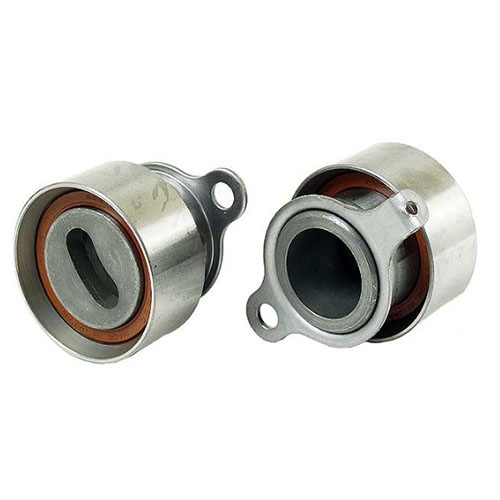
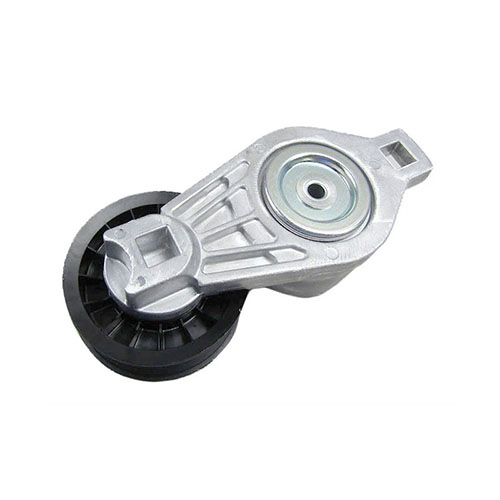
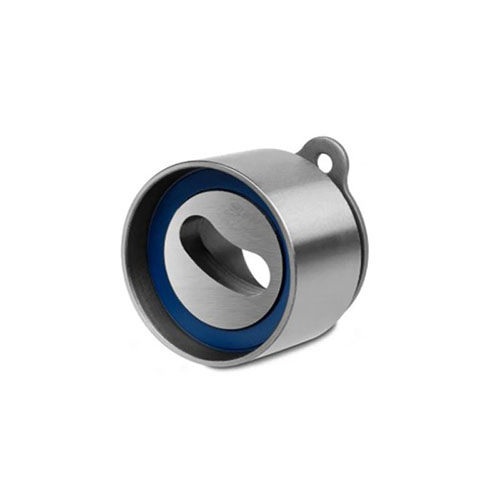
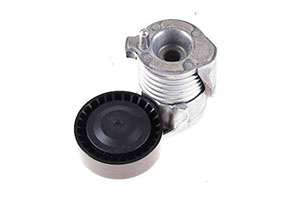
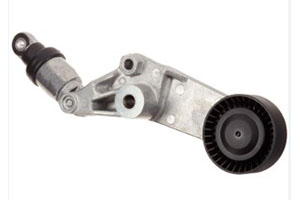
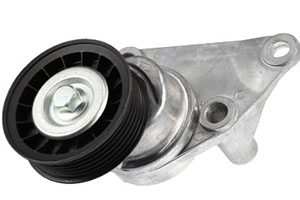
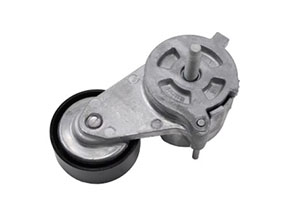
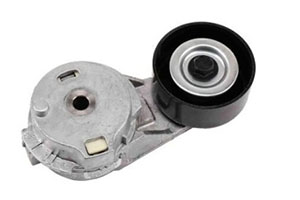
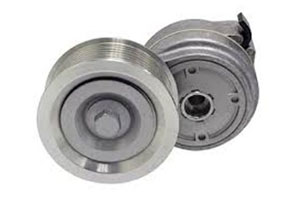
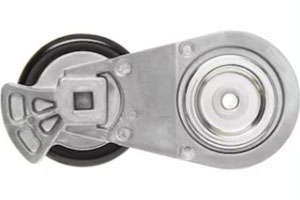
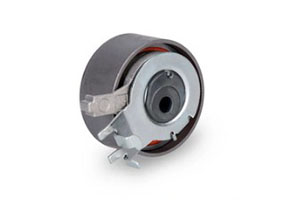
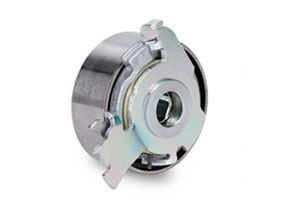
A tensioner pulley is a spring-loaded or hydraulically damped component that maintains correct tension in engine belt systems. It consists of a pulley wheel, a sealed ball bearing pressed into the pulley hub, and a tensioning arm with a spring mechanism.
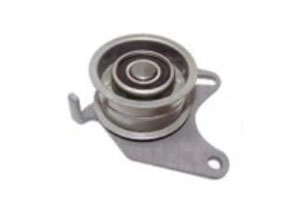
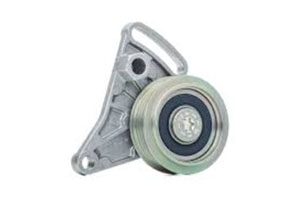
The pulley rotates against the belt while the tensioner arm applies constant force, automatically compensating for belt stretch and temperature changes. Two structural forms exist: integrated tensioner pulleys (complete assembly including arm, spring, pulley and bearing) and separate tensioner pulleys (pulley with bearing only, designed to fit into an existing tensioner bracket).
Key Features
- Pre-assembled spring mechanism maintains consistent belt tension without manual adjustment.
- High-carbon chromium steel bearing pressed into the pulley for durability.
- Double-lip rubber seals prevent contamination and retain grease.
- OE-matching pulley dimensions for direct interchange with original equipment.
- Corrosion-resistant coating on pulley and mounting surfaces for extended service life.
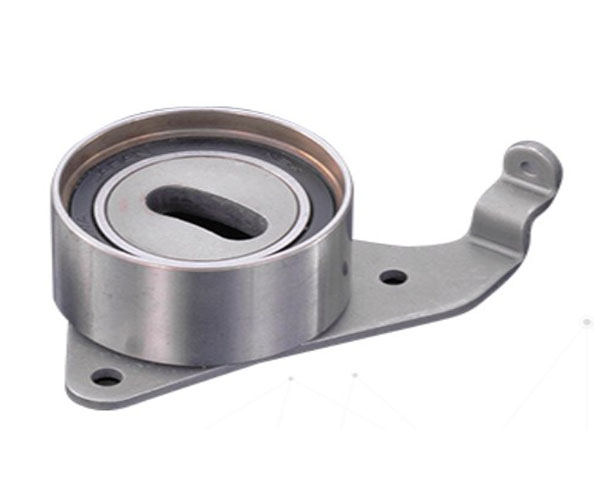
Your Professional Tensioner Pulley Manufacturer
DUHUI has manufactured automotive tensioner pulleys since 2003. We operate an IATF 16949 and ISO 9001 certified factory. Monthly production capacity exceeds 100,000 units. Our product range covers over 1,200 types of tensioner pulleys, including mechanical and hydraulic tensioners. We supply replacement parts compatible with Honda, Toyota, Ford, Volkswagen, BMW, and other major brands.
Materials, Standards, and Certification
We manufacture tensioner pulleys using GCr15 high-carbon chromium bearing steel in accordance with GB/T 18254. The torsion spring and sealed bearing design reduces field failures and extends service life. Our quality management system is IATF 16949 certified for design and manufacturing of tensioner devices for engine applications. You can search our product library by OE number to find identical replacement parts. For high-volume orders, we also offer custom stamping and non-standard bore sizes.
Production Tolerances and Process Control
Our production process follows GB/T 13405-2020 for quality control. Examples of our specification control:
- Bearing radial clearance within 0.02–0.05 mm
- Shaft hole diameter tolerance within H7 (±0.018 mm)
- Tensioner body hardness at HRC 50–60 (alloy steel)
Every batch is tracked with traceability codes. We perform SPC (statistical process control) on critical dimensions during production runs.
Quality Testing Beyond Basic Specifications
Every DUHUI tensioner pulley goes through dimensional tolerance inspection. We also run targeted tests for real-world operating conditions:
- Salt spray test (GB/T 10125) – 72 hours continuous operation without rust
- Durability test – 4,000 r/min with 500 N load for 120 hours
- High and low temperature test – -40°C to 150°C with no signs of aging
Each unit receives final inspection before anti-rust packaging. Our annual customer complaint rate has remained below 0.5% for three consecutive years.
Packaging, Warranty, and Export
We export to aftermarket distributors in Europe, North America, Southeast Asia, and the Middle East. Standard packaging is individual poly bag + color box + export carton. We offer a 12-month warranty against manufacturing defects from the date of shipment. Samples are available for pre-order testing. OEM/ODM orders are accepted for wholesale buyers.
Why B2B Buyers Choose DUHUI
We supply the aftermarket channel with tensioner pulleys that meet OE standards for automotive engines. Lead time for standard models is 15–25 working days. We support low MOQ for trial orders (typically 500–1,000 pieces). Contact us with your OE numbers or sample drawings to request a quote.
Product Types & Series
Total product range covers two main configurations: complete integrated tensioner pulley assemblies and separate tensioner pulleys (repair pulleys with bearing only). Each serves different repair scenarios and vehicle platforms.
- Product Type Introduction
- Integrated Tensioner Pulley Series
- Separate Tensioner Pulley Series
Product Type Introduction
Tensioner pulleys for automotive belt systems are manufactured either as fully assembled units with spring arms or as pulley-only repair components. The choice between integrated and separate types depends on bracket condition, repair budget, and whether the spring mechanism remains functional. Both configurations are available as direct OE replacements.
Integrated Tensioner Pulley Assemblies
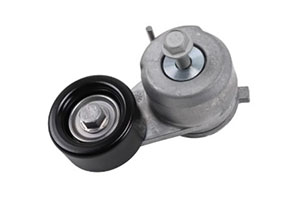
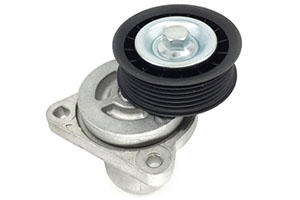
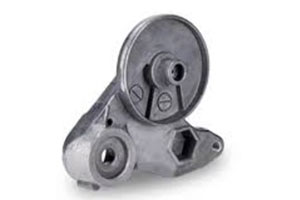
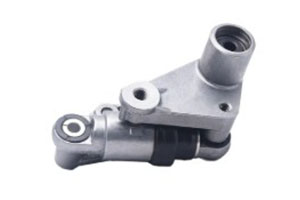
Complete assemblies that include a spring-loaded arm, pivot bushing, pulley and a pre-installed sealed bearing. Used for camshaft timing belts and accessory serpentine belts. When any component fails, the entire unit is replaced. Aftermarket integrated series directly substitute SKF, INA, Gates and Dayco original tensioners.
Separate Tensioner Pulleys (Repair Pulleys)
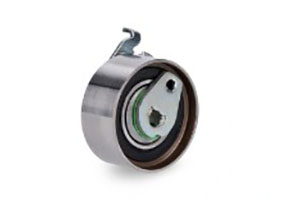
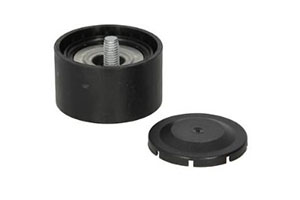
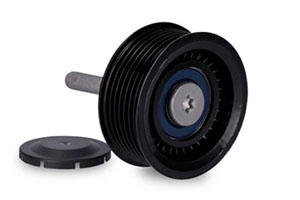
Pulley-only components designed to be pressed into an existing tensioner bracket. Selected when the bracket, spring and pivot remain fully functional. This approach lowers repair cost and material waste while delivering OE-grade bearing performance. Separate pulleys are also referred to as repair kits or deflection pulleys.
Integrated Tensioner Pulley Series
The following integrated tensioner pulley series are engineered as direct service replacements for OE tensioners from SKF, INA, Gates and Dayco. Each series targets specific vehicle brands and engine families. All units come with pre-assembled sealed bearings and calibrated spring mechanisms for consistent belt tension.
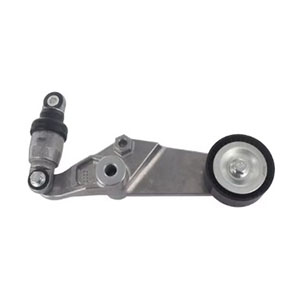
VKM Tensioner Series-Aftermarket integrated tensioner pulley range matching SKF VKM dimensions and spring characteristics. Compatible with numerous European and Asian passenger car timing and accessory drive layouts. Each unit comes with a pre-assembled sealed bearing and a calibrated spring mechanism for maintaining stable belt tension.
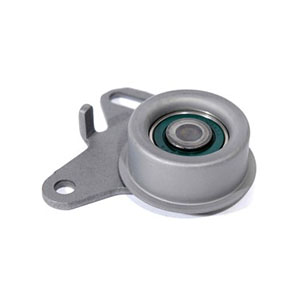
T43 Tensioner Series-Replacement tensioner pulley series corresponding to Gates T43 belt tensioners. Fits Japanese, European and American vehicle models equipped with serpentine accessory drives. Built with corrosion-resistant springs and long-life grease-filled bearings. A dependable alternative for professional belt system repairs.
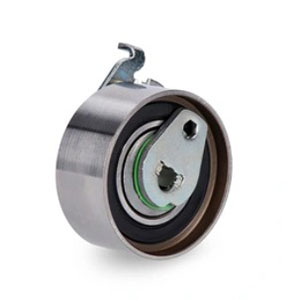
FT30 Tensioner Series-Aftermarket integrated timing belt tensioner pulley range designed to substitute INA FT30 components. Specifically developed for VW/Audi 1.8T and 2.0L four-cylinder engines. Provides correct damping force to minimize timing belt vibration. Direct-fit geometry matches original mounting points and belt alignment.
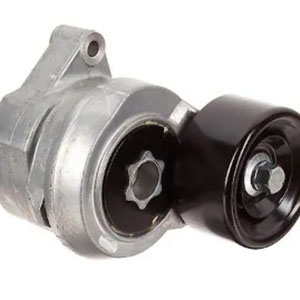
FT40 Tensioner Series-Integrated accessory drive tensioner pulley series compatible with INA FT40 units. Engineered for VW/Audi EA888 2.0T engine front end accessory drives. Features a heavy-duty spring mechanism that compensates for belt stretch and component wear. A high-quality alternative to dealer-supplied tensioners.
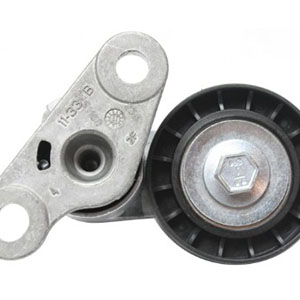
36 Tensioner Series-Accessory belt tensioner pulley series that interchanges with Dayco and Gates 36 series tensioners. Primarily serves GM LS family engines and GMT800 truck chassis (Silverado, Sierra, Suburban). Provides locked-center tensioning function along with integrated idler pulley action for serpentine belt systems.
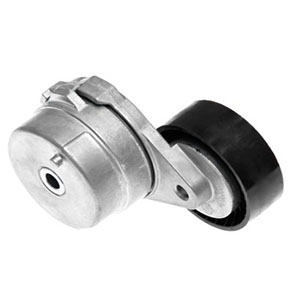
38 Tensioner Series-Aftermarket accessory belt tensioner pulley range serving as a substitute for Gates 38 series DriveAlign tensioners. Fits American, European and Asian passenger vehicles as well as light trucks. Precision-machined housing and pulley dimensions match original form, fit and functional requirements.
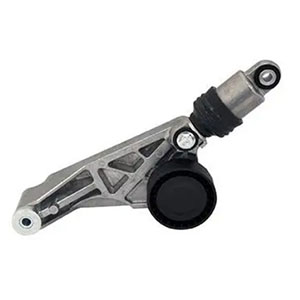
89 Tensioner Series-Heavy-duty integrated tensioner pulley series designed to replace Dayco No Slack 89 series units. Suitable for diesel engine accessory drives found in trucks and commercial vehicles. Implements flat spring technology to absorb high torque fluctuations, combined with a cast aluminum body for extra durability.
Separate Tensioner Pulley Series
The following separate tensioner pulley series are supplied as repair kits for original INA tensioner assemblies. They include the pulley and bearing only, allowing pulley replacement while retaining the original bracket and spring. These repair pulleys are dimensionally identical to OE components and are intended for outer race rotation.
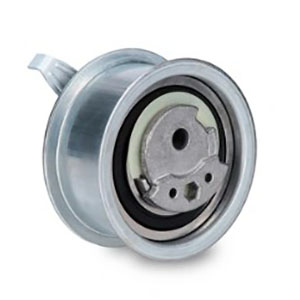
5310 Tensioner Series
-Separate tensioner pulley repair kit range matching INA 5310 timing belt tensioners. Includes only the pulley and bearing element for cost-conscious repairs when the tensioner bracket shows no wear. Designed for VW/Audi EA113 and EA827 engine families. A branded alternative for timing belt system maintenance.
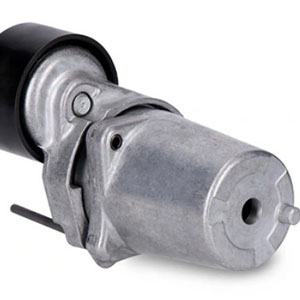
5320 Tensioner Series-Separate tensioner pulley kit series corresponding to INA 5320 accessory drive pulleys. Provides a sealed bearing unit pressed into a pulley, intended for outer race rotation — the typical operating mode for belt tensioner pulleys. Suitable for BMW N-series engine accessory drives and other European passenger cars.
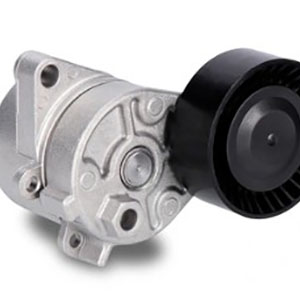
5330 Tensioner Series-Separate tensioner pulley repair kit range matching INA 5330 v-ribbed belt tensioners. Serves as a repair solution for original INA tensioner assemblies without replacing the entire mounting bracket. Features a precision-ground bearing manufactured to OE dimensional and material standards.
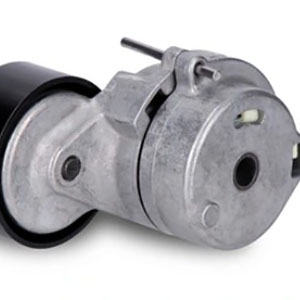
5340 Tensioner Series-Separate tensioner pulley kit series compatible with INA 5340 accessory drive belt tensioner assemblies. Offers consistent vibration damping and steady belt tension for front end auxiliary drive (FEAD) systems. A high-quality replacement choice for Volvo, Land Rover, BMW and Toyota vehicles.
Other Related Types
Beyond standard tensioner bearings, related components include idler pulleys, eccentric tensioners, and hydraulic damped units. These parts are often inspected and replaced during belt service.
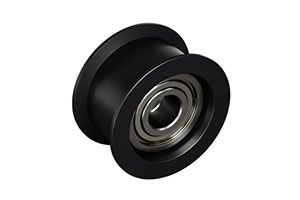
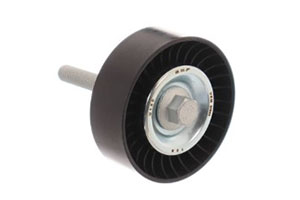
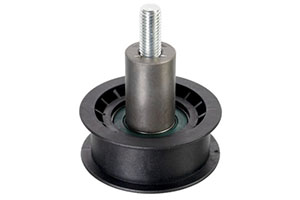
Fixed guide pulleys without tension adjustment mechanism. Used to redirect belt travel or increase belt wrap angle around accessories. Commonly replaced together with tensioner bearings. No spring-loaded arm present.
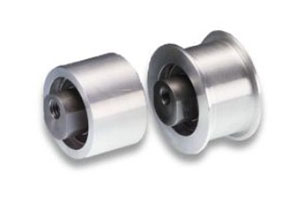
Bearing mounted on an offset bushing. Rotating the bushing changes belt tension manually. Found on some older or commercial vehicle accessory drives. Requires manual adjustment after installation.
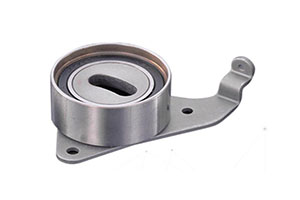
Integrated tensioner with a hydraulic damper instead of a mechanical spring. Provides controlled damping for timing belt systems on premium European vehicles. More complex but offers smoother operation.
Applications
Tensioner pulleys are installed in multiple engine belt systems. The following applications represent the most common replacement scenarios across passenger and commercial vehicles.

Maintains tension on the timing belt that synchronizes crankshaft and camshaft rotation. Pulley and bearing must endure high cyclic loads and precise positioning. Replacement every 60k-100k miles.
Drives alternator, power steering pump, AC compressor and water pump. Tensioner pulley absorbs belt length changes and vibration. Inspection recommended at every oil change.
Heavy-duty applications with higher torque pulses. Requires reinforced pulley bearings and flat spring technology (e.g., 89 series). Common in commercial trucks and vans.
High-load belt systems for air brakes, fan clutches and additional alternators. Uses larger diameter tensioner pulleys with cast aluminum housings. Extended service intervals.
Technical Comparison Articles
Two critical comparisons for belt drive repairs: choosing between integrated and separate tensioner pulleys, and correctly identifying tensioner pulley versus idler pulley.
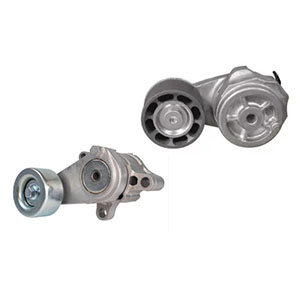
Integrated tensioners (VKM, T43, FT30, FT40, 36, 38, 89) replace the entire spring-loaded arm and pulley as one unit. Separate repair bearings (5310, 5320, 5330, 5340) are bearing-only kits for brackets still in good condition. This article compares cost, labor, OE interchange logic, and failure assessment for professional repair decisions.
For more details, please read “ Integrated vs. Separate Tensioner Bearings”.
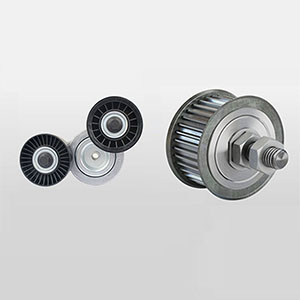
A tensioner pulley is mounted on a spring-loaded arm and automatically adjusts belt tension. An idler pulley is fixed and only redirects the belt or increases wrap angle. This guide explains visual identification, common failure symptoms (noise, wobble, wear patterns), and why tensioner bearings typically require more frequent replacement.
For more details, please read “Tensioner Pulley vs Idler Pulley: What is the Difference?”.
Related Product Recommendations
The following models are commonly requested in the aftermarket. DUHUI Bearing manufactures compatible units using OE specifications. Model numbers are provided for cross‑reference purposes only.
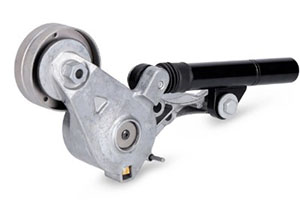
5330118100 Separate v-ribbed belt tensioner repair kit compatible with Schaeffler INA/LuK 5330118100. A high-quality branded alternative for BMW accessory drive repairs. Interchanges with Schaeffler INA 533011810 and LuK 5330118100.
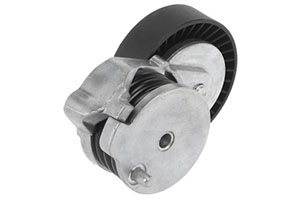
5340348100 Separate accessory drive belt tensioner assembly bearing for Toyota Crown, Reiz 2.5/3.0 (2005+), Highlander 3.5 (2009-2015), Lexus RX350 3.5 (2006+). Interchanges with INA 5340348100, Toyota OE 12563083.
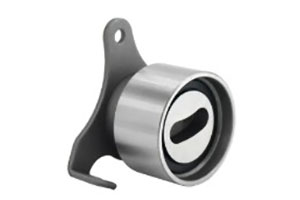
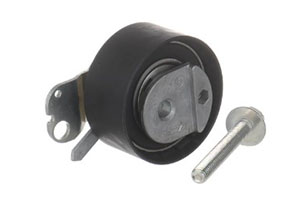
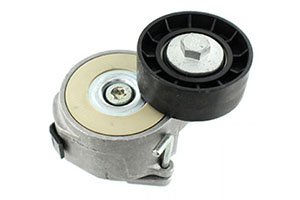
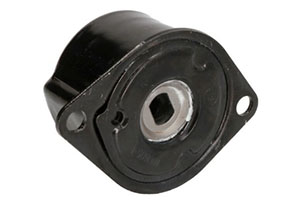
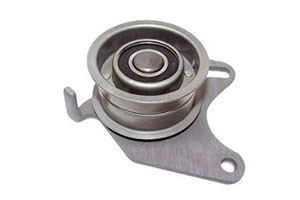
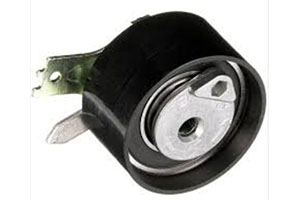
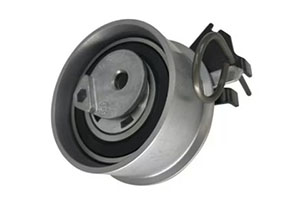
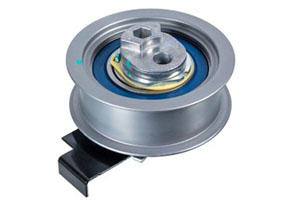
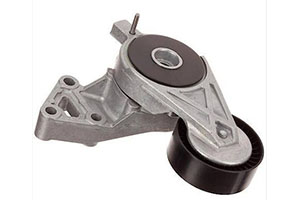
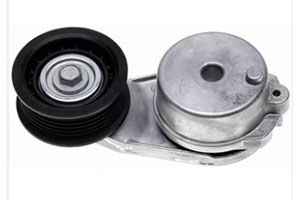
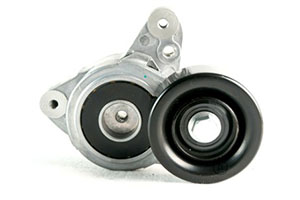
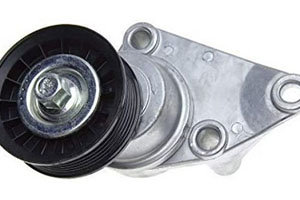
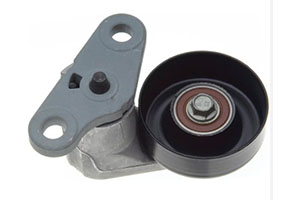
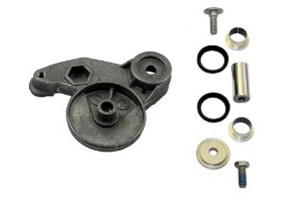
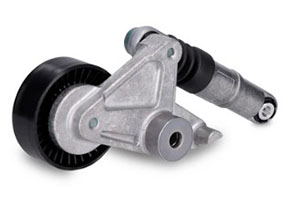
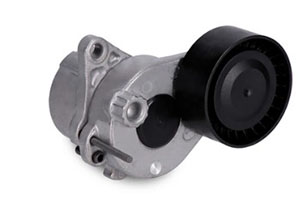
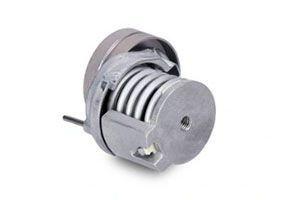
Understanding Tensioner Pulleys for Automotive Belt Systems
Modern internal combustion engines rely on belts to drive critical systems — the alternator, power steering pump, air conditioning compressor, and sometimes the water pump. At the heart of every belt system is a small but vital component: the tensioner pulley. Have you ever heard a chirping noise from under the hood that changes with engine speed? That’s often a failing tensioner pulley. This section explains what tensioner pulleys are, how they work, how to recognize failure, and how to choose the right replacement.
What Is a Tensioner Pulley and How Does It Work?
A tensioner pulley is a spring‑loaded or hydraulically damped wheel that maintains correct tension on engine drive belts. The tensioner consists of a pulley wheel, a sealed bearing pressed into the pulley hub, and a tensioning arm with an internal spring. The spring applies constant force against the belt, automatically compensating for belt stretch, temperature changes, and engine load variations. Without proper tension, belts can slip, skip teeth, or fail — leading to engine damage or loss of alternator charging, power steering, and air conditioning.
Types of Tensioner Pulleys
Integrated Tensioner Pulley Assemblies
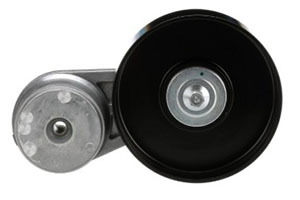
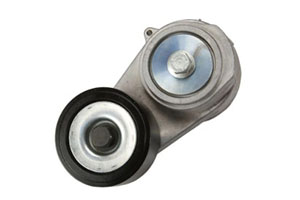
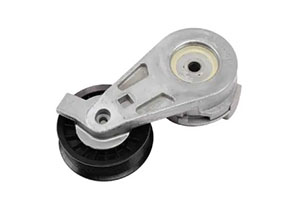
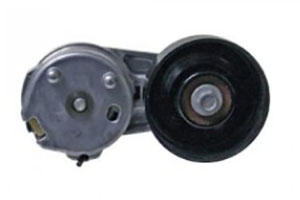
These come as a complete unit: spring arm, pivot bushing, pulley, and bearing pre‑assembled. They are common in timing belt systems and modern serpentine drives. Replacing the whole assembly ensures all wear parts are renewed at once. Most vehicles use this design.
Separate Tensioner Pulleys (Repair Pulleys)
These are sold as a pulley with bearing only, without the spring arm or bracket. They fit into existing tensioner brackets. This offers a cost‑effective repair when only the pulley bearing has failed but the tensioner spring and arm remain functional. It’s popular for DIY replacements and certain vehicle models such as Subaru and older Volvo.
Tensioner Pulley vs. Idler Pulley — Key Differences
| Tensioner Pulley | Idler Pulley |
|---|---|
| Mounted on a spring‑loaded arm | Mounted on a fixed frame |
| Actively applies tension to the belt | Passively guides the belt, changes direction |
| Automatic, continuous adjustment | No adjustment – fixed position |
In short: idler pulleys guide the belt; tensioner pulleys tighten the belt.
Materials and Lubrication — What Makes a Quality Tensioner Pulley?
Pulley wheel materials vary: reinforced plastic (lightweight, low noise) for accessory drives, or cast iron and steel for high‑load timing belts and diesel engines.
Bearings inside tensioner pulleys use SAE 52100 chrome steel (also known as 100Cr6, SUJ2, or GCr15). This high‑carbon chromium alloy provides hardness (HRC 62–65), wear resistance, and fatigue strength under cyclic loading. Through‑hardening and precision grinding ensure dimensional stability and low noise.
Seals keep contaminants out and grease in. Two common seal materials:
- NBR (Nitrile Rubber) – Good for general use, mineral oils, and greases.
- FKM (Viton®) – Superior heat resistance (up to about 150°C) and chemical resistance; preferred for heavy‑duty or high‑temperature environments.
Lubrication is specialized. Tensioner pulley bearings undergo oscillating motion, not continuous rotation. Standard electric motor greases fail here. Quality bearings use lithium complex or polyurea greases with high‑viscosity base oils that maintain film strength under low‑speed, high‑torque conditions and resist oxidation at under‑hood temperatures.
Common Signs of Tensioner Pulley Failure
- Chirping, squealing, or grinding noises from the belt area — often worse at cold start or when changing RPM.
- Belt slippage, flutter, or misalignment — visible vibration or tracking off‑center.
- Wobbling or play in the pulley — a failing pulley bearing allows axial or radial movement.
- Grease leakage around seal lips — indicates seal damage and imminent bearing failure.
- Roughness when spun by hand — with the belt removed, spin the pulley. If it feels gritty, has resistance, or spins more than two full rotations freely, the pulley bearing is bad.
Replacement Intervals and Service Life
- Timing belt systems: Replace tensioner pulley with the timing belt every 60,000–100,000 miles (or per manufacturer).
- Accessory (serpentine) belt systems: Inspect at 60,000 miles; replace around 90,000 miles.
Critical rule — replace belts and tensioner pulleys together. An old tensioner will sharply reduce a new belt’s life, and vice versa. Since belt removal is required to change a tensioner pulley, doing both at once saves labor and extends system life.
How a Faulty Tensioner Pulley Affects Performance
A failing tensioner pulley does more than make noise. It can:
- Increase parasitic drag — the engine works harder to turn the belt drive, using more fuel.
- Reduce alternator output — belt slippage lowers charging voltage, affecting ignition and fuel injection efficiency.
- Degrade accessory performance — weak A/C, power steering, or water pump function.
While the exact impact varies, some owners notice a small drop in fuel economy (roughly 1–2 MPG) when tensioner issues persist.
Selecting the Right Replacement Tensioner Pulley
- Verify application — match your vehicle’s year, make, model, and engine size.
- Choose quality brands — OE suppliers include INA (Schaeffler), SKF, Gates, Dayco, Koyo (JTEKT). Premium aftermarket brands offer comparable or superior quality.
- Consider a full kit — timing belt kits often include tensioner pulley, idler pulleys, belt, and water pump — the most cost‑effective approach.
Note: For high‑mileage vehicles, replacing the complete integrated assembly is more reliable than installing a separate repair pulley. Always consult your service manual.
Practical Replacement Tips
- Work on a cold engine — never install belts or tensioners on a hot engine.
- Relieve belt tension using a breaker bar or serpentine belt tool on the tensioner arm before removal.
- Clean the mounting surface — dirt or debris can cause misalignment.
- Torque fasteners to spec — over‑tightening distorts the bearing housing; under‑tightening causes wobble.
- Spin the new pulley by hand before installation to ensure smooth operation.
Tensioner Pulley Failure Diagnosis and Replacement Guidelines
Without proper tension, belts can slip, skip teeth, or fail prematurely — leading to engine damage or loss of alternator charging, power steering, and air conditioning. How can you tell if a tensioner pulley is failing before it leaves you stranded? This guide covers diagnosis procedures, failure causes, replacement intervals, and installation guidelines for tensioner pulleys.
How to Diagnose Tensioner Pulley Failure
Noise Diagnosis – Chirping, Squealing, and Rattle
A chirping or squeaking sound at idle that changes with engine speed often indicates a failing tensioner pulley bearing, typically from lack of lubrication or raceway spalling. A rattle or knocking sound suggests a worn pivot bushing or loose tensioner arm. To isolate the source, remove the drive belt and run the engine briefly. If the noise disappears, the issue is in the belt drive system, likely the tensioner pulley or idler pulley.
The Hand‑Spin Test
Remove the belt or timing cover, then rotate the tensioner pulley by hand. A healthy pulley spins smoothly with light grease seal drag. Indicators of failure:
- Excessive free rotation — More than two full turns means grease loss; replace the pulley.
- Roughness or resistance — Grinding feel or noise indicates bearing failure.
- Sticky or notchy movement — Hesitation or binding during rotation.
Visual Inspection Checklist
Before the hand‑spin test, inspect for:
- Belt tracking — Belt running off‑center or off pulley edge indicates misalignment or bushing wear.
- Uneven wear patterns — Polished edges or uneven belt contact point to pulley wobble.
- Rust bleed — Rust dripping or bleeding between tensioner arm and base signals internal wear.
- Grease leakage — Oil or grease around pulley seals means seal failure; bearing will run dry.
- Metal‑to‑metal contact — Shiny streaks or gouges on the tensioner arm or housing mean component failure.
- Cracks — Inspect tensioner stops, mounting bracket, and pulley housing for visible cracks.
What Causes Tensioner Pulley Failure?
- Contamination — Dirt, sand, or oil from engine leaks entering through damaged seals (leading cause).
- Over‑tensioning — Excessive belt load accelerates raceway fatigue and pulley wear.
- Under‑tensioning — Belt slip generates heat that degrades grease and pulley surface.
- Age‑related grease oxidation — After 50,000–70,000 miles, lubricating properties diminish.
OE Replacement Intervals and Standards
- Timing belt tensioner pulleys — Replace with timing belt, typically every 60,000–100,000 miles (96,000–160,000 km). Koyo recommends replacement after 5 years or 100,000 km.
- Accessory belt tensioner pulleys — Inspect at 60,000 miles; replace by 90,000 miles. Replace belt and tensioner pulley together as a system.
Integrated Tensioner Pulley Assembly vs. Separate Pulley Replacement
When a tensioner fails, two options exist:
- Integrated assembly — Replace entire unit if the spring is weak, pivot seized, bearing noisy, or housing cracked. Never replace just the pulley on a used tensioner assembly.
- Separate repair pulley — Use only when the bracket and spring are fully functional and no cracks, preload loss, or pivot wear exists. Some vehicles (e.g., certain Subaru, older Volvo) are designed for separate pulley replacement. Always consult your service manual.
Tensioner Pulley Installation Tips
- Work on a cold engine — never install belts or tensioners hot.
- Use the correct tool (T50 Torx or 3/8″ square drive) to relieve tension — never pry on the pulley.
- Document belt routing before removal (photo or sketch).
- Clean the mounting surface to prevent misalignment.
- Torque in three stages — 1/3 torque in star pattern, then 2/3, then final spec. Over‑torquing distorts raceways; under‑torquing causes wobble. Many M8 bolts require about 34 Nm (40 ft‑lbs). Verify in service manual.
- Spin the new pulley by hand to verify smooth operation.
- After installation, rotate engine manually two full revolutions and re‑check belt tension and alignment.
Materials That Affect Tensioner Pulley Life
Quality tensioner pulleys use SAE 52100 chrome steel (HRC 60–64) for bearings. Pulley wheels are either reinforced plastic (lightweight, low noise) for accessory drives or cast iron/steel for high‑load applications. Seals are double‑lip contact type: NBR for standard use, FKM for high‑temperature diesel engines. Lubrication is lithium‑complex or polyurea grease — never standard electric motor grease. These materials directly influence pulley longevity and help identify quality replacement parts.
Conclusion
Diagnosing a failing tensioner pulley comes down to three things: listening for chirping or rattling noises, performing the hand‑spin test, and visually checking for rust, grease leaks, or cracks. Most tensioner pulleys need replacement between 60,000 and 100,000 miles, always together with the belt. Choose between an integrated assembly or a separate repair pulley based on the condition of the spring and bracket. Follow proper torque procedures and work on a cold engine. A correctly installed tensioner pulley will keep your belt system reliable for another full service interval.
Tensioner pulleys are small but mission‑critical components. Understanding their function, recognizing early failure signs, and adhering to replacement intervals (60,000–100,000 miles) will prevent costly engine damage and keep your vehicle’s belt systems operating reliably. Always replace belts and tensioners together, choose quality parts from reputable brands like INA, SKF, Gates, or Koyo, and consult your service manual for specific guidance. If you’re unsure about any step, a qualified mechanic can help you get it right.
Timing belt tensioner pulleys should be replaced with every timing belt change, typically every 60,000-100,000 miles (96,000-160,000 km). Accessory belt tensioner pulleys have no fixed interval but should be inspected at each oil change and replaced if noisy, leaking, or showing free play.
Yes, if the tensioner bracket and spring mechanism are in good condition. Separate tensioner pulleys (repair pulleys, e.g., 5310, 5320, 5330, 5340 series) are designed for this scenario. However, if the bracket is cracked, the spring has lost tension, or the pivot bushing is worn, you must replace the entire integrated tensioner assembly.
Yes. Belts and tensioner pulleys wear together. Replacing only one will significantly shorten the life of the new component. Always replace belts and tensioners as a set.
A tensioner pulley is mounted on a spring-loaded arm and automatically adjusts belt tension. An idler pulley is fixed – it does not adjust tension, only guides the belt or changes its wrap angle. Tensioner pulleys experience oscillating loads, while idler pulleys typically rotate continuously.
Common causes include: contamination from oil or coolant leaks, over-tensioning of the drive belt, under-tensioning causing belt slip and heat, grease degradation due to age, and improper installation (e.g., hammering on the pulley).
A chirping or squeaking sound that changes with engine speed indicates a dry or spalled bearing inside the pulley. A rattle or knock suggests a loose tensioner arm or worn pivot. Listen near the belt drive with a mechanic’s stethoscope or a long screwdriver placed against the tensioner bracket.
Specifications vary by vehicle. Many M8 bolts require approximately 34 Nm (40 ft-lbs). Always tighten in three stages using a star pattern and verify the correct specification in your vehicle’s service manual. Over-torquing distorts bearing raceways; under-torquing causes wobble.
Yes. Belt slippage can reduce alternator output (low charging voltage), slow down the water pump (engine overheating risk), and impair power steering or A/C function. In timing belt systems, a seized tensioner pulley can cause belt breakage and valve-to-piston contact on interference engines.
Rust bleeding (reddish-brown stains dripping between the tensioner arm and pulley base) indicates internal component wear. The bearing or pivot has lost its protective coating and is failing. Replace the tensioner pulley immediately.
Quality aftermarket manufacturers like DUHUI Bearing use SAE 52100 chrome steel bearings, double-lip seals, and high-temperature greases that meet or exceed OE specifications. Interchange numbers (e.g., VKM, FT30, 5310 series) ensure dimensional and functional compatibility with original INA, SKF, Gates and Dayco tensioner pulleys.
For integrated tensioner assemblies: a serpentine belt tool (often a 3/8″ square drive or T50/T60 torx bit), socket set, and torque wrench. For separate repair pulleys: a press to remove and install the pulley into the bracket, plus circlip pliers if the pulley has a retaining ring.
Possible causes: incorrect belt routing, mismatched belt length or type (e.g., using a standard belt on a stretch-fit system), misaligned pulleys from a damaged bracket, or a defective new pulley bearing. Double-check interchange numbers and inspect all adjacent pulleys.
Sometimes, but you must verify by OE interchange numbers. Many tensioner pulleys are shared across vehicle brands within the same manufacturer group (e.g., VW/Audi/Seat/Skoda). The product tables above provide cross-references. When in doubt, compare dimensions (outer diameter, inner diameter, width) and spring rotation direction.