Quick Answer: What Is an Idler Pulley and When Should You Replace It?
An idler pulley is a non-driven wheel that rotates freely on a sealed bearing. Its job is to guide the belt, maintain proper belt routing, and increase belt wrap angle. You likely need to replace it if you notice:
- Squealing or chirping – high‑pitched noise that changes with engine RPM
- Pulley wobble – the idler does not spin true
- Belt misalignment – belt rides to one side or shows uneven edge wear
- Grinding or rumbling – internal bearing damage
- Excessive free spin – when spun by hand, the pulley rotates more than 1‑2 revolutions (loss of grease)
Most idler pulleys last between 50,000 and 100,000 miles (80,000‑160,000 km). Many mechanics recommend replacing them when the serpentine belt is changed, typically every 90,000 miles.
A worn or failing idler pulley can cause belt squeal, accessory failure, and even engine overheating. How do you tell if an idler pulley is bad, and what should you consider when replacing it? This guide covers idler pulley definition, types, failure symptoms, selection criteria, installation steps, and cost estimates. It also explains the critical differences between an idler pulley and a tensioner pulley.
What Is an Idler Pulley?
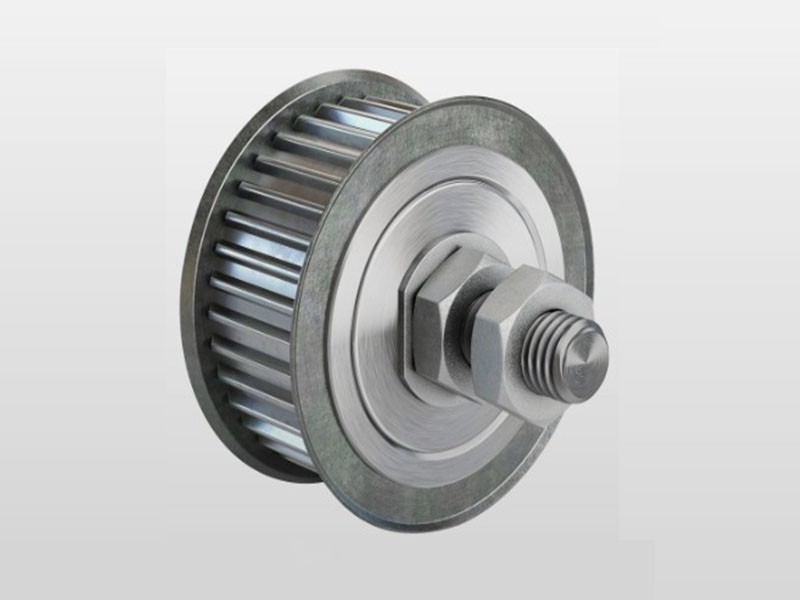
An idler pulley is a non-powered wheel that is part of a belt drive system. Unlike a drive pulley or a driven pulley, it does not transmit power. Instead, it rotates freely on a sealed bearing and serves to guide, support, or apply tension to the belt, performing four essential functions.
Core Functions of an Idler Pulley
- Applying tension – In some layouts (especially older or fixed-center systems), the idler pulley pushes against the belt to maintain enough friction, preventing slip and ensuring consistent power transfer to vital components like the alternator, water pump, and hydraulic pumps.
- Guiding the belt path – In crowded engine compartments, the belt must go around obstacles such as alternators, water pumps, and A/C compressors. Idler pulleys redirect the belt and prevent it from rubbing against engine components.
- Increasing wrap angle – By pressing the belt against a driving or driven pulley, the idler increases the contact arc, improving torque transfer and reducing the risk of belt slip.
- Damping vibration – A healthy idler pulley reduces belt flutter, vibration, and oscillation. This increases belt life and prevents premature wear on bearings in accessory components.
Idler Pulley vs. Tensioner Pulley
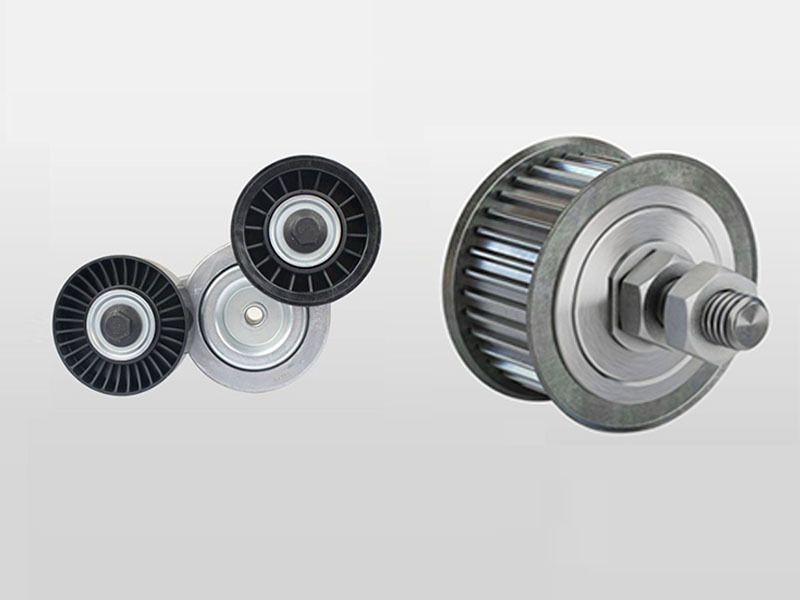
These two components are often confused, but they serve distinct roles in a serpentine belt system. A tensioner pulley uses a spring-loaded arm or a hydraulic actuator to apply the proper pressure and help keep the belt tensioned and aligned. The idler pulley is bolted directly to the engine or bracket and serves as a fixed guide to wrap the belt in the correct direction.
| Feature | Idler Pulley | Tensioner Pulley |
|---|---|---|
| Primary function | Guides the belt, maintains a fixed position | Applies and maintains belt tension automatically |
| Adjustment | Fixed mounting, non-adjustable | Spring-loaded arm or hydraulic damper |
| Mounting hole | Round, precisely located | Slotted or eccentric to allow arm movement |
| Location | Any point that needs redirection or support | Usually near the longest belt span, opposite the crankshaft pulley |
In modern automotive accessory drives, the tensioner pulley is part of a tensioner assembly that includes a spring arm and a damping mechanism. The idler pulley is simply a wheel with a bearing, bolted directly to the engine or bracket.
Types of Idler Pulleys
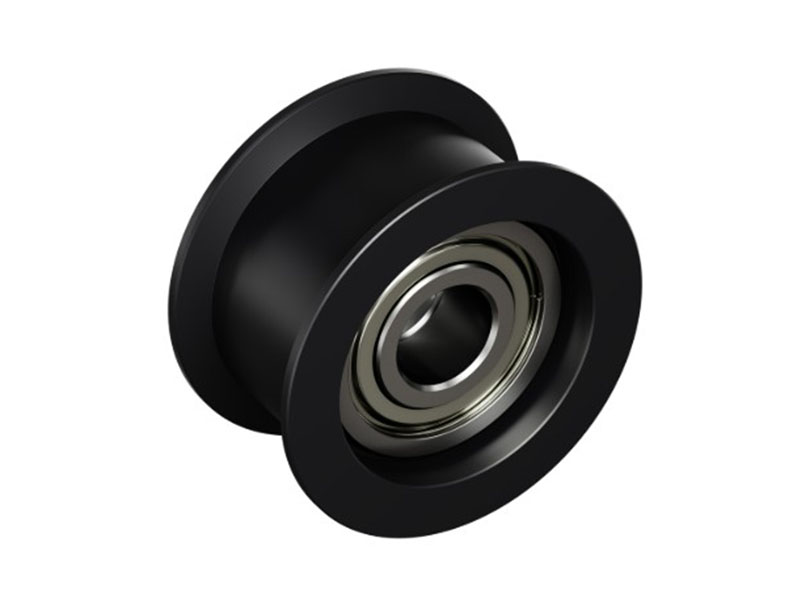
Selecting the correct idler pulley requires understanding its surface, material, and application.
By Surface Profile
- Grooved idler pulley – Features V‑shaped or multi‑ribbed grooves that match the ribbed side of a serpentine or V‑ribbed belt. In automotive and most industrial drives, this type contacts the belt’s ribbed side. For precision equipment such as 3D printers that use timing belts (synchronous belts), the idler is typically smooth and flat – grooved pulleys are not used with timing belts.
- Smooth (flat) idler pulley – Has a flat or slightly crowned surface. It contacts the back (smooth side) of the belt. A crowned surface helps the belt self‑center, reducing edge wear. Smooth pulleys are also used with timing belts in 3D printers and other light‑duty synchronous drives.
Critical note: Using the wrong surface type will shred a serpentine belt in minutes. Always match the replacement to the original pulley profile.
By Material
- Stamped steel – Economical for high‑volume applications. Sufficient for passenger cars in normal conditions.
- Cast iron – Offers high strength, wear resistance, and vibration damping. Preferred for heavy‑duty trucks, construction equipment, and high‑load industrial drives.
- Fiberglass‑reinforced nylon – Lightweight, corrosion‑resistant, and quiet. Common in lawn equipment and appliances where moisture or washdown is frequent.
- Machined (billet) aluminum or steel – Used for custom or low‑volume applications where precise dimensions are required.
By Application
- Heavy equipment – Excavators, tractors, wheel loaders, and other off-road machinery. Built for extreme tension and heat. Look for solid steel construction and high-load, sealed bearings to protect against dust and moisture.
- Lawn & garden equipment – Riding mowers and garden tractors, for tensioning blade and drive belts. Lighter construction, often using stamped steel or composite plastic. Designed for lower horsepower.
- Household appliances – Residential clothes dryers. A small, often plastic part for low-load, low-heat use, showing why using an application-specific pulley is essential for reliability.
- 3D printers and light robotics – Small, smooth idler pulleys (often with ball bearings) that guide timing belts. Low torque, high cycle life requirements.
Idler Pulley Assembly Components
A complete idler pulley assembly typically includes:
- Pulley wheel – The part that contacts the belt. It may be grooved or smooth.
- Bearing – The most critical component. Most idler pulleys use a pre‑lubricated, sealed deep groove ball bearing. The bearing’s internal clearance, grease type, and seal design determine service life under specific temperatures and speeds.
- Mounting bolt – Fastens the pulley to the bracket or engine block.
- Bushing or spacer – Ensures correct alignment.
- (For a tensioner assembly only: tensioner arm, spring, and pivot bushing.)
From a bearing manufacturer’s perspective, idler pulley failures are overwhelmingly bearing‑related: loss of grease, seal damage, brinelling from impact, fatigue spalling, or thermal degradation.
Symptoms and Diagnosis of a Failing Idler Pulley
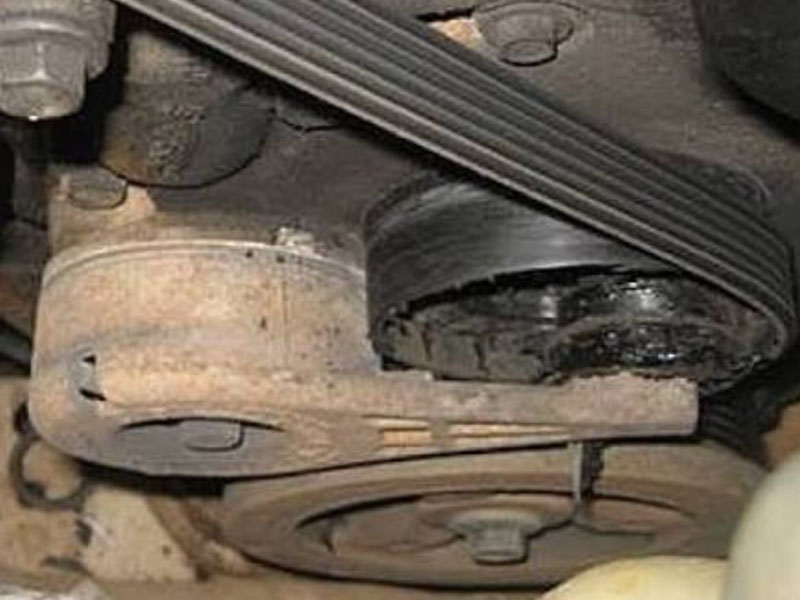
Early recognition of idler pulley problems prevents belt damage and unexpected breakdowns.
Common Failure Indicators
1. Unusual noise – A high‑pitched squeal, chirp, or whine that changes with engine RPM. This is the most frequent early sign. A worn or dry idler pulley bearing will produce: high-pitch squeal during startup, chirping that increases with RPM, and grinding noises from metal-on-metal wear.
| Noise Type | Likely Cause | Severity |
|---|---|---|
| Squealing / chirping | Bearing wear, loss of lubrication, or slight misalignment | Medium |
| Rattling / clicking | Loose bearing balls or damaged retainer | High |
| Grinding | Severe bearing wear, cage failure, or a seized ball | High |
| Rumbling | Belt tracking off‑center or a grooved pulley worn smooth | Medium |
| Burning smell | Seized pulley causing belt friction | Critical |
2. Visible belt wear or misalignment – If the idler pulley is wobbling, the belt may begin to track incorrectly. Symptoms include belt walking off the pulley, uneven belt wear, and shredded belt edges. Misaligned belts can snap unexpectedly.
3. Pulley wobble or abnormal rotation – With the belt removed, spin the idler pulley by hand. A healthy pulley rotates smoothly with slight resistance. A failing pulley feels loose, gritty, or uneven. If it spins more than one or two revolutions (too freely), the grease has degraded and the bearing will fail soon. Seized bearings indicate the pulley will lock up. Rock the pulley back and forth – there should be no noticeable side‑to‑side movement.
4. Accessory malfunctions – A slipping belt due to a dragging idler can cause low alternator output (battery light on), power steering difficulty, weak air conditioning, or engine overheating (water pump under‑driven). A blocked water pump can cause the belt to slip over the blocked pulley, leading to plastic idler pulley melting.
5. Burning smell – Belt slip generates friction heat and a burnt rubber odor. Overheating may occur if the water pump speed drops significantly.
Quick Diagnostic Tests
- Visual inspection – Look for cracks, missing chunks, rust, excessive wear (common on vehicles operated in dusty environments), surface build-up, or grease leakage around the bearing seal.
- Hand spin test – As described above. Any roughness, play, or abnormal free‑spin indicates replacement is needed.
- Wobble test – Try to rock the pulley sideways. More than 1‑2 mm of axial play suggests bearing wear or housing deformation.
- Water spray test – With the engine idling, carefully spray a small amount of water on the belt. If the noise stops temporarily, the belt is slipping (often due to insufficient tension). If the noise remains, the idler pulley bearing or tensioner bearing is likely the source.
Why Idler Pulleys Fail: Bearing Failure Analysis
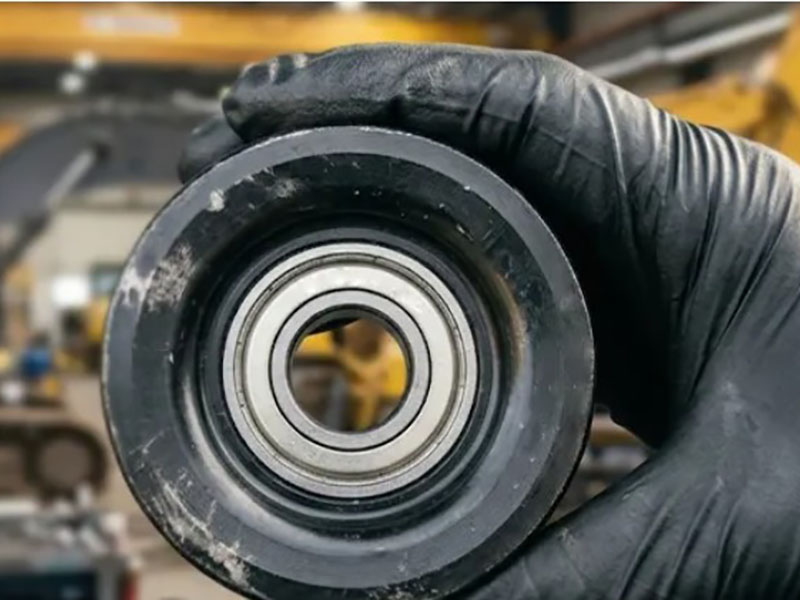
Understanding the root causes of bearing failure helps in selecting durable replacements and preventing premature issues. Based on DUHUI Bearing‘s manufacturing experience, the following failure modes are most common in idler pulley applications.
- Lubricant loss and contamination – The bearing’s seal becomes compromised, allowing grease to leak out or contaminants (dirt, moisture) to enter. This increases friction and heat, accelerating wear. A free‑spinning pulley (more than 1‑2 revolutions when spun by hand) is a strong indicator of grease depletion.
- Fatigue spalling – Under cyclic loading, the bearing raceways develop surface pitting or flaking. This creates a grinding sensation when rotating and generates metallic noise. Fatigue spalling is the most dominant type of damage found in failed idler roller bearings.
- False brinelling – When a vehicle or equipment sits stationary for extended periods, vibration from nearby machinery or passing traffic causes the rolling elements to oscillate and wear small depressions into the raceways. This creates a “washboard” pattern and leads to early failure once operation resumes, even though the bearing was not overloaded during use.
- Thermal degradation – Excessive belt slip (from a seized accessory or improper tension) or insufficient heat dissipation causes bearing temperatures to rise beyond the grease’s rated range. The grease breaks down, loses its lubricating properties, and the bearing eventually seizes. Discoloration on the pulley can be caused by intermittent seizure of the pulley bearing or a bad tensioner, resulting in belt slip.
- Misalignment-induced wear – Worn bearings allow the pulley to tilt, causing misalignment. Misaligned pulleys create belt chirp noise and accelerate both belt and bearing wear.
For maximum service life, choose idler pulleys with high‑grade sealed bearings (double rubber seals, high‑temperature grease) and inspect them regularly.
How to Choose the Right Idler Pulley
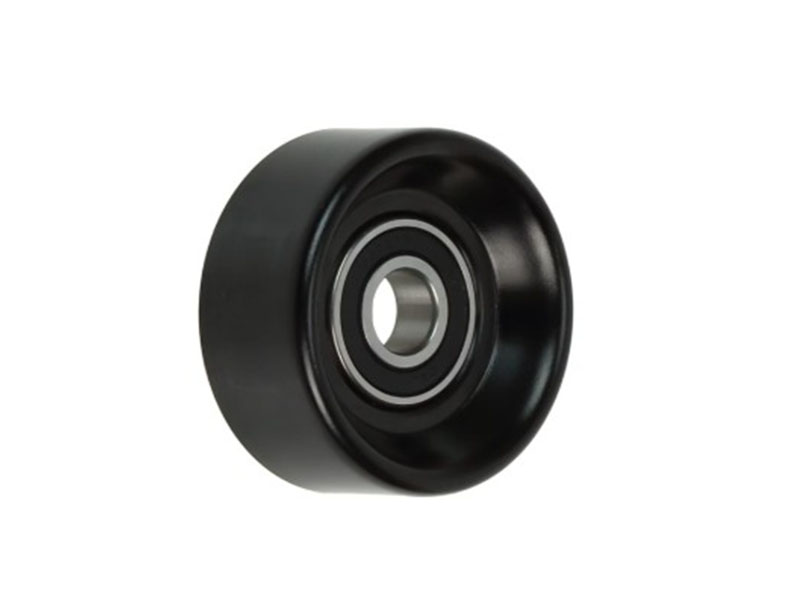
Selecting a replacement idler pulley requires matching several parameters. Choosing the right idler pulley means matching the part to the job. A pulley for a dryer will not survive on an excavator.
Key Matching Factors
- Surface type – Grooved for the belt’s ribbed side; smooth for the back side (or for timing belts). Never guess: inspect the original part or consult the vehicle’s parts catalog.
- Dimensions – Outer diameter (OD), width, bearing inner diameter (ID), and bolt thread size. Even a 1 mm difference in offset can cause belt misalignment.
- Bolt torque specification – Torque varies significantly by vehicle model. For example:
- General reference for metric bolts (not vehicle‑specific): M8 = 25 N·m / 16-24 ft·lbs; M10 = 70 N·m / 40-48 ft·lbs; M12 = 115 N·m. Always verify with your vehicle’s service manual.
- GM first design (curved shield, non‑captive washer): 47 N·m (35 lb‑ft)
- GM second design (flat shield, captive washer): 27 N·m (20 lb‑ft)
- Infiniti G37 (three idlers): 28 N·m (21 lb‑ft) – as reported in owner forums; confirm with factory data if available.
Always consult the manufacturer’s workshop manual for the exact specification for your vehicle.
OEM vs. High‑Quality Aftermarket
- OEM – Guaranteed fit and durability, but higher price.
- Aftermarket – More economical. Choose brands that specify compliance with OEM dimensions, materials, and bearing standards. A quality aftermarket idler pulley should use a double‑sealed bearing with high‑temperature grease (-40°C to +120°C or better). DUHUI Bearing manufactures precision bearings that meet or exceed these requirements for idler pulley applications.
Replace as a Set
When replacing the serpentine belt or timing belt, it is wise to replace all idler pulleys and the tensioner pulley at the same time. These components have similar service lives (typically 100,000–150,000 km / 60,000–90,000 miles). Replacing only one worn part leaves older components that may fail soon, causing a second labor charge. In most cases it is recommended to replace the idler pulley at the same time as the belt tensioner.
Idler Pulley Replacement and Installation
Replacing an idler pulley is a moderate DIY task for many vehicles. The following steps are generic; always refer to the specific vehicle repair manual.
Basic Replacement Procedure
- Disconnect the battery – For safety, always disconnect battery and wear appropriate safety equipment before performing any work under the hood.
- Relieve belt tension – Use a belt tensioner tool or a breaker bar on the tensioner pulley bolt to lift the tensioner away from the belt. Never cut or pry the belt off while under tension.
- Remove the belt – Slip the belt off one pulley. Look for the OE belt routing diagram located under the hood or on the front support panel. If unavailable, make a simple sketch to aid reinstallation prior to belt removal.
- Remove the old idler pulley – Remove the idler mounting bolt(s) and idler from the engine. Note any spacers or washers.
- Clean the mounting surface – Ensure that the idler mounting surface is clean and free of debris before installing the new idler.
- Install the new idler pulley – Obtain the new pulley assembly from the package. Ensure that all packaging material is removed from the idler pulley prior to installation. Do not reuse the old dust shield or bolt with the new pulley – they may have stripped threads or deformation.
- Torque to specification – Use a calibrated torque wrench. Torque the mounting bolt to the recommended value (M8 = 25 N·m; M10 = 70 N·m; M12 = 115 N·m, or as specified by the vehicle manufacturer).
- Reinstall the belt – Follow the original belt routing diagram. Ensure the belt is properly seated in all pulley grooves and routed correctly.
- Final check – Start the engine for 30 seconds, then turn it off. Re‑inspect the belt alignment and that the belt is seated and tracking properly. Re-check the bolt torque if required by the manual.
Important Installation Notes
- Remove all packaging material. Some pulleys have a protective cap or tape over the bearing – remove it before installation.
- Ensure the belt rides centered on the new pulley. If it tracks to one edge, re‑check the spacer arrangement.
- If the idler pulley is part of a timing belt system (e.g., on some overhead cam engines), follow the timing alignment procedure exactly. Rotating the camshaft or crankshaft without the belt can cause valve/piston contact.
- For idler pulleys on 3D printers or small machinery: first loosen the belt tension adjustment, replace the pulley, then re‑tension according to the manufacturer’s deflection specification.
Post-Replacement Verification and Testing
To ensure the replacement was performed correctly, the following validation steps are recommended:
- Pre-start inspection – Confirm the mounting bolt has been tightened to the specified torque. Verify the belt is correctly seated in all pulley grooves with no edge tracking issues.
- Static rotation test (belt off) – Before reinstalling the belt, rotate the new pulley by hand. A new bearing should exhibit slight damping resistance from the grease. If it feels gritty, rough, or does not rotate at all, there may be an installation defect or a faulty part. If it spins too freely (more than 1-2 revolutions), the grease level may be insufficient and the bearing is likely to fail prematurely.
- Idle auscultation – Start the engine and listen for any abnormal noise. Using a mechanic’s stethoscope or a long screwdriver placed against the idler mounting bracket allows the bearing’s operating sound to be clearly heard. Compare the sound with other idler pulleys if multiple are present.
- Infrared temperature measurement – After the engine reaches normal operating temperature, measure the temperature of the idler pulley body with an infrared thermometer. If one pulley shows a significantly higher temperature than others, it indicates excessive friction within that bearing.
- Road test recheck (automotive applications) – After a short test drive, re-inspect belt tracking and re-check bolt torque if specified by the manufacturer’s procedure.
Safety reminder: Remove all tools from the engine after the installation is completed.
Idler Pulley Replacement Cost
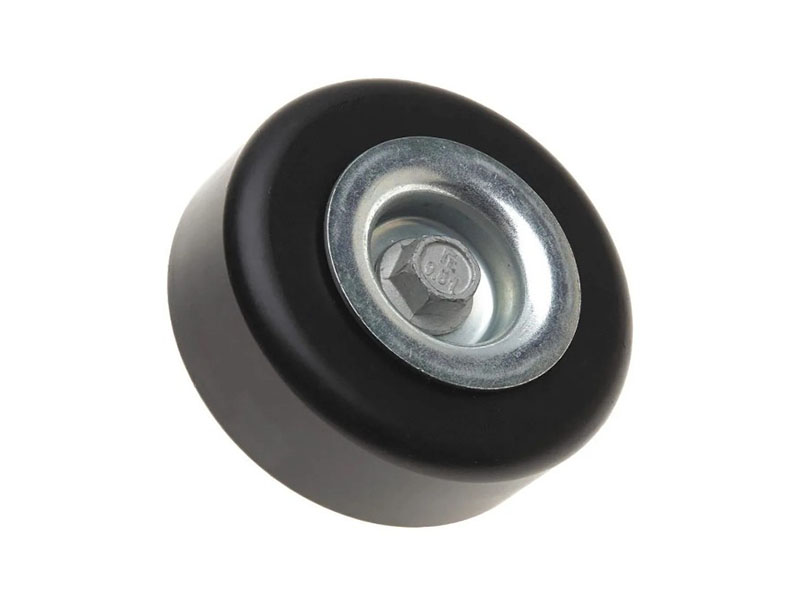
For passenger cars and light trucks, the total cost to replace one idler pulley (parts and labor) typically ranges from $151 to $320 in the United States.
- Parts: $20 – $100 (depending on brand, material, and whether it is an idler alone or a tensioner assembly)
- Labor: $140 – $170 (based on 1‑1.5 hours at average shop rates)
Factors that affect the final cost:
- Vehicle model and number of idler pulleys (some engines use two or three idlers)
- OEM vs. aftermarket parts
- Simultaneous belt replacement adds about $150–$250 (part + labor)
- Geographic location and shop hourly rate
For heavy equipment, agricultural machinery, or industrial applications, idler pulley costs are significantly higher, and prices vary by machine model. Request a quote with the exact OEM part number.
Maintenance Tips to Extend Idler Pulley Life
Although idler pulleys are often considered maintenance‑free (sealed bearing), a few practices can maximize their service life.
- Periodic visual inspection – Every oil change or every 15,000 km, look for grease seepage, cracks, or rust on the pulley. Check for excessive wear, especially on vehicles operated in dusty environments.
- Keep the belt clean – Oil, coolant, or power steering fluid contamination accelerates bearing seal degradation and belt slip.
- Replace the belt on schedule – An old, hardened belt places higher radial load on the idler bearing.
- Use correct belt tension – Too loose causes slip and heat; too tight overloads the bearing. Follow the manufacturer’s tension specification.
- Environment‑matching material – In dusty or muddy environments, choose pulleys with contact seals (e.g., 2RS) rather than metal shields. In corrosive environments (salt spray, fertilizers), fiberglass‑nylon or stainless steel pulleys are preferred.
Most modern idler pulleys have non‑serviceable bearings. If the bearing fails, replace the entire pulley assembly. Attempting to press out and replace only the bearing is rarely successful because the pulley wheel’s bore is often deformed during removal, and the bearing fit may be compromised.
Conclusion
An idler pulley plays a critical role in belt drive reliability. Recognizing early failure symptoms (especially unusual noise), selecting the correct replacement based on surface type, dimensions, and torque specifications, and installing it properly will prevent costly accessory failures. Most idler pulley failures originate from bearing degradation. When replacing a belt, replacing all idler pulleys and the tensioner at the same time is a cost‑effective preventive practice. Always consult your vehicle’s repair manual for model‑specific instructions.
Frequently Asked Questions (FAQs)
Q1: What is the difference between an idler pulley and a tensioner pulley?
A tensioner pulley uses a spring-loaded arm or a hydraulic actuator to apply pressure and maintain belt tension and alignment. The idler pulley is bolted directly to the engine and serves as a fixed guide to wrap the belt in the correct direction. They are not interchangeable.
Q2: Can I drive with a bad idler pulley?
Driving with a failing idler pulley risks belt slip, belt breakage, loss of alternator charging, power steering, and water pump function. Overheating and battery drain can leave you stranded. Replace it as soon as symptoms appear.
Q3: Can I replace just the bearing in an idler pulley?
On some older designs, the bearing can be pressed out and replaced. However, most modern idler pulleys are sealed units where the bearing is permanently integrated into the plastic or stamped steel wheel. Even if the bearing is removable, the wheel bore often wears. Replacing the complete assembly is the recommended and more reliable approach.
Q4: How do I know if my idler pulley is bad?
Common signs: squealing or grinding noise from the belt area, visible belt edge wear, pulley wobble when pushed, or a rough/notchy feel when spinning the pulley by hand (with belt removed). Technicians often check for side‑to‑side movement (rock), misalignment, cracks, free spinning (>1-2 revolutions), seized bearings, discoloration, surface build‑up, and excessive wear.
Q5: How often should idler pulleys be replaced?
There is no fixed interval, but they are typically replaced together with the serpentine belt (every 60,000–90,000 miles / 100,000–150,000 km) or when noise appears. Many mechanics recommend replacing all idlers and the tensioner when the belt is changed.
Q6: Do I need to replace the belt when I replace an idler pulley?
It is strongly recommended. An old belt has permanent stretch, glazed ribs, or cracks that will reduce the life of the new pulley bearing. The labor to replace the belt later is nearly the same as doing it together.
Q7: How many idler pulleys does my car have?
Most modern cars have one idler pulley and one tensioner pulley. Some engines (e.g., V6 or V8 with multiple accessories) may have two or three idlers. Check a parts diagram or the manufacturer’s repair manual.
Q8: Is an idler pulley a driven or a drive pulley?
It is a driven (passive) pulley. It receives no power input; it rotates solely because the belt moves over it. It does not drive any accessory.
Q9: Why are there grooved and smooth idler pulleys?
The grooved surface matches the ribbed side of a serpentine belt to prevent lateral movement. The smooth surface contacts the back side of the belt, often with a slight crown to keep the belt centered. For timing belts (3D printers, robotics), smooth pulleys are used exclusively. Using the wrong type will shred a serpentine belt in minutes.
Q10: What happens if I do not torque the idler pulley bolt correctly?
Under‑torquing may allow the bolt to loosen, causing pulley misalignment or complete detachment. Over‑torquing can strip the mounting threads or damage the bearing’s inner race, leading to premature failure. Always use a torque wrench and the factory specification. General torque references: M8 = 25 N·m / 16-24 ft·lbs; M10 = 70 N·m / 40-48 ft·lbs; M12 = 115 N·m.
Q11: Can a bad idler pulley affect fuel economy?
Yes, indirectly. A worn bearing increases rolling resistance, forcing the engine to use slightly more power to overcome friction. Belt slip caused by inadequate tension reduces alternator and water pump efficiency, which can also increase fuel consumption.
Q12: What type of lubricant is used in idler pulley bearings?
Most idler pulley bearings are deep groove ball bearings pre‑filled with a high‑temperature lithium or polyurea grease, sealed by two rubber or steel shields. They are designed as “lubricated for life” and require no additional grease. Attempting to add grease often damages the seal.