
Definitions and Materials
Definition:Thrust bearings are rotary bearings designed specifically to accommodate axial loads — forces applied parallel to the shaft axis. Unlike radial bearings that support perpendicular forces, thrust bearings provide high axial rigidity and are essential components in gearboxes, pumps, vertical shafts, and screw drives where axial load management is critical.
Materials:DUHUI Bearing manufactures thrust bearings using high-carbon chromium bearing steel (GCr15 / SAE 52100), conforming to ASTM A295 specifications for hardness, wear resistance, and fatigue life. For specialized applications, stainless steel and ceramic hybrid options are available to address corrosion resistance and high-temperature requirements.
Design Features
- Load Direction & Capacity — Single-direction thrust bearings carry axial loads in one direction only, while double-direction designs accept loads from both sides. Roller-based thrust bearings provide significantly higher load capacity than ball types of comparable envelope dimensions.
- Speed Capability — Thrust ball bearings operate at higher speeds than roller types due to lower rolling friction. Precision-ground raceways and optimized internal geometry enable reliable operation at moderate rotational speeds with proper lubrication.
- Misalignment Tolerance — Spherical roller thrust bearings incorporate self-aligning capability to accommodate shaft deflection and mounting errors. Aligning seat washers on certain thrust ball bearing series provide limited compensation for minor angular misalignment.
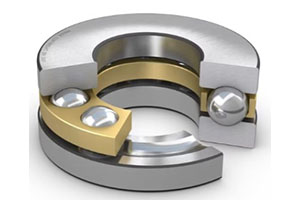
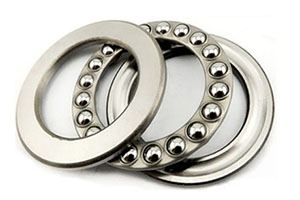
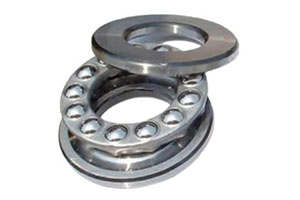
- Separable Design — Most thrust bearings feature separable components (shaft washer, housing washer, and rolling element assembly), simplifying mounting, dismounting, and maintenance procedures in confined installations.
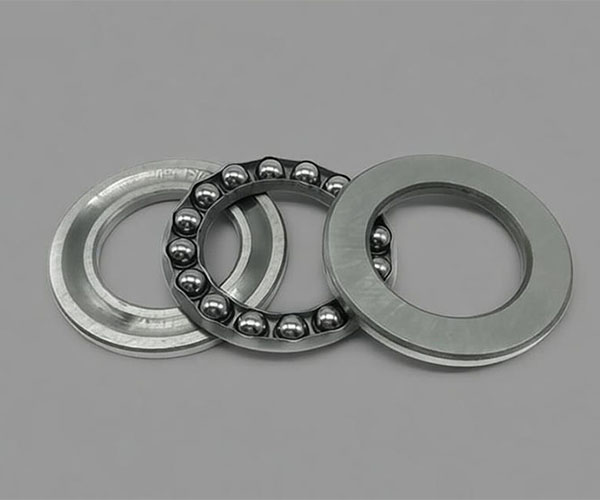
Technical Advantages of DUHUI High-Performance Thrust Bearings
Modern thrust bearings incorporate a range of design features that collectively enhance load capacity, thermal management, operational reliability, and service life. The following engineering characteristics distinguish industrial-grade thrust bearings from standard commercial alternatives, with applications spanning heavy machinery, precision machine tools, and high-speed rotating equipment.
Directed Lubrication
In high-speed and high-load thrust bearing applications, maintaining adequate oil film thickness between rolling elements and raceways is essential. Directed lubrication systems deliver pressurized oil precisely to the bearing contact zones, reducing operating temperatures and minimizing power loss. This feature is particularly critical in spherical roller thrust bearings and large cylindrical thrust bearings used in vertical pumps, marine thrust blocks, and steel mill drives. Proper oil flow management directly correlates with bearing life under ISO 281 calculations.
Advanced Materials
The material composition of thrust bearings determines their fatigue life, wear resistance, and environmental durability. DUHUI thrust bearings utilize through-hardened GCr15 bearing steel (SAE 52100) meeting ASTM A295 specifications. For corrosive or high-temperature environments, stainless steel rings and ceramic rolling elements (Si₃N₄, ZrO₂) provide extended service life in chemical processing, marine, and food-grade equipment. Ceramic hybrid thrust bearings can operate without lubrication in select applications, while maintaining dimensional stability from -70°C to 260°C.
Axial Vibration Suppression Technology
Precision-ground raceways and controlled rolling element geometry reduce axial vibration in thrust bearing assemblies. This design refinement minimizes noise generation and axial runout, which is essential for machine tool spindles, precision measuring equipment, and high-speed rotating machinery where positioning accuracy and surface finish quality depend on stable axial positioning.
Pad Pivot Types and Offsets
Tilt pad thrust bearings utilize independently pivoting pads that automatically align with the rotating collar to maintain an optimal lubricating wedge. Offset pivot designs optimize the pressure distribution across the pad surface, reducing peak temperatures and improving load capacity. While more common in hydrodynamic thrust bearings, this design principle informs the geometry optimization in rolling thrust bearings used in high-speed turbo machinery and large vertical turbines.
Hydrostatic Jacking
For large, slow-speed thrust bearing applications such as kilns, large gearboxes, and heavy rotary tables, hydrostatic jacking systems introduce pressurized oil between bearing surfaces before shaft rotation begins. This feature eliminates metal-to-metal contact during startup, protecting the bearing from damage under static loads. Hydrostatic lift is commonly specified for spherical roller thrust bearings and large cylindrical thrust bearings in heavy industrial service.
Instrumentation Options
Industrial thrust bearings can be supplied with embedded temperature sensors, vibration monitors, and oil film thickness measurement devices. Real-time condition monitoring enables predictive maintenance scheduling and prevents catastrophic bearing failures in critical equipment such as main propulsion shafts, hydroelectric turbines, and large compressors. Instrumentation integration aligns with Industry 4.0 standards for intelligent machinery monitoring.
Thrust Bearing Types and Series
This tabbed guide covers all major thrust bearing types and series manufactured by DUHUI Bearing. Use the tabs to navigate between type overview, thrust ball bearing series, and thrust roller bearing series for engineering selection.
- Thrust Bearing Types
- Thrust Ball Bearing Series
- Thrust Roller Bearing Series
Thrust Bearing Types
Thrust bearings are classified by rolling element geometry, which determines load capacity, speed capability, and misalignment tolerance. Two primary categories exist: thrust ball bearings for higher-speed moderate loads, and thrust roller bearings for extreme axial loads in heavy machinery.
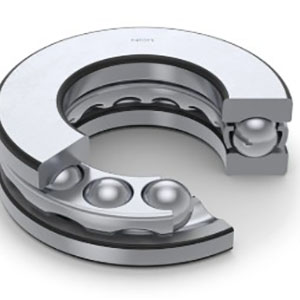
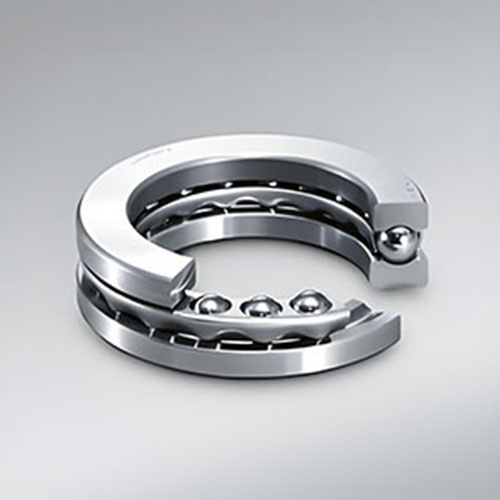
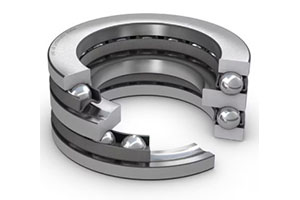
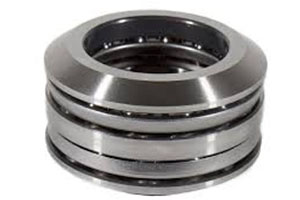
Thrust Ball Bearings-Single-direction and double-direction designs with ball rolling elements between grooved washers. Operate at higher speeds than roller types. Available with flat or aligning seat washers. Common in automotive steering columns, crane hooks, machine tool lead screws, and vertical shafts with moderate axial loads.
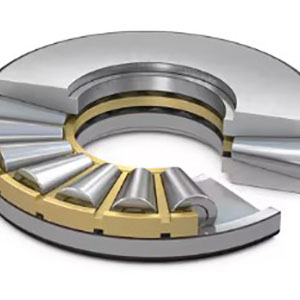
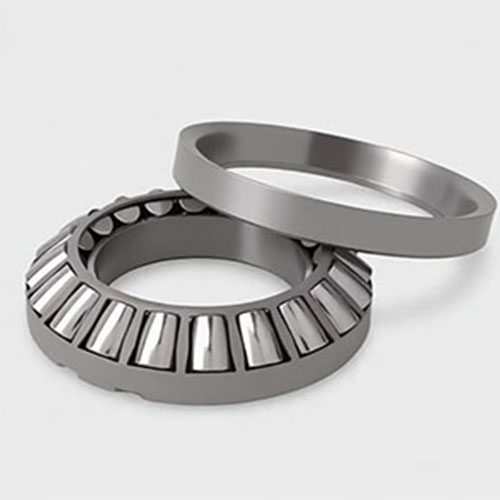
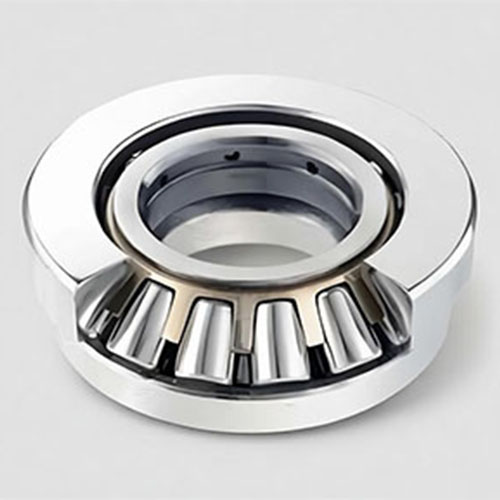
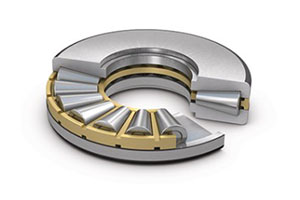
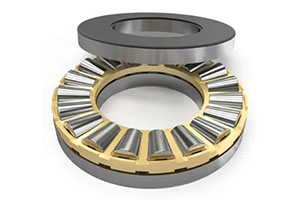
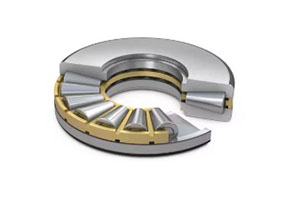
Thrust Roller Bearings-Employ cylindrical, spherical, tapered, or needle rollers for line contact and higher load capacity. Cylindrical types offer maximum axial stiffness. Spherical types are self-aligning. Tapered types handle combined loads. Needle types provide thinnest cross-section. Specified for mining, steel mills, marine propulsion, and heavy gearboxes.
Thrust Ball Bearing Series
DUHUI thrust ball bearings cover metric series from light to maximum capacity, including single-direction (511-514, 532-533), double-direction (522-544), and precision angular contact (7602, 7603, TAC) for ball screw support. Below are individual series descriptions with dimensions and applications.
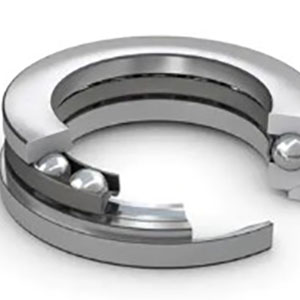
511 series — Light single-direction flat seat: 20mm and above bore range. This thin-section rolling bearing (thrust ball type) handles light axial loads. Flat seat washer simplifies mounting. Common in cranes, lifting equipment, and small conveyors.
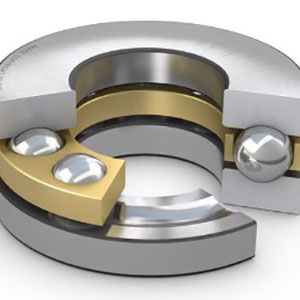
512 series — Medium single-direction thicker section: 10-220mm bore. This medium-duty thrust bearing has increased cross-section height for higher load capacity. Standard for automotive steering gears and screw jacks.
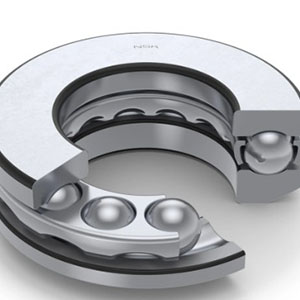
513 series — Extra-heavy single-direction large section: 30mm and above bore range. This heavy thrust ball bearing features robust washer thickness and larger balls. Used in heavy machine tool spindles and industrial presses.
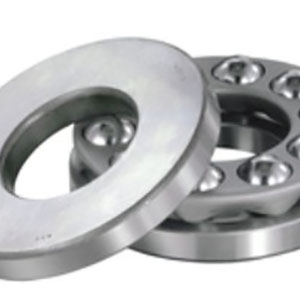
514 series — Maximum capacity single-direction: 40-400mm bore. This maximum capacity thrust bearing has the largest ball complement. Designed for extreme axial loads in mining equipment and large presses.
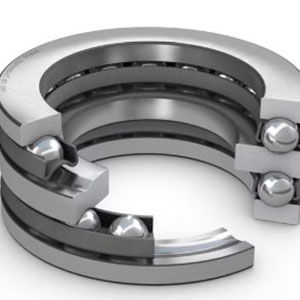
522 series — Double-direction flat seat: 15-370mm bore. This double-direction thrust ball bearing has two independent ball rows for bidirectional loads. For vertical motor shafts and hydraulic positioning systems.
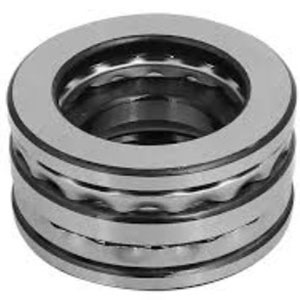
523 series — Double-direction medium series: 15-150mm bore. This medium bidirectional thrust bearing offers higher dynamic rating than 522 due to optimized pitch diameter. Common in marine gearboxes and rotary tables.
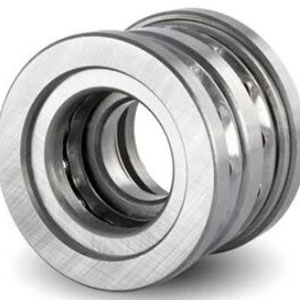
542 series — Double-direction aligning spherical seat: 15-220mm bore. This self-aligning double-direction thrust bearing has a spherical housing washer. For hydraulic components and heavy industrial drives with shaft misalignment.
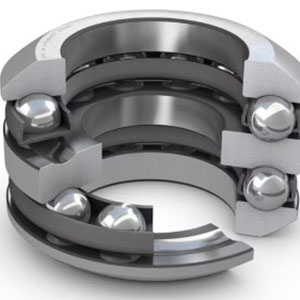
544 series — Extra-heavy double-direction aligning: 40-150mm bore. This highest-capacity aligning thrust ball bearing is for demanding applications needing extreme bidirectional load and misalignment accommodation.
Thrust Roller Bearing Series
DUHUI thrust roller bearings include four sub-types: tapered roller (metric/inch), spherical roller (self-aligning, 292-294), cylindrical roller (high stiffness, 811-894), and needle roller (compact, AXK/AZK/NKX). Each series is detailed below with load characteristics and typical applications.
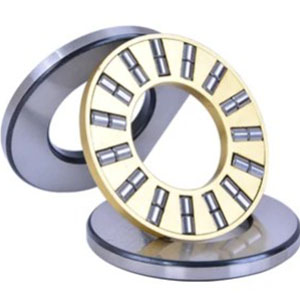
2578/2523 series — Common inch series thrust tapered roller: This inch-dimension thrust roller bearing is designed for North American equipment. For cross-shaft installations and heavy vehicle gearboxes requiring imperial sizes.
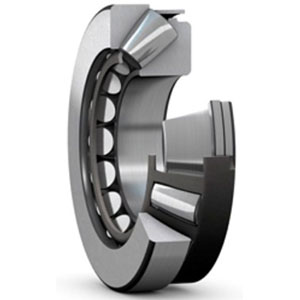
32900 series — Thin-section thrust tapered bearing: This thin-section thrust roller bearing has reduced cross-section height for axial space constraints. For boat engine reversing gears and compact drive systems.
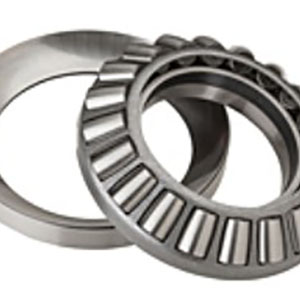
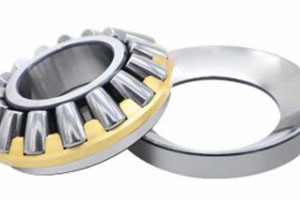
293 series — Heavy spherical roller thrust bearing: This heavy thrust spherical roller bearing has high dynamic rating with reinforced roller guidance. For mining cone crushers and heavy industrial vertical gearboxes.
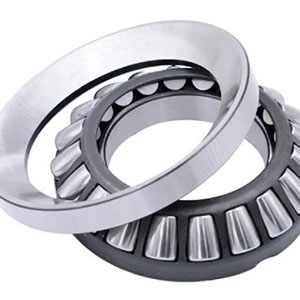
29400E series — E-design variant with reduced roller-end stress: This extreme-performance thrust roller bearing eliminates stress concentration via modified roller-end geometry. For forging presses and hydroelectric turbines.
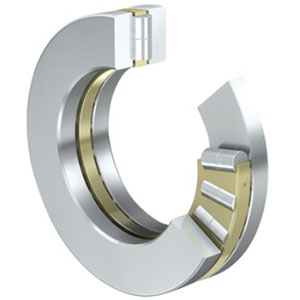
894 series — Extra-heavy thrust cylindrical roller bearing: This extra-heavy thrust cylindrical bearing has maximum roller diameter relative to cross-section. For extreme axial loads in forging presses and marine thrust blocks.
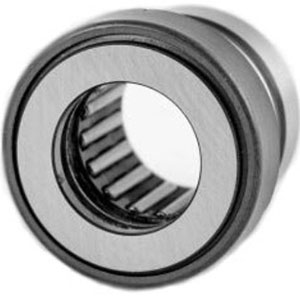
NKX series — Combined needle/thrust ball bearing: This combined bearing provides radial needle support and axial thrust ball capacity in the same envelope. For elevator door operators and limited-space applications.
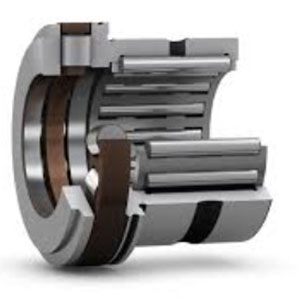
NKXR series — Combined needle/cylindrical roller thrust bearing: This combined bearing is based on 811 series cylindrical thrust design. For bidirectional thrust with radial support in packaging and textile machinery.
Heavy Duty Thrust Bearings For Industrial Performance
Heavy-duty thrust bearings are engineered for extreme axial loads, harsh operating environments, and continuous-duty cycles in demanding industrial sectors. The following subsections detail application-specific recommendations and bearing selection criteria.
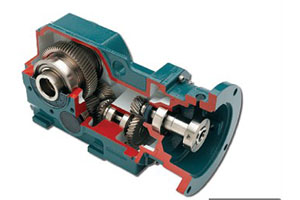
Thrust bearings in gearboxes manage axial forces generated by helical and bevel gears. Cylindrical roller thrust bearings provide high axial stiffness for gear shaft positioning, while tapered roller thrust bearings accommodate combined loads in output shafts. Double-direction thrust bearings are specified for floating shaft arrangements requiring bidirectional load management.

Excavators, loaders, bulldozers, and crane slewing rings rely on large-diameter thrust bearings for rotational support under heavy payloads. Spherical roller thrust bearings accommodate misalignment caused by frame deflection during operation. Heavy-duty thrust ball bearings (513, 514 series) provide cost-effective axial load management in moderate-speed construction applications.
Cone crushers, vibrating screens, and feeder drives operate under extreme axial loads with high contamination levels. 294 series spherical roller thrust bearings and 894 series cylindrical thrust bearings deliver maximum load capacity with durable cage designs. Through-hardened bearing steel and optimized roller geometry ensure reliable service in dust-laden environments.

Rolling mill backup rolls, coilers, and processing line drives require thrust bearings capable of sustaining heavy axial loads at elevated temperatures. E-design spherical roller thrust bearings (29300, 29400 series) incorporate improved roller-end geometry to reduce stress concentrations. Brass cages and high-temperature grease lubrication extend bearing life in steel mill service conditions.
Thrust Bearings Applications by Industry
Thrust bearings serve critical axial load management functions across diverse industrial sectors. The following industry-specific overview provides selection guidance for engineers and procurement professionals.

Thrust ball bearings are standard components in automotive steering columns, manual transmission shafts, and clutch release mechanisms. Double-direction series (522, 523) manage axial loads on vertical shafts in transfer cases. Needle roller thrust bearings (AXK series) provide compact thrust support in automatic transmission planetary gear sets.
Industrial gearboxes, pumps, compressors, and machine tools require thrust bearings for shaft positioning and axial load management. Cylindrical roller thrust bearings (811-894 series) deliver high stiffness for precision leadscrews and extruder assemblies. Precision angular contact bearings (7600, TAC series) support ball screws in CNC machinery.
Farm equipment operates in dusty, high-contamination environments with variable load conditions. Thrust bearings in tractor PTO shafts, harvester gearboxes, and irrigation pumps require robust sealing and adequate load margin. 512 and 513 series thrust ball bearings, along with 33000 series thrust tapered bearings, are commonly specified for agricultural drives.
Aircraft actuation systems, landing gear mechanisms, and engine accessory drives demand lightweight, high-reliability thrust bearings manufactured to precision tolerances. Ceramic hybrid and stainless steel thrust bearings address weight reduction and corrosion resistance requirements in demanding flight environments.

Marine propulsion shafts, deck machinery, and steering systems require thrust bearings with corrosion-resistant materials and high load capacity. 294 series spherical roller thrust bearings accommodate propeller thrust loads and shaft misalignment. Stainless steel thrust bearings are specified for saltwater-exposed applications.
Vertical pumps, centrifugal pumps, and submersible pumps utilize thrust bearings to manage hydraulic axial forces. Cylindrical roller thrust bearings (893, 894 series) provide the axial stiffness required for pump impeller positioning. Lubrication compatibility with pumped media is a critical selection factor in water pump applications.
Comparison Guides
Selecting the correct thrust bearing type for an application requires understanding the performance trade-offs between different designs. The following articles provide detailed comparison data for engineering decision-making.
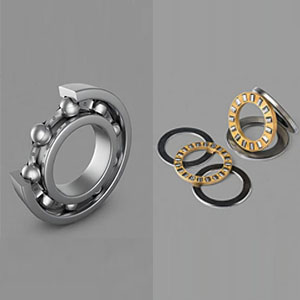
Radial bearings support perpendicular shaft loads, while thrust bearings manage parallel axial forces. Many applications require both bearing types working in combination. This article explains load path analysis, combined loading scenarios, and common arrangement configurations (angular contact pairs, tapered roller bearing sets, and separate radial/thrust bearing assemblies) for optimal machine design.
For more details, please read“Radial vs Thrust Ball Bearings”
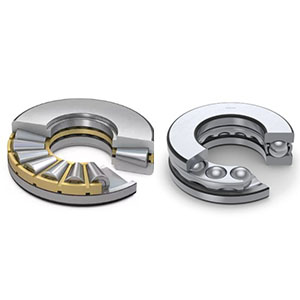
Thrust ball bearings offer higher speed capability and lower friction, making them suitable for moderate-load, higher-speed applications such as automotive steering and machine tool lead screws. Thrust roller bearings provide significantly higher load capacity due to line contact geometry, but at lower maximum speeds. This comparison includes load-life calculations under ISO 281, lubrication requirements, and application-specific selection matrices for gearboxes, pumps, and heavy machinery.
For more details, please read“Thrust Ball Bearing vs. Thrust Roller Bearing”
Popular Thrust Bearing Models
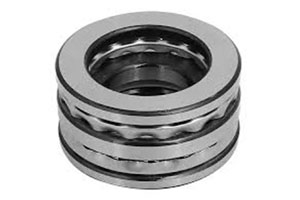
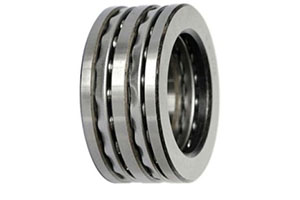
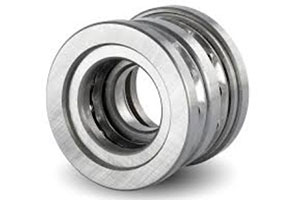
The following thrust bearing models represent commonly specified configurations for automotive, industrial, and heavy machinery applications. Each listing includes key dimensions, load characteristics, and typical use cases for engineering reference.
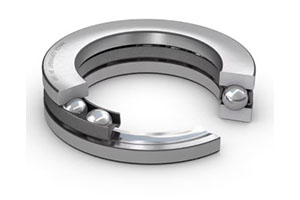
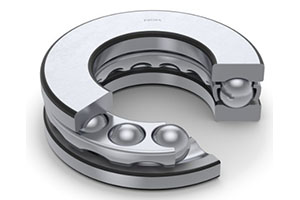
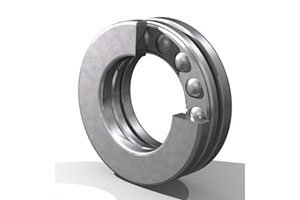
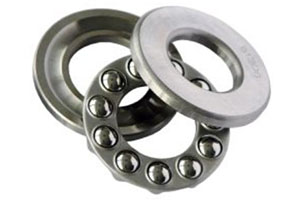
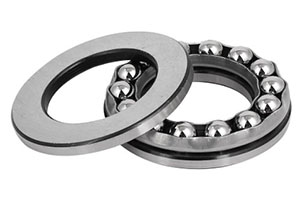
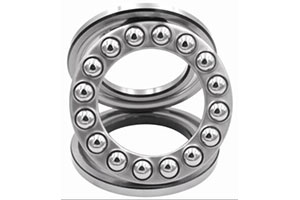
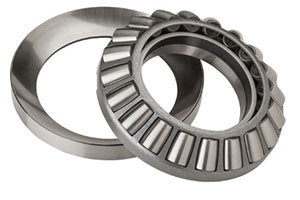
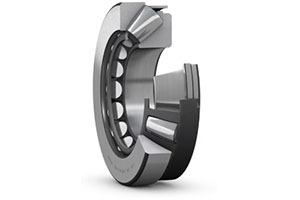
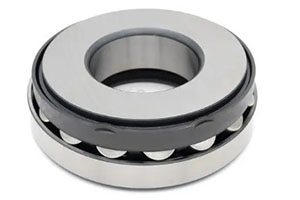
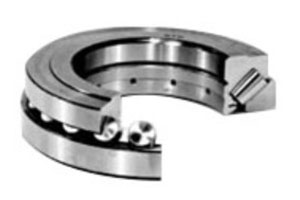
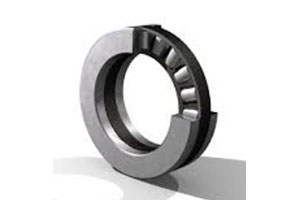
Technical Information & Product Catalog
Rolling Element Thrust Bearing Selection Guide
| Bearing Type | Core Advantages | Common Applications |
| Single-Direction Thrust Ball Bearing | Supports unidirectional axial loads; simple structure; low cost | Steering columns, screw jacks, crane hooks |
| Double-Direction Thrust Ball Bearing | Supports bidirectional axial loads; space-saving design | Marine gearboxes, hydraulic cylinder end caps, rotary tables |
| Angular Contact Thrust Ball Bearing | High rigidity and speed capability; precision grades (P4/P2) | CNC machine tool spindles, ball screw support |
| Tapered Roller Thrust Bearing | Accommodates high combined axial-radial loads | Automotive differentials, heavy-duty transmissions, mining equipment |
| Spherical Roller Thrust Bearing | Self-aligning; handles extreme loads and vibration | Hydroelectric turbines, injection molding machines, large fans |
| Cylindrical Roller Thrust Bearing | Highest axial stiffness; shock and vibration resistance | Gearbox shaft positioning, rolling mills, screw conveyors |
| Needle Roller Thrust Bearing | Extremely thin cross-section; high axial stiffness; light weight | Automatic transmissions, pumps, clutches |
Complete Technical Documentation
Access comprehensive product specifications for all thrust bearing series, including:
- Dimensional drawings
- Load ratings
- Limiting speeds
- Mounting instructions
Downloadable PDF catalogs cover ISO metric and inch series:
- Thrust ball bearings
- Cylindrical roller thrust bearings
- Spherical roller thrust bearings
- Needle thrust assemblies
Thrust Bearings in Key Industrial Sectors
A complete industry guide covering thrust bearing applications across:
- Automotive
- Industrial machinery
- Mining & steel
- Marine & aerospace
Includes:
- Selection matrices
- Environmental considerations
- Case studies in challenging operating conditions
High-Performing Thrust Bearing Solutions from DUHUI Bearing
DUHUI Bearing combines precision manufacturing capabilities with ISO-compliant quality systems to deliver thrust bearings that meet or exceed OEM specifications.
Our production facilities utilize:
- CNC grinding for dimensional accuracy
- Superfinishing processes for superior surface finish
These technologies ensure reliable, long-term service performance in demanding applications.
Precision thrust bearings (P4, P2 accuracy classes) reduce axial runout and positioning error in machine tool spindles, ball screw supports, and precision rotary tables. Tighter dimensional tolerances ensure consistent preload, lower vibration levels, and improved surface finish quality in machining operations. Precision angular contact thrust bearings with optimized contact angles deliver higher speed capability without sacrificing axial rigidity.
Heavy-duty thrust bearings are required whenever axial loads exceed the capacity of standard thrust ball bearings. Typical applications include: mining cone crushers and vibrating screens; steel mill backup rolls and processing lines; marine propulsion shafts; hydraulic presses and injection molding machines; wind turbine main shafts; and large vertical pump thrust positions. Spherical roller thrust bearings (293, 294 series) and extra-heavy cylindrical thrust bearings (894 series) are commonly specified for these demanding applications.
Spherical roller thrust bearings incorporate self-aligning capability that accommodates shaft deflection, housing misalignment, and mounting errors. Specify spherical roller thrust bearings when the application involves structural deflection under load, non-rigid mounting arrangements, or where perfect alignment cannot be guaranteed. Cylindrical roller thrust bearings offer higher axial stiffness and should be specified when alignment is precise and maximum rigidity is the primary requirement.
Single-direction thrust bearings accept axial load in one direction only. Specify single-direction bearings when the axial force always acts in the same direction (e.g., vertical shaft supported by gravity, pump impeller thrust directed toward pump casing). Double-direction thrust bearings incorporate two rows of rolling elements to accept loads from both directions. Specify double-direction bearings for vertical shafts with reversing load direction, reciprocating mechanisms, or floating shaft arrangements requiring bidirectional positioning.
Standard thrust ball bearings are designed for pure axial loads and have very limited radial load capacity. Spherical roller thrust bearings and tapered roller thrust bearings can accommodate moderate radial loads in addition to axial loads due to their roller geometry and raceway design. For applications with significant radial loads, a separate radial bearing should be used in combination with a thrust bearing.
Lubricant selection depends on operating speed, temperature, load, and environmental conditions. Grease lubrication is suitable for moderate speeds and temperatures with periodic relubrication intervals specified in ISO standards. Oil lubrication (circulating oil, oil bath, or oil jet) is required for high speeds, high temperatures, or heavy loads. Consult engineering specifications for specific lubricant recommendations based on operating conditions.