
Rolling Bearings
Rolling bearings are machine elements that support rotating shafts while minimizing frictional resistance. They consist of an inner ring, outer ring, rolling elements (balls or rollers), and a cage that maintains spacing between rolling elements. This design converts sliding friction into rolling friction, resulting in lower energy loss, reduced heat generation, and improved operational efficiency.
DUHUI Bearing manufactures rolling bearings in metric and inch dimensions, serving automotive OEM and aftermarket, agricultural machinery, and industrial equipment sectors worldwide. As a bearing manufacturer and supplier, DUHUI Bearing supports wholesale distribution, OEM projects, and aftermarket replacement programs.
Advantages of Rolling Bearings
- Reduces friction – Rolling contact between elements and raceways minimizes resistance, lowering energy consumption and operating temperatures.
- Increases lifespan – Properly selected and lubricated rolling bearings withstand millions of cycles with consistent performance.
- Cost-effective – Predictable maintenance intervals and reduced downtime lower total cost of ownership.
- High-speed performance – Ball bearings and certain roller bearing designs support rotational speeds exceeding 10,000 rpm in many configurations.
- High load carrying capacity – Roller bearings distribute loads across line contact surfaces, handling radial loads up to several hundred kN.
- Versatility – Available in hundreds of dimensional series, tolerance classes, seal configurations, and cage materials.
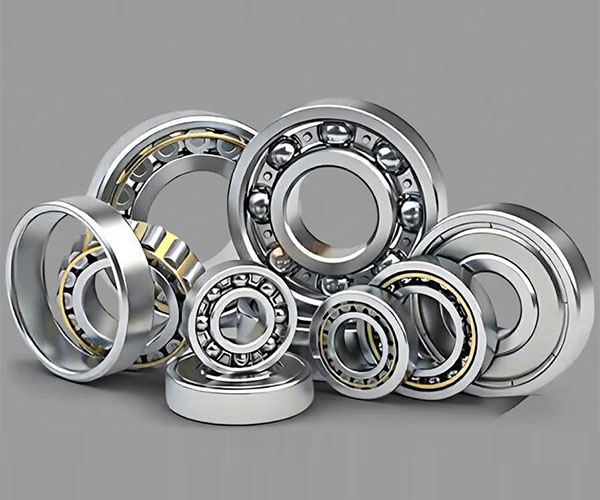
What Are Rolling Bearings
Rolling bearings support radial loads, axial loads, or combined load conditions depending on internal geometry. Ball bearings, featuring point contact between balls and raceways, accommodate moderate loads at high speeds. Roller bearings, with line contact geometry, handle heavier radial loads at moderate speeds.
Standard rolling bearing dimensions follow ISO 15 (metric series) and ANSI/ABMA 20 (inch series) with tolerance classes including Normal (P0), P6, P5, and P4. Precision grades ABEC 1 through ABEC 9 are specified for ball bearings where rotational accuracy is critical. Seal options include open (no seal), ZZ (metal shield), 2RS (rubber contact seal), and low-friction designs for contaminated environments.
Lubrication — grease or oil — reduces internal friction, dissipates heat, and protects raceways from corrosion. Operating temperature ranges typically from -30°C to +150°C, with special high-temperature greases extending limits to 250°C. For applications involving vibration, shock loads, or shaft misalignment, self-aligning bearing geometries compensate for angular errors without compromising performance.
Internal clearance (C2, CN, C3, C4) accommodates thermal expansion and fit conditions. Preload options (light, medium, heavy) are used for zero-backlash applications such as machine tool spindles. Cage materials — steel, polyamide, brass — each offer specific advantages in strength, speed, and temperature stability. Sealing strategies range from non-contact shields (ZZ) for clean environments to heavy-duty contact seals (2RS) for dusty or wet conditions. Dynamic load rating (C) and basic rating life (L10) calculations per ISO 281 enable accurate bearing selection for target service life.
DUHUI Bearing supplies rolling bearings as a manufacturer and supplier, manufactured to ISO dimensional and tolerance standards, with heat-treated chrome steel (GCr15) or case-carburized steel for heavy-duty applications.
Rolling Bearing Types
Rolling bearings are divided by rolling element shape and the direction of loads they support.
- Ball Bearings
- Roller Bearings
- Thrust Bearings
- Insert Bearings & Mounted Bearings
Ball Bearings
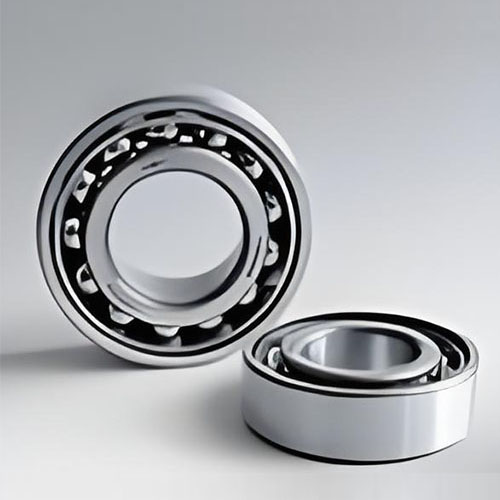
Ball bearings use spherical rolling elements that make point contact with raceways. They support moderate radial and axial loads at high speeds with low friction. These bearings are suitable for precision equipment, electric motors, and automotive components where rotational accuracy and speed are critical. Common configurations include deep groove, angular contact, and self-aligning types.
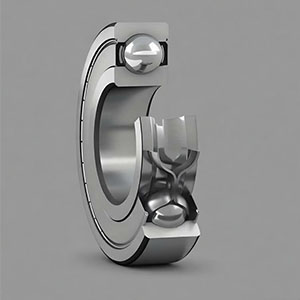
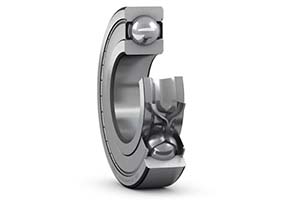
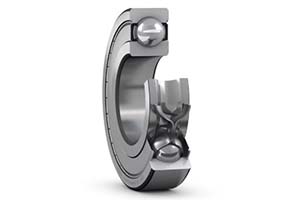
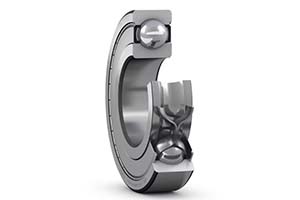
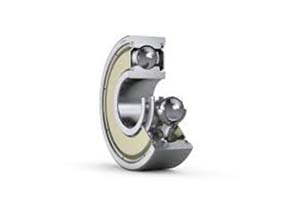
Deep groove ball bearings have uninterrupted raceway shoulders, supporting radial, bidirectional axial, and combined loads. They operate with low friction at high speeds. Applications include electric motors, pumps, conveyors, gearboxes, and automotive alternators.
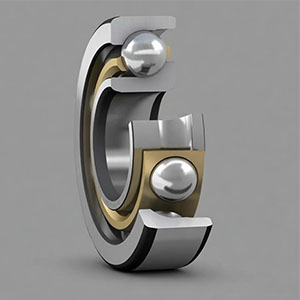
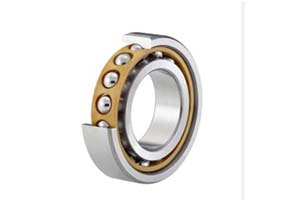
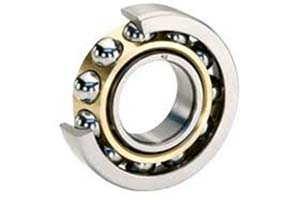
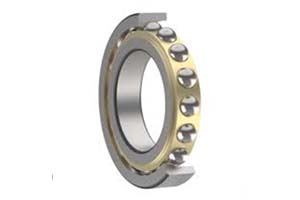
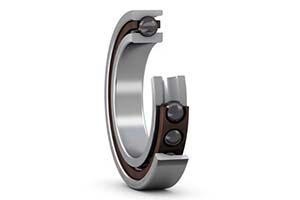
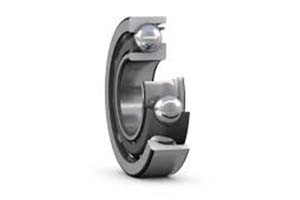
Angular contact ball bearings have displaced raceways with contact angles of 15°, 25°, 30°, or 40°. They support combined radial and axial loads and are mounted in pairs for bidirectional thrust. Used in machine tool spindles, pumps, compressors, and precision instruments.
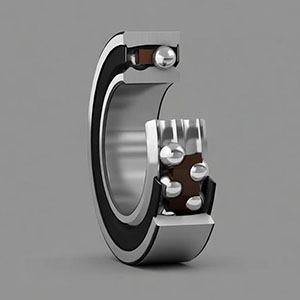
Self-aligning ball bearings have two rows of balls and a spherical outer ring raceway, compensating for shaft misalignment up to three degrees. Ideal for fans, blowers, textile machinery, and woodworking equipment where alignment cannot be guaranteed.
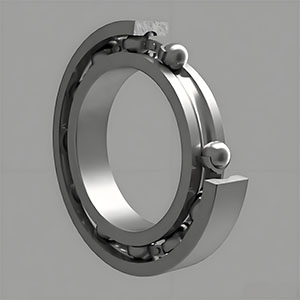
Miniature ball bearings have bore diameters from 3mm to 10mm with high precision (ABEC-5 and above). They offer low noise and high-speed capability. Typical applications include dental handpieces, small motors, measuring devices, and optical instruments.
Roller Bearings
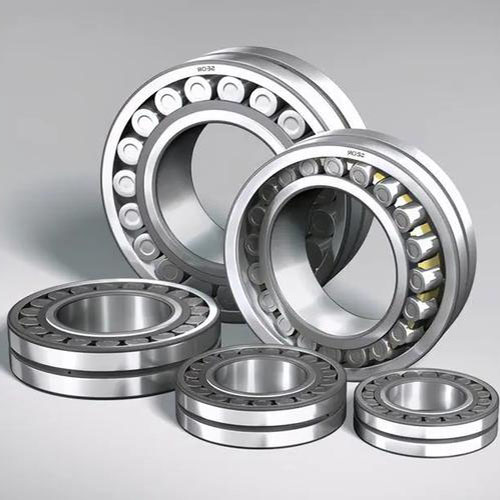
Roller bearings use cylindrical, tapered, or spherical rolling elements that make line contact with raceways. This design provides higher radial load capacity than ball bearings, typically at moderate to low speeds. They are selected for heavy-duty industrial applications such as conveyors, crushers, gearboxes, and rolling mills. Types include tapered, cylindrical, needle, spherical, and crossed roller bearings.
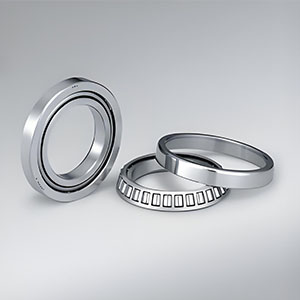
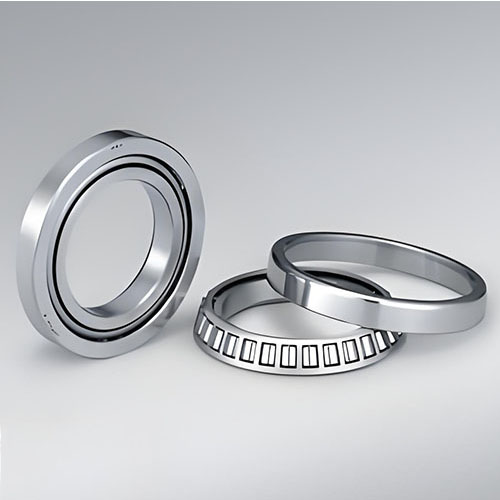
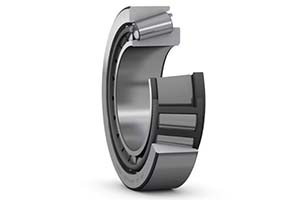
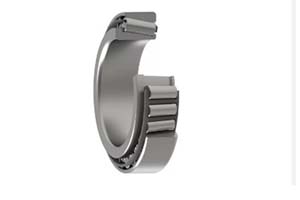
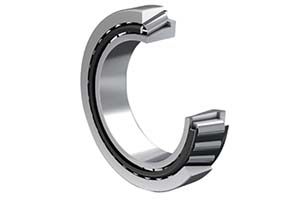
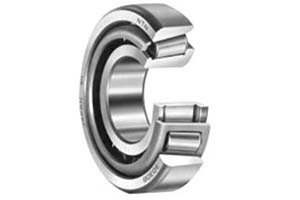
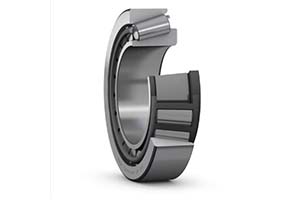
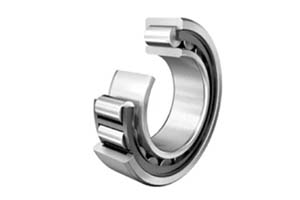
Tapered roller bearings have tapered raceways and conical rollers, supporting combined radial and axial loads in one direction. Common in automotive wheel hubs, gearboxes, differentials, industrial axles, and heavy machinery.
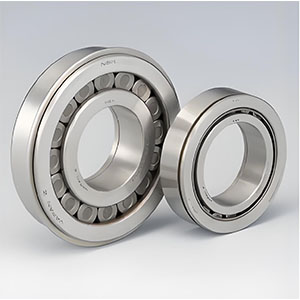
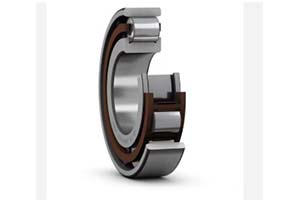
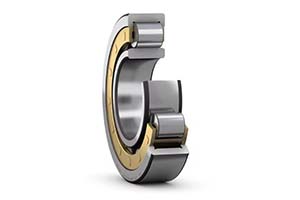
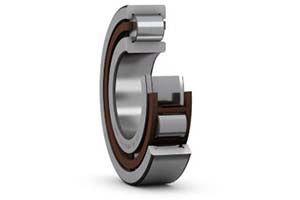
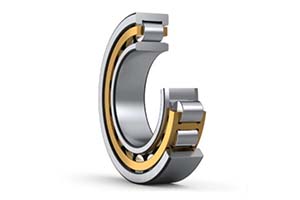
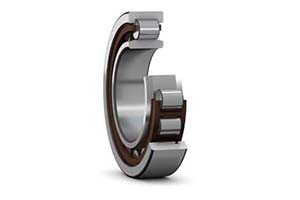
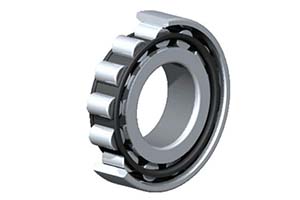
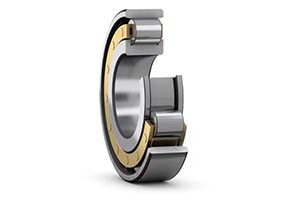
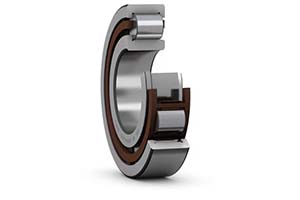
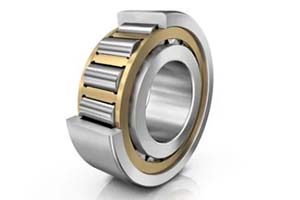
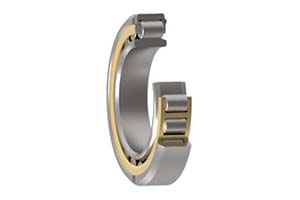
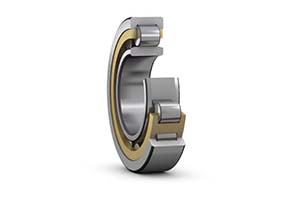
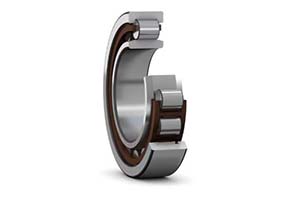
Cylindrical roller bearings provide high radial load capacity with separable rings (NU, NJ, NUP types), allowing axial displacement or location. Used in electric motors, gearboxes, rolling mills, pumps, and compressors.
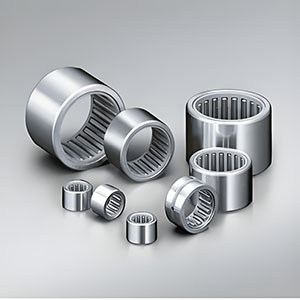
Needle roller bearings have small-diameter rollers for a compact radial cross-section while maintaining high load capacity. Ideal for automotive transmissions, connecting rods, rocker arm pivots, and space-constrained assemblies.
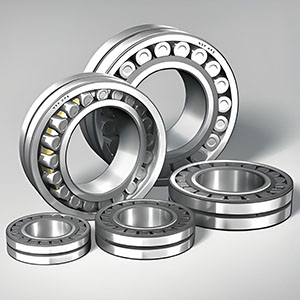
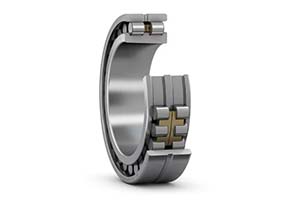
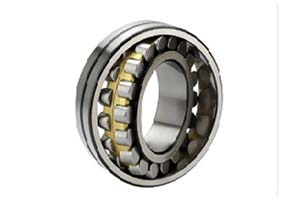
Spherical roller bearings have barrel-shaped rollers and a sphered outer ring raceway, providing self-alignment and high radial and axial load capacity. Used in conveyors, crushers, vibratory screens, fans, and wind turbines.
Thrust Bearings
Thrust bearings are designed to support axial loads with minimal radial load capacity. They are suitable for vertical shaft configurations or applications where axial forces dominate. These bearings are available in ball, roller, tapered, spherical, cylindrical, and needle configurations. Common uses include automotive steering gears, crane hooks, hydroelectric turbines, and heavy-duty gearboxes.
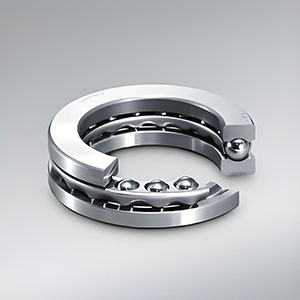
Thrust ball bearings consist of two grooved rings with a ball complement, supporting axial loads at moderate speeds. Used in automotive steering gears, machine tools, rotary tables, and cranes.
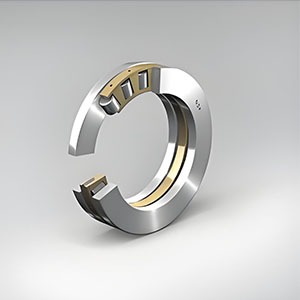
Thrust roller bearings use cylindrical or tapered rollers between flat or grooved raceways, offering higher axial capacity than ball types. Used in heavy-duty gearboxes, rolling mills, vertical pumps, and marine propulsion.
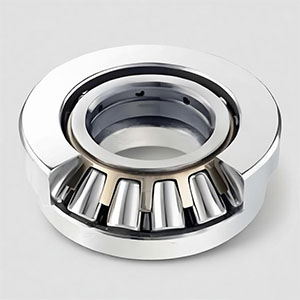
Thrust tapered roller bearings have conical rollers between tapered raceways, accommodating heavy axial loads and some radial loads. Used in crane hooks, oil drilling equipment, extruders, and forging presses.
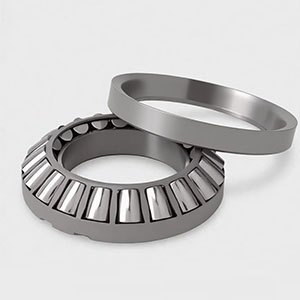
Thrust spherical roller bearings feature barrel-shaped rollers on a spherical raceway, providing self-alignment and high axial load capacity at moderate speeds. Used in hydroelectric turbines, large vertical pumps, extruders, and marine propeller shafts.
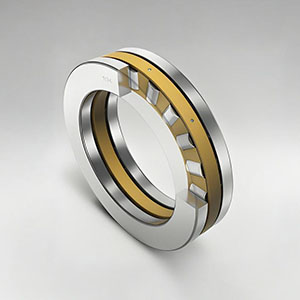
Thrust cylindrical roller bearings have cylindrical rollers between flat raceways, delivering the highest axial load capacity among roller thrust bearings. Used in heavy gearboxes, rolling mills, and oilfield equipment.
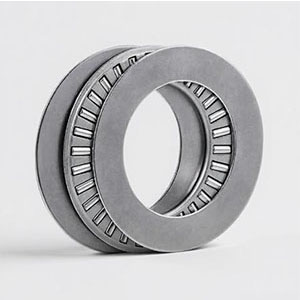
Thrust needle roller bearings use small-diameter rollers in a compact axial cross-section, providing high axial load capacity in limited space. Used in automotive automatic transmissions, torque converters, and pumps.
Insert Bearings & Mounted Bearings
Insert bearings are pre-lubricated, sealed units with spherical outer rings, designed for easy installation into cast iron or stainless steel housings. They feature locking collars or setscrews for shaft attachment. These bearings are commonly used in agricultural machinery, conveyors, fans, and food processing equipment where simplified mounting and maintenance are priorities. Types include pillow block, flange mounted, and take-up bearings.
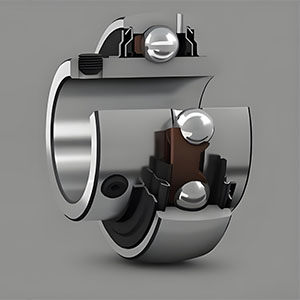
Insert bearings have wide inner rings with eccentric locking collar or setscrew locking. Spherical outer diameter allows self-alignment. Pre-greased and sealed. Used in agricultural machinery, conveyors, fans, and food processing equipment.
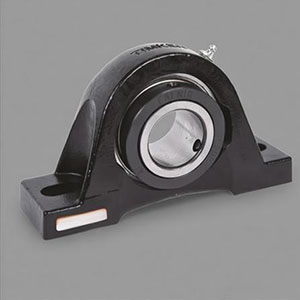
Pillow block bearings consist of an insert bearing in a two-bolt or four-bolt cast iron housing, simplifying shaft support. Used in conveyors, fans, blowers, and packaging machinery.
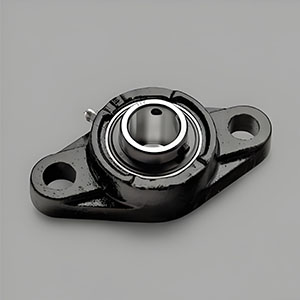
Flange mounted bearings have square or round flange housings with insert bearings, allowing mounting perpendicular to the shaft axis. Used in industrial machinery with confined mounting surfaces.
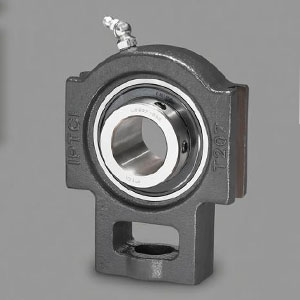
Take-up bearings combine an insert bearing with a sliding housing for belt tension adjustment on conveyor frames. Used in material handling systems, agricultural elevators, and food processing conveyors.
Aftermarket Bearing Series
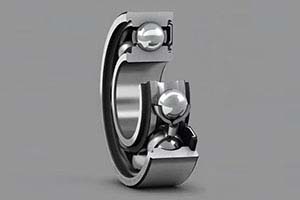
6000 Standard deep groove ball bearing for high-speed and light load conditions.
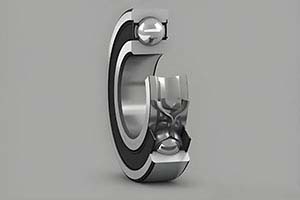
6200 Medium-deep groove bearing with robust construction for moderate radial loads.
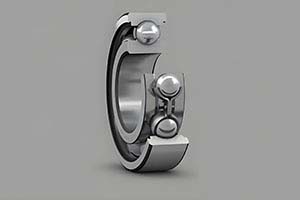
6300 Deep groove ball bearing with heavy-duty design supporting substantial radial capacity.
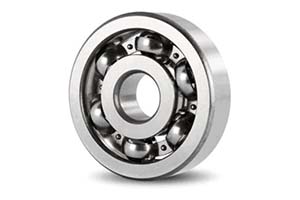
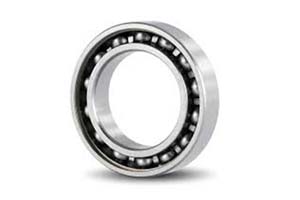
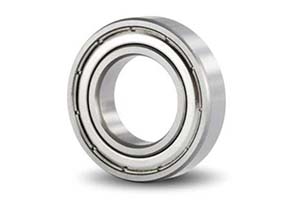
6900 Very thin-section deep groove bearing for ultra-space-limited applications such as robotics.
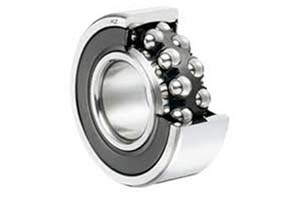
16000 Deep groove ball bearing with extra-thin outer ring for high-speed applications.
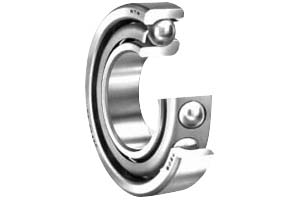
7000 Single-row angular bearing with universal 15°, 25°, or 40° contact angle (C, AC, B).
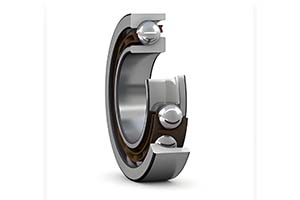
7200 Medium-duty angular ball bearing for combined radial-axial loads in general machinery.
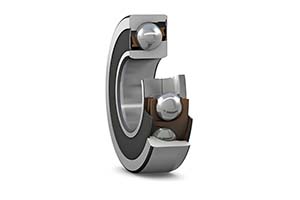
7300 Heavy-duty angular contact bearing for high-load machine tools and spindles.
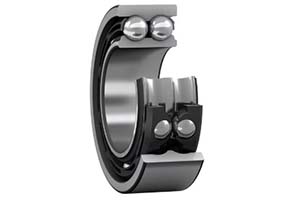
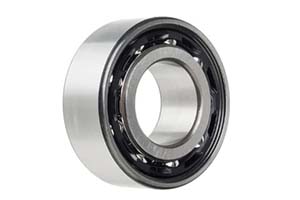
3200 Double-row angular contact bearing with compact design for limited spaces.
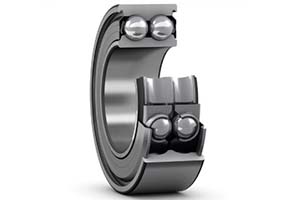
3300 Double-row angular contact bearing with high load capacity integrating two rows.
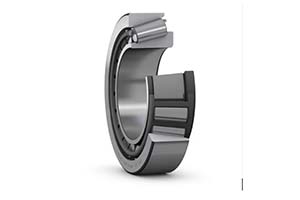
32000 Light series for combined loads, widely used in automotive wheel hubs and gearboxes.
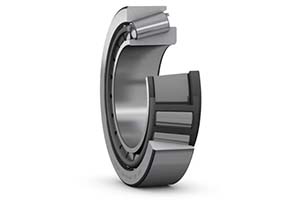
33000 Medium-light tapered bearing for general industrial applications and conveyor rollers.
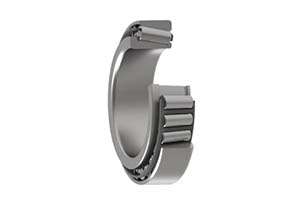
30300 Medium series with larger size for heavy-duty industrial shafts and gearboxes.
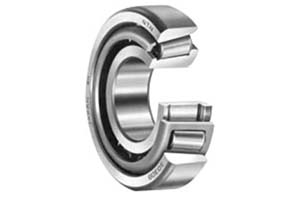
32200 Heavy series for intense combined loads in off-highway vehicle axles and final drives.
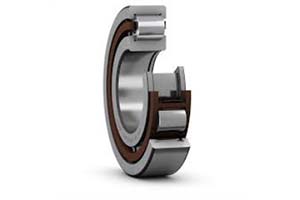
NUP Series Cylindrical roller bearing with rib and retaining ring on the inner ring for shaft positioning.
Applications Of Rolling Bearings
Rolling bearings support rotating machinery across automotive, agricultural, industrial, and mining sectors.

Wheel hub assemblies (Gen 1–3), transmission shafts, differentials, alternators, water pumps, steering columns. High-speed, vibration-resistant designs.
Tractors, harvesters, balers, tillage equipment. Sealed insert bearings in housings for dust and moisture resistance. Vibration-resistant spherical roller designs for harvester headers.
Electric motors, pumps, compressors, fans, gearboxes, conveyor systems, packaging machinery, printing presses. Precision grades from standard to ABEC-5 as required.
Construction equipment (excavators, loaders, bulldozers), mining trucks, rolling mills. Case-carburized tapered rollers and heavy-section spherical roller designs for shock loads.
Crushers (jaw, cone, impact), vibrating screens, conveyors, mills. Explosion-proof designs with high-temperature tolerance. Large-bore spherical roller bearings up to 1,000 mm OD.
P4 to P2 tolerance classes (ABEC-7, ABEC-9). For machine tool spindles, aerospace actuators, high-speed dental turbines, measuring systems. Maximum rotational accuracy and minimal runout.
Some Common Comparison
Rolling bearings include many types. Below are two common comparisons to help with selection based on application requirements and operating environment.
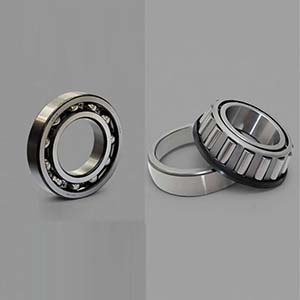
Ball bearings use point contact between balls and raceways, making them suitable for high-speed applications with moderate radial and axial loads. Roller bearings use line contact via cylindrical, tapered, or spherical rollers, providing higher radial load capacity at lower speeds. Selection depends on load direction, speed requirements, and available space.
For more details, please read “The Differences Between Ball and Roller Bearings“.
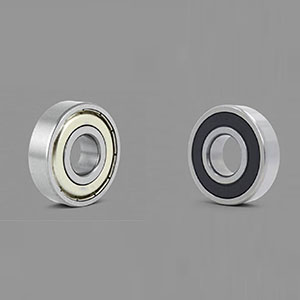
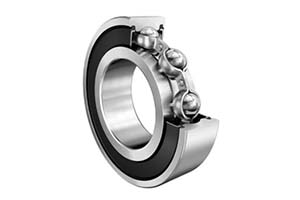
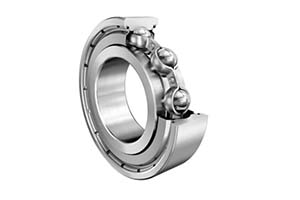
Shielded bearings (ZZ suffix) have metal shields attached to the outer ring, offering basic protection against large debris while maintaining low friction. They are suitable for clean environments with minimal contamination risk. Sealed bearings (2RS suffix) have rubber contact seals that provide superior dust and moisture resistance but generate higher friction torque. Choose sealed types for dusty, dirty, or wet operating conditions.
For more details, please read “The Difference Between Shielded and Sealed Bearings“.
Related Products
Rolling Bearing Characteristics And Functions
Rolling bearings support radial loads, axial loads, or combined load conditions depending on internal geometry. Ball bearings, featuring point contact between balls and raceways, accommodate moderate loads at high speeds. Roller bearings, with line contact geometry, handle heavier radial loads at moderate speeds.
Standard rolling bearing dimensions follow ISO 15 (metric series) and ANSI/ABMA 20 (inch series) with tolerance classes including Normal (P0), P6, P5, and P4. Precision grades ABEC 1 through ABEC 9 are specified for ball bearings where rotational accuracy is critical. Seal options include open (no seal), ZZ (metal shield), 2RS (rubber contact seal), and low-friction designs for contaminated environments.
Lubrication — grease or oil — reduces internal friction, dissipates heat, and protects raceways from corrosion. Operating temperature ranges typically from -30°C to +150°C, with special high-temperature greases extending limits to 250°C. For applications involving vibration, shock loads, or shaft misalignment, self-aligning bearing geometries compensate for angular errors without compromising performance.
Internal clearance (C2, CN, C3, C4) accommodates thermal expansion and fit conditions. Preload options (light, medium, heavy) are used for zero-backlash applications such as machine tool spindles. Cage materials — steel, polyamide, brass — each offer specific advantages in strength, speed, and temperature stability. Sealing strategies range from non-contact shields (ZZ) for clean environments to heavy-duty contact seals (2RS) for dusty or wet conditions. Dynamic load rating (C) and basic rating life (L10) calculations per ISO 281 enable accurate bearing selection for target service life.
DUHUI Bearing supplies rolling bearings as a manufacturer and supplier, manufactured to ISO dimensional and tolerance standards, with heat-treated chrome steel (GCr15) or case-carburized steel for heavy-duty applications.
Rolling Bearings Selection Criteria
Load requirements
Calculate the magnitude and direction of forces the bearing must support. For primarily radial loads, cylindrical or spherical roller bearings offer high capacity. For pure axial loads, thrust bearings are appropriate. When both radial and axial forces act simultaneously, angular contact ball bearings or tapered roller bearings are typically selected.
Speed requirements
Determine the maximum rotational speed of the application. Ball bearings generally support higher speeds than roller bearings of equivalent size. Above 10,000 rpm, lightweight cages (polyamide or machined brass) and oil lubrication become necessary.
Environment factors
Assess operating temperature range, moisture exposure, dust or debris levels, and chemical contact. Sealing selection: ZZ shields for clean indoor environments, 2RS contact seals for dusty or wet conditions. For temperatures above 150°C, specify high-temperature grease or oil lubrication.
Space limitations
Measure available radial cross-section and axial length. Needle roller bearings provide high load capacity in compact radial envelopes. Thin-section ball bearings or miniature series (internal diameter below 10mm) are available for tight spaces.
Cost and availability
Standard metric series such as 6000, 6200, 6300 (deep groove ball bearings) and 30200, 30300 (tapered roller bearings) offer the shortest lead times and competitive pricing. Non-metric sizes, special alloys, or high-tolerance grades require longer production schedules and higher budgets.
Tolerance and precision requirements
Standard class (P0/ABEC-1) satisfies most industrial machinery. For machine tool spindles, robotics, or precision measuring equipment, P5 (ABEC-5) or P4 (ABEC-7) grades are required to minimize runout and vibration.
Lubrication strategy
Grease lubrication suits the majority of applications (approximately 80% of industrial installations). It simplifies maintenance and seals out contaminants. Oil lubrication is specified for high-speed operation (n*dm value above grease limits), elevated temperatures, or where heat dissipation is a priority.
DUHUI Bearing provides engineering consultation for bearing selection, including load verification and configuration recommendations. Custom designs are manufactured to buyer specifications. Wholesale and factory-direct sourcing options are available.
Bearing codes follow ISO dimension series standards. Prefix indicates type and configuration. Basic number (e.g., 6204) specifies series and bore size. Suffix defines seal type (ZZ, 2RS), clearance (C3, C4), cage material (M, TN9), and precision grade (P5, P4). View full decoding guide.
For more details, please read “Understanding Your Bearing Code“.
Regular maintenance includes re-greasing at specified intervals, monitoring operating temperature and vibration levels, inspecting seals for damage, and cleaning external surfaces. Contaminated grease should be replaced. Follow manufacturer relubrication schedules for each application.
For more details, please read “Bearing Maintenance Guide for Automotive and Industrial Applications“.
Selection factors: load magnitude and direction, rotational speed, operating temperature range, contamination exposure, available space, and budget. Step-by-step selection guide available.
For more details, please read “Bearing Types Selection Guide: How to Select the Right Bearing“.
Rolling bearings are suitable for 90% of industrial rotating machinery. For high-speed continuous operation, ball bearings are preferred. For heavy shock loads, case-carburized tapered or spherical roller bearings are indicated.
For more details, please read “Rolling Bearings: Types, Applications and Selection Guide“.
Used bearings can be reconditioned when raceways and rolling elements show minimal wear. Custom configurations: non-standard dimensions, special coatings, high-temperature greases, modified internal clearances, alternative cage materials. Custom engineering consultation available.
For more services, please read “About Services“.