Selecting the right bearing requires accurate technical information, not marketing claims. The 6202RS is a widely used deep groove ball bearing found in electric motors, automotive components, industrial machinery, and household appliances. Understanding its dimensions, sealing design, load ratings, and variant differences helps engineers and procurement professionals make informed sourcing decisions. This guide covers all relevant specifications, performance data, and practical selection criteria.
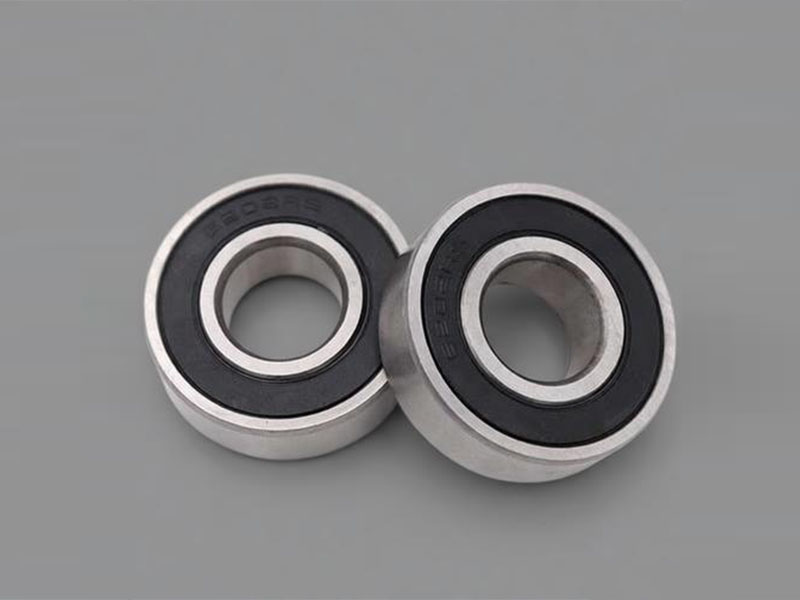
What Is a 6202RS Bearing? Core Design and Structure
The 6202RS is a single-row deep groove ball bearing. Its design accommodates radial loads and moderate axial loads in both directions. The “6202” designation follows ISO dimensional standards, where the first digit (6) indicates the deep groove series, and “02” specifies a 15 mm bore diameter.
Basic Construction
A 6202RS bearing consists of five main components, each contributing to its performance:
- Inner ring: Mounts onto the rotating shaft.
- Outer ring: Fits into the housing or equipment frame.
- Rolling elements (balls): Steel balls that roll between the inner and outer raceways, minimizing friction.
- Cage (retainer): Spaces the balls uniformly to prevent contact and ensure even load distribution.
- Seals (2RS): Two rubber seals, one on each side, that block contaminants and retain lubrication.
Standard Dimensions
All 6202RS bearings share the same basic dimensions to ensure interchangeability:
- Bore diameter (d): 15 mm
- Outer diameter (D): 35 mm
- Width (B): 11 mm
Interchangeability across brands is a key advantage of ISO-standardized bearings. A 6202RS from any compliant manufacturer will fit the same shaft and housing dimensions.
6202RS Bearing Dimensions and Technical Specifications
The following table lists the standard specifications for a 6202RS bearing.
| Specification | Value | Notes |
|---|---|---|
| Type | Single row deep groove ball bearing | Handles radial and bidirectional axial loads |
| Bore diameter (d) | 15 mm | Tolerance: -0.008 mm to 0 |
| Outer diameter (D) | 35 mm | Tolerance: -0.011 mm to 0 |
| Width (B) | 11 mm | Tolerance: -0.12 mm to 0 |
| Ring and ball material | Chrome steel (Gcr15 / SAE 52100) | High-carbon, high-chromium alloy |
| Cage material | 300 series stainless steel or pressed steel | Provides corrosion resistance and durability |
| Dynamic radial load rating (C) | 1709 lbf (7.6 kN) | Load capacity under rotating inner ring conditions |
| Static radial load rating (C₀) | 832 lbf (3.7 kN) | Maximum load under stationary or shock conditions |
| Maximum rotational speed (grease lubrication) | 19,000 rpm | Speed limit depends on actual load and lubrication |
| Lubrication | Grease-packed, sealed for life | Factory-filled; no relubrication required under normal conditions |
| Temperature range | -30°C to 120°C | Standard operating limits |
| Precision rating | ABEC 3 / P6 | Suitable for general industrial and moderate-speed applications |
Tolerance and Precision Class
The 6202RS bearing is manufactured to ABEC 3 (P6) precision standards. This means the bore and outer diameter tolerances are controlled to within microns, as shown in the table above. For most general industrial applications, including electric motors, pumps, and conveyors, P6 precision provides sufficient accuracy for smooth operation and minimal vibration.
When an application requires higher rotational accuracy, such as in machine tool spindles or precision instruments, a higher precision class (ABEC 5 / P5 or ABEC 7 / P4) should be specified. However, for the majority of 6202RS applications, ABEC 3 offers an optimal balance between cost and performance.
6202RS Bearing Load Rating and Fatigue Life
Understanding load ratings is essential for predicting bearing service life.
Dynamic and Static Load Ratings
The dynamic load rating (C) of 1709 lbf (7.6 kN) represents the constant radial load under which a group of identical bearings would achieve a calculated L10 life of 1 million revolutions. In practical terms, it serves as a reference for sizing bearings relative to the actual loads in an application.
The static load rating (C₀) of 832 lbf (3.7 kN) is the maximum load a bearing can withstand in a stationary or slow-rotating condition without causing permanent deformation of the rolling elements or raceways.
When selecting a 6202RS bearing, ensure that the applied load does not exceed these ratings under normal operating conditions.
Calculating L10 Fatigue Life
The L10 life is the number of revolutions that 90% of a group of identical bearings will complete under a given load before the first signs of fatigue appear. For ball bearings, the basic rating life is calculated as:
L₁₀ = (C / P)³ × 1,000,000 revolutions
Where:
C = dynamic load rating (N or lbf)
P = equivalent dynamic bearing load (N or lbf)
For a 6202RS bearing under a constant radial load of 500 N (approximately 112 lbf), with no significant axial load:
L₁₀ = (7600 N / 500 N)³ × 1,000,000 = (15.2)³ × 1,000,000 ≈ 3.5 × 1,000,000 ≈ 3.5 billion revolutions
To convert revolutions to operating hours, divide by the rotational speed:
- At 3,000 rpm: 3.5×10⁹ ÷ (3,000 × 60) ≈ 19,400 hours
- At 10,000 rpm: 3.5×10⁹ ÷ (10,000 × 60) ≈ 5,800 hours
Note that actual service life in field conditions may be shorter due to factors such as installation misalignment, vibration, and contamination levels. The L10 rating provides a standard basis for comparison.
Sealing Mechanisms: What Does “2RS” Mean and How It Differs from ZZ and DU?
The “RS” suffix stands for “Rubber Seal.” The “2” indicates seals on both sides of the bearing. Rubber seals provide direct contact with the inner ring, creating a physical barrier against dust, moisture, and other contaminants while retaining the factory-packed grease.
Double Rubber Seals (2RS)
- Contaminant barrier: Prevents debris ingress, which is a leading cause of premature bearing failure.
- Lubricant retention: Maintains a consistent lubrication film on rolling elements and raceways, reducing friction and wear.
- Maintenance-free operation: Factory-lubricated and sealed for life, eliminating the need for periodic relubrication in most applications.
Metal Shields (ZZ / 2Z)
Where 6202RS bearings use contact rubber seals, the 6202ZZ variant uses non-contact metal shields. Metal shields provide a barrier against larger particles but allow minor contamination ingress. They generate lower friction than rubber seals, making them suitable for higher-speed applications where the operating environment remains relatively clean.
Comparison Summary
| Feature | 6202RS | 6202ZZ |
|---|---|---|
| Seal/Shield type | Rubber contact seal | Metal non-contact shield |
| Contaminant barrier | Excellent – prevents dust, moisture | Moderate – blocks larger particles only |
| Lubricant retention | High | Moderate |
| Friction | Low but present (contact type) | Minimal |
| Maximum speed (relative) | Slightly reduced due to seal contact | Higher than RS |
| Typical applications | Motors in dusty/humid environments | Clean indoor machinery, fans |
For applications operating in dusty, moist, or outdoor conditions, the 6202RS provides superior protection. For clean-environment, high-speed operation, the 6202ZZ may be more suitable.
What Does 6202DU Mean?
Some manufacturers use “DU” to denote a rubber-sealed bearing similar to 2RS. For example, NSK uses the designation 6202DU for its contact rubber seal variant. In practice, 6202DU is functionally equivalent to 6202RS. When comparing across brands, always check the manufacturer’s catalog to confirm whether the seal is a contact type or a non-contact design.
6202RS Bearing Applications by Industry
The combination of moderate load capacity, sealed construction, and compact dimensions makes the 6202RS suitable for a wide range of applications across multiple industries.
Automotive Applications
- Alternators: withstands belt tension and high rotational speeds while protecting against under-hood contaminants.
- Idler pulleys and belt tensioners: sealed design retains grease and prevents debris ingress in engine compartment environments.
- Air conditioning compressors: provides reliable operation under varying thermal and load conditions.
Industrial Machinery
- Electric motors (fractional horsepower): commonly used in fan motors, pump motors, and compressor motors for light to moderate duty cycles.
- Conveyor rollers: supports radial loads in material handling systems, particularly where dust is present.
- Small centrifugal pumps: withstands radial loads while maintaining seal integrity in pumping applications.
Home Appliances and Power Tools
- Washing machines: found in drive motors and drum support structures.
- Electric fans and blowers: ensures quiet, smooth rotation with minimal vibration.
- Power tools: supports high-speed spindles in drills, grinders, and sanders.
In power tools particularly, the sealed construction of the 6202RS prevents ingress of abrasive dust generated during cutting, grinding, or drilling operations.
Additional Applications
The 6202RS bearing is also specified in textile machinery spindles (where high-speed operation is required), light-duty agricultural equipment, bicycle hubs, and exercise equipment.
6202RS Bearing Variants and Identification: 2RS, 2RS1, 2RSH, Clearance Grades
Suffix Meanings Across Leading Brands
Different manufacturers use distinct suffixes for the same 6202RS bearing type. Engineers reviewing multiple suppliers should be aware of these equivalent designations:
| Manufacturer | Suffix | Meaning |
|---|---|---|
| SKF | 6202-2RS1 | Contact rubber seals on both sides (NBR rubber) |
| SKF | 6202-2RSH | Heavy-duty contact rubber seals (higher sealing force) |
| FAG / INA | 6202-2RSR | Rubber seals on both sides |
| NSK | 6202DDU | Contact rubber seals (equivalent to 2RS) |
| NTN | 6202LLU | Rubber seals on both sides (low-friction type) |
| KOYO | 6202RS | Rubber seal on one side only |
NSK (alternative)6202DURubber seal variant (check catalog for contact type)
When sourcing 6202RS equivalents, confirm that the supplier’s variant uses contact rubber seals (as opposed to non-contact or low-friction lab seals), and confirm that the internal clearance grade matches your application requirements.
Internal Clearance: C0, C3, C4
Internal clearance refers to the amount of free radial movement within the bearing before it is mounted. Standard 6202RS bearings are manufactured to CN (C0) normal clearance.
When operating conditions include:
- High temperatures (above 70°C)
- Press fit mounting on shaft or housing
- Significant temperature differential between inner and outer rings
A C3 clearance (greater than normal) may be required to prevent preload-induced heating and premature failure. C4 clearance (greater than C3) is reserved for extreme temperature applications exceeding 120°C or where interference fits are unusually large.
Guidance: For electric motors and general industrial applications at room temperature, CN clearance is standard. For pumps handling hot fluids or motors operating in high-ambient environments, specify C3 clearance.
6202RS vs 6202ZZ vs 6202DU: Comparison and Selection Guide
The table below summarizes the key differences among these three sealing variants.
| Selection Criterion | 6202RS | 6202ZZ | 6202DU |
|---|---|---|---|
| Seal type | Rubber contact (both sides) | Metal shield (both sides) | Rubber contact (varies by brand) |
| Operating environment recommendation | Dusty, moist, outdoor, washdown | Clean, dry, indoor | Equivalent to RS (check brand) |
| Maximum speed (relative) | Moderate (seal contact adds friction) | High (non-contact) | Same as RS for contact type; higher for lab seal variants |
| Maintenance needs | None – sealed for life | None – but periodic relubrication may benefit | None |
| When to choose | Contamination risk is present | Clean environment, high RPM requirement | When brand-specific requirement is specified |
Decision rule: Choose 6202RS when the priority is protection from contaminants. Choose 6202ZZ when the priority is achieving the highest possible rotational speed in a clean environment. For projects where a specific brand (e.g., NSK) is specified, confirm which suffix that manufacturer uses for its contact rubber seal equivalent.
How to Identify a Quality 6202RS Bearing? Supplier and Sourcing Considerations
What to Check in a Supplier
- Traceable raw material sourcing: High-carbon chrome steel (Gcr15 / SAE 52100) is the industry standard. Suppliers should be able to provide material certifications upon request.
- Dimensional consistency: Bore, outer diameter, and width tolerances must conform to ISO standards. Request inspection reports for batch samples.
- Seal integrity: Contact rubber seals should fit securely without gaps. Poorly seated seals allow premature ingress of moisture or debris.
Quality Certifications
ISO 9001:2015 certification for quality management systems is a baseline requirement for bearing manufacturers supplying industrial or automotive customers. For certain regulated industries (e.g., medical equipment, aerospace), additional certifications such as IATF 16949 (automotive) may be required. Request the supplier’s current certification documentation before placing orders.
Authenticity Verification
Counterfeit bearings remain a concern in the global supply chain. Indicators of genuine, quality-manufactured bearings include:
- Laser-etched part number and brand marking, not stamped or printed labels
- Consistent surface finish on ring faces without burrs or irregularities
- Packaging that includes batch numbers and traceability codes
- Supplier D‑U‑N‑S registration or verification through third-party trade platforms
A D‑U‑N‑S number is a unique nine-digit identifier issued by Dun & Bradstreet, used globally to verify business legitimacy. Suppliers with a registered D‑U‑N‑S number have undergone commercial verification. Trade platforms such as Alibaba Trade Assurance and Thomas Verified provide similar third-party validation of supplier credentials.
For critical applications, request small sample quantities first to verify fit, finish, and performance before committing to full-volume production orders.
Installation and Maintenance Tips for 6202RS Bearings
Although the 6202RS is designed as a maintenance-free sealed bearing, proper installation procedures and periodic condition checks will maximize service life.
- Handle with clean tools: Contamination introduced during installation is the most common cause of premature bearing failure. Use clean, lint-free cloths and dedicated mounting tools.
- Apply force to the correct ring: When press-fitting the bearing onto a shaft, apply force only to the inner ring. When press-fitting into a housing, apply force only to the outer ring. Applying force through the rolling elements can cause brinelling (surface indentations) and premature failure.
- Check for noise during operation: Grinding, whining, or irregular sounds may indicate contamination ingress or lubrication breakdown. If unusual noise occurs, replace the bearing and inspect the housing and shaft for damage.
- Inspect seals during routine maintenance: Over time, rubber seals can harden or crack, particularly in high-temperature or chemical-exposure applications. Examine the seal lip for signs of damage or deformation. If compromised, replacement is required.
The sealed construction of the 6202RS does not require periodic relubrication. Applying external grease may damage the seals or introduce contaminants. For high-temperature or high-humidity applications, consult your bearing supplier about specialized grease fill options.
Frequently Asked Questions About 6202RS Bearings
Q1: What is the difference between 6202-2RS and 6202RS?
A1: There is no functional difference. “6202-2RS” and “6202RS” both refer to a 15×35×11 mm deep groove ball bearing with rubber seals on both sides. The hyphen is a manufacturer-specific formatting choice.
Q2: Is 6202RS the same as 6202-2RS1?
A2: Yes, both indicate rubber seals on both sides. SKF uses “2RS1” as its specific designation for bearings with two synthetic rubber contact seals. For practical purposes, 6202RS and 6202-2RS1 are interchangeable.
Q3: What does C3 clearance mean for a 6202RS bearing?
A3: C3 indicates greater-than-normal internal radial clearance. It is recommended for applications where the bearing operates at elevated temperatures (above 70°C) or where there is a significant temperature difference between the inner and outer rings. Standard 6202RS bearings are supplied with CN (normal) clearance unless C3 is specified.
Q4: Can a 6202RS bearing be washed or cleaned for reuse?
A4: Not recommended. Washing removes the factory-packed grease and may allow moisture to become trapped inside the sealed cavity. 6202RS bearings are designed for one-time, maintenance-free use. If a bearing is damaged or noisy, replace it rather than attempting to clean and reinstall.
Q5: What does EMQ mean for 6202RS bearings?
A5: EMQ stands for “Electric Motor Quality.” Bearings with EMQ designation are manufactured to tighter noise and vibration standards, making them suitable for electric motors, fans, and other applications where quiet operation is important. For general industrial use where noise is not a primary concern, standard-grade 6202RS bearings are sufficient.
Q6: Is 6202RS suitable for high-temperature applications (above 120°C)?
A6: Standard 6202RS bearings have a temperature range of -30°C to 120°C, limited by the rubber seal material (NBR) and standard grease. For sustained operation above 120°C, request high-temperature grease (synthetic or PTFE-based) and seals made from fluorocarbon rubber (FKM/Viton). Discuss specific temperature requirements with your bearing supplier before ordering.
Q7: How to store 6202RS bearings before installation?
A7: Store bearings in their original, unopened packaging in a dry, clean indoor environment. Avoid temperature fluctuations that can cause condensation inside the sealed cavity. Do not remove bearings from their protective packaging until immediately before installation.
Q8: Does the grease in 6202RS bearings have a shelf life?
A8: Yes. The lithium-based grease typically has a usable shelf life of approximately 3 to 5 years when stored in proper conditions. For bearings that have been stored beyond this period, consult the manufacturer regarding grease condition testing or replacement requirements before installation.
Q9: Can axial load be applied to 6202RS bearings?
A9: Yes. As deep groove ball bearings, the 6202RS can accommodate moderate axial loads in both directions in addition to radial loads. However, when high axial loads are expected, consider thrust bearings or angular contact bearings designed specifically for axial load dominance.
Q10: What is the difference between shielded (ZZ) and sealed (RS) bearings for outdoor equipment?
A10: For outdoor equipment such as agricultural machinery, electrical enclosure fans, or pumps, sealed (2RS) bearings are strongly preferred. Rubber seals provide protection against moisture ingress, while metal shields (ZZ) do not. In outdoor or washdown applications, 2RS bearings significantly reduce the risk of corrosion and premature failure.
Q11: How to check the remaining service life of an installed 6202RS bearing?
A11: For non-critical applications, monitor operating noise and temperature as the primary indicators. For critical equipment, perform vibration analysis at scheduled intervals. A sudden increase in vibration amplitude typically precedes fatigue failure. When in doubt, replace the bearing during scheduled maintenance rather than waiting for failure.
Conclusion
The 6202RS bearing is a standardized, widely available deep groove ball bearing suitable for electric motors, automotive components, industrial machinery, and household appliances. Its double rubber seal design provides effective protection against contaminants and eliminates routine maintenance requirements in most applications.
For engineers specifying new equipment, the key selection criteria are seal type (RS vs ZZ vs DU variants), internal clearance (C0 standard vs C3 for high-temperature operation), and proper load verification against the bearing’s rated capacity. For procurement professionals, verifying supplier ISO certification, requesting material certifications, and confirming suffix meanings across brands ensures consistent quality.
As a manufacturer with ISO-certified production lines, DUHUI Bearing supplies 6202RS bearings manufactured to ISO dimensional standards and ABEC 3 precision tolerances. For technical inquiries, material certifications, or custom clearance grade requirements, contact the DUHUI technical team with your application specifications and load data.