Quick Answer:
A bad idler pulley shows three types of symptoms. Visible signs: side-to-side play, belt off-center, cracks, or uneven grooves. Audible signs: high-pitched squeak on cold start, continuous squeal, or low rumbling noise. Indirect signs: battery light comes on, loss of power steering, or engine overheating. If you notice any of these, replace the idler pulley immediately – a failed pulley can break the belt and damage the engine.
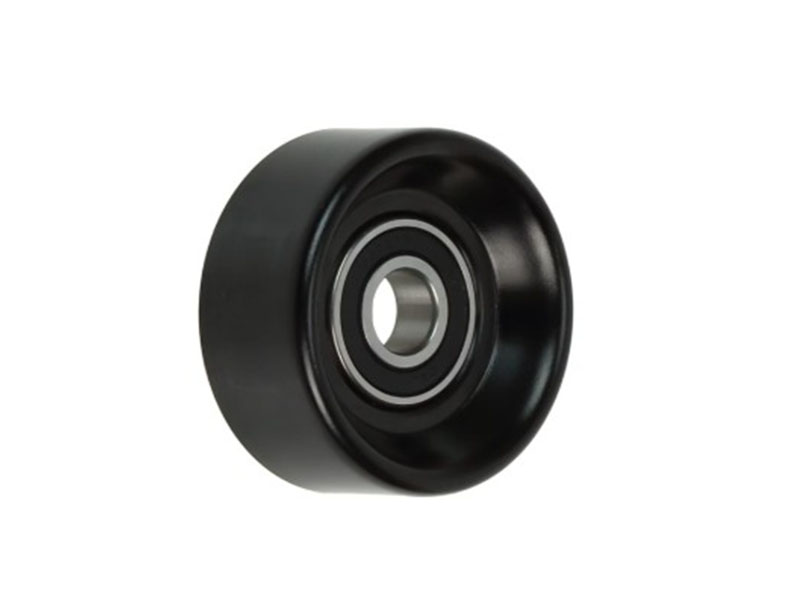
The idler pulley is a fixed guide wheel in the engine’s serpentine belt system. Unlike the spring‑loaded tensioner, its only job is to redirect the belt around accessories. When the idler pulley bearing begins to fail, it produces a series of distinct warnings. Recognizing the 14 symptoms of a bad idler pulley early helps you avoid belt damage, accessory failure, and sudden engine overheating. Below is a complete diagnostic guide – grouped by how you can detect each issue.
8 Visible Symptoms You Can Check Without Starting the Engine
Symptom 1 – Rocking Play: Grasp the idler pulley and try to move it side‑to‑side or in‑and‑out. A healthy pulley has no perceptible movement. Any rocking motion indicates worn bearing races or a loose mounting bolt.
Symptom 2 – Belt Misalignment: Look along the serpentine belt’s path. It must run perfectly straight across all pulleys. If the belt rides off‑center on the idler pulley (closer to one edge), the bearing or mounting bracket is likely deformed, causing edge wear.
Symptom 3 – Cracked or Broken Pulley Body: Inspect the pulley wheel for cracks, missing chunks, or deformation. Even a small crack can propagate under load and eventually cause the pulley to separate from the bearing while the engine is running.
Symptom 4 – Free Spinning (No Resistance): With the belt removed, spin the idler pulley by hand. A good bearing offers some rotational resistance. If the pulley spins effortlessly for more than 1‑2 turns, the internal grease has dried out – a sign of imminent failure.
Symptom 5 – Seized or Rough Rotation: The opposite condition is equally problematic. If the pulley feels gritty, notchy, or extremely difficult to turn, the bearing is already seizing. A seized idler pulley forces the belt to drag across its surface, generating friction and smoke.
Symptom 6 – Discoloration from Heat Stress: Examine the pulley surface and the surrounding metal hub. Blue, brown, or dark yellow discoloration indicates excessive operating temperatures. This heat stress often precedes complete bearing lock‑up.
Symptom 7 – Foreign Material Build‑Up: Look for rubber powder, black dust, or oily residue on the pulley’s contact area. Rubber dust comes from belt abrasion; oily buildup may point to a nearby leak. Both accelerate pulley and belt wear.
Symptom 8 – Uneven Groove Wear: For V‑groove or multi‑rib idler pulleys, inspect the groove pattern. Deep, uneven, or polished grooves reduce belt traction. If the wear pattern does not match the belt’s ribs, the pulley is no longer guiding correctly.
3 Audible Symptoms That Require Engine Running
Symptom 9 – High‑Frequency Squeak (Cold Start): A sharp, chirping squeak that occurs once per belt revolution. It is most noticeable on a cold engine and may diminish as the engine warms. This is often the first acoustic warning of a drying bearing.
Symptom 10 – Continuous Squeal: Unlike an intermittent chirp, a steady high‑pitched squeal indicates constant slippage between the belt and the pulley. A worn bearing allows the pulley to tilt slightly, reducing belt contact area. The noise worsens under electrical or steering load.
Symptom 11 – Grumbling or Rumbling Noise: A low‑frequency rumbling or grinding sound that follows engine speed signals metal‑to‑metal contact inside the bearing. Immediate inspection is required – the pulley could lock up at any time.
3 Indirect Symptoms from Accessory Failures
Symptom 12 – Abnormal Belt Wear Patterns: Remove the serpentine belt and examine it. A failing idler pulley often leaves frayed edges (from misalignment), a glazed shiny surface (from heat), or uneven rib wear. Any of these patterns warrants testing the idler pulley.
Symptom 13 – Battery Warning Light (Voltage Fluctuation): The serpentine belt drives the alternator. When an idler pulley becomes stiff or seizes, the belt may slip, reducing alternator speed. This causes intermittent charging issues, triggering the battery warning light on the dashboard. Headlights may also dim.
Symptom 14 – Engine Overheating or Loss of Power Steering Assist: Many engines use the same belt to drive the water pump and power steering pump. If the idler pulley locks up completely, the belt may snap or jump off. The immediate result is sudden loss of power steering (very hard to turn the wheel), followed within minutes by engine overheating. These are emergency symptoms – pull over safely and turn off the engine.
Common Misdiagnosis: What Else Could Cause Similar Symptoms?
Not every noise or belt issue comes from a bad idler pulley. Several other components produce nearly identical signs. Misdiagnosis wastes time and money, so consider these alternatives before replacement.
Misdiagnosis 1 – Tensioner Pulley Failure: A failing tensioner pulley makes similar squeaking or rumbling noises. However, a tensioner also has a spring‑loaded arm. If the arm moves excessively, flutters, or bottoms out, the tensioner is the culprit – not the idler pulley.
Misdiagnosis 2 – Worn or Glazed Belt: A worn belt can squeal even when all pulleys are healthy. If the belt has a glossy, hard surface, it has lost its friction coefficient. Before replacing any pulley, try a fresh belt – many “pulley noises” disappear with a new belt.
Misdiagnosis 3 – Accessory Bearing Failure (Alternator or Water Pump): The alternator and water pump contain bearings that can fail, generating high‑pitched squeals or grinding sounds. To isolate the source, remove the serpentine belt and spin each accessory pulley by hand. A rough‑spinning alternator or a water pump with side‑to‑side play points to that component, not the idler.
Misdiagnosis 4 – Loose Belt Tension: Insufficient belt tension (from a weak tensioner) causes a continuous squeal under load. Use a belt tension gauge or observe the tensioner arm’s position. If the arm rests against its stop, the tensioner needs replacement.
How to Correctly Diagnose: Remove the serpentine belt and spin each pulley individually (idler, tensioner, alternator, water pump, A/C compressor). A noisy, rough, or wobbly idler pulley should be replaced. Also check for play in the mounting bracket. If all pulleys spin smoothly and quietly, the belt or tensioner is likely the cause. For professional results, replace the idler pulley, belt, and tensioner as a set – they wear together.
Conclusion
The 14 symptoms above cover nearly all failure modes of an automotive idler pulley. Visual and physical inspections catch most issues early; audible symptoms provide real‑time alerts; indirect accessory failures confirm the diagnosis. Always rule out misdiagnoses such as a worn belt, bad tensioner, or failing accessory bearing before replacing the idler pulley. When replacement is necessary, choose components that meet OE standards. DUHUI Bearing manufactures idler pulleys with precision‑ground bearings and durable seals, offering reliable solutions for professional mechanics and DIY users. Early detection and proper diagnosis keep your serpentine belt system running safely for thousands of miles.
Frequently Asked Questions
Q1: Can I drive with a bad idler pulley?
A: No. Driving with a failing idler pulley risks belt slippage, sudden belt breakage, and loss of critical engine accessories such as the alternator, water pump, or power steering pump.
Q2: How long can I drive with a noisy idler pulley?
A: There is no safe distance. A noisy bearing can degrade rapidly – sometimes within 50–100 miles. Immediate inspection and replacement are strongly recommended.
Q3: How many idler pulleys does a car have?
A: Most vehicles have one idler pulley, but some engines (especially those with complex serpentine belt routing) may have two or more.
Q4: Should I replace the tensioner with the idler pulley?
A: Yes. Both components experience similar wear cycles. Replacing both together ensures consistent belt tension, saves labor time, and reduces the risk of a second failure shortly after.
Q5: How much does an idler pulley replacement cost?
A: Replacement costs vary by vehicle, but most drivers pay between $100 and $250 for parts and labor. The pulley itself typically ranges from $20 to $80.
Q6: What causes an idler pulley to fail?
A: The most common cause is bearing wear from lack of lubrication, dirt intrusion, or normal age‑related fatigue. Heat cycles, misalignment, and excessive belt tension also accelerate failure.