Quick Answer: The idler pulley is located at the front of the engine, somewhere along the serpentine belt path. To find it, look for a pulley that is not connected to any accessory (alternator, A/C compressor, or water pump) and is mounted on a fixed, non‑movable bracket. Check your owner’s manual or the belt routing diagram sticker under the hood for the exact location on your specific vehicle.
The idler pulley is a small but essential component of a vehicle’s serpentine belt system. If you have ever heard a chirping noise from the engine bay or noticed the belt wobbling, the idler pulley may be the cause. But before inspecting or replacing it, you first need to know where it is located.
This article explains exactly where the idler pulley is located, how to identify it visually, how it differs from a tensioner pulley, and answers common questions about its placement across different vehicle brands.
What Is an Idler Pulley?
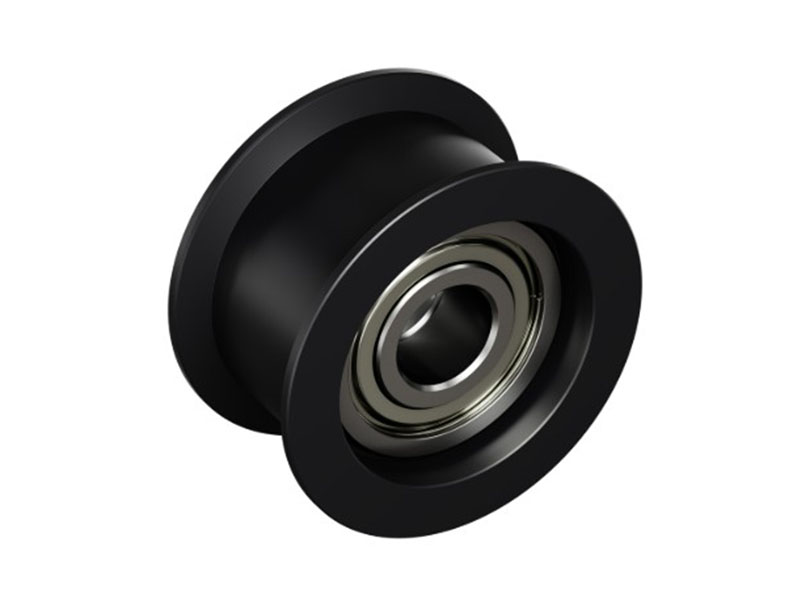
An idler pulley is a free‑spinning wheel with a sealed bearing. It is mounted on a fixed bracket at the front of the engine. Unlike other pulleys, the idler pulley does not connect to any accessory such as the alternator, water pump, or air conditioning compressor. Its only purpose is to guide the serpentine belt.
The term “idler” reflects its passive role — it simply allows the belt to run over it while changing direction or spanning long distances.
What Does an Idler Pulley Do?
The idler pulley performs three main functions in the belt drive system:
- Guides the belt path – It routes the serpentine belt around various engine accessories, ensuring the belt follows the correct loop.
- Increases belt wrap – By increasing the contact arc between the belt and driven pulleys (power steering pump, alternator, A/C compressor, etc.), the idler pulley improves power transmission efficiency.
- Reduces vibration – On long belt spans, the idler pulley provides support, preventing the belt from fluttering, jumping, or producing noise during operation.
Where Is the Idler Pulley Located?
General Location
The idler pulley is located at the front of the engine, directly adjacent to the serpentine belt (accessory belt). Because its role is to guide the belt around various components, you can usually find it near the air conditioning compressor, alternator, or water pump. However, the exact position varies by vehicle model and engine layout. Always refer to the factory belt routing diagram for your specific vehicle.
How to Visually Identify the Idler Pulley
Recognising the idler pulley among several similar pulleys is straightforward if you know what to look for.
Feature‑based identification
- No connected components – The idler pulley has no wires, hoses, or belt‑driven loads. It is the only pulley on the belt path that serves no driven function.
- Surface type – The idler pulley can have a smooth surface (where the back of the belt rides) or a grooved surface (where the ribbed side of the belt rides), depending on which side of the belt it contacts.
- Fixed mounting – It is installed on a stationary bracket and cannot be adjusted.
Comparison: Idler Pulley vs. Tensioner Pulley
| Feature | Idler Pulley | Tensioner Pulley |
|---|---|---|
| Mounting | Fixed bracket, non‑adjustable | Spring‑loaded swing arm, movable |
| Function | Belt guidance / redirection | Maintain belt tension |
| Surface | Smooth or grooved | Typically grooved |
The pulleys themselves may look identical. The key difference lies in the mounting – one has a swinging arm (tensioner), the other is bolted to a fixed bracket (idler).
Most reliable method to locate the idler pulley
- Check the owner’s manual – many include belt routing diagrams.
- Look for the belt routing diagram inside the engine compartment – commonly found on the radiator support, fan shroud, or underside of the hood.
- If no diagram is available, ask a local auto parts store.
Brand and Model Differences
The location of the idler pulley varies significantly between different manufacturers and even between different engines from the same brand.
- Some engines place the idler pulley at the top center of the engine front.
- Others position it between the power steering pump and the alternator.
- A few vehicle models may have no separate idler pulley; instead, they rely only on a tensioner pulley.
Always use the factory belt routing diagram for your exact vehicle. Do not rely on general memory or experience from a different car.
Conclusion
The idler pulley is located at the front of the engine, along the serpentine belt path. To identify it, look for a pulley that is not connected to any accessory, mounted on a fixed bracket, and has either a smooth or grooved surface. Do not confuse it with the tensioner pulley, which sits on a movable spring arm.
Because the exact location varies widely between vehicle makes, models, and engine types, always consult the factory belt routing diagram before any inspection or service.
Frequently Asked Questions (FAQs)
Q1: How many idler pulleys does a car have?
Most passenger cars have one idler pulley. Some engines with longer or more complex belt paths may use two or more idler pulleys.
Q2: Do all vehicles have an idler pulley?
No. Some older or very simple engine layouts do not include an idler pulley. However, the majority of modern vehicles with a serpentine belt have at least one.
Q3: How can you tell the difference between an idler pulley and a tensioner pulley by looking at them?
Look at the mounting bracket. The idler pulley is attached to a fixed bracket that does not move. The tensioner pulley is mounted on a spring‑loaded swing arm that pivots. The tensioner arm moves when you apply force with a wrench.
Q4: Is the idler pulley always on the ribbed side of the belt?
Not necessarily. The idler pulley can contact either the ribbed side (grooved side) or the smooth back side of the serpentine belt. This is why some idler pulleys have a grooved surface while others are smooth.
Q5: Does the idler pulley location differ between brands like Ford, Honda, and Chevrolet?
Yes, significantly. Even the same brand may use different belt layouts on different engines. You must check the factory belt routing diagram for your specific vehicle. General knowledge from one model does not apply to another.
Q6: What if the owner’s manual does not show a belt routing diagram?
Look for a sticker inside the engine compartment – often on the radiator support, fan shroud or hood. If there is no sticker, search online using your vehicle’s year, make, model, and the phrase “serpentine belt diagram.” Local auto parts stores can also provide a printed reference.
Q7: Can the idler pulley be seen from under the car?
On a few vehicles, the idler pulley is mounted low on the engine and may be more accessible from underneath. However, on most passenger cars and trucks, the idler pulley is visible from the top of the engine compartment once any plastic covers are removed.