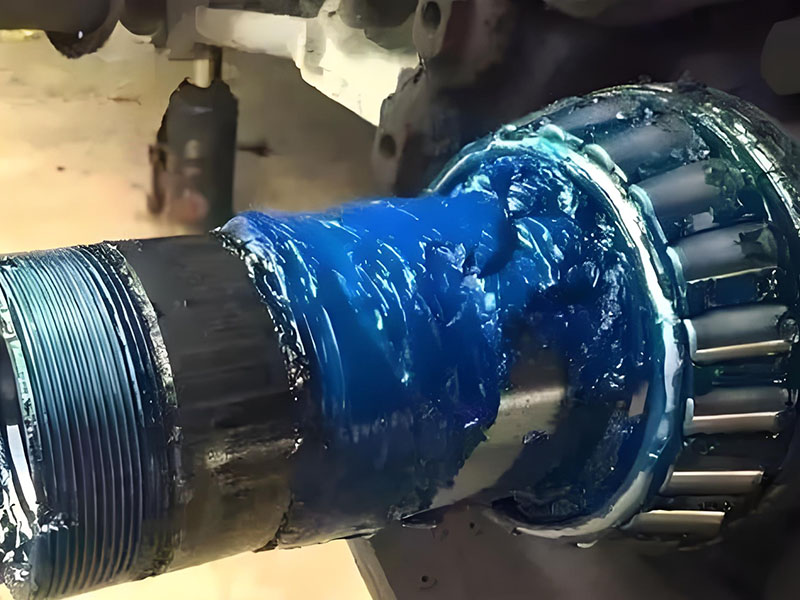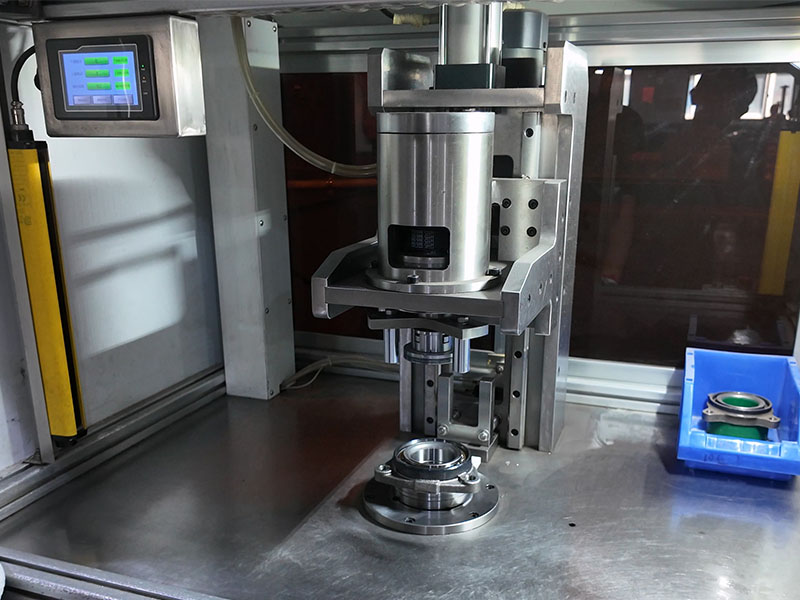
In the world of industrial machinery, bearings ensure smooth rotation and minimizing friction. However, the efficiency and longevity of a bearing are not just about the bearing itself, but also about how it is housed and supported. This is where mounted bearings come into play. These pre-assembled units, combining a bearing and a housing, simplify design, installation, and maintenance for engineers worldwide.
This guide is designed to walk you through the three main types of mounted bearings, helping you understand their unique advantages and ideal applications. Our goal is to provide you with the engineering knowledge you need to make the best choice for your machinery.
What Are Mounted Bearings?
A mounted bearing, sometimes referred to as a Plummer Block, is a ready-to-mount unit consisting of a rolling element bearing (like a ball bearing or roller bearing) housed inside a precisely machined casing. This casing, typically made of cast iron, steel, or thermoplastic, is designed for direct bolting onto a machine frame, eliminating the need for a custom housing.
The core advantages of using mounted bearings include:
- Simplified Installation and Alignment: They are pre-assembled, pre-lubricated, and often pre-sealed, allowing for a “fit-and-forget” installation. This drastically reduces assembly time and eliminates the complex alignment processes required for separate bearings and housings.
- Reduced Maintenance: Integrated sealing systems protect the bearing from contaminants like dust and moisture. Many designs also include re-lubrication fittings, making regular maintenance quick and straightforward, which extends bearing life.
- Enhanced Durability and Reliability: The robust housing protects the bearing from external impacts and distributes loads evenly, reducing stress points and improving the unit’s overall lifespan.
- Optimized Load Support: Mounted bearings are engineered to handle both radial (perpendicular to the shaft) and axial (parallel to the shaft) loads, with capacity depending on the type of bearing insert used.
- Space-Efficient Design: By integrating the bearing and housing, these units create a more compact machine design, which is particularly beneficial in applications with limited space.
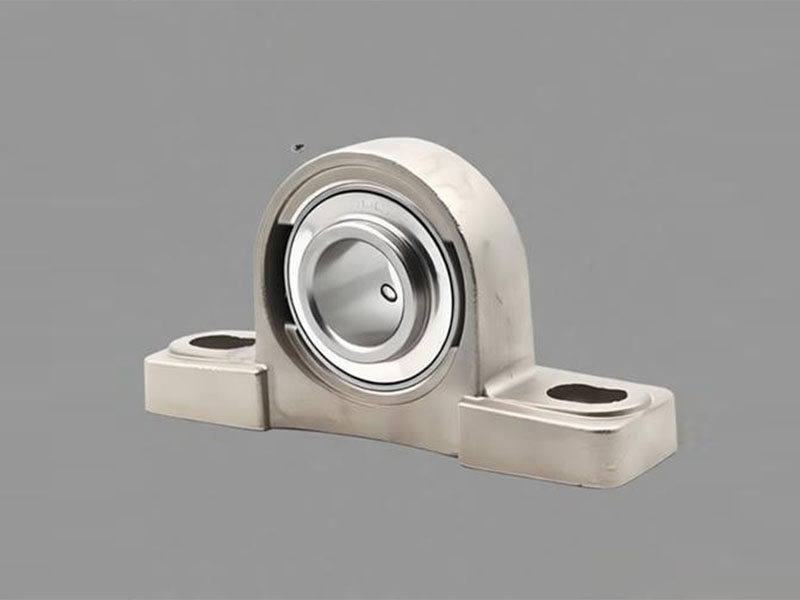
Pillow Block Bearings: The Workhorse of Industrial Applications
The pillow block bearing, also known as a plummer block, is the most common type of mounted bearing. It features a housing with a flat base that allows it to be bolted to a supporting surface, with the shaft running parallel to that surface.
Core Applications:
Due to their versatility and robust design, pillow block bearings are used across nearly every industry. Common applications include:
- Mining & Aggregate: Conveyor systems handling heavy, abrasive materials.
- Agriculture: Balers, harvesters, and other equipment exposed to dirt and vibration.
- Material Handling: Roller conveyors in warehouses and distribution centers.
- General Manufacturing: Fans, blowers, line shafts, and industrial ovens.
Main Variants:
When selecting a pillow block, you’ll encounter standard and heavy-duty series, with the latter offering thicker housings and larger bearings for higher load and impact resistance. The bearing insert itself can be a deep groove ball bearing for general use, or a spherical roller bearing for applications requiring high radial load capacity and the ability to handle misalignment.
Installation & Maintenance Best Practices:
While they are user-friendly, proper care is crucial for maximum service life.
- Proper Alignment: Ensure the mounting surface is flat and the shaft is correctly aligned with the base before tightening bolts.
- Regular Re-lubrication: Follow the manufacturer’s schedule. The right amount of clean grease reduces friction and flushes out contaminants.
- Proactive Monitoring: Train maintenance staff to listen for unusual noise or monitor for excessive vibration and heat, as these are early indicators of potential failure.
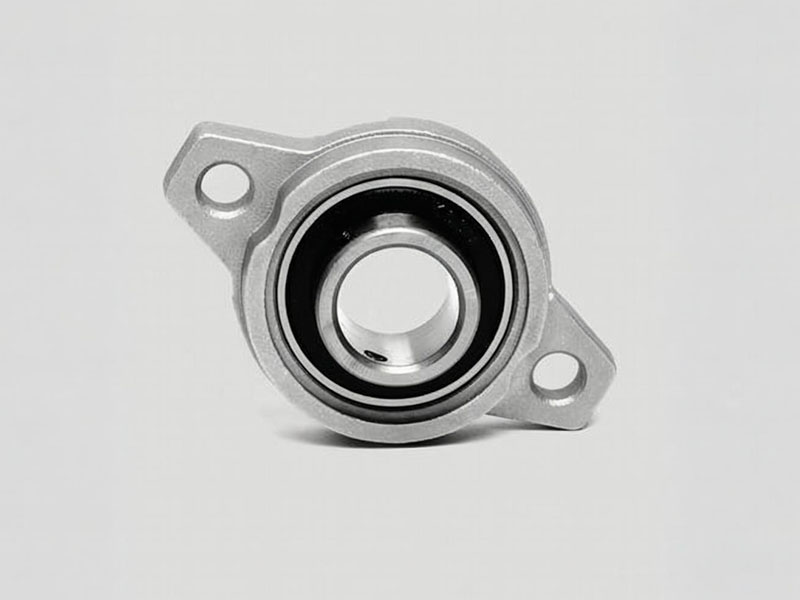
Flange Block Bearings: Precision Mounting for Perpendicular Surfaces
Unlike pillow blocks, flange block bearings are designed to be mounted on surfaces perpendicular to the shaft axis. They feature a flanged housing with bolt holes, allowing the unit to be bolted to a wall, frame gusset, or machine side plate.
Typical Applications:
The flange block’s design makes it ideal for applications where mounting from the side is more practical than from below.
- Material Handling: Supporting the ends of conveyor rollers.
- Food Processing & Packaging: Compact, easy-to-clean designs (especially in stainless steel) for light-duty machinery.
- Textile Machinery: Providing stable support in high-speed operations.
- HVAC & Baggage Handling Systems: Perfect for tight spaces where running a shaft to a pillow block support is not feasible.
Variants and Their Differences:
Flange blocks are primarily categorized by the number and arrangement of bolt holes, which directly correlates to their load-holding capability.
- 2-Bolt Flange Bearings: Suitable for light to medium-duty applications where space is at a premium.
- 3-Bolt Flange Bearings: Often triangular, they offer increased stability and resistance to rotation on the mounting surface.
- 4-Bolt Flange Bearings: Designed for heavy-duty applications or where significant vibration is present, providing the most secure mounting.
Material & Durability:
The choice of housing material is critical. At DUHUI Bearing, we offer a range of materials to match your operating environment. Ductile iron housings provide excellent strength and shock absorption. Stainless steel housings offer superior corrosion resistance for food processing or chemical plants. Thermoplastic housings are ideal for light-duty, corrosive, or applications requiring quiet operation.
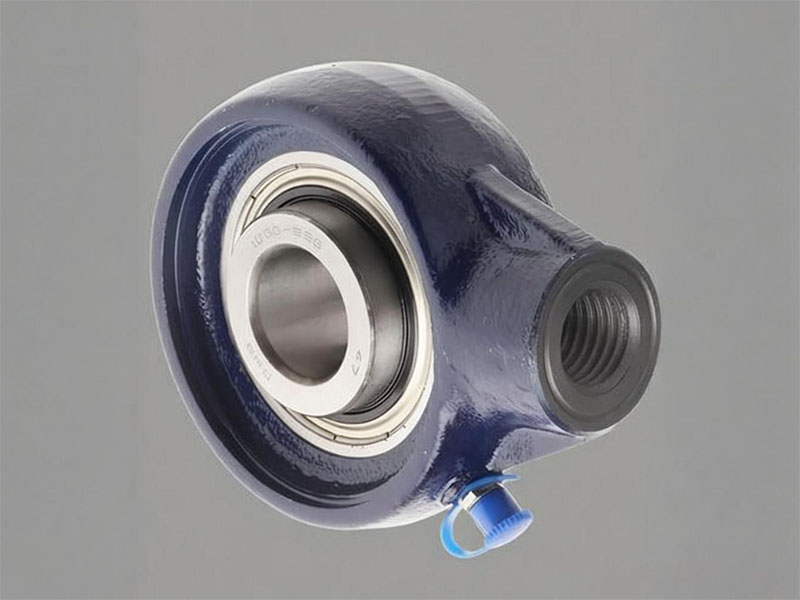
Hanger Bearings: Supporting Shafts in Overhead Applications
The hanger bearing is a specialized type of mounted bearing designed for a very specific purpose: supporting long, horizontal transmission shafts from above. As the name implies, it “hangs” the shaft from an overhead structure.
Core Applications:
- Screw Conveyors (Augers): This is the most classic application. In long screw conveyors, hanger bearings are used to support the intermediate sections of the screw shaft, preventing sagging and ensuring smooth operation.
- Long Line Shafting: In older manufacturing facilities or specialized overhead power transmission systems, hanger bearings provide necessary support at intermediate points where floor mounting is impossible.
Key Features and Advantages:
The unique design of a hanger bearing allows the shaft to pass through it while being suspended. These units are typically self-aligning to accommodate slight shaft deflection or mounting imperfections in long conveyor systems. Their design also often allows for easy access to lubrication points and simple replacement, which is vital in hard-to-reach overhead locations.
Making the Right Choice: Key Selection Criteria
Selecting the optimal mounted bearing is an engineering decision. To ensure peak performance and longevity, consider these five factors. The DUHUI team is here to help you navigate each one.
- Load Direction and Magnitude: Is the primary force radial (pushing down on the shaft) or axial (pushing along the shaft)? Is it a constant load or are there heavy shocks? This will guide you toward the right bearing insert (ball, spherical roller, etc.).
- Operating Speed: High-speed applications may require precision ball bearings with tighter tolerances, while低速, high-torque applications might benefit from roller bearings.
- Environmental Conditions: Is the environment clean or filled with abrasive dust? Is it dry, wet, or chemically corrosive? This determines the need for specialized seals (e.g., triple-lip contact seals) and housing materials (e.g., stainless steel).
- Mounting Space and Orientation: Do you have a flat base to mount on? A vertical side wall? Or do you need to support a long overhead shaft? The answer will lead you to pillow blocks, flange blocks, or hanger bearings.
- Maintenance Needs: Do you want a unit that requires minimal attention, or does your facility have a regular lubrication schedule? This influences your choice between sealed-for-life units and those with re-greasing capabilities.
Conclusion
Mounted bearings are fundamental components that drive efficiency and reliability in modern machinery. Whether you need the versatile support of a pillow block, the space-saving design of a flange block, or the specialized function of a hanger bearing, understanding their unique characteristics is the first step toward an optimal solution.
With two decades of manufacturing experience and a deep understanding of global industrial demands, DUHUI Bearing is your trusted partner. We don’t just sell bearings; we provide engineered solutions. If you are unsure which mounted bearing is right for your application, or if you need a custom-engineered solution, our team of experts is ready to assist you.