

Advanced Design
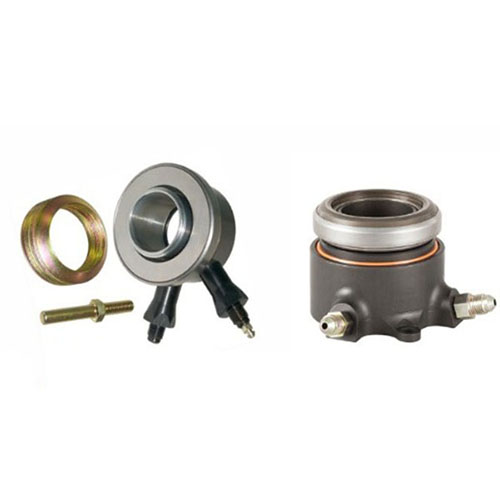
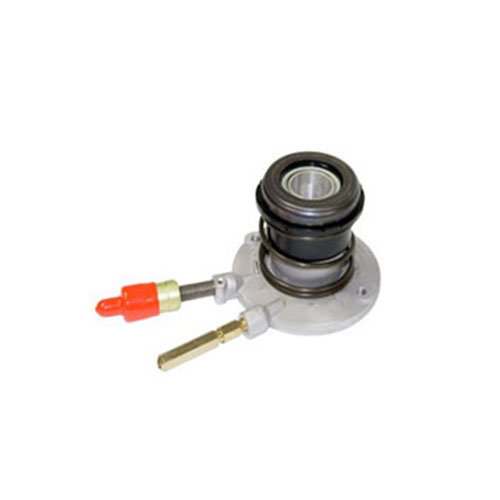
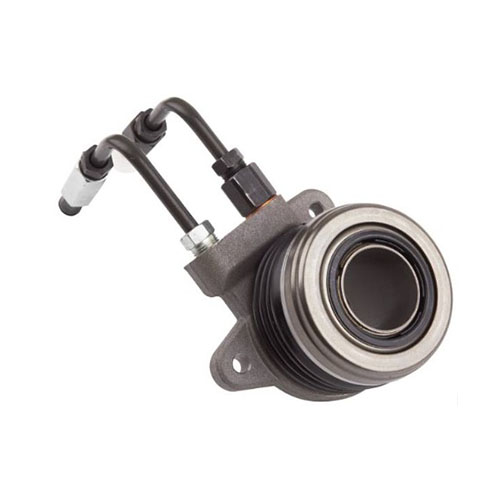
A hydraulic release bearing, also known as a concentric slave cylinder (CSC), is a key component in modern hydraulic clutch systems. It replaces the traditional clutch fork and external slave cylinder.
The main components include a piston, cylinder body, angular contact ball bearing, high-temperature seals, and a hydraulic port or quick-connect fitting. The entire assembly is mounted concentrically on the transmission input shaft sleeve.
Unlike mechanical release bearings, the CSC directly applies hydraulic pressure to push the bearing against the clutch diaphragm spring. This integrated design reduces moving parts and improves clutch release consistency.
Features & Benefits
- Self-adjusting air gap – Maintains a preset 0.150–0.200 inch clearance for consistent clutch pedal feel and release point.
- Compact and lightweight – Eliminates clutch fork, pivot, and external linkage, reducing total clutch system weight by up to 70%.
- Premium seal and bearing materials – Resists clutch dust, high-temperature exposure, and hydraulic fluid contamination.
- Angular contact ball bearing design – Supports high axial loads and compensates for minor misalignment between the crankshaft and transmission.
- Standardized hydraulic connection – Compatible with most aftermarket master cylinders; available with integrated bleeder for easy servicing.
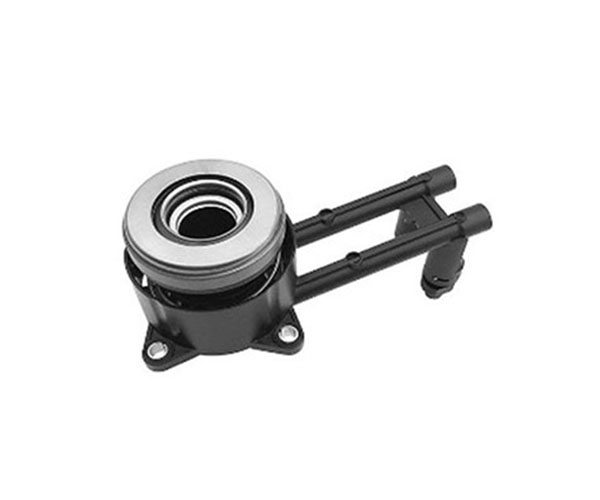
Your Professional Hydraulic Release Bearing Supplier
DUHUI has manufactured automotive bearings since 2003, with over 20 years focusing on hydraulic release bearings. We operate an ISO 9001 and IATF 16949 certified factory. Production equipment includes fully automatic CNC machine tools. Monthly capacity reaches 100,000 sets. A technical team of seven specialists controls every production stage to meet OE standards.
Over 800 Models Covering Major Automakers
We supply hydraulic release bearings for Honda, Audi, Ford, GM, and other major brands. Our DH13 series offers more than 800 automotive hydraulic release bearing models. Each bearing is a direct OE replacement. Aftermarket pricing provides a competitive advantage over OEM parts.
GCr15 Bearing Steel with Heat Treatment
Inner and outer rings use GCr15 bearing steel (equivalent to AISI 52100 / DIN 100Cr6), the most widely used high-carbon chromium bearing steel in the global bearing industry. After quenching and tempering, surface hardness meets standard requirements. A surface coating process improves corrosion and wear resistance. Seals use FKM rubber (Viton) from ISO 9001 certified suppliers to prevent hydraulic oil leakage.
Integrated Hydraulic System Design
Unlike traditional mechanical release bearings, DUHUI hydraulic release bearings feature an integrated hydraulic system. Structural integration reduces overall weight. Lower load improves energy efficiency. Hydraulic transmission delivers smoother, more stable clutch engagement. This design is commonly used in modern passenger car manual transmissions.
Testing Standards for Hydraulic Release Bearings
Before leaving the factory, DUHUI hydraulic release bearings undergo standard product testing and performance testing. We follow the QC/T series (China’s automotive industry standards for clutch release bearing assemblies) and T/ZZB 2192-2021 (passenger car hydraulic clutch release bearing assembly specification).
- Axial clearance: static tolerance ≤0.05mm, dynamic tolerance ≤0.15mm (per QC/T standards).
- Rotational torque: no-load ≤1.2Nm at room temperature, under load ≤1.5Nm.
- High and low temperature test: -40℃ to 150℃ to verify seal integrity and lubrication stability.
- Fatigue test: 1 million cycles without damage to validate service life.
- Salt spray test: 72 hours, no rust on exposed metal surfaces.
- Sealing test: no oil leakage under pressure cycling.
Quality Control from Material to Finished Product
Quality control is implemented in every process from material receiving to final packaging. We provide material inspection certificates and finished product inspection certificates. For export markets, we handle country-specific access certifications including CE for the EU. Our quality department performs 100% inspection on finished products before shipment.
Service, Delivery, and Quality Commitment
Typical lead time for stock models is 7–15 days. We export to more than 50 countries and work with automotive aftermarket distributors and wholesale suppliers. Customization options include bearing dimensions, seal types, and grease specifications. Customer complaint rate is maintained below 0.5% annually based on shipment volume. Contact us with your target models or volume estimates for a quotation.
Product Types & Series
This section covers the three main configurations of hydraulic release bearings found in modern clutch systems, followed by three aftermarket series from DUHUI Bearing.
- Pull-type CSC
- Push-type CSC
- Integrated Slave Cylinder & Bearing
- Product Series Introduction
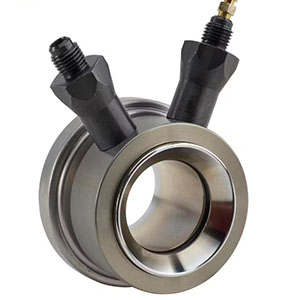
Pull-type CSC
Pull-type hydraulic release bearings are mainly used in heavy-duty trucks and some high-performance vehicles. Unlike push-type designs, the bearing pulls the diaphragm spring away from the pressure plate. This configuration allows for higher clutch clamp loads with lower hydraulic effort. The bearing assembly moves toward the engine when actuated.
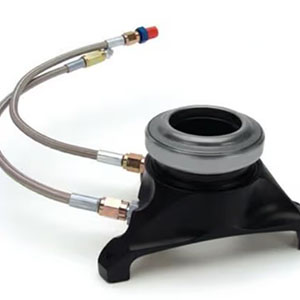
Push-type
Push-type CSC is the most common configuration for passenger cars and light commercial vehicles. Hydraulic pressure pushes the bearing forward toward the flywheel, acting directly on the diaphragm spring fingers. This design is simple, compact, and widely interchangeable among many vehicle platforms. Most Asian and European compact cars use push-type hydraulic release bearings.
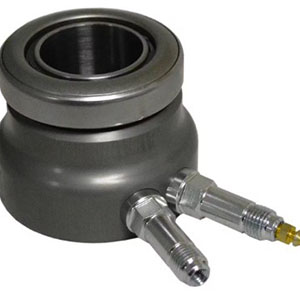
Integrated Slave Cylinder & Bearing
This type combines the slave cylinder and release bearing into a single, non-serviceable unit. There is no separate bearing housing or external cylinder. The integrated design reduces the number of dynamic seals and potential leak paths. It also simplifies assembly for automated transmission lines. Replacement always involves changing the complete CSC assembly, which ensures consistent performance.
Product Series Introduction
The following DUHUI series are designed for direct interchange with OE and leading aftermarket clutch systems. Each series references proven industry platforms to ensure correct fitment and hydraulic performance.
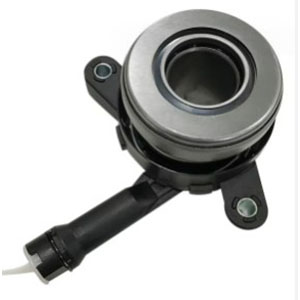
Series 510 hydraulic release bearings follow the OE-level design specification established by LuK, one of the major European clutch manufacturers. LuK utilizes the 510 series numbering system across its CSC range, with typical part numbers such as 510 XXXX 10 (e.g., 510 0230 10). These CSC units feature integrated release bearing and slave cylinder construction, eliminating the conventional clutch fork for improved efficiency and reduced weight. DUHUI Series 510 equivalents are suitable for passenger car applications where LuK 510 series CSC is specified as OE or aftermarket replacement.
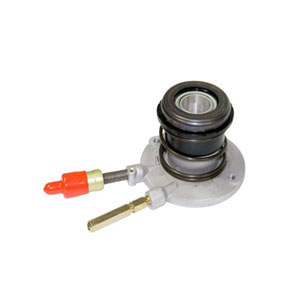
Series 3151 hydraulic release bearings reference the widely adopted product numbering system from SACHS, a global leader in clutch OE supply. The 3151 series includes part numbers such as 3151 804 241, available in both pull-type and push-type configurations. These bearings are engineered with specialized high-temperature grease and reinforced sealing to withstand heat and contamination inside the bellhousing. DUHUI Series 3151 equivalents are designed for passenger car, commercial vehicle, and performance applications requiring SACHS-specification CSC units.
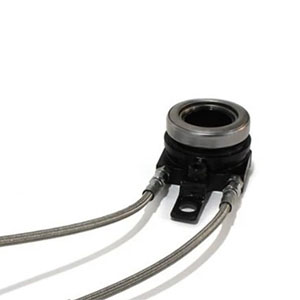
Series 804 hydraulic release bearings follow the OE reference system used by Valeo, one of the world’s largest clutch manufacturers with a history of clutch system production since 1923. Valeo’s CSC parts within the 804 numbering range include applications. Valeo CSC units integrate the slave cylinder and release bearing into a single compact assembly, eliminating the clutch fork and conventional release bearing while reducing total system weight by up to 70% compared to conventional fork-type systems. DUHUI Series 804 equivalents are manufactured for vehicle applications where Valeo-specification hydraulic release bearings are required.
Other Related Types
Besides the standard CSC designs described above, DUHUI also manufactures specialized hydraulic release bearing variants for unique aftermarket conversion, retrofit, and high-wear applications.
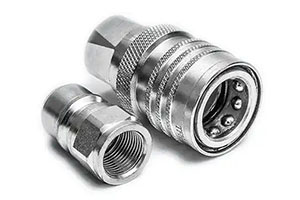
Quick-connect CSC – Features a factory-installed push-to-connect hydraulic fitting that requires no tools for line attachment. The quick-connect interface reduces installation time and allows positive locking confirmation. The connector uses dual O-ring seals rated for DOT3 and DOT4 brake fluids.
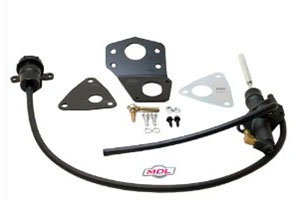
Retrofit kit CSC – Complete conversion kits that convert mechanical clutch linkage systems to hydraulic operation. Each kit includes a CSC, a matching hydraulic master cylinder, a pre-filled and pre-bled hose assembly, and mounting hardware.
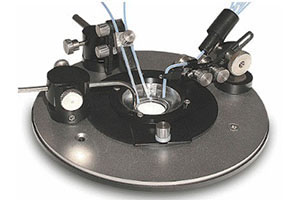
Low-profile CSC – Designed for transmissions with minimal space between the input shaft sleeve and the bellhousing wall. Uses a reduced outer diameter cylinder and a compact bearing face. Stroke length remains within 8-12 mm.
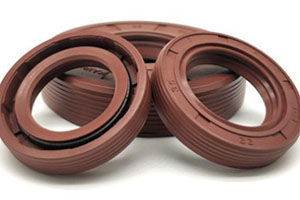
High-temperature CSC – Uses Viton (FKM) primary seals, a vented bearing housing, and high-droop-point grease. Maximum continuous operating temperature is 200°C (392°F), with short-duration peaks up to 240°C.
Product Applications
Hydraulic release bearings are used across multiple vehicle segments and operating conditions. Each application places different demands on stroke length, seal durability, bearing load capacity, and hydraulic pressure.

Compact and mid-size sedans with manual transmissions. Typical stroke range 10–14 mm, system pressure 50–80 bar. CSC reduces pedal effort and eliminates clutch fork noise. Applications include Volkswagen Golf, Toyota Corolla, and Hyundai Elantra. DUHUI Series 510 and 3151 directly replace LuK and SACHS units in these platforms.
Light trucks, vans, and minibuses up to 7.5 tons. High cycle durability and contamination resistance required. Reinforced pistons and double-lip seals are standard. Long-stroke designs (up to 18 mm) accommodate clutch disc wear in fleet operations. Example: Ford Transit with Valeo 804 fitment.
Water, mud, sand, and dust exposure demand robust seal design and corrosion-resistant housings. Anodized aluminum or stainless steel CSC housings prevent corrosion. External dust boots protect the bearing interface. Applications include Jeep Wrangler JK and Toyota Land Cruiser.
High-rpm clutch kits and racing transmissions require low rotating mass and consistent release at elevated temperatures. Performance CSCs use lightweight aluminum cylinders, stainless steel AN-4 fittings, and constant-contact self-adjusting air gap. Applications: Ford Mustang with Tremec T-56 swap and Porsche 911 racing CSC.
Clutch Release Bearing Technology Comparison
This comparison examines two distinct release bearing systems: mechanical (fork‑actuated) and hydraulic (concentric slave cylinder). Key differences in actuation, maintenance, and application suitability are covered.
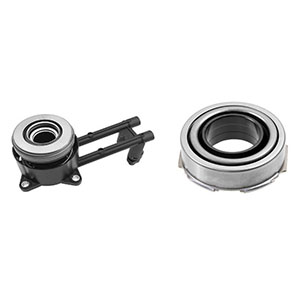
This article compares hydraulic release bearings (CSC) and mechanical release bearings across structure, actuation method, failure modes, and maintenance requirements. Hydraulic systems use a concentric slave cylinder mounted on the transmission input shaft, eliminating the clutch fork and reducing system weight by up to 70%. Mechanical systems rely on external linkage and a fork-actuated bearing. The article also covers common failure symptoms, conversion considerations for retrofit applications, and a decision guide for selecting the correct type based on vehicle platform and operating conditions.
For more details, please read “Mechanical vs. Hydraulic Clutch Bearings: Key Differences and How to Choose”.
Related Product Recommendations
Below are popular hydraulic release bearing models from DUHUI, grouped by series. These part numbers cross-reference to OE and leading aftermarket specifications.
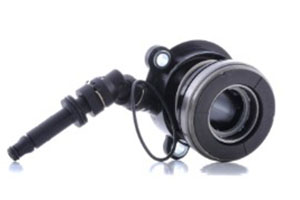
510 0073 10 – Hydraulic concentric slave cylinder for Opel/Vauxhall. Integrates actuation and release in one sealed hydraulic unit, eliminating the release fork. Provides self-adjusting hydraulic clutch operation.
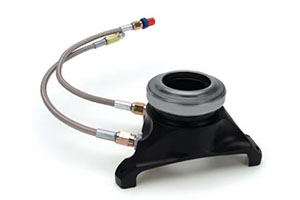
510 0154 10 – Pre-filled, ready-to-install hydraulic throw-out bearing for passenger car hydraulic clutch systems. Corrosion-resistant aluminum housing. Reduces hydraulic pedal slack and improves shift engagement.
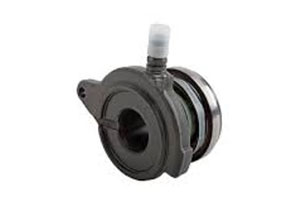
510 0102 10 – Medium-duty OE-grade hydraulic CSC with extended piston stroke to compensate for disc wear. All hydraulic seals pre-assembled for direct replacement.
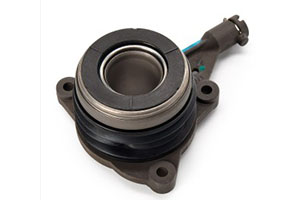
510 0235 10 – Factory-fit hydraulic release bearing for Land Rover Defender and Discovery. Withstands extreme articulation without hydraulic fluid leakage. Optional wear sensor available.
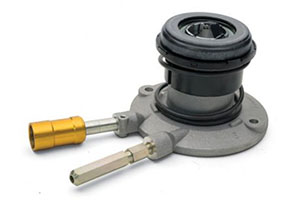
3151 886 001 – Direct-fit hydraulic concentric slave cylinder for 2003–2007 Honda Accord. One-piece hydraulic unit removes external slave cylinder leak concerns. Connects directly to hydraulic line.
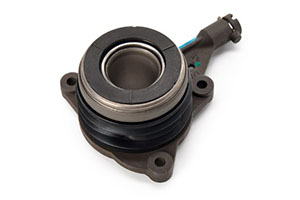
3151 000 515 – Universal hydraulic CSC for Getrag and ZF transmissions. Adjustable spacer allows precise hydraulic bearing preload setting to match clutch stack height.
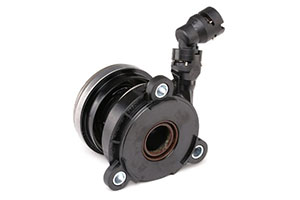
Hydraulic Release Bearing (CSC) Overview – Design, Working Principle and Installation
You press the clutch pedal and the transmission shifts smoothly. That easy action relies on a small but critical component inside your bellhousing: the hydraulic release bearing, also known as a concentric slave cylinder (CSC). How does it differ from an old‑school mechanical release bearing? Why do most modern vehicles use hydraulic actuation? This guide covers the design, working principle, technical specs, and correct installation procedure – information every workshop technician and serious DIYer should know.
What Is a Hydraulic Release Bearing (CSC)?
A hydraulic release bearing combines the clutch release bearing and the slave cylinder into one sealed unit. Unlike traditional systems that use a separate external slave cylinder and a clutch fork, the CSC mounts directly inside the bellhousing, concentric with the transmission input shaft. This compact design removes several mechanical parts, reducing friction and potential failure points.
When you depress the clutch pedal, brake fluid from the master cylinder flows into the CSC and pushes a piston forward. That piston forces the bearing against the rotating diaphragm spring of the pressure plate, disengaging the clutch disc from the flywheel. Release the pedal, pressure drops, and a return spring retracts the piston – the clutch re‑engages.
How a CSC Works – Step by Step
The operation cycle is straightforward:
- Clutch pedal depressed → master cylinder generates hydraulic pressure → fluid travels through a hose to the CSC.
- Pressure acts on the CSC piston → piston moves forward → release bearing contacts the pressure plate’s diaphragm spring.
- Bearing rotates at engine speed while the pedal is held → clutch disc separates from flywheel → power flow stops.
- Pedal released → hydraulic pressure falls → return spring pulls the piston back → bearing moves away → clutch disc clamps against flywheel → torque delivery resumes.
The bearing only spins when the pedal is pressed. In stop‑and‑go city driving, that can mean hundreds of short rotation cycles per day. On the highway, the CSC may stay stationary for hours. This intermittent duty cycle puts unique demands on internal lubrication – the grease must not separate during long idle periods, yet must flow instantly when rotation starts.
Key Advantages Over Mechanical Release Systems
Traditional mechanical or hydraulic‑fork systems use an external slave cylinder mounted on the transmission housing. A pushrod or fork transfers force through the bellhousing to a separate release bearing. That fork pivots on a ball stud, and the bearing slides on a guide tube.
A CSC offers several clear benefits:
- Fewer components – No clutch fork, external slave cylinder, or pushrod. Less friction and fewer wear points.
- Lighter pedal feel – Direct hydraulic pressure without mechanical leverage losses.
- No fork deformation – Traditional forks can bend under heavy load, reducing release efficiency. A CSC has no fork to bend.
- Backlash‑free operation – Constant, quiet contact with the diaphragm spring reduces noise and vibration.
- Self‑adjusting – The CSC maintains proper contact as the clutch disc wears, unlike mechanical systems that need periodic free‑play adjustment.
The main trade‑off? A CSC is not serviceable externally. When it fails, you must remove the transmission to replace it.
Technical Parameters – What to Look For
When selecting or inspecting a CSC for passenger cars and light trucks, these typical specifications apply:
- Stroke: 8–18 mm, vehicle‑dependent. Too little stroke prevents full clutch disengagement; too much overstresses internal stops.
- Burst pressure: >250 bar (3,600 psi). A weak unit may rupture under hard use.
- Leakage rate: <0.5 cc/min at 100 bar. Higher rates indicate seal wear.
- Service life: >500,000 cycles under OE test conditions – roughly 80,000 to 160,000 km of real‑world driving.
- Continuous operating temperature: -40°C to 150°C. Exhaust and engine heat can push local temperatures higher.
- Max rotational speed: Up to 8,000 rpm for passenger car CSCs; lower for commercial vehicles.
Quality CSCs use high‑grade steel for bearing races, PTFE‑reinforced piston seals, and an anodised aluminium cylinder body. Reputable manufacturers perform 100% leakage testing – typically pressurised to 120 bar for 30 seconds while monitoring pressure drop.
Matching the CSC to the Hydraulic Circuit
The CSC does not work alone. It is part of a matched hydraulic system that includes the clutch master cylinder, hose, and fluid. The master cylinder’s bore diameter and stroke must move enough fluid volume to push the CSC piston through its full travel.
If the master cylinder is undersized, the CSC won’t fully release the clutch – gears will grind. If it is oversized, pedal effort becomes excessive, and the CSC may be over‑stroked, damaging internal seals. When replacing a CSC, inspect the master cylinder for wear or leakage. Many workshops replace both components as a set on high‑mileage vehicles (over 150,000 km).
Installation – Critical Steps for a Reliable Result
Proper installation is the difference between a CSC that lasts 160,000 km and one that fails in 20,000 km. Pay close attention to these points.
Air Gap Measurement and Adjustment
The air gap between the CSC bearing face and the diaphragm spring is the single most important measurement. Most OEM specifications call for 3.8 to 5.1 mm (0.150–0.200 inch).
- Too large a gap: The CSC runs out of travel before fully releasing the clutch. Result: gear grinding, especially reverse.
- Too small a gap (preload): The bearing stays in constant light contact with the diaphragm spring. Result: rapid wear, clutch slip under load, and eventual bearing seizure.
How to measure: With the CSC bolted to the transmission but the transmission not yet fully tightened to the engine, use a depth gauge or a straightedge with feeler gauges. Measure from the bearing face to the pressure plate mounting surface. Add or remove shims as needed. Some performance clutches with lightweight flywheels require a different gap – always check the vehicle service manual.
Other Installation Essentials
- Centering: The CSC must be concentric with the input shaft sleeve. Misalignment causes uneven bearing contact and early failure.
- Do not compress a new CSC before installation. Compressing a dry, unfitted unit can damage the internal seals. If the piston extends accidentally, retract it slowly by hand over several seconds.
- Bleed the system thoroughly. Air in the hydraulic circuit produces a spongy pedal and incomplete clutch disengagement.
- Clean the bellhousing. Remove all clutch dust, grease, and debris before installing the new CSC. Contamination will kill the bearing quickly.
- Replace the O‑ring. The seal between the CSC and transmission should always be new – reused O‑rings are a common source of external leaks.
Why You Must Replace the CSC with Every Clutch Job
Industry experts – including ZF Aftermarket and other OE suppliers – strongly recommend replacing the CSC whenever you replace the clutch disc, pressure plate, or flywheel. The labour cost is already paid because the transmission has to come out anyway. Reusing an old CSC alongside new clutch components is a false economy.
An old CSC can fail in two ways that directly damage your new clutch:
- Internal leakage: Fluid bypasses the piston seals and contaminates the clutch disc, causing slip or chatter.
- Bearing seizure: A seized bearing grinds into the diaphragm spring fingers, ruining the pressure plate and sending metal debris through the bellhousing.
The small additional cost of a new CSC is cheap insurance against a comeback repair that will cost you twice the labour.
Common Installation Mistakes to Avoid
Based on real workshop experience, these errors cause most premature CSC failures:
- Forgetting to remove shipping spacers (if provided with the CSC).
- Using the wrong shim thickness after flywheel resurfacing – the stack height changes.
- Failing to account for aftermarket clutch kits that have different pressure plate heights.
- Not bleeding the system completely – even a small air bubble reduces effective stroke.
- Using old, contaminated brake fluid from an open container. Moisture lowers the boiling point and corrodes seals.
Take your time, measure the air gap, flush the hydraulic circuit with fresh DOT4 fluid, and always fit a new CSC with the clutch kit. Your customers – or your own vehicle – will thank you with years of reliable service.
Hydraulic Release Bearing Failure Diagnosis and Prevention Guide
A hydraulic release bearing (CSC) is a reliable component, but it does fail over time. Recognizing the early warning signs can save a vehicle owner from a roadside breakdown and an expensive second transmission removal. This guide covers four common failure patterns seen in real‑workshop conditions, plus diagnostic procedures and preventive measures that reduce comeback repairs. If you work on manual transmissions professionally, keep this reference handy.
Failure Mode 1 – Bearing Noise When the Clutch Pedal is Depressed
A high‑pitched squeal or grinding noise that appears only when you push the clutch pedal – and disappears when you release it – is the classic symptom of a failing CSC bearing. The noise comes from a dry or contaminated angular contact bearing inside the CSC. Over time, clutch dust from a worn disc can work past the bearing seals. The bearing only spins when hydraulic pressure is applied, so the noise stops as soon as the pedal comes up. The pitch also changes with engine RPM.
Diagnosis: Use a mechanic’s stethoscope on the bellhousing while an assistant cycles the clutch. If the noise originates from the centre of the bellhousing, the CSC bearing is the likely cause. Compare with a known good vehicle if possible. Do not mistake this for transmission input shaft bearing noise – that usually changes with vehicle speed or gear selection, not just clutch pedal position.
Action: Replace the entire CSC. The bearing is not serviceable separately. Do not attempt to lubricate or repair a noisy CSC – internal access is impossible without destroying the seal. Ignoring bearing noise can lead to complete seizure. A seized CSC will chew into the pressure plate fingers, destroying the pressure plate and potentially sending metal fragments through the bellhousing.
Prevention: When fitting a new CSC, ensure the bellhousing is completely clean of old clutch dust. Some high‑dust environments (severe duty or off‑road) may benefit from a CSC with enhanced sealing, though most OE designs are sufficient for normal use.
Failure Mode 2 – Internal Fluid Leakage (Sinking Pedal)
You press the clutch pedal and hold steady pressure at about 50% travel. Over 10 to 20 seconds, the pedal slowly sinks toward the floor without you moving your foot. That is a classic sign of internal leakage past the CSC piston seals. Fluid bypasses the piston from the pressure side to the return side, effectively short‑circuiting the hydraulic circuit.
Test procedure: With the engine off, hold the pedal at half travel for 30 seconds. If it sinks further without applied force, internal leakage is confirmed. A related check: pump the clutch pedal several times to build pressure, then hold steady – sinking indicates bypass. Low brake fluid level in the reservoir with no external drips is another strong indicator.
Root cause: Contaminated brake fluid is the number one cause. Moisture absorbed from the air (DOT4 is hygroscopic) and microscopic wear particles act as abrasives, wearing down the PTFE sealing lips. Over time, the seals can no longer maintain a tight barrier.
Action: Replace the CSC. Then, critically, flush the entire clutch hydraulic circuit with fresh DOT4 brake fluid from a sealed container. Failure to flush leaves contaminated fluid that will damage the new seals within months. Also inspect the clutch master cylinder – a failing master cylinder can send debris downstream into the CSC.
Failure Mode 3 – External Leakage at the Quick‑Connect Fitting
Visible brake fluid on the outside of the bellhousing or dripping from the lowest point of the transmission often comes from the CSC’s hydraulic port or quick‑connect fitting. This is usually easy to spot but sometimes misdiagnosed as a rear main engine oil seal leak.
Diagnosis: To distinguish between engine oil and brake fluid, add UV dye to the brake fluid reservoir. Run the engine and cycle the clutch a few times, then inspect with a UV light. If the leak glows, it is hydraulic fluid. If not, it is likely engine oil. Also, wipe the area clean, then have an assistant depress the clutch pedal while you inspect the fitting. If fluid appears at the connector, the CSC or its fitting is the source.
Common causes:
- Improper connector seating – the quick‑connect was not fully engaged.
- Damaged or missing O‑ring on the fitting.
- Cracked plastic fitting (some designs use plastic connectors that become brittle with heat cycling).
- A dislodged retaining clip during transmission installation – the clip may have been bumped or not properly locked.
Action: Replace the CSC. After installation, always pull‑test the quick‑connect with slight tension to confirm locking. For push‑fit connectors, verify that the O‑ring from the old CSC has not remained inside the female connector – this is a surprisingly common oversight that prevents proper sealing.
Failure Mode 4 – Incorrect Air Gap or Preload (Installation Error)
Many CSC failures are not due to defective parts but to incorrect installation. The air gap between the bearing face and the diaphragm spring must be within the vehicle manufacturer’s specification – typically 3.8–5.1 mm (0.150–0.200 inch) for most passenger cars.
Symptoms of incorrect gap:
- Too much gap: The CSC runs out of stroke before fully releasing the clutch. Gears grind, especially reverse. The clutch drags even with the pedal fully depressed.
- Too little gap (preload): The bearing stays in constant light contact with the diaphragm spring. Symptoms include clutch slip under full throttle in higher gears, a clutch pedal with zero free play, and rapid bearing wear leading to noise or seizure.
Measurement procedure: With the CSC bolted to the transmission but the transmission not yet fully tightened to the engine, use a depth gauge or a straightedge with feeler gauges. Measure from the bearing face to the pressure plate mounting surface. Add or remove shims as needed. Some vehicles require a specific preload (negative gap) – always refer to the service manual.
Common installation errors that contribute to incorrect air gap:
- Forgetting to remove shipping spacers (if the CSC came with protective spacers).
- Using the wrong shim thickness after flywheel resurfacing – the stack height changes because material was removed from the flywheel.
- Failing to account for aftermarket clutch kits that have different pressure plate heights compared to OE.
- Not measuring at all – “eyeballing” the gap is not reliable.
Action: Always measure the gap before final tightening. Document the measurement. If the gap is out of spec, correct it with the appropriate shim kit. Never force the transmission into place to compensate for a wrong gap – that only masks the problem and leads to premature failure.
Additional Diagnostic Signs Worth Knowing
Beyond the four main failure modes, watch for these clues during routine inspections:
- Clutch pedal vibration during engagement: May indicate a misaligned CSC or a worn input shaft bearing. Inspect the input shaft guide sleeve for grooves or corrosion. A worn sleeve allows the CSC to rock off‑axis.
- Difficulty selecting reverse specifically: Reverse gear is usually non‑synchronized. It shows clutch drag before forward gears do. If reverse grinds with the engine running but engages easily with the engine off, suspect insufficient CSC travel (too much air gap or internal leakage).
- Clutch slip under full throttle in higher gears: Can be caused by CSC preload (too little air gap) keeping the bearing in constant contact. Verify by checking for zero free play at the clutch pedal – a preloaded CSC often eliminates all pedal free play.
- Brake fluid reservoir repeatedly low with no external drips: Points to internal CSC leakage. Fluid accumulates inside the bellhousing or is pushed back into the reservoir. If you keep topping up but never see a drip under the vehicle, suspect the CSC.
Prevention Summary – Checklist for Workshops
To minimise comeback repairs and extend CSC life, follow these best practices every time:
- Always replace the CSC as a complete assembly when doing a clutch job. Never reuse a CSC from an old clutch, even if it looks functional.
- Use fresh DOT4 brake fluid from a sealed container. Bleed the system completely. Old fluid absorbs water over time, lowering boiling point and increasing corrosion.
- Before installing a new CSC, inspect the clutch diaphragm spring fingers for wear or unevenness. Worn fingers will damage the new bearing and cause noise, even with a brand‑new CSC.
- Measure the air gap before final transmission installation. Use the correct shims. Do not rely on guessing – always use a gauge. Record the measurement on the job sheet.
- Do not compress the CSC piston before installation. If the piston extends accidentally, retract it slowly by hand over several seconds to avoid hydraulic lock damage.
- On vehicles over 150,000 km (about 93,000 miles), replace the clutch master cylinder at the same time. A failing master cylinder can send contaminated fluid and debris into the new CSC, causing premature seal failure.
- Inspect the input shaft guide sleeve for scoring or corrosion. Lightly lubricate with high‑temperature grease only if the vehicle manufacturer specifies it – and keep grease off the CSC itself. Grease on the CSC can attract dust and cause seal damage.
When to Replace – A Clear Guideline
A hydraulic release bearing should be replaced whenever the clutch disc, pressure plate, or flywheel is removed. The labour cost to access the CSC is identical to clutch replacement. Installing a used or high‑mileage CSC alongside new clutch components is a high‑risk practice that often leads to customer dissatisfaction and warranty claims. Replacing the CSC, clutch disc, pressure plate, and release bearing as a complete kit ensures all wear items are new and compatible, significantly reducing comeback rates.
For professional shops, document the air gap measurement and fluid flush dates on the repair order. This supports warranty claims with suppliers and gives customers confidence in your work. If a vehicle returns with a clutch issue, your documentation proves that proper procedures were followed – or helps you identify where something went wrong.
Ignoring a failing CSC will not make the problem go away. A grinding bearing or a sinking pedal will only get worse, and the eventual failure will almost certainly damage other clutch components. Replace early, replace completely, and follow the installation checklist. That is the professional approach.
A mechanical release bearing is actuated by a clutch fork and external linkage. A hydraulic release bearing (CSC) uses hydraulic pressure and is mounted concentrically on the input shaft, eliminating the fork and external slave cylinder.
Common symptoms include squealing or grinding noise when pressing the clutch pedal, a spongy or slowly sinking pedal, visible fluid leaks from the bellhousing area, or difficulty engaging/disengaging gears.
No. The bearing and hydraulic cylinder are a single sealed assembly. Partial replacement is not reliable and will void any performance claim. Always replace the complete CSC unit.
Most OE systems require 0.150 to 0.200 inches (3.8–5.1 mm) between the bearing face and the clutch diaphragm spring. Always check the vehicle or clutch kit manufacturer specifications.
Yes. Air trapped in the CSC or hydraulic line causes a spongy pedal and incomplete clutch release. Use a pressure bleeder or the CSC’s integrated bleeder screw if available.
Not always. The master cylinder bore size and fluid displacement must match the CSC’s stroke and volume requirement. Mismatched components can lead to insufficient clutch release or excessive pedal effort.
Main causes: degraded seals from old or contaminated brake fluid, physical damage during installation, or over-pressurization from incorrect pedal stop adjustment.
An OE-grade CSC typically lasts 100,000 to 150,000 kilometers under normal driving. DUHUI bearings are tested to 500,000 cycles, equivalent to approximately 120,000–160,000 km.
Yes, with a retrofit kit that includes a compatible CSC, hydraulic master cylinder, and pre-bled hose. DUHUI offers retrofit kits for many passenger car and commercial vehicle conversions.
Yes. DUHUI Bearing provides OE cross-reference data for over 200 models. Custom bore diameters, mounting flange dimensions, and hydraulic port positions are available for qualified aftermarket customers.