

Core Component
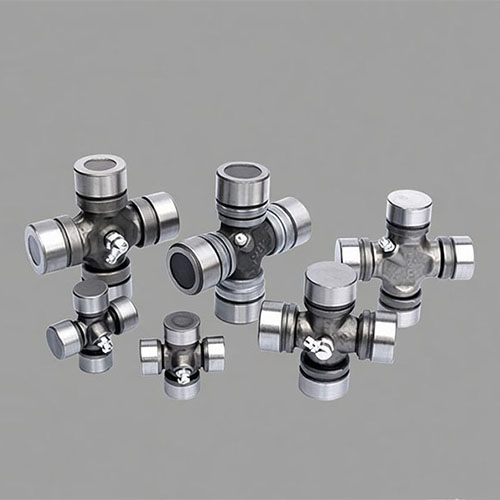
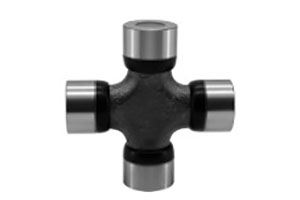
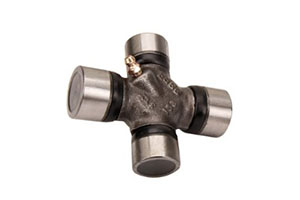
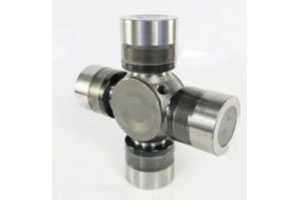
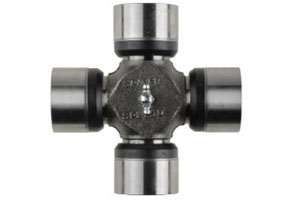
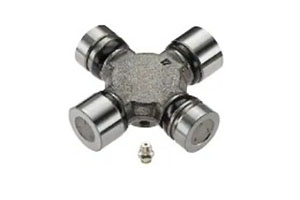
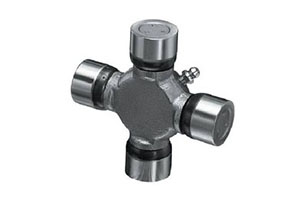
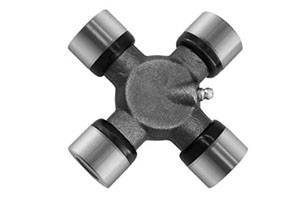
A universal joint cross is the central load-bearing component of a universal joint assembly. It connects the driving and driven yokes, allowing torque transmission between shafts that are not aligned on the same axis.
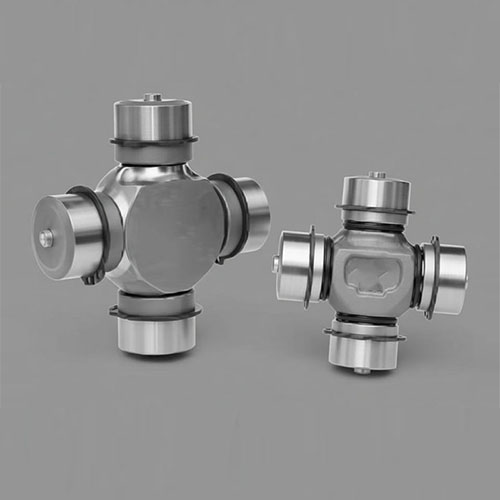
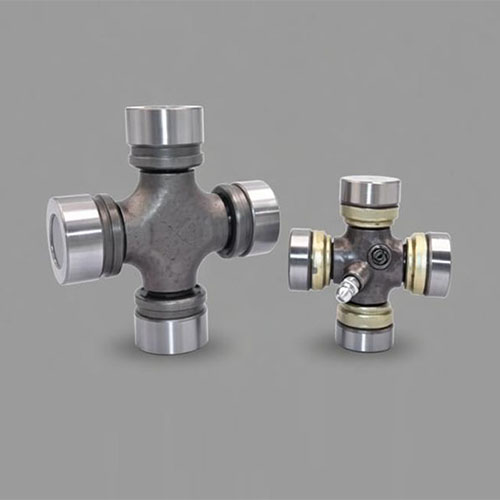
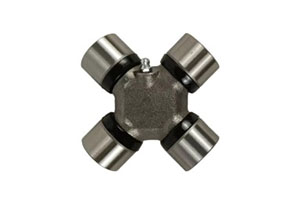
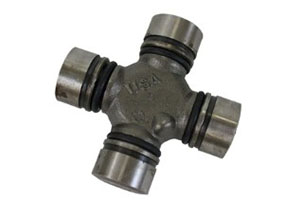
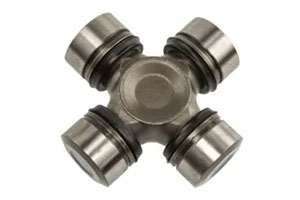
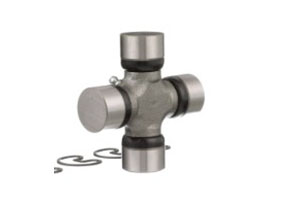
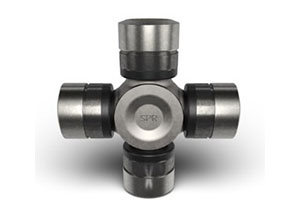
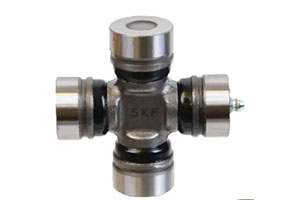
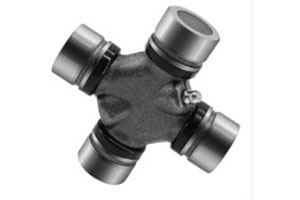
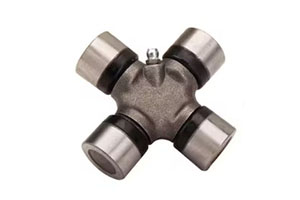
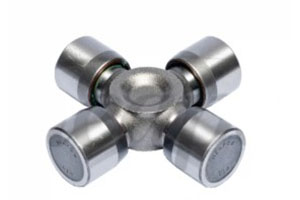
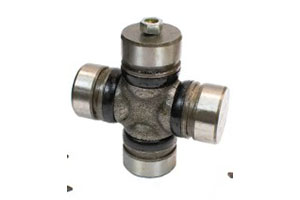
The cross consists of four trunnions arranged at 90-degree angles, each fitted with a bearing cup containing needle rollers. The bearing cups are secured to the yoke using snap rings, which may be positioned either on the outside of the bearing cup (OSR) or on the inside face (ISR) depending on the yoke design. Heat-treated alloy steel construction ensures structural integrity under torsional loads.
Key Performance Features
- Snap Ring Retention Options – Available in OSR (outside snap ring) for standard yoke ears with external grooves, and ISR (inside snap ring) for yokes with flat inside surfaces. Both designs ensure secure bearing cup positioning under driveline torque loads.
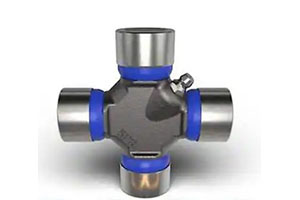
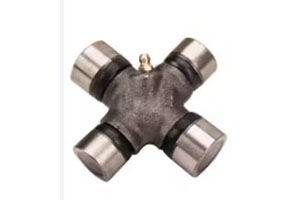
- Lubrication Configurations – Greaseable crosses include a zerk fitting for periodic maintenance; non-greasable crosses are sealed and pre-lubricated. Greaseable design allows contaminants to be flushed out during service.
- Slotted Bearing Design – Slotted bearing cups feature precision-machined lubrication channels that distribute grease evenly to all needle rollers. Eliminates grease passages within the cross body for maximum structural strength in high-torque applications.
- Heat-Treated Alloy Steel – Cross spiders manufactured from 20CrMnTi alloy steel with carburized case hardening. Bearing cups from 1010 low-carbon steel with surface grind finish.
- High-Precision Tolerances – Dimensional control at ±0.005mm on cup O.D. and ±0.003mm on cross journal diameter ensures drop-in fitment without modification.
Your Professional Universal Joint Cross Supplier
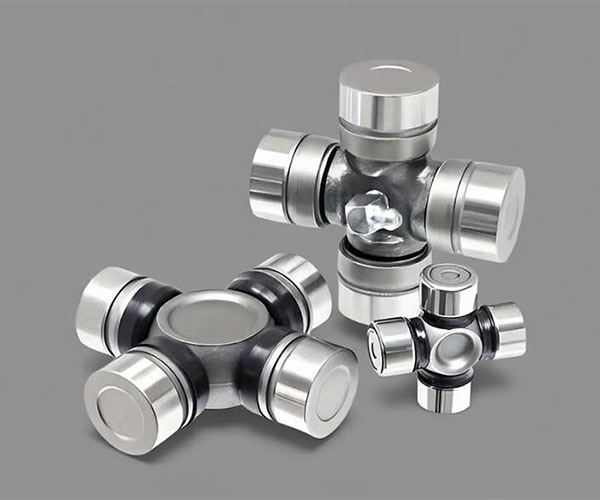
DUHUI is a leading supplier of universal joint crosses in China, certified to IATF 16949 and ISO 9001:2015. Our factory covers 10,000m² and is equipped with Sigma CNC precision turning machines, Wheeler machining centers, and fully automatic superfinishing lines. Monthly output: 100,000 sets. We also maintain a full range of precision testing instruments to ensure consistent quality.
Product Range & Stock Availability
DUHUI stocks over 2,000 universal joint cross models (DCTUJ Series), each with corresponding drawings. From forging, rough turning, fine turning to assembly, all processes follow the drawings to ensure every cross meets original OE standards. Our quality is more reliable and our pricing more competitive.
Materials & Heat Treatment
Each cross is forged from high-quality alloy steel, offering high strength and excellent wear resistance. The forged blank undergoes quenching at 850°C and tempering at 550°C – enhancing toughness while maintaining hardness. Needle rollers are made of GCr15 bearing steel, ultra-fine ground and polished to ensure low friction and high wear resistance.
Surface Treatment – Gas Carburizing + Carbonitriding
We apply a gas carburizing process, followed by carbonitriding (CN) treatment. This forms multiple composite hardened layers, effectively improving wear resistance and corrosion resistance. Combined with DUHUI’s unique surface coating process, the service life is significantly extended.
Seal & Lubrication Design
The sealing ring adopts a labyrinth double-lip design, which effectively prevents contaminant ingress. The lubrication design is radial, distributing grease 360° to the bearing surface. We also use a re-lubricatable design – allowing new grease to be injected for easy maintenance and effective contaminant flushing.
Custom & Non-Standard Capabilities
We have independent design and processing capabilities. In addition to standard models, we produce custom non-standard universal joint crosses to your specifications. Send your drawings or requirements – we support engineering changes and deviation requests.
Quality Certifications & In-Process Control
Certified to IATF 16949 and ISO 9001:2015. In-process controls cover dimensional checks, hardness testing, and surface finish inspection. Precision testing instruments are used throughout production – from incoming raw material to finished goods.
Order Fulfillment & Performance Data (2025)
- Monthly output: 100,000 sets (average over 2025)
- Inventory: over 2,000 models with drawings on file
- Annual shipment volume: 1.2 million units across 30+ countries
- Annual complaint rate: < 0.8% based on return reports
- Corrective actions implemented within 2 weeks
Why B2B Customers Choose DUHUI
We are a manufacturer, not a trading company – you pay factory-direct pricing. Finished goods inventory for 200+ fast-moving SKUs. QC team of 20 inspectors works two shifts. Average email response: 6 hours (including weekends). No pushy sales calls. Send your OE number, dimensions, or drawing. We quote within 24 hours with a sample policy and landed cost estimate.
Universal Joint Cross Types & Series
- Universal Joint Cross Types
- OSR Series
- ISR Series
- Slotted Series
Universal joint crosses are classified by snap ring retention method (OSR vs. ISR) and lubrication design (greaseable vs. sealed). OSR crosses are standard for driveshafts with external yoke grooves. ISR crosses are used for wheel joints and compact assemblies. Slotted designs incorporate lubrication grooves for 360-degree grease distribution in high-torque applications.
Outside Snap Ring
OSR universal joint crosses feature snap rings installed on the outside diameter of the bearing cups, locking into grooves machined into the yoke ears. This design is common in passenger cars, light trucks, and heavy-duty driveshafts. OSR configuration allows larger bearing caps compared to ISR designs for the same series, providing greater torque capacity. Available in both greaseable and non-greasable configurations.
Inside Snap Ring
ISR universal joint crosses feature snap rings installed on the inside face of the bearing cups, with the yoke ears machined flat on the inner surface. This design is typically used in wheel joint applications and compact driveshaft envelopes where space is limited. ISR retention provides secure cap positioning and is commonly found in steering axle applications and sealed maintenance-free designs.
Slotted
Slotted universal joint crosses feature precision-machined lubrication grooves on the bearing cups or cross trunnions to ensure 360-degree grease distribution. The slotted design eliminates grease passages within the cross body itself, allowing the cross to maintain maximum structural strength while still providing reliable lubrication to all needle bearings. Available in both OSR and ISR retention configurations. Slotted designs are particularly beneficial for high-torque applications.
OSR Series
Outside snap ring series represent the most common universal joint cross configuration for automotive driveshafts. OSR crosses are installed in yokes with external groove retention, allowing snap rings to seat on the outside of bearing cups. These series cover a wide range of torque capacities from light-duty passenger cars to heavy-duty commercial trucks.
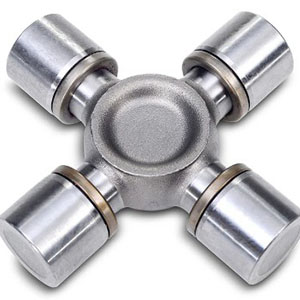
1100 Series (Outside Snap Ring) – Universal joint cross series featuring outside snap ring retention for driveshaft yokes. Designed for light to medium duty automotive and light truck applications, delivering reliable torque transmission with greaseable cross design. The bearing cups are heat-treated for maximum durability in passenger car and compact SUV driveshafts.
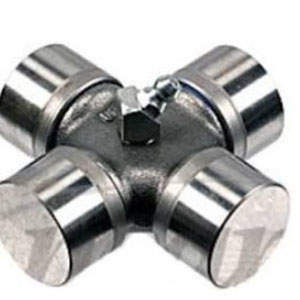
1310 Series (Outside Snap Ring) – Universal joint cross series with 1.062″ bearing cap diameter and 3.219″ lock-up width. Features OSR retention where snap rings fit into yoke ear grooves, providing secure cap positioning for passenger car and light truck rear-wheel drive applications.
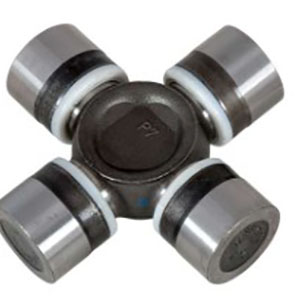
1350 Series (Outside Snap Ring) – Universal joint cross series for heavy-duty pickup and SUV applications. This OSR series features 1.188″ bearing cap diameter with premium multi-lip sealing package for extended service life under high torque. Greaseable cross design ensures easy maintenance for demanding driveline conditions.
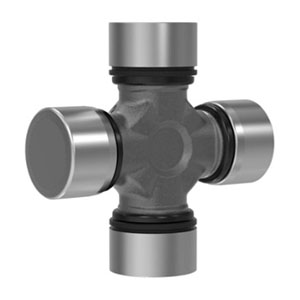
1480 Series (Outside Snap Ring) – Universal joint cross series for severe off-road and high-torque commercial vehicle applications. With 1.375″ bearing cap diameter and 4.188″ lock-up width, this OSR series provides superior strength for extreme duty driveshafts. Cold-forged alloy steel construction ensures maximum durability under heavy loads.
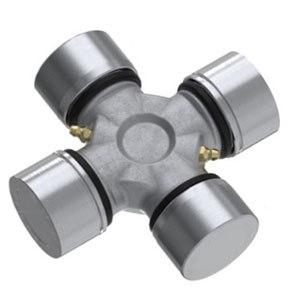
210 Series (Outside Snap Ring) – Universal joint cross series manufactured from high-grade chrome-molybdenum alloy steel with OSR retention. Features hot-forged or cold-formed spider construction with four grease-filled roller bearings capable of transmitting large torque at low friction.
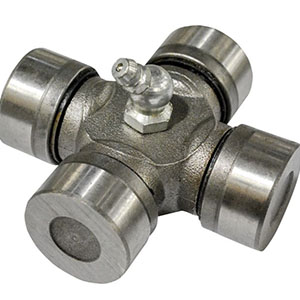
1000 Series (Outside Snap Ring) – Universal joint cross series designed for light-duty PTO, steering, and low-torque automotive driveshaft applications. This OSR series with greaseable cross design ensures reliable performance under moderate loads. Cold-forged high-strength alloy steel construction with case-hardened bearing caps provides dependable service for passenger cars and PTO systems.
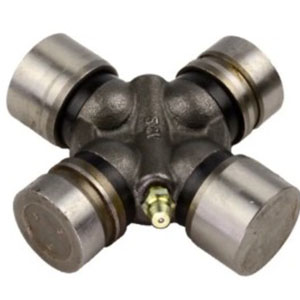
1330 Series (Outside Snap Ring) – Universal joint cross series featuring 1.062″ bearing cap diameter with OSR retention. Ideal for light to medium truck applications where external snap ring design allows for larger bearing caps and bearings, resulting in a heavier duty joint compared to internal designs. Available in greaseable and non-greasable configurations.
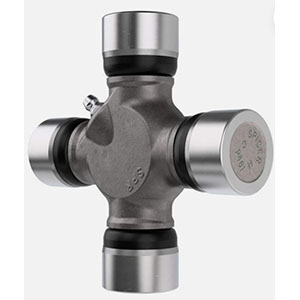
1410 Series (Outside Snap Ring) – Universal joint cross series for medium to heavy-duty truck and off-road driveshaft applications. This OSR series with 1.188″ cap diameter and 4.188″ lock-up width supports high torque transmission while resisting brinelling from impact loads. Heat-treated bearing cups with premium sealing provide long service life.
ISR Series
Inside snap ring series are designed for applications where yoke ears are machined flat on the inside surface. ISR crosses are commonly used in wheel joint positions (steering axles) and compact driveshaft envelopes where external snap ring clearance is limited. These series often feature sealed, non-greasable designs for extended maintenance-free service.
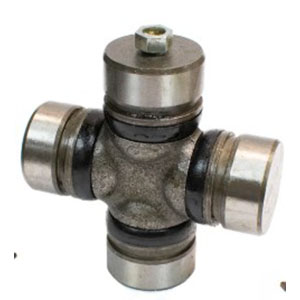
SPL Series (Inside Snap Ring) – High-durability universal joint cross series with inside snap ring retention for wheel joint applications. Features cold-forged high-quality steel construction with synthetic thrust washers and multi-lip seals. Non-greasable sealed design for extended service life.
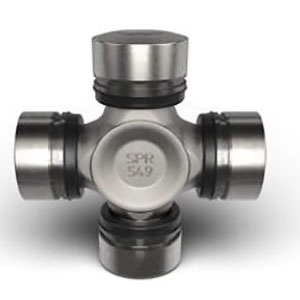
1310WJ Series (Inside Snap Ring) – Universal joint cross series designed specifically for wheel joint applications with ISR retention. Features 1.063″ bearing cap diameter and 3.219″ lock-up width with C-clip retention where yokes are machined flat on the inside. Cold-forged cross with heat-treated bearing caps ensures secure retention in compact driveshaft envelopes.
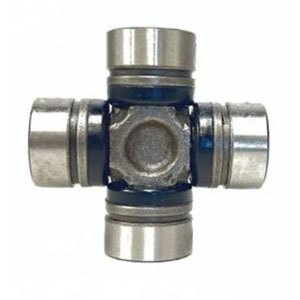
220 Series (Inside Snap Ring) – Universal joint cross series for light to medium-duty Japanese automotive applications with ISR retention. Chrome-molybdenum alloy steel construction with black oxide coating for rust and wear protection. Greaseable or non-greasable options.
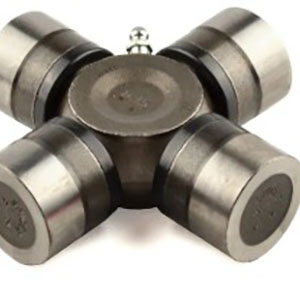
SPL55 Series (Inside Snap Ring) – Universal joint cross series featuring 1.375″ bearing cap diameter with inside snap ring retention. Construction provides maximum strength for heavy-duty applications where yokes feature flat machined inside surfaces for C-clip retention. Greaseable version with slotted bearings for optimal lubrication.
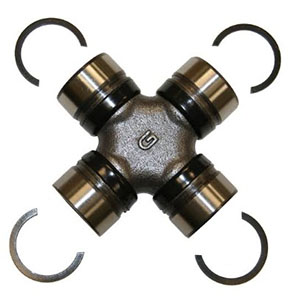
210 Series ISR (Inside Snap Ring) – Universal joint cross series manufactured from chrome-molybdenum alloy steel with ISR retention option. Features heavy-duty needle bearings with cold-forged cross and bearing caps. Grease fitting in cross for easy maintenance with OSR/ISR snap rings included.
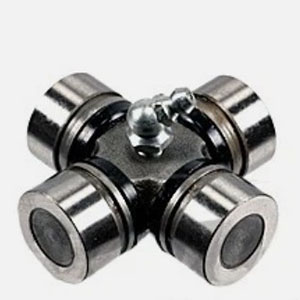
1-0xxx Series (Inside Snap Ring) – Universal joint cross series available in ISR retention configuration for light to heavy-duty applications. Greaseable or sealed designs with round bearing cups and precise cap diameters.
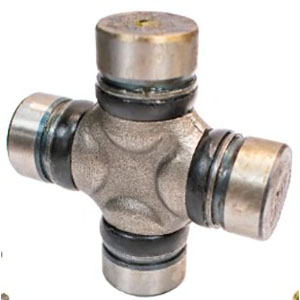
1000WJ Series (Inside Snap Ring) – Universal joint cross series designed for wheel joint applications requiring compact ISR design. Greaseable configuration allows periodic maintenance while the inside snap ring retention ensures secure bearing cap positioning in applications with limited installation space.
Slotted Series
Slotted universal joint crosses feature precision-machined lubrication grooves on bearing cups or cross trunnions. This design eliminates grease passages within the cross body, maximizing structural strength while ensuring 360-degree grease distribution. Slotted series are preferred for heavy towing, off-road, and lifted truck applications where regular lubrication is required.
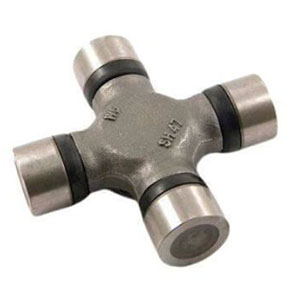
Life Series Slotted (Greasable) – Universal joint cross series with precision-machined lubrication grooves in cross trunnions for 360-degree grease distribution. Cold-forged from high-quality steel with synthetic thrust washers and multi-lip seals. Available in greaseable configuration with fitting in cross body.
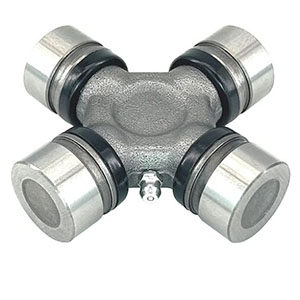
5-xxxX Series (Grooved Bearings) – Universal joint cross series featuring grooved lubrication channels in bearing cups for even grease distribution. ISR or OSR retention options with high-strength alloy steel cross and heat-treated bearing caps. Greaseable design with zerk fitting in cross for 360-degree lubricant coverage.
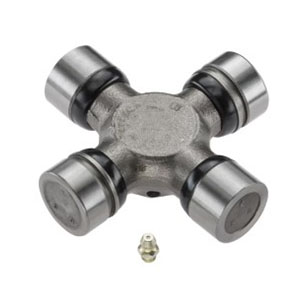
Heavy Duty Slotted Series – Universal joint cross series with precision-machined lubrication grooves for consistent grease flow. OSR/ISR retention with greaseable design featuring 1.188″ bearing cap diameter and 3.625″ lock-up width. Heavy-duty construction for off-road, heavy truck and extreme-duty driveshafts.
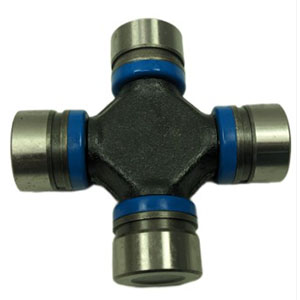
Super Strength Slotted Series – Universal joint cross series for high torque applications requiring maximum cross strength. Eliminates grease passages within cross body, using grooved bearing cups for lubricant flow. Alloy steel cross with nitrile seals for ideal grease retention and cross trunnions ground to smooth surface finish.
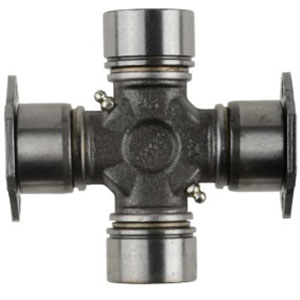
SPL Series Slotted (Greasable) – Universal joint cross series combining high-durability metallurgy with slotted lubrication design. Greaseable configuration with precision-machined grooves ensures 360-degree lubricant distribution for extended service life. Cold-forged steel construction delivers superior strength for heavy-duty applications.
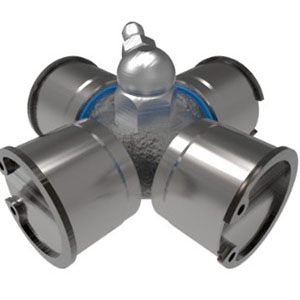
Performance Series Slotted – Universal joint cross series featuring enhanced design thrust washers with low-friction additive. Slotted bearing design ensures optimal lubricant coverage while decreasing stick-slip and reducing heat generation under heavy loads.
Other Related Types
Beyond universal joint crosses, automotive drivelines and wheel ends rely on several other bearing types. The following components are essential for vehicle power transmission, wheel rotation, and driveline support in passenger cars, trucks, and commercial vehicles.
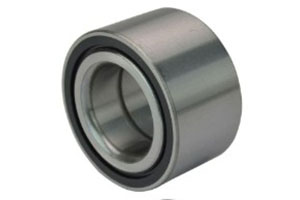
Wheel bearings support the full vehicle weight and allow smooth wheel rotation with minimal friction. Installed between the wheel hub and steering knuckle or axle housing, they accommodate both radial and axial loads during cornering and braking. Common designs include tapered roller bearings, double-row angular contact ball bearings, and generation hub units with integrated sensors for ABS.
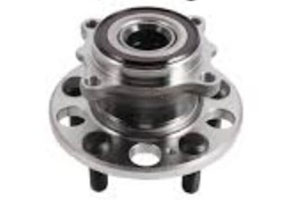
A wheel hub assembly is a pre-assembled unit combining the wheel hub, wheel bearing, and mounting flange. It simplifies installation and eliminates the need for bearing adjustment during service. Hub assemblies often include integrated ABS speed sensor rings and are available in bolt-on designs for front or rear applications. Common in modern passenger cars and light trucks.
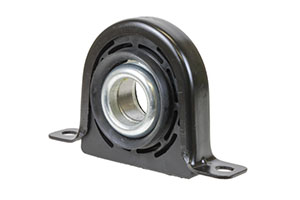
Center support bearings are mounted on two-piece or multi-piece driveshafts to support the shaft span between the transmission and rear axle. The bearing is housed in a rubber-isolated bracket that damps vibration and compensates for minor misalignment. Center support bearings are critical for heavy-duty trucks, vans, and long-wheelbase passenger vehicles with split driveshafts.
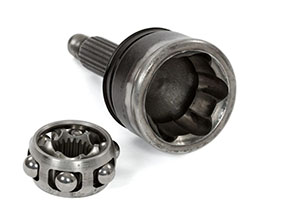
Constant velocity (CV) joints transmit torque at variable angles while maintaining constant rotational speed. Outer CV joints connect the axle shaft to the wheel hub, accommodating steering angles. Inner CV joints connect to the transmission or differential, allowing suspension travel. CV joints use ball bearings or tripod roller designs within grease-filled rubber boots. Common in front-wheel drive, all-wheel drive, and independent rear suspension systems.
Automotive Applications of Universal Joint Crosses
Universal joint crosses are used in passenger car, light truck, heavy truck, and off-road vehicle drivelines. The following applications represent the most common automotive installations requiring universal joint cross replacement or specification.

Rear-wheel drive and all-wheel drive sedans, coupes, and wagons use universal joint crosses in the main driveshaft. Typical applications use 1310 series OSR crosses with greaseable or non-greasable configurations.
Pickup trucks and SUVs require higher torque capacity. 1310, 1330, and 1350 series OSR crosses are standard. Greaseable designs are preferred for towing and occasional off-road use.
Commercial trucks, tractor-trailers, and buses use 1410, 1480, and larger series crosses with OSR retention. Sealed designs with premium multi-lip seals are common for extended service intervals.
Transfer case output shafts, front and rear driveshafts, and axle pinion yokes in off-road vehicles. Slotted greaseable crosses are preferred for regular lubrication after water crossings and extreme angle operation.

Inside snap ring (ISR) crosses are used in steering axle wheel joint positions where yoke ears are machined flat. These applications require compact design and often use sealed non-greasable crosses.
Comparison Guides for Driveline Component Selection
The following comparison articles help technicians and parts professionals select the correct universal joint cross for specific vehicle applications.
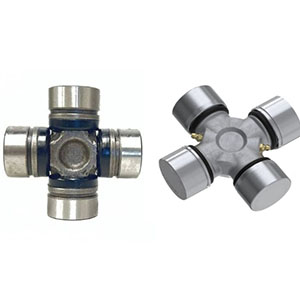
Outside snap ring (OSR) and inside snap ring (ISR) universal joints differ in yoke groove location and snap ring seating position. OSR crosses are used in yokes with external grooves; ISR crosses are used in yokes with flat inner surfaces and internal grooves. Using the wrong retention type prevents proper cap seating and leads to premature bearing failure. This guide covers visual inspection and measurement methods
For more details, please read “OSR vs. ISR U-joint”.
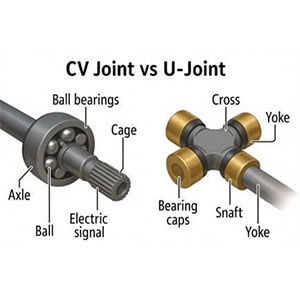
The main functional difference: an idler pulley guides the belt without providing tension, while a tensioner pulley applies adjustable force to maintain belt tension. Idler pulleys are fixed‑center mounted; tensioner pulleys are spring‑ or hydraulically actuated. Visual identification based on adjustability helps avoid misdiagnosis. This article details both.
For more details, please read “CV Joints vs. U-Joints: Key Differences and How to Choose”.
Recommended Related Products
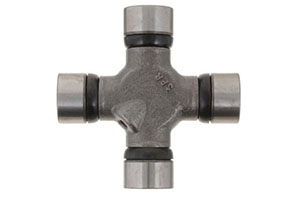
5-160X (Slotted) – Slotted universal joint cross with OSR retention. 1.188″ cap diameter, 4.188″ lock-up width. Greaseable 1410 series with grooved lubrication channels. For heavy-duty truck applications.
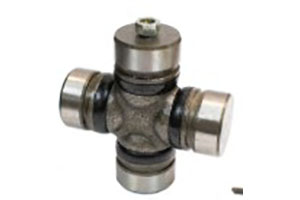
5-188X (Slotted) – Slotted universal joint cross with OSR retention. 1.375″ cap diameter. Greaseable 1480 series with slotted bearing design. For severe off-road and high-torque applications.
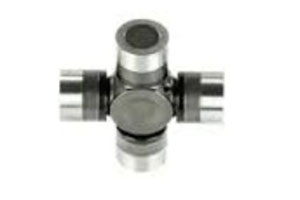
SPL55-1X (Slotted) – Slotted universal joint cross with ISR retention. 1.375″ cap diameter. Greaseable SPL55/1480 series with precision-machined lubrication grooves. For 360-degree grease distribution in heavy-duty driveshafts.
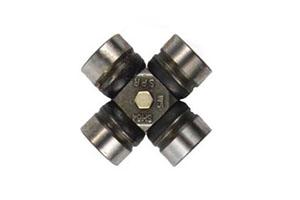
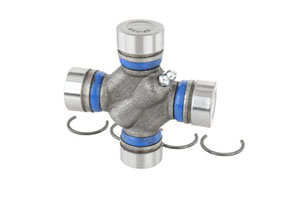
Universal Joint Cross: Component Function, Classification, and Aftermarket Replacement Guide
Got a vibration under acceleration or a clunk when shifting? You might think the whole driveshaft is failing. In most cases, it’s just the universal joint cross worn out. Replacing the entire driveshaft costs several hundred dollars. Swapping only the cross—the serviceable wear component inside the universal joint assembly—is the standard repair practice. So what exactly is a universal joint cross? What types are out there? And how do you pick the right replacement without guessing? This guide walks you through the structure, retention styles, lubrication designs, and three measurements you’ll need to get the job done right.
What Is a Universal Joint Cross?
A universal joint cross—also called a journal cross, cross shaft, or spider—is the load‑bearing core inside a universal joint. In a typical rear‑wheel‑drive or all‑wheel‑drive vehicle, two universal joints are used on the driveshaft: one at the front and one at the rear. They let the driveshaft transmit engine torque from the transmission to the differential while constantly changing angle as the suspension moves up and down.
Each universal joint assembly contains one cross with four trunnions (journals), four bearing cups that hold needle rollers, sealing elements, and snap rings or other retainers. Here’s the key distinction: “universal joint” refers to the complete assembly including the yokes. The universal joint cross itself is the replaceable part. In aftermarket repair, when bearing wear or seal failure happens, replacing only the cross—not the whole driveshaft—is what experienced technicians do.
Structural Parts of a Universal Joint Cross
A typical universal joint cross includes the following components:
- Cross spider (central body) – A four‑arm part machined from alloy steel. Each arm ends in a ground journal surface that rides on needle bearings inside the bearing cup. The cross geometry determines torque capacity and operating angle range.
- Bearing cups – Cylindrical housings that press into the yoke bores. Inside each cup you’ll find needle rollers, a thrust washer, and a sealing element. Bearing cups are case‑hardened and precision‑ground to tight tolerances.
- Needle rollers – Small‑diameter cylindrical rollers arranged around the inside of each bearing cup. They reduce friction between the rotating cross journal and the stationary cup. Material is typically GCr15 bearing steel with a hardness of HRC 60‑64.
- Sealing elements – Rubber or metal seals at the open end of each bearing cup. They keep grease inside the bearing cavity and keep dirt and water out. Seal design—contact vs. non‑contact—affects both friction level and contamination protection.
- Snap rings (ertainers) – Spring steel rings that hold bearing cups inside the yoke bores. Whether the snap ring sits on the outside diameter of the cup or on the end face determines the OSR vs. ISR classification.
- Grease fitting (if serviceable) – A zerk fitting installed in the cross body. You attach a standard grease gun to inject fresh lubricant during routine maintenance.
Snap Ring Retention Types: OSR vs. ISR
Two main snap ring configurations exist in automotive universal joint crosses. They are not interchangeable, and using the wrong one will cause premature joint failure.
Outside Snap Ring (OSR) – The snap ring installs on the outside diameter of the bearing cup and seats into a groove machined into the yoke ear. OSR yokes have external groove retention. This is the most common design in passenger car and light truck driveshafts. For a given series, OSR allows a larger bearing cup diameter than ISR, which means higher torque capacity. Most aftermarket universal joint crosses come in OSR configuration. To remove an OSR cross, you’ll need snap ring pliers to compress the ring until it clears the groove.
Inside Snap Ring (ISR) – The snap ring installs on the inside face of the bearing cup. The yoke ears are machined flat on the inner surface, and the snap ring seats into a groove on the bearing cup end face. This design is typically found in wheel‑end joints and compact driveshaft envelopes. Spicer Life Series (SPL) and 1310WJ series use ISR retention. Removal usually involves tapping the snap ring out of its groove with a flat screwdriver.
Critical point: OSR and ISR components cannot be swapped. Installing an OSR cross into an ISR yoke—or the other way around—prevents the snap rings from seating properly. The bearing cups will migrate outward, and the joint will fail quickly. Always check the snap ring configuration on your original joint before ordering a replacement.
Lubrication Design: Greaseable vs. Non‑Greaseable
Greaseable (serviceable) crosses – These have a zerk fitting on the cross body and internal passages that route grease to all four trunnion bearings. During regular maintenance, you attach a grease gun to push fresh grease through, flushing out old grease and contaminants. Greaseable crosses are a solid choice for off‑road vehicles, heavy towing, and agricultural equipment—applications that see frequent water, mud, and debris. Service intervals typically range from 5,000 to 10,000 miles, or after any water crossing. The upside: regular maintenance extends service life. The downside: if you neglect servicing, a greaseable cross will fail faster than a sealed unit.
Non‑greaseable (maintenance‑free) crosses – These come factory‑sealed with pre‑installed grease for the life of the component. Sealed crosses use premium multi‑lip seals to keep grease in and contaminants out. Spicer Life Series (SPL) and similar product lines represent this category. Modern manufacturing has largely eliminated the old strength disadvantage of sealed crosses compared to greaseable ones. Many OEM applications now specify non‑greaseable crosses as standard. The upside: no service required after installation. The downside: you can’t flush out contaminants. Once the factory grease degrades or gets contaminated, you have to replace the whole cross.
Slotted (Grooved) Bearing Design
Slotted bearing cups have precision‑machined lubrication channels on the inner surface of the cup or on the cross trunnion. When you service the joint, these grooves distribute grease evenly to all needle rollers—360‑degree coverage.
In contrast, a conventional non‑slotted cross relies on internal grease passages drilled through the cross body. Those passages weaken the cross at the critical journal fillet radii. By eliminating those internal passages, a cross with slotted bearing cups keeps maximum cross‑sectional area at the fillets. That translates directly to higher torsional strength.
MOOG’s Super Strength series is a good example of this design approach: no grease passages through the cross body, just grooved bearing cups for lubricant flow. This configuration is specified for high‑torque applications where maximum cross strength is required.
How to Measure a Universal Joint Cross for Replacement
If the original part number is missing or unreadable, you can identify the correct replacement using three measurements:
- Bearing cap diameter – Measure the outside diameter of the bearing cup with a caliper. Common aftermarket cap diameters include 0.938″, 1.000″, 1.062″, 1.125″, 1.188″, 1.250″, and 1.375″. Some conversion joints have different diameters on each axis.
- Lock‑up width – For OSR crosses, measure across the outside surfaces of all four bearing cups. For ISR crosses, measure across all four snap rings. The lock‑up width must match the yoke span so the snap rings seat properly.
- Snap ring style – Identify whether the original joint uses outside snap rings (OSR) or inside snap rings (ISR). Look at the yoke groove pattern: OSR yokes have an external groove; ISR yokes have a flat inner surface with the groove on the bearing cup end face.
For quick reference, here are typical cap diameters and their common series:
Cap Diameter (inches)Common Series0.938″12101.000″13101.062″13301.125″13501.188″14101.250″1480
Common Failure Modes and Symptoms
Here’s what to watch for when a universal joint cross is going bad:
- Vibration under acceleration or deceleration – Worn bearings allow too much joint movement, which throws off driveline balance. The vibration gets faster as vehicle speed increases.
- Clunking noise when shifting – Excess clearance in the needle rollers creates impact loading when torque direction changes.
- Squeaking or chirping at low speed – Loss of lubrication leads to metal‑to‑metal contact between the cross journal and the needle rollers. Heat builds up and speeds up bearing damage.
- Rust or discoloration around seals – Seal failure lets moisture in, causing corrosion on bearing surfaces.
- Seized joint with no articulation – Complete lubrication loss or brinelling damage locks the cross in one position.
Installation Best Practices
How you install a universal joint cross directly affects how long it will last. Here’s how to do it right:
- Clean the yoke bores thoroughly before installation. Remove all rust, burrs, and old bearing material.
- Never drive bearing cups directly with a hammer. Use a press or a dedicated U‑joint installation tool. A hammer can cock the cup and displace the needle rollers.
- Align the cross with the yoke bore before pressing. Misalignment damages seal lips and bearing surfaces.
- After installation, verify that each snap ring is fully seated in its groove.
- For greaseable crosses, apply fresh grease until it purges from all four seals. That confirms the bearing cavities are full and contaminants have been pushed out.
- Rotate the joint through its full operating angle to confirm free movement with no binding.
Market Presence and Applications
Universal joint crosses are essential components across multiple industries. In the automotive aftermarket, annual replacement demand comes from normal wear, towing, off‑road use, and environmental contamination. Common applications include:
- Rear‑wheel drive and all‑wheel drive passenger vehicles – Driveshafts typically use 1310 series crosses with OSR retention. Both greaseable and non‑greaseable options are available.
- Light trucks and SUVs – Ford, GM, Ram, Toyota, Nissan, and Mitsubishi trucks use 1310, 1330, or 1350 series crosses depending on model year and powertrain.
- Heavy‑duty trucks – Volvo, MAN, DAF, and Scania commercial trucks use larger series (1410, 1480, 1550) with OSR retention and heavy‑duty sealing.
- Agricultural equipment – PTO shafts on tractors and implements need crosses with corrosion‑resistant finishes and greaseable design for field service.
- Industrial machinery – Conveyor systems, packaging equipment, and manufacturing lines use sealed crosses for maintenance‑free operation in automated environments.
Conclusion
The universal joint cross is a precision‑engineered component. Getting the right replacement and installing it correctly makes the difference between a repair that lasts 100,000 miles and one that fails in a few months. Understand the three critical factors before you order: snap ring type (OSR or ISR), bearing cap diameter, and lock‑up width. If you’re not sure about the original configuration, check the service manual or measure the old part directly.
Actionable takeaway: For vehicles that see water, mud, or heavy towing, choose a greaseable cross and set up a regular service schedule. For daily drivers on paved roads, a non‑greaseable (sealed) cross is more convenient and reliable. Either way, use a press for installation and double‑check that every snap ring is fully seated. That’s how you get a solid repair that lasts.
OSR (Outside Snap Ring) crosses have snap rings that fit into grooves on the yoke ear exterior. ISR (Inside Snap Ring) crosses have snap rings that seat into grooves on the bearing cup end face, with yoke ears machined flat on the inside. The two types are not interchangeable. OSR is more common in driveshaft applications; ISR is typically used in wheel joint applications.
Examine the yoke. If the yoke ears have visible grooves on the inside surface (where the snap ring seats), it is OSR. If the yoke ears are flat on the inside and the snap ring seats into a groove on the bearing cup end face, it is ISR. When in doubt, reference the original part number or measure the lock-up width and snap ring groove location.
Three measurements are required: bearing cap diameter (outside diameter of the cup), lock-up width (distance across opposite bearing cups or snap rings), and snap ring retention style (OSR vs. ISR). For conversion joints, measure cap diameters on both axes.
Greaseable joints include a zerk fitting for periodic lubrication, allowing contaminants to be flushed out. Non-greasable joints are factory-sealed with lifetime grease and require no maintenance. Greaseable joints are preferred for off-road and heavy towing applications. Non-greasable joints are standard in many OEM applications.
If the dimensional specifications (cap diameter, lock-up width, snap ring style) match, substitution is mechanically possible. However, replacing a non-greasable joint with a greaseable one requires periodic maintenance access. If the application does not allow regular servicing, a non-greasable joint may be the better choice.
Slotted (grooved) bearing cups incorporate precision-machined lubrication channels that ensure 360-degree grease distribution to all needle rollers. This design allows grease to flow without requiring passages drilled through the cross body itself, maximizing structural strength. Slotted crosses are typically greaseable.
Service intervals vary by application. For normal on-highway use, lubrication every 5,000 to 10,000 miles is recommended. For off-road vehicles, towing applications, or vehicles exposed to water crossings, lubricate more frequently. Apply grease until it purges from all four seals.
Vibration under acceleration or deceleration, clunking noise when shifting between drive and reverse, squeaking or chirping at low vehicle speeds, and heat generation around the bearing cups. Advanced failure causes visible rust around seals and seized articulation.
Service life varies widely based on joint quality, vehicle type, operating conditions, and maintenance. Well-maintained crosses can last over 100,000 miles. Vehicles used for heavy towing or off-road may require replacement at shorter intervals.
Yes. In most applications, the cross is a serviceable component. Remove the driveshaft, press out the old cross, and install a new cross with the correct dimensions and snap ring style. The yokes do not require replacement unless damaged.
Common causes include improper lubrication, extended operating angles from lifted vehicles, contamination ingress through failed seals, impact loading from off-road use, and installation damage from hammering bearing cups.
Series numbers primarily indicate bearing cup diameter. Larger series numbers correspond to larger cup diameters and higher torque capacity. 1310 (1.062″ cap) is standard for passenger cars. 1350 (1.188″ cap) is used in heavy-duty pickups. 1410 and 1480 (1.188″ to 1.375″ caps) are for commercial trucks.
Cross spiders are typically forged from alloy steel such as 20CrMnTi with carburized case hardening. Needle rollers are GCr15 bearing steel (HRC 60-64). Bearing cups are case-hardened low-carbon steel (1010 grade). Premium seals use nitrile rubber or Viton for chemical resistance.
Many aftermarket crosses are dimensionally identical to OE and major brand part numbers. Always verify the three critical measurements: cap diameter, lock-up width, and snap ring style. Cross-reference guides are available to confirm interchange.
A universal joint cross is the replaceable core component (spider, bearing cups, seals, and snap rings). A complete universal joint assembly includes the cross plus the yokes. In aftermarket replacement, only the cross is typically replaced. Yokes are reused unless damaged.