Quick Answer:
Clicking or popping when you turn? That points to the outer CV joint. Vibration or shudder when you accelerate straight ahead? That points to the inner CV joint. The most common root cause is a torn CV boot — grease leaks out, dirt gets in, and the joint wears rapidly. If you see grease splattered on the inside of a wheel or on suspension parts, inspect both boots immediately. Catching a torn boot early can prevent joint failure and save you from replacing the entire axle.
A failing CV joint does not always show the same signs. Some drivers notice a clicking noise only when turning. Others feel a vibration or shudder during straight-line acceleration. These different symptoms point to different joints — the outer CV joint near the wheel, or the inner CV joint near the transmission. Knowing which joint is failing helps determine the urgency of the repair and what kind of work is required.
This guide covers the symptoms of a bad CV axle, explains how to distinguish between inner and outer CV joint failure, and provides practical diagnostic steps for vehicle owners and technicians.
Why CV Joints Fail In Real-World Conditions
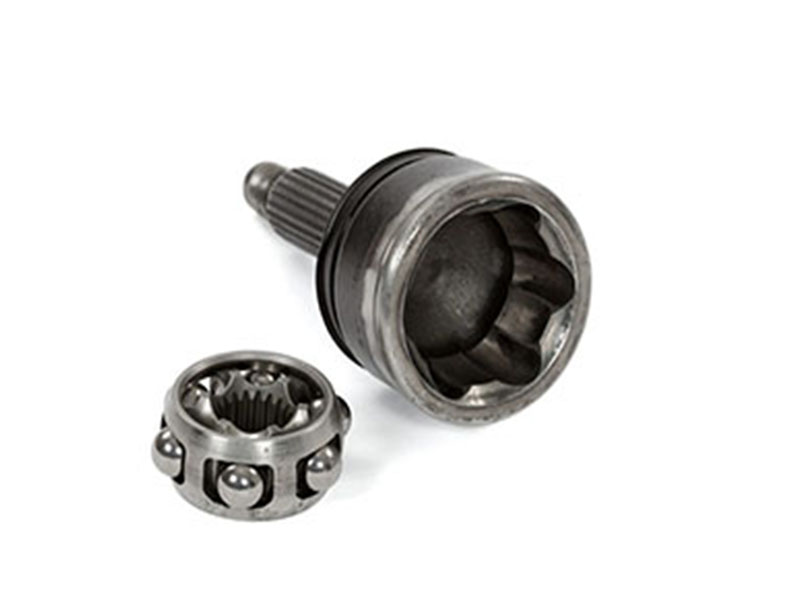
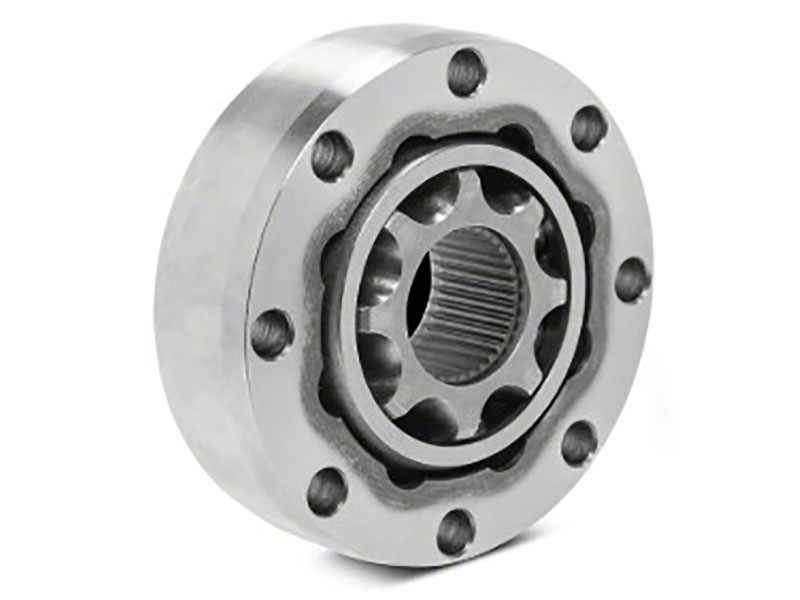
CV joints transfer power from the transmission to the wheels while the suspension moves and the wheels steer. Each drive axle typically has an outer joint near the wheel and an inner joint closer to the transmission.
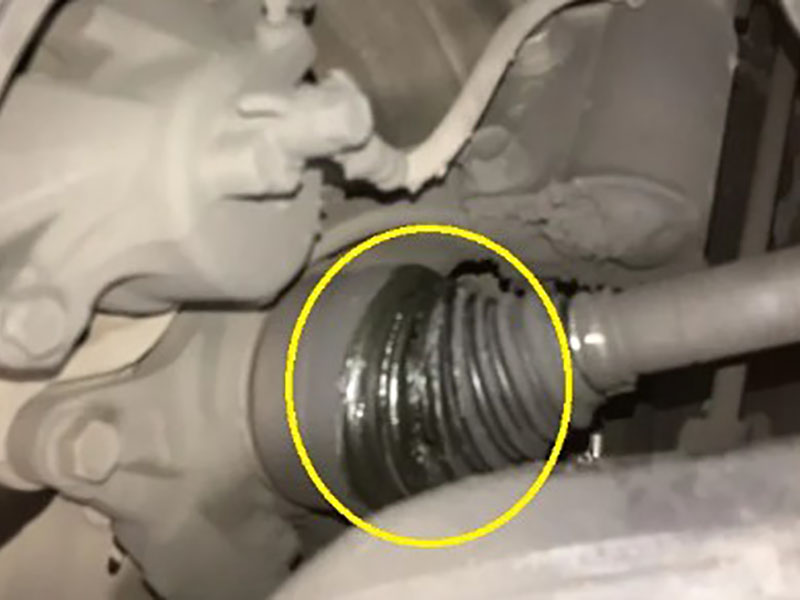
The most common reason CV joints fail is boot damage. The rubber boot holds grease inside and keeps dirt, sand, and water out. Once a boot tears, grease flings out under centrifugal force, and road contaminants work their way in. The joint begins to wear rapidly after that, especially if the vehicle is driven on unpaved roads or in wet conditions.
The outer boot is exposed to more road debris and steering movement, so it tears more frequently than the inner boot. A visual inspection can often reveal boot damage before any noise appears. If a CV boot is torn or leaking grease, that is clear evidence that the joint is likely worn due to insufficient lubrication or contamination.
Outer CV Joint Symptoms: Noise During Turns
When the outer CV joint begins to fail, the classic symptom is a clicking, snapping, or rhythmic popping noise during tight turns. This is most noticeable at low speeds such as in parking lots or during U-turns.
The sound tends to get louder when light throttle is applied while turning because the joint is under load. Early in the failure process, the noise may only occur at full steering lock. As wear progresses, it can start happening during normal turns as well. This condition is almost always the first sign that the outer CV joint is failing.
An outer joint issue often sounds like it is coming from one front corner of the vehicle, particularly with the window down. To verify this condition, a technician can place the vehicle in reverse, crank the steering wheel to one side, and drive backwards in a circle — the noise tends to become louder during this test.
Inner CV Joint Symptoms: Issues During Straight-Line Acceleration
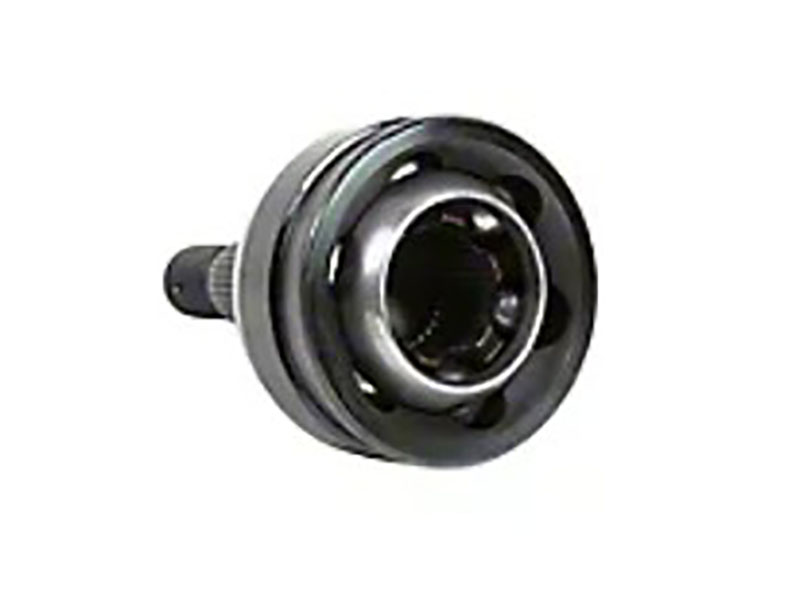
Inner CV joints fail differently from outer joints. Instead of producing clicking noises during turns, a failing inner joint tends to create a vibration or shudder during acceleration.
This vibration is often described as a shake through the seat or floor that gets worse when the driver presses the accelerator pedal, then calms down when the throttle is released. The symptom is load-dependent — it appears when torque is transmitted through the axle, not when the vehicle is coasting. This distinguishes CV joint shudder from a wheel balance issue, which produces vibration that tracks with vehicle speed regardless of throttle input.
The vibration can be more noticeable when going uphill, merging onto highways, or accelerating from a stop. An inner joint can also cause a clunk when shifting from Reverse to Drive, or during takeoff, because the joint has enough internal play to move suddenly when the direction of load changes. A clunking or knocking sound may also be heard near the gearbox or driveshaft area when starting from a standstill or during sudden acceleration.
A Quick Diagnostic Pattern Guide
The table below summarizes the characteristic symptoms of inner versus outer CV joint failure:
| Symptom Pattern | Likely Failure | Mechanism |
|---|---|---|
| Clicking or popping during turns, especially at low speed and full steering lock | Outer CV joint | Worn rolling elements and raceways create impact noise when the joint operates at extreme angles |
| Vibration or shudder during straight-line acceleration | Inner CV joint | Worn tripod components cause uneven torque transfer under load |
| Clunk when shifting between Reverse and Drive, or when accelerating from a stop | Inner CV joint | Excess internal play produces impact when load direction changes |
| Grease on the inside of the wheel rim or suspension components | Torn CV boot — check both ends | Boot tear allows grease loss and contaminant ingress; early detection allows boot replacement instead of axle replacement |
Conditions That Can Be Misdiagnosed As CV Joint Failure
Several other vehicle issues can produce symptoms similar to those of a failing CV joint. Awareness of these potential misdiagnoses helps avoid unnecessary repairs.
- Wheel bearings produce a humming, whining, or growling sound that changes in pitch with vehicle speed. When a wheel bearing fails, the noise is typically continuous and may get louder when the vehicle is turned in one direction (placing the bearing under load) and quieter when turned in the opposite direction. In contrast, CV joint noise is a rhythmic clicking that occurs specifically during turns or throttle application.
- Tire imbalance or uneven tire wear can produce a vibration that feels similar to CV joint shudder. However, tire vibration is speed-dependent — it occurs at specific vehicle speeds regardless of whether the throttle is applied. CV joint shudder is load-dependent — it appears under acceleration and diminishes when the throttle is released.
- Engine or transmission mounts can cause a clunk or bang when the vehicle is put into gear or during sudden acceleration. The key distinction is that mount failure typically produces a single impact noise when the drivetrain rocks in its mounts, rather than a repetitive clicking or a vibration that persists under sustained acceleration.
- Brake components may produce scraping or grinding noises, but these are usually tied to brake pedal application rather than turning or accelerating.
When A Failing CV Joint Becomes Dangerous
CV joint failure progresses through distinct stages. Catching the problem early makes a significant difference in repair cost and safety.
- Stage One — Boot damage only (no noise, just grease visible): This is the cheapest repair window. If the boot is replaced promptly and the joint is cleaned and relubricated, the joint itself may not need replacement.
- Stage Two — Clicking on turns (outer joint failure): The joint is still functional but wear has begun. Replacing the axle at this stage is straightforward and prevents further damage.
- Stage Three — Shuddering or clunking under acceleration (inner joint failure or advanced wear): This indicates that the joint is genuinely failing under load. The vehicle can still be driven short distances to a repair facility, but the problem should not be ignored.
- Stage Four — Complete failure: In the worst case, a CV joint can separate entirely. This disconnects the drive axle from the wheel or differential, meaning the wheel no longer receives power. The vehicle may lose the ability to move under its own power, and in severe cases, a broken CV joint can damage surrounding suspension components, brake lines, or the transmission housing.
Any of the following signs warrant immediate inspection and repair:
- Continuous clicking that has become significantly louder or more frequent
- A loud clunk or bang when accelerating or shifting
- Severe vibration that affects vehicle stability
- Any grinding or metal-on-metal noise from the front wheel area
Conclusion
Distinguishing between inner and outer CV joint failure comes down to observing when the symptom occurs. Clicking during turns points to the outer joint. Vibration or shudder during straight-line acceleration points to the inner joint. Grease on suspension components indicates a torn boot — the earliest warning sign. Recognizing these patterns allows drivers to address CV joint issues before they progress to complete failure, saving both repair costs and safety risks. If any of the symptoms described in this guide appear, a prompt inspection is the most effective course of action.
Frequently Asked Questions
Q1: How can I tell whether the noise is from a bad CV axle or a bad wheel bearing?
A wheel bearing typically produces a humming, whining, or growling sound that changes pitch with vehicle speed. It may get louder when turning in one direction and quieter when turning the other. A CV axle problem produces a rhythmic clicking or popping that occurs specifically during turns (outer joint) or a vibration that appears under acceleration (inner joint). The two sound distinctly different.
Q2: Is there any way to inspect a CV joint without removing it from the vehicle?
Yes. Raise the vehicle safely and support it on jack stands. Visually inspect both CV boots for cracks, tears, or grease leakage. Grasp the axle shaft near each joint and attempt to move it by hand — excessive play indicates internal wear. For the inner joint, rotate the shaft back and forth to check for looseness. For the outer joint, turn the steering wheel to full lock and rotate the wheel while listening for clicking.
Q3: Can I replace just the CV boot if there is no noise yet?
Yes, this is the optimal repair scenario. If a boot tear is discovered before contaminants have entered the joint and before any noise has developed, cleaning the joint and replacing the boot with fresh grease can restore normal service life. However, once clicking or vibration has begun, the joint itself has already sustained wear and the entire axle assembly should be replaced.
Q4: What is the typical cost of CV axle replacement?
Replacement costs vary significantly by vehicle make and model. Parts typically range from $150 to $800, with labor adding $100 to $300, depending on the shop rate and axle design. Luxury or all-wheel-drive vehicles often fall at the higher end. For an exact estimate, consult a local repair shop with your vehicle’s VIN.
Q5: Is it necessary to replace both CV axles at the same time?
In most cases, no. The left and right axles wear independently based on driving conditions, boot condition, and mileage. If only one CV axle shows symptoms of failure, replacing only that axle is the standard approach. However, if the vehicle has very high mileage and one axle has failed, inspecting the other axle thoroughly is recommended.
Q6: How long can I keep driving with a failing CV joint?
Continuing to drive with a failing CV joint is not recommended. The failure is progressive and irreversible. Once symptoms appear, the joint will continue to wear until it fails completely. A completely failed CV joint can separate, leaving the vehicle undrivable and potentially causing additional damage to surrounding components. The safe approach is to have the axle inspected and replaced as soon as symptoms are noticed.