
Gen 1 Wheel Bearings
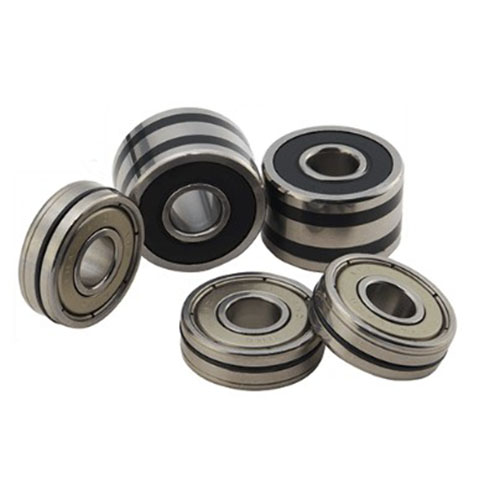
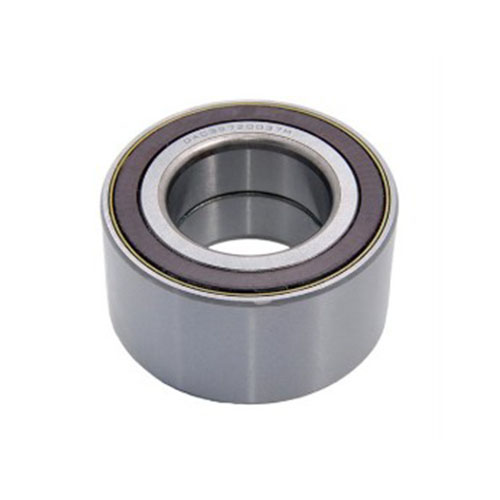
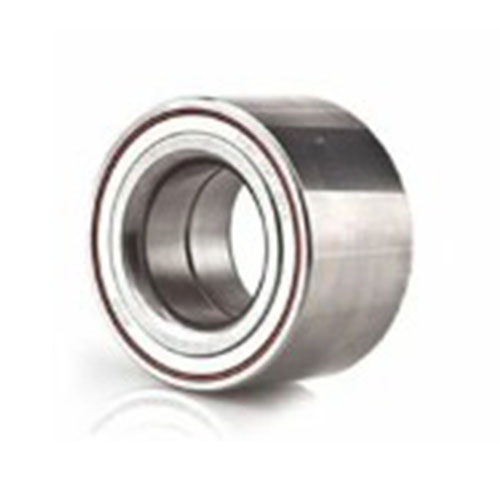
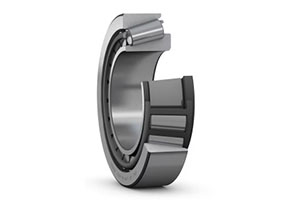
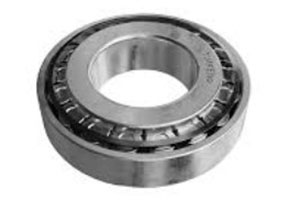
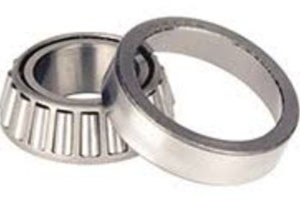
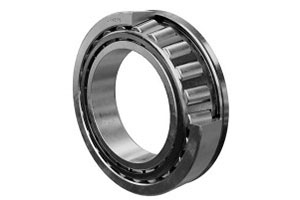
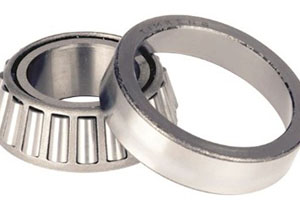
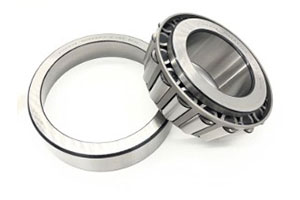
A first-generation wheel bearing is a single or double-row ball or tapered roller cartridge designed to be pressed directly into the steering knuckle or hub carrier. Unlike later generations, it has no integrated mounting flange or ABS sensor. The core components include an inner race with a splined bore for the axle shaft (on driven wheels) or a plain bore (on non-driven wheels), an outer race with a smooth cylindrical surface for press-fit installation, rolling elements (balls or tapered rollers), a cage separating each row, and integrated contact seals pre-packed with high-temperature grease.
Some Gen 1 wheel bearings include a magnetic encoder ring on the inner race for ABS wheel speed detection, but the sensor itself remains external. This design requires a hydraulic press for removal and installation and is common on vehicles manufactured from the 1980s through the early 2000s.
Performance Characteristics
- Double-row rolling element configuration distributes radial and axial loads across two contact surfaces, providing higher load capacity than single-row wheel bearings of similar size.
- Factory-sealed and pre-greased construction eliminates the need for periodic repacking. The seals retain lubricant for the wheel bearing’s service life while excluding water and road debris.
- Interchangeable design across many vehicle platforms. A single wheel bearing part number often fits multiple models from the same manufacturer, simplifying aftermarket inventory.
- Compact outer diameter allows installation in tight knuckle castings where flange-type hub units cannot be accommodated.
- Lower component cost compared to Gen 2 or Gen 3 hub assemblies, making press-in wheel bearings an economical choice for older vehicle repairs and high-volume aftermarket distribution.
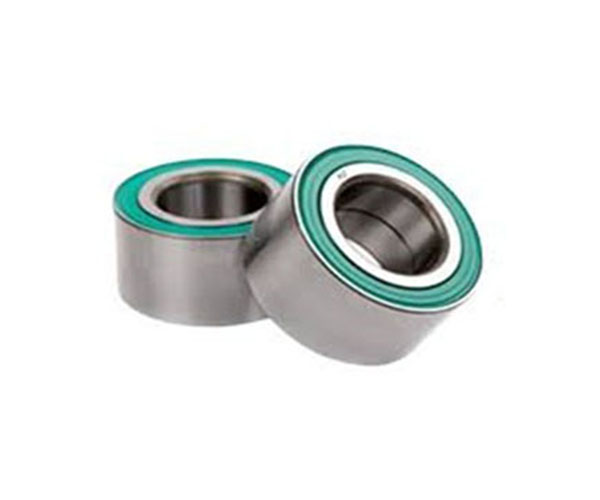
Your Reliable Wheel Bearing Supplier
DUHUI has manufactured wheel bearings since 2003. Over 20 years of experience shape our production approach. We produce over 4,000 wheel bearing models. Our DWB series meets OE standards. You can cross-reference DUHUI codes with SKF, NSK, and FAG numbers. Search by OE code in our library for precise replacement. Our bearings serve family cars, commercial vehicles, pickups, and trucks.
Factory Capacity and Equipment
Our plant operates 12 automated production lines with an annual output of 1.8 million units. We maintain a finished goods inventory of over 100,000 bearings. This supports just-in-time delivery for distributors and fleet customers. Key equipment includes CNC grinding machines, induction heating systems, and a 100% inspection line for radial clearance and torque measurement.
Materials and Heat Treatment
We use GCR15 bearing steel (AISI 52100) for rolling elements and inner rings. For outer rings, 65Mn spring steel delivers the required toughness and impact resistance. The case carburization process creates a hard, wear-resistant outer shell while the ductile core absorbs shock loads. Our technical team also applies induction hardening to raceways. Japanese lubricating grease is used for assembly, with high and low temperature tests performed before shipment.
Key material properties:
- GCR15: high hardness (HRC 60-64), good wear resistance, high fatigue strength
- 65Mn: excellent toughness and impact resistance for outer rings
- Cage: heat-resistant nylon PA66 with glass fiber (non-metallic, light weight)
Seals and Quality Control
DUHUI uses 2RZ non-contact rubber seals on both sides. This design keeps water and dust out. No direct contact with moving parts means no friction loss and lower operating temperature. Our factory holds ISO 9001 and IATF 16949 certifications. These standards are required for automotive suppliers. The annual customer complaint rate is below 0.5%. Each batch receives a CNAS-accredited test report, including vibration, clearance, and torque values.
Seal types: 2RZ (non-contact) has no friction effect and good protection against dust and splash water. Contact seals provide better sealing for muddy conditions but wear faster due to direct contact. We recommend 2RZ for most passenger car and light truck applications.
Precision Processing
Tempering is a mandatory step in our production line. Some manufacturers skip this process to reduce costs. We heat bearings to 600°C, then cool to 180–200°C and hold for 3–4 hours. This stabilizes the internal structure and eliminates residual stress. Polished raceways (Ra ≤ 0.1μm) and precise grinding ensure smooth rotation under load. End-of-line testing includes high-temperature operation (120°C for 72 hours) and low-temperature start (-40°C).
- Tempering: 180–200°C for 3–4 hours, stress relief verified
- Case carburization depth: 0.8–1.2mm
- Induction hardening on raceways with 100% hardness inspection
- STQ material test report for each steel batch
- CNAS test report for finished wheel bearings (noise, clearance, torque)
Customization and Technical Support
We accept custom orders based on OE samples or drawings. Minimum order quantity for custom bearings starts at 500 units. Our engineers can modify seal types, lubricant grades, and flange configurations. We provide CAD drawings and 3D models before production. For large fleet customers, we offer bearing rebuild kits including pre-greased bearings, seals, and snap rings.
Warranty and After-Sales
All DUHUI wheel bearings come with a 12-month warranty or 50,000 km (whichever comes first). Warranty covers material defects and premature wear under normal use. Replacement rate in the first year is below 0.3% based on 2024 shipment data. We also provide free technical troubleshooting via email or video call. For bulk orders, third-party inspection (SGS, TÜV) is accepted at buyer’s cost.
Call to Action
Contact us with your OE numbers or vehicle applications. We will confirm cross-references and provide pricing within 24 hours. Bulk orders, custom labeling, and mixed container shipments are available. Ask for our latest product catalog and IATF certificate. Sample orders (up to 5 pieces) are shipped within 7 days.
Press-In Wheel Bearing Series by Vehicle Origin
We manufacture first-generation press-in wheel bearings for the following vehicle origins and brands. Always verify fitment using OE numbers before ordering.
- Chinese Vehicle Press
- American Vehicle Press
- Japanese Vehicle Press
- Korean Vehicle Press
- Italian Vehicle Press
- French Vehicle Press
- German Vehicle Press
- British Vehicle Press
- Swedish Vehicle Press
Chinese Vehicle Press
Many Chinese passenger cars made before 2010 use Gen 1 press-in wheel bearings based on Japanese or European platform licenses. Our Chinese-series wheel bearings cover both families, with standard seals and ABS encoder options on higher trims.
BYD wheel bearings for the F3 (2005–2012) front axle follow the Toyota Corolla platform design (driven double-row ball). The F0 (2008–2014) uses smaller BYD wheel bearings for a mini car application. F6 and S6 rear BYD wheel bearings are non-driven units. Later F3 GLX-i models feature BYD wheel bearings with an ABS encoder. Standard seals suit Chinese road conditions.
Geely wheel bearings are based on Toyota and Mercedes license platforms for Emgrand EC7 (2009–2014), MK (2006–2010), CK (2005–2008), and Vision (2006–2010). Front Geely wheel bearings are driven double-row ball units; rear Geely wheel bearings are non-driven. EC7 Luxury trim offers Geely wheel bearings with an ABS encoder. Multi-purpose grease is used.
Chery wheel bearings are based on Seat/VW platforms for early models: QQ (2003–2008), early Tiggo (2005–2010), A5 (2005–2009), and Eastar (2006–2010). Front Chery wheel bearings are driven double-row ball units; rear Chery wheel bearings are non-driven. Base models are non-ABS; higher trims like Tiggo Comfort use Chery wheel bearings with an ABS encoder. Compact design suits small cars.

Haval wheel bearings for rear axles are press-in tapered roller units for H3 (2005–2012) and H5 (2010–2015) live axle designs. These Haval wheel bearings are designed for non-driven rear axles and feature a heavy-duty seal and high load rating for off-road use. H5 Supreme offers Haval wheel bearings with an ABS encoder. High-viscosity grease handles extreme conditions.
Great Wall wheel bearings for rear axles fit pickups: Wingle (2006–2013), Steed (2012–2015), and Sailor (2009–2014). These Great Wall wheel bearings use a tapered roller press-in design with an outer race that presses into the axle housing. They are designed for non-driven rear axles, with non-ABS standard. Reinforced cages support commercial loads.
Changan wheel bearings are based on Suzuki license platforms for Alsvin (2006–2011), Eado (2012–2014), and early CS35 (2012–2014). Front Changan wheel bearings are driven double-row ball units; rear Changan wheel bearings are non-driven. Luxury trims like Eado Deluxe feature Changan wheel bearings with an ABS encoder. Rubber seals protect against dust.
Roewe wheel bearings are based on Rover platforms for 550 (2008–2013) and early 750 (2008–2011). Front Roewe wheel bearings are driven double-row ball units; rear Roewe wheel bearings are non-driven. An ABS encoder is standard. High-temperature grease is used for premium sedans.
MG wheel bearings are identical to Roewe platforms for first-gen MG3 (2011–2014) and MG6 (2010–2014). Front MG wheel bearings are driven double-row ball units; rear MG wheel bearings are non-driven. An ABS encoder is standard. Sport-tuned seals enhance handling response.
BAIC wheel bearings include rear axle units for off-road BJ40 (2013–2015), similar to Jeep Wrangler Dana axle design. D20 (2013–2015) and D50 (2014–2015) front BAIC wheel bearings are based on Hyundai platforms. Front BAIC wheel bearings are driven double-row ball units. D50 Executive offers BAIC wheel bearings with an ABS encoder. Heavy-duty design for off-road use.
DongFeng wheel bearings are based on Honda and Nissan license platforms for Jingyi (2009–2012), Fengshen (2011–2014), and early AX7 (2014–2015). Front DongFeng wheel bearings are driven double-row ball units; rear DongFeng wheel bearings are non-driven. Fengshen models use DongFeng wheel bearings with an ABS encoder as standard. Pre-greased for long service life.
FAW wheel bearings are based on Mazda and Toyota platforms for Besturn B50 (2009–2012), B70 (2009–2012), and X80 rear (2013–2014). Front FAW wheel bearings are driven double-row ball units; X80 rear FAW wheel bearings are non-driven. Higher trims like Besturn B70 Luxury feature FAW wheel bearings with an ABS encoder. Precision-ground races are used.
JMC wheel bearings for rear axles are tapered roller units under Isuzu license for Baodian (2005–2010) and Yuhu (2010–2014) pickups. These JMC wheel bearings are designed for non-driven rear axles and feature heavy-duty construction for commercial loads. Non-ABS standard. High load rating and extended grease life support commercial use.
JAC wheel bearings are based on Hyundai platforms for J2 (2011–2014), J3 (2008–2013), J5 (2010–2014), and T6 pickup rear (2012–2014). Front JAC wheel bearings are driven double-row ball units; T6 rear JAC wheel bearings are non-driven. J5 Elegant offers JAC wheel bearings with an ABS encoder. Standard seals are used.
Zotye wheel bearings are based on Fiat platforms for early models: Z200 (2010–2013) and early T600 (2013–2014). Front Zotye wheel bearings are driven double-row ball units; rear Zotye wheel bearings are non-driven. Non-ABS standard. Compact design suits economy cars.
BaoJun wheel bearings (SAIC-GM-Wuling) are based on GM platforms for 510 (2013–2015), 310 (2014–2015), and 630 (2012–2014). Front BaoJun wheel bearings are driven double-row ball units; rear BaoJun wheel bearings are non-driven. High-end trims like BaoJun 630 Deluxe feature BaoJun wheel bearings with an ABS encoder. Corrosion-resistant coating is applied.
American Vehicle Press
American passenger cars and light trucks from the 1980s through early 2000s use Gen 1 press-in wheel bearings, often with tapered roller designs on front axles of RWD vehicles. Our American-series bearings cover Ford, GM, Chrysler, and Jeep platforms with high load ratings and ABS encoder options.
Ford wheel bearings for front axles serve FWD sedans: Taurus (1986–2005), Escort (1991–2002), Focus MK1 (2000–2004). Front Ford wheel bearings are driven double-row ball units. Rear axle Ford wheel bearings for Ranger (1998–2005) and Explorer (1998–2005) are tapered roller press-in designs for non-driven axles. Taurus SE and Focus ZTS offer Ford wheel bearings with an ABS encoder. For F-150 4WD models (2004 onward), Ford wheel bearings require special attention due to the Integrated Wheel End (IWE) system.
Chevrolet – Chevrolet wheel bearings fit FWD platforms: Malibu (1997–2003), Cavalier (1995–2005), Impala (2000–2005). Front Chevrolet wheel bearings are driven double-row ball units. Silverado front outer Chevrolet wheel bearings (1988–2006) are tapered rollers that press into the rotor hub (non-driven for outer position, driven for inner on 4WD). LS trims feature Chevrolet wheel bearings with an ABS encoder. High-temperature grease is used.
Dodge wheel bearings are designed for FWD sedans and minivans: Neon (1995–2005), Stratus (1995–2000), Intrepid (1998–2004), and Caravan front (1996–2003). Front Dodge wheel bearings are driven double-row ball units; some rear Dodge wheel bearings are non-driven. Higher trims like Neon R/T and Caravan Sport use Dodge wheel bearings with an ABS encoder. Rubber seals protect against dust.
Jeep wheel bearings for rear axles are press-in tapered roller units for Cherokee XJ (1984–2001) rear axle (Dana 35/30), Grand Cherokee ZJ (1993–1998) rear, and Grand Cherokee WJ (1999–2004) rear. These Jeep wheel bearings are designed for non-driven rear axles and feature an integral seal for off-road debris protection. No ABS encoder on base models; ABS is optional on Grand Cherokee. Heavy-duty cages are used.
GMC wheel bearings for front outer positions fit Sierra 1500 (GMT400/GMT800, 1988–2006), Savana van front (1996–2006), and Sonoma rear axle (1994–2004). These GMC wheel bearings press into the hub rotor. Front outer GMC wheel bearings are non-driven; rear Sonoma GMC wheel bearings are driven for 4WD. SLE trims offer an ABS encoder on these GMC wheel bearings. The high load rating suits truck applications.
Cadillac wheel bearings for front axles fit FWD luxury sedans: DeVille (1994–1999), Seville (1992–1997), and Eldorado (1992–2002). These Cadillac wheel bearings have a larger outer diameter and wider track width for premium FWD platforms. Front Cadillac wheel bearings are driven double-row ball units and include an ABS encoder as standard. Precision-ground races ensure quiet operation.
Buick wheel bearings are shared with Chevrolet and Pontiac FWD platforms for LeSabre (1992–1999), Century (1997–2005), Regal (1997–2004), and Park Avenue (1991–2005). Front Buick wheel bearings are driven double-row ball units. LS and Limited trims feature Buick wheel bearings with an ABS encoder. These Buick wheel bearings are pre-greased for long service life.
Opel wheel bearings serve European GM models: Astra F/G (1991–2002), Vectra B (1995–2002), and Corsa B/C (1993–2005). Vauxhall is identical for the UK market. Front Opel wheel bearings are driven double-row ball units; rear Opel wheel bearings are non-driven. CDX trims use Opel wheel bearings with an ABS encoder. Corrosion-resistant coating suits European road salt conditions.
Japanese Vehicle Press
Japanese passenger cars from the 1980s through mid-2000s widely employ Gen 1 double-row ball wheel bearings. Our Japanese-series wheel bearings conform to JIS standards and are offered in ABS and non-ABS versions. Common applications include Toyota, Honda, Nissan, and Subaru models where front bearings are typically driven and rear bearings non-driven.
Accord (1994–2002), Civic (1996–2005), CR-V (1997–2006), Odyssey (1999–2004), Prelude (1992–2001), and Integra (1994–2001). Front Honda wheel bearings are designed for driven axles, while rear bearings suit non-driven applications. ABS variants include an encoder ring, commonly required for Accord EX, Civic EX, and CR-V LX trims. For professional technicians, front Honda wheel bearings for models like Accord VI, Civic VII/VIII, and CR-V I/II are available with specific OE cross-references.
FWD and AWD platforms. They fit Camry (1992–2001, XV10/XV20), Corolla (1993–2002, E100/E110), RAV4 (1994–2000, XA10), Celica (1994–1999), Avalon (1995–2004, XX10), and Sienna (1998–2003). Front Toyota wheel bearings are engineered for driven wheels, while rear units are for non-driven axles. For XLE and Limited trims, Toyota wheel bearings are typically equipped with an ABS encoder. The same bearings also serve the rear of Lexus ES300 (1992–1997).
Front Nissan wheel bearings for Altima (1998–2006, L30/L31), Sentra (1995–2002, B14/B15), and Maxima (1995–2003) use a double-row ball design on driven axles. Rear Nissan wheel bearings for Pathfinder (1996–2004, R50) are tapered roller types for non-driven axles. For SE and GLE trims, Nissan wheel bearings come with an ABS encoder. Rear Nissan wheel bearings for the 240SX (1995–1998) use a tapered roller configuration.
Mazda wheel bearings for the front of FWD platforms — including 626 (1993–1997, GF/GW), Protege (1998–2003, BJ), MX-6 (1992–1997), and Millenia (1995–2002) — are driven double-row ball units. For the rear of B-Series pickup (1994–2004), Mazda wheel bearings are tapered roller types for non-driven axles. Higher trims feature Mazda wheel bearings with an ABS encoder. Mazda wheel bearings for the 626 and Protege share dimensions with Ford models of the same era, offering cross-brand compatibility.
Subaru wheel bearings are engineered specifically for AWD models: Impreza (1993–2001, GC/GD), Forester (1997–2002, SF), Legacy (1995–2004), and Outback (1995–2004). Front Subaru wheel bearings are double-row ball units for driven axles, while rear Subaru wheel bearings use a tapered roller design for non-driven axles. For 2.5RS and WRX variants, Subaru wheel bearings are pre-greased with low-temperature grease for cold-weather performance.
Mitsubishi wheel bearings serve FWD and AWD platforms including Lancer (1996–2003, CK/CM), Galant (1994–1998, EA/EC), Eclipse (1995–2005, 2G/3G), and Montero rear (1990–2005, V20/V40). Front Mitsubishi wheel bearings are driven double-row ball units. Montero rear Mitsubishi wheel bearings are heavy-duty tapered roller types, built for non-driven axle applications. Higher trims such as Eclipse GS-T/GSX and Montero SR employ Mitsubishi wheel bearings with an ABS encoder.
Suzuki wheel bearings are compact press-in units designed for light cars and SUVs. They fit Swift (1995–2005, EA/MA) and Esteem (1995–2002) on front axles as driven units. For Vitara rear (1999–2005, SQ), Suzuki wheel bearings are tapered roller types for non-driven axles. The smaller outer diameter of these Suzuki wheel bearings suits lightweight platforms. Non-ABS is standard, while a 48-pole ABS encoder is optional on Vitara JLX.
Lexus wheel bearings for rear axles serve RWD luxury sedans: ES300 (1992–1997), GS300 (1993–1997, JZS147), LS400 (1990–1997, UCF10/20), and SC300/400 (1992–1997). These Lexus wheel bearings use a tapered roller design for non-driven rear axles with an integrated ABS encoder. The higher load rating of Lexus wheel bearings suits premium vehicle demands. Front Lexus wheel bearings for ES300 share specifications with Toyota Camry.
Acura wheel bearings fit Integra (1994–2001, DC2/DB), TL (1996–2003, UA1/UA2), CL (1997–2003), and RL (1996–2004). These Acura wheel bearings are identical to Honda platforms but feature a specific ABS encoder configuration calibrated for Acura’s system. Front Acura wheel bearings are driven units, while rear are non-driven. These Acura wheel bearings are suitable for models with factory ABS.
Infiniti wheel bearings for rear axles serve Nissan luxury platforms: G20 (1999–2002, P11), I30 (1996–2001), and Q45 (1997–2001, FGY33). The front G20 uses the same Infiniti wheel bearings as Nissan Sentra (driven axle). Rear Infiniti wheel bearings are tapered roller non-driven. An ABS encoder is integrated into all Infiniti wheel bearings.
Isuzu wheel bearings are rear press-in tapered roller units for SUV applications: Rodeo (1991–2004, UC/UF), Trooper (1992–2002, UBS), Amigo (1992–2000), and VehiCROSS (1999–2001). These Isuzu wheel bearings feature a heavy-duty seal for off-road use and are designed for non-driven rear axles. An ABS encoder is optional on later Isuzu wheel bearings. Isuzu wheel bearings are filled with high-viscosity grease for extreme off-road conditions.
Korean Vehicle Press
Korean manufacturers used Gen 1 press-in wheel bearings extensively during the 1990s and early 2000s. Our Korean-series wheel bearings match Hyundai-Kia platform dimensions. Front bearings are typically driven double-row ball designs, while rear SUV bearings may use tapered roller configurations.
Sonata (EF, 1998–2005), Accent (LC, 2000–2005), and Tiburon (GK, 2002–2006). Front Hyundai wheel bearings are driven double-row ball units with 26 splines. For Santa Fe (SM, 2001–2006) rear axles, Hyundai wheel bearings have a larger outer diameter for SUV loads and are non-driven. GLS and SE trims use Hyundai wheel bearings with a 48-pole ABS encoder. These Hyundai wheel bearings also cover KIA Optima (MS, 2001–2005).
KIA wheel bearings share dimensions with Hyundai platforms. Front applications include Spectra (LD, 2004–2009), Sephia (FA, 1997–2001), Optima (MS, 2001–2005). For Sportage rear (NB7, 1999–2002), KIA wheel bearings are tapered roller non-driven units. Front KIA wheel bearings are driven double-row ball designs. EX trims offer KIA wheel bearings with a 48-pole ABS encoder. These KIA wheel bearings are factory pre-greased for extended service life.
Daewoo wheel bearings follow GM platform dimensions for Lanos (T100, 1997–2004), Nubira (J100, 1997–2004), Leganza (1997–2002), and Matiz (1998–2004). Front Daewoo wheel bearings are driven units, while rear Daewoo wheel bearings are non-driven. Non-ABS is standard. These Daewoo wheel bearings are interchangeable with certain Opel/Vauxhall units and are suitable for Eastern European and South Korean markets.

SsangYong wheel bearings for rear axles are heavy-duty tapered roller units for live axle designs. They fit Korando (KJ, 1996–2005), Musso (FJ, 1996–2005), and Rexton (2001–2005). These SsangYong wheel bearings are for non-driven rear axles. A 48-pole ABS encoder is available on later production. SsangYong wheel bearings feature reinforced cages and high-temperature grease for off-road durability.
Italian Vehicle Press
Italian passenger cars from Fiat and Alfa Romeo use Gen 1 wheel bearings on many 1990s and early 2000s models. These bearings often feature rubber seals for debris protection and are common in the European aftermarket. ABS encoders appear on higher trims.
Fiat wheel bearings serve front and rear axles across popular models: Punto (176/188, 1993–2005), Bravo (182, 1995–2001), Stilo (192, 2001–2005), Palio (1996–2004), and Uno (1993–2000). Front Fiat wheel bearings are driven double-row ball units; rear Fiat wheel bearings are non-driven. Later models like Punto HGT and Stilo Dynamic use Fiat wheel bearings with an ABS encoder. Common in the European aftermarket, these Fiat wheel bearings feature rubber seals for debris protection.
Alfa Romeo wheel bearings for front axles are engineered for 146 (1995–2000), 147 (2000–2006, 937), 156 (1997–2005, 932), 166 (1998–2006), and GT (2003–2006). These Alfa Romeo wheel bearings have tighter tolerances for sporty handling. Front Alfa Romeo wheel bearings are driven units; some rear models use tapered roller Alfa Romeo wheel bearings (non-driven). An ABS encoder is integrated into all Alfa Romeo wheel bearings. These bearings are pre-greased with high-performance grease.

IVECO wheel bearings for front axles are heavy-duty double-row tapered roller units for Daily light commercial vans (1990–2006). These IVECO wheel bearings are designed for non-driven front axles. Non-ABS is standard. With a high load rating and water-resistant seals, IVECO wheel bearings suit 2.8L and 3.0L diesel models.
French Vehicle Press
Renault, Peugeot, and Citroen relied on press-in wheel bearings until the mid-2000s. Our French-series wheel bearings match these platforms, with low-friction seals and ABS encoder options on higher trims. Many dimensions are shared between Peugeot and Citroen.
Renault wheel bearings for front axles fit Clio I/II (1990–2005), Megane I (1996–2003), Laguna I (1994–2001), Twingo (1993–2000), and Scenic (1996–2003). Front Renault wheel bearings are driven double-row ball units; rear Scenic Renault wheel bearings are non-driven. Models with factory ABS such as Clio II Expression and Megane I Privilege use Renault wheel bearings with an ABS encoder. Low-friction seals are standard.
Peugeot wheel bearings share dimensions with Citroen platforms. They fit 206 (1998–2005), 306 (1993–2002), 406 (1995–2004), 607 (2000–2005), and Partner (1996–2005). Front Peugeot wheel bearings are driven double-row ball units; rear 406 uses tapered roller Peugeot wheel bearings (non-driven). Higher trims like 206 XS and 406 SV feature Peugeot wheel bearings with an ABS encoder. These Peugeot wheel bearings are pre-greased with high-temperature lubricant.
Citroen wheel bearings are identical to Peugeot for same platform years: Saxo (1996–2003), Xsara (1997–2006, N1), C3 (2002–2006), C5 (2000–2004, I), and Berlingo (1996–2005). Front Citroen wheel bearings are driven units; Berlingo front Citroen wheel bearings are reinforced for van duty (non-driven on some variants). Exclusive trims use Citroen wheel bearings with an ABS encoder.
Dacia wheel bearings are based on the Renault Clio platform for Logan (2004–2010, LS) and Sandero (2008–2010). Front Dacia wheel bearings are driven double-row ball units; rear Dacia wheel bearings are non-driven. These lower-cost Dacia wheel bearings use standard seals and are suitable for the Eastern European market. Base models are non-ABS; Logan Laureate offers Dacia wheel bearings with an ABS encoder.
German Vehicle Press
Many German passenger cars from the 1990s and early 2000s used Gen 1 press-in wheel bearings before moving to Gen 3 hub units. Our German-series wheel bearings meet DIN quality standards, with integrated ABS encoders and high-temperature grease for autobahn speeds.
VW wheel bearings for front axles are designed for FWD platforms: Golf MK3 (1991–1997), Golf MK4 (1997–2004), Jetta (1993–2005), Passat B5 (1996–2000), Beetle (1998–2005), and Polo (1994–2001). Front VW wheel bearings are driven double-row ball units. Most models integrate an ABS encoder into the VW wheel bearing. Rear VW wheel bearings for Polo (6N) are non-driven. These VW wheel bearings are pre-greased with high-temperature grease for autobahn speeds.
Audi wheel bearings serve luxury FWD/Quattro models: A4 B5 (1994–2000), A4 B6 (2000–2004), A6 C5 (1997–2004), A3 8L (1996–2003), and TT (1998–2006). Front Audi wheel bearings are driven double-row ball units. Quattro models use tapered roller Audi wheel bearings for the rear (non-driven). An ABS encoder is integrated. These Audi wheel bearings feature precision-ground races for low noise.
BMW wheel bearings for rear axles are designed for RWD platforms: 3 Series E36 (1990–1999), E46 (1998–2005), 5 Series E39 (1995–2003), E34 (1988–1996), and X5 E53 rear (2000–2006). These BMW wheel bearings are non-driven tapered roller units with an integrated ABS encoder. BMW wheel bearings for E46 and E90 models require correct installation orientation due to the passive encoder design. The front axle uses a separate hub and bearing assembly. These BMW wheel bearings come with high-temperature grease for performance driving.
Mercedes wheel bearings for front axles fit C-Class W202 (1993–2000), W203 (2000–2007), W204 (2007–2014), E-Class W210 (1995–2002), and SLK R170 (1996–2004). Front Mercedes wheel bearings are driven double-row ball units. An ABS encoder is integrated as standard. High-temperature grease is used for autobahn speeds. Some Mercedes wheel bearings also cover rear non-driven axles.
Skoda wheel bearings are identical to VW Golf MK4 platform parts. They fit Octavia MK1 (1U, 1996–2004), Fabia MK1 (6Y, 1999–2004), and Superb MK1 (2001–2004). Front Skoda wheel bearings are driven double-row ball units; rear Skoda wheel bearings are non-driven. Higher trims like Octavia Laurin & Klement use Skoda wheel bearings with an ABS encoder. These Skoda wheel bearings are factory pre-greased for long service life.
Seat wheel bearings are available for Ibiza MK2 (6K, 1993–1999), Ibiza MK3 (6L, 1999–2002), Leon MK1 (1M, 1999–2005), and Toledo MK2 (1M, 1999–2004). Sharing dimensions with VW and Audi, front Seat wheel bearings are driven double-row ball units. An ABS encoder is optional on these Seat wheel bearings. Standard seals are used for European road conditions.
MINI wheel bearings for front axles fit R50/R53 Cooper (2001–2006). These MINI wheel bearings have a unique smaller outer diameter for a compact chassis and are driven double-row ball units. An ABS encoder is integrated into all MINI wheel bearings. Low-friction grease improves fuel efficiency.
MAN wheel bearings for front axles are press-in tapered roller units for TGL/TGM 3–7 ton commercial trucks (2000–2010). These MAN wheel bearings are designed for non-driven front axles and feature heavy-duty construction for fleet use. Non-ABS is standard. The high load rating and extended grease life of these MAN wheel bearings make them suitable for long-haul applications.
British Vehicle Press
British marques including Land Rover, Rover, and Jaguar used Gen 1 press-in wheel bearings on many models, especially on rear axles and older platforms. Land Rover bearings feature heavy-duty seals for off-road use, while Jaguar bearings offer high load ratings for luxury sedans.
Land Rover wheel bearings are serviceable tapered roller hub units for Defender (90/110, 1985–2005), Discovery 1 (1990–1998), Discovery 2 (1998–2004), and Range Rover Classic (1970–1995). These Land Rover wheel bearings use a press-in outer race design for front and rear axles (non-driven on front for some models). An ABS encoder is available for 2002+ Defender models. Heavy-duty seals on Land Rover wheel bearings exclude water and mud during off-road operation.
Rover wheel bearings share dimensions with Honda platforms for 200 (1990–1995), 400 (1990–1995), 600 (1993–1999), and 75 (pre-2005). Front Rover wheel bearings are driven double-row ball units; rear Rover wheel bearings are non-driven. Later models like Rover 75 Connoisseur use Rover wheel bearings with an ABS encoder. These Rover wheel bearings are pre-greased for standard road use.
Jaguar wheel bearings for rear axles are press-in tapered roller units for XJ40 (1986–1994), X300 (1994–1997), X308 (1997–2002), and S-Type (1999–2002). These Jaguar wheel bearings are designed for RWD luxury sedans with non-driven rear axles. An ABS encoder is integrated. With a high load rating, Jaguar wheel bearings feature precision-ground races for smooth, quiet operation.
Swedish Vehicle Press
Volvo and SAAB used press-in wheel bearings extensively before switching to hub units in the mid-2000s. Our Swedish-series wheel bearings emphasize cold-weather durability, with low-temperature grease and reinforced seals.
Volvo wheel bearings for front axles fit 850 (1992–1997), S70 (1997–2000), V70 (1997–2000), 940 (1990–1998), 960 (1991–1997), and first-gen S40 (1995–2000). Front Volvo wheel bearings are driven double-row ball units; rear 940 uses tapered roller Volvo wheel bearings (non-driven). An ABS encoder is integrated. These Volvo wheel bearings are pre-greased with low-temperature grease for Scandinavian climates.
SAAB wheel bearings are derived from GM platforms for 900 (NG, 1994–1998), 9-3 (1998–2002, YS3D), and 9-5 (1998–2005, YS3E). Front SAAB wheel bearings are driven double-row ball units; rear SAAB wheel bearings are non-driven. A specific ABS encoder is used for the SAAB Trionic system. These SAAB wheel bearings have reinforced seals for cold-weather operation.
Scania wheel bearings for front axles are press-in tapered roller units for 4×2 and 6×2 commercial vehicle configurations (1995–2008). These Scania wheel bearings are designed for non-driven front axles and feature a high-capacity design for long-haul applications. Non-ABS is standard. High-viscosity grease extends drain intervals.
Related Wheel Bearing Types
When servicing first-generation press-in wheel bearings, related components such as bare hubs and bearing kits may also be needed. Below is an overview of these ancillary products.
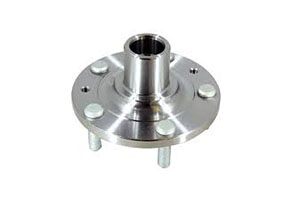
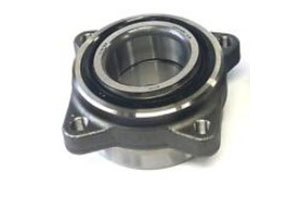
A bare hub is a wheel-mounting flange without a bearing pressed in. It is used when the original hub flange is damaged or corroded. The Gen 1 wheel bearing gets pressed into the hub bore, and the hub then mounts onto the vehicle’s knuckle or spindle. Bare hubs are typically required for vehicles using press-in bearings where the hub is a separate component from the bearing assembly.
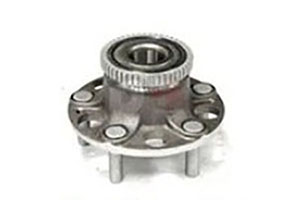
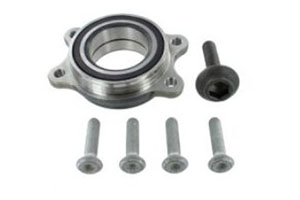
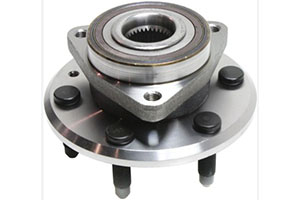
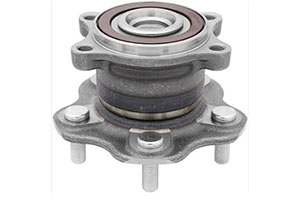
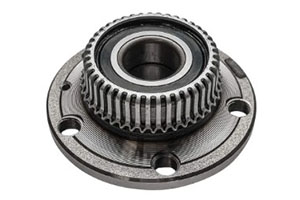
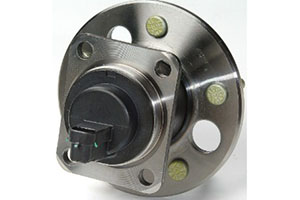
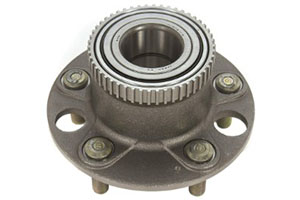
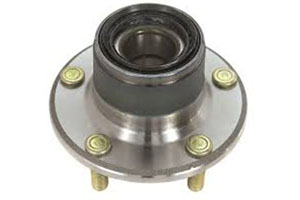
A Gen 2 wheel hub integrates the bearing with a single outer mounting flange that includes wheel studs. This design eliminates the need for a separate hub and allows bolt-on installation without a press. Gen 2 units are common on non‑driven rear axles of many Asian and American passenger cars manufactured after the early 2000s. They are not interchangeable with Gen 1 press-in bearings.
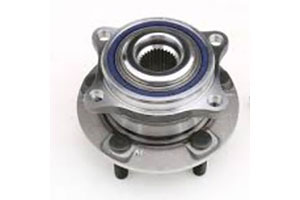
A Gen 3 wheel hub adds a second flange on the inner side for direct attachment to the suspension knuckle. It typically includes an integrated ABS speed sensor and wheel studs. Installation requires only basic hand tools and no hydraulic press. Gen 3 units dominate German and late‑model vehicles, offering simplified replacement but higher component cost compared to Gen 1 bearings.
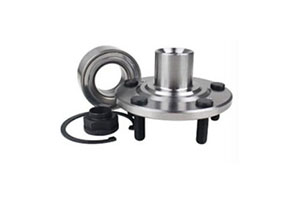
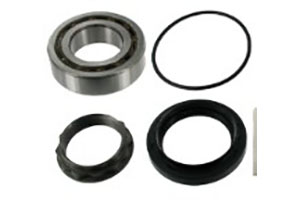
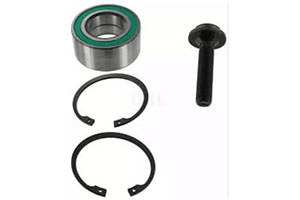
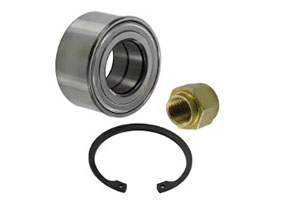
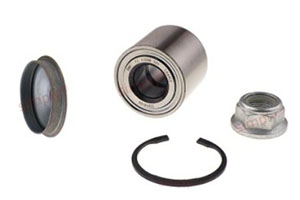
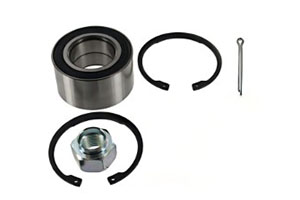
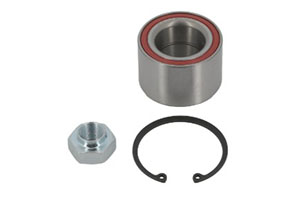
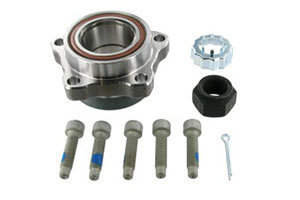
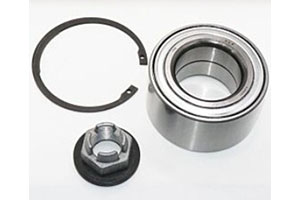
A wheel bearing kit contains the Gen 1 bearing cartridge along with all necessary installation components: circlips or snap rings, axle nuts, grease seals, and sometimes mounting bolts. Kits reduce the risk of missing parts during repair and are preferred by professional workshops. They ensure that all wear items are replaced at once, improving job efficiency and reliability.
Vehicle Categories That Use Gen 1 Press
First-generation press-in wheel bearings appear in multiple vehicle categories, mainly those built before 2010 or heavy-duty platforms that retain this design.

Sedans, hatchbacks, and coupes from this era employ Gen 1 front and rear wheel bearings. Examples include Honda Civic, Toyota Camry, VW Golf, and Ford Taurus. Front wheel bearings wear faster because they handle steering and drive forces.
Many older SUVs and pickups use press-in tapered roller wheel bearings on rear live axles. Ford Ranger, Chevrolet S-10, Jeep Cherokee XJ, and Toyota Hilux fall into this group. These wheel bearings are often serviceable and may need periodic repacking.
Vans such as Ford E-Series, Chevrolet Express, and older Mercedes Sprinter use Gen 1 press-in wheel bearings on front non-driven axles and rear axles. Higher load ratings and reinforced seals are standard.
Off-road vehicles including Land Rover Defender, Jeep Wrangler TJ, and Suzuki Vitara use press-in wheel bearings designed to resist water, mud, and impact shocks. Heavy-duty seal systems with labyrinth paths are common.
Comparison Articles for Wheel Bearing Selection
Read our detailed technical comparisons to understand the differences between press-in bearings and bolt-on hub units, as well as the evolution from Gen 2 to Gen 3 hub assemblies.
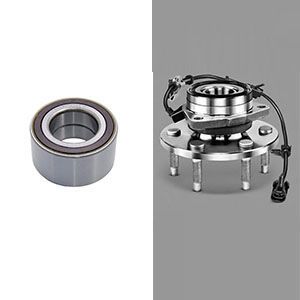
Press-in bearings (Gen 1) need a hydraulic press and careful race alignment but cost less per part and are typical for vehicles built before 2005. Bolt-on hub assemblies (Gen 2/3) simplify replacement with hand tools but have a higher unit price. This article compares labor time (press-in: 2–4 hours vs bolt-on: 1–2 hours), required tools, and vehicle compatibility to help workshops choose the right repair strategy for older models that still use press-in wheel bearings.
For more details, please read “Press-In Bearings vs Bolt-On Hub Assemblies”.
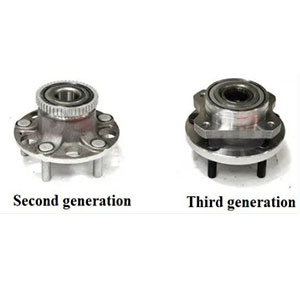
Second-generation hub units combine the wheel bearing with a single mounting flange for wheel attachment. Third-generation units add a second flange for knuckle mounting and usually come with pre-installed ABS sensors. Gen 2 units are common on non-driven rear axles of Asian and American cars. Gen 3 units dominate German and late-model vehicles, offering bolt-on installation without pressing. This article covers brand-specific compatibility, sensor integration, and cost factors for aftermarket sourcing.
For more details, please read “What is a Wheel Hub Assembly? ”.
Related Products
Below are 40 first-generation press-in products frequently ordered by aftermarket distributors. Note: Kits include ancillary components (seals, circlips); assemblies are pre-assembled units without mounting flanges.
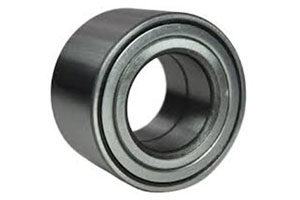
DAC38665052/48-2RZ Wheel Bearing For HYUNDAI. Double-row angular contact ball bearing with a 48-pole ABS encoder. Fits Hyundai Elantra (XD, 2001–2006), Tiburon (GK, 2002–2006), and KIA Spectra (LD, 2004–2009). Front axle, driven wheel. This press-in wheel bearing provides a direct OE fit without needing a full hub assembly.
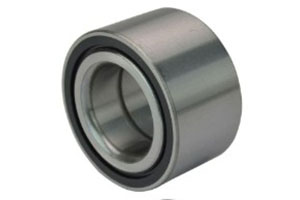
DAC38742037/48-2RZ Wheel Bearing For HONDA Civic / Accord. Double-row ball bearing with 48-pole magnetic encoder ring. Fits Honda Civic (1996–2005) and Accord (1998–2002) front axle. FWD application with 26-tooth spline. This front wheel bearing restores smooth rotation and eliminates grinding sounds.
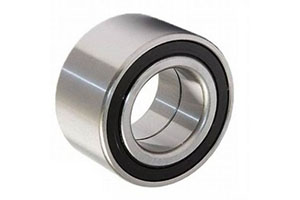
DAC38760043/40-2RS Wheel Bearing For Automotive Hubs. Double-row wheel bearing with rubber seals. Suitable for various passenger car front and rear axles requiring a press-fit 40mm width bearing. Non-ABS standard. A robust wheel bearing for load-bearing and rotation guidance.
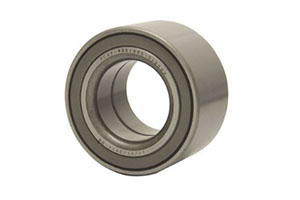
DAC40740042 Wheel Bearing For AUDI / VW Double-row angular contact ball bearing. Fits Audi A3 (8L, 1996–2003) and VW Golf MK4 (1997–2004) front axle. Integrated 48-pole ABS encoder. For driven front axle (28 splines). A premium wheel bearing designed for higher speed stability.
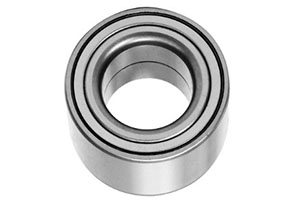
DAC407440CSS77 Wheel Bearing For FORD Focus (2000–2004). Double-row ball bearing for Ford Focus MK1 (2000–2004) front axle. 48-pole ABS encoder. Features rubber seals for enhanced dirt and moisture protection.
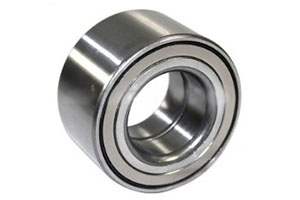
DAC42730037 Wheel Bearing For TOYOTA Camry / Corolla (Non-ABS). Double-row ball bearing without ABS encoder. Fits Toyota Camry (XV10/XV20, 1992–2001) front axle and Corolla (E100/E110, 1993–2002) front axle. Front axle, driven wheel with 28-tooth spline. This Gen 1 press-fit wheel bearing is intended for vehicles lacking factory ABS.
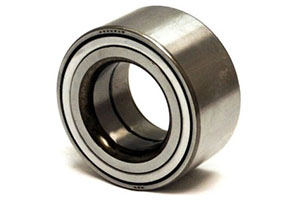
DAC42840037 Wheel Bearing For NISSAN Altima / Sentra. Double-row ball bearing for Nissan Altima (L30, 1998–2001) and Sentra (B14/B15, 1995–2002) front axle. ABS encoder available as an option (48-pole). Front axle, driven wheel with 28-tooth spline. This OE-design wheel bearing ensures precise fitment and long service life.
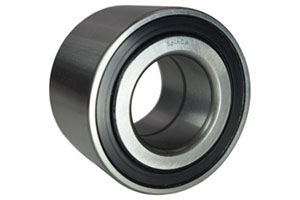
DAC3562W-S Wheel Bearing For CHANGHE / CHERY. Double-row angular contact ball bearing with sealed design. Fits Changhe Beidouxing (2003–2009) front axle and Chery QQ (2003–2008) front axle. Non-ABS standard. A compact press-in wheel bearing suitable for mini cars.
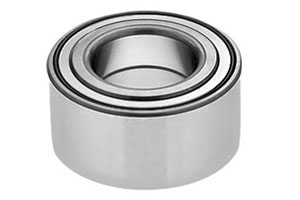
DAC38700037 Wheel Bearing For HONDA CR-V (1997–2001). Double-row ball bearing for Honda CR-V (RD1, 1997–2001) front axle. 48-pole ABS encoder (standard on EX trim). Front axle, driven wheel with 26-tooth spline. A robust wheel bearing engineered for SUV loads.
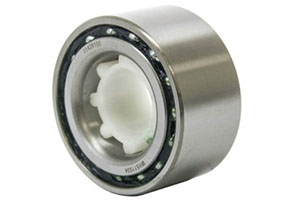
DAC40750040 Wheel Bearing For VW Golf / Jetta MK4. Double-row ball bearing for the VW A-platform (Golf MK4, Jetta MK4, Beetle, Audi A3 8L). Front axle, FWD. Integrated 48-pole ABS encoder. A quality aftermarket wheel bearing replacement for common VAG applications.
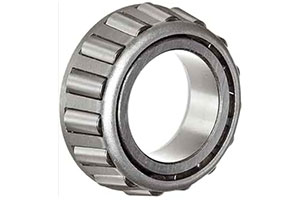
15123/250X Wheel Bearing For Light Trucks. Single-row tapered roller bearing. Dimensions 31.75mm ID x 63.5mm OD x 19.75mm. Suitable for light truck front wheel hubs and trailer axles. Non-ABS standard. A durable wheel bearing for light-duty commercial applications.
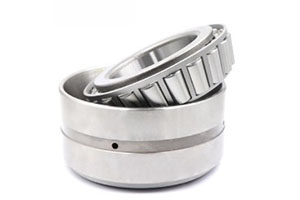
DU49920053-2RZ Double Row Tapered Wheel Bearing. Automotive hub wheel bearing with double row tapered roller design. Engineered to handle combined loads from wheel rotation and vehicle weight. Suitable for various passenger car rear axle applications.
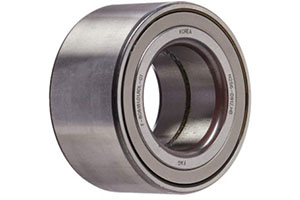
DU55900070-2RZ Wheel Bearing For HYUNDAI / KIA. Double-row wheel bearing for Hyundai (2007–2017) and KIA (2010–2019) rear axle applications. Designed to meet OE standards for durability and reliable performance across multiple Hyundai-KIA platforms.
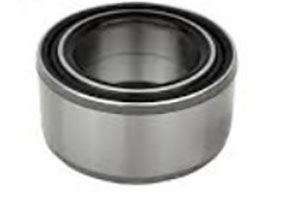
DU55900070-RZ/RS Wheel Bearing For Automotive Hubs. Sealed double-row wheel bearing unit with rubber seals (RZ/RS) for enhanced contamination protection. Engineered for direct press-in replacement on compatible vehicle platforms.
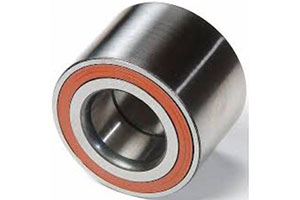
510008 Wheel Bearing Assembly For Universal Compact Cars. Wheel bearing assembly (pre-assembled unit without flange). Double-row ball design. Suitable for various compact cars including Chevrolet Cavalier and Pontiac Sunfire (1995–2005). Non-ABS standard. A reliable aftermarket wheel bearing assembly.
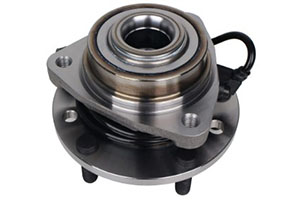
510024 Wheel Bearing Assembly For GM FWD Platforms. Wheel bearing assembly for GM FWD platforms including Chevrolet Malibu (1997–2003) and Oldsmobile Alero (1999–2004). Double-row ball design. ABS encoder (48-pole) available on LS trims. A quality wheel bearing assembly for GM compact cars.
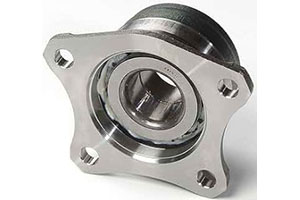
512000 Wheel Bearing Assembly For TOYOTA Camry (Non-ABS). Wheel bearing assembly for Toyota Camry (XV20, 1997–2001) front axle. Double-row ball design without ABS encoder. Front axle, driven wheel with 28-tooth spline. A reliable aftermarket wheel bearing assembly for Toyota FWD platforms.
First-Generation Wheel Bearings: Engineering, Applications, and Aftermarket Selection
How long should a press-in wheel bearing last? Why does the wrong ABS encoder trigger a fault code with no warning light? First-generation (Gen 1) wheel bearings—often called press-in or cartridge bearings—remain common on millions of vehicles built between the mid-1980s and late 2000s. A technician installs such a bearing by pressing it into the steering knuckle or rear hub carrier with a hydraulic press; the wheel hub or axle shaft then passes through the inner race. This architecture was standard on most passenger cars and light trucks from the 1980s until the early 2000s and continues to be used on many commercial vehicles and older platforms still in service.
Double-row design and two rolling element types
The double-row layout defines Gen 1 wheel bearings. Two separate rows of rolling elements—either steel balls or tapered rollers—sit side by side inside a single outer race. That arrangement lets the bearing manage both radial loads from vehicle weight and axial loads from cornering and braking forces simultaneously. Ball-type Gen 1 wheel bearings use spherical elements and appear on front-wheel-drive passenger cars, where lower friction helps fuel economy. Tapered-roller Gen 1 wheel bearings use conical elements and serve heavier vehicles such as pickups, SUVs, and rear-wheel-drive sedans that demand greater load capacity.
Unlike later generations, Gen 1 bearings do not incorporate a flange or wheel studs. The hub and brake rotor are separate pieces that slide over the bearing’s inner race and are secured by an axle nut or spindle nut. This modular design means a worn bearing can be replaced without replacing the hub or rotor, provided those parts remain in good condition. However, it does require a hydraulic press for servicing, which increases labor time and tooling needs compared to bolt-on hub units.
In the aftermarket, press-in bearings come in two principal versions: with or without a built-in ABS tone ring. Vehicles equipped with anti-lock brakes require a magnetic encoder ring bonded to the inner race. The external ABS sensor reads the encoder’s magnetic pulses across a small air gap. When selecting a replacement bearing, it is essential to match the encoder’s specifications—pole count and magnetic field strength—to the original part. A mismatched encoder will trigger ABS fault codes and may disable electronic stability control.
Typical vehicle applications for Gen 1 press-in bearings
These platforms still widely use Gen 1 press-in bearings. Knowing the specific models helps with accurate cross-referencing:
- Japanese models: Honda Civic (1996–2005), Accord (1998–2007), CR-V (1997–2006); Toyota Camry (1992–2006), Corolla (1998–2008), RAV4 (1998–2005); Nissan Altima (1998–2006), Sentra (1995–2006); Subaru Impreza, Forester (pre-2008).
- Korean models: Hyundai Elantra (1996–2006), KIA Spectra.
- European cars: VW Golf/Jetta (MK3, MK4), Audi A4 (B5, B6), BMW 3 Series (E36, E46), Mercedes C-Class (W202, W203).
- American vehicles: Ford Taurus, Chevrolet Malibu, Dodge Stratus (typically on non-driven rear axles).
When stocking Gen 1 bearings for distribution, key specifications to verify include outer diameter, inner diameter, width, number of rolling elements per row, presence and type of ABS encoder, and whether the bearing is intended for a driven or non-driven axle.
Expected service life and common failure symptoms
Gen 1 press-in bearings are designed to last 80,000 to 100,000 miles, but actual lifespan varies with driving conditions, maintenance practices, and installation quality. A correctly pressed bearing that receives the proper torque can exceed 120,000 miles, while one damaged during fitting may fail in under 10,000 miles.
The most frequent failure mechanism is race spalling caused by fatigue cycling. Spalling happens when microscopic cracks on the race surface grow under repeated stress, leading to flaking and increased friction. Symptoms include a low-frequency growl or hum that rises with vehicle speed, noticeable wheel play when the car is lifted, and, in severe cases, vibration in the steering wheel or brake pedal. The cornering noise test—swerving left and right at moderate speed—helps pinpoint the failed bearing. If the noise gets louder during a left turn, the right-side bearing is likely worn because cornering loads the outer bearing.
Installation mistakes that cause early failure (brinelling)
Replacing a press-in bearing requires a hydraulic press and a set of adapters sized to contact only the bearing’s outer race during removal and only the inner race when installing the new bearing into the knuckle or hub. Pressing on the wrong race transfers force through the rolling elements, creating indentations called brinelling. A brinelled bearing will make noise immediately after installation and fail early. Professional shops also use a bearing splitter or puller to extract the old bearing without harming the knuckle bore.
Installation mistakes are a leading cause of early failure. Pressing on the wrong race transfers force through the rolling elements, creating brinelling. A brinelled bearing makes noise immediately after installation and may fail in under 10,000 miles. The correct procedure: press only on the outer race during removal and only on the inner race when installing the new bearing into the knuckle or hub carrier. A hydraulic press and proper adapter set are non-negotiable for this job.
Inventory management: grouping by platform families
From a stocking perspective, aftermarket distributors should organize Gen 1 bearings by platform families. This cuts inventory SKUs while maintaining broad coverage. For example:
- Many compact cars from Honda (Civic, CR-V, Integra), Toyota (Corolla, Celica, MR2), and Nissan (Sentra, 200SX) share front bearing dimensions.
- European platforms like the VW A-platform (Golf, Jetta, Beetle, Audi A3, Seat Leon, Skoda Octavia) all use the same front press-in bearing.
- American FWD sedans from GM (Malibu, Grand Am, Alero) also share common bearing sizes.
ABS encoder compatibility – a critical detail often overlooked
Another critical point is ABS encoder compatibility. Vehicles with anti-lock brakes need a bearing that includes a magnetic encoder ring matching the original pole count and magnetic polarity pattern. Common pole counts are 43, 44, 48, and 96. Some bearings use a one-piece encoder bonded to the inner race; others use a separate tone ring. When replacing a bearing on an ABS-equipped car, the encoder specification must be checked against the OE part number. Installing a bearing with the wrong encoder will not illuminate the check engine light but will cause the ABS system to detect an implausible wheel speed signal, disabling ABS and stability control without immediate warning until a fault code is read.
For quick reference, common encoder configurations include:
| Encoder Type | Common Pole Counts | Typical Application Notes |
|---|---|---|
| Magnetic encoder ring (bonded) | 43, 44, 48 | Most Japanese and Korean ABS-equipped vehicles (1995–2005) |
| Separate tone ring | 96 | Some European models (BMW, Mercedes, late 1990s–2000s) |
Aftermarket selection checklist and quality indicators
When sourcing Gen 1 bearings for resale or workshop use, verify these points before purchase:
- Dimensions: Outer diameter, inner diameter, and width must match OE specs. Even a 1mm difference prevents proper press fit.
- Rolling element type: Ball or tapered roller – not interchangeable for the same application.
- ABS encoder presence and pole count: Confirm via part number lookup for ABS-equipped vehicles.
- Seal quality: Look for double-lip nitrile rubber seals rated for water and dust ingress. Poor seals shorten bearing life in wet or dusty conditions.
- Pre-lubrication: Quality bearings come pre-greased with high-temperature grease. Do not add grease – it can damage the seals.
- Packaging and included hardware: Each bearing should be individually packaged in a sealed bag, with axle nuts or circlips included where applicable. This reduces workshop handling time and the risk of missing parts during installation.
DUHUI Bearing manufactures Gen 1 press-in bearings to precise dimensional and encoder specifications. Each bearing is pre-greased with high-quality grease and sealed with double-lip nitrile rubber seals tested for water and dust ingress. Production includes 100% dimensional inspection and random noise testing to ensure smooth operation. For aftermarket buyers, DUHUI supplies bearings individually packaged in sealed bags with included axle nuts or circlips where applicable, reducing workshop handling time and the risk of missing parts during installation.
Final advice for workshops and distributors: Keep a cross-reference chart by platform family, not just by vehicle model. Train technicians on proper press-in procedures – brinelling from incorrect pressing is the #1 cause of early failure. Always confirm ABS encoder specifications before ordering for any vehicle equipped with anti-lock brakes. By following these practices, you will reduce returns, avoid fault code comebacks, and achieve the full 100,000-mile service life that Gen 1 bearings are designed to deliver.
A Gen 1 wheel bearing is a cartridge that must be pressed into the knuckle or hub carrier. It has no mounting flange or wheel studs. A Gen 2 hub assembly integrates the wheel bearing with a flange that includes wheel studs, allowing bolt-on installation without a press.
Most passenger cars built before 2005 use Gen 1 wheel bearings on at least one axle. If the vehicle has separate hubs and wheel bearings that require a press for service, it is Gen 1. If the replacement part comes with a flange and studs, it is Gen 2 or Gen 3.
Not recommended. Press-in wheel bearings need controlled force applied to the correct race. Hammering or using a bench vise risks damaging the wheel bearing or the knuckle. A shop press with proper adapters is the right tool.
Torque varies by vehicle. Typical ranges: 140–180 Nm for Japanese FWD cars, 180–250 Nm for German and American vehicles. Always consult a repair database. Under-torquing causes play and noise; over-torquing preloads the wheel bearing and shortens its life.
Look for a dark magnetic ring bonded to the inner race. It may show alternating magnetic poles. Non-ABS wheel bearings have a plain inner race without any ring. Check the OE part number for an ABS designation.
No. Press-fit wheel bearings are slightly deformed during removal. Reusing a removed wheel bearing will result in a loose fit in the knuckle bore and immediate noise or play. Always install a new wheel bearing.
The most common causes are: pressing on the wrong race (damaging rolling elements), dropping the wheel bearing before installation, contamination entering during pressing, or incorrect axle nut torque. Also possible is a misdiagnosed noise—tire or brake issues can mimic wheel bearing noise.
Yes. All sealed Gen 1 wheel bearings are factory-filled with grease and sealed for life. Do not attempt to add grease or clean the wheel bearing before installation. Extra grease will not enter the bearing and may contaminate the encoder or seals.