
Basic Structure
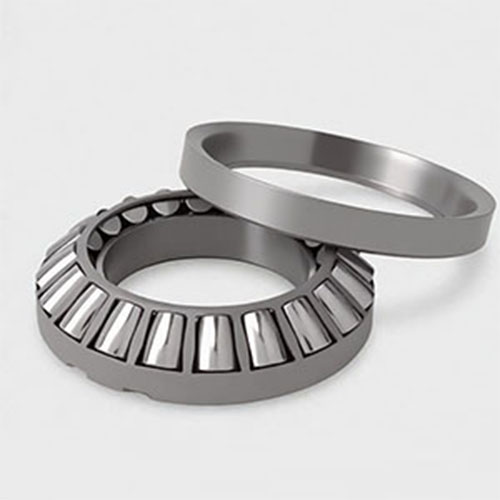
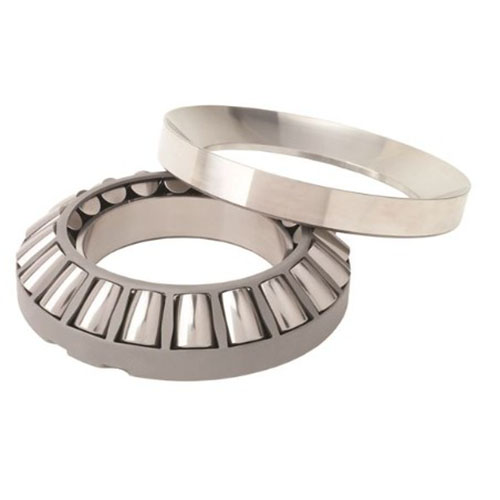
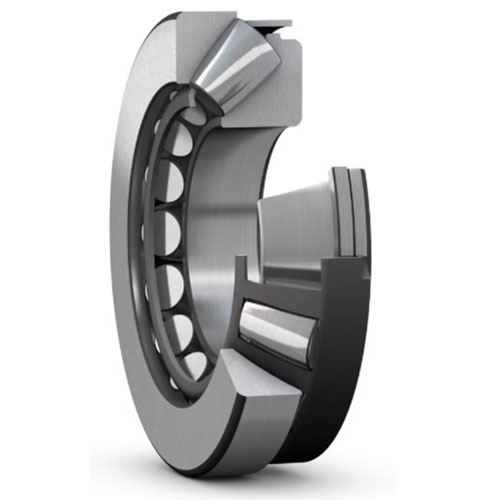
Thrust spherical roller bearings are single-row bearings for unidirectional axial loads with limited radial load capacity. Each bearing consists of a shaft washer (inner ring), a housing washer (outer ring) with a spherical raceway, asymmetrical barrel-shaped rollers, and a cage. The spherical raceway enables self-alignment up to 1–2 degrees.
These bearings are separable, allowing independent installation of the housing washer. Cages are available as pressed steel (standard) or machined brass (high-speed applications). All bearings are delivered unsealed and unlubricated, requiring field lubrication prior to operation.
Performance Features
- High Axial Load Capacity – Asymmetrical roller geometry maximizes contact area for superior thrust load handling in heavy machinery and marine systems.
- Self-Aligning Capability – Spherical raceway compensates for angular misalignment up to 1–2 degrees between shaft and housing.
- Limited Radial Load Capacity – Can carry radial loads up to 55% of applied axial load, reducing need for separate radial bearings.
- Separable Design – Housing washer installs independently, simplifying maintenance in confined spaces.
- Oil Lubrication Required – Unsealed design requires oil lubrication for roller end-flange contact areas and heat dissipation.
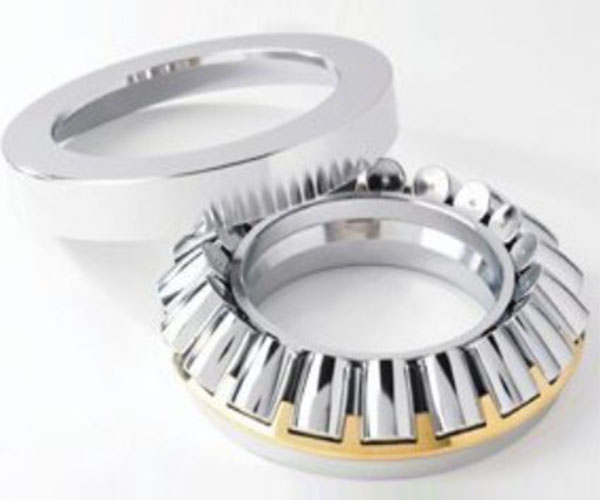
Comprehensive Guide to Thrust Spherical Roller Bearings
Thrust spherical roller bearings represent a specialized category within the thrust bearing family, distinguished by their unique self-aligning capability and high axial load capacity. Unlike thrust ball bearings, which use point contact between balls and raceways, thrust spherical roller bearings employ asymmetrical barrel-shaped rollers that establish line contact with the raceways. This line contact geometry significantly increases the load-carrying surface area, enabling substantially higher axial load capacities while maintaining manageable stress levels on the rolling elements and raceways.
The working principle revolves around the angular transmission of load. When an axial load is applied, the force is transmitted from the shaft washer through the asymmetrical rollers to the housing washer. The raceways are inclined relative to the bearing axis, allowing the bearing to convert part of the axial load into a radial force component. This inclined raceway geometry also enables accommodation of some radial load when axial load is present.
The self-aligning feature is achieved through the spherical profile of the housing washer raceway. As the shaft deflects or the housing experiences angular misalignment, the roller assembly can pivot slightly within the concave spherical surface of the housing washer. This compensating movement keeps the rollers in proper contact with both raceways, preventing edge loading that would otherwise reduce bearing life. The permissible misalignment angle varies by manufacturer and bearing size, with typical values ranging from 1° to 2° under normal operating conditions. When the self-aligning advantage is to be fully realized, adequate clearance must be provided for surrounding structural components.
Thrust spherical roller bearings are designed for moderate-speed applications. Because the asymmetrical rollers experience some degree of differential sliding during rotation—the larger end of each roller travels a longer path than the smaller end—heat generation increases with speed. For this reason, these bearings are typically specified for low to moderate speeds where the load capacity advantages outweigh the speed limitations. Oil lubrication is strongly recommended, even at lower speeds, to ensure adequate lubricant supply to the roller end/flange contact interfaces.
Manufacturing Process and Quality Control
The service life and reliability of thrust spherical roller bearings depend heavily on manufacturing precision. The bearing rings and rollers are produced from vacuum-degassed bearing steel (GCr15, GCr15SiMn), which minimizes non-metallic inclusions and improves fatigue life compared to conventional steel grades. A bainitic hardening heat treatment is applied to the components, providing higher impact resistance and dimensional stability than standard martensitic hardening. This treatment also reduces the risk of cracking under shock loading conditions.
After heat treatment, all raceways and roller surfaces undergo super-finishing to achieve a surface roughness of Ra 0.1 μm or better. This fine finish ensures optimal contact geometry for the asymmetrical rollers, reducing friction and heat generation during operation. Each component then passes through 100% eddy current crack detection before assembly, eliminating any parts with subsurface defects. The assembled bearings are tested for internal clearance and rotational torque. These manufacturing practices result in bearings that meet P5 or P6 tolerance classes as standard, with P4 available on request.
Dimension Tables for Quick Reference
The following tables provide critical dimensions for common thrust spherical roller bearing series. All dimensions are in millimeters (mm) and conform to ISO boundary standards.
| Model | Bore (d) | Outside Diameter (D) | Height (H) | Dynamic Load Rating (kN) | Cage Type |
| 29244 | 220 | 300 | 48 | 540 | M (Brass) |
| 29252 | 260 | 360 | 60 | 720 | M (Brass) |
| 29264 | 320 | 440 | 73 | 980 | M (Brass) |
| 29272 | 360 | 500 | 85 | 1,160 | M (Brass) |
| 29324 | 120 | 210 | 54 | 670 | E or M |
| 29328 | 140 | 240 | 60 | 850 | E or M |
| 29334 | 170 | 280 | 67 | 1,080 | E or M |
| 29348 | 240 | 380 | 85 | 1,560 | E or M |
| 29412 | 60 | 130 | 42 | 345 | E |
| 29414 | 70 | 150 | 48 | 449 | E |
| 29420 | 100 | 210 | 67 | 680 | E |
| 29434 | 170 | 340 | 103 | 1,830 | E or M |
Series Classification Overview
The 29000 series classification provides a standardized framework. The 29200 series is the lightest configuration for moderate axial loads with compact dimensions. The 29300 series offers balanced capacity for general industrial thrust applications. The 29400 series delivers the highest load capacity for extreme axial loads. E-type variants feature optimized internal geometry with pressed steel cages that allow for more rollers or larger roller diameters within the same boundary dimensions, increasing dynamic load ratings.
These bearings are deployed across heavy industries: marine propulsion systems, mining and construction equipment, wind turbine main shafts, industrial gearboxes, extruders and injection molding machines, and oil drilling rigs. Each application benefits from high axial capacity and self-alignment.
Product Series and Aftermarket Models
The 29000 series classification provides a standardized framework for identifying thrust spherical roller bearings by dimensional series and load ratings. The following sections detail each series with popular aftermarket models. All models listed conform to standard metric boundary dimensions and are interchangeable with major brand equivalents.
- Series Overview
- 29200 Series
- 29300 Series
- 29400 Series
- E-Type High Capacity Models
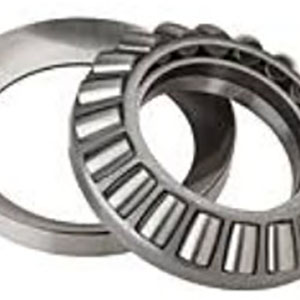
The 29200 series represents the lightest configuration, suitable for applications with moderate axial load requirements. These bearings feature asymmetrical spherical rollers and are commonly used in vertical motors, machine tool rotary tables, and light-duty industrial equipment. Their compact dimensions make them a preferred choice when axial space is limited.
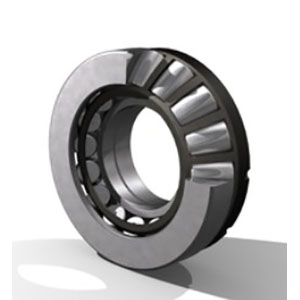
The 29300 series offers a balanced combination of load capacity and dimensional envelope, serving as a versatile choice for general industrial thrust applications. With larger roller diameters and higher roller counts compared to the 29200 series, these bearings deliver significantly increased dynamic and static load ratings. They are widely used in gearboxes, mining machinery, marine thrust blocks, and extruders.
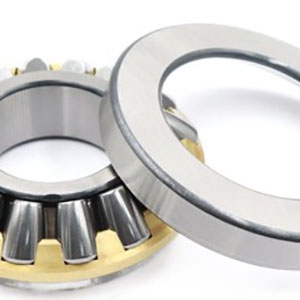
The 29400 series provides the highest load capacity within the 29000 classification, designed for extreme axial loads in heavy industrial applications. These bearings incorporate the largest roller diameters and the greatest number of rollers per bearing, maximizing the load-carrying surface area. Typical applications include heavy machine tools, high-power marine gearboxes, oil drilling rigs, and large industrial presses.
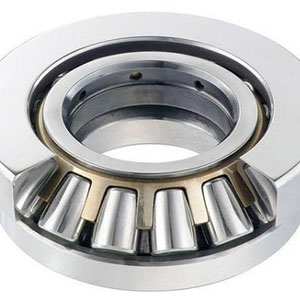
E-type thrust spherical roller bearings feature an optimized internal geometry with a pressed steel cage that allows for a higher number of rollers or larger roller diameters within the same boundary dimensions. This design enhancement increases the dynamic load rating while maintaining the same dimensional envelope, making E-type bearings the preferred choice for applications requiring maximum load capacity.
29200 Series Aftermarket Models
The 29200 series includes light-profile bearings for moderate axial loads and limited axial space. Below are popular models in this series.
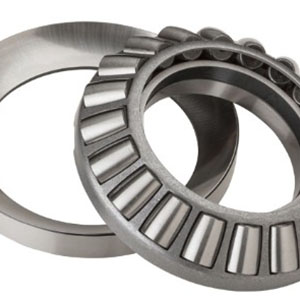
29244M Thrust Spherical Roller Bearing Bore 220 mm, OD 300 mm, height 48 mm. Machined brass cage. Suitable for vertical motor shafts and machine tool rotary tables where moderate axial thrust and compact dimensions are required. The brass cage offers higher speed capability compared to pressed steel designs.
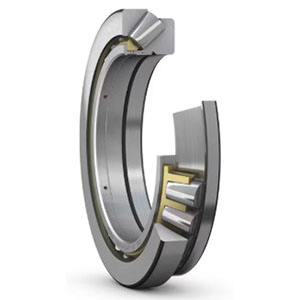
29252M Thrust Spherical Roller Bearing Bore 260 mm, OD 360 mm, height 60 mm. Provides reliable axial load handling in light to medium industrial equipment. The light series design reduces axial height while maintaining sufficient load capacity for crane hooks and positioning tables.
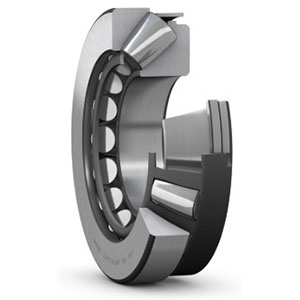
29264M Thrust Spherical Roller Bearing Bore 320 mm, OD 440 mm, height 73 mm. This larger-frame light series model is used in vertical pump assemblies and certain marine auxiliary systems where space constraints require a slim axial profile but substantial bore diameter.
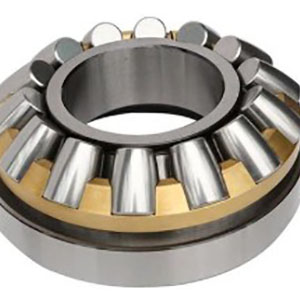
29272M Thrust Spherical Roller Bearing Bore 360 mm, OD 500 mm, height 85 mm. Despite its light classification, the asymmetrical roller design provides substantial load capacity relative to axial height, making it suitable for compact machinery designs in mining and material handling.
29300 Series
The 29300 series delivers balanced performance for general industrial thrust applications. These bearings are widely specified for gearboxes, mining equipment, and marine thrust blocks. Both E-type (steel cage) and M-type (brass cage) configurations are available.
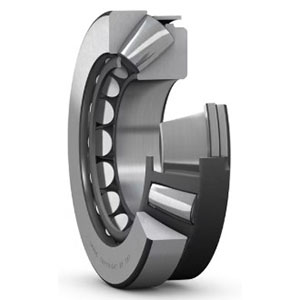
29324E Thrust Spherical Roller Bearing Bore 120 mm, OD 210 mm, height 54 mm, weight approx. 7.35 kg. Available with pressed steel or machined brass cage. Frequently specified for heavy machine tool spindles, injection molding machines, and construction equipment gearboxes.
29328E Thrust Spherical Roller Bearing Bore 140 mm, OD 240 mm, height 60 mm. Common applications include extruder thrust assemblies, mining conveyor drives, and marine auxiliary thrust blocks where moderate axial loads and self-alignment are required.
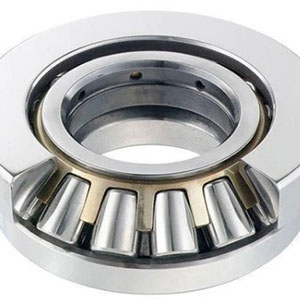
29334E Thrust Spherical Roller Bearing Bore 170 mm, OD 280 mm, height 67 mm. E-type geometry with pressed steel cage. Used in steel mill gearboxes, plastic extrusion lines, and large industrial fans where axial loads are substantial but not extreme.
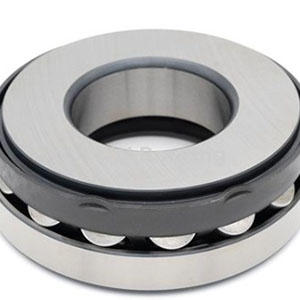
29348M Thrust Spherical Roller Bearing Bore 240 mm, OD 380 mm, height 85 mm. Machined brass cage. This large-diameter medium series model is designed for heavy-duty gearboxes, mining crushers, and industrial presses. The brass cage ensures reliable operation in high-temperature environments.
29400 Series
The 29400 series provides the highest axial load capacity within the thrust spherical roller bearing family. These models are suitable for extreme-duty applications such as marine main propulsion, heavy machine tools, and oil drilling equipment.
29412E Thrust Spherical Roller Bearing Bore 60 mm, OD 130 mm, height 42 mm. Dynamic load rating 345 kN. E-type high capacity design with pressed steel cage. Suitable for gearboxes, light to medium industrial machinery, and vertical pump applications.
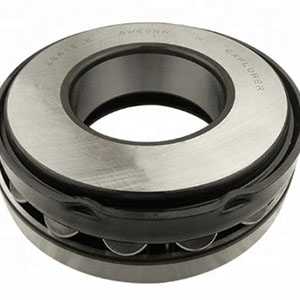
29414E Thrust Spherical Roller Bearing Bore 70 mm, OD 150 mm, height 48 mm. Dynamic load rating 449 kN, static load rating 1,250 kN. Typical uses include marine thrust systems, mining equipment, and industrial extruders.
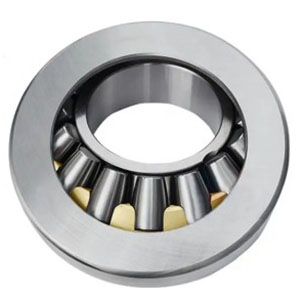
29420E Thrust Spherical Roller Bearing Bore 100 mm, OD 210 mm, height 67 mm. Used in large gearboxes, steel mill drives, and heavy industrial presses. The E-type design maximizes roller count, providing high dynamic load rating for demanding cyclic loading.
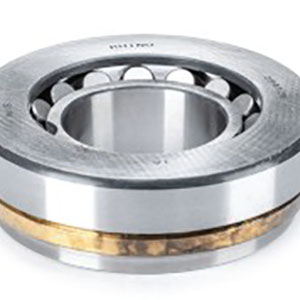
29434M Thrust Spherical Roller Bearing Bore 170 mm, OD 340 mm, height 103 mm. M designation indicates machined brass cage for higher speed capability and superior durability. Commonly used in wind turbine main shafts, large marine propulsion systems, and steel mill equipment.
E-Type High Capacity Models
E-type bearings are defined by optimized internal geometry that allows more rollers or larger roller diameters within standard boundary dimensions, achieved through a pressed steel cage with a different pocket design. E-type variants exist across the 29200, 29300, and 29400 series.
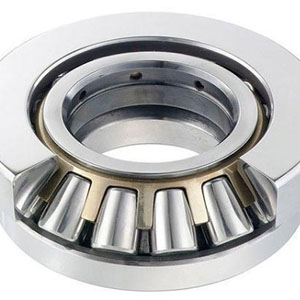
29244E Thrust Spherical Roller Bearing Same 220 mm bore and 300 mm OD as standard 29244 but with increased dynamic load rating due to E-type internal geometry. Pressed steel cage reduces roller pocket friction. Suitable for applications requiring maximum load capacity within the light series envelope.
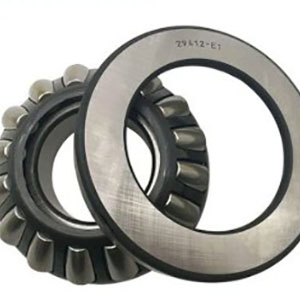
29412E Thrust Spherical Roller Bearing With a dynamic load rating of 345 kN, this model outperforms standard 29412 designs. Pressed steel cage is lightweight with good strength-to-weight ratio, suitable for medium-speed heavy-load applications such as industrial presses and extruders.
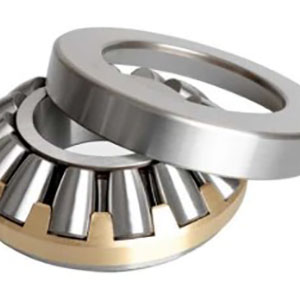
29422E Thrust Spherical Roller Bearing Bore 110 mm, OD 230 mm, height 73 mm. E-type design achieves higher roller count, resulting in increased load capacity without increasing dimensions. Used in heavy machine tool spindles, large injection molding machines, and marine stern tube thrust assemblies.
Industrial Applications
These bearings are deployed across heavy industries where axial loads dominate, misalignment is unavoidable, and reliability is critical.

Ship propeller shafts generate substantial axial thrust. Thrust spherical roller bearings accommodate these high loads while compensating for shaft deflection and hull-induced misalignment.
Excavators, bulldozers, crushers, and conveyors experience extreme axial loads combined with shock loading. Self-aligning capability and durability in contaminated environments are key advantages.
Modern wind turbines require bearings that tolerate shaft bending under variable wind conditions. Thrust spherical roller bearings support the main shaft despite high axial loads and angular misalignment.
Heavy-duty gearboxes in steel mills, cement plants, and mining operations withstand high axial loads from helical gear thrust forces while accommodating housing deflections.
Plastic extruders generate significant axial thrust as material is forced through dies. These bearings provide high axial load capacity and tolerate moderate screw shaft misalignment.
Rotary table drives and top drives in oil drilling equipment generate high axial loads under demanding conditions, requiring bearings that withstand shock loads and harsh environments.
Bearing Selection and Comparison
Selecting the correct bearing type requires understanding performance trade-offs between different thrust bearing configurations.
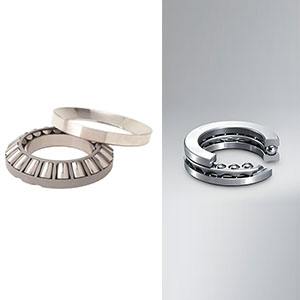
This comparison examines the fundamental differences between roller-type and ball-type thrust bearings. Thrust spherical roller bearings offer significantly higher axial load capacity due to line contact vs. point contact, but have lower speed limitations. Includes load capacity charts and speed rating comparisons.
For more details, please read“Thrust Spherical Roller Bearing vs. Thrust Ball Bearing”
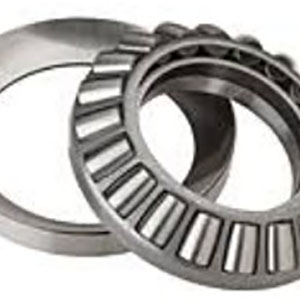
This selection guide covers critical parameters: dynamic vs. static load rating calculation, permissible misalignment angle interpretation, lubrication selection based on operating speed, and cage material selection for different temperature conditions.
For more details, please read“Selection Guide for Thrust Spherical Roller Bearings”
Other Related Thrust Bearing Types
Thrust bearings are manufactured in multiple rolling element configurations, each optimized for specific load, speed, and alignment requirements.
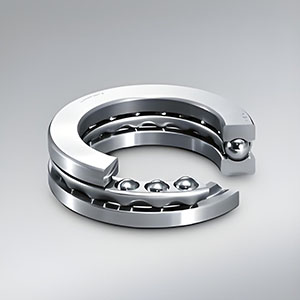
Thrust ball bearings utilize balls as rolling elements between two grooved washers. Suitable for pure axial loads at relatively high speeds but lower load capacity than roller-type thrust bearings. Common in automotive steering systems, machine tool spindles, and light industrial equipment.
Thrust tapered roller bearings employ tapered rollers and raceways to support heavy axial loads along with a significant radial load component. Used in commercial vehicle kingpin arrangements, heavy truck transmissions, and earth-moving machinery.
Thrust cylindrical roller bearings use cylindrical rollers between flat washers, providing very high axial rigidity and load capacity. Cannot accommodate radial loads or misalignment. Applications include gearboxes, extruders, and steelmaking equipment.
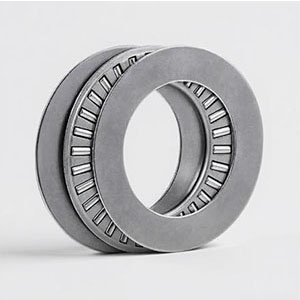
Thrust needle roller bearings feature long, thin rollers with length-to-diameter ratios of 3:1 or greater, offering high axial load capacity in an extremely compact axial height. Common in automatic transmissions, torque converters, and compact actuator mechanisms.
Proper Lubrication and Maintenance
Thrust spherical roller bearings require specific lubrication practices to achieve their designed service life. Unlike radial bearings, which can often operate successfully with grease lubrication in many applications, thrust spherical roller bearings face unique lubrication challenges due to sliding contact at the roller end–flange interface and differential roller kinematics.
Oil lubrication is strongly recommended even at lower operating speeds. As an asymmetrical roller rotates, the larger end travels a longer circumferential path than the smaller end, creating differential sliding. This generates friction at contact surfaces, particularly where roller ends contact the shaft washer rib. Oil provides superior film strength and heat dissipation compared to grease, ensuring critical contact zones remain lubricated.
When selecting oil, viscosity is the primary consideration. Lower viscosity oils reduce friction and heat generation at high speeds but may not provide sufficient film thickness under heavy loads. Higher viscosity oils offer better load-carrying capability but can increase operating temperatures due to fluid friction. General guideline: select ISO Viscosity Grade based on mean diameter and operating speed, then adjust for operating temperature. For elevated temperature applications (gearboxes, extruders), use a higher base viscosity grade or synthetic oil with a high viscosity index.
Grease lubrication may be used in lower-speed applications where oil circulation systems are impractical. However, grease-lubricated bearings require careful attention to fill quantity and relubrication intervals. Fill approximately 30–50% of free internal space. Overfilling causes churning losses and temperature rise; underfilling results in inadequate lubrication at roller end–flange contacts. Grease must contain extreme pressure (EP) additives to protect high-stress contact zones.
Relubrication intervals depend on speed, temperature, and environment. Higher speeds require more frequent relubrication. Elevated temperatures accelerate grease oxidation. In contaminated environments, more frequent relubrication flushes contaminants. For most industrial applications, relubrication every 2,000 to 5,000 operating hours is typical, but specific intervals should be calculated using manufacturer guidelines.
Installation practices directly affect lubrication effectiveness. Before mounting, inspect bearing seats on shaft and housing for flatness and surface finish. For oil-lubricated installations, ensure oil supply passages are clean and unobstructed. Maintain oil level for adequate submersion or splash. For grease-lubricated installations, apply grease to roller assembly and raceways during mounting, not just to the housing cavity.
Common lubrication-related failures include roller end smearing, rib overheating, and cage wear. Roller end smearing appears as discolored or smeared metal on roller ends, indicating inadequate lubrication at roller–rib contact. Rib overheating shows as blue or brown heat tint on the shaft washer rib. Both conditions point to insufficient oil flow, incorrect lubricant viscosity, or excessive temperature. If observed, replace lubricant with correct grade and inspect lubrication system for blockages.
For detailed lubricant recommendations based on specific bearing models and applications, consult the technical data sheet.
Typically 1° to 2° under general operating conditions, varying by manufacturer and model. Sufficient clearance must be provided for surrounding structural components.
Yes, when an axial load is applied simultaneously. Radial load should generally not exceed 55% of applied axial load. Not designed for pure radial loads.
Oil lubrication is strongly recommended, even at low speeds. Grease may be used in low-speed applications but must contain EP additives.
Internal design is not fully standardized by ISO, so variation exists between manufacturers. However, boundary dimensions follow standard metric series.
The shaft washer must be mounted on the rotating component; the housing washer secured in the stationary housing.
Seat distortion causing localized overheating; starved lubrication at roller ends or ribs; loss of internal clearance after mounting; rib fracture from shock loading.
29300 is medium series with balanced capacity; 29400 is heavy series with highest axial load capacity.
No. They are single-direction bearings. For alternating loads, mount two bearings in opposite orientations.
Roller end-flange contact surfaces are difficult to reach with grease. Oil provides better penetration and heat dissipation.
Marine propulsion, mining equipment, wind turbines, industrial gearboxes, extruders, and oil drilling rigs.