
Definition and Design
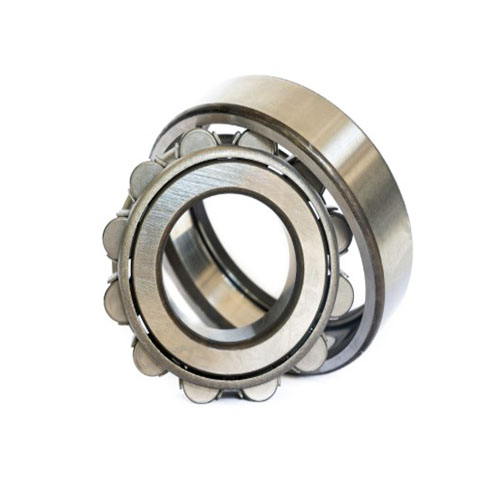
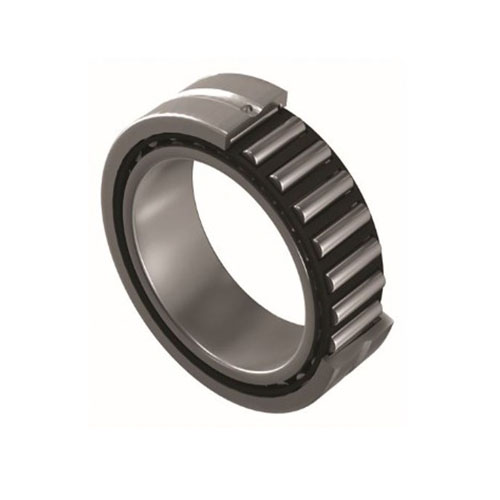
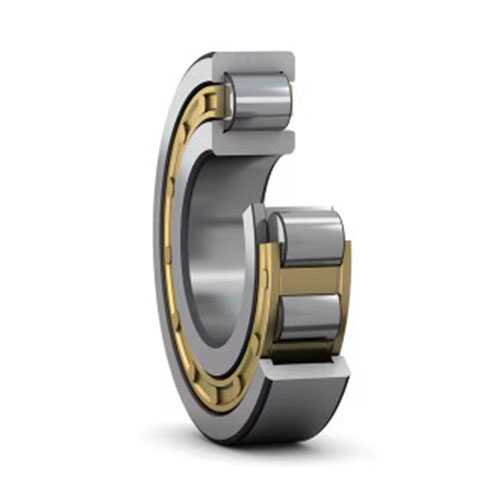
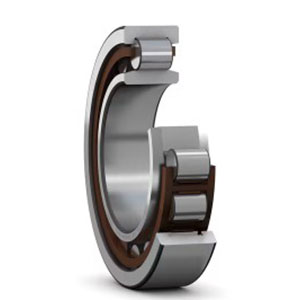
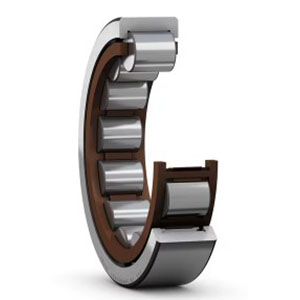
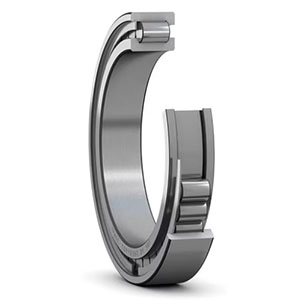
A cylindrical roller bearing uses cylindrical rollers between inner and outer rings. Line contact distributes loads over a larger area, increasing radial capacity. The rollers are typically crowned to reduce edge stress from misalignment.
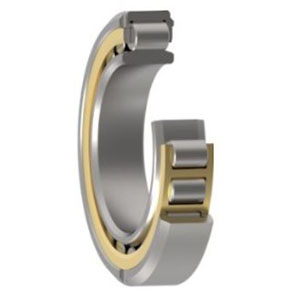
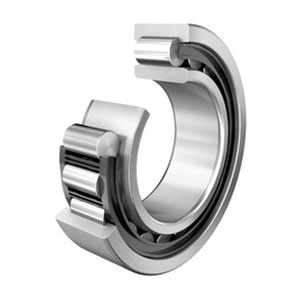
Axial load capability depends on integral flanges on the rings. Designs with flanges on both rings provide axial location. Designs without flanges on one ring allow shaft expansion. Cage materials include brass, pressed steel, and polyamide. The separable construction simplifies mounting and maintenance.
Key Advantages
- High radial load capacity from line contact between rollers and raceways, surpassing ball bearings of equivalent size.
- Accommodates thermal expansion using NU or N series floating bearing designs.
- Separable rings simplify mounting and maintenance in confined machinery spaces.
- High radial stiffness suitable for machine tool spindles and precision rolling mills.
- Roller crowning minimizes edge stress and extends bearing fatigue life under moderate misalignment.
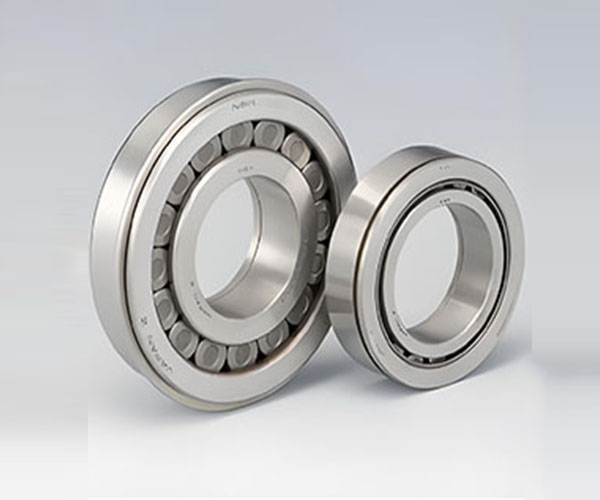
Cylindrical Roller Bearing Selection and Technical Guide
A cylindrical roller bearing is a rolling-element bearing that uses cylindrical rollers as the load-carrying elements. The line contact between rollers and raceways provides higher radial load capacity than ball bearings of the same envelope size. Common applications include gearboxes, electric motors, pumps, compressors, rolling mills, and machine tool spindles.
The basic dynamic load rating C, defined per ISO 281, determines the fatigue life of the bearing. The basic static load rating C0, per ISO 76, defines the load at which permanent deformation of 0.0001 times the roller diameter begins at the most heavily loaded contact. For purely radial loads, select an NU or N series cylindrical roller bearing, which lacks axial locating flanges on one ring. When moderate axial loads exist, choose an NJ or NUP series design with integral flanges. For heavy combined loads in both directions, double-row or four-row cylindrical roller bearings are required.
Operating speed and temperature determine the cage material. Polyamide cages offer the highest speed capability but limit the bearing to 120°C maximum. Pressed steel cages tolerate up to 300°C and withstand impact loads. Machined brass cages operate from -40°C to 250°C and are preferred for heavy industrial applications such as steel mills and mining. For high-speed operation, oil lubrication provides better heat dissipation than grease.
Radial internal clearance must be specified correctly. Normal clearance (CN) suits general-purpose applications. When the bearing operates above 80°C, specify C3 or C4 clearance to compensate for thermal expansion of the rings. Precision grades P5, P4, and P2 are required for spindles that demand minimal radial runout, typically below 5 microns.
Proper mounting is critical for achieving the intended service life of a cylindrical roller bearing. Use induction heating or an oil bath to heat the inner ring to 80–100°C before mounting. Never apply direct hammering. For separable NU, NJ, or NUP designs, align match marks to maintain correct radial clearance. The minimum radial load must be approximately 1.67% of C0 to prevent roller skidding.
Common failure modes include edge stress from misalignment, skidding below minimum load, axial scratches from tilted mounting, overheating from insufficient clearance or lubricant degradation, and fluting from stray electric currents in motor applications. Replace the bearing when spalling or deep pitting becomes visible on raceways or rollers.
Cylindrical Roller Bearing Product Range
DUHUI Bearing manufactures a complete range of cylindrical roller bearings for industrial aftermarket and OEM applications. The tables below cover single-row, double-row, four-row, and full complement types, along with their series and model specifications.
- Cylindrical Roller Bearing Types by Row Count
- Single Row Cylindrical Roller Bearing Series
- Double Row Cylindrical Roller Bearing Series
- Four Row Cylindrical Roller Bearing Series
- Full Complement Cylindrical Roller Bearings
Cylindrical Roller Bearing Types by Row Count
Cylindrical roller bearings are manufactured in single-row, double-row, four-row, and full complement configurations. Each type offers specific radial load capacity, speed capability, and axial displacement characteristics for different machinery requirements.
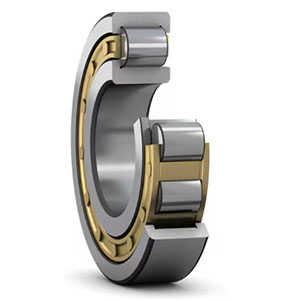
The most widely used type, balancing radial load capacity, speed capability, and design flexibility. Available in NU, N, NJ, and NUP flange configurations for axial displacement or location.
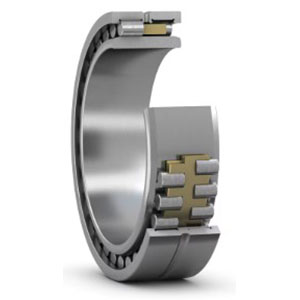
Offer higher radial stiffness and load capacity than single-row bearings while maintaining a compact axial space. Common in machine tool spindles and rolling mills.
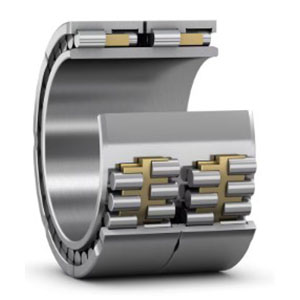
Designed for extreme radial loads in rolling mill work rolls and backup rolls. Four rows of rollers maximize load capacity within a limited cross-section.
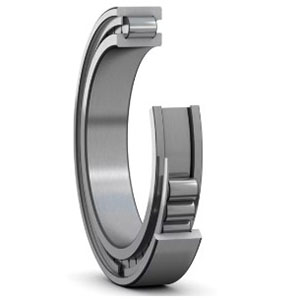
Contain no cage, allowing the maximum number of rollers. Highest radial load capacity for a given envelope, suitable for heavy loads and low to moderate speeds.
Single Row Cylindrical Roller Bearing Series
Single-row cylindrical roller bearings are identified by flange arrangements including NU, N, NJ, NUP, NCF, NJP, and RNU. Each series determines axial load capacity and whether the bearing functions as floating or locating.
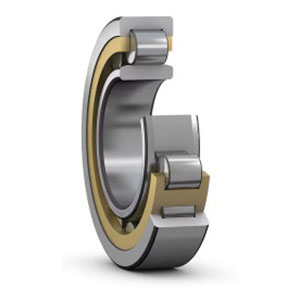
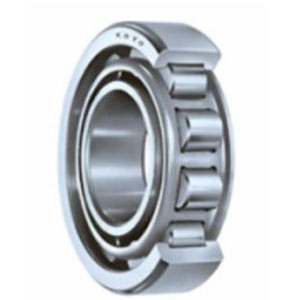
NU Series-Single row cylindrical roller bearing with two integral flanges on the outer ring and no flanges on the inner ring. Allows axial shaft displacement in both directions. Ideal as a floating bearing in electric motors, gearboxes, and pumps.
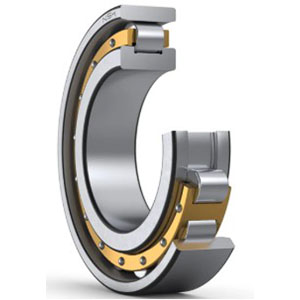
N Series-Single row cylindrical roller bearing with two integral flanges on the inner ring and no flanges on the outer ring. Allows axial displacement of the shaft within the housing. Widely used as a floating bearing in paper machinery, fans, and compressors.
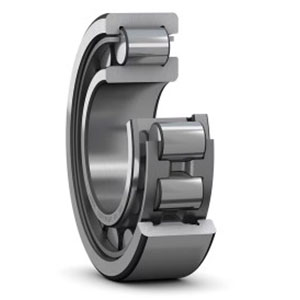
NJ Series-Single row cylindrical roller bearing with two flanges on the outer ring and one flange on the inner ring. Provides one-way axial location. Suitable as a locating bearing in gearboxes, industrial transmissions, and rolling mills.
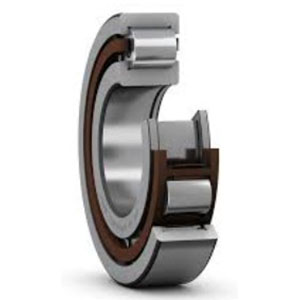
NUP Series-Single row cylindrical roller bearing with flanges on both rings plus a loose flange ring on the inner ring. Locks the shaft in both axial directions. Used as a locating bearing for precise shaft positioning in hydraulic pumps, screw compressors, and machine tool spindles.
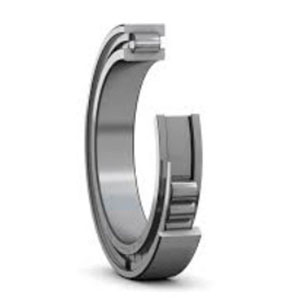
NCF Series-Single row full complement cylindrical roller bearing without a cage, but with flanges for axial guidance. Offers very high radial load capacity due to the maximum roller count. Suitable for heavy loads and low speed, common in crane wheels and conveyor rollers.
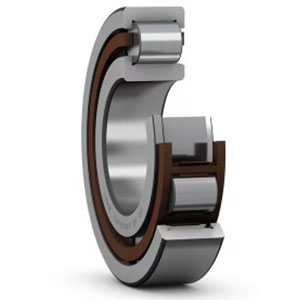
NJP Series-Single row cylindrical roller bearing similar to the NJ series but with tighter internal geometry for higher axial load capacity. Often used in combination with NU bearings to form a matched set. Popular in wind turbine gearboxes and heavy industrial drives.
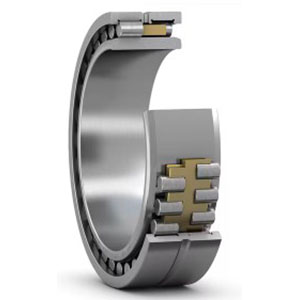
NNU Series (Single Row)-Single row cylindrical roller bearing with flanges on both the inner and outer rings. Rare but used in special applications requiring high precision, such as machine tool spindle support where minimal radial runout is critical.
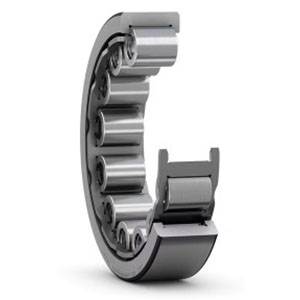
RNU Series-Single row cylindrical roller bearing without an inner ring. The shaft itself acts as the raceway. Provides a compact design with very high radial capacity. Common in large gearboxes and crushers where the shaft is hardened and ground.
Double Row Cylindrical Roller Bearing Series
Double-row cylindrical roller bearings increase radial stiffness compared to single-row designs. The NN and NNU series are industrial standards. Sealed and full complement variants offer maintenance-free options.
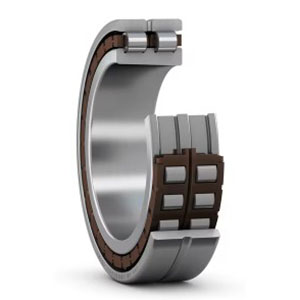
NN Series-Double row cylindrical roller bearing with flanges on the outer ring and no flanges on the inner ring. Provides very high radial stiffness and precision. Widely used as support bearings for machine tool spindles, rolling mills, and printing presses. C3 or C4 clearance is often specified.
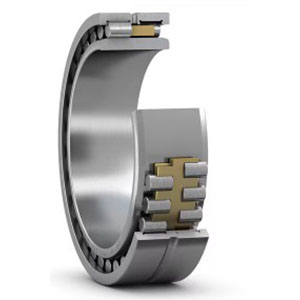
NNU Series-Double row cylindrical roller bearing with flanges on the inner ring and no flanges on the outer ring. Allows axial displacement of the outer ring. Ideal as a floating bearing in high-speed spindles and grinders. Available in precision grades P5 and P4.
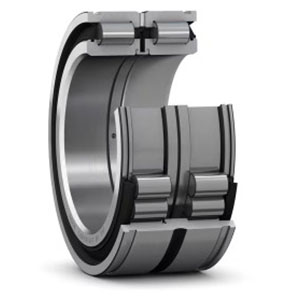
NNF Series-Double row full complement cylindrical roller bearing with contact seals (2RS). Pre-lubricated and maintenance-free. Suitable for heavy loads and slow rotation in forklift mast rollers, conveyor wheels, and agricultural machinery.
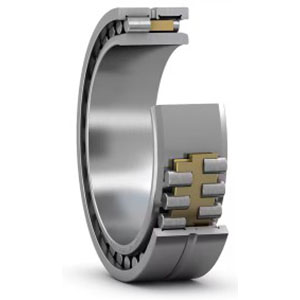
NNU W33 Series-Double row cylindrical roller bearing with a lubrication groove and holes in the outer ring (W33 suffix). Facilitates regular relubrication in heavy industrial applications such as mining conveyor drives and cement mill gearboxes.
Four Row Cylindrical Roller Bearing Series
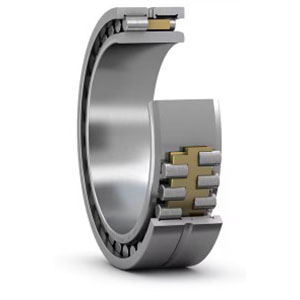
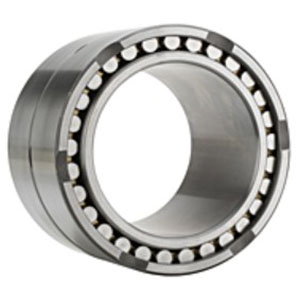
Four-row cylindrical roller bearings deliver the highest radial load capacity of any cylindrical roller bearing type. They are designed specifically for rolling mill applications. The FC and FCD series are industry standards.
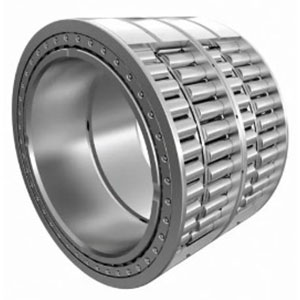
FC Series-Four row cylindrical roller bearing with symmetrical rollers and two inner rings on one outer ring. Designed for extreme radial loads in rolling mill work rolls and backup rolls. Standard design for Chinese and many international mills.
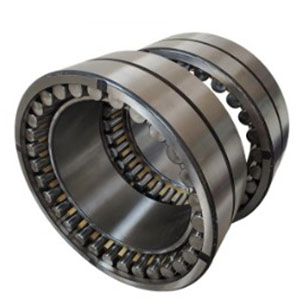
FCD Series-Four row cylindrical roller bearing with separable components for easier maintenance. The outer rings are identical, and the inner rings are matched. Widely used in steel strip and plate rolling mills. Available with brass or steel cages.
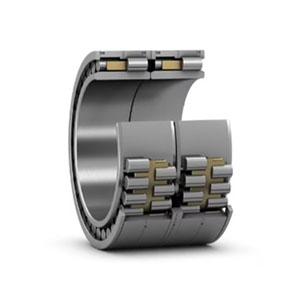
FCDP Series-Four row cylindrical roller bearing with a pressed steel cage and special internal geometry. Offers higher load capacity and longer service life. Common in heavy roughing stands of steel plants.
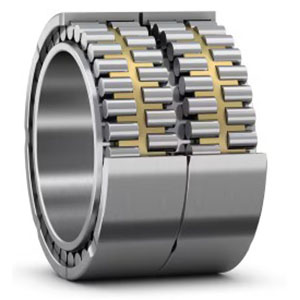
BC4 Series-Four row cylindrical roller bearing with optimized roller end profiles and heat-stabilized rings. Direct replacement for many original mill bearings. Can be pre-greased or oil-lubricated.
Full Complement Cylindrical Roller Bearings
Full complement cylindrical roller bearings omit the cage to maximize the number of rollers. They provide the highest radial load capacity per envelope size but have reduced speed capability compared to caged designs.
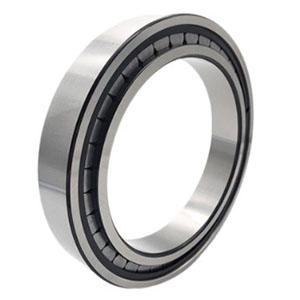
SL18 Series-Single row full complement cylindrical roller bearing without a cage. Maximum number of rollers for the highest radial load capacity. Suitable for heavy loads at low to medium speed. Widely used in gearboxes, wind turbine gear stages, and marine drives.
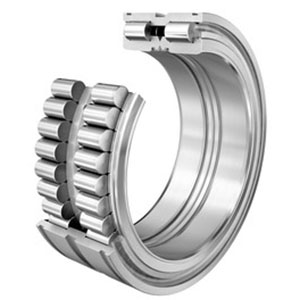
SL04 Series-Double row full complement cylindrical roller bearing with integrated double lip seals (PP). Pre-lubricated and maintenance-free. Ideal for hoisting wheels, conveyor pulleys, and forklift side thrust rollers. Compact and robust.
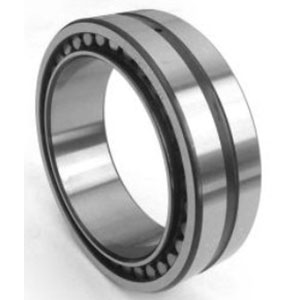
SL19 Series-Single row full complement cylindrical roller bearing with one row of rollers and flanges for axial guidance. Offers high radial capacity and moderate axial load. Common in planetary gearboxes and industrial winches.
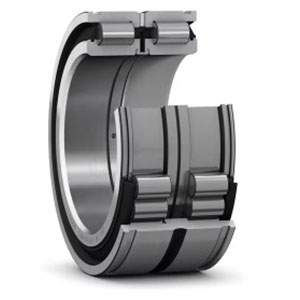
NNF Series (Double Row)-Double row full complement cylindrical roller bearing with contact seals (2RS) and a heavy-duty design. Pre-lubricated and ready to mount. Extensively used in agricultural machinery, combine harvesters, and road rollers.
Other Roller Bearing Types
Beyond cylindrical roller bearings, other roller bearing types serve different load and alignment requirements. Below are common alternatives.
Tapered roller bearings use tapered inner and outer raceways with tapered rollers. They support combined radial and axial loads in one direction. Common in automotive wheel hubs, gearboxes, and conveyor rollers.
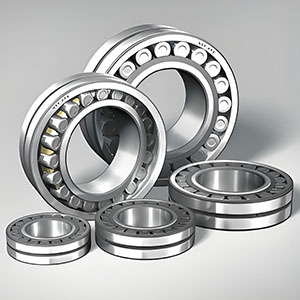
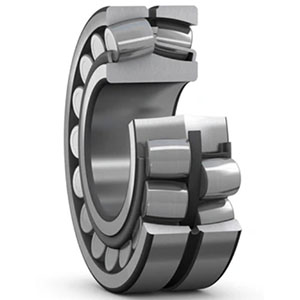
Spherical roller bearings have barrel-shaped rollers between an inner ring with two raceways and a spherical outer ring. They accommodate angular misalignment up to 2 degrees. Used in vibratory screens, fans, and wind turbines.
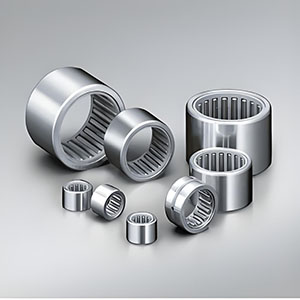
Needle roller bearings have rollers with a small diameter-to-length ratio. They offer a very thin cross-section and high load density. Often used without an inner ring in connecting rods, rocker arms, and compact gear pumps.
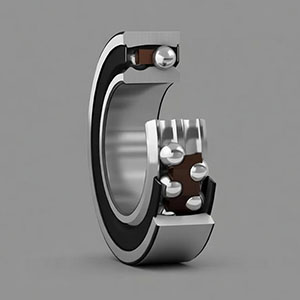
Self-aligning ball bearings feature two rows of balls with a spherical outer ring raceway, providing misalignment compensation similar to spherical roller bearings but for lighter loads and higher speeds. Suitable for fans, textile machinery, and agricultural equipment where light to moderate loads accompany shaft misalignment.
Cylindrical Roller Bearing Applications
Cylindrical roller bearings serve heavy and precision industries. Each application demands specific load, speed, and accuracy requirements.

Four-row and double-row cylindrical roller bearings with brass cages support work rolls. Forced oil lubrication and C4 clearance are standard.
High-precision NN and NNU series cylindrical roller bearings with P4S or SP tolerance. Provide radial rigidity and minimal runout for grinding spindles and milling heads.
NJ and NUP series cylindrical roller bearings with polyamide cages. High reliability under variable loads on intermediate and high-speed shafts.
NU series cylindrical roller bearings serve as floating bearings to accommodate shaft expansion. NJ or NUP series provide axial location.
NU design cylindrical roller bearings in the non-drive end (floating position). Low-noise polyamide cages for moderate speeds.
Full complement SL04 or NCF series sealed cylindrical roller bearings. Pre-lubricated for dusty environments, used in rope sheaves and hoist drums.

Double-row sealed full complement cylindrical roller bearings of SL04 or NNF series. Direct pulley mounting with no relubrication required.
Drying cylinders use NN series cylindrical roller bearings with tapered bore and W33 lubrication features. High temperature requires C3 clearance.
Heavy-duty NJ series or full complement cylindrical roller bearings with steel cages. Designed for impact loads and dust, with bore diameters often exceeding 200 mm.
NUP series locating cylindrical roller bearings with pressed steel cages. Provide precise axial positioning. Oil lubrication is preferred for high-speed operation.
Cylindrical Roller Bearing Comparison Articles
The following comparisons help select the correct bearing type based on load, speed, and mounting constraints.
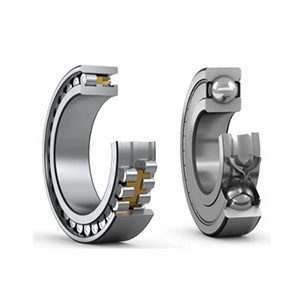
Double row cylindrical roller bearings offer approximately 1.7 times the radial stiffness of single row bearings at the cost of a wider cross-section and a lower speed limit. Choose single row for floating positions and double row for precision spindles.
For more details, please read“Single Row vs. Double Row Cylindrical Roller Bearings”
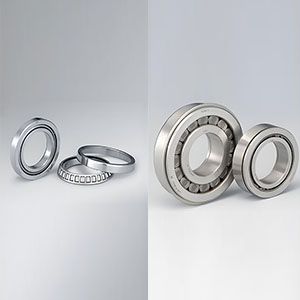
Cylindrical roller bearings excel in pure radial loads and allow axial expansion. Tapered roller bearings handle combined radial and thrust loads but require preload adjustment and are less tolerant of speed variation.
For more details, please read“Tapered vs. Cylindrical Roller Bearing”
Related Cylindrical Roller Bearing Models
Below are popular aftermarket models from DUHUI Bearing. Dimensions are in mm (bore × outer diameter × width). Standard precision and clearance unless otherwise noted.
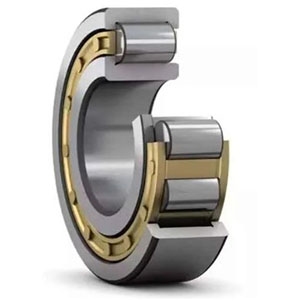
NUP206 ECP-Single row cylindrical roller bearing with locking ring, 30×62×16 mm. Provides full axial location for hydraulic pump drives. High precision and easy assembly.
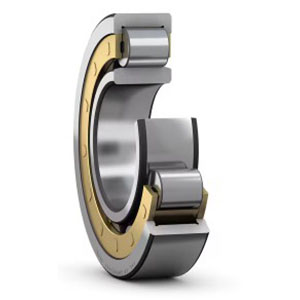
NU2214 ECM-Single row cylindrical roller bearing, 70×125×31 mm. Machined brass cage for high temperature. Used in heavy industrial gearboxes and extruder drives.
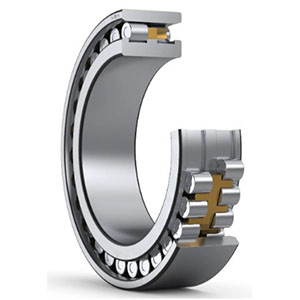
NN3020K/P5W33-Double row cylindrical roller bearing, 100×150×37 mm. Tapered bore, P5 precision. For CNC lathe spindles and grinding machines. High radial rigidity.
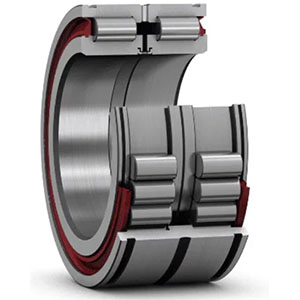
NNF5015 ADA-2LSV-Double row full complement sealed cylindrical roller bearing, 75×115×54 mm. Pre-greased, maintenance-free. For forklift mast rollers and scissor lifts.
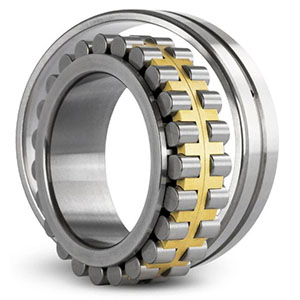
NN3022 KTN9/SP-Double row cylindrical roller bearing, 110×170×45 mm. Polyamide cage, P5 precision. For high-speed grinding spindles.
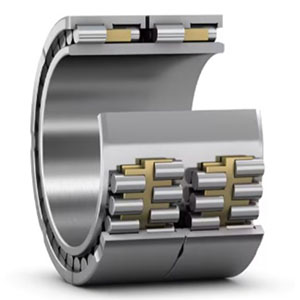
FCD3045120-Four row cylindrical roller bearing, 150×225×120 mm. Compact design for small rolling mills and wire rod stands. Direct replacement for many Chinese mills.
Structural Variants, Performance Comparisons and Key Selection Criteria
Single row cylindrical roller bearings are identified by their flange arrangement. NU series bearings have two integral flanges on the outer ring and no flanges on the inner ring, allowing axial shaft displacement in both directions. This makes NU bearings suitable for floating bearing positions. N series bearings have flanges on the inner ring only, providing the same floating function but with the outer ring as the separable component. NJ series bearings have two flanges on the outer ring and one flange on the inner ring, offering one-way axial location and the ability to accommodate moderate axial loads. NUP series bearings add a loose flange ring on the inner ring to lock the shaft in both axial directions, making them locating bearings.
Cage material significantly affects the speed and temperature limits of a cylindrical roller bearing. Polyamide cages have low mass and high speed capability, but the maximum operating temperature is 120°C. Pressed steel cages tolerate up to 300°C and withstand impact loads, though they generate more vibration. Machined brass cages operate from -40°C to 250°C and are self-lubricating, making them ideal for heavy industry, mining, and gearboxes with high temperatures.
Roller crowning is a critical design feature in modern cylindrical roller bearings. Logarithmic profiles distribute contact pressure evenly across the roller length, eliminating edge stress even under moderate misalignment of 0.5 to 2 arc-minutes. This extends bearing fatigue life substantially in applications where shaft deflection or housing deformation cannot be avoided. When selecting cylindrical roller bearings, always consider the required radial load, any axial load, operating speed, temperature range, and lubrication method.
Types, Characteristics and Application Selection Guide
Cylindrical roller bearings are categorized by row count and flange arrangement. Single-row types (NU, N, NJ, NUP, NCF, NJP, RNU) cover the majority of industrial applications. Double-row types (NN, NNU, NNF) provide higher radial stiffness. Four-row types (FC, FCD) are dedicated to rolling mills. Full complement designs (SL18, SL04) maximize load capacity at the expense of speed.
Material specifications for cylindrical roller bearing rings and rollers are typically through-hardened chromium steel (GCr15 or 100Cr6) for general applications. Case-hardened steel is used for impact loads. Operating temperature dictates heat stabilization: SN design for up to 120°C, S0 for 150°C, S1 for 200°C, and S2 for 250°C and above.
Roller profiles are either crowned or full-crowned (logarithmic). Crowned rollers reduce edge stress under misalignment and are standard in most cylindrical roller bearings. Full-crowned profiles are used in applications with significant shaft bending.
RBEC precision grades from RBEC 1 (commercial) to RBEC 5 (super-precision) define dimensional and running tolerances. P5 corresponds to RBEC 3, P4 to RBEC 5, and P2 to RBEC 7. Most industrial applications require RBEC 1 (P0) or RBEC 3 (P6). Machine tool spindles need P5 or P4. Ultra-precision spindles use P2.
Application selection guide: For electric motors, choose an NU series cylindrical roller bearing with a polyamide cage and CN clearance. For gearboxes, use NU series for floating positions and NJ or NUP series for locating positions, with a steel or brass cage depending on temperature. For rolling mills, select a four-row FC or FCD series cylindrical roller bearing with a brass cage, W33 lubrication, and C4 clearance. For crane wheels, pick a full complement sealed SL04 or NCF series bearing.
How to Correctly Select Cylindrical Roller Bearings
Selecting the correct cylindrical roller bearing requires evaluating three dimensions: load type, speed requirements, and clearance tolerance.
Load type: Determine if the application has purely radial load or combined radial and axial load. For pure radial load, select an NU or N series cylindrical roller bearing (floating bearing). For radial load plus moderate axial load in one direction, select an NJ series bearing. For radial load plus axial load in both directions (reversing), select an NUP series bearing. If the axial load is high relative to the radial load, consider tapered roller bearings instead.
Speed requirements: Calculate the speed factor (n × dm, where n is rotational speed in rpm and dm is the bearing mean diameter in mm). For a high speed factor above 500,000, choose cylindrical roller bearings with polyamide cages or, for very high speeds, machined brass cages with oil lubrication. For a low speed factor below 200,000, full complement bearings without a cage may be used if the radial load is extremely high. Always verify that the speed does not exceed the thermal reference speed (nth) specified in bearing catalogs.
Clearance and tolerance: Determine the operating temperature range. For continuous operation above 80°C, select C3 radial internal clearance. For temperatures above 120°C, use C4 clearance. For precision applications such as spindles, specify tolerance class P5 or P4. Tapered bore bearings (suffix K) allow radial clearance adjustment via axial displacement on the shaft, which is useful when thermal conditions vary widely.
Additional considerations: The minimum radial load should be at least 1.67% of the static load rating C0 to prevent skidding. Lubrication should be selected based on the viscosity ratio κ (operating viscosity divided by reference viscosity). For κ ≥ 1, adequate film thickness is achieved. Grease lubrication suffices for most general-purpose bearings. Oil lubrication is required for high speed, high temperature, or forced cooling applications.
Correct Use and Common Failure Modes
Installation specifications: Clean the shaft and housing thoroughly before mounting a cylindrical roller bearing. Remove burrs and sharp edges. For interference fits, heat the inner ring to 80–100°C using an induction heater or an oil bath. Never use an open flame. For separable NU, N, NJ, and NUP designs, mount the rings individually. Align any match marks if present. Press the inner ring onto the shaft using a sleeve that contacts only the ring face. Never apply force through the rollers or cage.
Lubrication requirements: For grease lubrication, fill the bearing cavity to approximately 30% of its free space. For an oil bath, the oil level should reach the center of the lowest rolling element. For circulating oil systems, ensure the flow rate is sufficient to remove generated heat. Check the lubricant condition regularly. Replace grease every 3,000 to 5,000 operating hours or annually, depending on the temperature environment.
Analysis of “bearing operating temperature too high”: Possible causes include insufficient radial internal clearance (specify C3 or C4), excessive preload from incorrect mounting, over-greasing, lubricant degradation, or misalignment. Measure the temperature at the outer ring near the housing. The normal operating temperature for a cylindrical roller bearing should be below 70°C for grease. Up to 100°C is acceptable with oil or high-temperature grease.
Analysis of “operating noise too high”: Possible causes include contamination ingress (flush and re-lubricate), fatigue spalling (replace the bearing), skidding from insufficient load (increase the load or change the bearing), or raceway waviness (use a higher precision grade). Grinding noise suggests lubrication starvation or contamination. Squealing suggests skidding. Use vibration analysis to diagnose specific frequency peaks corresponding to the roller pass frequency.
Installation problems illustrated: Axial scratches on raceways are typically caused by inner ring tilting during assembly or impact loading. Prevent these by using proper alignment tools and applying force squarely. Misalignment greater than 2 arc-minutes induces edge stress. Correct the housing bores or use a self-aligning bearing if the misalignment cannot be eliminated.
A cylindrical roller bearing is a rolling-element bearing that uses cylindrical rollers between the inner and outer rings. Line contact provides high radial load capacity and low friction. It is suitable for high radial load applications with smooth rotation.
For more details, please read “What Is a Cylindrical Roller Bearing?”.
Single-row tapered roller bearings are separable, meaning the cone assembly can be mounted independently from the cup. To mount, install the cup into the housing bore using a press tool that contacts only the cup face. Install the cone onto the shaft with the appropriate interference fit, applying force to the cone ring only—never through the rollers or cage. After mounting, set axial clearance or preload by adjusting a locknut or spacer stack. For dismounting, use a bearing puller on the cone and a press tool to remove the cup from the opposite side. Always refer to the manufacturer’s mounting instructions for specific clearance values and torque specifications.
For more details, please read “Cylindrical Roller Bearings vs. Ball Bearings”.
ECP indicates a glass fibre reinforced polyamide cage. M denotes a machined brass cage. V indicates a full complement design with no cage. TN9 specifies an injection-moulded polyamide cage. Each suffix affects the speed, temperature, and load capacity of the bearing.
For more details, please read “ What does the bearing designation suffix mean (ECP, M, V, TN9)?“.
The minimum radial load is approximately 1.67% of the static load rating C0. Below this load, rollers may skid instead of roll, causing smearing and premature bearing failure. Consult manufacturer tables for exact values for each bearing size.
For more details, please read “What is the minimum radial load for a cylindrical roller bearing? ”.
Clean the shaft and housing before installation. Use the temperature differential method (heat the bearing to 80–100°C). Never hammer directly. For separable designs, note the assembly sequence to prevent roller scratching on the raceways.
For more details, please read “What should be considered when installing a cylindrical roller bearing?”.
Grease lubrication is simple and has low leakage. Oil lubrication provides lower friction and better heat dissipation. The specific lubricant type and quantity should be determined according to the equipmeFor more details, please read “What should be considered when installing a cylindrical roller bearing?”.nt requirements.
For more details, please read “How should a cylindrical roller bearing be lubricated?”.
Replace the bearing when any of the following signs appear: abnormal noise (such as grinding), excessive heating, increased vibration, or reduced equipment performance. These are signals that the bearing requires inspection or replacement.
For more details, please read “When should a cylindrical roller bearing be replaced?”.
A cylindrical roller bearing is very sensitive to angular misalignment. Its line contact design causes edge stress concentration at the roller ends when shaft deflection occurs, leading to premature damage. If your application has significant misalignment, consider using a spherical roller bearing instead.
For more details, please read “Why is a cylindrical roller bearing not suitable for severe misalignment?”.
Pure axial load capability is limited. A cylindrical roller bearing with zero contact angle has minimal axial capacity unless it is equipped with locating flanges (NJ or NUP series). For pure axial loads, use a thrust bearing or a tapered roller bearing.
For more details, please read “Can a cylindrical roller bearing carry pure axial load?”.
These ISO tolerance classes define the running accuracy of a bearing. P5 (ABEC 3) is for general spindles. P4 (ABEC 5) is for precision grinding machines. P2 (ABEC 7) is for ultra-precision applications such as coordinate measuring machines and aerospace gyroscopes.
For more details, please read “What Are Precision Bearings? ”.

