
Structural Features
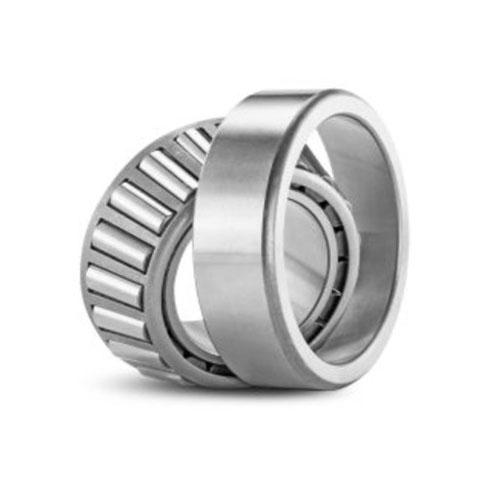
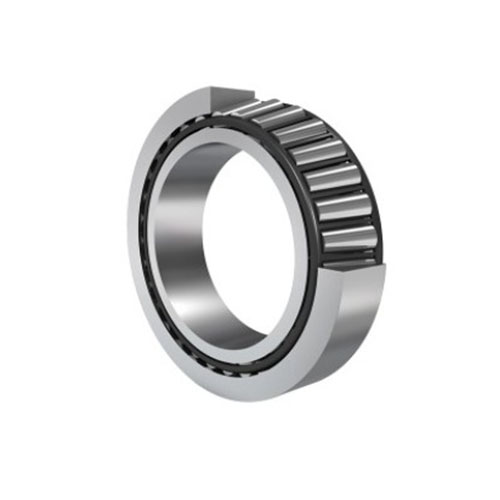
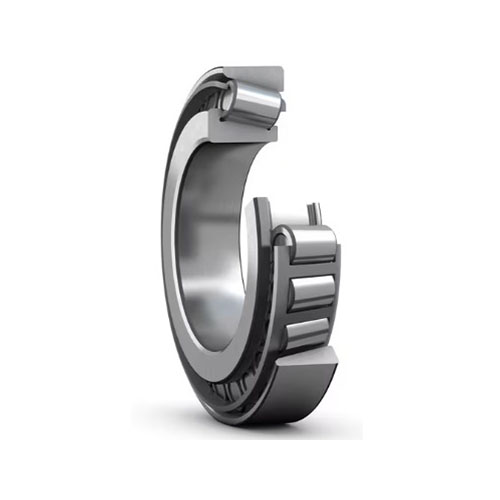
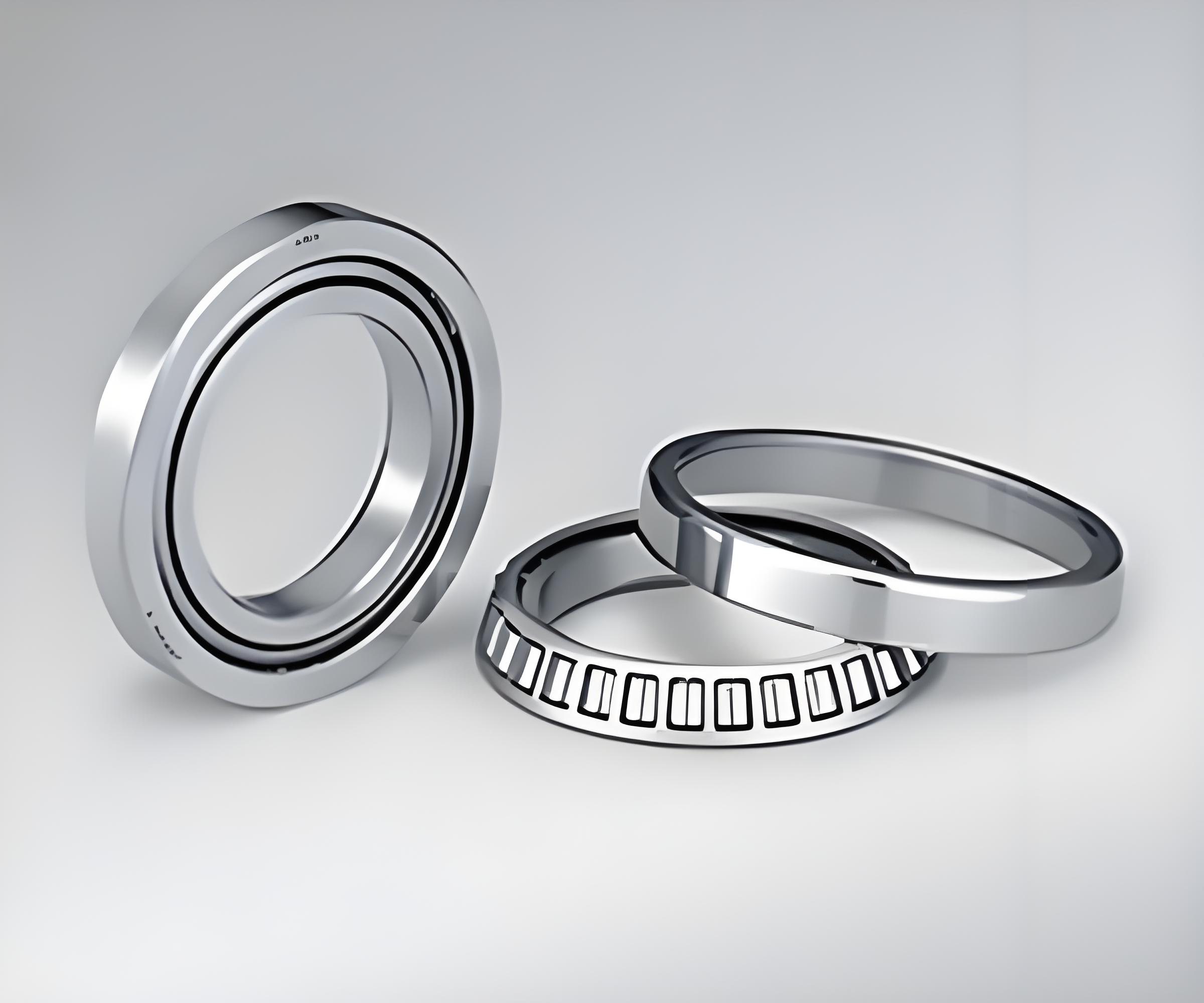
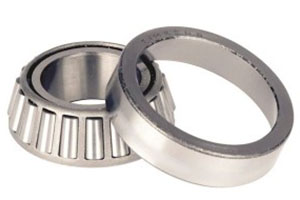
A tapered roller bearing features separable cone (inner ring) and cup (outer ring) assemblies, allowing independent mounting and simplified maintenance. The tapered raceways of both rings and the tapered rollers ensure true rolling motion with converging apexes. Interchangeable components within the same series reduce spare parts inventory. The cage retains roller spacing, while the cone rib guides roller ends under load.
Performance Benefits
- Low friction, noise, and vibration – Optimized roller end geometry and raceway surface finish promote hydrodynamic lubricant film formation, reducing frictional heat and flange wear while maintaining low operating noise levels in tapered roller bearings.
- Long service life – Crowned or logarithmic raceway profiles distribute load evenly along contact surfaces and reduce stress concentrations at roller ends, extending the service life of the bearing.
- Enhanced operational reliability under difficult conditions – Optimized surface finishes support stable lubricant film formation, allowing tapered roller bearings to operate reliably under shock loads, contamination, and temperature variations.
- Running-in period with reduced temperature peaks – Advanced bearing design minimizes friction during initial operation, resulting in a controlled temperature rise compared to conventional configurations.
- Separable and interchangeable components – The cone assembly mounts independently from the cup, and components within the same tapered roller bearing series are interchangeable. This simplifies mounting, dismounting, and periodic maintenance inspection.
What Are Tapered Roller Bearings?
Tapered roller bearings are a class of rolling-element bearings specifically engineered to accommodate combined loads—simultaneous radial and axial forces. Unlike ball bearings, which rely on point contact, tapered roller bearings achieve line contact between each roller and its raceways. This line contact distributes the applied load over a larger surface area, providing higher load-carrying capacity within the same envelope size compared to many other bearing types.
The defining geometric feature of a tapered roller bearing is its conical shape. The inner ring raceway, outer ring raceway, and the rollers themselves are all tapered. When these tapered surfaces are extended geometrically, their apexes converge at a common point along the bearing axis. This arrangement ensures true rolling motion and minimizes sliding between the rollers and the raceways, which reduces wear and frictional heat generation. This fundamental principle distinguishes tapered roller bearings from cylindrical or spherical roller bearings.
Tapered roller bearings support three types of loads simultaneously. The radial component is handled by the compression of rollers against the raceways. The axial component is managed by the roller rib or flange contact. The resultant force derived from the conical geometry pushes the rollers toward the cone rib, maintaining proper alignment and stability under load. This characteristic makes tapered roller bearings indispensable in applications where both radial and axial forces are present, such as vehicle wheel hubs and gearboxes.
One key operational advantage of a tapered roller bearing is its adjustable internal clearance. Because the cup and cone are separable components, engineers can set either endplay (axial clearance) or preload (axial interference) by moving the components axially during installation. In many precision applications, a slight preload maximizes bearing stiffness and service life, though excessive preload can cause overheating and premature failure. This adjustability is not available in most other roller bearing types.
Separability also offers practical maintenance benefits. The cone assembly (inner ring with rollers and cage) can be mounted independently from the cup (outer ring). This feature simplifies installation in confined spaces and allows inspection of each tapered roller bearing component individually without full disassembly. Interchangeability within the same bearing series further reduces maintenance complexity and spare parts inventory requirements.
Tapered roller bearings are further classified by the number of rows of rollers. Single-row tapered roller bearings support radial loads and axial loads in one direction, requiring a second bearing mounted in opposite orientation to handle bidirectional axial forces. They are commonly used in automotive wheel hubs, transmissions, and differentials. Double-row tapered roller bearings provide higher radial capacity and handle bidirectional axial loads within a single assembly, simplifying shaft arrangements for gearboxes and machine tool spindles. Four-row tapered roller bearings are engineered for extreme radial loads in rolling mills, large crushers, and heavy press drives, where maximum load capacity and rigidity are required.
Common applications for tapered roller bearings include gearboxes, differentials, wheel hubs, railroad axles, agricultural equipment, construction machinery, mining equipment, and many industrial drive systems.
Tapered Roller Bearing Product Guide
This guide covers the main product categories of tapered roller bearings by row count, followed by detailed metric series for single-row, double-row, and four-row configurations commonly available in the OEM and aftermarket segments.
- Tapered Roller Bearing Types by Row Count
- Single Row Tapered Roller Bearing
- Double Row Tapered Roller Bearing
- Four Row Tapered Roller Bearing
Tapered Roller Bearing Types by Row Count
Single-row, double-row, and four-row tapered roller bearings serve different operational requirements based on load magnitude, directionality, and available mounting space. The following sections describe each tapered roller bearing type in terms of structure, load characteristics, and typical applications.
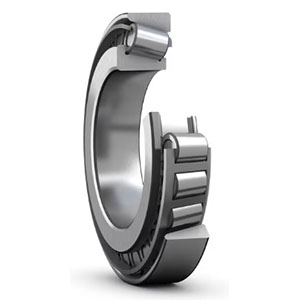
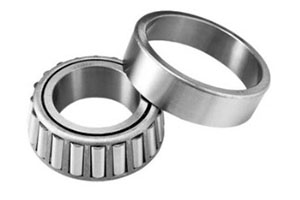
A single-row tapered roller bearing supports radial load and axial load in one direction. It requires pairing with a second single-row bearing mounted in the opposite orientation to handle bidirectional axial loads. The separable cone and cup components allow independent mounting and adjustable axial clearance. This type of tapered roller bearing is suitable for applications with moderate combined loads and unidirectional axial forces, such as automotive gearboxes, differential pinions, and general-purpose industrial motors.
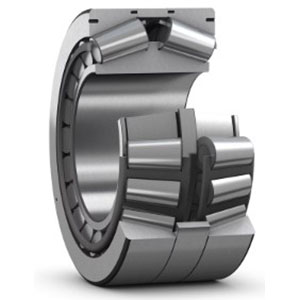
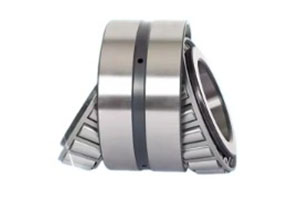
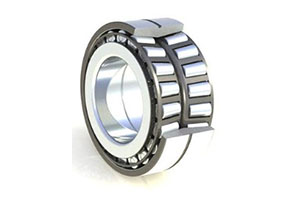
A double-row tapered roller bearing provides greater radial load capacity and handles axial loads in both directions within a single assembly. It offers a stiffer shaft arrangement compared to paired single-row bearings. Double-row tapered roller bearings are available in configurations with either a single outer ring and two inner rings, or two outer rings and a single inner ring. Common applications include machine tool spindles, heavy-duty gearboxes, crane hooks, and industrial equipment requiring bidirectional axial force support without the need for multiple separate bearings.
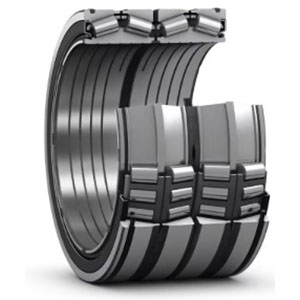
A four-row tapered roller bearing combines four rows of alternating converging and diverging rollers in one assembly. It delivers the highest radial load capacity among all tapered roller bearing types—approximately three to four times that of a single-row bearing—while also providing bidirectional axial load capability. This bearing type is designed exclusively for heavy-duty applications that demand extreme loads and high rigidity, including rolling mill work rolls, large crushers, heavy press drives, and other severe-service industrial machinery.
Single Row Tapered Roller Bearing – Metric Series
The following ISO metric series represent the most common single-row tapered roller bearing configurations found in the global aftermarket. Each series has distinct dimensional parameters, contact angles, and load characteristics. These single-row tapered roller bearings are available as separable cone and cup assemblies and are widely stocked by distributors serving automotive and industrial replacement markets.
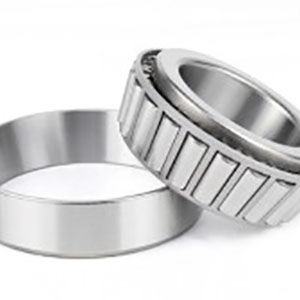
30200 Series-The 30200 series is a light metric single-row tapered roller bearing designed for moderate combined loads. These bearings are commonly found in vehicle transmissions and gearboxes. They are widely adjustable, allowing for easy preload or endplay setting during assembly, and are extremely common in the aftermarket due to their versatility in light-to-medium duty applications.
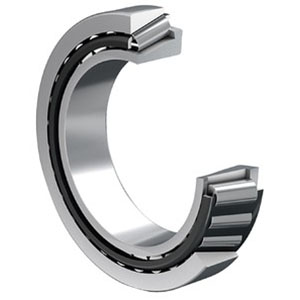
30300 Series-The 30300 series features a steeper contact angle than the 302 series, providing higher axial load capability for a given bore size. These single-row tapered roller bearings are used in hub units and heavy gearboxes that demand a robust design. The steeper angle allows them to handle greater thrust loads while maintaining compact dimensions.
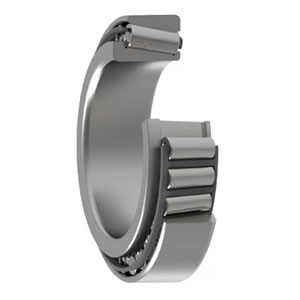
32000 Series-The 32000 series is a metric wide single-row tapered roller bearing with increased radial capacity. These bearings are popular for wheel bearings in trucks and industrial machinery where space permits a wider bearing envelope. The wider design accommodates more rollers or larger rollers, resulting in higher radial load ratings compared to standard-width series.
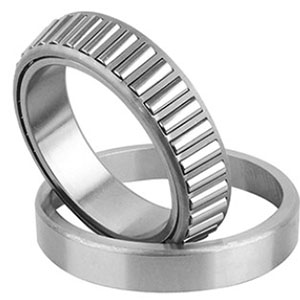
32200 Series-The 32200 series is a metric very wide single-row tapered roller bearing optimized for heavy radial loads. These bearings are often used in differential pinions and heavy truck wheel hubs. They are extremely common in both OEM and aftermarket applications because of their excellent radial load capacity and robust construction.
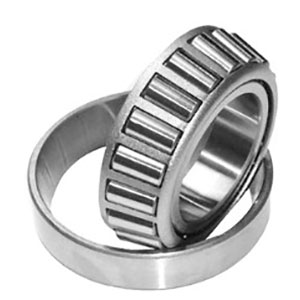
32300 Series-The 32300 series is a metric extra-heavy single-row tapered roller bearing designed for maximum radial capacity within the single-row category. These bearings are found in heavy construction equipment gearboxes and mining machinery. Their extra-wide profile and optimized roller geometry allow them to withstand severe shock loads and high radial forces.
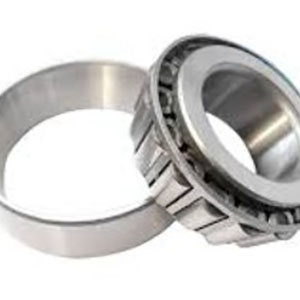
33000 Series-The 33000 series is a metric medium single-row tapered roller bearing that balances load capacity and packaging space. This versatile bearing series is suitable for many industrial gear drive applications requiring a single-row taper configuration. It offers a compromise between the lighter 302 series and the heavier 322 series, making it a popular choice for general-purpose industrial gearboxes.
Double Row Tapered Roller Bearing – Metric Series
Double-row tapered roller bearings integrate two rows of rollers within a single outer ring or two outer rings, offering higher radial capacity and bidirectional axial load capability in a more compact axial space compared to paired single-row bearings. The following metric double-row tapered roller bearing series are widely stocked in aftermarket channels for industrial machinery repairs and OEM replacements.
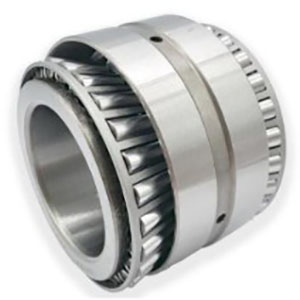
352100 Series (3521)-The 352100 series is a metric extra-wide double-row tapered roller bearing that integrates two 323 series heavy rows. These bearings are used in mining excavator boom pivot points and large crusher countershafts where extreme loads and shock resistance are required. The extra width contributes to higher stiffness and load distribution.
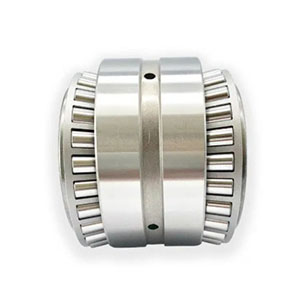
351200 Series (3512)-The 351200 series is a metric medium double-row tapered roller bearing that balances load capacity and axial space. It is commonly used in excavator swing drives and heavy-duty forklift mast pivots. This series offers a practical compromise between the heavier 352 series and the more compact 3513 series, making it a versatile choice for mobile equipment applications.
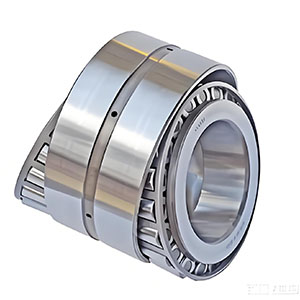
352000 Series (3520)-The 352000 series is a metric heavy double-row tapered roller bearing using an older designation that indicates a capacity combination of two 322-sized rows. This bearing is designed for heavy industrial gearboxes and large conveyors. It provides high radial rigidity and the ability to handle axial loads from both directions without requiring a separate opposing bearing.
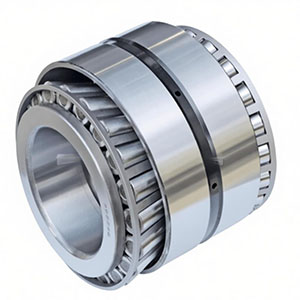
352200 Series (3522)-The 352200 series represents the largest metric double-row tapered roller bearing type, effectively replacing two 329 series narrow bearings in width. These bearings are specified for extreme overhung loads in steel mill table rolls. Their robust construction minimizes deflection under high radial forces and intermittent shock loads.
Four Row Tapered Roller Bearing – Metric Series
Four-row tapered roller bearings are designed for the most demanding heavy industrial applications where extreme radial loads and high stiffness are required within a compact axial length. These bearings are used primarily in rolling mill work rolls and backup rolls, large crushers, and heavy press drives. The radial load capacity of a four-row tapered roller bearing is approximately three to four times that of a single-row configuration. The following series represent common aftermarket types.
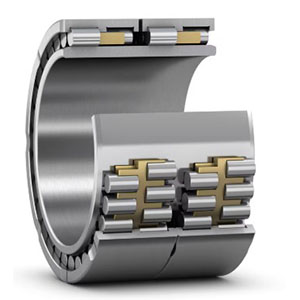
971000 Series-The 971000 series uses two outer rings and two inner rings. The split design facilitates inspection and replacement of individual bearing rows without complete disassembly. This series is common in large section mills and primary rolling stands where maintenance access is important. The separable rings allow for more flexible installation procedures compared to single-outer-ring designs.
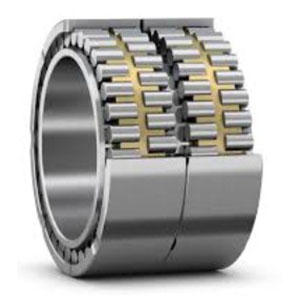
380000 Series-The 380000 series incorporates four rows with optimized contact geometry for maximum load ratings. This bearing type is designed for heavy plate mills and nonferrous metal rolling applications where extreme radial loads and high surface stresses are expected. The internal geometry is refined to distribute load evenly across all four rows, maximizing service life under high rolling pressures.
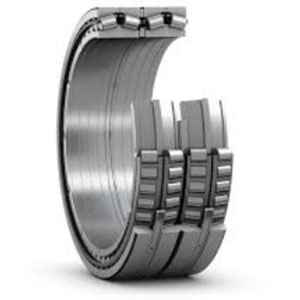
BT4B Series (metric four-row)-The BT4B series is a compact multi-row tapered roller bearing layout with precision-ground raceways. This series is suitable for rolling mill work rolls requiring high dimensional accuracy and consistent preload. BT4B bearings are often supplied as fully assembled units with factory-set internal clearances, simplifying installation for mill rebuilds and new equipment.
Other Related Bearing Types
Tapered roller bearings are specifically engineered for combined radial-axial loads. For applications requiring different rolling element geometries or load-handling characteristics, DUHUI also manufactures the following bearing types. Each bearing type offers distinct advantages in specific operating conditions.
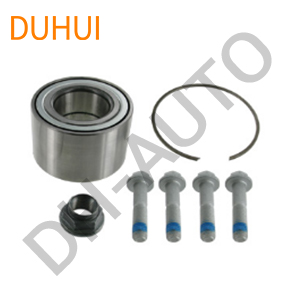
A cylindrical roller bearing accommodates high radial loads with low friction but carries minimal axial load. It uses straight raceway geometry and is separable for easy mounting and dismounting. Cylindrical roller bearings are suitable for electric motors, machine tool spindles, and gearboxes where radial capacity is the primary requirement and axial forces are negligible. Unlike tapered roller bearings, cylindrical designs do not provide axial guidance unless combined with integral flanges.
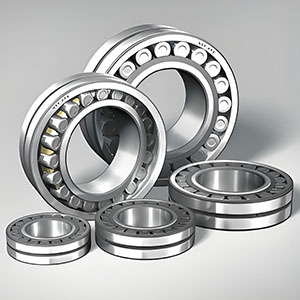
A spherical roller bearing supports heavy radial loads and moderate axial loads in both directions while accommodating significant angular misalignment. The barrel-shaped rollers and double-row design provide self-aligning capability that compensates for shaft deflection or housing misalignment. Spherical roller bearings are ideal for vibrating screens, conveyors, and industrial fans. They differ from tapered roller bearings in that they can accept larger misalignment angles but generally have lower axial load capacity for a given size.
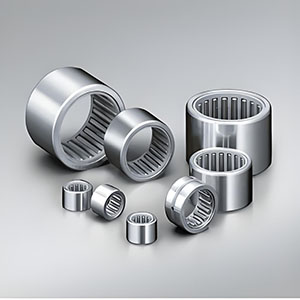
A needle roller bearing employs long, thin rollers with a high length-to-diameter ratio to achieve maximum radial capacity in a minimal radial space. Needle roller bearings have very low cross-section heights and are commonly used in connecting rods, rocker arm pivots, and transmission synchronizers. Compared to tapered roller bearings, needle bearings offer no significant axial load capability and are intended for pure radial load applications where compactness is the primary concern.
Tapered Roller Bearings Applications
Tapered roller bearings serve critical rotating functions across multiple industries, from high-volume automotive production to heavy industrial processing facilities. The list below summarizes the primary application sectors and representative uses for tapered roller bearings in each industry.

In automotive applications, tapered roller bearings are used in wheel hubs, transmissions, differentials, pinion shafts, and steering knuckles. Their ability to handle combined radial and axial loads makes them essential for vehicle drivelines and wheel-end assemblies.
Industrial machinery relies on tapered roller bearings for gearboxes, conveyor systems, electric motors, machine tool spindles, industrial fans, pumps, and compressors. These bearings provide the reliability and load capacity required for continuous operation in manufacturing environments.
Agricultural equipment such as tractors, harvesters, irrigation pivots, and tillage equipment gearboxes commonly use tapered roller bearings. The bearings must withstand dirt, moisture, and variable loads while providing long service life with minimal maintenance.
In rail transport, tapered roller bearings are installed in train axles, traction motor suspension units, and gear reduction drives. The high radial capacity and ability to accommodate track-induced misalignments make them suitable for freight and passenger railcar axles.
Mining applications demand rugged tapered roller bearings for crusher countershafts, vibrating screens, conveyor drive heads, and excavator swing drives. These bearings are exposed to heavy shock loads, vibration, and contamination, requiring robust design and effective sealing.
Construction equipment including crane turntables, excavator swing drives, forklift mast rollers, and concrete drum drives uses tapered roller bearings to manage combined loads and provide rotational accuracy under heavy service conditions.
Product Series Comparisons
Understanding the differences between bearing configurations helps select the optimal product for specific operating conditions.
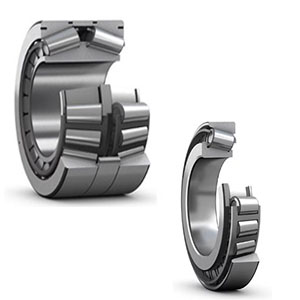
Single-row tapered roller bearings support combined loads in one axial direction and require a second bearing mounted in opposition to handle bidirectional axial forces. Double-row tapered roller bearings integrate two rows of rollers into one assembly, handling bidirectional axial loads and providing higher radial stiffness in a compact axial space. Double-row designs simplify shaft arrangements and reduce the number of components required, but they are less adjustable for preload compared to paired single-row bearings. Single-row bearings are generally preferred when axial clearance needs to be closely controlled during assembly, while double-row bearings are chosen for applications where space is limited and bidirectional loads are present.
For more details, please read“Single Row vs. Double Row Tapered Roller Bearing”
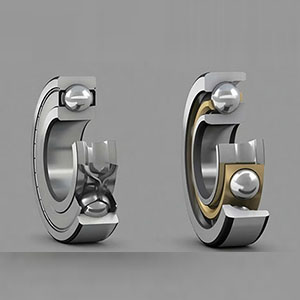
Deep groove ball bearings handle combined radial and moderate bidirectional axial loads without requiring pairing or preload. Their deep raceway geometry suits general rotating equipment, electric motors, and pumps. Angular contact ball bearings are designed for high unidirectional axial loads and are typically used in preloaded sets (back‑to‑back or face‑to‑face) to support bidirectional thrust. They provide higher axial rigidity and precision at high speeds but are more sensitive to misalignment. Choose deep groove ball bearings for general‑purpose, low‑maintenance applications; choose angular contact bearings for spindle or axial‑dominant applications.
For more details, please read“The Differences Between Deep Groove Ball Bearing and Angular Contact Ball Bearings”
Popular Aftermarket Models
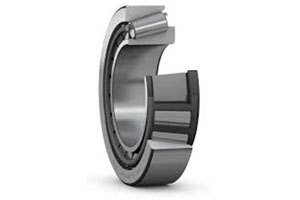
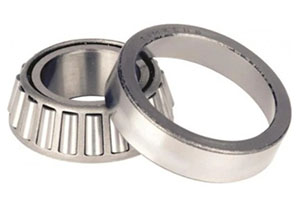
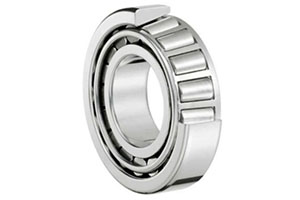
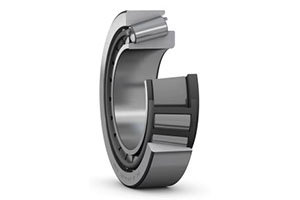
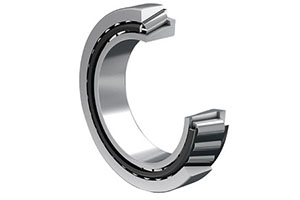
The following metric single-row and double-row tapered roller bearings are among the most frequently ordered aftermarket models. Dimensions and application notes are provided for each bearing to assist in selection.
Tapered Roller Bearings Maintenance and Service Life
Importance of Tapered Roller Bearings Maintenance
Regular inspection of lubricant condition, operating temperature, and abnormal noise patterns can identify early-stage degradation of a tapered roller bearing before catastrophic failure occurs. Documented maintenance schedules typically extend bearing service life by 30–50% compared to run-to-failure practices. Proper relubrication intervals prevent lubricant breakdown and protect against friction-related damage. Contamination exclusion through effective seals and regular cleaning of bearing surfaces maintains the cleanliness required for stable oil film formation. Correct mounting procedures ensure proper fit and alignment. For single-row tapered roller bearings, clearance adjustment is part of the installation process. Double-row and four-row bearings are supplied with factory-set clearances, requiring only correct assembly order and positioning.
Extended bearing life equals longer equipment service life
Field studies show that tapered roller bearings maintained according to manufacturer specifications consistently operate beyond their rated L10 service life. Lubrication quality is the single most important factor—contaminated or degraded lubricant is the primary cause of premature bearing replacement. Additionally, proper preload or endplay setting during installation directly affects fatigue life. Bearings operated with excessive preload suffer from increased operating temperatures and accelerated wear, while excessive endplay allows damaging impact loads on raceways. Following manufacturer recommendations for mounting and lubrication is essential for maximizing the service life of any tapered roller bearing.
Longer intervals between scheduled machine maintenance results in lower ownership cost
Selecting the correct tapered roller bearing for the operating conditions, setting proper preload or clearance, and installing effective sealing arrangements directly correlate with mean time between maintenance interventions. Bearings operating in clean, well-lubricated environments allow extended maintenance intervals without compromising reliability. Conversely, bearings in high-contamination or high-moisture applications require more frequent inspection and relubrication. Calculating total cost of ownership—including bearing cost, labor for replacement, and downtime losses—often justifies investing in higher-quality tapered roller bearings with improved sealing and surface finishes. Longer maintenance intervals reduce labor costs and production losses, making premium bearings more economical over the full equipment lifecycle.
DUHUI Bearing supplies OEMs, authorized distributors, and industrial aftermarket channels worldwide. To purchase tapered roller bearings, contact the DUHUI sales team with product model numbers and required quantities for a direct factory quotation. Custom and OEM orders are accepted with minimum quantity options. Distributor inquiries are also welcome.
For more details, please read “Where to buy DUHUI tapered roller bearings?“.
Single-row tapered roller bearings are separable, meaning the cone assembly can be mounted independently from the cup. To mount, install the cup into the housing bore using a press tool that contacts only the cup face. Install the cone onto the shaft with the appropriate interference fit, applying force to the cone ring only—never through the rollers or cage. After mounting, set axial clearance or preload by adjusting a locknut or spacer stack. For dismounting, use a bearing puller on the cone and a press tool to remove the cup from the opposite side. Always refer to the manufacturer’s mounting instructions for specific clearance values and torque specifications.
For more details, please read “How to mount and dismount your tapered roller bearing?“.
Common failure modes for tapered roller bearings include spalling (surface fatigue), smearing (sliding damage), corrosion, and overheating. Prevention measures include: selecting the correct internal clearance for the operating temperature range; using the specified lubricant type and adhering to recommended relubrication intervals; installing effective seals to exclude contaminants; mounting bearings without impact damage; and checking housing and shaft tolerances before installation. Regular vibration or temperature monitoring can detect early signs of bearing degradation, allowing planned replacement before failure causes equipment damage.
For more details, please read “How to Prevent and Diagnose Bearing Failure“.
Tapered roller bearings are used wherever a rotating shaft assembly requires support for combined radial and axial loads. Typical applications include automotive wheel hubs, transmissions, differentials, industrial gearboxes, conveyor rollers, machine tool spindles, agricultural equipment axles, and heavy machinery pivot points that require adjustable preload capability. Their ability to handle both radial and thrust loads in a single bearing makes them a common choice in many power transmission systems.
For more details, please read “Tapered Roller Bearings: Design, Uses, Advantages and Comparison ”.
The most popular aftermarket tapered roller bearing models include the 30200, 30300, 32000, 32200, and 33000 series for single-row metric configurations. For double-row bearings, the 352000 and 351100 series are widely stocked. Specific model numbers frequently requested include 30205, 32208, 32008X, 352122, and 352130. The popularity of these series stems from their extensive use in automotive, truck, and industrial equipment original equipment manufacturing, which creates sustained aftermarket demand.
For more details, please read “What are the most popular tapered roller bearings?”.