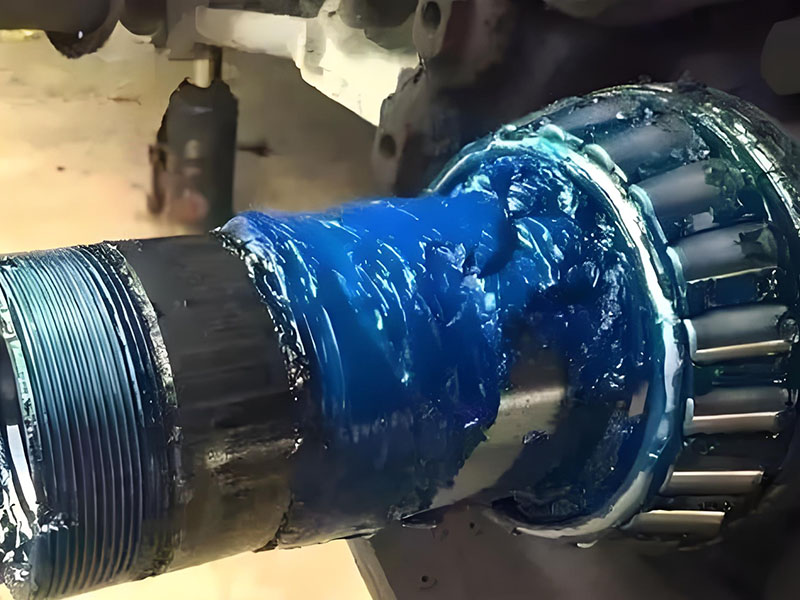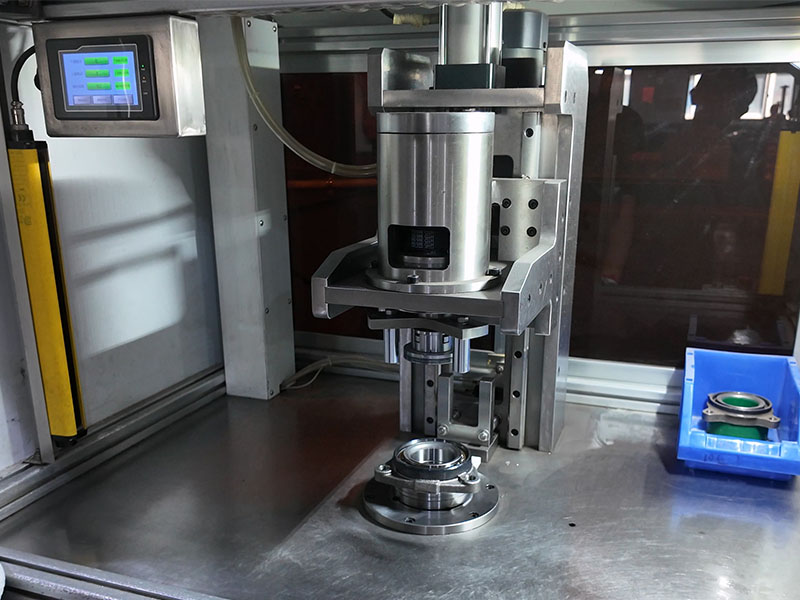
In the world of machinery and precision engineering, the smallest components often play the most critical roles. Small bearings, despite their diminutive size, are the unsung heroes enabling smooth, efficient, and precise motion in countless applications—from life-saving medical devices to high-speed robotics. DUHUI will delve into the world of small bearings, exploring their definition, types, materials, and key selection criteria.
What Are Small Bearings?
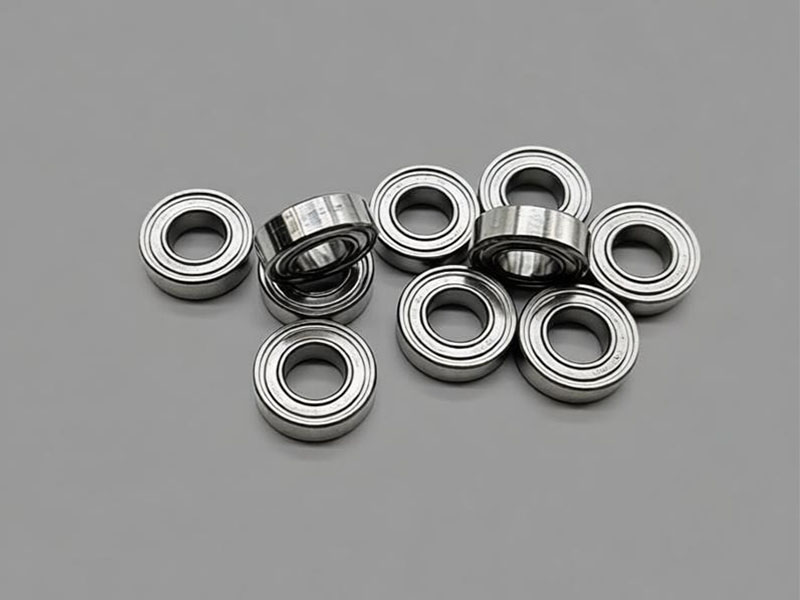
Small bearings are a category of anti-friction bearings characterized by their compact dimensions. While there’s no universal standard, they typically refer to bearings with an outer diameter of less than 30mm or an inside diameter under 10mm. They are designed to reduce rotational friction and support radial and/or axial loads in space-constrained applications.
Dimensional Characteristics: The defining features of a small bearing are its precise bore diameter (inner diameter), outer diameter, and width. These are meticulously manufactured to international standards like ABEC (Annular Bearing Engineering Committee) scales to ensure interchangeability and performance.
Common Terminology Explained: You might encounter various names for these components:
- Miniature Bearings / Miniature Ball Bearings: The most common terms, generally referring to bearings with an outer diameter of up to 9mm or 10mm.
- Micro Bearings / Micro Ball Bearings: Often used for even smaller bearings, typically under 5mm in outer diameter, requiring extreme manufacturing precision.
- Small Ball Bearings / Mini Bearings: More general terms that encompass a slightly larger range but still imply a compact size.
All these terms fundamentally describe the same type of product, with “micro” and “miniature” often indicating the extreme end of the size spectrum.
Anatomy of a Small Bearing
Despite their small size, these bearings contain all the key components of their larger counterparts:
- Outer Ring (Race): The stationary part mounted into a housing.
- Inner Ring (Race): The rotating part mounted onto a shaft.
- Rolling Elements (Balls): Spherical elements that roll between the rings, providing the low-friction motion. Typically made of steel or ceramic.
- Cage (Retainer): Separates and guides the balls, preventing them from contacting each other and ensuring even spacing.
- Lubricant: Oil or grease that reduces friction, dissipates heat, and protects against wear.
- Seals/Shields: Protective components that keep lubricant in and contaminants out.
Classification and Types of Small Bearings
Small bearings are classified in several ways to meet diverse application needs.
By Measurement System: Metric vs. Inch
Bearings are manufactured to either metric (e.g., 695, 6800 series) or inch (e.g., R series, MR series) dimensions. Selecting the correct system is crucial for compatibility with your shaft and housing.
By Load Type:
- Radial Bearings (Deep Groove): The most common type, designed primarily for radial loads (perpendicular to the shaft) but can handle some axial (thrust) loads.
- Angular Contact Bearings: Designed to accommodate combined radial and axial loads. They are often used in pairs in applications requiring high precision, like spindles.
- Thrust Bearings: Specifically designed to handle pure axial loads.
By Design Feature: With or Without Flanges
A flanged bearing has an integral flange on the outer ring. This simplifies mounting by providing a positive location in a housing, eliminating the need for a snap ring or shoulder.
By Internal Geometry: Variations in the raceway curvature can affect load capacity and friction.
Sealing and Shielding Options: Open, Shielded, and Sealed
The choice of closure is vital for bearing longevity.
- Open Bearings: No closure. Allow for maximum speed and easy re-lubrication but are vulnerable to contamination. Suitable for clean environments.
- Shielded Bearings (e.g., ZZ, 2Z): Feature a non-contact metal shield. They provide good protection against large particles while maintaining low friction. Ideal for applications where re-lubrication is possible.
- Sealed Bearings (e.g., 2RS, 2RU): Equipped with contact rubber seals. They offer the best protection against contamination and retain lubricant effectively, often for the bearing’s lifetime. They have slightly higher friction but are perfect for dirty or moist environments.
Materials Used in Small Bearings
The material dictates the bearing’s performance, durability, and environmental resistance.
- Chrome Steel (GCr15 / 52100): The standard bearing steel. It offers excellent hardness, wear resistance, and load-carrying capacity for general-purpose applications. It is not corrosion-resistant without proper lubrication.
- Stainless Steel (AISI 440C): Offers good corrosion resistance, making it ideal for medical, food processing, and marine applications. It is slightly less hard than chrome steel.
- Ceramic Materials (Silicon Nitride Si3N4 / Zirconia ZrO2): Balls made from ceramic are lighter, harder, and generate less heat than steel. They are used in high-speed, high-temperature, or electrically insulating applications.
- Hybrid Bearings: Combine steel rings with ceramic balls. This design leverages the strength of steel and the low-friction, high-speed properties of ceramics, offering a superior performance balance.
Key Advantages of Using Small Bearings
- Space and Weight Savings: Their compact design is fundamental for miniaturization in modern devices.
- High Precision and Rotational Accuracy: Manufactured to tight tolerances (e.g., ABEC 5, 7, 9), they ensure precise shaft rotation, critical for instrumentation and spindles.
- Low Friction and High Speed Capability: The optimized geometry and smooth surfaces result in minimal frictional torque, allowing for high rotational speeds.
- Durability and Reliability: When properly selected and maintained, they provide a long and reliable service life.
- Quiet Operation: High-quality small bearings are designed for low vibration and noise (“quiet running”), which is essential in medical and audio equipment.
Diverse Applications Across Industries
The versatility of small bearings makes them indispensable across a wide spectrum of industries:
- Medical & Dental: High-speed handpieces, surgical tools, and diagnostic equipment require precision, cleanliness, and reliability.
- Precision Instruments: Gyroscopes, synchros, servos, and optical encoders demand bearings with minimal friction and runout for accurate measurements.
- Robotics & Automation: Joints, actuators, and small gearboxes in robots and pick-and-place machines need compact, durable bearings.
- Electric Motors: Miniature motors in drones, cooling fans, and power tools rely on small bearings for efficient operation.
- Aerospace & Defense: Used in flight control systems, sensors, and satellite mechanisms where reliability under extreme conditions is paramount.
- Flow Meters & Fuel Control: In fuel systems and cryogenic coolers, they provide precise, low-friction rotation.
How to Choose the Right Small Bearing
Choosing the correct bearing is critical. Follow this step-by-step guide:
- Step 1: Define Your Application Requirements: What is the primary function? What are the loads (radial/axial) and speeds involved?
- Step 2: Analyze the Operating Environment: Will the bearing be exposed to moisture, dust, chemicals, or extreme temperatures?
- Step 3: Match Dimensions and Tolerances: Know your exact shaft and housing dimensions. Specify the required tolerance class (e.g., ABEC-1 for general use, ABEC-5 or higher for precision).
- Step 4: Select the Appropriate Material: Choose chrome steel for standard use, stainless steel for corrosion resistance, or ceramics for extreme performance.
- Step 5: Choose the Correct Seal/Shield: Opt for open bearings for low friction in clean rooms, shields for general protection, and seals for harsh environments.
- Step 6: Verify Load and Speed Ratings: Consult manufacturer technical datasheets to ensure the bearing’s dynamic/static load ratings (Cr, Cor) and speed limits meet your needs.
- Step 7: Consider Precision and Noise Levels: For applications like medical handpieces or hard drives, specify low-noise (EMQ) or high-precision grades.
- Step 8: Consult with Bearing Experts: Partnering with an experienced manufacturer, like DUHUI Bearing, can help you navigate complex requirements and avoid costly mistakes.
Maintenance, Handling, and Troubleshooting
Even the best bearings require care.
Proper Handling and Storage: Always handle bearings with clean hands or gloves. Store them in a clean, dry environment in their original packaging.
Inspection and Lubrication: Monitor for noise or vibration. Follow manufacturer guidelines for re-lubrication intervals and the correct type/amount of grease or oil.
Installation Best Practices: Use appropriate tools to apply force only to the ring being mounted (press on the inner ring for shaft fits, outer ring for housing fits). Never hammer directly on the bearing.
Common Failure Modes and Diagnosis:
- Excessive Noise/Vibration: Often caused by contamination, incorrect preload, or lubrication failure.
- Overheating: Can result from over-lubrication, insufficient internal clearance, or high-speed operation beyond the bearing’s limit.
- Premature Wear/Damage: Frequently due to improper installation (misalignment, brinelling), contamination ingress, or wrong lubricant.
- Corrosion: A clear sign of moisture ingress, indicating a need for stainless steel or better sealing.
Conclusion
Small bearings are precision components that are fundamental to the performance and reliability of modern machinery. From understanding their anatomy and classifications to mastering the selection and maintenance process, this knowledge ensures optimal performance and longevity of your equipment. As a dedicated manufacturer, DUHUI Bearing can provide you with the perfect bearing solution tailored to your specific needs.