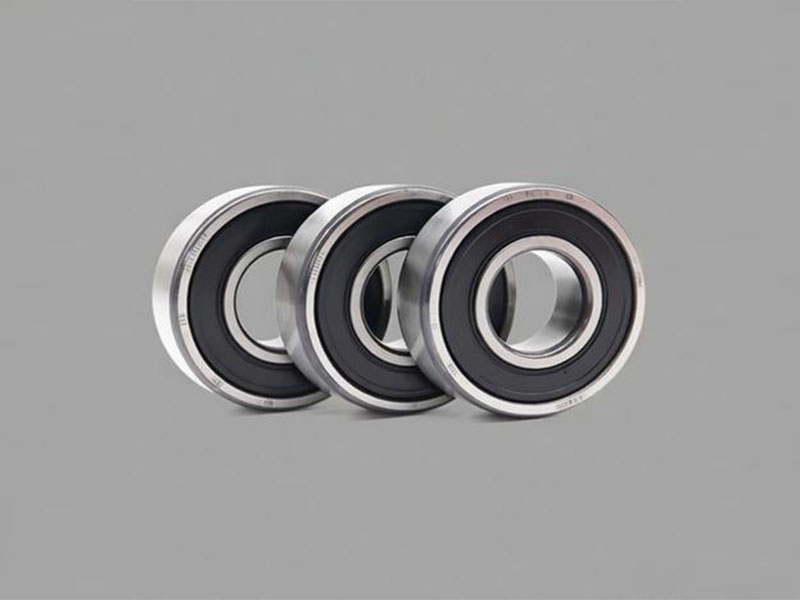
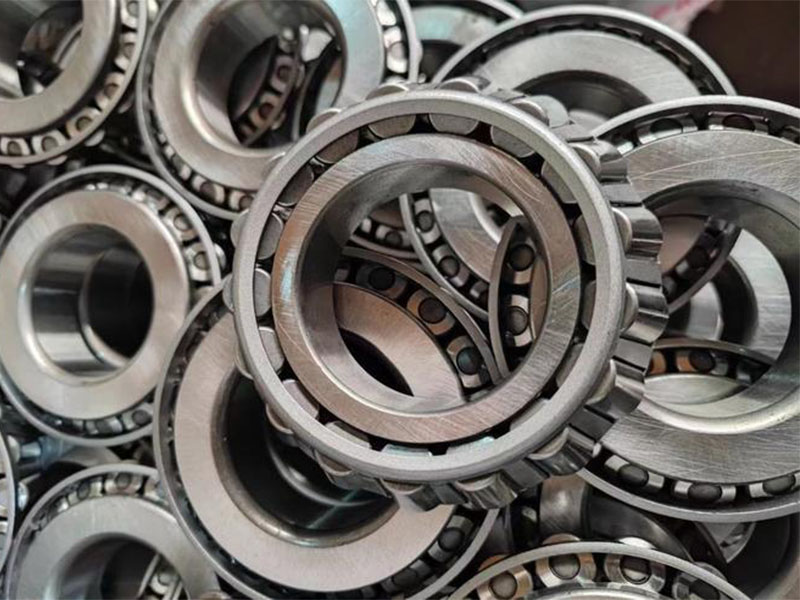
Silicon nitride (Si₃N₄) balls represent the pinnacle of bearing technology, offering a unique combination of lightness, hardness, and durability that traditional steel alloys cannot match. For engineers and procurement specialists seeking to enhance performance in high-speed, high-temperature, or corrosive environments, understanding the manufacturing process is crucial to assessing quality and reliability. DUHUI provides a comprehensive, step-by-step technical overview of how precision silicon nitride balls are produced—from raw powder to the finished, high-precision component.
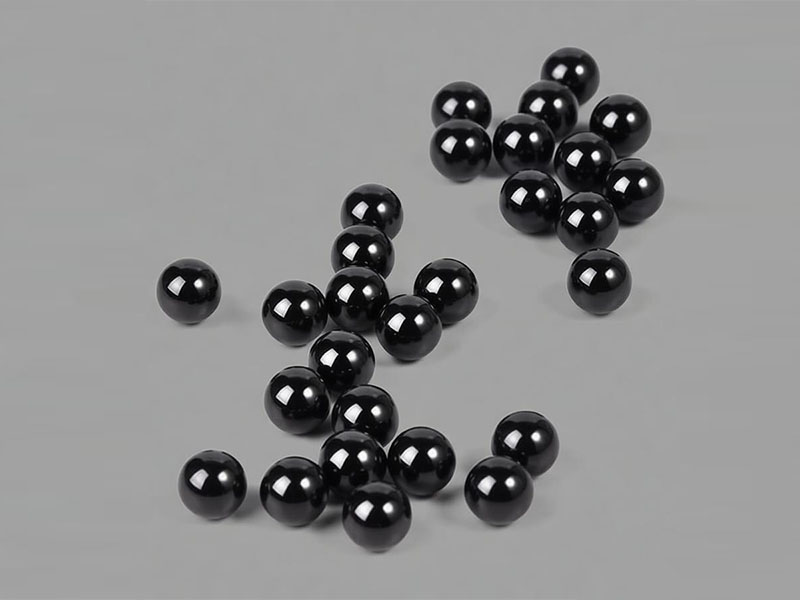
What is Silicon Nitride (Si₃N₄)?
Silicon nitride is a high-performance engineering ceramic known for its excellent thermal shock resistance and mechanical strength. Unlike metals, it maintains its stability and hardness even at extreme temperatures. To truly appreciate its value, it is best to compare its physical properties directly against the most common bearing steels.
Comparison of Properties: Silicon Nitride, M50 Steels, and 440C Stainless Steel
| Properties | Unit | Si₃N₄ (Ceramic) | M50 (Tool steel) | 440C (Stainless steel) |
| Density | kg/m³ | 3190 | 7850 | 7800 |
| Working temperature | °C | 800 | 538 | 300 |
| Hardness (Rc) | 75-80 | 62 | 66 | |
| Thermal expansion | 10⁻⁶/K | 2.7 | 12.5 | 10.2 |
| Young‘s modulus | GPa | 303 | 208 | |
| Poisson ratio | 0.28 | 0.3 | 0.3 | |
| Thermal conductivity | W/mK | 26 | 28 | 24.2 |
Why Choose Silicon Nitride for Bearing Balls?
The data reveals why Si₃N₄ is the material of choice for advanced applications. Its low density (60% lighter than steel) reduces centrifugal forces in high-speed rotations, extending bearing life . Its ultra-high hardness ensures exceptional wear resistance, while its low thermal expansion (roughly one-third that of steel) minimizes dimensional changes under temperature fluctuations, ensuring consistent precision . Furthermore, as an electrical insulator, it prevents arcing damage in electric motors, a critical feature for electric vehicles .
The Step-by-Step Manufacturing Process of Silicon Nitride Balls
Creating a silicon nitride ball with the required precision (often G5 grade or higher) is a complex, multi-stage process that demands rigorous control.
Raw Material Preparation: The Foundation of Quality
The journey begins with high-purity silicon nitride powder. This is mixed with precise amounts of sintering aids, such as Yttria (Y₂O₃) and Alumina (Al₂O₃), which are essential for promoting densification during firing . The materials are then milled to achieve a homogeneous particle size and spray-dried into a free-flowing granulate. Material purity is paramount; impurities can become stress points, compromising the final ball‘s mechanical strength and wear resistance .
Forming the Green Body
The prepared powder is then shaped into a “green“ (unsintered) ball.
- Cold Isostatic Pressing (CIP): This is the preferred method for high-quality balls. The powder is sealed in a flexible mold and subjected to uniform hydraulic pressure from all directions. This ensures a homogeneous density throughout the compact, which is critical for preventing distortion during sintering .
- Injection Molding: For complex shapes or micro-balls, Powder Injection Molding (PIM) offers a near-net-shape alternative, allowing for mass production with high efficiency .
Sintering: Densification and Strengthening
Sintering is the most critical step, where the porous green body is transformed into a dense, hard ceramic. The parts are heated to temperatures exceeding 1700°C in a nitrogen atmosphere . Several methods are used:
- Hot Isostatic Pressing (HIP): This advanced technique applies high-pressure gas (like nitrogen) uniformly in all directions at high temperatures. HIP virtually eliminates any residual porosity, achieving near-theoretical density and maximizing the material’s strength and fracture toughness .
- Gas Pressure Sintering (GPS): A common and effective method where sintering occurs under a nitrogen gas pressure of several MPa to suppress decomposition and aid densification .
Lapping and Polishing: Achieving Precision
As-sintered balls are slightly oversized and have a rough surface. To achieve their final precision, they undergo a series of finishing processes. Using progressively finer diamond slurries and abrasive films, the balls are lapped and polished in multi-plate machines. This process refines the sphericity (to G5 or better) and surface roughness (Ra), resulting in a mirror-like finish that is essential for low friction and quiet operation.
Quality Control and Standards
At DUHUI Bearing, quality is not an afterthought; it is integrated into every step. Finished balls undergo rigorous inspection:
- Dimensional Accuracy: Automated systems measure diameter, sphericity, and lot variation.
- Visual and Flaw Detection: High-magnification inspection ensures the surface is free of cracks, pits, or other defects.
- Mechanical Validation: Samples are tested for hardness and fracture toughness to ensure material integrity.
- Adherence to International Standards: Our processes and products are designed to comply with strict industry specifications, including ASTM F2094 for silicon nitride bearing balls, covering Classes I, II, and III requirements .
Applications of Precision Silicon Nitride Balls
The unique properties of Si₃N₄ balls make them indispensable in a range of high-performance industries:
- Aerospace: For actuators, control systems, and turbine engines where weight savings and high-temperature capability are critical .
- Electric Vehicles (EVs): In high-speed motor bearings where electrical insulation prevents fluting (electrostatic discharge damage) .
- Medical Devices: In surgical tools and implantable devices like hip replacements, due to their biocompatibility and wear resistance .
- Wind Energy: In pitch and yaw systems of turbines, where corrosion resistance and long-term reliability are required .
Conclusion: The DUHUI Bearing Advantage
The production of high-quality silicon nitride balls is a testament to advanced material science and precision engineering. From stringent raw material selection to advanced sintering and finishing, every step dictates the performance and reliability of the final product.
At DUHUI Bearing, we combine decades of manufacturing expertise with state-of-the-art facilities to produce silicon nitride balls that meet the most demanding global standards. Whether you require standard sizes or customized solutions for aerospace, automotive, or industrial applications, our engineering team is ready to support your project.