When designing mechanical equipment, engineers often face a fundamental choice: which bearing type best suits the application? Sleeve bearings—also known as plain bearings or bushings—are among the most widely used bearing solutions across industrial machinery. How do they differ from rolling element bearings, and what factors should you consider when selecting a sleeve bearing for your project? This guide provides a comprehensive overview of bearing sleeve characteristics, types, and selection criteria.
What Is a Sleeve Bearing?
A sleeve bearing, also referred to as a plain bearing, bushing, or journal bearing, is a mechanical component designed to support a rotating or sliding shaft while minimizing friction. Unlike ball bearings that use rolling elements, sleeve bearings function through a sliding action. The bearing consists of a cylindrical sleeve with a smooth inner surface that contacts the shaft directly or through a thin lubricant film.
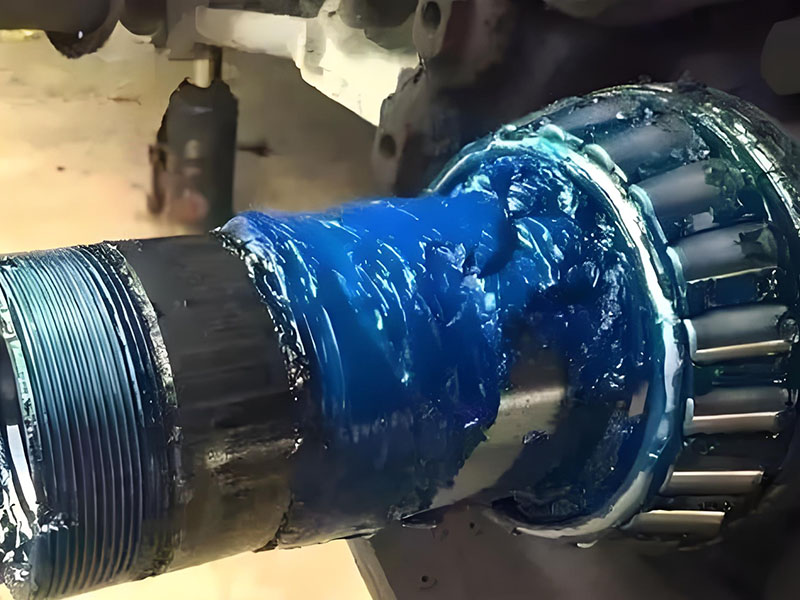
The operating principle is relatively straightforward: a layer of lubricant—oil, grease, or a solid lubricant—separates the shaft from the bearing surface, reducing friction and wear. This sliding mechanism allows sleeve bearings to operate quietly, particularly at low speeds, and provides excellent shock load resistance due to the large contact area between the shaft and bearing.
Sleeve bearings can be manufactured from various materials, including metals, plastics, and composites, each offering distinct performance characteristics suited to different operating conditions.
Key Characteristics of Sleeve Bearings
Low friction. With proper lubrication, sleeve bearings achieve a low coefficient of friction, typically through the formation of a stable lubricant film between the shaft and bearing surface.
Compact form. Sleeve bearings have a simple cylindrical or flanged shape with thin wall sections, allowing them to fit into space-constrained designs. Their one-piece construction reduces housing dimensions and overall assembly weight.
Low weight. Compared to rolling element bearings of equivalent size, sleeve bearings are generally lighter due to their simpler construction and absence of cages or rolling elements.
Easy installation. The straightforward press-fit design of sleeve bearings simplifies assembly and reduces the risk of bearing or housing damage during installation.
Vibration suppression. Sleeve bearings with conformal liners can compensate for minor misalignment and provide effective vibration damping, contributing to smoother machine operation.
Noise reduction. At low to moderate speeds, sleeve bearings operate significantly more quietly than ball bearings, making them the preferred choice for noise-sensitive applications such as household appliances and office equipment.
Functions and Purposes of Mechanical Sleeves
Protect shafts from wear and corrosion. Sleeves act as sacrificial components, absorbing wear that would otherwise damage the shaft surface. This protection is particularly valuable in applications involving abrasive or corrosive media.
Improve alignment of rotating components. Sleeve bearings can accommodate minor shaft misalignment, helping maintain proper alignment between rotating components and reducing stress on adjacent parts.
Reduce friction between moving parts. The primary function of any bearing is friction reduction, and sleeve bearings achieve this through a sliding interface that, when properly lubricated, maintains low friction levels.
Extend the life of bearings and seals. By providing stable support and reducing vibration, sleeve bearings help prolong the service life of seals and other components in the bearing system.
Allow easy replacement without changing the main shaft. When a sleeve bearing wears out, the sleeve can be replaced without removing or replacing the main shaft, significantly reducing downtime and maintenance costs.
Types of Sleeve Bearings
Steel sleeve bearings. Manufactured from high-carbon steel or alloy steel, steel sleeve bearings offer high strength and wear resistance. They are typically used in applications involving heavy loads and high speeds, though they generally require consistent lubrication to prevent galling.
Bronze sleeve bearings. Bronze bearings provide excellent wear resistance and corrosion resistance, making them suitable for moderate loads and speeds. They perform particularly well in humid or corrosive environments. Some bronze sleeve bearings are oil-impregnated (sintered bronze), containing pores that absorb lubricant and release it during operation, enabling self-lubricating performance.
Plastic sleeve bearings. Manufactured from engineering plastics such as PTFE or polyamide, plastic sleeve bearings feature a low friction coefficient and excellent chemical resistance. They are suitable for light loads and moderate speeds, and are often used in applications where corrosion resistance or electrical insulation is required.
Composite material sleeve bearings. Composite bearings combine the advantages of metals and plastics. Common configurations include a steel backing with a sintered bronze intermediate layer and a PTFE or POM bearing surface. These bearings exhibit excellent wear resistance and self-lubricating properties, making them suitable for a broad range of load and speed conditions. Examples include PTFE-lined composite bearings and POM-lined composite bearings.
In addition to material classification, sleeve bearings are also categorized by structural configuration. Cylindrical sleeve bearings have straight inside and outside diameters and sit flush within the housing. Flanged sleeve bearings feature a protruding flange at one end that provides a bearing surface for axial loads in addition to radial support.
Common Applications of Sleeves in Mechanical Systems
Centrifugal pumps. Sleeve bearings support pump shafts and impellers, often operating in wet environments where corrosion resistance is essential. They are also used in shaft protection sleeves that prevent mechanical damage from shaft seals.
Industrial motors. In fractional horsepower motors and small electric motors, sleeve bearings provide quiet, low-friction support for rotating shafts. They are commonly used in fan motors, HVAC equipment, and appliance motors.
Gearboxes. Sleeve bearings support gear shafts and help maintain alignment under varying load conditions. Bimetal and composite sleeve bearings are frequently specified for gearbox applications.
Compressors. Both reciprocating and rotary compressors use sleeve bearings to support crankshafts and connecting rods. Bronze and composite sleeve bearings are common choices due to their wear resistance and ability to operate with boundary lubrication.
Heavy machinery. Construction equipment, agricultural machinery, and material handling equipment often utilize steel-backed or bronze sleeve bearings to withstand high shock loads and contaminated operating environments. In these applications, operating speeds are typically low to moderate.
How to Select and Maintain Sleeve Bearings
Selection Guide for Sleeve Bearings
Selecting the appropriate sleeve bearing for a specific application requires careful evaluation of several operational parameters.
Load. Consider both radial loads (perpendicular to the shaft axis) and axial loads (parallel to the shaft axis). The bearing material must have sufficient compressive strength to withstand the applied loads without excessive deformation. Sleeve bearings can handle light to heavy loads, but the load capacity is material-dependent.
Speed. Operating speed directly affects lubricant film formation and heat generation. Sleeve bearings are generally better suited for low to moderate speeds, though certain designs can accommodate higher speeds with proper lubrication.
Temperature. The operating temperature range affects both the bearing material properties and lubricant viscosity. Bronze and composite bearings can handle higher temperatures than many plastic alternatives.
Environmental conditions. Exposure to moisture, chemicals, dust, or abrasive particles must be considered. Bronze offers good corrosion resistance, while plastic and composite bearings provide enhanced chemical resistance.
Lubrication requirements. Determine whether external lubrication (oil or grease) is feasible or if a self-lubricating solution is required. Oil-impregnated sintered bronze and PTFE-lined composite bearings can operate with minimal or no external lubrication.
PV value. The product of contact pressure (P) and sliding velocity (V) is a critical parameter for sleeve bearing design. A lower PV value generally correlates with longer bearing life. This value helps determine whether a given bearing material can survive the expected operating conditions.
Installation and maintenance considerations. Ease of installation, replacement frequency, and access for maintenance should also factor into the selection process.
Maintenance Practices
Regular lubrication. For bearings that require external lubrication, maintain proper oil levels or grease intervals according to manufacturer recommendations. Monitor lubricant condition—contaminated or degraded lubricant should be replaced promptly.
Inspecting wear patterns. Periodically inspect bearings for signs of uneven wear, scoring, or pitting. Discoloration (such as blue or brown hues) may indicate overheating. Record wear measurements to track degradation over time.
Replacing damaged sleeve bearings. When wear exceeds acceptable limits or damage is detected, replace the bearing promptly. Unlike ball bearings, sleeve bearings are often replaced without removing the main shaft, simplifying maintenance.
Troubleshooting Common Issues
Several common failure modes can occur in sleeve bearings. Overheating typically results from insufficient lubrication, lubricant degradation, overload, or improper installation. Check lubrication quality and quantity, verify load conditions, and confirm proper bearing clearance. Noise or abnormal vibration may indicate poor lubrication, bearing wear, foreign particle ingress, or excessive clearance. If lubrication does not resolve the issue, inspect the bearing for wear and replace if necessary. Sticking or seizure can occur due to rust, corrosion, excessive wear, or overly tight shaft fit. Disassemble the bearing for inspection, clean or replace damaged parts, and ensure proper fit clearance upon reassembly.
Sleeve Bearings vs. Ball Bearings: A Comparison
Engineers often need to decide between sleeve bearings and ball bearings for a given application. The following comparison summarizes the key differences.
| Characteristics | Sleeve Bearings | Ball Bearings |
|---|---|---|
| Structure | Made of thin-walled hollow cylinders, without rolling elements | Include inner race, outer race, rolling elements (balls), and cage |
| Operating Principle | Utilize a lubricant film between the shaft and bearing to reduce friction | Reduce friction by rolling balls between inner and outer races |
| Applications | Suitable for a wide load range (light to heavy) at low to moderate speeds; common in pumps, motors, heavy machinery, and appliances | Ideal for high-speed and high-precision applications; common in automotive components, machine tools, and electric motors requiring high RPM |
| Advantages | Simple structure, lower cost, quieter operation at low speeds, excellent shock load resistance, easier maintenance, tolerates contamination better | Very low friction coefficient, suitable for very high speeds, high rotational precision, longer life under proper conditions |
| Disadvantages | Performance limited by PV value; speed capability lower than ball bearings; orientation-sensitive in some designs | More complex structure, higher cost, sensitive to misalignment and contamination, can be noisier at low speeds |
Ball bearings offer higher precision and efficiency for high-performance applications requiring elevated speeds. However, sleeve bearings remain the preferred choice when simplicity, cost-effectiveness, quiet operation, or operation in contaminated environments are primary considerations.
Conclusion
Bearing sleeves are fundamental components in mechanical systems, providing low-friction support for rotating and sliding shafts across a wide range of industrial applications. Their simple design, compact form, and cost-effectiveness make them an attractive alternative to rolling element bearings in many scenarios. By understanding the characteristics of different sleeve bearing materials—steel, bronze, plastic, and composite—and carefully considering factors such as load, speed, temperature, and lubrication requirements, engineers can select the appropriate sleeve bearing for their specific application. Proper maintenance, including regular lubrication and wear inspection, ensures reliable operation and extended service life.
Frequently Asked Questions (FAQs)
Q1: What is the difference between a sleeve bearing and a bushing?
A1: There is no substantial technical difference between the two terms. A bushing is essentially a type of sleeve bearing. Both refer to cylindrical components that reduce friction between moving parts through a sliding action. Generally speaking, all bushings are bearings, but not all bearings are bushings.
Q2: When should I choose a sleeve bearing over a ball bearing?
A2: Sleeve bearings are preferable when low cost, quiet operation, compact design, and easy installation are priorities. They perform well in low to moderate speed applications across light to heavy loads, such as fans, small motors, pumps, heavy machinery (at low speeds), and household appliances. Ball bearings are better suited for high-speed, high-precision applications.
Q3: Do sleeve bearings require lubrication?
A3: Many sleeve bearings require external lubrication, but self-lubricating options are available. Oil-impregnated sintered bronze bearings contain lubricant within their porous structure, while PTFE-lined composite bearings can operate dry without external lubricant. The lubrication requirement depends on the bearing material and application conditions.
Q4: How long do sleeve bearings last?
A4: Service life varies significantly based on operating conditions, load, speed, lubrication, and maintenance practices. With proper lubrication and operation within design parameters (especially staying within the material’s PV limit), sleeve bearings can provide thousands of hours of reliable service. Self-lubricating bearings may offer extended maintenance-free operation.
Q5: Can sleeve bearings handle axial (thrust) loads?
A5: Standard cylindrical sleeve bearings primarily support radial loads. For applications requiring axial load support, flanged sleeve bearings are available. The flange provides a bearing surface for axial loads while the cylindrical portion supports radial loads.