Quick Answer
Wheel bearings typically last 85,000–100,000 miles. Most failures come from impact damage (Brinelling), contamination, or improper torque. Warning signs include a growling noise that changes with speed and turns, steering vibration, and loose feel. Diagnose with a road test, play check, and dial indicator—runout over 0.004 inch means failure.
You’re driving down the highway and notice a low growl or rumble coming from one corner of your vehicle. It gets louder as you speed up, and when you turn slightly, the sound changes. That’s one of the classic signs of a failing wheel bearing.
Wheel bearings—often referred to as wheel hub bearings or simply hub assemblies—are critical safety components that carry the full weight of your vehicle while enduring constant road impacts, heat, and contamination. Despite their importance, they are often overlooked until they start making noise or causing handling problems. A failed wheel bearing can cause wheel separation, loss of steering control, and serious accidents—so early detection matters.
This guide covers what wheel bearings are, why they fail, what symptoms to watch for, and how to diagnose a failing bearing before it becomes a safety hazard. Whether you’re a vehicle owner or an automotive technician, you’ll find practical, actionable information here.
What Is a Wheel Bearing?
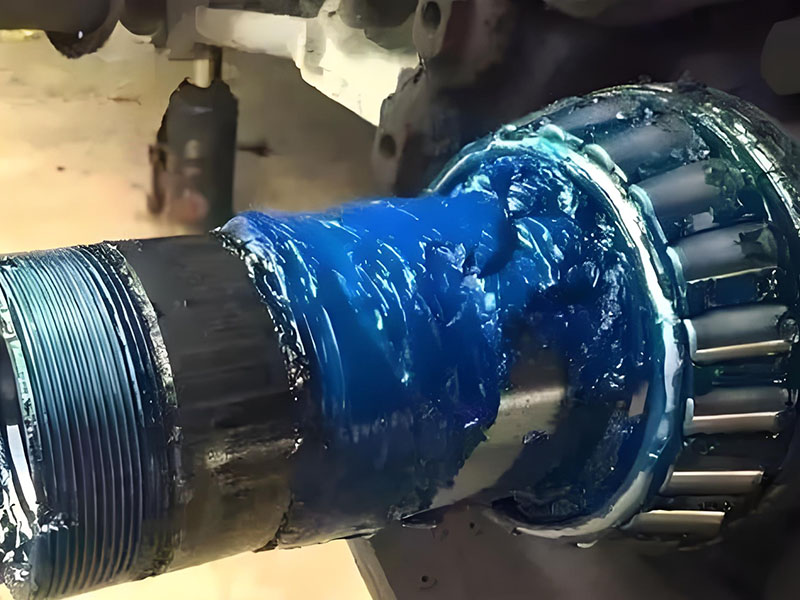
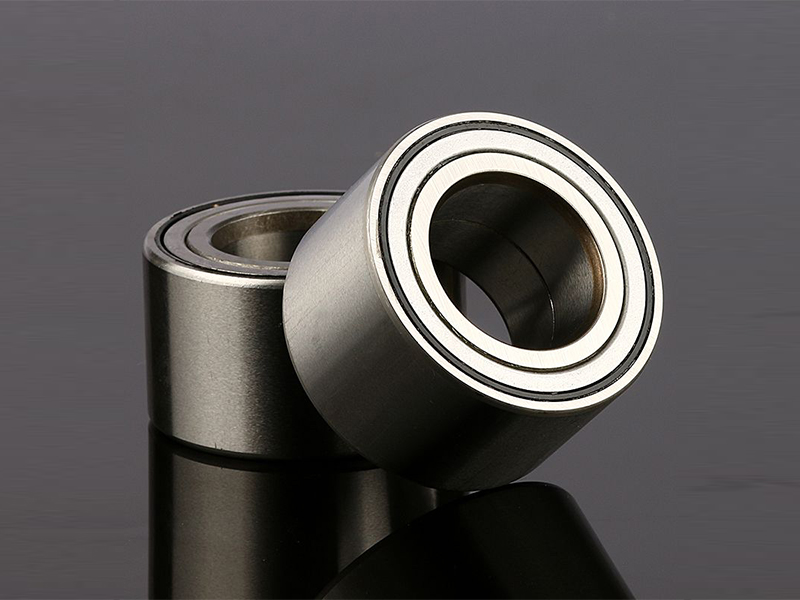
A wheel bearing—also known as a wheel hub bearing or hub assembly—is a set of steel balls (or tapered rollers) held together by a metal ring called a “race.” The assembly is enclosed in a sealed unit filled with specialized grease and bolts directly to the steering knuckle or spindle at the center of each wheel hub.
The wheel hub bearing serves three critical functions:
- It provides a stable mounting point between the wheel and the suspension.
- It allows the wheel to rotate with minimal friction.
- It supports the full weight of the vehicle.
Beyond simply supporting static weight, the bearing must also withstand dynamic loads from every bump, turn, brake application, and acceleration event. On a typical 3,400‑lb passenger vehicle, each front wheel bearing supports roughly 850 lb of static weight—plus additional forces from cornering and braking that can multiply that load several times over.
Typical lifespan: Under normal driving conditions, sealed wheel bearings last approximately 85,000 to 100,000 miles (about 136,000 to 160,000 kilometers). Some high‑quality hub assemblies can reach 150,000 miles or more with gentle use and favorable road conditions. There is no set replacement interval—bearings are replaced when symptoms appear.
Types of wheel bearings by generation:
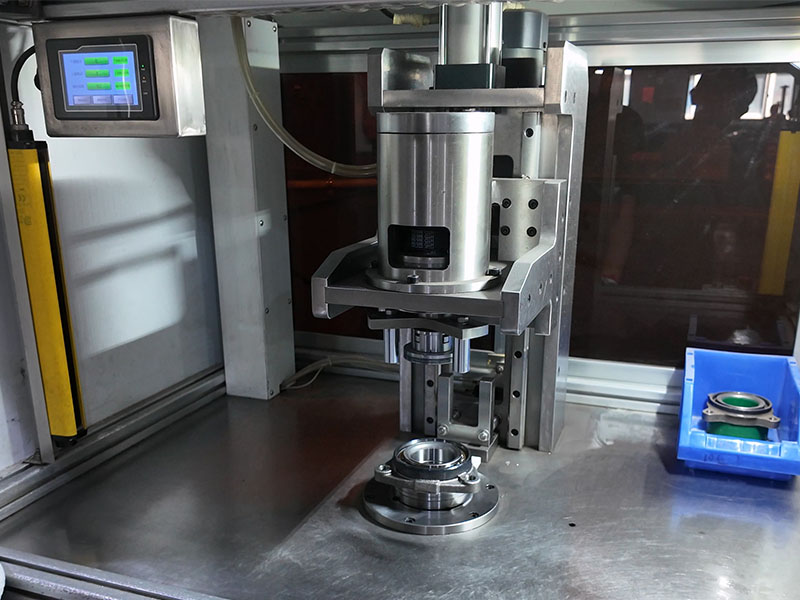
- Gen 1 – Press‑in wheel bearing – Installed by pressing the bearing into the steering knuckle or spindle using a hydraulic press or specialized tool. Typically found on older vehicles and some heavy‑duty applications. May be serviceable (clean and repack) or sealed depending on the specific design. Requires careful handling during installation to avoid misalignment or seal damage.
- Gen 2 – Bolt‑on wheel hub assembly – An integrated unit that combines the bearing, hub, and flange. Bolts directly to the steering knuckle using 3 or 4 mounting bolts—no pressing required. Used on many modern vehicles.
- Gen 3 – Bolt‑on wheel hub assembly with integrated sensor – Similar to Gen 2 but with the wheel speed sensor and ABS tone ring built into the hub assembly. Used on the vast majority of late‑model passenger cars, SUVs, and light trucks. When a Gen 2 or Gen 3 unit fails, the entire hub assembly is typically replaced as a complete unit rather than disassembled for individual bearing replacement, as the components are factory‑set to precise tolerances and not designed for field servicing.
Why Do Wheel Bearings Fail? Common Causes
Cause 1: Impact Damage (Brinelling)
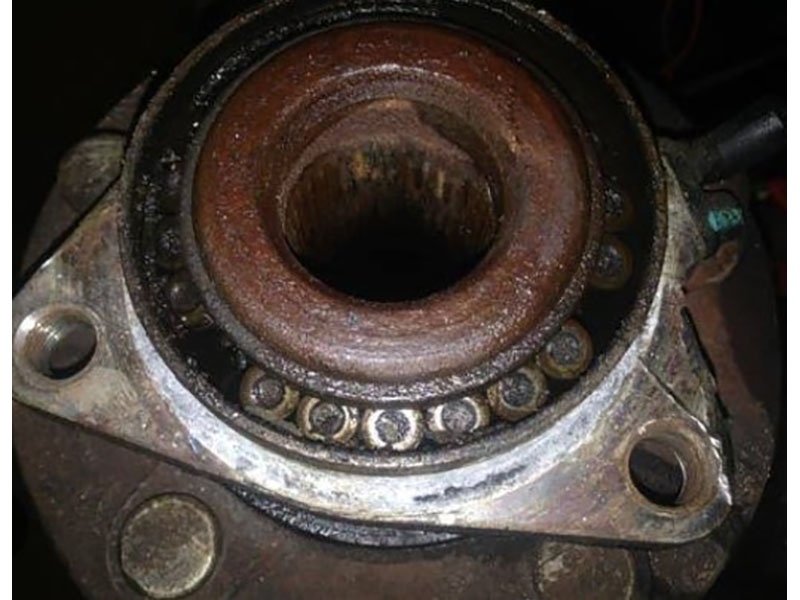
Impact is the most common cause of wheel bearing failure. When you drive over a pothole, hit a curb, or strike road debris, the impact force transfers through the tire and wheel directly to the bearing’s rolling elements and races.
If the impact force exceeds the hardness limit of the bearing material, it leaves a permanent dent or indentation on the bearing surfaces. This is called Brinelling—a term derived from the Brinell hardness test. The dent creates a localized stress concentration that disrupts the smooth rolling action of the hub bearing.
The Brinell mark may not cause immediate noise. You might drive 1,000 miles or more before the bearing starts to growl. But as the dented surfaces continue to rotate under load, the damage progressively spreads across the races and rolling elements. What starts as a single indentation eventually becomes widespread surface damage, and the wheel bearing fails.
Impact force that is severe enough can also change the bearing preload—the internal clearance that determines how the hub assembly handles load. This alteration causes additional damage and contributes to noise.
SAE International research confirms that Brinell damage from curb and pothole impacts is one of the two largest failure modes for wheel bearings, alongside contamination. The same research shows that vehicles equipped with larger diameter wheels have higher rates of Brinell‑related warranty claims.
Cause 2: Contamination from Water, Dirt, and Road Salt
Wheel hub bearings are sealed for good reason. The precision‑ground surfaces and tight internal clearances inside a hub bearing cannot tolerate abrasive particles or corrosion.
If water, mud, dust, or road salt gets past the seal, it can ruin a wheel bearing within a few thousand miles or less. Road salt is particularly destructive—in regions that use salt on winter roads, the corrosive effect on wheel bearings is “almost as bad as ocean water,” rapidly degrading the bearing surfaces.
Contaminants enter the hub assembly through several pathways:
- Worn or cracked seals that no longer provide a tight barrier.
- Driving through deep water, which can force water past the seals under pressure.
- Seal damage that occurs during installation, creating an immediate entry point for contaminants.
Once contaminants mix with the grease, they circulate continuously between the races and rolling elements. Abrasive particles wear down the precision surfaces. Corrosive agents like salt and water attack the metallurgy, creating pitting and rust. The result is accelerated wear that leads to premature wheel bearing failure.
Cause 3: Improper Installation
Poor installation is a leading cause of premature wheel bearing failure. Even a high‑quality hub assembly will fail early if installed incorrectly. Common installation errors include:
Incorrect torque on the axle nut. The center axle nut sets the bearing preload—the internal clearance that determines how the bearing handles radial and axial loads. If the torque is too low, the bearing develops excessive play, leading to impact loading and accelerated wear. If the torque is too high, preload becomes excessive, causing overheating and premature wear. A variance of just 10 ft‑lb can mean the difference between long bearing life and failure within a few thousand miles.
Using impact wrenches for installation. Impact wrenches can damage axle nut threads and shock the CV joints. More importantly, they make it impossible to achieve precise torque. Always use a calibrated torque wrench and follow the vehicle manufacturer’s specification.
Using a hammer or improper tools during installation. Striking the hub assembly or bearing during installation can deform the races or damage the seals. Mounting force must be applied correctly, never through the rolling elements themselves.
Reusing old hardware. Old axle nuts, bolts, and seals should always be replaced with new ones. Reused seals cannot provide reliable protection and typically leak, leading to contamination and lubricant loss. Reused axle nuts may not hold proper torque.
Damage to wheel speed sensor wiring. During installation, the wheel speed sensor cable—which is often integrated into the hub assembly—can be damaged. This triggers ABS fault codes and requires additional repair. (See Symptom 5 below for more on ABS-related symptoms.)
Cause 4: Wheel Alignment and Suspension Issues
Poor wheel alignment forces the vehicle to pull consistently to one side. The driver must constantly correct the steering to maintain a straight path. This keeps the wheel hub bearing under continuous side load, accelerating wear significantly.
Worn suspension components compound the problem. Ball joints, tie rod ends, and control arm bushings that are worn or failing allow abnormal wheel movement. This movement transfers additional loads to the wheel bearing, forcing it to work harder with every bump and turn. Suspension wear also allows vibrations to transmit directly to the hub bearing, contributing to fatigue damage.
Cause 5: Other Contributing Factors
Several additional factors can shorten wheel bearing life:
- Low tire pressure or unbalanced tires change the vehicle’s weight distribution and force the bearing to handle uneven loads that it was not designed for.
- Oversized wheels and tires add extra weight and leverage. The increased unsprung mass and longer lever arm multiply the forces acting on the wheel bearing.
- Brake heat transfers through the hub and can break down bearing grease over time, reducing its lubricating properties.
- Transient electrical current from poor vehicle grounding can cause microscopic electrical arcing inside the wheel bearing. This phenomenon, known as electrical discharge machining (EDM), creates tiny pits on the bearing surfaces and accelerates wear. This is increasingly noted in hybrid and electric vehicles where high‑voltage systems create more opportunities for stray currents.
- Lubrication failure from insufficient grease, degraded grease, or grease that has been contaminated.
- Electric vehicle weight adds additional load to wheel bearings. EV batteries can add 1,000 lb or more to vehicle weight, increasing bearing stress.
How to Tell If a Wheel Bearing Is Damaged? Common Symptoms.
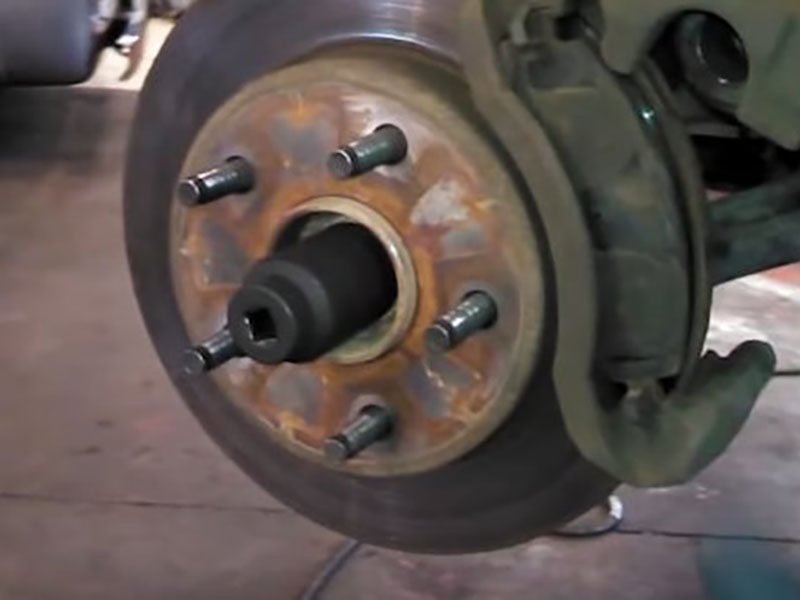
According to a Tire Review survey, 51% of bad wheel bearings are identified because a customer complains about noise, 24% are found during a brake job, and 19% are discovered during an alignment. Here’s what to look for.
Symptom 1: Unusual Noise
Noise is the most common symptom of a failing wheel hub bearing. As bearing surfaces become damaged, they produce distinctive sounds:
- Roaring, rumbling, or growling – This noise increases with vehicle speed and is often most noticeable at highway speeds above 50 mph.
- Cyclic chirping, squealing, or growling – These sounds change in proportion to vehicle speed and may disappear at certain speeds.
- Grinding – A grinding noise indicates severe wear where metal components are making direct contact. This is a late‑stage symptom that requires immediate attention.
- Clicking during acceleration – A clicking sound that occurs during acceleration can also indicate wheel bearing wear.
The key diagnostic clue for wheel bearing noise: the sound changes when you turn the steering wheel. This is the most reliable way to distinguish wheel hub bearing noise from other vehicle noises.
Noise location technique:
- If the noise gets louder when you turn left, the right‑side wheel bearing is likely failing.
- If the noise gets louder when you turn right, the left‑side wheel bearing is likely failing.
- This happens because turning shifts the vehicle’s weight to the outside of the turn, loading the opposite bearing and making its noise more pronounced.
Importantly, a change in noise during turns is a critical distinction between wheel bearing failure and tire noise—tire noise does not typically change with steering input.
Symptom 2: Vibration and Shaking
A failing wheel hub bearing can cause noticeable vibration and movement:
- Steering wheel vibration that changes with vehicle speed or during turns.
- Excessive steering wheel looseness at low speeds.
- “Death wobble” – violent shaking that worsens as vehicle speed increases.
- Wheel wobble or shimmy that occurs at specific speeds or under certain driving conditions, such as light braking or gentle turns.
These vibration symptoms often appear alongside noise but can occur on their own, especially in early‑stage failures where surface damage has not yet produced audible sounds.
Symptom 3: Steering and Handling Issues
As wheel bearing wear progresses, it affects steering and vehicle control:
- Reduced steering response – The steering feels loose, vague, or difficult to control.
- Vehicle pulling to one side – The vehicle drifts consistently in one direction, requiring constant steering correction.
- Abnormal side pull during braking – The vehicle pulls to one side when brakes are applied, which can be mistaken for brake problems.
These symptoms indicate that wheel hub bearing looseness is affecting wheel positioning and alignment.
Symptom 4: Tire and Brake Abnormalities
Wheel bearing wear can cause secondary damage to other components:
- Uneven tire wear – Bearing looseness allows the wheel to move slightly, creating abnormal tire wear patterns.
- Uneven brake disc and pad wear – Runout in the bearing flange transfers to the brake rotor, causing uneven pad contact and premature brake wear.
- Wheel hub overheating – A wheel bearing generating excessive friction will make the wheel hub too hot to touch after driving. This is a sign of severe wear or lubrication failure.
Symptom 5: ABS System Fault
Many sealed hub assemblies integrate the wheel speed sensor for the anti‑lock braking system (ABS). When the wheel hub bearing fails or the sensor wiring is damaged—which commonly occurs during bearing failure or improper installation—several things happen:
- The ABS warning light illuminates on the dashboard.
- The ABS system may be disabled until the hub assembly is replaced.
- Wheel speed sensor cable damage is a common cause of ABS fault codes.
How to Diagnose a Failing Wheel Bearing
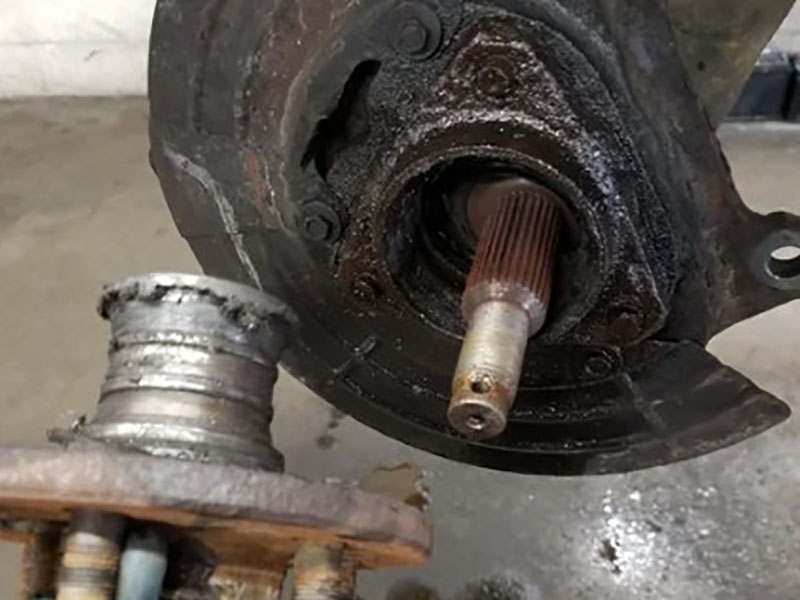
Diagnosis 1: Customer Interview
Before performing any physical inspection, gather information from the driver:
- Ask what the noise sounds like—is it a growl, rumble, squeal, or click?
- When does the noise occur? Does it happen at all speeds or only above a certain speed?
- Did the noise start suddenly or gradually?
- Has the vehicle recently hit a pothole, curb, or other road hazard?
This information helps narrow down the diagnosis and distinguishes wheel bearing issues from other problems.
Diagnosis 2: Road Test
A road test is one of the most effective diagnostic methods for wheel hub bearing issues:
- Accelerate the vehicle to 50 mph or higher on a straight, safe road.
- Listen carefully for a growling or rumbling noise that increases with speed.
- Perform gentle left and right steering turns while listening for changes in the noise.
- Record which side produces increased noise during turns—this points to the opposite wheel bearing.
- At low speeds, gently rock the steering wheel left and right. This shifts vehicle weight and increases load on the wheel bearings, making a failing bearing’s noise more apparent.
- Try to determine whether the noise comes from the front axle or rear axle. This helps isolate which wheel hub bearing to inspect first.
Diagnosis 3: Wheel Play Test (Physical Inspection)
A physical play test can identify wheel bearings that have developed significant wear:
- Safely lift the vehicle and support it on jack stands.
- Grip the tire firmly at the 12 o’clock and 6 o’clock positions (top and bottom).
- Push and pull firmly with alternating force, checking for any noticeable movement or “play.”
If you detect play, the wheel bearing is severely worn and requires replacement. Important note: Sealed hub assemblies should have no perceptible play whatsoever.
However, this test only detects wheel hub bearings that are already significantly worn. Some sealed hub units can fail with no detectable play at all. If the wheel feels tight but noise persists, proceed to more precise diagnostic methods.
For accurate measurement, use a dial indicator to measure wheel bearing play precisely. Good wheel bearings typically show no more than 0.005 inch (0.13 mm) of play when measured with a dial indicator against the hub flange.
Diagnosis 4: Hub Rotation Check
This test checks for smooth operation and abnormal resistance in the hub assembly:
- Remove the tire and brake caliper (slide out one caliper pin and tilt the caliper so the brake pads do not drag on the rotor).
- Rotate the hub by hand, feeling for any abnormal resistance, roughness, or vibration.
- Compare the feel with the hub on the opposite side of the vehicle. A healthy wheel bearing rotates smoothly; a failing wheel bearing feels rough or notchy.
Diagnosis 5: Runout Measurement—Precise Diagnosis
For the most accurate diagnosis of a wheel hub bearing, use a dial indicator to measure hub flange runout:
- Mount the dial indicator with its probe against the brake rotor mounting surface or the hub flange.
- Zero the indicator, then slowly rotate the hub assembly through a full revolution.
- Read the total runout—the maximum variation in the indicator reading.
Diagnostic thresholds:
- Runout exceeding 0.004 inch (0.10 mm) indicates the wheel bearing has failed.
- Most manufacturers specify an allowable flange runout of zero to 0.0015 inch (0.00 to 0.04 mm). Anything beyond this range affects brake rotor performance and indicates wheel bearing wear.
The practical impact of runout is significant: a flange with 0.001 inch of runout can produce 0.003 inch of rotor runout when the brake rotor is mounted. Over 6,000 miles, that high spot passes the brake pads more than 5 million times, causing uneven pad wear and brake pedal pulsation.
Diagnosis 6: Distinguishing Bearing Noise from Other Component Noise
| Noise Source | Characteristics |
|---|---|
| Wheel bearing | Noise changes during turns; noise is proportional to vehicle speed; growling, rumbling, or roaring sound |
| Tire noise | Does not change during turns; consistent hum that may vary with road surface; speed‑related but not turn‑sensitive |
| Brake problems | Noise occurs only when brakes are applied; noise stops when brake pedal is lightly pressed |
| CV joint | Clicking or popping sounds during sharp turns; does not change with vehicle speed in a straight line |
| Suspension components | Can produce periodic noise that transmits through the body; often related to bumps rather than speed |
Additional diagnostic steps:
- Inspect tires for uneven wear, cupping, or feathering—these can indicate wheel bearing or alignment issues.
- Check CV joint boots for tearing or leakage.
- Use a wired or wireless microphone/stethoscope attached to the steering knuckle to compare noise levels across wheel bearings.
Diagnosis 7: Visual Inspection
A careful visual inspection can reveal telltale signs of wheel hub bearing trouble:
- Check for seal damage—cracked, torn, or deteriorated seals that allow contaminants to enter the hub assembly.
- Look for grease streaks radiating outward from the seal—this indicates seal failure and lubricant loss from the wheel bearing.
- Check the axle nut for roughness or visible wear.
- Inspect the hub flange for distortion or bending.
- Look for rust or corrosion on the hub and surrounding components.
When to Replace and What to Know
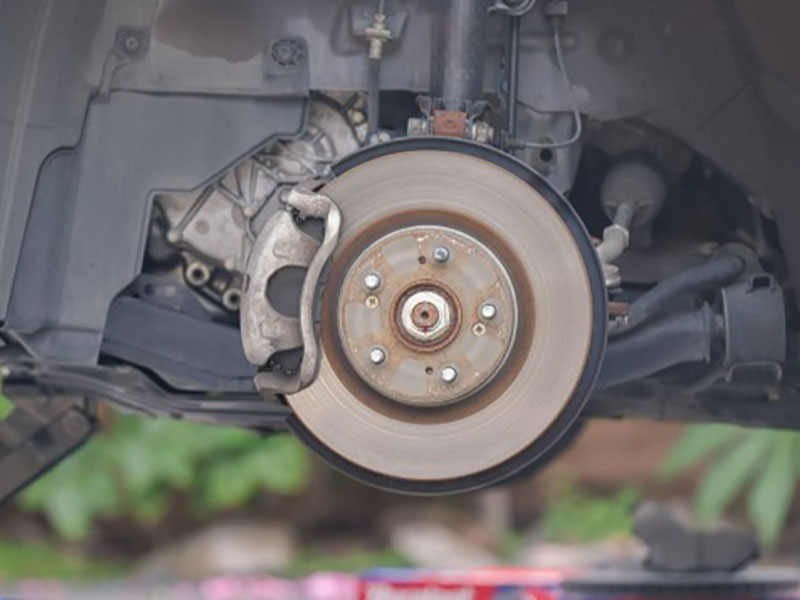
- Sealed hub assemblies cannot be repaired. When a sealed wheel bearing fails, the entire hub assembly must be replaced as a complete unit.
- Always use new axle nuts. Replace the axle nut every time you remove it. Reusing old nuts risks losing proper torque and preload, which leads to premature wheel bearing failure.
- Use a torque wrench, never an impact wrench. As noted in the installation section above, proper torque is essential. Follow the vehicle manufacturer’s specification precisely. A variance of just 10 ft‑lb can significantly shorten wheel bearing life.
- Replace in pairs when possible. While not strictly mandatory, replacing wheel bearings on both sides of an axle is recommended. If one wheel hub bearing has failed, the other side has experienced similar operating conditions and loads, and it may fail soon after. Replacing both sides saves labor in the long run.
- Inspect the bearing bore before installation. Check the hub bore for debris, corrosion, or distortion that could prevent proper seating. Any abnormality in the bore will cause the new wheel bearing to fail prematurely.
- Inspect and replace worn hubs if necessary. Worn or damaged hubs should be replaced when installing new wheel bearings. Reusing a damaged hub can cause the new bearing to fail quickly.
- Check and fix electrical grounding issues. Poor electrical grounding can cause transient current damage to new hub assemblies. In hybrid and electric vehicles, this is particularly important—check and repair ground connections during wheel bearing replacement.
- Regular preventive measures: Maintain proper tire pressure, keep wheels balanced, avoid driving through deep water when possible, and have wheel alignment checked regularly. For serviceable wheel bearings, follow the manufacturer’s recommended schedule for cleaning and repacking.
Conclusion
Wheel bearings are critical safety components that carry the full weight of your vehicle while enduring constant road impacts, heat, and contamination. Most sealed wheel bearings last 85,000 to 100,000 miles, but failures can happen much sooner due to pothole impacts, contaminated grease, improper installation, or suspension issues.
Key takeaways:
- Listen for noise—a growl, rumble, or roar that changes with speed and turning is the earliest and most common warning sign of wheel bearing trouble.
- Check for play at the 12 and 6 o’clock positions, but don’t rely on this test alone—some wheel hub bearings fail with no detectable play.
- Measure runout with a dial indicator for precise diagnosis. Runout exceeding 0.004 inch (0.10 mm) means the wheel bearing has failed.
- Install correctly—use new hardware, follow manufacturer torque specifications, and never use an impact wrench on the axle nut.
- Consider replacing in pairs to avoid a second wheel bearing failure shortly after the first.
If you notice any of these symptoms, have the wheel bearing inspected promptly. A failed wheel bearing can cause wheel separation, loss of steering control, and serious accidents. Early diagnosis and proper replacement keep your vehicle safe and your repair work reliable.
FAQs
Q1: How long do wheel bearings typically last?
Most sealed wheel bearings last 85,000 to 100,000 miles (about 136,000 to 160,000 kilometers) under normal driving conditions. Some can reach 150,000 miles or more with gentle use and good road conditions. There is no set replacement interval—replace wheel hub bearings when symptoms appear.
Q2: Can I drive with a bad wheel bearing?
Not recommended. A failing wheel bearing can seize, overheat, or cause the wheel to separate from the vehicle. If you notice severe symptoms like “death wobble,” you should stop driving immediately. For early‑stage noise, drive carefully to a repair facility—but don’t delay replacement.
Q3: How do I tell which wheel bearing is bad?
Perform a road test. Drive straight at highway speed, then gently turn left and right. If the noise gets louder when turning left, the right‑side wheel bearing is likely failing. If it gets louder turning right, suspect the left side. You can also check each wheel for play using the 12 and 6 o’clock test.
Q4: Can a bad wheel bearing trigger the ABS warning light?
Yes. Many sealed hub assemblies contain an integrated wheel speed sensor. If the wheel hub bearing fails or the sensor wiring is damaged during failure or installation, the ABS warning light will come on and the system may be disabled.
Q5: Can I just replace the bearing, or do I need the whole hub assembly?
On most modern vehicles, the wheel bearing is part of a sealed, unitized hub assembly that cannot be disassembled or serviced. You must replace the entire hub assembly. On older vehicles with serviceable bearings, you may be able to replace just the bearing and repack it with grease.
Q6: Should I replace wheel bearings in pairs?
It’s recommended but not mandatory. If one wheel hub bearing on an axle has failed, the other side has been subjected to similar loads and conditions. Replacing both sides reduces the risk of a second wheel bearing failure soon after and saves labor costs in the long run.
Q7: How do I distinguish bearing noise from tire noise?
Wheel bearing noise changes when you turn the steering wheel—it gets louder on the opposite side of the turn. Tire noise typically does not change with steering input. Additionally, check the tires for uneven wear; if they show cupping or feathering, tire noise is more likely.
Q8: What is Brinelling, and why does it matter?
Brinelling is a permanent dent or indentation on wheel bearing surfaces caused by impact forces that exceed the material’s hardness limit. It’s typically caused by hitting potholes or curbs. The damage may not make noise immediately but will progress over time as the dented surfaces continue to rotate under load, eventually leading to wheel bearing failure.
Q9: Why is axle nut torque so important?
The axle nut sets the wheel bearing preload—the internal clearance that determines how the hub assembly handles radial and axial loads. Too little torque allows excessive play, causing impact damage and accelerated wear. Too much torque creates excessive preload, causing overheating and premature wear. A variance of just 10 ft‑lb can significantly shorten wheel bearing life.
Q10: What are the earliest warning signs of bearing failure?
The earliest symptom is usually a roaring, rumbling, or growling noise that increases with vehicle speed. This may be followed by steering wheel vibration, loose steering feel, and vehicle pulling. Note: some wheel bearing failures may never produce noise and only show up as vibration or brake system problems.
Q11: How do I check a wheel bearing with a dial indicator?
Mount the dial indicator with its probe against the brake rotor mounting surface or hub flange. Zero the indicator, then rotate the hub assembly through one full revolution and read the total runout. Good wheel bearings show runout of 0.0015 inch or less. If runout exceeds 0.004 inch (0.10 mm), the wheel bearing has failed. For play measurement, good wheel bearings typically show no more than 0.005 inch of play.
Q12: Why does a newly replaced bearing fail again quickly?
Common causes include: not replacing a worn hub, incorrect axle nut torque, reusing old axle nuts instead of installing new ones, poor electrical grounding causing transient current damage, or failing to inspect and replace related suspension components. Proper installation with new hardware and correct torque prevents most repeat wheel bearing failures.