Quick Answer: What does a wheel bearing do?
A wheel bearing has three jobs: it lets the wheel spin with very little friction, it supports the vehicle’s weight plus extra forces from braking, cornering, and bumps, and it keeps the wheel centered so the vehicle tracks straight and tires wear evenly. Without a working wheel bearing, the wheel can’t rotate smoothly, carry loads properly, or stay aligned.
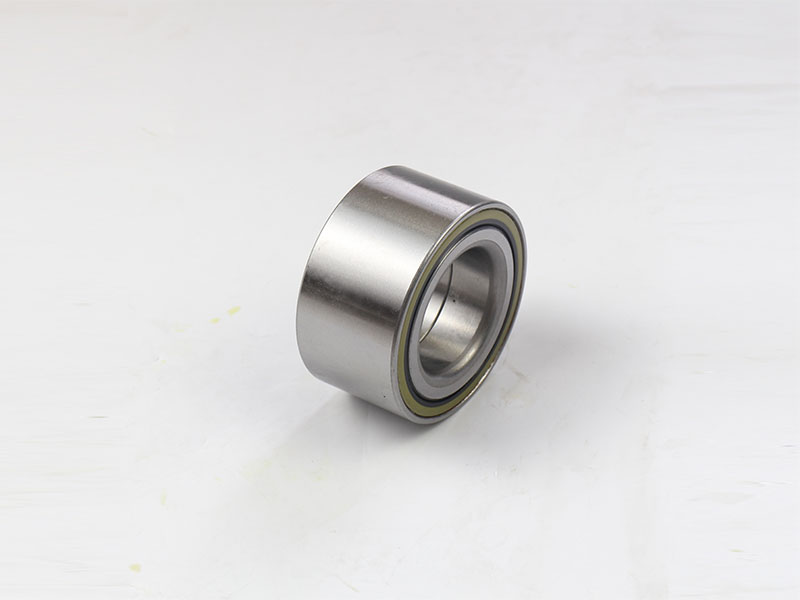
A wheel bearing is a mechanical component that allows a wheel to rotate freely, support the vehicle’s weight, and maintain precise alignment. It is installed inside the wheel hub, between the axle (or steering knuckle) and the wheel. Although often unnoticed, the wheel bearing performs three essential tasks that directly affect how a vehicle rolls, steers, and carries weight.
The Primary Functions of a Wheel Bearing
1. Enabling Smooth Wheel Rotation
A wheel bearing converts sliding friction into rolling friction. Inside the bearing, steel balls or tapered rollers move between two metal rings (inner and outer races). This design reduces rotational resistance to a minimum. When the wheel turns, the bearing ensures that rotation is smooth, quiet, and energy‑efficient. Without this function, metal‑to‑metal contact would generate excessive heat, increase fuel consumption, and rapidly damage surrounding components. Whether the vehicle is cruising on a highway or rolling through city traffic, the wheel bearing allows each wheel to spin freely with very little effort.
2. Supporting Vehicle Weight and Dynamic Loads
Each wheel bearing supports approximately one‑quarter of the vehicle’s static weight. However, in real driving conditions, loads are rarely static. A wheel bearing must also handle:
- Radial loads – forces acting perpendicular to the axle (e.g., vehicle weight, impacts from road irregularities).
- Axial loads – forces acting parallel to the axle (e.g., cornering forces, braking thrust, acceleration torque).
Front wheel bearings experience particularly complex load patterns because they must accommodate steering inputs while carrying weight and transmitting driving or braking forces. Rear wheel bearings face more constant radial loads but are often more exposed to water, salt, and debris from the road surface. The bearing’s internal geometry – especially the contact angle between rolling elements and races – determines how efficiently it can manage these combined loads.
3. Maintaining Wheel Stability and Alignment
A wheel bearing does more than support weight and rotation. It also precisely guides the wheel’s rotational axis. By keeping the hub perfectly centered relative to the spindle or steering knuckle, the bearing prevents unwanted wheel movement (play) during driving. This stability directly influences:
- Steering response – loose bearings cause vague or delayed steering feel.
- Tire wear patterns – a stable bearing keeps the tire tread evenly contacting the road.
- Straight‑line tracking – any excess clearance can cause the vehicle to pull or wander.
In short, the wheel bearing acts as a positioning reference that preserves wheel alignment angles such as camber and toe under varying loads.
How Different Bearing Designs Affect Performance
Not all wheel bearings perform identically. Two common designs are ball bearings and tapered roller bearings.
- Ball bearings – use steel balls as rolling elements. They generate very low friction and are well suited for high‑speed, lighter‑load applications. Many non‑driven rear wheels on passenger cars use ball‑type hub units.
- Tapered roller bearings – use conical rollers and races. They are designed to handle high radial and axial loads simultaneously. Tapered roller bearings are frequently found on driven wheels (front or rear) and on heavier vehicles where load capacity is critical.
The choice of bearing type directly determines how well a wheel bearing can perform its three core functions under specific vehicle conditions.
Front vs. Rear Wheel Bearings – Functional Differences
Although all wheel bearings share the same basic purpose, front and rear bearings operate under different mechanical demands.
- They must support vehicle weight, enable wheel rotation, and accommodate steering angles.
- Steering imposes constantly changing axial loads as the wheel turns left or right.
- In front‑wheel‑drive vehicles, they also transmit driving torque.
- Their primary duties are rotation and weight support.
- Steering‑induced axial loads are minimal (except on rear‑steer systems).
- However, rear bearings are often more exposed to road contaminants like salt water, mud, and gravel because they lack the heat and protection of the engine bay.
These functional differences influence how engineers select bearing specifications for each axle position.
Modern Wheel Bearings and Integrated Functions
Many contemporary vehicles use sealed hub unit bearings that incorporate additional features beyond the traditional mechanical tasks. One common integration is the magnetic encoder ring. This ring is built into the bearing seal and works with an ABS (anti‑lock braking system) wheel speed sensor. As the wheel rotates, the encoder ring generates a variable magnetic field. The sensor reads this signal to determine individual wheel speed. While the encoder ring does not change the bearing’s load‑carrying or rotation function, it makes the bearing a multi‑role component: it still supports the wheel, but now it also supplies essential data for ABS, traction control, and electronic stability programs. Precision rotation of the bearing directly contributes to accurate speed signals – any deviation in rotational smoothness would affect signal quality.
Conclusion
A wheel bearing does three fundamental jobs: it enables smooth wheel rotation, it supports the vehicle’s weight together with dynamic driving loads, and it maintains precise wheel alignment. These functions work together to ensure that every wheel rolls efficiently, stays stable under load, and keeps the tire correctly positioned on the road. Modern designs add integrated speed‑sensing capabilities, but the core mechanical purpose remains unchanged. For automotive engineers, fleet managers, and repair specialists, understanding exactly what a wheel bearing does is the first step toward selecting the right component for each vehicle application.
Frequently Asked Questions (FAQs)
Q: How does a wheel bearing support both radial and axial loads at the same time?
A: The internal geometry of the bearing – specifically the contact angle between the rolling elements and the raceways – allows it to resolve forces from different directions. Tapered roller bearings are especially effective at sharing radial and axial loads because their conical shape naturally distributes forces along the roller’s surface.
Q: Why do front wheel bearings often require different specifications than rear bearings?
A: Front bearings must handle steering‑induced axial loads in addition to radial loads and (on driven axles) torque transmission. Rear bearings primarily manage radial loads, so their design can sometimes prioritise lower friction or greater contamination resistance, depending on the vehicle layout.
Q: What is the relationship between a wheel bearing and the ABS sensor?
A: Modern wheel bearings often include a magnetic encoder ring that rotates with the hub. An external ABS sensor reads this ring to measure wheel speed. The bearing’s mechanical function (smooth, stable rotation) is essential for generating a clean, accurate speed signal.
Q: Can a wheel bearing’s function be affected by installation quality?
A: Yes. Even a correctly specified bearing will not perform its intended functions if installed improperly. Incorrect tightening torque, contamination during fitting, or damage to the sealing surfaces can compromise rotation smoothness, load distribution, and axial stability.
DUHUI Bearing supplies wheel bearings that meet these functional requirements for passenger cars and light trucks.