Quick Answer: To measure a U-joint, use a caliper. First, measure the bearing cap diameter. Then check the lock rings. If the rings are on the outside of the caps, measure the overall width directly across two opposite caps. If the rings are on the inside, measure the distance between the inner faces of the two opposite lock ring grooves, then add the thickness of two lock rings. Compare your numbers to standard series charts (e.g., 1310: 1.062″ cap, 3.219″ width).
Replacing a universal joint (U‑joint) without a part number is common in driveline repair. Accurate measurement allows you to identify the correct replacement by size alone. This guide explains how to recognize U‑joint types, take precise measurements, and use those dimensions to find a matching part.
The Types Of U‑Joints
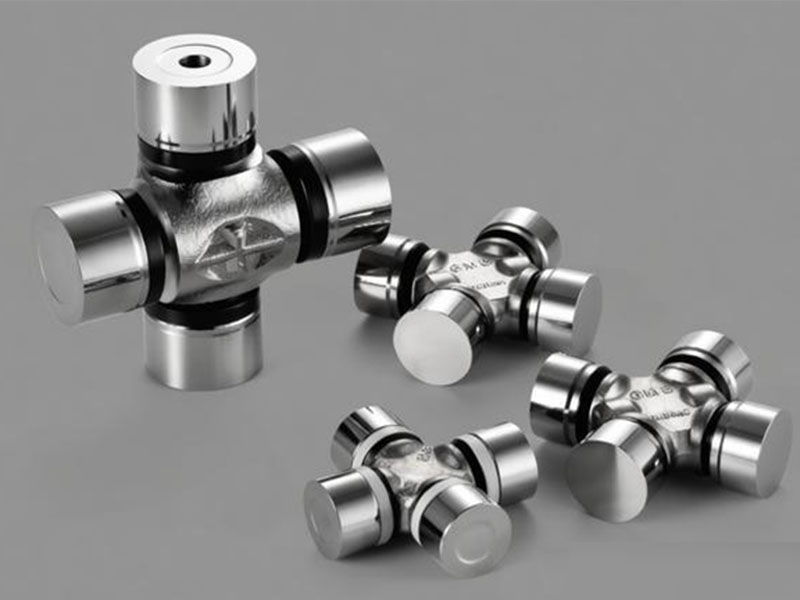
A U‑joint is classified by the style of its four bearing cups. There are three basic cup styles:
- Plain – smooth surface with no plates or grooves.
- Plate – a flat plate attached to the end of the cup.
- Grooved – a groove at the bottom of the cup, typically used with inside snap rings.
Combining these styles gives five common types: 4 Plain (all cups plain), 4 Plate (all cups with plates), 4 Grooved (all cups grooved), 2 Plain/2 Plate, and 2 Plain/2 Grooved. Identifying the type is the first step because different cup styles may require different measurement methods.
How To Measure Your U‑Joint
Tools You’ll Need
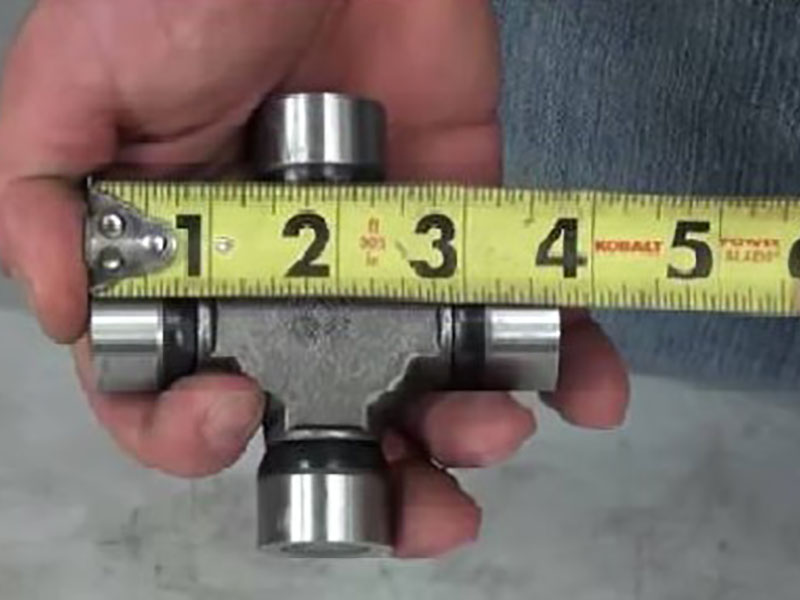
A digital caliper or micrometer is essential. It should measure to an accuracy of 0.001 inches (0.02 mm). A C‑clamp or a vise can help seat the bearing caps before measuring.
Key Measurements
Two dimensions are critical:
- Bearing cap diameter – Measure the outside diameter of a single cap. If the joint has two different cap sizes (common in some Ford applications), measure all four caps.
- U‑joint width – Measure the distance between the outer ends of two opposite bearing caps. Before measuring, ensure the caps are fully seated against the cross body. Use a C‑clamp to apply light pressure until the caps are snug.
Lock Ring Location Matters: Outside Lock Vs Inside Lock
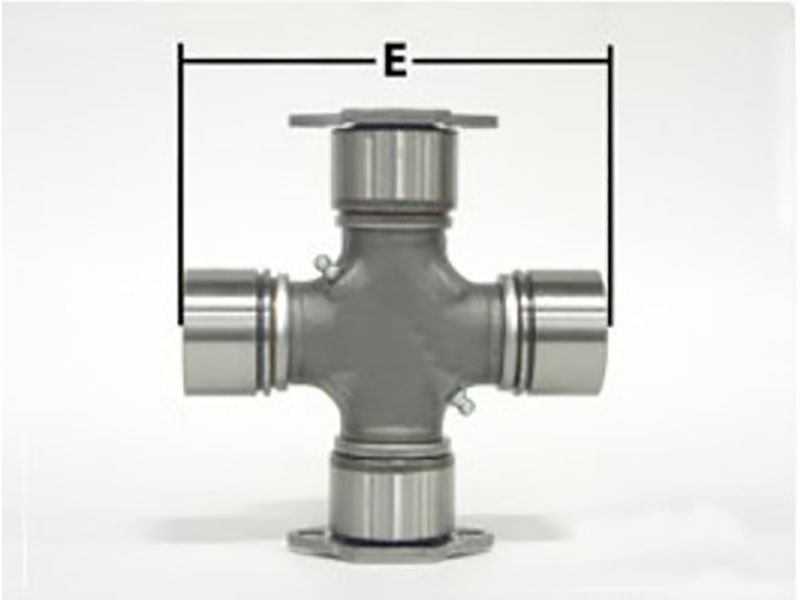
The position of the snap rings (lock rings) determines how you measure the width.
- Outside locks – The snap rings sit on the outer ends of the bearing caps. Measure directly across the outside faces of two opposite caps. This reading is the overall width.
- Inside locks – The snap rings sit inside the yoke ears, fitting into grooves near the inner ends of the caps. To measure:
- Measure the distance between the inner faces of the two opposite lock ring grooves.
- Measure the thickness of one lock ring and double it.
- Add the two lock ring thicknesses to the groove‑to‑groove distance. The sum is the effective overall width.
How To Measure The Yoke For U‑Joint Replacement
If the original U‑joint is missing or too worn to measure, measure the yoke directly.
- Yoke lug width – Measure the internal distance between the two yoke ears. This must equal the overall width of the replacement U‑joint.
- Retaining structure – Note whether the yoke uses a full‑round (captured cap) design or a half‑round (open ear) design. This affects how the U‑joint is secured.
Understanding U‑Joint Series and Common Sizes
Standard U‑joint sizes are classified by series numbers, such as 1310, 1330, and 1350. Each series corresponds to a specific cap diameter and overall width. Typically, a higher series number indicates a stronger joint capable of handling greater torque loads. The following table summarizes common series dimensions for outside lock U‑joints.
| Series | Cap Diameter (in) | Overall Width (in) | Typical Applications |
|---|---|---|---|
| 1310 | 1.062 | 3.219 | Small passenger cars; 1/2‑ton trucks |
| 1330 | 1.062 | 3.622 | Large passenger cars; medium 1/2‑ton trucks |
| 1350 | 1.188 | 3.622 | 3/4‑ton and 1‑ton trucks |
Data sourced from multiple driveline technical references.
When measuring a U‑joint, compare the recorded cap diameter and width to these series standards. If the measurements closely match a standard series, the joint can be reliably identified.
Conclusion
To measure a U‑joint by size, first identify the bearing cup style (plain, plate, or grooved) and the lock ring location (outside or inside). Use a caliper to measure the cap diameter and the overall width—directly for outside locks, or via groove distance plus lock ring thickness for inside locks. When the joint is unavailable, measure the yoke lug width instead. Accurate measurement ensures a correct replacement without relying on a part number.
FAQs
Q1: Can I find a replacement U‑joint by measurement alone without a part number?
Yes. Identify the cup style, measure the cap diameter and overall width accurately, then match the dimensions to series charts or manufacturer lookup tools.
Q2: What should I pay attention to when using a caliper?
Use a caliper with 0.001″ (0.02 mm) resolution. Clean the measuring surfaces and fully seat the caps before measuring. Take readings on a clean, flat surface and compare to standard size tables.
Q3: How do I determine if my joint is 4 Plain, 2 Plain/2 Grooved, etc.?
Inspect all four bearing cups:
– Four smooth cups → 4 Plain
– Four cups with plates → 4 Plate
– Four cups with grooves → 4 Grooved
– Two smooth, two grooved → 2 Plain/2 Grooved
– Two smooth, two with plates → 2 Plain/2 Plate
Q4: What is the difference between outside lock and inside lock, and how does that affect measurement?
– Outside lock: Snap rings on the outer ends – measure directly across opposite cap ends.
– Inside lock: Snap rings on the inner side – measure between lock ring grooves and add twice the lock ring thickness.
Q5: What do series numbers like 1310 and 1350 mean?
They are standard series codes. A 1310 joint typically has a 1.062″ cap diameter and 3.219″ width. A 1350 joint has a 1.188″ cap diameter and 3.622″ width. Higher numbers indicate higher strength.
Q6: What if my measured dimensions do not exactly match any standard series chart?
First verify the lock ring type and that the caps were fully seated. Small differences (a few thousandths of an inch) are normal due to manufacturer tolerances – use your measured values. Large differences may indicate a metric joint; use your measurements directly with a lookup tool.
Q7: When do I need to measure the yoke?
When you have no original U‑joint or the existing joint is too worn for accurate measurement. Measure the yoke lug width and confirm the retaining structure (full‑round or half‑round). These must match the replacement U‑joint’s dimensions.
Q8: Can the same U‑joint have different cap diameters on the same cross?
Yes. Some Ford applications use a U‑joint with two different cap diameters – one size for the two caps that fit into the driveshaft and another size for the two caps that fit into the pinion yoke. Always measure all four caps.