Bearing friction refers to the resistance that opposes relative motion between bearing components—rolling elements, raceways, cages, and seals—during operation. In rotating machinery, excessive bearing friction reduces mechanical efficiency, generates heat, accelerates wear, and shortens equipment service life. For engineers and maintenance professionals, understanding what causes bearing friction and how to control it is essential for reliable machine operation. This article examines how bearing friction varies by bearing type, identifies internal and external contributing factors, explores the consequences of abnormal friction, and presents practical solutions.
Friction Characteristics of Different Bearing Types
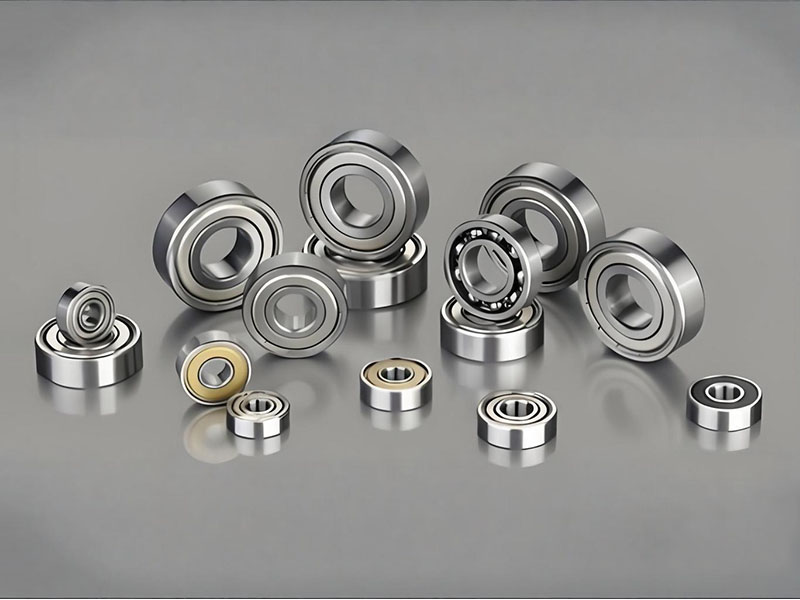
Not all bearings exhibit the same frictional behavior. Friction coefficients vary significantly across different bearing types due to differences in geometry, rolling element configuration, and contact mechanics. Rolling bearings are often called anti-friction bearings because they produce substantially lower friction torques than plain bearings, which typically have friction coefficients in the range of 0.01 to 0.02—and in some cases as high as 0.1 to 0.2.
For rolling bearings operating under normal conditions with proper lubrication, reference friction coefficient values have been established by bearing manufacturers. The following table presents typical friction coefficients from Koyo/JTEKT Corporation for various bearing types during stable operation:
| Bearing Type | Friction Coefficient μ |
|---|---|
| Deep groove ball bearing | 0.0010–0.0015 |
| Angular contact ball bearing | 0.0012–0.0020 |
| Self-aligning ball bearing | 0.0008–0.0012 |
| Cylindrical roller bearing | 0.0008–0.0012 |
| Tapered roller bearing | 0.0017–0.0025 |
| Spherical roller bearing | 0.0020–0.0025 |
| Thrust ball bearing | 0.0010–0.0015 |
| Needle roller and cage assembly | 0.0020–0.0030 |
For engineers requiring a practical estimate of bearing frictional torque, the following simplified formula is commonly used:
For deep groove ball bearings (radial load):
M = 0.5 × 0.0015 × P × d
For thrust ball bearings (axial load):
M = 0.5 × 0.0013 × P × d
Where:
M = friction torque (N·mm)
P = applied load (N)
d = bearing bore diameter (mm)
These values represent approximations for running bearings under optimal lubrication conditions. Starting friction torque can be significantly higher—up to twice the running values. More comprehensive models, such as the SKF friction calculation approach, divide total friction into four components: rolling friction (Mrr), sliding friction (Msl), seal friction (Mseal), and drag losses (Mdrag). Seal friction, in particular, can sometimes exceed the friction generated within the bearing itself when contact seals are employed.
Internal Factors Affecting Bearing Friction
Internal factors are characteristics inherent to the bearing—determined during manufacturing and assembly. Even before installation, these conditions establish a baseline friction level.
Machining inaccuracies represent a significant internal contributor. Imperfections in roundness, deviations in raceway geometry, and dimensional inconsistencies disrupt uniform load distribution across rolling elements, increasing localized contact stress and friction.
Surface roughness directly affects friction magnitude. Rougher surfaces exhibit higher contact resistance and greater potential for material transfer or adhesion. Smoother surfaces reduce the real area of contact and lower frictional forces.
Heat treatment quality influences material properties that govern friction. Improperly controlled heat treatment can lead to inadequate hardness, excessive deformation under load, or undesirable microstructural changes—all of which increase frictional resistance. Bearings from suppliers with certified heat treatment processes and full material traceability offer more consistent friction characteristics.
Material selection plays a fundamental role. Different materials have varying hardness, elasticity, and surface energy, affecting how much the bearing deforms elastically under load and, consequently, contact area and friction magnitude.
Incorrect assembly introduces friction problems not always apparent initially. Mistakes such as pressing on the incorrect ring, applying uneven force during mounting, or using improper tools cause misalignment, uneven load distribution, and localized stress concentrations that elevate friction. Approximately 16% of all bearing failures are attributable to incorrect installation practices.
External Factors Affecting Bearing Friction
External factors are conditions encountered during operation, including environmental influences, load characteristics, and maintenance practices.
Misalignment occurs when bearing rings are not properly positioned relative to each other or when shafts and housings are not aligned correctly. Even small misalignment angles create uneven load distribution across rolling elements, causing excessive force on localized areas, increasing friction, and accelerating wear. Misalignment can reduce bearing life by up to 90%, ranking it among the most frequent causes of premature failure in industrial applications.
Operating speed influences friction through multiple mechanisms. Higher rotational speeds increase heat generation, which can degrade lubricant properties and reduce film thickness. High-speed operation may also cause lubricant starvation, where centrifugal forces prevent proper lubricant replenishment in critical contact zones.
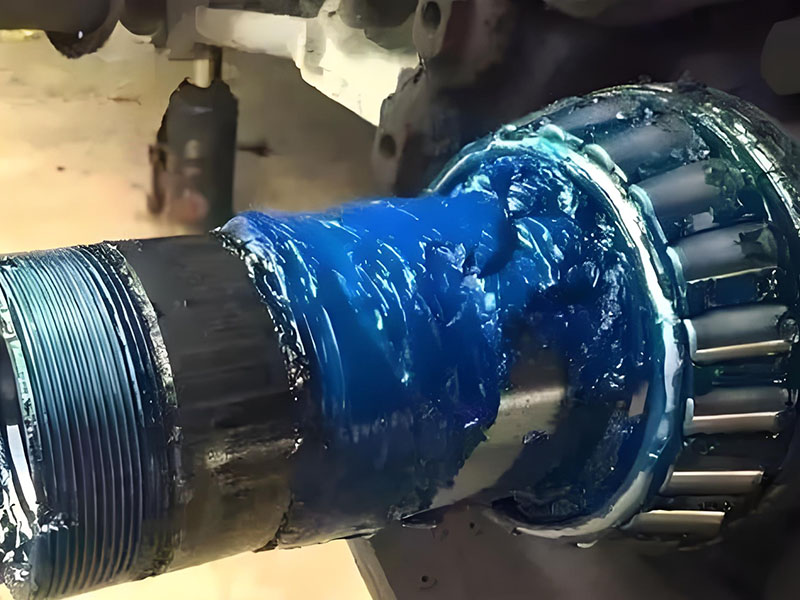
Lubrication issues constitute a primary external factor. Improper lubrication accounts for approximately 80% of bearing failures, making it the single most common cause. Common problems include:
- Insufficient lubrication: Metal-to-metal contact increases friction, generates heat, and causes rapid wear.
- Over-lubrication: Excessive grease causes churning, which generates destructive heat and can damage seals.
- Incorrect lubricant: Using a grease or oil with improper viscosity for the application’s load, speed, or temperature requirements.
- Contaminated lubricant: Water, dust, or solid particles act as abrasives, accelerating wear and increasing friction.
Wear and tear over extended operation gradually degrades bearing surfaces. As surfaces become rougher through normal wear, friction coefficients increase, creating a self-accelerating cycle of deterioration.
Overloading subjects bearings to forces exceeding design capacity. When load limits are exceeded, elastic deformation transitions to plastic deformation, contact stresses rise dramatically, and friction increases correspondingly.
Temperature affects internal clearances and lubricant properties. Higher temperatures can increase internal clearances through differential thermal expansion, altering contact geometry and potentially increasing friction. Elevated temperatures also accelerate lubricant degradation and reduce viscosity. In addition, high temperature can degrade elastomeric seals, increasing seal friction and overall bearing friction.
Contamination from dirt, dust, moisture, or process debris damages bearing surfaces. Contaminants act as third-body abrasives, increasing friction through abrasive wear mechanisms. Even microscopic particles can embed in softer materials, altering surface topography and creating new friction sources.
Consequences of Abnormal Bearing Friction
When bearing friction exceeds normal operating levels, the consequences affect entire mechanical systems.
Reduced mechanical efficiency is the most immediate consequence. Higher friction directly translates to greater mechanical losses, requiring more input power to achieve the same output. In electric motors, bearing defects increase energy losses, leading to increased heat dissipation in contact zones and measurable reductions in motor efficiency.
Increased energy consumption follows directly from reduced efficiency. When bearing friction rises, machinery draws more electrical power or fuel to maintain the same output. In automotive axle systems, bearings and their associated seals contribute approximately 50% of total axle power loss. These energy penalties accumulate over time, representing significant operational expenses.
Premature bearing failure represents the most severe consequence. Bearing failures account for between 40% and 90% of rotating machinery failures across industrial sectors. When bearings fail ahead of their calculated L10 life—the service hours that 90% of bearings should survive—the root cause is often excessive friction that accelerates wear and fatigue mechanisms.
Costly downtime and repairs result from all of the above. Unplanned downtime in energy sector applications has been estimated to cost hundreds of thousands of dollars per hour, with forced outages lasting several hours translating into millions in lost revenue. Beyond direct repair costs, bearing failures often cause collateral damage to adjacent components, increasing repair scope and duration.
Practical Solutions to Minimize Bearing Friction
Addressing bearing friction requires a systematic approach targeting both internal and external factors.
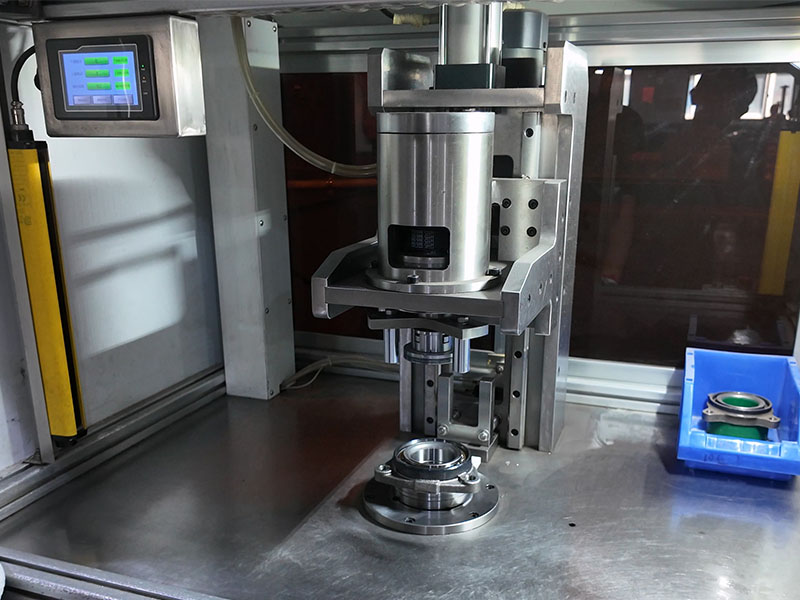
Precision manufacturing and surface finishing establish low-friction baseline characteristics. Advanced machining processes achieve tighter dimensional tolerances and smoother surface finishes, directly reducing contact resistance. For heat treatment–related issues, selecting bearing suppliers with certified heat treatment processes and material traceability ensures consistent hardness and microstructure. Post-processing treatments—such as honing, superfinishing, and specialized coatings—further reduce surface roughness and improve friction characteristics.
Proper lubrication selection and schedule is among the most effective friction control measures. Lubricants create a thin film between bearing surfaces, reducing metal-to-metal contact and lowering friction coefficients. Key considerations:
- Select lubricant type (grease, oil, or solid film) based on operating conditions: speed, load, and temperature.
- Maintain appropriate lubricant quantity—typically 10–30% of free space in grease-lubricated bearings.
- Adhere to manufacturer recommendations for relubrication intervals.
- Monitor lubricant condition for contamination or degradation.
Regular cleaning and condition monitoring prevent contamination accumulation and enable early detection of friction-related issues. Bearings operating in dusty or debris-laden environments require more frequent inspection. Condition monitoring techniques—including vibration analysis, thermography, and oil analysis—can detect increasing friction trends before they cause failure.
Appropriate bearing type and material selection matches bearing characteristics to application requirements. For high-speed applications, low-friction bearing designs such as deep groove ball bearings with optimized internal geometry are preferred. For high-load or contaminated environments, bearing materials with enhanced surface treatments—such as black oxide coatings—provide improved running-in properties and reduced friction, particularly under marginal lubrication conditions.
Correction of misalignment and load conditions addresses external mechanical factors. Proper shaft alignment using laser alignment tools or dial indicators is essential. During installation, pressing should be applied only to the ring with interference fit—inner ring for shaft fits, outer ring for housing fits. Alignment should be verified after installation.
Adoption of advanced bearing technologies offers additional friction reduction. Energy-efficient bearing designs can reduce frictional losses by 30% or more compared to standard bearings. Surface texturing, advanced coatings such as diamond-like carbon (DLC), and alternative materials including ceramics provide friction coefficients lower than conventional steel bearings. Ongoing research on superlubricity suggests friction coefficients approaching 0.01 may become achievable in practical applications through carefully matched material, surface, and lubricant combinations.
Conclusion
Bearing friction is inherent in all rotating machinery, but its magnitude can be effectively managed through informed design, manufacturing precision, and disciplined maintenance. The key relationships discussed in this article can be summarized as a logical framework:
Understand friction sources (bearing type + internal/external factors) → Assess their impact on efficiency, energy use, and life → Implement targeted countermeasures (lubrication, alignment, material selection, advanced technologies) → Monitor and maintain for continuous improvement.
Friction coefficients vary by bearing type: deep groove ball bearings typically exhibit μ values of 0.0010 to 0.0015, while thrust ball bearings range from 0.0010 to 0.0015 under normal conditions. Internal factors (machining quality, surface finish, heat treatment, assembly precision) set baseline friction levels. External factors (misalignment, speed, lubrication, overloading, temperature, contamination) can elevate friction beyond normal ranges. Consequences include reduced mechanical efficiency, increased energy consumption, premature failure, and costly downtime.
Effective friction management requires a systematic approach: precision manufacturing to minimize internal sources, proper lubrication selection and maintenance, regular cleaning and monitoring, appropriate bearing selection for each application, correction of misalignment and overload conditions, and consideration of advanced low-friction technologies. For engineers and maintenance professionals, controlling bearing friction directly translates to improved reliability, reduced operational costs, and extended equipment service life.
FAQs
Q1: What is bearing friction?
A1: Bearing friction is the resistance opposing relative motion between bearing components—rolling elements, raceways, cages, and seals—during operation. It determines power loss, heat generation, and wear rates in rotating machinery.
Q2: Which bearing type has the lowest friction?
A2: Among rolling bearings, self-aligning ball bearings and cylindrical roller bearings exhibit the lowest friction coefficients under normal operating conditions, typically 0.0008–0.0012. Deep groove ball bearings (0.0010–0.0015) and thrust ball bearings (0.0010–0.0015) also offer very low friction.
Q3: How does lubrication affect bearing friction?
A3: Lubrication reduces friction by creating a separating film between contacting surfaces. Under elasto-hydrodynamic lubrication (EHL) conditions, this film prevents metal-to-metal contact and lowers the effective friction coefficient. Insufficient lubrication increases friction; excessive lubrication increases churning losses and operating temperature.
Q4: Can bearing friction be completely eliminated?
A4: Complete elimination is not possible in practical mechanical systems. Rolling bearings operate with very low friction coefficients (as low as 0.0008 under optimal conditions). Ongoing research into superlubricity continues to lower practical limits, but zero friction remains unattainable due to fundamental contact mechanics.
Q5: How to measure bearing friction?
A5: Bearing friction is typically quantified through frictional torque measurement using specialized test rigs. In field applications, indirect indicators include operating temperature (higher temperature suggests higher friction), power consumption measurements, and vibration analysis. For design purposes, frictional torque can be estimated using formulas based on bearing type, load, and bore diameter.
Q6: What are the signs of excessive bearing friction?
A6: Common indicators include abnormal temperature rise at bearing locations, increased power consumption or current draw in electric motors, unusual noise (squealing, grinding, or rumbling), visible wear patterns on disassembled bearings, shortened lubricant service life, and premature fatigue failure. Monitoring these parameters helps detect friction-related issues before catastrophic failure occurs.