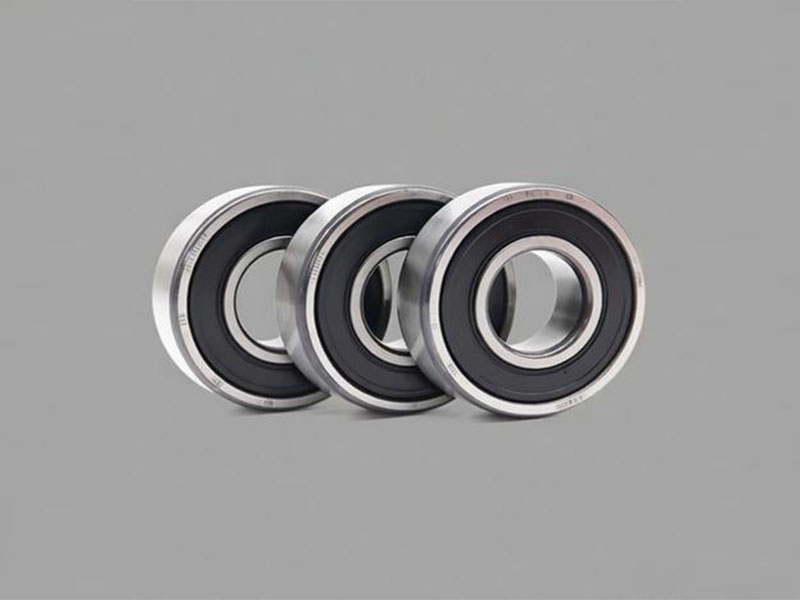
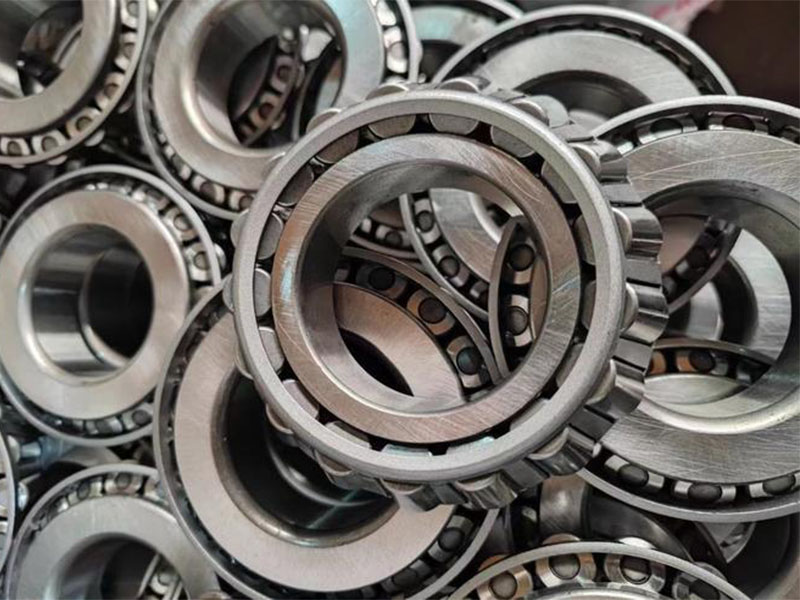
Ball bearings reduce friction by replacing surface‑to‑surface sliding with rolling contact. Instead of two mechanical parts rubbing directly against each other, hardened steel or ceramic balls roll between the inner and outer raceways. This simple but fundamental transformation is the reason why ball bearings are used in everything from automotive wheel hubs to high‑speed industrial spindles.
Compared with plain bearings that rely on sliding motion, ball bearings substantially lower resistance, reduce heat generation, and improve overall mechanical efficiency.
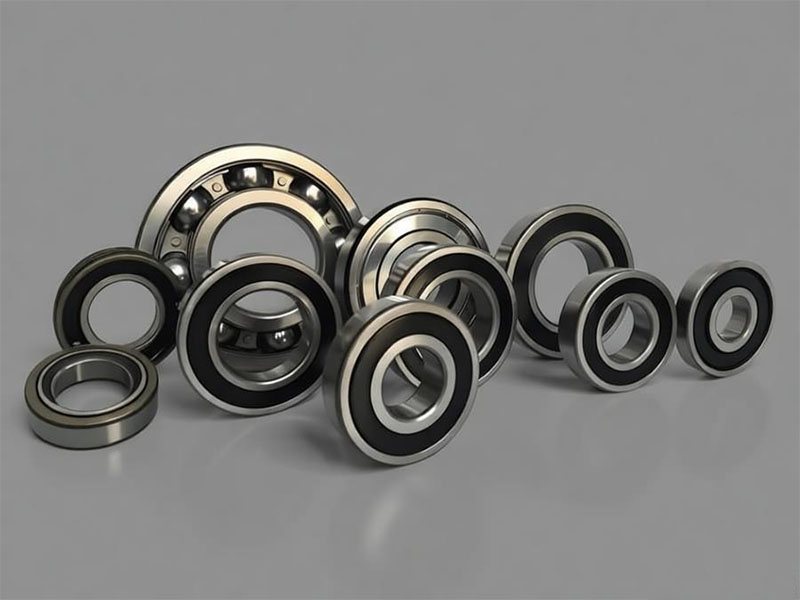
Ball Bearing Working Principle
A ball bearing consists of four basic components: an inner ring, an outer ring, rolling elements (balls), and a cage or retainer that keeps the balls evenly spaced.
When a shaft rotates, the inner ring turns with it. The balls roll along the raceway surfaces of both rings, transmitting the load from the outer ring to the balls and then to the inner ring. As long as one ring rotates, the other follows, and the balls roll smoothly along the raceways instead of sliding.
This rolling motion is the essential mechanism that makes ball bearings effective at reducing friction. The contact area between a ball and its raceway is extremely small—essentially a point contact—which minimizes the surface area over which frictional forces act.
The Rolling Contact Principle
The principle is analogous to the difference between pushing a heavy box across a floor versus placing the same box on a set of wheels. The wheels eliminate direct sliding contact between the box and the floor, dramatically reducing resistance. Ball bearings apply the same principle at a microscopic scale within a compact mechanical assembly.
When properly designed and lubricated, ball bearings allow machinery to operate more efficiently, with less energy loss and greater reliability over extended service life.
Ball Bearing Friction Types
Understanding the different forms of friction that occur within a rolling bearing helps explain why ball bearings are so effective for friction reduction.
Rolling vs. Sliding Friction
Sliding friction occurs when two solid surfaces slide directly against each other under load. This type of friction generates significant heat, causes wear, and consumes substantial energy. Plain bearings operate on sliding friction, which requires continuous lubrication to maintain acceptable performance.
Rolling friction occurs when one object rolls over another rather than sliding across it. The resistance produced by rolling motion is substantially lower. Where sliding friction coefficients typically range from 0.08 to 0.12, rolling friction coefficients in ball bearings are only 0.001 to 0.005. In some well‑lubricated bearing configurations, the coefficient can drop as low as 0.001 under elastohydrodynamic lubrication conditions.
This difference—often two orders of magnitude—is the quantifiable reason why ball bearings reduce friction so effectively.
Internal Friction in Rolling Bearings
While rolling friction is the dominant form of resistance in ball bearings, internal friction also arises from several sources:
- Elastic hysteresis at the rolling contacts (the energy lost as the ball and raceway deform slightly under load and then recover)
- Sliding friction between the rolling elements and the cage pockets
- Lubricant shear—the viscous resistance of the grease or oil as it is pushed aside by moving components
- Seal friction in bearings that incorporate contact seals to exclude contaminants
The total friction in a rolling bearing is the sum of these contributions, with rolling and sliding friction at the ball‑raceway contacts being the primary components.
Coefficient of Friction
The coefficient of friction (μ) is a dimensionless number that quantifies the ratio of frictional force to the normal (perpendicular) force between two surfaces. A lower coefficient indicates less resistance and higher efficiency.
For rolling bearings under proper operating conditions:
- Hydrodynamic lubrication: μ ≈ 0.001 – 0.01
- Mixed lubrication: μ ≈ 0.01 – 0.1
- Boundary lubrication: μ may be higher but still significantly lower than sliding bearings
In contrast, sliding bearings operating under similar conditions have coefficients typically ranging from 0.08 to 0.12, meaning ball bearings can reduce frictional resistance by up to 90% or more compared to plain bearings.
Ball Bearing Components That Reduce Friction
Every component of a ball bearing is designed with one objective: to minimize frictional resistance while maintaining load capacity and operational stability.
The Raceways (Inner and Outer Rings)
The inner and outer rings provide the precision‑ground surfaces on which the balls roll. The raceways are manufactured to exacting tolerances with surface roughness (Ra) values below 0.05 μm in high‑quality bearings. A smoother raceway reduces the mechanical interlocking of microscopic surface asperities, which is a direct source of rolling resistance.
The material hardness of the raceways is equally critical. Most ball bearing rings are made of high‑carbon chromium steel hardened to HRC 58–64. This hardness ensures that the raceways resist deformation under load, maintaining the precise geometry required for low‑friction rolling motion. Some advanced bearings use silicon nitride (Si₃N₄) ceramic components, which have only 40% of the density of steel, further reducing rolling friction and allowing higher rotational speeds.
The Rolling Elements (Balls)
The spherical shape of the rolling elements is fundamental to friction reduction. A sphere contacts the raceway at a theoretical point, minimizing the contact area and therefore the frictional force. Achieving this requires exceptional manufacturing precision—high‑grade ball bearings are manufactured to Grade 10 to 48 sphericity under ISO 3290, with deviation less than 0.1 μm.
Ball materials also influence friction. While chrome steel remains the industry standard, ceramic balls (silicon nitride) are increasingly used in high‑speed and high‑temperature applications. Ceramic balls have lower density, higher hardness, and better thermal stability, all of which contribute to reduced rolling resistance and longer service life.
The Cage or Retainer
The cage (or retainer) keeps the rolling elements evenly spaced around the bearing, preventing ball‑to‑ball contact. Without a cage, balls would collide with each other during rotation, generating additional friction and potentially leading to premature failure.
Modern cages are manufactured from materials that minimize sliding friction between the balls and the cage pockets. Polymeric cages (such as glass‑fiber‑reinforced polyamide) have inherently low coefficients of sliding friction and can reduce overall bearing friction by 20% or more compared to conventional steel or brass cages. Advanced cage designs also improve lubrication distribution, ensuring that all rolling contacts receive adequate lubricant film.
The Lubricant
Lubrication is arguably the most important factor in managing friction in ball bearings. The lubricant—whether grease, oil, or solid film—serves multiple functions:
- Separates moving surfaces: A thin film of lubricant prevents direct metal‑to‑metal contact between balls and raceways
- Reduces friction: Properly selected lubricants minimize both rolling and sliding resistance within the bearing
- Dissipates heat: Lubricant carries away frictional heat, preventing thermal degradation
- Prevents corrosion and excludes contaminants
The viscosity of the lubricant must be matched to the bearing’s operating speed, load, and temperature. Under elastohydrodynamic lubrication conditions, the lubricant film is thick enough to completely separate the rolling contacts, resulting in the lowest possible friction coefficients (μ ≈ 0.001). Factory‑applied greases can reduce bearing friction by 30–50% compared to unlubricated operation.
Friction Reduction Best Practices for Ball Bearings
To maintain low friction and maximize service life, the following ten practices are recommended:
- Keep bearings clean – Contaminants such as dust, dirt, and metal particles increase friction by interfering with the rolling contact and accelerating wear.
- Inspect bearings regularly – Periodic inspection for signs of wear, pitting, or discoloration helps detect friction‑related issues before they lead to failure.
- Use bearings for the right applications – Different bearing types (deep groove, angular contact, thrust) are designed for specific load and speed conditions.
- Store bearings properly – Unused bearings should be stored in clean, dry conditions with original packaging intact to prevent corrosion and contamination.
- Do not over‑lubricate – Excessive grease increases viscous drag and operating temperature. Follow the manufacturer’s recommended fill volume.
- Keep bearings shielded or sealed – Contact seals protect against contaminants but add some friction; non‑contact shields offer protection with lower resistance.
- Avoid using damaged bearings – Even minor surface damage increases rolling resistance and generates abnormal heat.
- Select the correct bearing size – Undersized bearings cannot support the load, leading to deformation and high friction; oversized bearings increase inertia and may not fit properly.
- Verify load ratings – Operating a bearing beyond its rated dynamic or static load capacity causes permanent deformation and excessive friction.
- Follow the manufacturer’s installation instructions – Proper mounting (using correct tools and press‑fit methods) ensures alignment and prevents brinelling damage to raceways.
Ball Bearing Friction Reduction Applications
Ball bearings are selected for friction‑sensitive applications across virtually every industry.
Automotive Industry
Automotive systems rely on ball bearings to reduce friction in engines, transmissions, wheel hubs, electric motors, pumps, and steering systems.
Deep groove ball bearings are used in wheel hubs and electric motors because of their ability to handle high speeds with low noise. Angular contact ball bearings are found in gearboxes where combined radial and axial loads occur.
In electric vehicles, low‑friction hub bearings play a particularly critical role. Reductions in rolling resistance of 30–64% have been achieved with advanced wheel bearing designs, directly extending EV range and improving energy efficiency. According to publicly available data from NSK, low‑torque ball bearings for hybrid vehicle transmissions enable 50–65% improvement in frictional loss compared to conventional bearings.
Industrial Machinery
High‑speed spindles used in CNC machine tools operate at rotational speeds that demand exceptionally low bearing friction. Angular contact ball bearings with ceramic balls are standard in such applications because the lower density of ceramic reduces centrifugal forces and rolling resistance at high speeds. Modern spindle bearings achieve friction reductions of 20% or more through optimized cage materials and precision raceway finishing.
In pumps, compressors, electric motors, and industrial fans, deep groove ball bearings provide consistent low‑friction operation over extended run‑times.
Consumer Products
From laptop cooling fans to skateboards and fitness equipment, ball bearings enable smooth, quiet motion with minimal energy loss. Miniature deep groove ball bearings are found in computer fans, where their low friction coefficient allows continuous operation with low noise and minimal power consumption.
In skateboards, yo‑yos, fidget spinners, and many other products, ball bearings are the reason movement feels effortless and continues for extended periods after an initial push.
Frequently Asked Questions (FAQs)
Q1: Do ball bearings really reduce friction?
A1: Yes. Ball bearings replace sliding motion with rolling contact, which significantly lowers frictional resistance and heat generation compared to direct surface‑to‑surface contact.
Q2: How much friction can ball bearings reduce compared to sliding bearings?
A2: The coefficient of friction for rolling bearings is typically 0.001–0.005, compared with 0.08–0.12 for sliding bearings. This represents a reduction in frictional resistance of roughly 90–98% under comparable operating conditions.
Q3: What is the primary source of friction in a ball bearing?
A3: The primary sources are rolling friction at the ball‑raceway contacts (due to elastic hysteresis) and sliding friction between the rolling elements and the cage. Lubricant viscosity and seal friction are secondary contributors.
Q4: Are ceramic ball bearings better at reducing friction than steel ball bearings?
A4: Ceramic balls (silicon nitride) have lower density (40% of steel) and higher hardness than steel, which reduces rolling resistance and allows higher rotational speeds. They also generate less heat under high‑speed operation. However, steel bearings remain more cost‑effective for most standard applications.
Q5: How does lubrication affect friction reduction in ball bearings?
A5: Lubrication separates metal surfaces with a thin fluid film, preventing direct contact and drastically reducing both rolling and sliding friction. Under ideal elastohydrodynamic lubrication, friction coefficients can drop to approximately 0.001.
Q6: Can ball bearings completely eliminate friction?
A6: No. Some residual friction always exists due to elastic hysteresis of the rolling elements, sliding in the cage, lubricant shear, and seal friction. However, ball bearings approach the lowest practical friction levels achievable in mechanical systems.
Q7: What types of ball bearings are most effective for low‑friction applications?
A7: Deep groove ball bearings offer the best combination of low friction and high speed capability. For applications requiring very low starting torque and minimal resistance, specially designed low‑torque ball bearings with optimized cages and low‑viscosity lubricants are available.
Conclusion
Ball bearings reduce friction fundamentally by converting sliding contact into rolling contact—a mechanical transformation that lowers the coefficient of friction by as much as 90% or more compared to plain bearings. The combined effect of precision‑ground raceways, high‑hardness rolling elements, optimized cage designs, and appropriate lubrication systems enables ball bearings to operate with minimal resistance across a wide range of speeds and load conditions.
Whether in automotive wheel hubs, industrial spindles, or everyday consumer products, ball bearings remain the most efficient solution for managing friction in rotating machinery. Proper selection, installation, and maintenance—including regular inspection, cleanliness, and correct lubrication—ensure that ball bearings continue to deliver low‑friction performance throughout their intended service life.
Understanding how ball bearings reduce friction is the first step toward improving mechanical efficiency, reducing energy consumption, and extending equipment life.