Quick Answer
The CV joint is located at both ends of your car’s axle shafts. The inner CV joint sits near the transmission or differential (center of the car). The outer CV joint sits near the wheel, behind the brake rotor and hub assembly. Most front-wheel-drive cars have four CV joints. They connect the transmission to the wheels, allowing steering and suspension movement while maintaining constant speed.
Constant velocity (CV) joints are essential drivetrain components that transfer engine power to the wheels while accommodating steering angles and suspension travel. If you hear clicking noises when turning or feel vibrations during acceleration, the CV joints may be failing. So, where is the CV joint located in a car? In most passenger vehicles – especially front-wheel-drive models – CV joints are positioned at both ends of each driveshaft (axle shaft). This guide explains exact locations across different drivetrain layouts, their functions, access steps, and frequently asked questions.
What Are CV Joints and Why Do Their Locations Matter
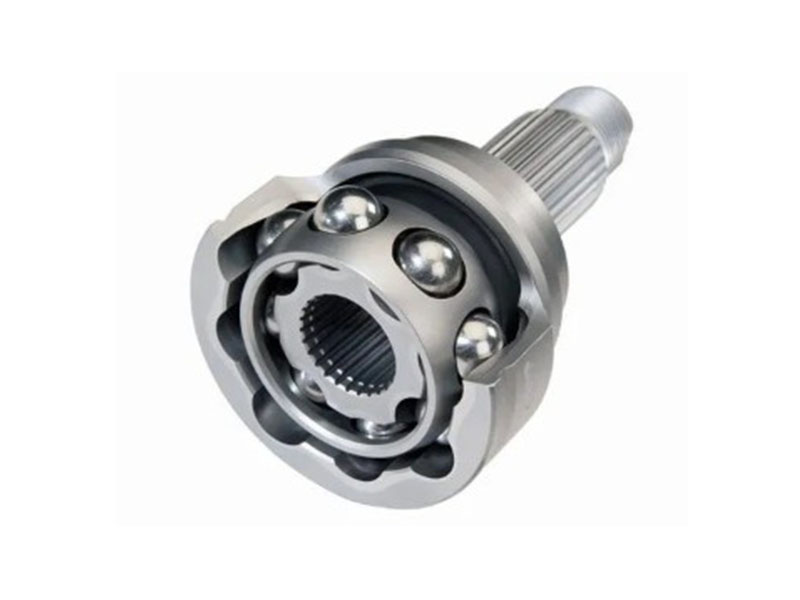
Constant velocity joints are flexible connectors that transfer torque from the transmission to the drive wheels while maintaining a steady rotational speed regardless of the operating angle. This is critical for front-wheel-drive and independent-suspension vehicles. Knowing CV joint locations helps with:
- Diagnosing noise: Clicking during turns typically points to an outer joint; vibration during acceleration often indicates an inner joint problem.
- Performing repairs: Accessing a CV joint requires knowing whether it is near the differential or behind the wheel hub.
- Preventive maintenance: Inspecting the rubber boots that cover CV joints is easier when you know exactly where to look under the vehicle.
Where Exactly Are CV Joints Located (Core Answer)
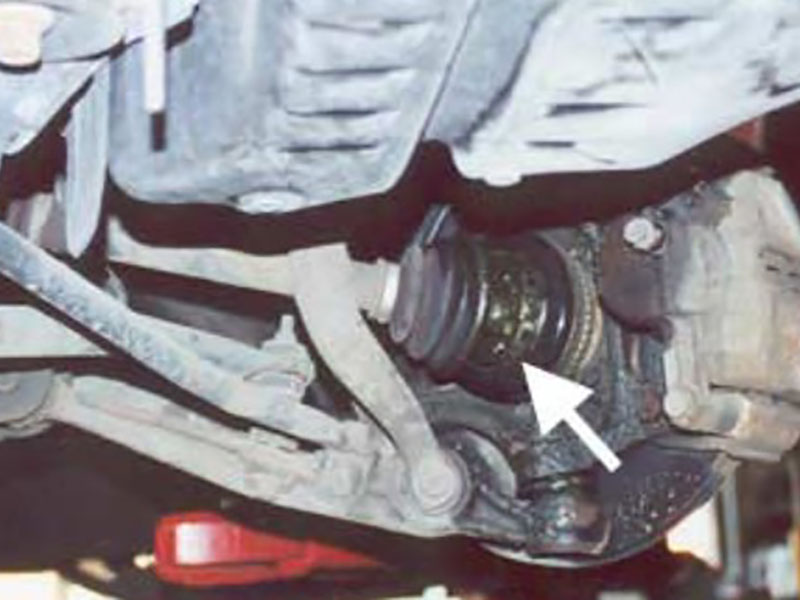
On a typical front-wheel-drive (FWD) car, there are four CV joints – two per axle shaft.
- Inner CV joint: Located between the transmission (or transaxle) and the axle shaft. On most FWD vehicles, inner joints are near the center of the car, directly beside the differential. They handle the largest changes in shaft length as the suspension compresses and extends.
- Outer CV joint: Located between the axle shaft and the wheel hub assembly. The outer joint sits just behind the brake rotor and knuckle. It is responsible for steering angles, allowing the front wheels to turn left or right while still receiving power.
Imagine looking at the underside of a front-wheel-drive car: two metal shafts extend left and right from the transmission. Each shaft has a rubber-booted bulge close to the transmission (inner joint) and another rubber-booted bulge close to the wheel (outer joint).
CV Joint Locations in Different Drivetrain Layouts
While front-wheel drive is the most common application, CV joints also appear in other drivetrain configurations.
Front-Wheel Drive (FWD)
Both inner and outer CV joints are present on the left and right front axles. Some FWD vehicles also use CV joints on rear axles if equipped with rear-wheel steering or certain torsion-beam designs, but that is less common.
Rear-Wheel Drive (RWD)
Traditional rear-wheel-drive cars with a solid rear axle typically use U-joints instead of CV joints. However, many modern RWD vehicles with independent rear suspension (IRS) use CV joints on the rear half-shafts. In this setup, inner CV joints connect the half-shafts to the differential, and outer CV joints connect to the rear wheel hubs.
All-Wheel Drive (AWD) and 4WD
AWD and 4WD vehicles often have CV joints at both ends of each half-shaft – front and rear. Additionally, some models use CV joints on the propeller shaft (driveshaft) between the transfer case and the differentials. For example, many AWD systems employ up to ten CV joints across the entire vehicle.
Key takeaway: Regardless of drivetrain, inner CV joints are always closer to the differential or transmission, while outer CV joints are always adjacent to the wheels.
Comparison of Inner vs Outer CV Joints
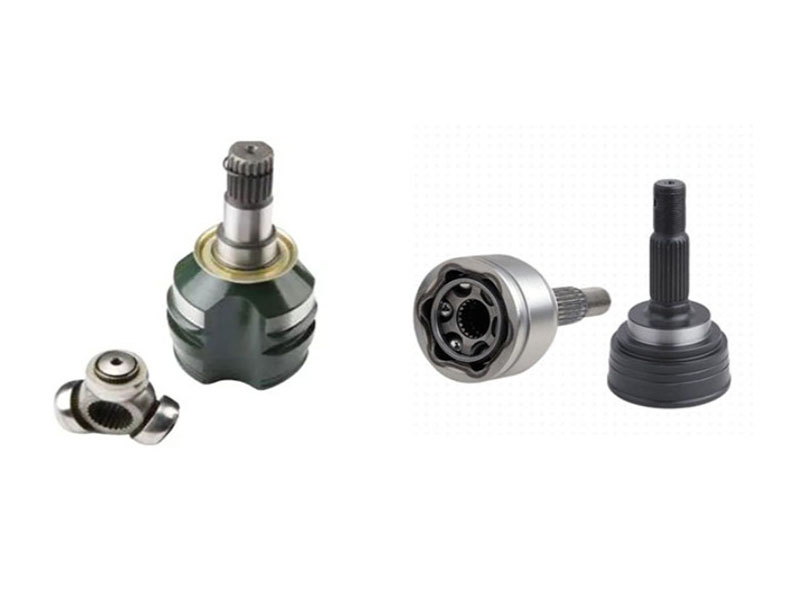
The table below summarizes key differences between inner and outer CV joints.
| Feature | Inner CV Joint | Outer CV Joint |
|---|---|---|
| Primary movement | Plunging (in/out) for suspension travel | Angular articulation for steering |
| Typical design | Tripod or VL type | Rzeppa (ball-type) |
| Failure symptom | Vibration or clunk during acceleration | Clicking or popping during turns |
| Location | Near transmission/differential | Near wheel hub |
How to Access the CV Joints (Step-by-Step)
If you need to inspect or replace a CV joint, accessing the component typically requires removing the entire CV axle assembly. Below is a standard procedure for most FWD vehicles. Always consult the vehicle-specific service manual before attempting repairs.
- Lift and support the vehicle safely. Use jack stands on level ground. Never rely solely on a hydraulic jack.
- Remove the wheel and tire. This exposes the outer CV joint and hub assembly.
- Disconnect steering and suspension components from the steering knuckle (e.g., tie rod end, ball joint, or strut bolts). The goal is to free the knuckle enough to pull the axle out.
- Remove the large axle nut. This nut secures the splined end of the outer CV joint to the wheel hub. It is typically torqued very high and may require a breaker bar.
- Disengage the axle from the hub. Once the nut is off, push the axle shaft inward to free its splines from the hub.
- Swing the steering knuckle aside and secure it with wire or a bungee cord to avoid straining the brake hose.
- Pry the inner CV joint out of the transmission or differential. Use a pry bar between the inner joint housing and the transmission case. Apply gentle, even pressure – the joint should pop out with a sharp click.
Note: The above steps are for professional technicians or experienced DIYers. Improper removal can damage the transmission seal or the CV joint itself.
Conclusion
Knowing where CV joints are located – inner joints near the transmission/differential and outer joints near the wheels – is essential for vehicle maintenance and troubleshooting. Front-wheel-drive cars commonly use four CV joints, while independent-rear-suspension RWD or AWD vehicles may have additional joints. Regular inspection of CV boots for cracks or grease leaks can prevent costly failures. If you experience clicking, vibration, or grease splatter, have the CV joints inspected promptly to ensure safe and reliable operation.
Frequently Asked Questions (FAQs)
Q: How do I know if a CV joint is bad without removing it?
A: Common symptoms include a rhythmic clicking or popping noise when turning sharply (failed outer joint), a clunking or vibration during straight-line acceleration (failed inner joint), grease splattered around the inside of the wheel or under the hood (torn CV boot), or excessive play in the axle when inspected manually.
Q: Can a car be driven with a bad CV joint?
A: It is not recommended. A severely worn CV joint can disintegrate, causing sudden loss of power to the wheels and potential damage to the transmission, brake lines, or suspension components. In extreme cases, a broken axle can lock the wheel or puncture the transmission housing.
Q: Are CV joints the same on both sides of the car?
A: Often, left and right CV axles are different lengths (driver side shorter, passenger side longer). However, the joint designs (inner vs. outer) are typically interchangeable between sides – but the shafts themselves are not. Always verify part numbers.
Q: Do all cars have CV joints?
A: No. Many rear-wheel-drive vehicles with solid rear axles use U-joints instead. Some heavy-duty trucks and older vehicles also rely on U-joints. However, almost all modern front-wheel-drive and independent-suspension cars use CV joints.
Q: Why do CV joints fail more often on one side?
A: The passenger-side outer CV joint often fails sooner because it operates at a constant turning angle during most driving (due to road crown and typical left-turn patterns). Additionally, a torn boot on one side can go unnoticed longer, allowing dirt and moisture to enter.
Q: Can I just replace the rubber boot instead of the whole CV joint?
A: If the boot is torn but the joint is still clean and makes no noise, you can repack it with fresh grease and install a new boot. However, once dirt has entered or clicking has started, the joint surface is already damaged. In that case, replacing the entire axle assembly is more cost-effective.
Q: What is the difference between an inner and outer CV joint in terms of design?
A: Inner CV joints (often tripod or VL type) allow significant plunging motion – sliding in and out – to accommodate suspension travel. Outer CV joints (usually Rzeppa type) are designed for high-angle articulation but minimal plunging, enabling sharp steering angles.