Quick Answer
A bad front wheel bearing produces a constant growl, rumble, or grinding noise that gets louder as speed increases. Turn the steering wheel left and right while driving at 25–40 mph: if noise worsens during a right turn, the left bearing is likely failing; during a left turn, the right one. Lift the wheel and check for play – axial movement over 0.05 mm (0.002 inch) confirms failure. Do not drive; replace the hub assembly immediately.
A failing front wheel bearing is not just a noise nuisance—it directly affects vehicle safety and handling. Many drivers first notice unusual sounds from the front wheel area, but identifying a bad front wheel bearing early can prevent more costly damage and potential wheel detachment. So, how can you tell if a front wheel bearing is bad? This guide walks through the most reliable signs, diagnostic methods, and common causes, helping you make an informed decision about repairs.
What Is a Front Wheel Bearing and What Does It Do?
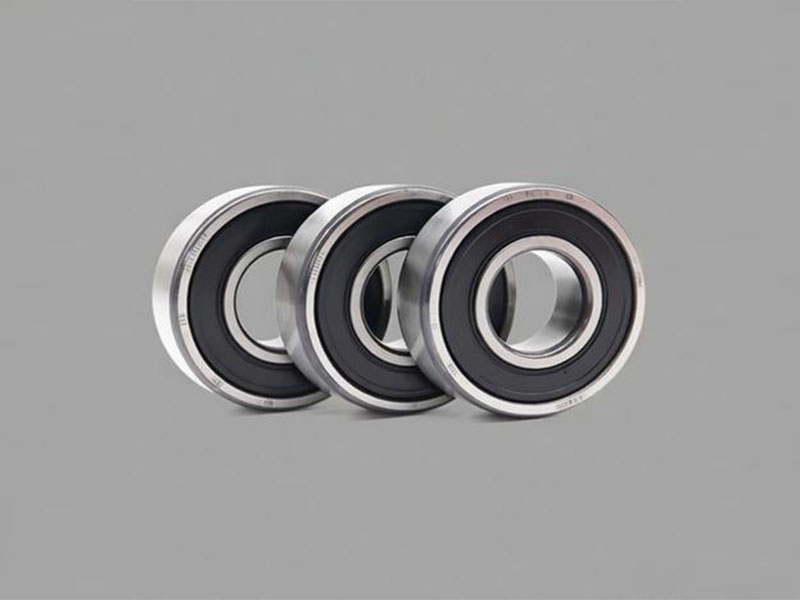
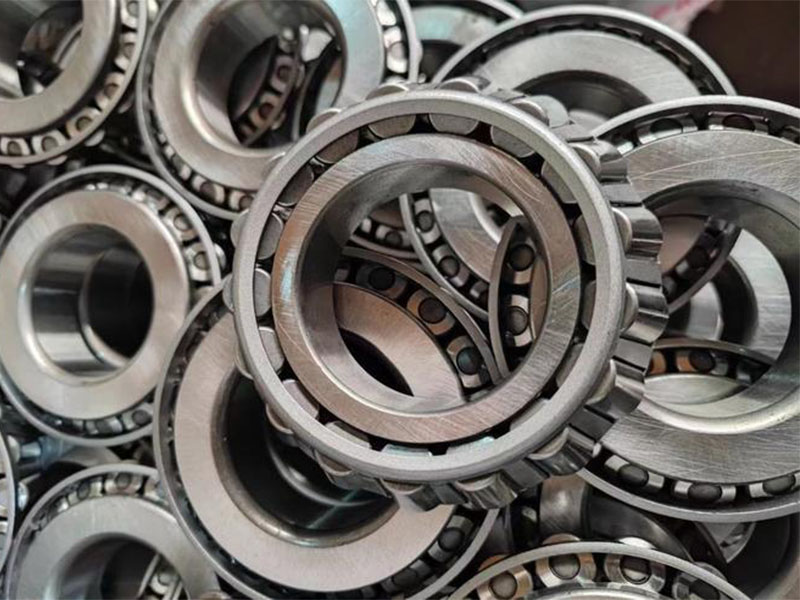
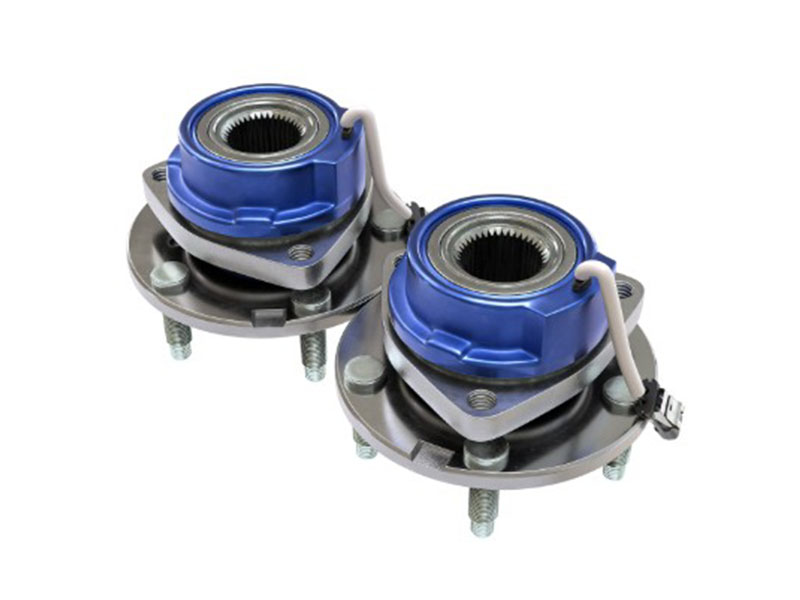
A front wheel bearing is a precision component located inside the wheel hub assembly. It typically consists of an inner ring, outer ring, rolling elements (steel balls or tapered rollers), a cage, and integrated seals with high‑temperature grease. Its primary function is to support the vehicle’s weight while allowing the wheel to rotate with minimal friction. On most modern passenger cars and light trucks, the front wheel bearing is part of a pre‑assembled, maintenance‑free hub unit that also houses the ABS sensor ring.
Common Signs of a Bad Front Wheel Bearing
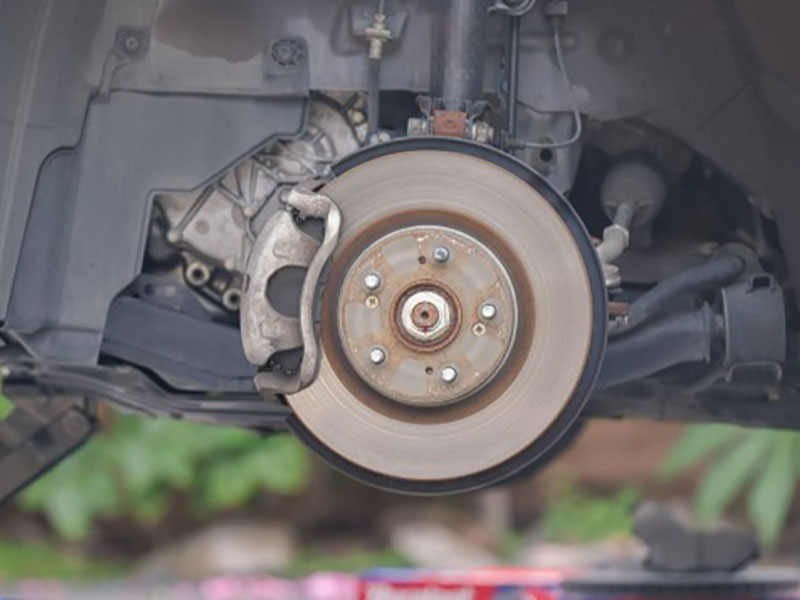
Detecting a failing front wheel bearing relies on three categories: sound, feel, and visual clues. Below are the most frequently reported indicators from field diagnostics and service bulletins.
Unusual Noise That Changes with Vehicle Speed
The most characteristic symptom of a bad front wheel bearing is a continuous noise from the front wheel area that increases in pitch and volume as the vehicle accelerates. Drivers often describe it as:
- A deep growl or rumble
- A humming or droning sound
- A grinding or scraping noise, especially in later stages
Unlike engine noise, bearing noise does not change with engine RPM—it strictly follows wheel speed. Also, it does not significantly change with road surface texture, which helps distinguish it from tire noise. In early stages, the noise may only be noticeable inside a tunnel, near concrete barriers, or on very quiet asphalt.
Loose or Vague Steering Feel
When a front wheel bearing develops excessive internal clearance (axial or radial play), the wheel hub can shift slightly relative to the spindle. This translates into a steering feel that is less precise, “loose,” or delayed during cornering or low‑speed maneuvers such as parking. Some drivers report that the front end feels “wandering” or that the steering wheel does not return to center as firmly as before.
Vehicle Pulling or Vibration While Driving
A worn bearing can allow the wheel to wobble, which generates vibrations felt through the floorpan, seat, or even the steering wheel. In some cases, the driver perceives a pulling sensation to one side, as if the vehicle is constantly trying to drift. This symptom is often confused with alignment issues or tire problems, so it should be cross‑checked with other signs.
Uneven or Premature Tire Wear
A loose wheel bearing causes the tire to scrub irregularly against the road. Inspecting the front tires may reveal feather‑edge wear, cupping (small scalloped dips across the tread), or accelerated wear on one edge. While uneven wear can also result from poor alignment or worn suspension parts, a failing bearing remains a possible cause—especially when combined with noise or looseness.
Why Do Front Wheel Bearings Fail?
Understanding the root causes helps both in prevention and in recognizing early failure patterns.
- Seal damage and contamination – The bearing’s rubber seals keep debris, water, and road salt out. Once a seal fails, contaminants enter and quickly degrade the internal grease, leading to rapid wear.
- Loss of lubrication – Over time, grease can dry out or leak away. A dry bearing generates high heat and metal‑to‑metal contact, producing a grinding noise and eventual seizure.
- Improper installation – Using incorrect tools (e.g., hammering the bearing instead of pressing it) or applying wrong torque to the axle nut can damage the bearing or create excessive preload, drastically shortening its life. NHTSA recalls have cited over‑tightened spindle nuts as a cause of premature front wheel bearing failure.
- Harsh operating conditions – Frequent driving on flooded roads, gravel, or salted winter highways accelerates wear. Heavy loads (towing or overloading) also increase stress on the front bearings.
How to Diagnose a Bad Front Wheel Bearing
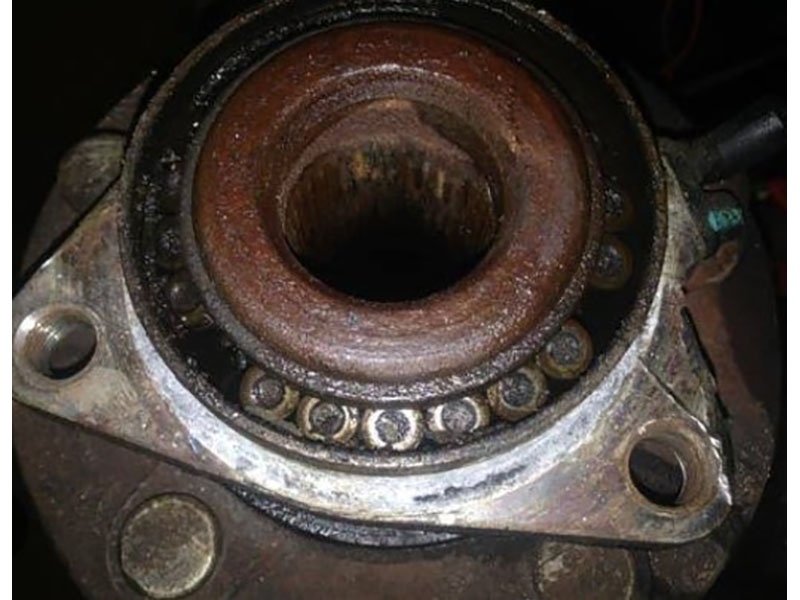
If you suspect a problem, follow this step‑by‑step diagnostic approach. Safety first: always use proper jack stands and never rely solely on a floor jack.
1. Road Test – The “Load‑and‑Listen” Method
Find a safe, empty area such as a large parking lot. Drive the vehicle at a moderate speed (25‑40 mph / 40‑65 km/h) and perform gentle left and right turns while listening carefully.
- Noise increases during a right turn → weight shifts to the left side → left front bearing is more likely faulty.
- Noise increases during a left turn → weight shifts to the right side → right front bearing is the prime suspect.
This method works because loading the bearing changes the clearance and contact pattern inside the rolling elements, amplifying the noise from the worn side.
2. Lift and Shake (Play Check)
Raise the front end until both wheels are off the ground. Grasp the tire at the 12 o’clock and 6 o’clock positions and push/pull alternately. A serviceable bearing should have no perceptible play. If you feel a distinct knocking or clunking movement, the bearing likely has excessive internal clearance. For precise measurement, a dial indicator placed against the hub or brake disc can be used – an axial play exceeding 0.05 mm (0.002 inch) is generally considered out of specification.
Note: This test also checks for ball joint or control arm bushing wear. If the play is felt but the bearing noise is absent, other suspension components should be inspected.
3. Spin and Listen with a Stethoscope (Advanced)
With the wheel removed, brake caliper, and rotor secured out of the way, rotate the hub by hand while using a mechanic’s stethoscope or a long screwdriver pressed against the knuckle. A healthy hub rotates almost silently with a smooth feel. A failing bearing will produce a rough, grating, or rumbling sound as the rollers pass over damaged raceways.
What Happens If You Ignore a Bad Front Wheel Bearing?
Postponing repairs carries serious safety risks:
- Sudden wheel detachment – In extreme cases, the bearing can disintegrate, allowing the entire wheel and hub assembly to separate from the vehicle. This results in immediate loss of control and potential rollover.
- Loss of steering precision – Even before complete failure, excessive play degrades handling, especially during emergency maneuvers or braking on uneven surfaces.
- Secondary damage – Heat and vibration from a failing bearing can damage the brake rotor, caliper, axle shaft, or wheel speed sensor, raising repair costs significantly.
Replacement Guidelines – What You Should Know
- No repair, only replacement – Modern front wheel bearings are sealed, non‑serviceable units. They must be replaced as a complete assembly.
- Replace in pairs – While not always mandatory, replacing both front bearings at the same time is strongly recommended. The remaining original bearing has similar mileage and wear history; replacing only one often leads to a second failure within a short interval, doubling labor costs.
- Use quality parts – OEM‑grade or premium aftermarket bearings (such as those meeting ISO/TS 16949 standards) ensure proper fit, material quality, and longevity. Low‑cost bearings may use inferior steel or inadequate seals, leading to premature failure.
- Professional installation – Correct torque on the axle nut and proper press tools are critical. An incorrectly installed bearing can fail in as little as a few thousand miles.
Conclusion
Knowing how to tell if a front wheel bearing is bad comes down to listening for speed‑dependent growling or humming noises, feeling for steering looseness or vibration, and performing a simple wheel play test during routine maintenance. Early detection not only prevents unsafe driving conditions but also avoids damage to other chassis components.
For professional technicians and workshop owners, choosing a reliable bearing supplier makes a difference in both customer satisfaction and comeback rates. DUHUI Bearing specializes in manufacturing high‑precision wheel hub bearings for passenger cars and light trucks, meeting strict OE standards. With a focus on advanced sealing technology and durable steel grades, DUHUI products offer consistent performance under diverse road conditions. For more technical resources or product specifications, visit the DUHUI Bearing official website.
Frequently Asked Questions (FAQs)
Q: Can I drive with a bad front wheel bearing?
A: No. Once a bearing produces noise or shows detectable play, it is already compromised. While some vehicles may continue for a few hundred miles, the risk of sudden wheel detachment or loss of control is real and unpredictable. Immediate inspection and replacement are the only safe actions.
Q: How long do front wheel bearings typically last?
A: Under normal driving conditions, quality front wheel bearings last 80,000 to 150,000 miles (130,000‑240,000 km). Severe conditions—frequent water immersion, gravel roads, salt exposure, or heavy loads—can reduce lifespan significantly.
Q: Is the noise from a bad bearing the same as tire noise?
A: No, but they are easily confused. Tire noise usually changes with road surface (smooth asphalt vs. coarse concrete) and has a more “rhythmic” or “humming” quality. Bearing noise is more constant, grows louder with speed, and typically does not change when driving onto a different pavement type.
Q: Can a bad front wheel bearing affect fuel economy?
A: Yes. Increased rolling resistance from a worn bearing forces the engine to work harder, leading to a measurable decrease in fuel efficiency—typically 2‑5%, though higher in severe cases.
Q: How do I know which side is bad if I hear noise?
A: Use the load‑and‑listen road test described above. Turning left or right shifts vehicle weight, making the faulty bearing louder on the loaded side. If you are still uncertain, a professional technician can use chassis ears (wireless microphones) to pinpoint the exact wheel.
Q: Does a bad bearing always produce noise before failing?
A: Most of the time, yes. However, in rare cases—especially with catastrophic grease loss—a bearing can seize or break apart with very little audible warning. That is why periodic inspections (e.g., during tire rotations) are recommended.
Q: Can I replace just one front wheel bearing?
A: While technically possible, it is not recommended. The remaining old bearing has the same mileage and similar wear. Replacing both at once saves labor costs and provides balanced handling and braking. Many professional repair shops insist on pair replacement.