Skateboard bearings are critical for wheel speed and ride smoothness, yet choosing the best skateboard bearing can be confusing given the variety of materials, ratings, and price points. This article explains how bearings work, how to evaluate them, and—most importantly—which type delivers the best performance for different skating styles.
What Are Skateboard Bearings?
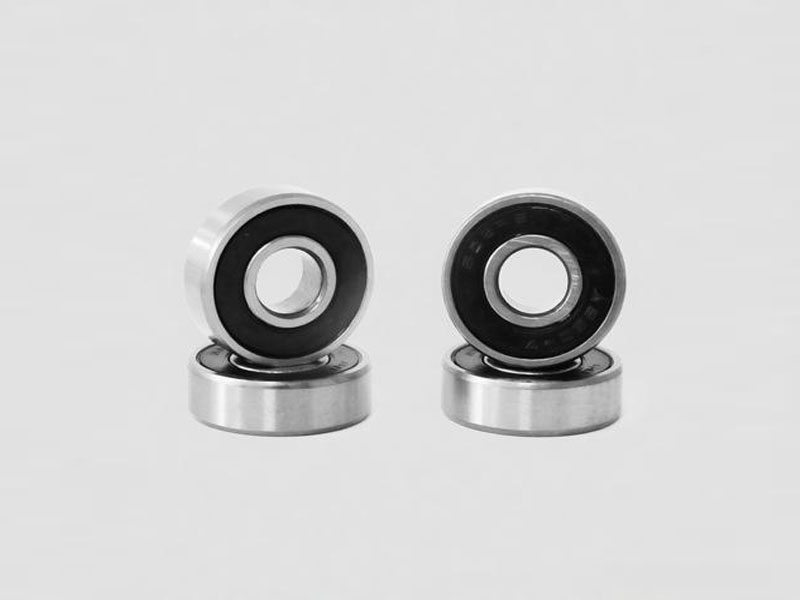
Skateboard bearings are precision deep groove ball bearings that fit inside the wheels and mount onto the axle. Each wheel uses two bearings, totaling eight per skateboard, enabling free rotation around the axle while managing radial and axial loads.
Components
A standard skateboard bearing consists of:
- Inner Race – Sits on the axle.
- Outer Race – Fits into the wheel hub.
- Balls – Rolling elements (usually 6–8 per bearing).
- Ball Retainer (Cage) – Spaces the balls evenly.
- Shields – Metal (ZZ) or rubber (2RS) covers protecting internal parts.
- C-Ring – Retains the shield.
Key Features
- Materials – Steel, ceramic, titanium, or hybrids.
- Precision Rating – ABEC scale (1,3,5,7,9) measures manufacturing tolerances.
- Sealing – Rubber-sealed (2RS) offers best contamination protection; metal-shielded (ZZ) allows higher speeds.
- Lubrication – Grease (longer lasting, higher resistance) or oil (lower friction, frequent reapplication).
How to Choose Skateboard Bearings
Selection should balance skating style, environment, and budget.
ABEC Rating
ABEC-5 or ABEC-7 bearings meet the needs of most street and park skaters. ABEC-9 is beneficial only for downhill longboarding at sustained high speeds. Lower ABEC ratings (1,3) are adequate for casual or beginner use.
Material
- Steel – Durable, affordable, rust-prone. Best for all-around use.
- Ceramic (Hybrid) – Steel races with ceramic balls (silicon nitride). Lower friction, corrosion-proof, fast acceleration. Higher cost.
- Titanium – Lightweight, corrosion-resistant. Marginal gain over quality steel at premium price.
Seals
- 2RS (rubber) – Preferred for outdoor/street skating.
- ZZ (metal) – For clean environments or speed-focused setups.
Lubrication
Pre-lubricated bearings are ready to use. Most factory lubrication is grease (e.g., Chevron SRI-2). For maintenance, lightweight oil reduces friction but requires reapplication every 20–30 hours.
Spacers and Washers
Spacers maintain alignment between two bearings inside the wheel; washers reduce side loading. Both extend bearing life.
Types of Skateboard Bearings
| Type | Construction | Performance | Best Uses | Limitations |
|---|---|---|---|---|
| Steel | Chrome steel or stainless steel races and balls | Durable, affordable, balanced friction | Street skating, park, all-around | Susceptible to rust |
| Ceramic (Hybrid) | Steel races + ceramic (Si₃N₄) balls | Low friction, corrosion-proof, fast acceleration | Cruising, downhill, wet conditions | High cost; ceramic balls may crack under extreme impact |
| Titanium | Titanium-coated or titanium alloy | Lightweight, corrosion-resistant | Performance-focused setups | Expensive; marginal gain |
| Swiss | High-grade steel, precision Swiss manufacturing | Exceptional tolerances, smooth rotation | Competitive skating, high-speed longboarding | Premium pricing |
Note: True full-ceramic bearings (ceramic races + ceramic balls) are rarely used in skateboarding due to fragility and cost. Miniature bearings (e.g., 688, 698) exist for very small wheels or children’s skateboards but are not covered here as they are non-standard for most adult boards.
How Long Do Skateboard Bearings Last?
With proper maintenance, bearings typically last 1–2 years. Reduced lifespan is caused by:
- Daily skating in wet or dusty conditions.
- High-impact tricks and slides.
- Low initial quality (e.g., no-brand bearings with poor materials).
Signs of replacement need: grinding noise, wheels not spinning freely after cleaning, visible rust or pitting, missing balls or shields.
How to Maintain Skateboard Bearings
Regular cleaning and lubrication significantly extend service life.
Cleaning steps:
- Remove wheels and bearings.
- If shields are removable, lift them carefully.
- Place bearings in a sealed container with isopropyl alcohol or citrus cleaner.
- Shake for 20–30 seconds.
- Dry completely—any moisture causes rust.
Lubrication:
- After cleaning, apply 1–2 drops of lightweight bearing oil per bearing (e.g., speed cream).
- For grease-lubricated bearings, apply a small amount evenly and spin to distribute.
- Do not over-lubricate.
Cleaning frequency: Every 20–30 hours of skating; more often in wet or dusty conditions.
Skateboard Bearing Specifications
The table below includes bearings used in skateboards, longboards, roller skates, stunt scooters, and electric skateboards. For standard skateboards, focus on the 608 series (8×22×7mm). Other series serve niche or application-specific markets.
| Bearing Series | Dimensions ID × OD × W (mm) | Closure Type | Typical Aftermarket Applications |
|---|---|---|---|
| 608ZZ | 8 × 22 × 7 | Metal shields (non‑contact) — lower friction, less contamination resistance | Clean indoor skate parks, speed skating, racing boards, and setups where minimal rolling resistance is the priority |
| 608‑2RS | 8 × 22 × 7 | Rubber seals (contact type) — superior protection against dust, water, and debris | Street skateboarding, longboarding, commuting, downhill, and any outdoor or wet conditions; the most common all‑around configuration |
| 609ZZ | 9 × 24 × 7 | Metal shields | Stunt scooters, certain electric skateboards, and some roller skates that use 9mm axles; also found in older inline skate models |
| 609‑2RS | 9 × 24 × 7 | Rubber seals | Same 9mm axle applications as 609ZZ, but preferred for outdoor or dirty surfaces where contamination protection is required |
| 625ZZ | 5 × 16 × 5 | Metal shields | Electric skateboards, compact scooters, and small‑wheeled devices with 5mm axles; lower load capacity, suitable for lightweight builds |
| 625‑2RS | 5 × 16 × 5 | Rubber seals | Same 5mm axle applications as 625ZZ, offering extended service life in dusty or damp environments |
| 626ZZ | 6 × 19 × 6 | Metal shields | Stunt scooters, aggressive inline skates, and some electric skateboards with 6mm axles; provides higher load capacity than 625 series |
| 626‑2RS | 6 × 19 × 6 | Rubber seals | Preferred for outdoor stunt scooter riding, skatepark use in dusty conditions, and all‑weather commuting on 6mm axles |
| 627ZZ | 7 × 22 × 7 | Metal shields | Quad roller skates, artistic roller skating, and certain old‑school skateboard trucks (non‑standard 7mm axles); does not fit standard 8mm skateboard axles |
| 627‑2RS | 7 × 22 × 7 | Rubber seals | Outdoor roller skating, rink use where debris is present, and any 7mm axle application requiring better seal integrity |
| 628ZZ | 8 × 24 × 8 | Metal shields | High‑performance longboards, electric longboards, and downhill boards with larger wheel cores (24mm outer diameter); offers wider raceway for increased radial load capacity |
| 628‑2RS | 8 × 24 × 8 | Rubber seals | Same as 628ZZ but recommended for downhill and all‑weather riding where contamination protection is critical for safety and longevity |
Important notes for buyers:
- 608 series remains the universal standard for modern skateboards. All other series listed above serve niche or application‑specific markets.
- Sealing selection: Choose 2RS for outdoor, street, or dirty environments; choose ZZ for clean, speed‑optimized indoor use.
- Compatibility verification: Always confirm the axle diameter (inner diameter) and wheel hub bore (outer diameter) before ordering. The width dimension must also match the wheel’s bearing seat depth.
- Quality and lubrication: All bearings listed are available in ABEC‑5, ABEC‑7, or custom precision grades. Factory lubrication is typically Chevron SRI‑2 grease or equivalent synthetic grease.
This specification table is based on real aftermarket demand and OEM production data. For custom dimensions, seal materials, or precision grades not listed, please contact the manufacturer directly.
What Is the Best Skateboard Bearing? A Summary
The best skateboard bearing depends on your priorities:
- For most skaters (street, park, casual) – A quality steel bearing with ABEC-5 or ABEC-7, rubber seals (2RS), and factory grease offers the best balance of durability, smoothness, and value. Example: 608‑2RS ABEC-5 with Chevron SRI-2 grease.
- For speed and wet conditions – Ceramic (hybrid) bearings with rubber seals provide lower friction and corrosion resistance. Higher cost is justified for downhill longboarding or daily skating in rain-prone areas.
- For budget or beginner setups – ABEC-3 steel bearings are sufficient. Avoid no-name bearings with poor tolerances.
- For competitive/racing – Swiss or ABEC-9 steel bearings with metal shields (ZZ) and lightweight oil, but expect more frequent maintenance.
No single bearing is “best” for everyone. Match the bearing’s material, seal type, and ABEC rating to your skating environment and frequency. Regular cleaning and proper lubrication will make even mid-range bearings outperform neglected premium ones.
Frequently Asked Questions
Q1: Do all skateboards use the same bearings?
A1: Nearly all modern skateboards use the 608 size (8mm inner diameter). Always confirm your axle diameter before purchasing.
Q2: Are ABEC 7 bearings fast?
A2: ABEC 7 bearings have tighter tolerances than ABEC 5, but actual speed is more affected by lubricant, seals, and maintenance. A clean, well-oiled ABEC 5 bearing can feel faster than a dry, grease-packed ABEC 9.
Q3: When should I replace or repair skateboard bearings?
A3: Replace when cleaning and re-lubrication do not restore smooth rotation, when you hear persistent grinding, or when rust, pitting, or missing components are visible. Repair is limited to cleaning; damaged internal parts cannot be user-replaced.
Q4: Do ceramic bearings require lubrication?
A4: Yes. Hybrid ceramic bearings (steel races + ceramic balls) need lubrication for the steel races. Apply lightweight oil sparingly.
Q5: How often should I clean my skateboard bearings?
A5: Every 20–30 hours of normal skating. After wet or dusty sessions, clean immediately.
Q6: Can I use any lubricant on skateboard bearings?
A6: No. Use only lightweight bearing oil or speed cream. Avoid WD-40, heavy greases, or cooking oils.
Q7: Are titanium bearings better than steel?
A7: Titanium bearings are lighter and more corrosion-resistant, but the performance difference over quality steel is minimal for most skaters. The higher cost is rarely justified outside of competitive racing.
Q8: What is the difference between 608ZZ and 608‑2RS?
A8: 608ZZ has metal shields (non‑contact, lower friction, less protection). 608‑2RS has rubber seals (contact type, higher friction, superior dust/water protection). For outdoor street skating, 608‑2RS is recommended.