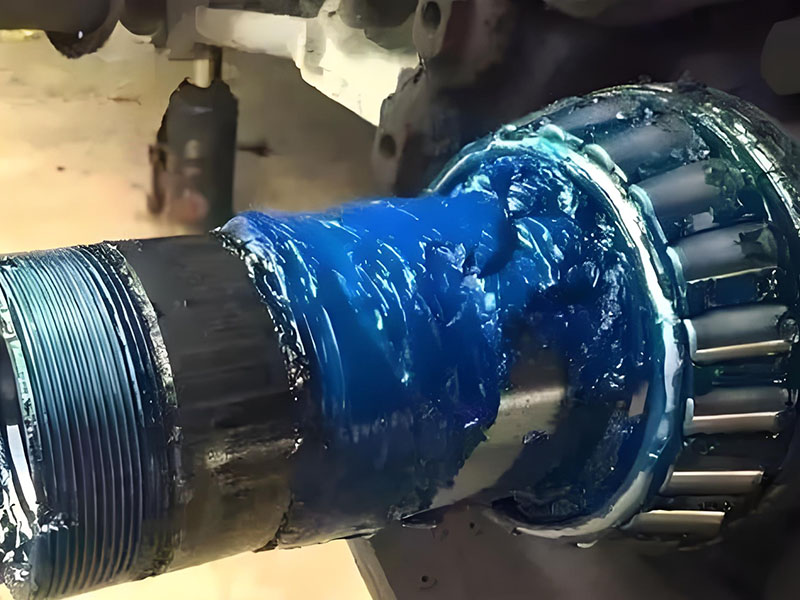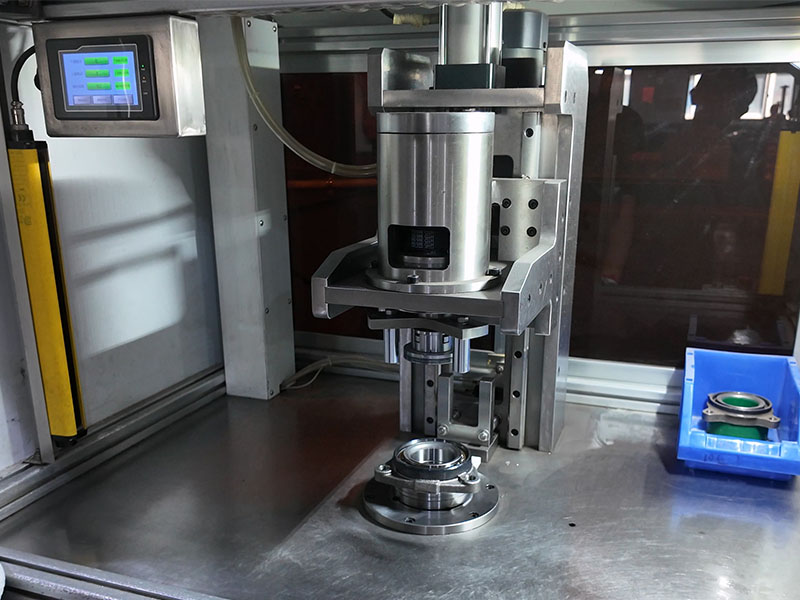
What are the essential functions of a lubricant for bearings and mechanical drives? Studies show that approximately 80% of bearing failures can be traced back to lubrication-related issues — yet many users continue to assume that “adding grease” alone is sufficient. In reality, a lubricant performs multiple critical roles beyond simply reducing friction. When any of these functions fails, bearing damage is often the result. This article examines each of the seven core functions of a bearing lubricant in detail and explains their practical implications for bearing applications.
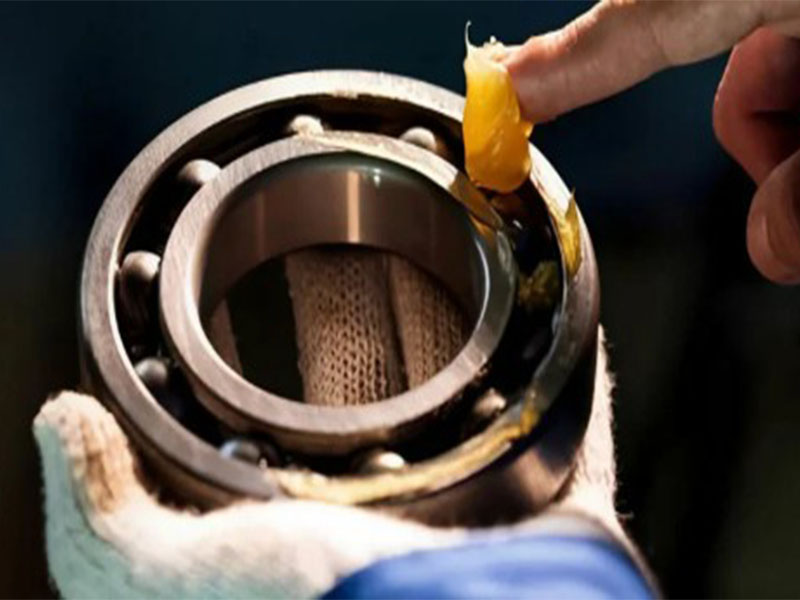
What is lubrication and why does it matter?
Lubrication is the process of introducing a substance — typically oil, grease, or solid film — between moving surfaces to reduce friction, manage heat, and protect components from wear. In bearing applications, lubrication determines operational efficiency, service life, and overall reliability. According to SKF, the lubricant in a rolling bearing serves to reduce friction and wear between moving parts, dissipate heat, and prevent corrosion of critical surfaces.
Without proper lubrication, metal-to-metal contact occurs within a bearing, leading to rapid wear, excessive heat generation, and eventual seizure. Therefore, understanding the specific functions a lubricant performs is essential for selecting the right product and maintaining bearing health.
Grease versus oil: two primary lubricant types for bearings
Before examining the key functions of bearing lubricant in depth, it is important to understand the two main categories used in bearing applications. Each offers distinct advantages and limitations that affect how well the lubricant performs its functions.
Grease lubrication is the most common choice for rolling element bearings. Grease consists of approximately 80–90% base oil combined with a thickener that acts like a sponge, holding the oil and releasing it where needed. Advantages of grease include ease of retention within the bearing housing, inherent sealing properties against contaminants, and minimal maintenance requirements. Grease is generally suitable for low to medium speed applications and does not provide active cooling like circulating oil does.
Oil lubrication is typically used for high-speed, high-load, or high-temperature applications. Because oil is a liquid, it provides better coverage of critical surfaces and dissipates heat more effectively, particularly when circulation and cooling are integrated into the system. Oil also allows for contamination filtration and easier replacement. However, oil lubrication systems are more complex and require more rigorous maintenance than grease-based solutions.
The choice between grease and oil directly impacts how effectively functions such as heat removal, contamination control, and sealing are achieved. For most general bearing applications, grease is sufficient. For demanding conditions, oil may be necessary.
Why bearings fail even with regular lubrication?
A common question in maintenance practice is why bearings continue to fail despite regular lubrication. The answer lies in the fact that a lubricant has more tasks than just reducing friction. If any of the functions described below is compromised — whether through incorrect lubricant selection, improper application quantity, or environmental factors — problems will occur.
Lubrication-related bearing failures typically fall into four categories:
- Insufficient lubrication – leads to increased friction, overheating, and rapid wear.
- Over-lubrication – causes grease churning within the bearing housing, generating destructive heat and potentially damaging seals.
- Incorrect lubricant selection – such as using grease with the wrong viscosity or additive package, resulting in inadequate film formation under operating loads and temperatures.
- Contaminated lubricant – containing water or solid particles, acts as an abrasive and accelerates wear across bearing surfaces.
It is worth noting that both insufficient and excessive lubrication can be equally harmful. When too much grease is pumped into a bearing cavity, the housing becomes full, leading to churning losses and elevated temperatures. In extreme cases, grease guns can produce up to 15,000 psi, which can rupture lip seals and allow contaminants to enter the bearing housing.
Understanding the core functions of a bearing lubricant
A bearing lubricant performs seven distinct functions. Each function addresses a specific operational risk. The following sections explain each function in detail.
Function 1: Reduce friction
The primary function of any bearing lubricant is to reduce friction between moving surfaces. The lubricant forms a thin film — either fluid or boundary layer — that separates rolling elements from raceways, preventing direct metal-to-metal contact. This reduction in friction minimizes energy loss and heat generation. Without this function, bearings would experience rapid temperature rise and premature failure. The effectiveness of friction reduction depends on the lubricant’s viscosity and the operating conditions (load, speed, temperature). For most bearing applications, the goal is to maintain elastohydrodynamic (EHL) lubrication, where the film is thick enough to fully separate surfaces.
Function 2: Limit wear
Beyond friction reduction, a bearing lubricant must protect surfaces from wear, including adhesive wear (cold welding of asperities) and abrasive wear (caused by hard particles). Anti-wear additives in the lubricant form a protective chemical layer on metal surfaces. This function is particularly critical for bearings operating under boundary lubrication conditions, where the fluid film is too thin to prevent surface contact. Properly formulated lubricants with extreme pressure (EP) additives can significantly extend bearing fatigue life by reducing surface damage.
Function 3: Remove heat
Bearings generate heat during operation due to rolling and sliding friction. A lubricant helps remove this heat by absorbing it from contact zones and transferring it to the bearing housing or ambient environment. In oil-lubricated systems, circulation provides active cooling. In grease-lubricated bearings, heat dissipation relies on conduction through the grease and housing. If heat removal is insufficient, bearing temperatures rise, reducing lubricant viscosity and accelerating oxidation — a self-reinforcing failure cycle. Effective heat removal is therefore essential for high-speed and high-load applications.
Function 4: Control contamination
Lubricants act as a medium for controlling contaminants such as dirt, wear debris, and moisture. In oil systems, filtration removes solid particles, and water separators remove moisture. In grease lubrication, the thickener can encapsulate contaminants, keeping them away from rolling contact surfaces. Contamination control is one of the most critical functions for bearing longevity. Even a small amount of abrasive particles can cause micro-pitting and raceway wear. Regular oil analysis and grease replacement are required to maintain this function over time.
Function 5: Prevent corrosion and oxidation
Bearings are often exposed to moisture, oxygen, and aggressive chemicals. A lubricant provides a barrier layer on metal surfaces, preventing rust and corrosion. In addition, the lubricant itself must resist oxidation — chemical degradation due to heat and oxygen. Oxidized lubricant forms sludge and acidic byproducts that attack bearing surfaces. Anti-oxidant and rust-inhibiting additives are therefore essential components of bearing lubricants. This function is particularly important for bearings operating in damp environments, food processing, or outdoor equipment.
Function 6: Seal against ingress
While bearings use physical seals (rubber or metal), the lubricant itself contributes to sealing. Grease, in particular, creates a viscous barrier that resists the entry of dust, dirt, and moisture through bearing seals. In oil-lubricated systems, the continuous oil film helps maintain a hydrodynamic seal at shaft interfaces. Without this function, external contaminants would rapidly degrade bearing performance. Proper lubricant fill volume — not too high to cause leakage, not too low to break the barrier — is important for maintaining seal integrity.
Function 7: Transmit power
In hydraulic systems and certain transmission applications, the lubricant also serves as a power transmission medium. While this function is less relevant for standard rolling bearings, it becomes critical in applications where the same fluid lubricates and actuates. For bearings within hydraulic pumps or motors, the fluid must maintain viscosity under high pressure to transmit force while still protecting rolling elements. This dual role imposes additional formulation requirements, including shear stability and high viscosity index.
These seven functions are interdependent. For example, a lubricant that fails to control contamination will often also fail to prevent corrosion, as moisture and particulates accelerate surface oxidation. Similarly, a lubricant with insufficient film strength at elevated temperatures cannot effectively reduce friction or limit wear.
How lubrication regimes affect function performance
The effectiveness of the above functions depends on the lubrication regime — the physical state of the lubricant film between contacting surfaces. Three primary regimes exist:
- Boundary lubrication – the film is too thin to separate surfaces; function 1 (friction reduction) and function 2 (wear limit) depend heavily on additive chemistry.
- Mixed lubrication – partial film separation; both fluid properties and additives contribute.
- Full-film (EHL) lubrication – the ideal condition where the fluid fully separates surfaces; functions 1 and 2 are primarily governed by viscosity.
Modern bearing applications often operate under mixed or boundary conditions due to higher loads and speeds. Therefore, a lubricant must perform its functions across a range of regimes, not just under ideal full-film conditions.
Practical application: lubricant functions in bearings
In rolling bearings, the most critical lubricant functions are function 2 (limit wear), function 4 (control contamination), and function 6 (seal against ingress). Here is how these functions translate into practical requirements:
- For wear limitation, select a grease or oil with appropriate base oil viscosity and, for boundary conditions, anti-wear or EP additives.
- For contamination control, use lubricants with good filterability (for oil) or stable thickener (for grease). Implement regular relubrication or oil changes to remove accumulated particles.
- For sealing, avoid over-greasing which can rupture seals. Fill grease-lubricated bearings to 30–40% of free internal space, and housings to 30–60% depending on speed.
Additionally, for high-speed bearings, heat removal (function 3) becomes more important. In such cases, oil lubrication with circulation cooling may be necessary even though grease is simpler to maintain.
For grease-lubricated bearings, typical fill volumes range from 30% to 40% of the free internal space within the bearing, with housing fill volumes between 30% and 60% of available space. For high-speed applications, lower fill volumes are recommended to prevent overheating due to grease churning. Koyo Bearings notes that appropriate lubrication covers rolling contact surfaces with the proper oil film to prolong bearing fatigue life.
Frequently Asked Questions
Q1: How do I choose the right lubricant for a bearing?
Consider operating speed, load, temperature, and environmental conditions. For standard conditions, a general-purpose grease with appropriate base oil viscosity is typically sufficient. For high-speed applications, oil lubrication or low-viscosity grease is preferred. For extreme temperatures or extended service intervals, synthetic lubricants offer better performance than mineral oils. Always refer to OEM specifications as the starting point.
Q2: How often should bearings be relubricated?
Relubrication frequency depends on bearing type, speed, temperature, and environment. As a general guideline, smaller bearings operating at higher speeds require more frequent relubrication than larger, slower bearings. Temperature is a key indicator — if a bearing runs consistently hotter than expected, relubrication may be insufficient or the lubricant may be incorrect. Follow manufacturer calculations for initial guidance and adjust based on operating observations.
Q3: Can I mix different types of grease in a bearing?
Mixing greases with different thickener types is not recommended. Incompatible thickeners can cause the grease to soften, harden, or separate, leading to lubrication failure. If a change of grease type is necessary, thoroughly clean the bearing and housing to remove all old grease before introducing the new product.
Q4: What happens if I over-lubricate a bearing?
Over-lubrication causes excessive grease churning within the bearing cavity. This churning generates destructive heat that can degrade the grease and damage seals. In severe cases, excessive grease can also rupture seals and allow contaminants to enter the bearing housing.
Q5: What is the difference between synthetic and mineral oil lubricants?
Synthetic oils are chemically engineered to provide consistent performance across wider temperature ranges and under more extreme conditions. They typically offer better oxidation resistance, longer service life, and improved low-temperature flow compared to mineral-based oils. Mineral oils are refined from crude oil and are generally more cost-effective for standard operating conditions where extreme demands are not present.
Summary
The key functions of bearing lubricant extend far beyond friction reduction. Proper lubrication reduces friction and wear, dissipates heat, controls contamination, prevents corrosion, seals against ingress, and in hydraulic systems transmits power. Each function plays a specific role in protecting bearings. Given that an estimated 80% of bearing failures are lubrication-related, understanding these functions is essential for effective maintenance. For bearing users, attention to lubricant selection, application quantity, and relubrication intervals ensures that all seven functions remain active throughout the bearing’s service life.