Quick Answer: Driving with a bad CV joint is unsafe in most situations. According to SAE repair guidelines and ASE technician recommendations, once the joint produces a rhythmic clicking during turns, its remaining service life is unpredictable. In early stages – only occasional click, no vibration – you may drive a few miles below 30 mph directly to a workshop. If loud clunking, severe vibration, or intermittent power loss occurs, the vehicle must be towed. Continuing to drive risks sudden loss of wheel power and damage to the transmission.
Has your car started making a clicking noise when you turn the steering wheel? That is often the first sign of a failing constant velocity (CV) joint. Many drivers ask: can you still drive with a bad CV joint? The answer depends on how far the damage has progressed. This guide explains what the CV joint does, how to recognize each stage of failure, and exactly when you should stop driving and call a tow truck.
What Is a CV Joint and How Does It Work?
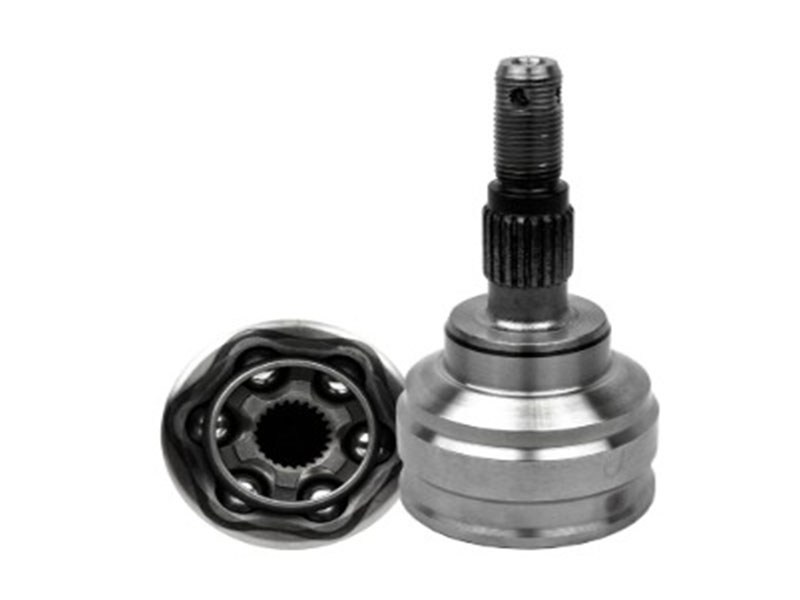
A constant velocity (CV) joint is a drivetrain component that transfers engine power to the drive wheels while allowing the suspension to move up and down and the wheels to steer. Each drive axle has two CV joints: an inner joint near the transmission and an outer joint near the wheel hub. The outer joint handles the sharp angles required for turning. According to SAE J1930 (standard automotive terminology), CV joints are constant‑velocity universal joints commonly used in front‑wheel‑drive and all‑wheel‑drive vehicles.
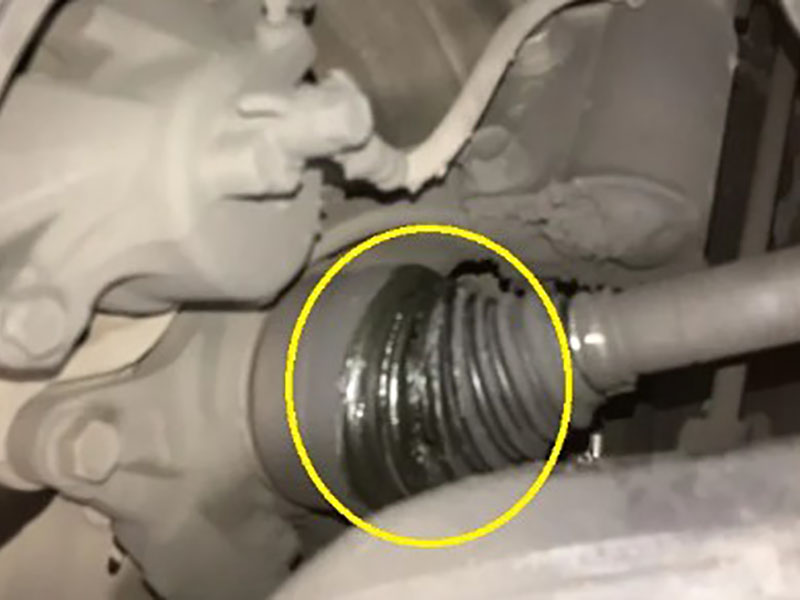
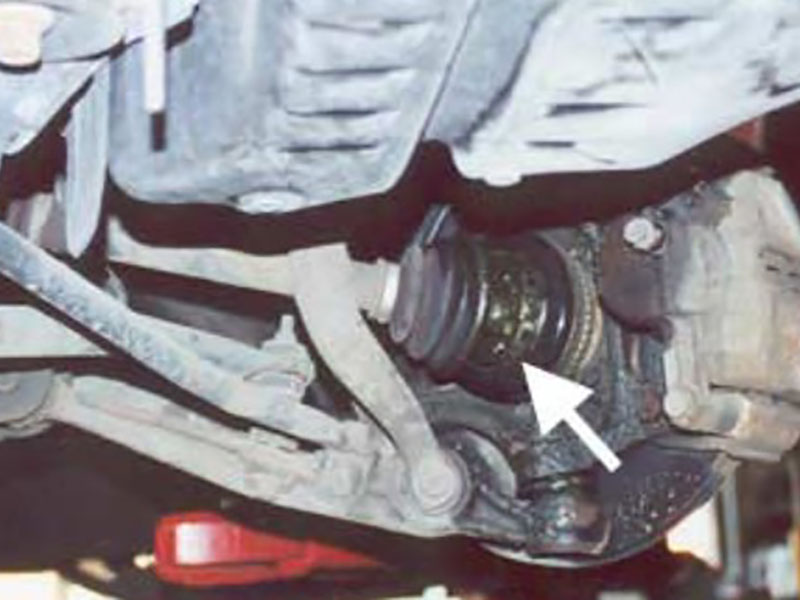
A rubber boot, also called a CV boot, seals each joint. It retains high‑temperature grease and blocks road contaminants. When the boot tears – often from age, ozone cracking, or debris impact – grease escapes and dirt enters. Without lubrication, the joint’s bearing surfaces wear rapidly. Industry repair data indicate that a torn boot left unrepaired typically leads to joint failure within 300 to 1,000 miles of normal driving.
Signs of a Failing CV Joint
Recognizing early symptoms helps you avoid sudden breakdowns and expensive secondary damage. Look for these indicators:
- Clicking noise when turning – The most characteristic sign. A rhythmic “click, click, click” occurs during sharp turns, especially when accelerating out of a corner. The noise is caused by loose balls or rollers inside the worn joint. It usually worsens over time.
- Grease on the inner edge of a wheel or suspension parts – Dark, heavy grease splattered near a wheel means the CV boot has torn. Check both inner and outer boots.
- Vibration while driving – A worn CV joint can cause vibration that increases with vehicle speed. You may feel it through the steering wheel or the floor pan. This indicates advanced wear.
- Reverse gear noise – Some drivers report a clunking or clicking when backing up. This often happens when the joint has significant radial play.
- Stiff or notchy steering – In severe cases, a damaged outer joint can make the steering feel heavier or bind during rotation.
Once any of these symptoms appear, the joint is compromised. The question then becomes: can you still drive, or is it already too risky?
Can You Drive with a Bad CV Joint?
Overall verdict – not recommended
Driving with a bad CV joint is strongly discouraged by automotive professional organizations such as ASE (National Institute for Automotive Service Excellence). A complete CV joint failure can occur without warning, resulting in sudden loss of power to the affected wheel. On a front‑wheel‑drive vehicle, that can cause unexpected direction changes or an inability to complete a turn.
Limited situation – very short, low‑speed trip
Some mechanics agree that a short, cautious drive to a nearby repair shop may be acceptable only when all of the following are true:
- The only symptom is occasional clicking during tight turns, with no noise when driving straight.
- There is no significant vibration during acceleration or at steady speeds.
- Only the CV boot is torn, and you have not yet heard any clicking or felt any vibration.
In this early stage, you may drive directly to a workshop – keep speed under 30 mph (50 km/h), avoid highways, and make no sharp turns with heavy throttle. Understand that each additional mile reduces the margin of safety and can turn a simple boot replacement (low cost) into a full half‑shaft replacement (significantly higher cost).
Conditions requiring a tow – do not drive
If you experience any of the following, do not attempt to drive. Arrange a tow truck immediately.
- Loud clunking, banging, or metallic grinding during acceleration, deceleration, or gear changes. This indicates the joint is near complete separation.
- Severe vibration that increases with speed, felt strongly through the chassis or steering wheel.
- Intermittent loss of power – the engine revs but the vehicle does not accelerate properly, or you feel a hesitation/jerking from the drivetrain.
- Visible CV joint separation – the axle has partly disconnected from the wheel hub. This is rare but possible in advanced failure.
Driving under these conditions is unsafe for you and other road users, and it often causes collateral damage to the transmission or wheel bearing.
Risks of Continuing to Drive with a Bad CV Joint
Ignoring a failing CV joint leads to more than just a roadside breakdown. Here are the concrete consequences based on real‑world repair data:
- Sudden loss of control – When the outer CV joint fails completely during a turn, the wheel loses all driving force. On a front‑wheel‑drive car, this can cause the vehicle to understeer or fail to complete the turn.
- Damage to other drivetrain components – A badly worn joint creates vibration and erratic torque delivery. That stress transfers to the transmission differential, wheel bearings, and suspension parts. Replacing a damaged transmission differential often costs five to ten times more than a CV axle replacement.
- Stranded breakdown – Once the joint separates, the axle may break loose and bounce inside the wheel well, making the vehicle immobile. Towing and repair costs are significantly higher than if you had addressed the issue early.
- Increased repair cost – Replacing a torn boot (parts $15‑40, labor 1‑1.5 hours) is much cheaper than replacing a complete half‑shaft assembly (parts $80‑300, labor 1.5‑2.5 hours). Driving on a damaged joint turns a minor repair into a major one.
How to Diagnose and What to Do Next
If you suspect a bad CV joint, follow these diagnostic steps, recommended by ASE master technicians:
- Park on level ground, turn the steering wheel fully to one side, and visually inspect the CV boots behind each front wheel (or all drive wheels on AWD). Look for cracks, tears, or leaked grease. A torn boot requires immediate attention.
- Perform a slow‑speed turning test in an empty parking lot. Drive in circles at full left and full right lock, listening for clicking. Note whether the noise occurs on left turns, right turns, or both.
- Feel for vibration during a short test drive at 30‑40 mph (50‑65 km/h). Pay attention to whether the vibration changes with speed or during acceleration.
What to do based on findings:
- If only the boot is torn and there is no noise or vibration, drive gently to a repair shop as soon as possible. The boot can be replaced, or the joint can be cleaned and repacked with fresh grease.
- If clicking or vibration is present, limit driving to essential trips only. Avoid high speeds and schedule a repair within a few days. Have a professional inspect the joint.
- If severe noise or vibration occurs, do not drive. Tow the vehicle to a mechanic. Continuing will almost certainly cause additional damage.
Conclusion
A bad CV joint is not a component you should ignore. While a vehicle with very early‑stage damage may tolerate a short, low‑speed trip to a repair shop, any clicking, vibration, or grease leakage must be taken seriously. The risks include sudden loss of power, damage to the transmission, and being stranded. To protect your safety and control repair costs, have a failing CV joint inspected and replaced as soon as symptoms appear. When in doubt, tow it – never push a damaged joint beyond its limit.
Frequently Asked Questions (FAQs)
Q: How many miles can I drive on a bad CV joint before it fails?
A: There is no safe or predictable mileage. According to real‑world repair shop data, a joint with minor clicking may last anywhere from 50 to 2,000 miles, but it can also fail in the next 10 miles. The only reliable approach is to repair it immediately after symptoms appear.
Q: Will a bad CV joint cause the wheel to fall off?
A: No. Even if the CV joint fails completely, the wheel remains attached to the wheel hub and suspension. However, you will lose power to that wheel, and the broken axle may bounce and damage nearby components such as the brake line or tie rod.
Q: Can a failing CV joint damage the transmission?
A: Yes. The vibration and erratic torque from a worn joint put extra stress on the transmission’s differential and output shaft bearings. Over time, that can lead to internal transmission damage – a repair that typically costs four to six times more than a CV axle replacement.
Q: Is it safe to drive with only a torn CV boot and no noise?
A: Short, low‑speed trips to a repair shop are acceptable. But once the boot is torn, contamination begins immediately. Driving for weeks or in wet, sandy, or snowy conditions accelerates wear significantly. Replace or repair the boot promptly to avoid joint failure.
This information is provided for general educational purposes. Vehicle conditions vary. Always consult a qualified mechanic for diagnosis and repair specific to your vehicle.