Quick Answer: Based on 2025–2026 U.S. shop rates and parts pricing, replacing one CV axle (the common repair) costs $300–$1,500 per side. An economy car at an independent shop runs $300–$700. A midsize SUV or sedan: $700–$1,200. A luxury model or heavy‑duty truck: $1,200–$1,800+. Catching a torn boot early costs only $120–250. Labor rates: $90–250/hour. Parts: $80–1,500+. Prices vary by region, vehicle, and shop type.
You turn the steering wheel and hear a rhythmic clicking. Or you spot grease splattered around a wheel well. Those are classic signs of a failing CV joint. For most drivers, the first question isn’t about how the joint works — it’s how much to replace a CV joint. This guide gives you real, data‑backed numbers so you can budget accurately and avoid overpaying.
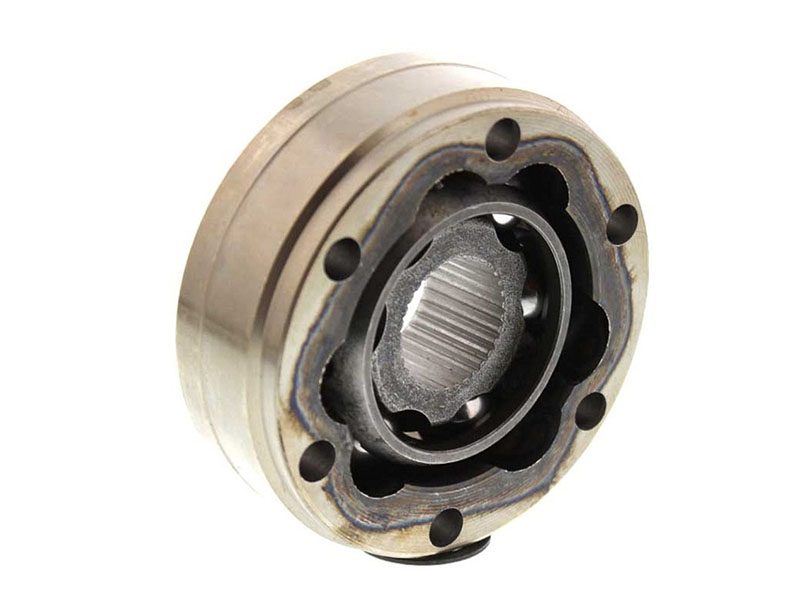
In modern repair shops, “replacing a CV joint” almost always means installing a completely new CV axle assembly (halfshaft). The total bill ranges from $300 to $1,500+ per side. The wide spread depends on vehicle make, parts quality, labor rates, and where you take the car. Below we break down every dollar.
How Much to Replace a CV Joint? Total Cost Per Side
| Repair Scenario | Total Cost (Parts + Labor) |
|---|---|
| Boot‑only replacement (preventive) | $120 – $250 |
| Single aftermarket axle (economy car) | $300 – $700 |
| Single OEM / luxury car axle | $650 – $1,850+ |
| Both sides replaced together | approx. 1.8× single‑side cost |
| Axle plus additional components (seals, bearings) | $1,200 – $2,000 |
Key takeaway: Most one‑side repairs fall into the $300–$1,500 range. The rest of this article explains why the numbers vary so much.
Cost Breakdown: Parts, Labor, and Extras
Parts cost
- Boot kit (if you catch the tear early) – $20–$50
- Aftermarket CV axle – $80–$200 (typical for economy to mid‑range cars)
- OEM or premium axle (European, heavy‑duty) – $500–$1,500+
Labor cost
- Standard book time – 1.5–3 hours (flat‑rate system; you pay the quoted hours regardless of how fast the mechanic works). Sources: MOTOR and Mitchell1 labor guides.
- Independent shop hourly rate – $90–$175
- Dealer hourly rate – $150–$250 (higher in major metro areas)
Common extra charges
- Wheel alignment (strongly recommended after axle replacement) – $50–$200
- Drive axle seal – often leaks when the old axle is removed – $100–$200
- Wheel bearing or suspension component – if damaged during failure – $50–$400
What Affects the Final Bill? Six Key Factors
Several variables explain why two shops can quote hundreds of dollars apart for the same car. Here are the biggest ones:
- Repair scope – A boot‑only fix ($120–250) versus a full axle replacement ($300–1,800+).
- Parts source – Aftermarket vs. OEM. The difference can be $200–$1,000 for the same axle.
- Shop type – Independent garage vs. dealer. You can easily pay $200–$500 more at a dealership for identical work.
- Vehicle make and model – An axle for a Toyota Corolla costs far less than one for a BMW or a Ford F‑250. Parts alone can differ by $1,000+.
- Geographic location – Rural shops charge $90–$120/hour. High‑cost cities often hit $200+/hour.
- One side or both – Replacing both axles at the same time usually runs about 1.8× a single side (not double) because labor overlaps.
Dealer vs. Independent Shop: Which Is Cheaper?
Many drivers overpay simply by defaulting to the dealership. The table below shows typical differences for a common front‑wheel‑drive car like a Honda Civic.
| Cost Component | Independent Shop | Dealer |
|---|---|---|
| Labor rate per hour | $90 – $175 | $150 – $250 |
| Parts used | Aftermarket or OEM (your choice) | OEM only (often 2–4× aftermarket price) |
| Typical total for a common car | $300 – $600 | $700 – $1,200 |
| Extra cost vs. independent | — | +$200 to +$500 |
Verdict: Unless your vehicle is still under a warranty that requires dealer service, a reputable independent shop almost always gives you the best value.
DIY Replacement: How Much Can You Save?
Doing the job yourself eliminates labor cost entirely, but it’s not a beginner‑level project.
- Labor cost saved: $150 – $400 (what you would have paid a shop)
- Parts cost you pay: $80 – $200 for an aftermarket axle
- Tool support: Free tool‑loan programs at major auto parts retailers provide axle pullers, torque wrenches, and other specialty equipment.
- Time required: Half a day to a full day for a first‑timer
Risks of DIY
- Incorrect torque on the axle nut can cause premature bearing or joint failure.
- Failing to clean the splines or install the snap ring properly may allow the axle to loosen.
- Without a proper alignment afterward (additional $50–200), the new axle can wear significantly faster — potentially cutting its life in half.
Recommendation: If you have mechanical experience, a torque wrench, and a factory repair manual, DIY is a solid money‑saver. Otherwise, paying a professional is worth the peace of mind.
How to Save Money on CV Joint Replacement
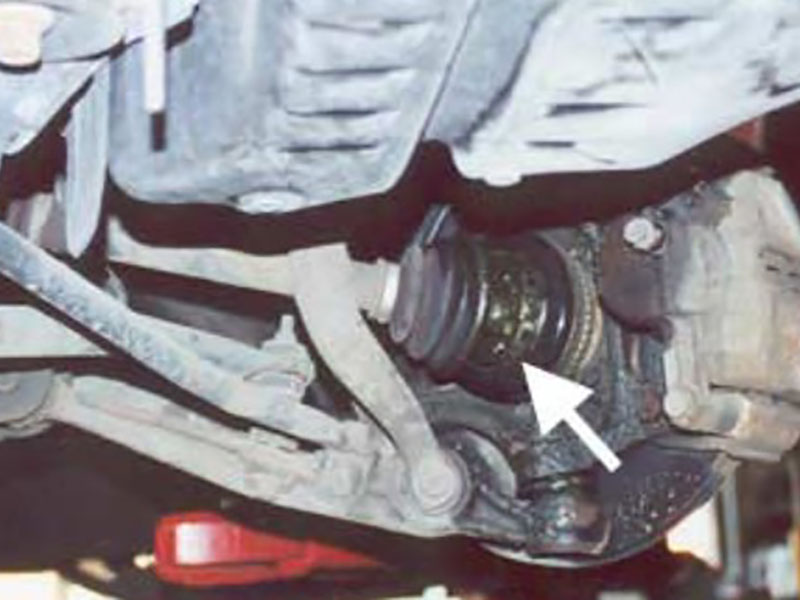
Even if you choose professional repair, these proven strategies lower your bill without cutting corners:
- Inspect boots every six months – Catching a torn boot early means a $120–250 boot‑only fix instead of a $1,000+ axle replacement.
- Get at least three quotes – Compare independent shops and dealers in your area. Prices for the same car can vary by $300 or more.
- Replace both sides together – Ask for a labor discount. Total cost often comes to about 1.8× a single side, not double.
- Check your powertrain warranty – Many manufacturers cover CV joints for 5 years/60,000 miles (some up to 10 years/100,000 miles) if the failure is due to a manufacturing defect. That costs you nothing.
- Avoid high‑pressure washing near boots – Direct steam cleaning ages rubber faster, leading to premature cracks.
- Consider aftermarket axles – For most daily drivers, a quality aftermarket axle works perfectly at a fraction of the OEM price.
CV Joint Repair Cost by Option: Boot Only vs. Full Axle
| Repair Option | Parts Cost | Labor Cost | Total Cost | When to Choose |
|---|---|---|---|---|
| Boot replacement only | $20–50 | $100–200 | $120–250 | Boot torn but no clicking / vibration yet |
| Aftermarket axle (one side) | $80–200 | $150–350 | $300–700 | Standard commuter car with symptoms |
| OEM / premium axle | $500–1,500+ | $150–400 | $650–1,850+ | Luxury, European, or heavy‑duty truck |
| Both sides together | 2× parts | ~0.8× single labor | ~1.8× single total | Maintain balanced driveline, often get labor discount |
| Axle + extra repairs (seals, bearings) | varies | varies | $1,200–2,000 | Additional worn parts found during disassembly |
CV Axle Replacement Cost by Vehicle Type (Economy, Midsize, Luxury, Truck)
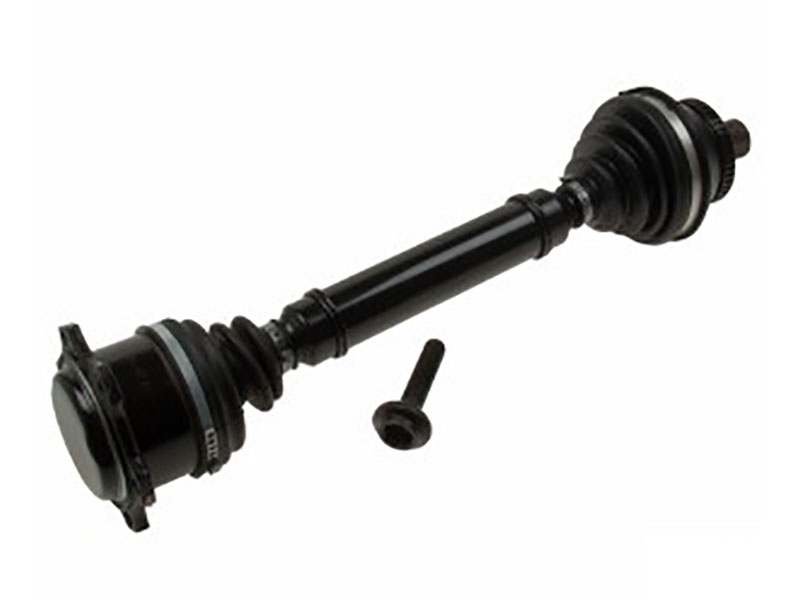
Estimates assume an aftermarket axle and an independent shop, excluding alignment or extra parts. Actual costs vary by model year, drivetrain (FWD/AWD), and local labor rates.
| Vehicle Category | Typical Total Cost Range | Example Models |
|---|---|---|
| Economy car / compact | $300 – $700 | Toyota Corolla, Honda Civic, Hyundai Elantra |
| Midsize sedan / compact SUV | $700 – $1,200 | Toyota Camry, Honda CR‑V, Nissan Rogue |
| Luxury sedan / SUV | $1,200 – $1,800+ | BMW 3 Series, Audi Q5, Volvo XC60 |
| Heavy‑duty pickup / full‑size SUV | $1,000 – $1,800+ | Ford F‑150, Chevrolet Silverado, Toyota Tundra |
Note: AWD/4WD models usually add $100–$300 per axle compared to their 2WD versions. Some European luxury vehicles (Porsche, Land Rover) can exceed $1,800 even for a single axle.
Conclusion
To answer how much to replace a CV joint with clear numbers:
- Budget $300–$700 for an economy car at an independent shop using an aftermarket axle.
- Expect $700–$1,200 for a midsize sedan or compact SUV.
- Prepare $1,200–$1,800+ for luxury, European, or heavy‑duty vehicles.
The single most effective way to control cost is early detection. Inspect your CV boots during every oil change. A torn boot that hasn’t started clicking costs only $120–250 to fix. Ignore it, and you’ll face a $1,000+ bill a few months later.
FAQs
Q1: How long can I drive on a torn CV boot before replacing the axle?
Once the boot tears and dirt enters the joint, you typically have about 500 miles before irreversible wear occurs. If you hear clicking or feel vibration, the damage is already done – a boot replacement won’t help. You need a full axle.
Q2: Do I really need a wheel alignment after CV axle replacement?
Yes, strongly recommended. A misaligned suspension can accelerate wear on the new axle significantly. The $50–200 alignment is cheap insurance.
Q3: Does my warranty cover CV joint failure?
– Factory powertrain warranty – Usually covers manufacturing defects, but not damage caused by a torn boot (considered external contamination).
– Extended warranty – Read the contract. Some explicitly list “CV joints,” others exclude them. Call your provider to confirm.
Q4: Why do different shops quote such different prices for the same car?
Three main reasons:
1. Parts source – aftermarket ($80–200) vs. OEM ($500+)
2. Labor rate – independent ($90–175/h) vs. dealer ($150–250/h)
3. Repair scope – boot only vs. complete axle vs. axle plus seals
Q5: How long does a CV axle replacement take at a shop?
A professional shop usually finishes in 2–4 hours including test drive and alignment. DIY can take half a day or more.
Q6: Are AWD or 4WD vehicles more expensive to repair?
Yes. Front axles on AWD/4WD models typically cost $100–300 more than their 2WD versions. Some vehicles also have rear CV axles, doubling the potential cost if both ends fail.
This guide is provided for informational purposes. Always consult a qualified mechanic for a specific diagnosis and estimate for your vehicle.
— Data and analysis compiled by DUHUI Bearing, an IATF 16949 certified manufacturer of automotive bearings and CV axle components. DUHUI supplies OE‑quality driveline parts to aftermarket distributors globally.