Quick Answer
For a typical economy sedan like a Honda Civic or Toyota Corolla, you’ll pay $300 to $700 to replace the timing belt tensioner pulley — parts and labor included. If you also need a new timing belt, idler pulley, and water pump, the total runs $500 to $1,000 at an independent shop. Doing it yourself saves $250–500 in labor, but a mistake can cause engine damage that costs $2,000–6,000 to fix.
Wondering whether that $700 quote is fair? Or if you can just replace the pulley and skip the belt? This guide pulls from 2026 repair data (RepairPal, tpautorepair, VehicleRuns) to give you real numbers for four-cylinder economy cars like the Honda Civic, Toyota Corolla, Ford Focus, and Hyundai Elantra. DUHUI Bearing, an automotive bearing manufacturer, provides this independent cost overview to help you make an informed decision — no sales pitch, just facts.
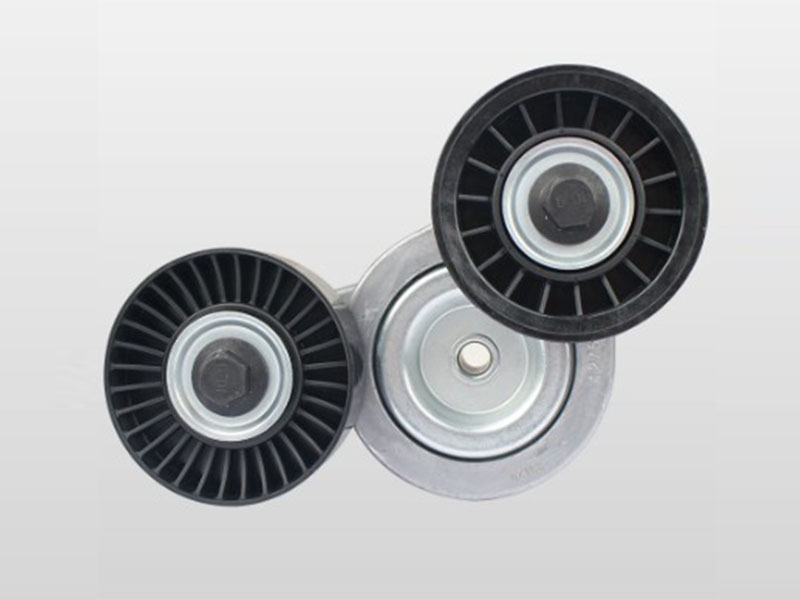
What Is a Timing Belt Tensioner Pulley and Why Does Its Cost Matter?
A timing belt tensioner pulley works with a spring or hydraulic damper to keep the timing belt at the correct tension. If the pulley fails — typically due to bearing wear or seal leakage — the belt can slip. In interference engines (where valves and pistons share the same space), a slip leads to valve-piston collision. That repair often exceeds $4,000.
Unlike general maintenance articles that focus on when or how to replace the part, this guide focuses strictly on replacement cost for economy vehicles. You’ll see price breakdowns, labor hours, and the financial logic behind replacing related components at the same time. That way you can decide between a quick fix and a long-term overhaul.
How Much Does It Cost to Replace a Timing Belt Tensioner Pulley?
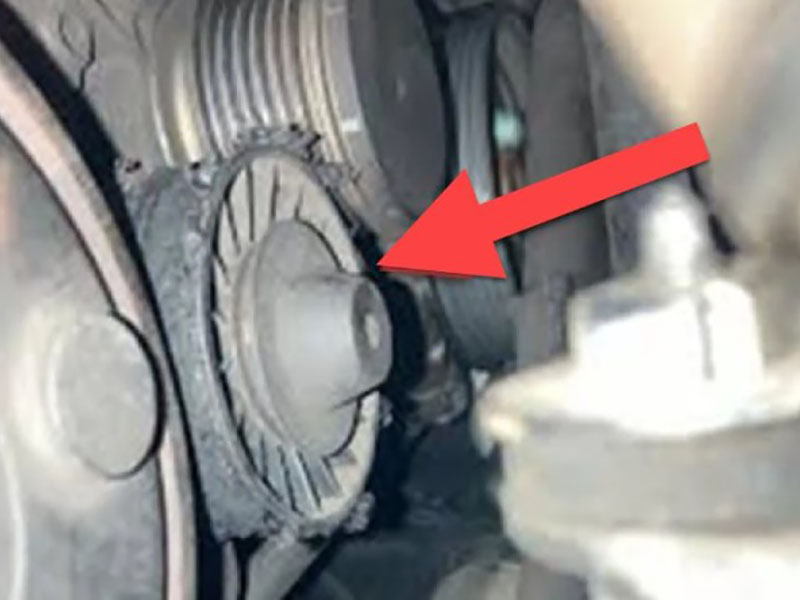
For compact and midsize sedans with four-cylinder engines, expect to pay $300 to $700 at an independent U.S. repair shop. That covers both the part and professional labor.
| Service Scope | Price Range (USD) | Notes |
|---|---|---|
| Tensioner pulley only (parts + labor) | $300 – $700 | Typical for economy four-cylinder sedans |
| Parts only (tensioner pulley) | $40 – $200 | Depends on OEM vs. aftermarket brand |
| Labor only | $250 – $500 | Usually 3–5 shop hours at $75–150/hour |
To give you a concrete example: a Honda Civic timing belt tensioner replacement is estimated between $511 and $707 (parts + labor) according to RepairPal’s 2026 data. The national average across all vehicles runs about $484 to $690. So if you own a Civic or Corolla, you’re right in the middle.
What about a full timing service? Most shops recommend replacing the timing belt, idler pulley, and water pump at the same time because the labor overlaps. A complete job (belt + tensioner + idler + water pump) typically costs $500 to $1,000. The parts kit alone runs $100–$300 without a water pump, or $150–$450 with one. Data from tpautorepair shows compact four-cylinder vehicles often come in at $400–$800 for the full service.
If you’re handy with tools, DIY can save you $250–500 in labor. But you’ll need parts ($100–300), special tools like a timing lock kit ($50–150), and a repair manual ($20–50). Total DIY cost: $170–500. Net savings for an experienced DIYer: $80–250. But a single mistake — misaligning the timing marks — can destroy your engine, costing $2,000–6,000. So this isn’t a beginner’s job.
Dealership vs. independent shop: Independents typically charge $400–900 for the same work that a dealership would do for $600–1,100. That’s a 15–25% difference. For most economy car owners, a reputable independent shop offers the best value.
Key Factors That Influence the Final Price
Vehicle make and engine layout
Compact four-cylinder engines with good access take fewer labor hours. A transverse V6 or a tight engine bay can add 1–3 hours to the job.
OEM vs. aftermarket parts
An OEM tensioner pulley runs $100–200. Quality aftermarket brands like Gates, Dayco, Litens, GMB, and SKF cost $40–120 — 20–40% cheaper — and offer similar reliability when they use sealed ball bearings and meet OE specifications.
Labor hours by engine type
Timing belt tensioner replacement typically takes 3–8 hours:
- Compact four-cylinder (easy access): 3–5 hours
- Midsize four-cylinder: 4–6 hours
- Transverse V6 or tight bay: 5–8 hours
Note: Economy sedans with inline-4 engines fall at the lower end.
Regional labor rates
– Rural independent shops: $75–120/hour
– Metro-area independents: $100–150/hour
– Dealerships: $150–200/hour
Additional parts replaced at the same time
Adding a timing belt ($25–60), idler pulley ($20–50), water pump ($50–150), and coolant adds $150–300 in parts. But it saves $200–400 in duplicate labor if you’d otherwise need to go back in later.
Only Tensioner Pulley vs. Full Timing Kit – Which Is More Economical?
Here’s a side-by-side look at the two approaches:
| Comparison Aspect | Only Tensioner Pulley | Full Timing Kit (Belt + Tensioner + Idler + Water Pump) |
|---|---|---|
| Part cost | $40 – $200 | $100 – $300 (kit) / $150 – $450 (kit + water pump) |
| Labor cost | Higher if belt fails later | One-time labor only |
| Long-term value | Poor unless belt is nearly new | Excellent – extends system life 50,000+ miles |
| Best for | Budget fix, low-mileage belt | Most economy car owners |
What mechanics actually recommend: If the timing belt has over 50,000 miles or has been in service for more than five years, install a full kit that includes the tensioner pulley. Paying for a second round of labor ($300–600) is rarely cost-effective.
Consequences of Delaying Replacement (With Cost Implications)
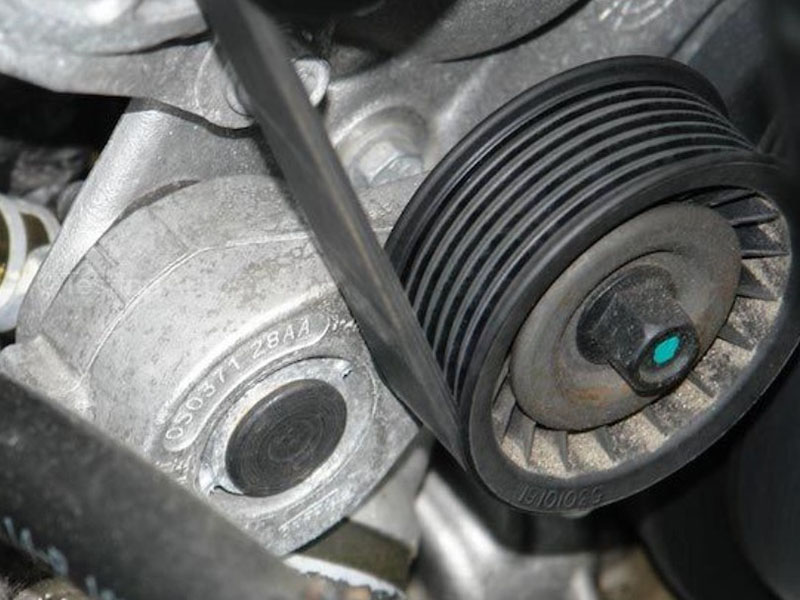
Ignoring a failing tensioner pulley doesn’t save money — it multiplies the eventual repair bill.
| Failure Mode | Symptoms | Repair Cost Progression |
|---|---|---|
| Pulley bearing wears out | Chirping or squealing noise → belt edge wear → jumping teeth | $300–700 → $1,000–4,000+ |
| Hydraulic tensioner loses pressure | Rough idle, loss of power, no-start | $1,500–4,000+ (interference engine damage) |
| Spring breaks, debris enters timing case | Sudden engine stall | $2,000–5,000+ |
| Water pump fails due to belt slip | Overheating, coolant leak | Adds $300–800 to repair cost |
For interference-type engines — which include many modern economy cars — a complete loss of tensioner function often results in bent valves and damaged pistons. That repair bill can easily exceed $4,000.
Money-Saving Strategies (Without Sacrificing Quality)
- Get multiple written estimates. Ask three to five independent shops for itemized quotes. Compare labor hours and parts charges separately — not just the final total.
- Choose quality aftermarket brands. Gates, Dayco, Litens, GMB, and SKF offer OE-level performance at 20–40% less than OEM parts. Look for sealed ball bearings and a 12-month minimum warranty.
- Bundle services for labor overlap. Replace the timing belt, tensioner, idler, and water pump together. A full timing kit ($100–300) plus the same labor charge saves you $200–400 in future duplicate repairs.
- Ask about kit pricing. Many shops will give you a small discount if you buy a complete timing kit rather than individual components.
- Schedule in the off-season. Repair shops are often less busy in January and February, and some may offer slightly lower rates.
Conclusion
On a typical economy sedan, replacing just the timing belt tensioner pulley costs $300 to $700 parts and labor. A full timing kit — including belt, tensioner, idler, and water pump — runs $500 to $1,000 at an independent shop. Your final price depends on your car’s model (Civic, Corolla, Elantra, etc.), local labor rates, and whether you pick OEM or quality aftermarket parts.
For most owners, the smartest move is to replace the tensioner pulley together with the timing belt and water pump — as a complete kit. Yes, the upfront cost is higher ($600–900), but you avoid paying duplicate labor later, and you get 50,000+ miles of trouble-free operation.
Delaying a failing tensioner pulley is a false economy. The risk of sudden belt failure and catastrophic engine damage — with repair bills over $4,000 — far outweighs any short-term saving. A proactive, kit-based replacement is the most reliable and economical strategy for the vast majority of economy sedan drivers.
Need a custom estimate? Use RepairPal’s Fair Price Estimator or call three local independent repair shops for itemized quotes.
Frequently Asked Questions (FAQs)
Q1: Is $700 too much to replace a timing belt tensioner on my Honda Civic?
A: No. According to RepairPal data, a Civic tensioner replacement runs $511–707. A $700 quote for a four-cylinder Civic is within the normal range. If a shop quotes over $900 for the same job, get a second opinion.
Q2: Can I replace only the tensioner pulley without the timing belt?
A: Yes — but only if the belt is nearly new (under 30,000 miles). If the belt has over 50,000 miles or is more than five years old, you’ll end up paying labor twice ($300–600 each time). Most mechanics say: replace the belt whenever you’re in there.
Q3: How long can I drive with a noisy tensioner pulley?
A: Don’t. Once you hear chirping or squealing from the timing cover area, the pulley bearing is already failing. Continued driving risks belt slip and engine damage — repairs starting at $2,000. Get it checked immediately.
Q4: How often should a tensioner pulley be replaced on an economy car?
A: Follow the timing belt schedule: typically 60,000–105,000 miles or 5–10 years, whichever comes first. Severe conditions (dust, extreme heat, frequent short trips) may shorten that interval. Check your owner’s manual.
Q5: Can a bad tensioner pulley damage a new timing belt?
A: Yes. An old tensioner applies incorrect force — too tight stretches the belt, too loose causes slapping and uneven wear. A new belt on an old tensioner can fail within 20,000 miles. That’s why shops insist on replacing both together.
Q6: My car runs fine — do I still need to replace the tensioner proactively?
A: Yes. Timing system components give little warning before failure. By the time you hear noise or feel performance loss, damage may already be happening. Following the manufacturer’s replacement interval is the cheapest insurance against a $4,000 engine rebuild.
Q7: How much do I actually save by doing it myself?
A: DIY saves $250–500 in labor but costs $170–500 for parts, tools, and a manual. Net savings for an experienced DIYer: $80–250. But the risk — a timing mistake causing $2,000–6,000 in engine damage — is high for beginners. This job isn’t for first-timers.
Q8: A shop quoted $900 for a full timing service on my Toyota Corolla — is that fair?
A: For a complete job (belt, tensioner, idler, water pump, coolant) on a four-cylinder Corolla, $900 is on the higher side but not unreasonable at a dealership. Independent shops typically charge $500–800 for the same work. Get two more quotes before deciding.
Q9: Does a timing chain engine also have a tensioner?
A: Yes, but it tensions a chain, not a belt. Chain tensioner replacement costs $600–2,500+ because you have to go deeper into the engine. This guide focuses on belt-driven systems, which are common in older and many current economy cars.
Q10: What’s the most common cause of tensioner failure on economy cars?
A: Two main causes: bearing wear (makes chirping noise) and hydraulic seal failure (loss of tension). Both are accelerated by age, heat cycles, and mileage. Replacing the entire timing component set at the recommended interval is the best prevention.
Q11: Does my economy car even have a timing belt?
A: Many older sedans use timing belts, but newer models increasingly use timing chains. Check your owner’s manual or search online for your year and engine. Chain-driven cars don’t need belt replacement, but they still have chain tensioners that eventually require service.
Q12: What’s the cost to replace a tensioner pulley and belt together?
A: On a four-cylinder economy car, both together typically cost $500–900 (parts + labor). That’s $200–400 cheaper than doing them separately because the labor overlaps. Most shops strongly recommend this combination for long-term reliability.
Q13: Can a mechanic inspect the tensioner without charging full replacement labor?
A: If the timing cover has to come off for inspection, that alone costs $150–400 in labor — often better applied toward replacement. Some shops offer free preliminary checks (listening for noise, looking at belt alignment), but those can’t detect internal bearing wear. If you suspect failure, budget for a full inspection or just go ahead with replacement.
Q14: What warranty should I expect from a repair shop?
A: Most reputable independent shops offer a 12-month / 12,000-mile warranty on timing belt and tensioner replacement. Dealerships may offer longer warranties but at higher prices. Always confirm warranty terms before authorizing work — especially if the shop suggests replacing only the tensioner without the full timing kit.
This guide is based on publicly available industry data from RepairPal, tpautorepair, and VehicleRuns as of 2026. DUHUI Bearing provides this information for educational purposes. Always consult your vehicle’s service manual and obtain multiple quotes before proceeding with repairs.