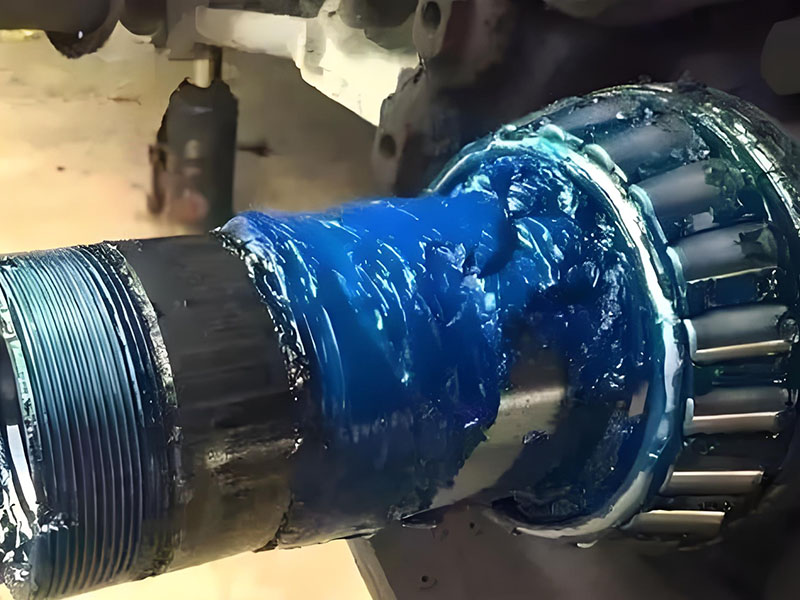
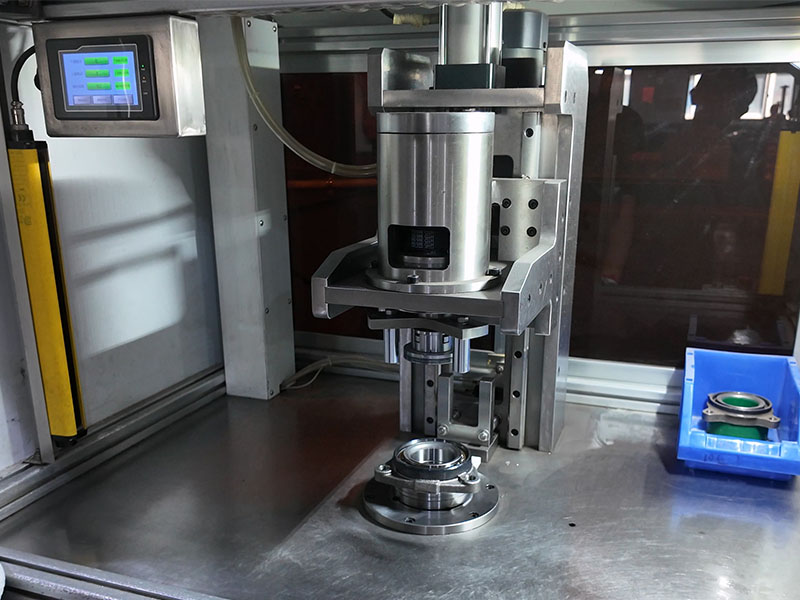
What makes sealed ball bearings a preferred choice for engineers across automotive, industrial, and agricultural applications? For equipment operating in dusty, wet, or contamination-prone environments, the answer comes down to protection, reliability, and reduced maintenance. This article covers the key benefits of sealed ball bearings, including extended service life, reduced maintenance, contamination protection, and application versatility.
What Are Sealed Ball Bearings?
Sealed ball bearings are rolling element bearings equipped with protective closures—typically made of elastomeric materials such as nitrile butadiene rubber (NBR) or fluororubber—that prevent foreign matter from entering the bearing interior while retaining lubricant.
Basic Structure and Working Principle
A sealed ball bearing consists of an inner ring, an outer ring, a set of rolling balls, a cage to separate the balls, and one or two seals mounted on the outer ring. The seal lip contacts or approaches the inner ring, creating a barrier that blocks contaminants while keeping grease inside the bearing cavity.
Contact vs. Non-Contact Seals
Seals are broadly classified into two types based on their interaction with the inner ring:
- Contact seals feature a seal lip that physically touches the inner ring. This design provides superior protection against contamination and moisture but generates additional friction torque, which can affect speed capability and increase power loss. Contact seals are typically designated by suffixes such as RS, 2RS, or DDU.
- Non-contact seals maintain a narrow clearance between the seal and the inner ring, eliminating friction entirely. They offer better speed performance than contact seals while providing more contamination protection than shields, though less than contact seals. Non-contact seals are often designated by suffixes such as RZ or LLU.
Common Suffix Designations
Understanding bearing suffix codes helps in selecting the right sealed bearing:
- 2RS / DDU: Double-sided contact rubber seals, providing maximum contamination protection at the cost of increased torque.
- LLU: Double-lip contact seal with enhanced sealing effectiveness, suitable for harsh environments.
- RZ / 2RZ: Non-contact rubber seals offering reduced friction and higher speed capability.
Key Functions of Sealed Ball Bearings
Sealed ball bearings perform several critical functions that directly impact equipment reliability and operating costs.
Contaminant Protection
The primary function of a seal is to prevent solid contaminants—dust, dirt, debris—and liquid contaminants such as water, moisture, or washdown fluids from entering the bearing raceway. Contaminant ingress is one of the leading causes of premature bearing failure, as foreign particles can cause abrasive wear, surface indentation, and lubricant degradation. Sealed bearings provide a physical barrier that effectively blocks most contaminants under normal operating conditions.
Lubrication Retention
Seals prevent the escape of lubricating grease from the bearing cavity. This function is particularly important because lubrication is essential for reducing friction, dissipating heat, and preventing metal-to-metal contact between rolling elements and raceways. By retaining grease, sealed bearings maintain optimal lubrication throughout their service life.
Reduced Maintenance
Because sealed bearings are pre-lubricated at the factory and designed to retain grease while excluding contaminants, they typically do not require periodic relubrication. This “sealed-for-life” characteristic eliminates the need for scheduled greasing, reduces labor costs, and removes the risk of over-lubrication or under-lubrication—common causes of bearing failure.
Corrosion Resistance
Seals also protect the bearing’s steel components from moisture and corrosive agents. By preventing water ingress, seals reduce the risk of rust formation on raceways and rolling elements, extending bearing life in humid or wet environments.
Performance Characteristics: Torque, Friction and Speed
Seal selection directly affects rotational torque, friction, and speed capability—key performance parameters in many applications.
Contact seals generate friction between the seal lip and the inner ring, which increases rotational torque. Contact seals therefore have lower maximum speed ratings due to frictional heat generation. Non-contact seals and shields, by contrast, generate virtually no additional friction and can operate at speeds comparable to open bearings.
Advanced seal designs continue to reduce the friction drawback of contact seals. For example, some manufacturers have developed ultra-low friction sealed ball bearings that achieve significant reduction in rotation torque compared to conventional contact sealed types.
Advantages of Sealed Ball Bearings
Extended Service Life
By excluding contaminants and retaining lubricant, sealed bearings achieve significantly longer service life than open bearings in contaminated environments. Field data indicates that sealed bearings can provide three to five times longer life in dirty operating conditions compared to open-type bearings.
Optimized Friction Performance
While contact seals introduce some friction, non-contact sealed designs achieve torque levels nearly equivalent to open bearings. For applications requiring contamination protection with minimal friction, non-contact seals offer a balanced solution. Even within contact seals, modern low-friction lip designs have narrowed the torque gap.
Maintenance-Free Operation
Sealed bearings are pre-greased at the factory and require no routine relubrication throughout their design life. This eliminates maintenance costs, reduces equipment downtime, and removes the risk of contamination during regreasing procedures.
Contamination Prevention
Sealed bearings provide reliable protection against a wide range of contaminants, including dust, dirt, water, chemicals, and process debris. This makes them particularly suitable for applications where environmental conditions cannot be tightly controlled.
Versatility
Sealed ball bearings are available in a wide range of sizes, materials, and seal configurations, making them adaptable to diverse applications across automotive, industrial, agricultural, and household equipment.
Sealed vs. Shielded Bearings: A Technical Comparison
Shields and seals serve similar purposes but have distinct design characteristics that make each suitable for different operating conditions.
Sealed Bearings
Sealed bearings use elastomeric seals that contact or closely approach the inner ring. They provide superior contamination protection compared to shields, making them ideal for harsh environments with dust, moisture, or chemical exposure. However, contact seals generate additional friction, which can reduce speed capability and increase torque.
Application scenarios for sealed bearings include environments where contamination risk is high and maintenance access is limited—such as agricultural equipment, outdoor machinery, food processing equipment, and automotive wheel hubs.
Shielded Bearings
Shielded bearings use metal shields that are pressed into the outer ring with a small gap (approximately 0.005 inches) between the shield and the inner ring. Because there is no contact, shielded bearings produce no additional friction and can operate at speeds equal to open bearings. Shields also withstand higher temperatures than elastomeric seals—up to 250°F (121°C) versus approximately 212°F (100°C) for standard rubber seals.
However, the gap in shielded bearings allows fine contaminants and moisture to enter, making them unsuitable for dirty or wet environments.
Application scenarios for shielded bearings include relatively clean environments such as electric motors, computer cooling fans, and precision instruments where high speed is required and contamination risk is low.
| Comparison Factor | Sealed Bearings | Shielded Bearings |
|---|---|---|
| Contamination Protection | Excellent | Moderate |
| Water/Moisture Resistance | Good | Poor |
| Rotational Torque | Higher (contact type) | Very low |
| Maximum Speed | Moderate (contact type) | High |
| Temperature Range | Up to ~100°C (rubber seals) | Up to ~120°C |
| Maintenance | Pre-lubricated, no regreasing | Pre-lubricated, no regreasing |
| Best For | Harsh, dirty, wet environments | Clean, high-speed environments |
Applications of Sealed Ball Bearings
Automotive
Sealed ball bearings are widely used in automotive wheel hubs, transmissions, alternators, electric power steering systems, and ABS control motors. Modern vehicles increasingly use sealed hub assemblies that require no maintenance and provide reliable performance throughout the vehicle’s service life.
Industrial Machinery
In industrial settings, sealed ball bearings are used in conveyor systems, pumps, fans, gearboxes, electric motors, and factory automation components. Their ability to operate in dusty factory environments while requiring minimal maintenance makes them a cost-effective choice for manufacturing equipment.
Household Appliances
Washing machines, dryers, refrigerators, vacuum cleaners, ceiling fans, and air conditioning units all rely on sealed ball bearings for quiet, reliable operation. The sealed design prevents detergent, moisture, and lint from entering the bearing while retaining grease for the appliance’s service life.
Agriculture
Agricultural equipment such as tractors, harvesters, tillers, planters, and balers operate in extremely challenging conditions—dusty fields, mud, water, and fluctuating temperatures. Sealed ball bearings with specialized seal designs, including triple-lip configurations, provide the durability required for these demanding applications.
Maintenance and Lubrication Considerations
Sealed ball bearings are factory-filled with a precise quantity of high-quality grease and are designed to operate without relubrication for their intended service life. Attempting to regrease a sealed bearing is generally not recommended, as it can damage the seal, introduce contamination, or cause over-lubrication.
The shelf life of sealed bearings is typically three to four years, limited by the grease’s chemical stability rather than the bearing steel itself. For long-term storage, sealed bearings should be kept in their original packaging in a clean, dry environment.
Conclusion
Sealed ball bearings offer several distinct benefits that make them a preferred choice across industries. By combining contamination protection, lubrication retention, and reduced maintenance requirements, they lower total cost of ownership in automotive, industrial, agricultural, and household equipment. While contact seals introduce some torque penalty compared to open or shielded designs, advances in low-friction seal technology continue to narrow this gap. For applications where environmental contaminants are present and maintenance access is limited, sealed ball bearings provide reliable, long-lasting performance.
Frequently Asked Questions
Q1: Do sealed ball bearings need to be lubricated?
A1: No. Sealed ball bearings are pre-lubricated at the factory with the correct type and quantity of grease and are designed for maintenance-free operation throughout their service life. Attempting to add grease is not recommended and may damage the seal or introduce contaminants.
Q2: When should sealed bearings be used instead of shielded bearings?
A2: Sealed bearings should be used when the operating environment contains dust, moisture, chemicals, or other contaminants that could damage the bearing. They are also preferred when maintenance access is difficult or when equipment must operate reliably without scheduled lubrication. Shielded bearings are more appropriate for clean, high-speed applications where contamination risk is minimal.
Q3: What is the difference between 2RS and LLU seals?
A3: Both are double-sided sealed bearings, but they differ in seal design. 2RS (or DDU) typically refers to contact rubber seals that provide maximum contamination protection. LLU refers to a double-lip contact seal with an inner flange, offering enhanced sealing effectiveness against both solid contaminants and liquids.
Q4: Can sealed bearings be used at high speeds?
A4: Yes, but speed capability depends on the seal type. Non-contact sealed bearings (e.g., RZ/2RZ) can operate at speeds comparable to open bearings. Contact sealed bearings have lower maximum speed ratings due to frictional heat generation at the seal lip. For high-speed applications requiring contamination protection, non-contact seals or light-contact seals offer a balanced solution.
Q5: How long do sealed ball bearings last?
A5: Service life depends on operating conditions, load, speed, and environmental factors. In contaminated environments, sealed bearings typically last three to five times longer than open bearings. The grease inside sealed bearings has a shelf life of approximately three to four years when stored properly. Under normal operating conditions, many sealed bearings outlast the equipment they are installed in.
Q6: Are sealed bearings waterproof?
A6: Sealed bearings provide good resistance to water and moisture, but their level of water protection depends on seal design. Contact rubber seals offer better water resistance than non-contact seals. For applications involving direct water spray or high-pressure washdown, specialized seal designs or additional housing protection may be required to prevent water ingress.