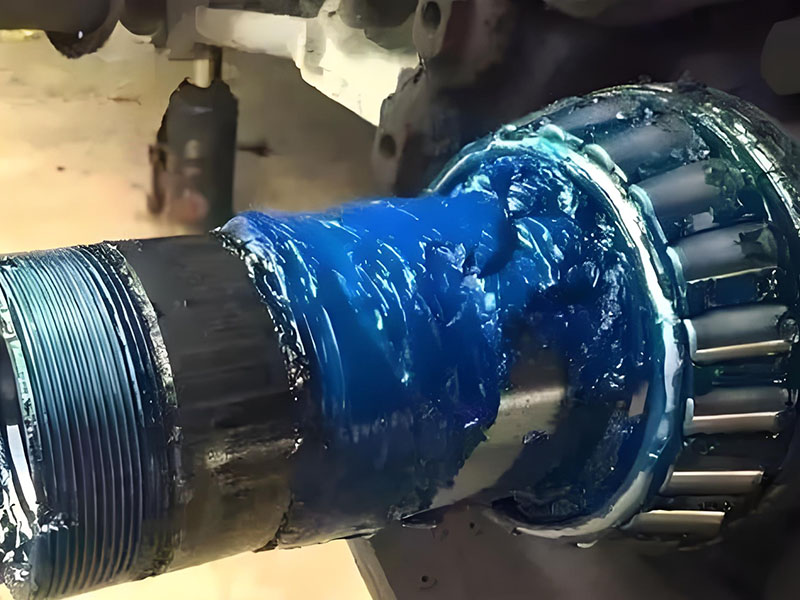
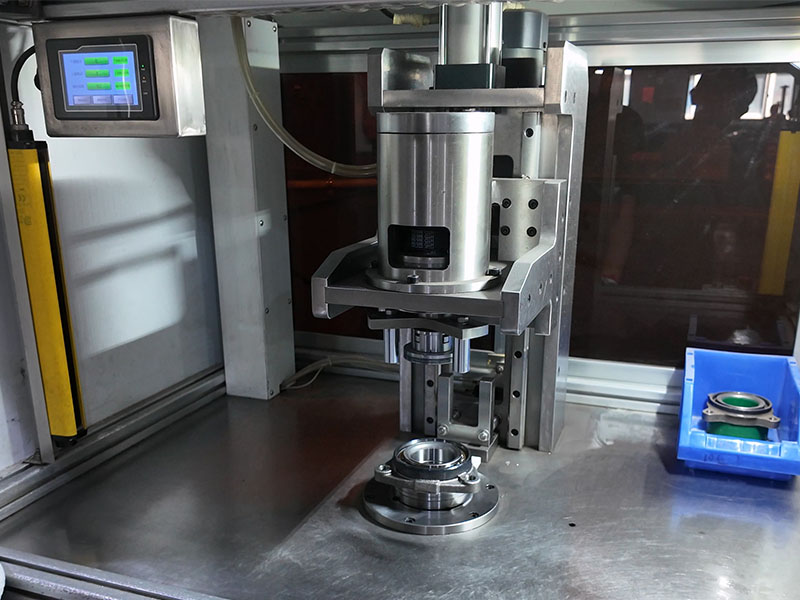
A bearing sleeve—also known as a plain bearing or bushing—is a cylindrical component that supports a rotating or oscillating shaft while reducing friction and wear. Unlike rolling element bearings, bearing sleeves operate on a sliding contact principle and are widely used in applications where compact design, high load capacity, or maintenance-free operation is required.
Choosing the right bearing sleeve type depends on several key factors: load magnitude and motion characteristics, lubrication availability, operating temperature and environmental conditions, and expected maintenance intervals. Making the wrong selection can lead to premature wear, increased downtime, and higher operational costs. This guide will introduce five common bearing sleeve types, compare their material structures and performance parameters, and provide practical selection advice.
What Are the Main Bearing Sleeve Types?
Bearing sleeves can be categorized by material composition, lubrication method, and manufacturing process. The five most widely used types in industrial and automotive applications are:
- PTFE composite bushings
- POM composite bushings
- Bimetal bushings
- Bronze wrapped bearings
- Solid lubricant inlaid bearings
Each type has distinct material structures, performance characteristics, and typical use cases. The following sections examine each type in detail.
PTFE Composite Bushings
PTFE bushings are self-lubricating composite bearings consisting of three bonded layers: a steel backing for structural strength, a porous sintered tin bronze layer that improves thermal conductivity and bond strength, and a PTFE (polytetrafluoroethylene) sliding layer (often mixed with lead or other fillers) for low friction and wear resistance. This multi-layer design is produced through a rolling process that embeds the PTFE mixture into the porous bronze layer.
The PTFE layer forms a transfer film on the mating shaft surface during initial operation. Once established, this film enables metal-on-lubricant contact rather than metal-on-metal contact, significantly reducing friction and wear. PTFE composite bushings operate effectively under dry running conditions and require no external lubrication, which makes them truly “fit and forget” components.
Key performance parameters for PTFE composite bushings:
- Temperature range: -195°C to +270°C
- Coefficient of friction (dry): <0.20
Typical applications include automotive suspension components, steering mechanisms, pedal pivot points, automation equipment, small motors, food machinery, and any application where lubrication is impractical or undesirable. These bushings are also used in hydraulic pumps under moderate load conditions.
POM Composite Bushings
POM bushings share a similar three-layer construction with PTFE bushings—steel backing plus porous sintered bronze—but use a POM (polyoxymethylene) sliding layer instead of PTFE. The POM layer may feature micro-pores or surface indentations that retain grease, enabling POM bushings to operate under boundary lubrication conditions.
Unlike PTFE bushings, POM bushings require initial greasing and periodic relubrication to maintain optimal performance. They are designed for applications where external lubrication is available but maintenance intervals may be extended. The POM layer provides higher mechanical strength than PTFE, making POM bushings better suited for applications requiring higher load-velocity combinations under lubricated conditions, such as shock-prone environments.
Key performance parameters for POM composite bushings:
- Temperature range: -20°C to +100°C
- Coefficient of friction (greased): <0.20
Typical applications include auto chassis components (steering gear, pedal bushes, king-pin bushes, tailgate pivots), hydraulic cylinders and motors, construction machinery, agricultural equipment, forging machines, and metallurgical equipment. POM composite bushings are also suitable for linear, oscillating, and rotating movements under relatively high load-velocity conditions with low to moderate speeds.
Bimetal Bushings
Bimetal bushings consist of a low-carbon steel backing with a sintered copper-lead or tin-bronze alloy lining layer. This two-layer structure combines the strength and dimensional stability of steel with the anti-friction and conformability properties of the bronze alloy. The steel backing provides high load capacity and excellent heat dissipation, while the sintered lining offers good wear resistance and fatigue strength.
Unlike composite bushings with polymer sliding layers, bimetal bushings rely entirely on an external lubricant supply (grease or oil) and typically incorporate oil pockets or grooves machined into the lining for better lubricant retention.
Key features of bimetal bushings:
- High fatigue strength under cyclic loading
- Excellent load capacity and impact resistance
- Good performance at high temperatures
- Compatibility with lead-free materials for EU RoHS compliance
- Good corrosion resistance with copper or tin plating
Typical applications include truck chassis, agricultural machinery (tractors, harvesters), construction equipment (excavators, loaders), automotive engine connecting rods, hydraulic motors, and general industrial machinery where regular lubrication is feasible.
Bronze Wrapped Bearings
Bronze wrapped bearings (also known as rolled bronze bushings) are manufactured by cold-forming a homogeneous bronze strip (typically CuSn8 phosphor bronze) into a cylindrical shape. The inner surface features diamond-shaped or half-ball lubrication grooves or indents that serve as grease reservoirs.
This manufacturing method offers several advantages over solid cast bronze bushings: lower material cost, more consistent material properties, easier volume production, and the ability to incorporate optimized lubrication groove patterns. The cold-forming process also work-hardens the bronze, improving its wear resistance.
Key features of bronze wrapped bearings:
- High density and load capacity
- Good anti-wear properties and long service life
- Diamond-shaped oil indents for effective grease retention
- More cost-effective than traditional cast bronze bushings
- Compact design suitable for space-constrained applications
Typical applications include construction machinery (hoisting equipment, excavators, loaders), automobiles, trucks, tractors, machine tools, and mining equipment. These bearings perform particularly well in slow-moving, heavily loaded pivot joints where contamination (dirt, dust, mud) is present—conditions under which rolling bearings would fail prematurely.
Solid Lubricant Inlaid Bearings
Solid lubricant inlaid bearings are manufactured from a high-strength metal matrix—typically bronze, brass, or cast iron—with solid lubricant plugs (graphite, molybdenum disulfide, or PTFE) mechanically embedded into the bearing surface. As the bearing operates, frictional heat and shear forces release the solid lubricant from the inlaid plugs onto the contact surfaces, forming a self-replenishing low-friction transfer film.
This design enables maintenance-free operation in applications where external lubrication is impossible or highly undesirable. Unlike polymer-lined composite bushings, solid lubricant inlaid bearings retain their load-carrying capacity even after the transfer film is temporarily disrupted by debris or contamination, as the lubricant continues to be released from the embedded plugs.
Key features of solid lubricant inlaid bearings:
- Truly maintenance-free for the bearing’s service life
- Extremely high load capacity (supported by the metal matrix)
- No fluid lubricants means no leakage or contamination risk
- Self-healing transfer film mechanism
- Excellent chemical and corrosion resistance
Typical applications include automotive production lines, water industry equipment, dam gates, plastic molding machinery, maritime and offshore equipment, steel mills, and any high-load, low-speed, or oscillating application where relubrication access is limited.
Quick Comparison of Common Bearing Sleeve Types
| Bearing sleeve type | Lubrication style | Typical features / uses |
|---|---|---|
| PTFE composite bushing | Dry running or very little grease | Low friction, maintenance-friendly; ideal for automotive suspension, automation, small motors |
| POM composite bushing | Boundary lubrication with grease | High load-velocity capacity under greased conditions, good for frequent start/stop; used in auto chassis, hydraulics, agricultural machinery |
| Bimetal bushing | Grease or oil lubrication | High fatigue strength; used in truck chassis, construction equipment, engine bearings |
| Bronze wrapped bearing | Grease stored in grooves | Cost-effective, tolerant of contamination; common in construction, lifting, and general machinery |
| Solid lubricant inlaid bearings | Self-lubricating (solid lubricant) | Maintenance-free; used where relubrication is difficult, with intermittent or oscillating motion |
How to Select the Right Bearing Sleeve Type
When selecting a bearing sleeve for a specific application, consider the following factors systematically:
1. Load characteristics. Determine whether the load is static or dynamic, radial or axial, and whether shock loading or vibration is present. Solid lubricant inlaid bearings and bimetal bushings excel under high static loads, while composite bushings handle moderate to high dynamic loads effectively.
2. Operating speed and motion type. For high-speed rotation, well-lubricated bimetal bushings are preferred. For low-speed, oscillating, or reciprocating motion, PTFE, POM, and bronze wrapped bearings all perform well. The product of pressure and velocity (PV factor) is a critical design parameter that affects bearing life.
3. Temperature range. PTFE bushings operate from -195°C to +270°C, making them suitable for extreme temperatures. POM and bimetal bushings have narrower temperature ranges but are adequate for most industrial environments.
4. Lubrication availability. If external lubrication is impossible or undesirable, select self-lubricating options: PTFE bushings (dry running) or solid lubricant inlaid bearings (maintenance-free). If periodic greasing is acceptable, POM bushings, bimetal bushings, and bronze wrapped bearings are viable options.
5. Environmental conditions. For dirty, dusty, or wet environments, bronze wrapped bearings (contamination-tolerant) or solid lubricant inlaid bearings (self-healing transfer film) are recommended. For clean environments like food processing, lead-free PTFE bushings are appropriate.
6. Maintenance requirements. Evaluate the cost and accessibility of routine maintenance. PTFE and solid lubricant inlaid bearings minimize maintenance needs, while POM, bimetal, and bronze wrapped bearings require periodic relubrication.
Summary of recommendations by application scenario:
| If you need… | Recommended bearing sleeve type |
|---|---|
| Dry running, no maintenance, wide temperature range | PTFE composite bushing |
| Greased operation, high load-velocity demands, shock resistance | POM composite bushing |
| High fatigue strength under cyclic loads, regular lubrication | Bimetal bushing |
| Cost-effective, contamination-tolerant, moderate loads | Bronze wrapped bearing |
| Truly maintenance-free, high static load, inaccessible location | Solid lubricant inlaid bearing |
FAQs
Q1: What is the difference between a bearing sleeve and a bushing?
A: The terms “bearing sleeve” and “bushing” are used interchangeably in most engineering contexts. Both refer to a plain bearing with a cylindrical geometry that supports a rotating or oscillating shaft through sliding contact.
Q2: What is PV value and why does it matter for bearing sleeve selection?
A: PV value is the product of bearing pressure (P, in MPa) and sliding velocity (V, in m/s). It represents the frictional heat generation rate at the bearing interface. Exceeding the material’s maximum PV limit leads to overheating, accelerated wear, and premature failure. The specific PV limit depends on the bearing material and lubrication condition.
Q3: Can PTFE bushings be used with lubrication?
A: Yes. While PTFE bushings are designed for dry running, they can operate with grease or oil lubrication. Under lubricated conditions, the allowable PV value typically increases significantly. Consult manufacturer datasheets for specific values.
Q4: Are bimetal bushings lead-free?
A: Many bimetal bushings are available in lead-free variants that comply with EU RoHS and other environmental regulations. Lead-free options typically use tin-bronze or aluminum-bronze lining layers.
Q5: How do I know which bearing sleeve type is right for my application?
A: Start by defining your operating conditions: load magnitude and type, speed, temperature range, available lubrication, and environmental factors. Then match these parameters to the performance specifications of each bearing type. For quick reference, see the summary table in the selection section above. For critical applications, request technical datasheets from the manufacturer and consider prototype testing.
Q6: What is the difference between PTFE and POM composite bushings?
A: PTFE and POM composite bushings share a three-layer construction (steel backing + porous bronze + polymer sliding layer), but differ in sliding material and lubrication requirements. Below is a detailed comparison.
Material structure comparison:
| Layer | PTFE Composite Bushing | POM Composite Bushing |
|---|---|---|
| Sliding layer | PTFE (often with fillers) | POM (polyoxymethylene) |
| Intermediate layer | Tin bronze powder (sintered) | Tin bronze powder (sintered) |
| Bonding layer | Copper layer | Copper layer |
| Backing | Steel | Steel |
| Top surface feature | Smooth PTFE film | Micro-pores or indentations for grease retention |
Performance comparison:
| Parameter | PTFE Composite | POM Composite |
|---|---|---|
| Temperature range (°C) | -195 to +270 | -20 to +100 |
| Coefficient of friction | <0.20 (dry) | <0.20 (greased) |
Application guidance: If the system operates dry and requires maintenance-free performance, PTFE composite is the appropriate choice. If the system is greased or oil-lubricated and operates under higher load-velocity combinations, POM composite typically provides longer service life. POM bushings are also better suited for applications with vibration, shock loading, or contamination.
Conclusion
Selecting the correct bearing sleeve type requires balancing multiple factors: load capacity, operating speed, temperature range, lubrication availability, environmental conditions, and maintenance expectations. PTFE composite bushings offer maintenance-free dry running for moderate loads across a wide temperature range. POM composite bushings provide higher load-velocity capacity with periodic greasing. Bimetal bushings deliver high fatigue strength for lubricated automotive and industrial applications. Bronze wrapped bearings offer a cost-effective, contamination-tolerant solution for construction and general machinery. Solid lubricant inlaid bearings enable truly maintenance-free operation under high-load, low-speed, or oscillating conditions where external lubrication is not feasible.
For specific application requirements—such as custom dimensions, non-standard materials, or lead-free compliance—consult with a bearing manufacturer to obtain detailed technical datasheets and engineering recommendations.