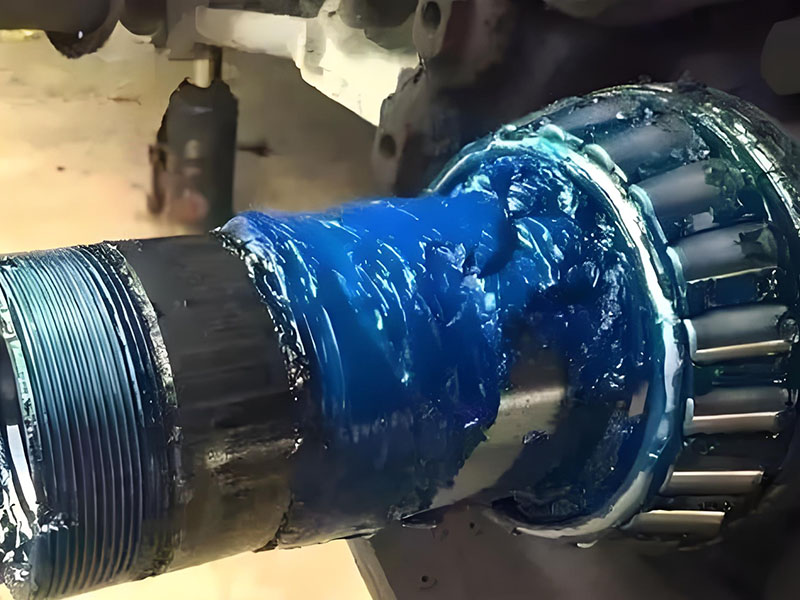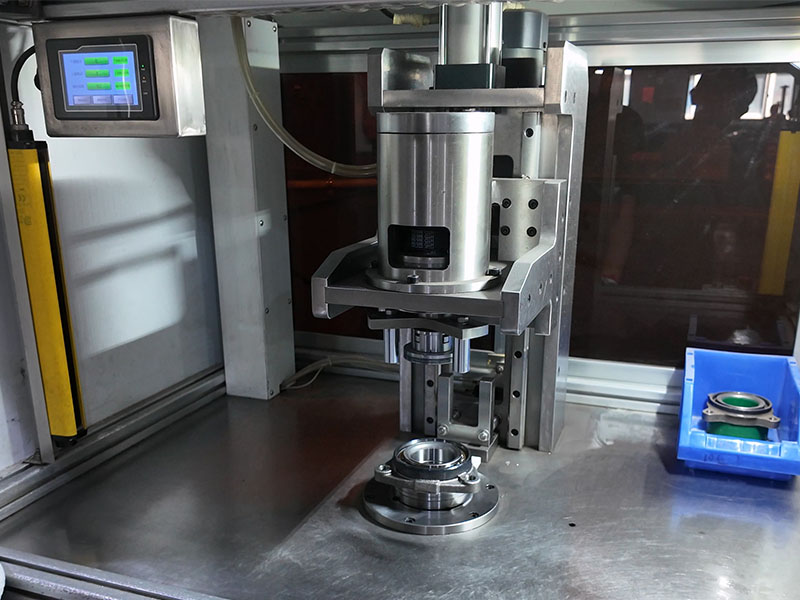
Hybrid ceramic bearings combine steel rings with ceramic rolling elements (typically silicon nitride, Si₃N₄). This design offers distinct advantages over all-steel bearings in high-speed, high-temperature, or electrically challenging environments. Engineers often ask: “When should I specify hybrid ceramic bearings instead of conventional steel bearings?” DUHUI will answer that question by examining construction, performance data, material science, and selection criteria.
What Are Hybrid Ceramic Bearings?
Definition and Basic Structure
A hybrid ceramic bearing consists of steel inner and outer rings paired with ceramic balls. The term “hybrid” distinguishes this configuration from full ceramic bearings (where rings and balls are both ceramic). Steel rings provide structural strength and compatibility with standard housings, while ceramic rolling elements reduce friction and improve thermal behavior.
Why Choose Hybrid Over All-Steel?
Hybrid designs address limitations of conventional bearings in three areas:
- Speed – reduced centrifugal force due to lower density of ceramic balls
- Temperature – ceramic balls resist softening up to 800°C
- Electrical insulation – silicon nitride blocks current, preventing fluting damage
They are not a universal replacement but are highly effective in targeted applications such as VFD motors, machine tool spindles, and aerospace drives.
Components of Hybrid Ceramic Bearings
Steel Rings (Materials and Heat Treatment)
Rings are manufactured from AISI 52100 chrome steel (high carbon chromium) or 440C stainless steel for corrosive environments. Heat treatment achieves a hardness of 58–65 HRC. Stainless steel rings offer corrosion resistance but reduce dynamic load rating by approximately 15–20% compared to 52100.
Ceramic Balls (Silicon Nitride Properties)
Silicon nitride (Si₃N₄) dominates due to its low density (3.2 g/cm³ vs. 7.8 g/cm³ for steel), high hardness (1500–1800 HV), and thermal stability up to 800°C. Other ceramics like zirconia (ZrO₂) or alumina (Al₂O₃) appear only in niche applications due to lower wear resistance or higher density.
Lubrication and Sealing Systems
Lubricantion include oils, greases, and solid lubricants (MoS₂). The ceramic surface promotes oil film retention. Seals – contact, non-contact, or shields – protect against contaminants. Typical combinations:
- High-speed spindles: oil-air lubrication
- Electric motors: greases with polyurea thickeners
- Vacuum or extreme temperatures: solid lubricants (MoS₂, graphite)
Types of Hybrid Ceramic Bearings
Radial Hybrid Bearings
Radial (deep groove) hybrid bearings accommodate combined radial and axial loads. They follow ISO dimension series 60, 62, and 63. Applications include pumps, compressors, and high-speed fans.
Angular Contact Hybrid Bearings
Angular contact designs support higher axial loads and are often used in pairs (back-to-back or face-to-face) for spindle applications. Contact angles of 15°, 25°, or 40° are standard. Machine tool spindles and precision gearboxes frequently employ these bearings.
Full Ceramic vs. Hybrid Comparison
Full ceramic bearings (ceramic rings and balls) operate at temperatures >500°C or in corrosive chemical baths but have lower load capacity and higher cost. Hybrid bearings offer a practical balance for most industrial applications below 300°C.
Key Benefits
Higher Temperature Tolerance
Silicon nitride balls maintain mechanical properties up to 800°C, while steel rings limit overall bearing temperature to approximately 300°C with proper lubrication. In comparison, all-steel bearings lose hardness above 150°C. The lower thermal expansion of ceramic (approx. 3.2 × 10⁻⁶ /K) reduces preload changes at elevated temperatures.
Enhanced Wear Resistance
Ceramic hardness (1500–1800 HV) exceeds that of bearing steel (700–800 HV). This reduces wear from contaminants and improves resistance to surface-initiated fatigue. In contaminated lubrication conditions, hybrid bearings demonstrate extended life because ceramic balls do not adhere to debris particles as steel does.
Increased Speed Capability
The lower density of silicon nitride reduces centrifugal force on rolling elements by approximately 58% compared to steel balls. This allows rotational speeds 20–40% higher than all-steel bearings of the same size before centrifugal overload occurs. Speed factor (DN value) for hybrid bearings can exceed 2 million mm·rpm with proper lubrication.
Hybrid Ceramic vs. All-Steel Bearings: Comparison Table
| Property | Hybrid Ceramic Bearing | All-Steel Bearing |
|---|---|---|
| Rolling element density | 3.2 g/cm³ (Si₃N₄) | 7.8 g/cm³ (steel) |
| Centrifugal force at 30k rpm (25mm bore) | Baseline | ~2.5× higher |
| Electrical insulation | Yes (resistivity >10¹⁴ Ω·cm) | No (conductive) |
| Maximum continuous temperature | ~300°C (ring-limited) | ~150°C (ball hardness loss) |
| Friction torque (high speed) | 15–30% lower than all-steel | Baseline |
| Relative cost | 3–8× | 1× |
Table 1: Technical comparison between hybrid ceramic bearings and conventional all-steel bearings.
Performance and Durability Characteristics
Load Capacity and Distribution
The load capacity of a hybrid ceramic bearing is primarily determined by the steel rings. Static load ratings (C₀) are identical to all-steel bearings of the same geometry. Dynamic load ratings (C) may be slightly lower (5–10%) due to different contact stress distribution between ceramic and steel. However, at high speeds, reduced centrifugal force often compensates for this difference.
Friction and Speed Behavior
Friction torque in hybrid bearings is typically 15–30% lower than all-steel equivalents at speeds above 10,000 rpm. Lower friction reduces heat generation, enabling sustained high-speed operation. Starting torque is similar between hybrid and steel bearings under full-film lubrication.
Fatigue Life and Maintenance Intervals
Calculated L₁₀ life (90% reliability) using ISO 281 often shows extended life for hybrid bearings in high-speed or contaminated environments. Field data from electric motor applications indicate that hybrid bearings can achieve 3–5 times longer service intervals compared to all-steel bearings when electrical pitting is present. Maintenance schedules should prioritize lubrication degradation rather than bearing fatigue.
Materials Used
Silicon Nitride vs. Other Ceramics
Silicon nitride offers a unique combination:
- Fracture toughness: 6–8 MPa·√m
- Weibull modulus >10
- Excellent thermal shock resistance
Zirconia (ZrO₂) has higher toughness but lower hardness and density of 6.0 g/cm³, reducing speed advantage. Alumina (Al₂O₃) is harder but brittle. For most engineering applications, Si₃N₄ is the standard choice.
Bearing Steel Grades (52100, Stainless)
AISI 52100 (100Cr6) provides high hardness and wear resistance. For corrosive environments, 440C stainless steel (X105CrMo17) or martensitic stainless grades are used, though with approximately 15–20% lower dynamic load rating. Rings may receive coatings such as black oxide or DLC (diamond-like carbon) for additional protection.
Cage and Lubricant Materials
Cages are commonly made from polyamide (PA66), PEEK, or brass. PEEK is specified for high-temperature or chemically aggressive environments. Lubricants include synthetic oils (PAO, ester) for high-speed spindles and lithium-complex greases for general industrial use. Grease life in hybrid bearings can extend up to 10,000 hours at moderate speeds.
Common Industrial Applications
Aerospace and Defense
Aerospace applications include aircraft accessory drives, helicopter transmissions, and turbine engine components. Hybrid ceramic bearings reduce weight and tolerate momentary lubrication loss. MIL-spec and AS9100-certified manufacturing is required.
Electric Motors and Generators
Variable frequency drive (VFD) motors benefit from electrical insulation properties. Typical use cases:
- Wind turbine generators
- Traction motors
- Industrial motor repairs
OEMs report reduced downtime from electrical fluting damage.
High-Speed Machining and Industrial Equipment
Machine tool spindles (20,000–60,000 rpm) represent a major application. Hybrid bearings allow higher cutting speeds with lower thermal growth. Other applications include turbochargers, vacuum pumps, dental handpieces, and high-speed centrifuges.
Selecting the Right Hybrid Ceramic Bearing
Speed and Load Calculations (DN Value)
Calculate the required DN value (bore diameter in mm × speed in rpm). Guidelines:
- DN < 500,000: all-steel bearings may suffice
- DN 500,000 – 1,500,000: hybrid bearings provide reliable operation
- DN > 1,500,000: specialized hybrid designs with PEEK cages and oil-jet lubrication
Load ratios (P/C) below 0.15 favor hybrid bearing benefits.
Environmental Factors
Selection considerations based on operating environment:
- Humid or wash-down conditions: stainless steel rings + appropriate IP seals
- Solid contaminants: closed seals or shields
- Temperatures above 150°C: high-temperature lubricants + check steel ring dimensional stability
Cost-Benefit Analysis
Hybrid ceramic bearings typically cost 3–8 times more than equivalent all-steel bearings. Justification depends on:
- Reduced downtime
- Extended relubrication intervals
- Prevention of catastrophic failure
Applications with continuous operation (24/7) or difficult access for maintenance often realize payback periods under six months.
Precision Classes (ABEC/ISO)
Hybrid bearings are available in precision grades from ABEC 1 (ISO P0) to ABEC 9 (ISO P2). High-speed spindles typically require ABEC 5 (P4) or higher. Tighter tolerances improve running accuracy but increase cost. For electric motors, ABEC 1 or 3 is usually sufficient.
Installation Best Practices
Pre-Installation Inspection
Inspect bearing packaging for damage. Verify smooth rotation by hand. Do not remove protective oil film unless cleaning is required. Check shaft and housing dimensions, roundness, and surface finish (recommended Ra ≤ 0.4 μm for shaft fits).
Mounting Techniques
Use induction heaters or oil baths for heating the inner ring (for press-fit on shafts). Do not apply direct heat above 120°C. Use mounting sleeves and press tools that apply force to the ring with interference fit – never through rolling elements. For angular contact bearings, match orientation to load direction.
Post-Installation Verification
After mounting, measure residual axial play or preload according to manufacturer specifications. Run the assembly at low speed (10–20% of maximum) for 15 minutes to check for abnormal noise or temperature rise. Vibration analysis can confirm proper seating.
Maintenance and Care
Cleaning and Relubrication Schedules
Relubrication intervals can be extended compared to all-steel bearings. Recommended practices:
- Grease-lubricated, below 70°C: relubricate every 5,000–10,000 hours
- Oil lubrication: monitor oil condition (particle count, viscosity)
- Avoid over-greasing – add 30–50% of calculated grease volume for the first relubrication
Monitoring Wear and Performance
Monitor bearing temperature and vibration. A temperature increase of 15°C above baseline indicates possible lubrication degradation or misalignment. Vibration velocity (mm/s RMS) is a practical indicator; values above 4.5 mm/s for medium-sized motors suggest investigation. Use ferrography or oil debris analysis for early detection of wear particles.
Common Operational Issues
Premature failure often results from:
- Improper mounting (brinelling)
- Contamination during installation
- Incorrect lubricant selection
Unlike all-steel bearings, hybrid bearings rarely fail by adhesive wear (smearing) but can experience ring cracking from excessive interference fits. Electrical damage is absent due to ceramic insulation.
Frequently Asked Questions (FAQ)
Why are hybrid ceramic bearings more expensive than traditional bearings?
The higher cost results from precision manufacturing of silicon nitride balls (hot isostatic pressing, grinding, finishing) and specialized quality control. Lower production volumes also contribute.
In what applications are hybrid ceramic bearings most beneficial?
High-speed spindles (DN > 500,000), VFD motors with bearing current risks, vacuum and cryogenic environments, and applications where lubrication is difficult to maintain.
Do hybrid ceramic bearings require special maintenance?
Maintenance practices are similar to all-steel bearings, though relubrication intervals may be extended. Use standard mineral oils or lithium greases. Avoid contamination during relubrication.
Can hybrid ceramic bearings operate without lubrication?
Short-term operation (minutes) under dry conditions is possible due to low friction of ceramic-on-steel contact. However, continuous unlubricated operation leads to rapid wear of steel rings. For vacuum or extreme temperatures, solid lubricants (MoS₂ or graphite) are required.
Are hybrid ceramic bearings suitable for automotive wheel hub applications?
While hybrid bearings can be used in wheel hubs, most passenger vehicles use conventional steel bearings due to cost sensitivity. However, high-performance or electric vehicles with integrated motors may benefit from hybrid bearings to handle higher speeds and electrical currents from regenerative braking systems.
How long do hybrid ceramic bearings typically last?
Service life varies. In clean, well-lubricated high-speed spindles, lives exceeding 20,000 hours are common. In VFD motors, hybrid bearings often outlast the motor winding insulation. Periodic relubrication is the primary factor limiting life.
Are hybrid ceramic bearings prone to electrical damage?
No. Silicon nitride is an electrical insulator, preventing current passage. Hybrid bearings are specified specifically to avoid electrical fluting damage that occurs in all-steel bearings in VFD applications.
Conclusion
Hybrid ceramic bearings offer measurable performance improvements in high-speed, high-temperature, or electrically challenging environments. Their construction – steel rings with silicon nitride rolling elements – balances structural strength with low friction and electrical insulation. Engineers should evaluate speed requirements (DN value), electrical risks, and maintenance access when considering hybrid designs. While initial costs exceed those of all-steel bearings, extended service intervals and reduced unplanned downtime often justify the investment. Proper installation, correct lubricant selection, and periodic monitoring ensure reliable operation. For applications below DN 500,000 without electrical or contamination concerns, all-steel bearings remain a cost-effective choice. However, when speed, temperature, or electrical demands exceed steel bearing capabilities, hybrid ceramic bearings provide a proven technical solution.