Have you ever wondered what prevents a rotating shaft from sliding out of its housing under heavy load? In many mechanical systems, the unsung hero is the thrust washer. Despite its simple appearance, selecting the wrong one can lead to premature wear, misalignment, and even catastrophic equipment failure. DUHUI will provide a detailed look into what thrust washers are, how they function, and how to choose the right one for your application.
Definition and Functions of Thrust Washers
A thrust washer is a load-bearing component designed to manage axial thrust—the force that acts parallel to the axis of a rotating shaft. Unlike radial bearings that handle rotating loads, thrust washers specifically accommodate linear, or thrust, loads.
Core functions include:
- Maintaining axial clearance: They hold components like gears or crankshafts in precise positions.
- Reducing friction: By providing a smooth, sacrificial surface between moving parts, they prevent metal-to-metal contact.
- Distributing load: They spread axial forces over a larger area to protect expensive components like housings or bearing faces.
Common Types of Thrust Washers
The design of a thrust washer varies significantly based on the application requirements. Here are the three most common configurations:
Flat Thrust Washers
These are simple, flat rings typically made from hardened steel, bronze, or PTFE composites. They rely on the sliding motion between surfaces. Flat washers are ideal for applications with limited space, oscillating movements, or where lubrication is abundant.
Roller Thrust Washers
Often integrated into needle roller or cylindrical roller bearings, these washers act as a raceway for rolling elements. They are designed for high-load, high-rigidity applications. Roller thrust washers significantly reduce friction compared to flat washers but require precise alignment and consistent lubrication.
Ball Thrust Washers
Similar to roller types but using balls as the rolling element. Ball thrust washers are suited for higher speed applications with moderate axial loads. They are commonly found in automotive steering systems and transmissions where smooth, low-friction rotation is critical.
The Relationship Between Thrust Washers and Bearings
Understanding the interplay between thrust washers and bearings is crucial for proper system design.
- Complementary Function: In many assemblies, the bearing handles the radial load (the weight of the shaft), while the thrust washer handles the axial load (the push along the shaft). Together, they ensure the shaft rotates freely without drifting.
- Component of a Bearing: Some “thrust bearings” are essentially a combination of a thrust washer and rolling elements. For instance, a needle roller thrust bearing consists of a cage with needles sandwiched between two thrust washers (raceways).
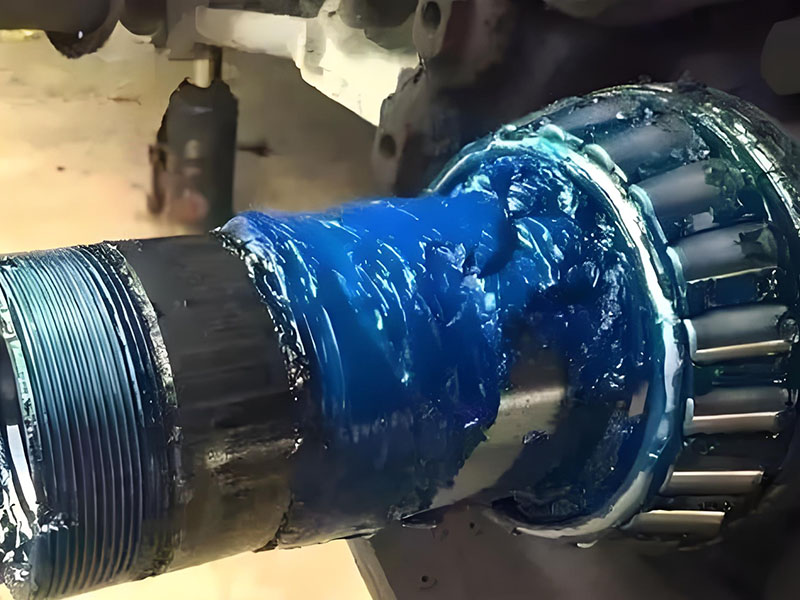
- Adjacent Installation: Even when a bearing has its own axial capacity, a separate thrust washer is often installed adjacent to it to protect the housing shoulder from wear caused by vibration or micro-motion.
Key Applications in Industry and Automotive Systems
Thrust washers are ubiquitous in any machinery that involves rotating shafts.
Industrial Machinery
In heavy equipment like wind turbines and gear reducers, thrust washers manage the immense axial forces generated by gear teeth engagement. They ensure the gearbox maintains precise alignment over decades of operation.
Automotive Systems
The automotive industry is one of the largest consumers of thrust washers. They are critical in:
- Engine (Maintain Crankshaft Alignment): In an internal combustion engine, engine thrust washers are installed on the crankshaft. Their primary job is to limit the crankshaft’s endplay (axial movement). Without them, the crankshaft could damage the engine block or cause the connecting rods to misalign.
- Transmission (Enable Smooth Gear Shifting): In manual and automatic transmissions, thrust washers support gear clusters and reduce the stress from clutch operation. They allow for smooth gear shifting by providing a low-friction surface for rotating gears under load.
Common Causes of Thrust Washer Failure
Identifying failure modes can help in preventive maintenance. Most thrust washer failures result from:
- Contamination: Dirt, debris, or metallic particles in the lubricant act as abrasives, quickly wearing down the washer surface.
- Misalignment: If the washer is not perfectly perpendicular to the shaft axis, uneven load distribution leads to premature edge loading and failure.
- Excessive Load: Pushing the component beyond its designed axial load capacity causes deformation, galling, or cracking.
- Improper Lubrication: Lack of oil or grease leads to excessive heat generation and friction welding of the surfaces.
How to Select the Right Thrust Washer
When sourcing thrust washers for a new project or replacement, consider these five critical parameters:
- Material: Choose based on operating conditions. Steel offers high strength; bronze provides excellent anti-seizure properties; PTFE composites allow for dry-running (maintenance-free) operation.
- Load Capacity: Ensure the static and dynamic load ratings exceed the maximum axial force expected in the system.
- Speed: High-speed applications typically require rolling element types (ball or roller) or specialized lubricated composite flat washers.
- Lubrication: Determine if the system uses oil, grease, or if the washer needs to operate dry.
- Dimensional Accuracy: Precise thickness and parallelism are essential for maintaining the correct shaft endplay.
Manufacturing Standards and Quality Assurance
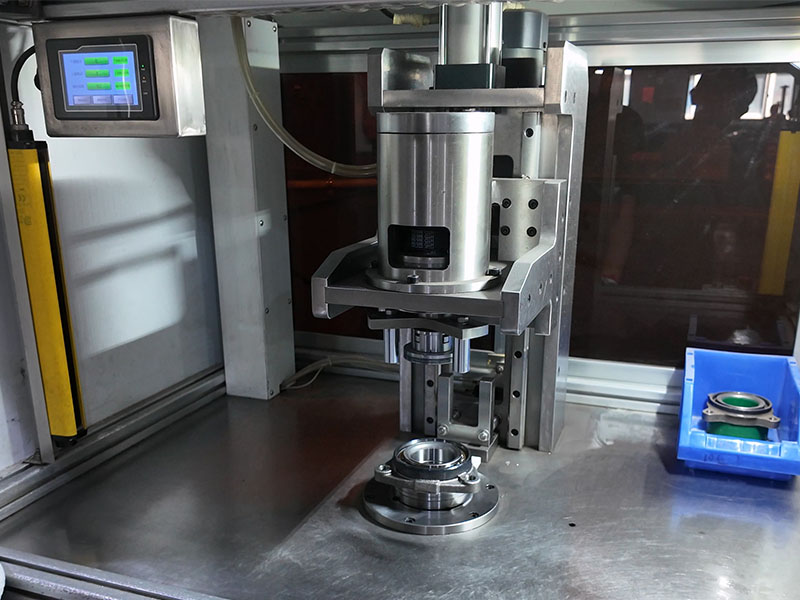
For critical applications such as automotive transmissions or industrial pumps, the quality of a thrust washer cannot be compromised. High-quality manufacturing involves precise stamping, grinding, and heat treatment processes to achieve the required hardness and dimensional stability. Reputable manufacturers adhere to international standards like ISO 9001 or automotive-specific IATF 16949, ensuring that every thrust washer meets strict tolerances for flatness, surface finish, and material consistency.
Conclusion
Thrust washers may be small, but they are fundamental to the reliability and longevity of rotating machinery. Whether you are dealing with the high axial loads of a wind turbine gearbox or the precision requirements of an automotive engine, selecting the correct type, material, and size is essential.
For businesses seeking reliable thrust washer solutions, partnering with a manufacturer that prioritizes precision manufacturing and strict quality control is key. As an experienced bearing components manufacturer, DUHUI Bearing specializes in producing high-quality thrust washers and bearings that meet rigorous industry standards, ensuring your mechanical systems operate smoothly under the toughest conditions.