When selecting a bearing assembly for industrial machinery, engineers frequently ask: What is the difference between a pillow block and a flange unit? Which locking method works best for bidirectional rotation? And how does housing material affect service life in corrosive environments? This article provides a technical overview of mounted ball bearings, covering their definition, features, common types, selection criteria, and maintenance practices to support informed decision-making.
What Are Mounted Ball Bearings?
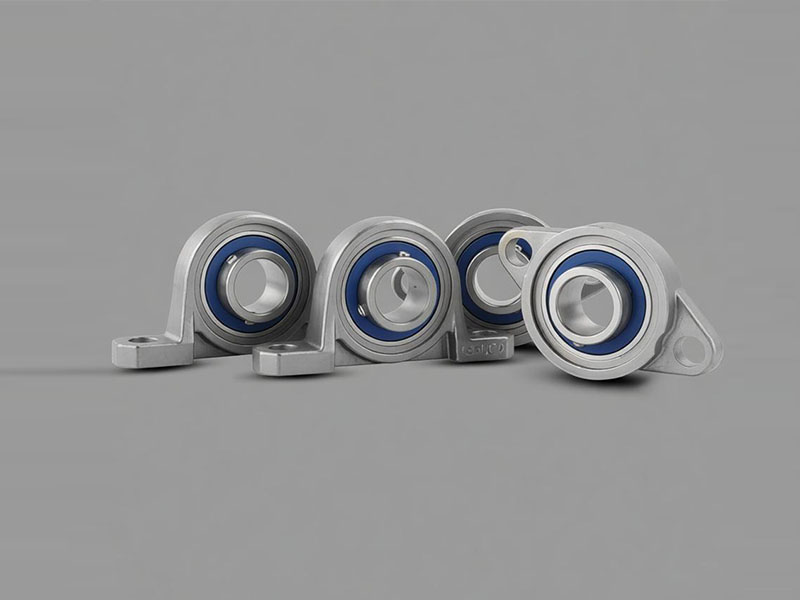
Mounted ball bearings, also referred to as housed bearing units, consist of a pre-assembled ball bearing insert enclosed within a housing that can be bolted directly to a support structure. The bearing insert includes an inner ring, outer ring, ball complement, cage, and seals. The housing—typically manufactured from cast iron, stainless steel, or thermoplastic—provides mechanical protection and simplifies installation.
A defining characteristic of mounted ball bearings is the spherical fit between the insert’s outer ring and the housing’s concave bore. This design compensates for initial shaft misalignment during installation, a capability not available in standard deep groove ball bearings. Mounted ball bearings support both radial loads and axial loads for light to medium-duty applications, offering low friction and high stiffness relative to their compact size. Because the entire unit is replaceable as a single component, maintenance downtime is significantly reduced compared to loose bearing assemblies.
Key Features and Advantages of Mounted Ball Bearings
Features
Self-aligning ability. The spherical outer surface of the bearing insert combined with the concave housing bore compensates for initial misalignment caused by mounting inaccuracies or frame deflection. This reduces internal stress and extends bearing life.
Load capacity. Mounted ball bearings handle radial loads (perpendicular to the shaft) and moderate axial loads (parallel to the shaft). They are best suited for light to medium load applications. For heavy-duty conditions, roller bearings are generally recommended.
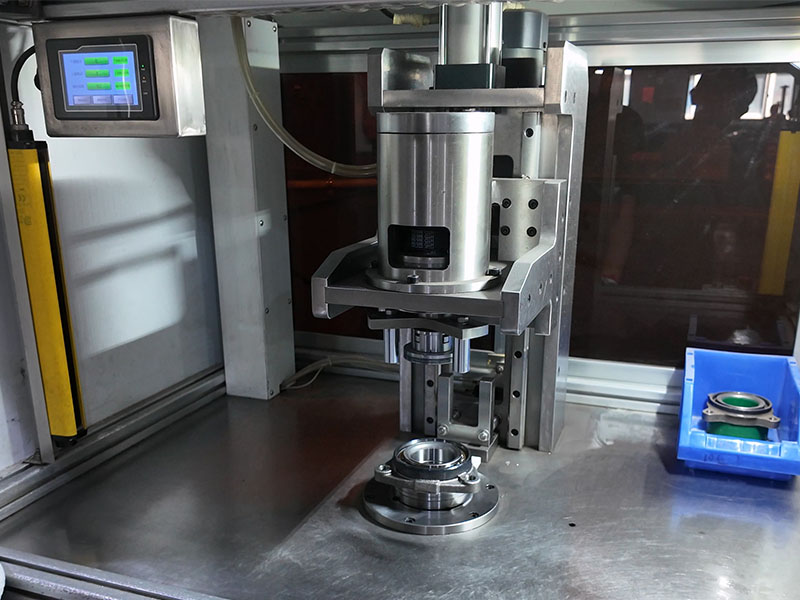
Pre-assembled, ready-to-mount design. The housing comes pre-assembled with the bearing insert, eliminating separate bearing mounting and alignment steps. Bolting the housing to the support structure is the primary installation task, followed by inserting the shaft through the bearing bore.
Advantages
Improved performance and reliability. Sealed designs prevent contaminant ingress while retaining lubricant, ensuring consistent operation in dusty or washdown environments.
Reduced downtime and maintenance costs. Standardized housing dimensions allow rapid unit replacement. Many mounted bearings feature relubrication ports, enabling in-service greasing without disassembly.
Versatility and adaptability. Available in multiple housing materials (cast iron for general use, stainless steel for food processing and corrosive environments, thermoplastic for chemical resistance) and various seal configurations to meet application-specific needs.
Common Types of Mounted Ball Bearings
Mounted ball bearings are classified primarily by housing configuration. The four most common types are described below.
Pillow Block Bearings
Pillow block bearings, also known as plummer block bearings, feature a housing with a flat base and bolt holes for mounting onto horizontal surfaces. The housing shape resembles a pillow, giving the type its name. These units are widely used where the shaft runs parallel to the mounting base.
Typical uses: Conveyor systems, fans, pumps, agricultural machinery, and general industrial equipment.
Advantages: Straightforward base mounting, easy shaft height adjustment with shims, fast unit replacement, and tolerance of moderate frame misalignment.
Flange Mount Bearings
Flange mount bearings have a housing with an extended lip (flange) containing bolt holes for face-mounting onto vertical or perpendicular surfaces—for example, machine sidewalls, end plates, or gearbox housings. This configuration suits applications where base mounting space is restricted.
Common applications: Motors, pumps, fans, and machinery requiring end-of-shaft support on vertical surfaces.
Key feature: Compact mounting and suitability for lateral load support on vertical or angled planes.
Take-Up Unit Bearings
Take-up unit bearings are mounted within an adjustable slide mechanism that allows linear positioning of the bearing along the shaft axis. This adjustability enables precise tensioning of belts, chains, or conveyor systems without disassembly.
Design: The bearing sits in a slide block that moves within a slotted frame, typically controlled by a threaded screw.
Advantage: Facilitates optimal belt or chain tension, accommodates thermal expansion, and reduces maintenance frequency.
Primary uses: Belt conveyors (tail or return sections), chain drives, V-belt drives, elevators, and material handling systems.
Hanger Bearings
Hanger bearings are specialized units designed for supporting screw conveyor shafts. The housing is mounted from overhead cross-bracing rather than from a floor or base. These units incorporate robust sealing arrangements to protect against the dusty or abrasive conditions common in bulk material handling. Hanger bearings are typically specified for long screw conveyors requiring intermediate shaft supports.
How to Select the Right Mounted Ball Bearing
Selecting an appropriate mounted ball bearing requires evaluating several technical factors. The following criteria guide the selection process.
Housing type. Choose pillow block for horizontal base mounting, flange mount for vertical or limited-space mounting, take-up units for tension adjustment, and hanger bearings for screw conveyor intermediate supports.
Locking method. The bearing insert can be secured to the shaft using different mechanisms. The table below summarizes common locking methods and their characteristics.
| Locking Method | Best for | Key characteristic |
|---|---|---|
| Setscrew locking | Unidirectional rotation, light loads | Economical, may damage shaft surface |
| Eccentric locking collar | Bidirectional rotation, vibration | Good vibration resistance |
| Concentric clamp collar | High precision, bidirectional | No shaft damage, concentric clamping |
| Adapter sleeve | Stepped shafts, frequent removal | Easy installation and removal |
Sealing configuration. Seal selection affects contaminant protection and speed capability. Single-lip contact seals provide basic protection; double-lip seals improve retention; flinger seals (non-contact) handle higher speeds while keeping contaminants out.
Housing material. Cast iron is standard for general industry. Stainless steel is required for washdown, food processing, or corrosive environments. Thermoplastic housings resist chemical attack and offer lightweight construction.
Load and speed requirements. Verify that the bearing’s dynamic load rating (C) exceeds the application’s equivalent radial load. For speeds above the grease’s limiting speed, consider oil lubrication or sealed-for-life units with high-speed grease.
Typical Applications of Mounted Ball Bearings
Conveyor systems. Pillow block and take-up units are widely used in belt and roller conveyors to support idler rollers, drive pulleys, and tail shafts under continuous-duty cycles with moderate loads.
Agricultural machinery. Tractors, harvesters, irrigation systems, and grain handling equipment rely on mounted ball bearings to support transmission shafts and pulleys in dusty, moist, and high-vibration environments.
HVAC systems. Air handling units, fans, blowers, and pumps use flange-mounted bearings for compact attachment to equipment sidewalls, where long service intervals and quiet operation are required.
Other common applications include food processing equipment, textile machinery, packaging lines, and general industrial automation.
Maintenance and Troubleshooting for Mounted Ball Bearings
Lubrication and Inspection
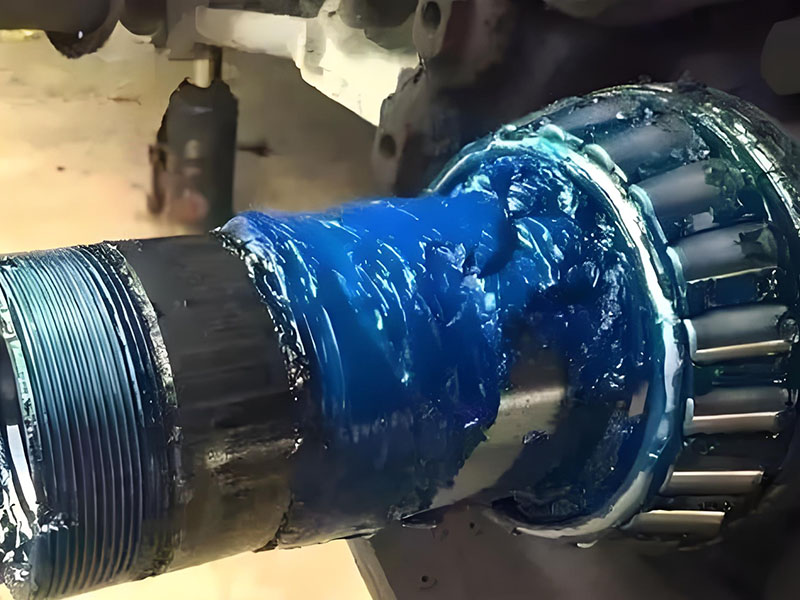
Proper lubrication is critical for bearing longevity. Relubrication frequency depends on operating speed, ambient temperature, and environmental conditions. General guidelines recommend greasing every three to six months under normal conditions, with shorter intervals for high-speed or contaminated environments.
When relubricating, use the grease type specified by the manufacturer. Add grease slowly until fresh grease purges from the seals, then wipe away excess to prevent overheating. For units without relubrication ports, follow the manufacturer’s sealed-life rating.
Routine inspection should include:
- Listening for abnormal noises (grinding, squealing)
- Measuring housing surface temperature after stabilization (1–2 hours after startup)
- Checking for lubricant leakage or discoloration
- Monitoring vibration trends using portable instruments
Common Issues and Solutions
Misalignment. Symptoms include uneven wear patterns and increased vibration. Solutions: verify shaft straightness, use self-aligning bearing types, and ensure housing mounting surfaces are flat and properly torqued.
Overloading. Indicated by excessive operating temperature and premature fatigue. Solutions: confirm applied loads remain within the bearing’s dynamic load rating, and select a larger bearing or switch to a roller bearing if necessary.
Contamination. Manifests as abrasive wear, corrosion, or lubricant degradation. Solutions: maintain seal integrity, improve environmental cleaning, and select bearings with higher ingress protection ratings.
Insufficient lubrication. Results in overheating, increased friction, and eventual seizure. Solutions: implement a scheduled relubrication program, use the correct grease type, and check lubricant levels at regular intervals.
Conclusion
Mounted ball bearings provide a practical, installation-ready solution for supporting rotating shafts across a wide range of industrial equipment. By understanding the key features—self-alignment, load capacity, and pre-assembled design—along with the advantages of sealed, standardized units, engineers can appreciate why these components are widely adopted. Selecting the appropriate housing type, locking method, seal configuration, and material ensures reliable operation. Regular lubrication and inspection further extend service life and reduce unplanned downtime.
DUHUI Bearing manufactures a comprehensive range of mounted ball bearings in cast iron, stainless steel, and thermoplastic housings, with multiple sealing and locking options to meet diverse industrial requirements.
Frequently Asked Questions
Q1: What is the difference between a mounted ball bearing and a standard deep groove ball bearing?
A1: Mounted ball bearings include a housing, making them ready for direct bolting onto support surfaces. Standard deep groove ball bearings are loose components requiring separate housing machining and assembly. Mounted units significantly reduce installation time.
Q2: How do I choose between a pillow block and a flange mount bearing?
A2: Use pillow block bearings for horizontal shafts where the bearing mounts onto a flat base. Use flange mount bearings for vertical or angled mounting surfaces where space is restricted or attachment to a machine sidewall is required.
Q3: Are mounted ball bearings maintenance-free?
A3: Not generally. Most require periodic relubrication and inspection unless specified as sealed-for-life units. Maintenance intervals depend on speed, load, temperature, and environmental conditions.
Q4: What locking method is best for bidirectional rotation?
A4: Eccentric locking collars and concentric clamp collars are suitable for bidirectional rotation. Setscrew locking is generally limited to unidirectional applications because vibration can loosen the screws under reverse rotation.
Q5: Can mounted ball bearings be used in food processing environments?
A5: Yes. Stainless steel housings with food-grade grease and IP69K-rated seals are available for washdown and food processing applications.
Q6: What are the signs that a mounted ball bearing needs replacement?
A6: Excessive noise (grinding or squealing), elevated housing temperature, visible lubricant leakage, increased vibration, or rough shaft rotation indicate the need for replacement.