Quick answer: The five wheel bearing types used in vehicles are deep groove ball bearings (older RWD cars), tapered roller bearings (trucks and SUVs, adjustable), hub units or wheel hub assemblies (modern FWD/AWD cars, sealed, non-serviceable), double row ball bearings (performance cars), and cylindrical roller bearings (heavy trucks, radial loads only). Hub units are the most common today, lasting 100,000–150,000 miles. Seals: 2RS (rubber) offers better protection than ZZ (metal shields).
Wheel bearings are fundamental to vehicle safety and ride comfort. Drivers often encounter humming noises, vibration, or wheel play—symptoms that point directly to a failing wheel bearing. Yet not all wheel bearings are the same. Understanding the types of wheel bearings used in modern vehicles helps mechanics and vehicle owners select the correct replacement part and avoid premature failures. DUHUI will describe only the bearing types that are actually installed in automotive wheel ends, from passenger cars to light trucks and heavy-duty vehicles. Additionally, it provides guidance on identifying bearing wear, selecting the appropriate type, and interpreting bearing codes.
What Is a Wheel Bearing?
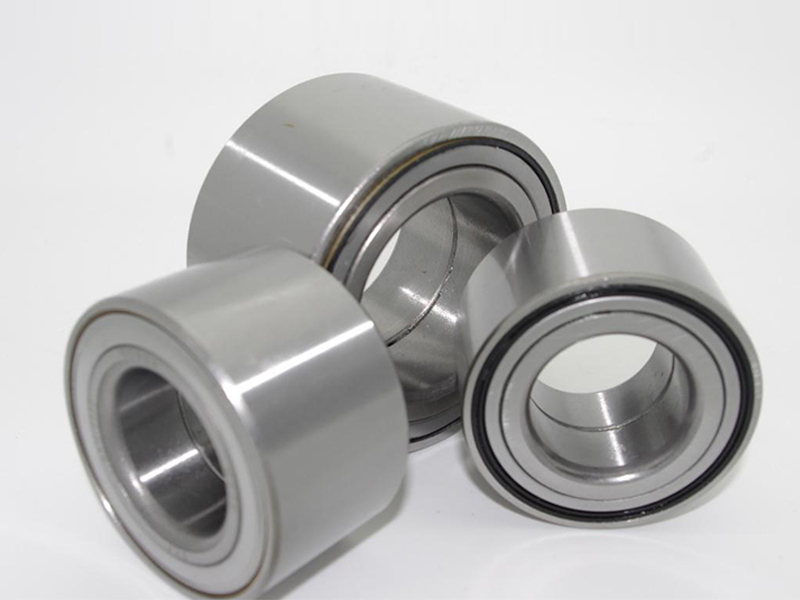
A wheel bearing is a precision mechanical component located inside the wheel hub assembly. It connects the wheel to the axle or steering knuckle and allows the wheel to rotate with minimal friction while supporting the full weight of the vehicle. A typical wheel bearing consists of an inner ring, an outer ring, rolling elements (balls or rollers), a cage to maintain spacing, and seals or shields to retain lubricant and exclude contaminants. Unlike industrial bearings, wheel bearings are designed to withstand both radial loads and axial loads simultaneously. Most modern passenger vehicles use sealed, non-serviceable wheel bearings, while some trucks and older vehicles still use adjustable tapered roller bearings.
Important Characteristics of Wheel Bearings
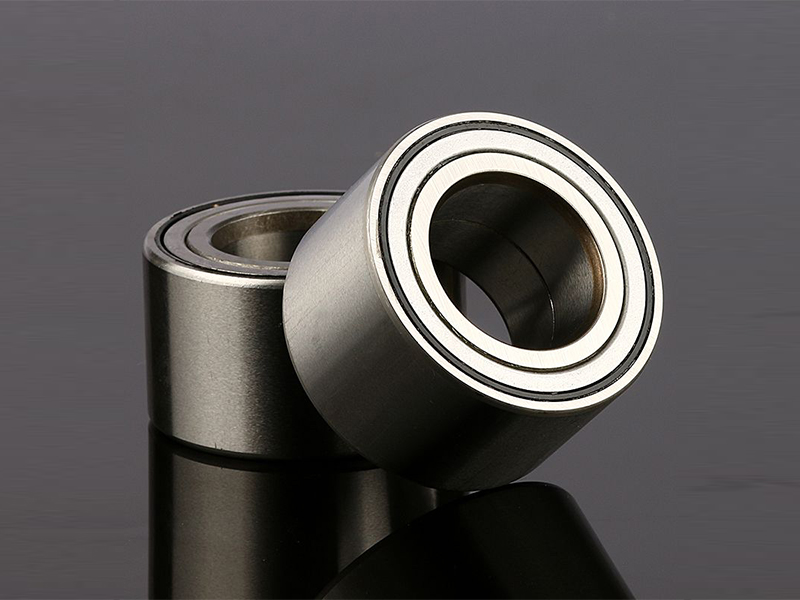
Regardless of the specific design, all quality wheel bearings share the following performance characteristics:
- High durability – Engineered for continuous rotation under fluctuating loads, with a typical service life exceeding 150,000 miles under normal driving conditions. Factors that reduce lifespan include potholes, water ingress, and over-tightening of the axle nut.
- Low friction – Precision-ground raceways and optimized lubricants reduce rolling resistance, contributing to fuel efficiency and lower operating temperatures. The coefficient of friction for ball bearings is typically 0.001–0.0015, while tapered roller bearings are slightly higher at 0.0015–0.002.
- Sealed construction – Most modern wheel bearings are sealed for life, using rubber or metal seals to prevent ingress of water, salt, and road debris. Common seal codes include 2RS (contact rubber seals on both sides) and ZZ (non-contact metal shields). Contact seals offer better contamination protection but generate slightly more friction.
- Load handling capability – Wheel bearings must support the vehicle‘s static weight plus dynamic loads from acceleration, braking, and cornering. Axial load capacity is particularly critical for front-wheel-drive vehicles, where cornering forces are transmitted directly through the bearing. A typical front wheel bearing on a passenger car must handle axial loads of 2–5 kN during normal driving.
- Material quality – High-carbon chromium steel (AISI 52100 / GCr15) is the industry standard for raceways and rolling elements, providing hardness of 60–64 HRC and excellent fatigue resistance. For high-performance or corrosion-prone applications, some bearings use stainless steel (440C) or ceramic hybrid designs (silicon nitride balls with steel races).
Main Types of Wheel Bearings
Only five bearing configurations are commonly found in automotive wheel hubs. Each type has distinct mechanical advantages and typical vehicle applications. The table at the end of this section provides a quick reference comparison.
Single Row Ball Bearings (Deep Groove)
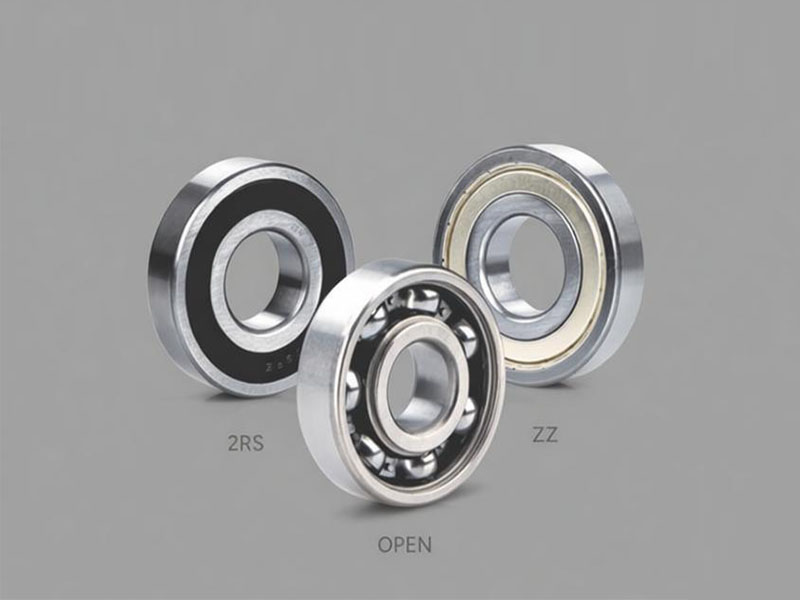
Deep groove ball bearings are the simplest wheel bearing type. They use a single row of steel balls running in deep raceways on the inner and outer rings. This design allows them to accommodate both radial and moderate axial loads in either direction. Ball bearings generally operate with lower friction than roller types and can handle higher rotational speeds. However, their load capacity per unit size is lower than that of roller bearings.
- Key characteristics: Low torque, quiet operation, suitable for speeds up to several thousand RPM, minimal axial play when new.
- Limitations: Lower radial load capacity compared to roller bearings of similar dimensions; sensitive to misalignment.
- Typical applications: Rear wheels of older rear-wheel-drive passenger cars (e.g., many 1990s Toyota and Honda models), small trailers, lightweight vehicles, and as secondary bearings in certain hub units.
- Common bearing numbers: 6204, 6303, 6205-2RS. The “04” in 6204 indicates a 20 mm bore diameter.
Tapered Roller Bearings
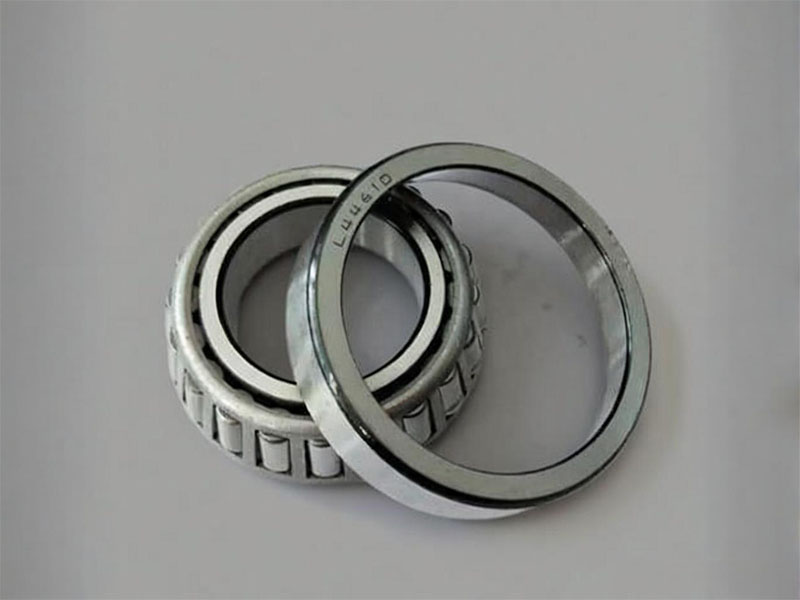
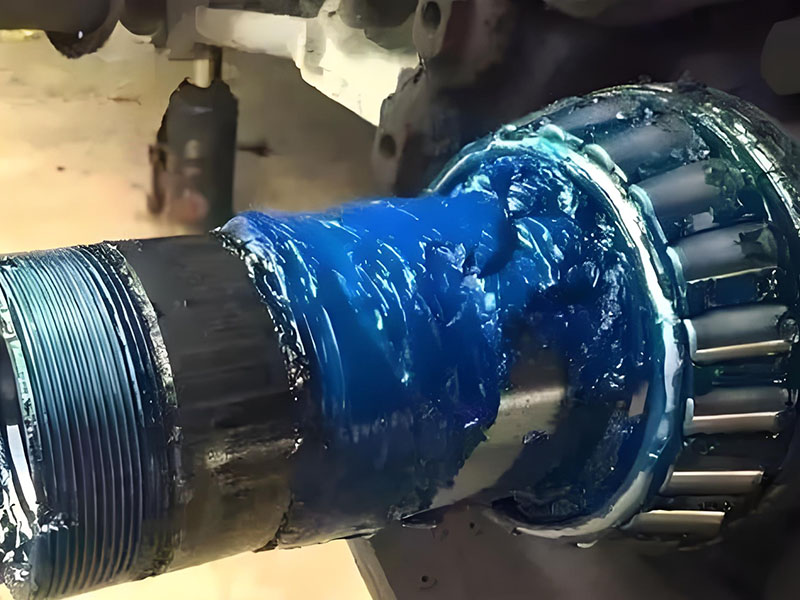
Tapered roller bearings consist of conical rollers and raceways with matching taper angles. The rollers make line contact with the races, distributing loads over a larger surface area. These bearings are almost always used in pairs (inner and outer) to handle axial loads from both directions. One key feature of tapered roller bearings in wheel applications is that they are adjustable: endplay can be set by tightening the axle nut to a specified preload. This adjustability allows for precise control of bearing clearance, which is essential for heavy-duty applications where thermal expansion varies significantly.
- Key characteristics: Excellent combined radial and axial load capacity, high rigidity, adjustable clearance, higher friction than ball bearings, requires periodic repacking of grease in many older designs.
- Limitations: More sensitive to improper preload (too loose causes vibration; too tight causes overheating and seizure).
- Typical applications: Front and rear wheel hubs of rear-wheel-drive vehicles (e.g., Ford F-Series trucks, Chevrolet SUVs), trailer wheels, and many heavy-duty commercial vehicles. Also found in some front-wheel-drive vehicles from the 1980s and 1990s.
- Common bearing numbers: 30205, 32006X, LM11949/LM11910 (cone and cup sets).
Hub Bearings (Wheel Hub Units)
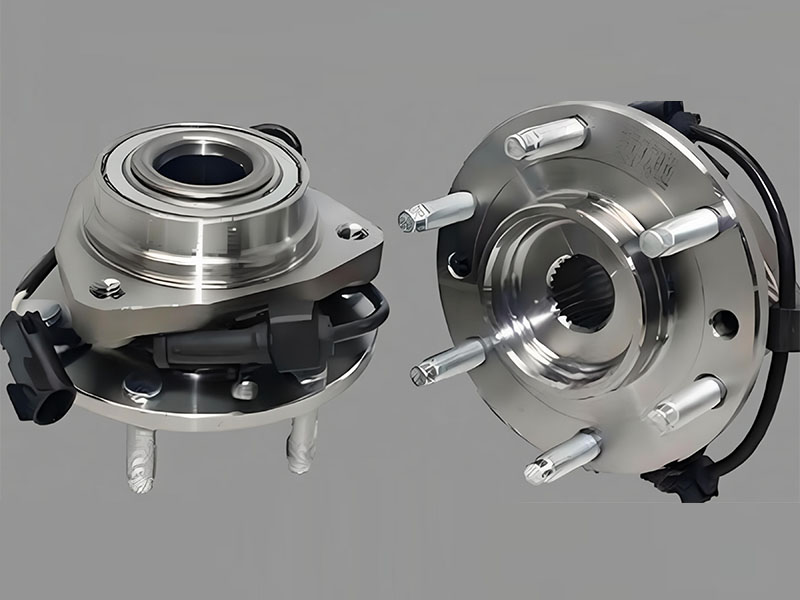
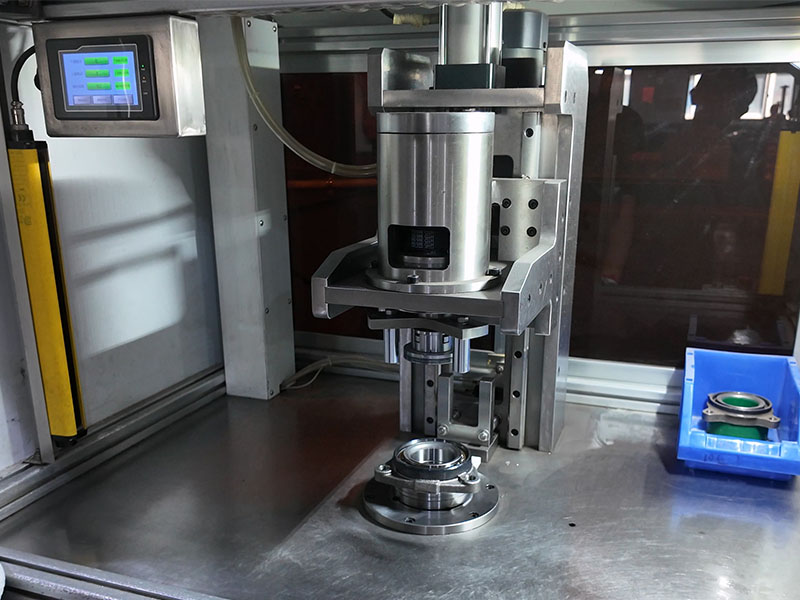
Hub bearings, also known as wheel hub units or hub assemblies, are pre-assembled, sealed modules that integrate the bearing, hub flange, mounting bolts, and often an ABS speed sensor ring. They are not serviceable—when worn, the entire unit is replaced. Hub units have evolved through three generations, each offering increased integration and reduced assembly complexity:
- Gen 1: Basic bearing with a flange on the outer ring; requires a separate hub and a press fit into the steering knuckle. Still used in some heavy trucks and trailers.
- Gen 2: Includes a flange for mounting the wheel and a flange for attaching to the steering knuckle. The outer ring has two bolt holes or studs for direct bolting to the knuckle. Common on many compact and mid-size cars.
- Gen 3: Integrates two flanges (wheel side and vehicle side) plus a pre-assembled bearing with optimized internal geometry for reduced weight and improved stiffness. The inner ring includes a flange with wheel studs, and the outer ring has bolt holes for knuckle attachment. Nearly universal on modern front-wheel-drive and all-wheel-drive passenger cars.
Most modern front-wheel-drive and all-wheel-drive passenger cars use Gen 2 or Gen 3 hub units. These units simplify assembly, eliminate the need for bearing adjustment, and provide superior contamination protection. Replacement typically requires removing the axle nut and unbolting the unit from the knuckle.
Double Row Ball Bearings
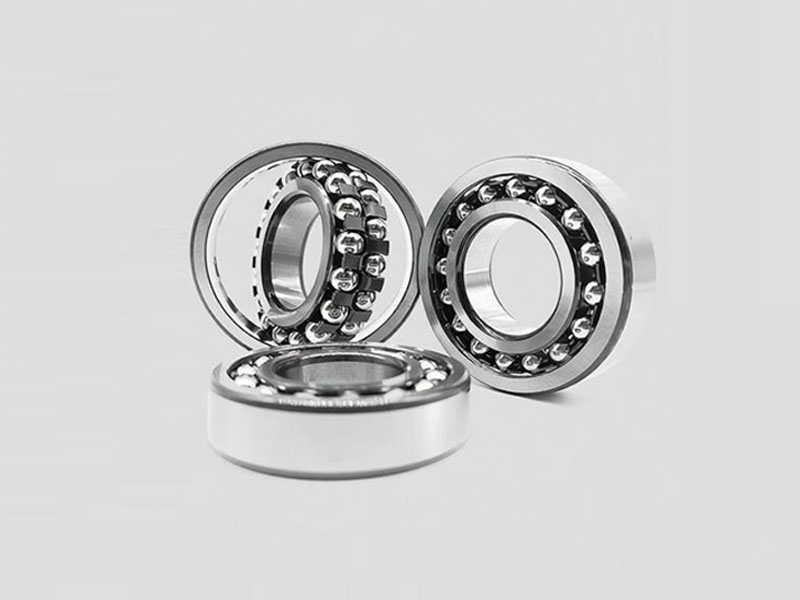
Double row ball bearings are an extension of the ball bearing design, incorporating two rows of balls instead of one. This configuration increases radial load capacity and moment rigidity compared to single-row ball bearings. They are often used in applications where space is limited but higher load support is required. Double row ball bearings are typically sealed and pre-lubricated, and they are non-adjustable. The internal clearance is set at the factory and cannot be modified.
- Key characteristics: Higher load capacity than single-row ball bearings (typically 1.5–2 times), compact axial space requirement, good axial location accuracy, higher friction than single-row ball bearings due to more rolling elements.
- Limitations: More expensive than single-row ball bearings, less tolerant of misalignment.
- Typical applications: Front wheel hubs of some high-performance passenger cars (e.g., BMW 3 Series, Audi A4), heavy-duty SUVs (e.g., Land Rover Discovery), and light commercial vehicles where a tapered roller design is not used.
- Common bearing numbers: 3204A-2RS, 3305A. The “32” or “33” prefix indicates a double row angular contact ball bearing.
Cylindrical Roller Bearings
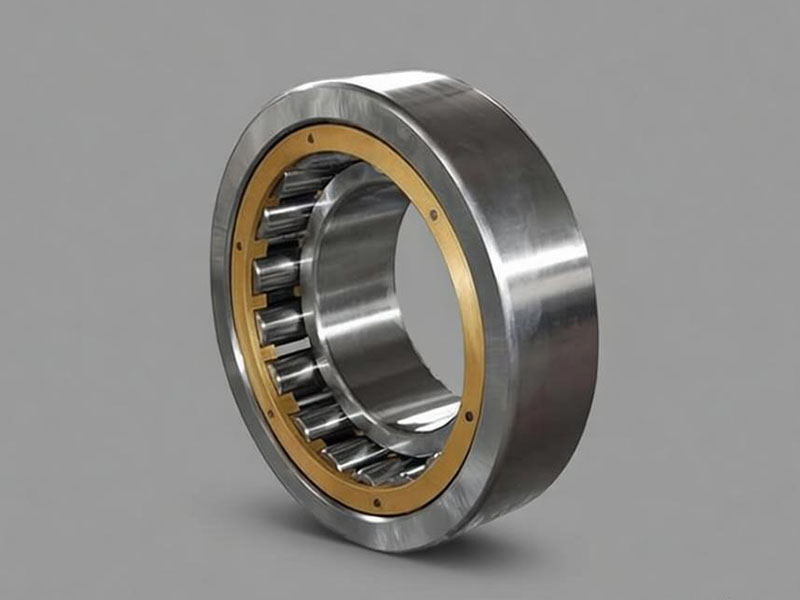
Cylindrical roller bearings use cylindrical rolling elements that make line contact with the raceways. They have very high radial load capacity but negligible axial load capacity unless specially designed with ribs (so-called “ribbed” cylindrical roller bearings). In wheel applications, they are almost never used alone; when employed, they are combined with a separate thrust bearing or used only on non-driven, non-steering wheels where axial loads are minimal. Some heavy truck rear axles use cylindrical roller bearings for the wheel ends, with a separate tapered roller bearing for axial location.
- Key characteristics: Extremely high radial stiffness, low friction for a roller bearing (lower than tapered rollers), but poor axial load handling unless specially designed.
- Limitations: Not suitable for wheel hubs that experience significant cornering forces unless paired with a thrust bearing.
- Typical applications: Rear wheel hubs of certain heavy trucks (drive axles may use tapered rollers instead), some trailer wheels (particularly heavy-duty tandem axles), and industrial wheel assemblies (forklifts, agricultural equipment, construction vehicles).
- Common bearing numbers: NU205, NUP206. The “NU” and “NUP” prefixes indicate different rib configurations for axial location.
The table below summarizes the five wheel bearing types and their main distinctions for quick reference:
| Type | Rolling Element | Axial Load Capacity | Adjustable? | Typical Vehicle Application |
|---|---|---|---|---|
| Deep Groove Ball Bearing | Spherical balls | Moderate (both directions) | No | Older RWD cars, small trailers |
| Tapered Roller Bearing | Conical rollers | High | Yes (via axle nut torque) | Trucks, SUVs, RWD vehicles |
| Hub Bearing (Hub Unit) | Balls or tapered rollers | High (pre-set) | No | Modern FWD/AWD passenger cars |
| Double Row Ball Bearing | Spherical balls (2 rows) | Moderate to high | No | Performance cars, heavy-duty SUVs |
| Cylindrical Roller Bearing | Cylindrical rollers | Very low (needs separate bearing) | No | Heavy trucks (rear non-steer), trailers |
How to Choose the Right Wheel Bearing Type for Your Vehicle
Selecting the correct type of wheel bearing is not only about matching dimensions but also about matching the bearing’s load and speed characteristics to the vehicle’s design. Follow these steps:
- Identify drive configuration: Front-wheel-drive vehicles almost exclusively use sealed hub units (Gen 2 or Gen 3) on the front wheels. Rear-wheel-drive vehicles may use tapered roller bearings or hub units depending on the age and design.
- Check the original bearing number: Clean the bearing or hub unit and look for a stamped number. For conventional bearings, the number follows ISO or ABMA standards. For hub units, the number is manufacturer-specific (e.g., SKF VKBA 1234, NTN 512108, FAG 713 6109 30).
- Consider maintenance preferences: If the vehicle is used in dusty or wet conditions, sealed bearings (hub units or 2RS bearings) offer better protection. If you prefer repackable bearings for long-term serviceability, tapered roller bearings are the choice—but they require correct preload adjustment.
- Check load ratings: For heavy vehicles or those used for towing, select a bearing with a higher dynamic load rating (C). Tapered roller bearings and double row ball bearings typically have higher C values than single row ball bearings.
Signs of Wheel Bearing Wear by Type
Different wheel bearing types exhibit different failure modes. Recognizing these signs helps diagnose which bearing has failed:
- Ball bearings (deep groove): Produce a high-pitched whirring or rumbling noise that increases with vehicle speed. Often accompanied by vibration in the steering wheel or seat. Play (wobble) may be felt when rocking the wheel at 12 and 6 o‘clock.
- Tapered roller bearings: Low-frequency growling or grinding noise, especially when cornering. The noise often changes with steering angle. Loose bearings cause a clunk when braking or accelerating. Over-tightened bearings cause overheating and a burnt grease smell.
- Hub units: Similar noise to ball bearings but may also trigger ABS warning lights due to a damaged sensor ring. Hub units often fail with excessive play in both radial and axial directions. They cannot be repacked or adjusted.
- Double row ball bearings: Similar symptoms to single row ball bearings but may produce a more pronounced rhythmic thumping because the two rows can fail unevenly.
- Cylindrical roller bearings: Deep, heavy rumbling that gets worse under radial load (e.g., cornering away from the affected side). Little or no axial play even when severely worn.
How to Read Wheel Bearing Specifications and Codes
To select the correct replacement, you must interpret the bearing number correctly. A typical wheel bearing number, such as 6204-2RS-C3, follows this pattern:
- Basic number (6204): The first digit (6) indicates deep groove ball bearing type. Digits 2 and 3 (20) indicate the series (light or medium). The last two digits (04) indicate bore diameter in mm multiplied by 5 → 04 × 5 = 20 mm bore. For tapered roller bearings, a number like 30206 means: 30 = series, 20 = bore (20 × 5 = 100 mm? Actually for tapered roller bearings, the last two digits also multiply by 5: 06 × 5 = 30 mm bore. The 30206 has a 30 mm bore. Be careful: the numbering system differs slightly between ISO and inch-based bearings.
- Suffix for seals (2RS): 2RS = contact rubber seals on both sides; 2RZ = non-contact rubber seals; ZZ = metal shields both sides; no suffix = open bearing (not sealed, rare for wheels).
- Suffix for clearance (C3): C3 indicates radial internal clearance greater than normal, often required for wheel applications to accommodate thermal expansion. C4 is extra large clearance (rare). CN is normal clearance.
- Additional suffixes: For tapered roller bearings, you may see “J” or “JR” (metric dimensions), “X” (modified internal geometry). For hub units, the number is proprietary: e.g., VKBA 1234 — VKBA is SKF‘s prefix for a wheel hub unit, and 1234 is an application-specific code.
Always cross-reference the full code with manufacturer catalogs or an online parts database using your vehicle’s make, model, year, and VIN. Do not rely solely on the bearing number, as different manufacturers may use different numbering systems for the same application.
Frequently Asked Questions
1. How can I tell which type of wheel bearing my car needs without removing the old one?
Check your vehicle‘s service manual or enter your VIN into an online parts catalog. For many modern cars, the wheel bearing type is integrated into the hub unit. If your car is front-wheel-drive and built after 2000, it almost certainly uses a sealed hub unit (Gen 2 or Gen 3) on the front wheels. Rear-wheel-drive trucks and SUVs typically use tapered roller bearings, which are serviceable.
2. What is the difference between a 2RS and a ZZ bearing for wheels?
2RS bearings have contact rubber seals on both sides, offering excellent protection against water and dirt but slightly higher friction. ZZ bearings have non-contact metal shields, allowing higher speeds with lower friction but less protection against fine dust and moisture. For wheel applications exposed to road salt and water, 2RS or 2RZ seals are strongly preferred over ZZ.
3. Can I replace a tapered roller bearing with a hub unit?
No. Hub units and tapered roller bearings are not interchangeable because the mounting interfaces, hub flanges, and knuckle attachments are completely different. Replacing one type with the other would require machining custom adapters, which is unsafe and impractical. Always replace with the original bearing type specified by the vehicle manufacturer.
4. Why does my wheel bearing noise change when I turn left or right?
That is a classic symptom of a failing bearing. When you turn left, the right-side wheel bearings experience increased load (due to weight transfer), and a bad right bearing will become louder. Conversely, turning right loads the left bearings. This directional change helps pinpoint which wheel has the faulty bearing. Tapered roller bearings often show this symptom more clearly than ball bearings.
5. How do I adjust preload on a tapered roller wheel bearing?
Tapered roller bearings require precise preload. Typical procedure: tighten the axle nut to a specified torque (e.g., 25–30 Nm) while rotating the wheel to seat the rollers, then back off 1/6 to 1/4 turn, then tighten the nut to a low final torque (often 0.5–2 Nm) while checking endplay with a dial indicator. Final endplay should be 0.025–0.125 mm (0.001–0.005 inches) for most passenger vehicles. Always follow the vehicle’s service manual, as specifications vary widely.
6. How long do different wheel bearing types typically last?
Under normal driving conditions: Sealed hub units: 100,000–150,000 miles (some last 200,000+). Tapered roller bearings: 80,000–120,000 miles if properly adjusted and repacked every 30,000–50,000 miles. Deep groove ball bearings: 70,000–100,000 miles in original equipment. Double row ball bearings: similar to hub units. Cylindrical roller bearings in heavy trucks: 150,000–300,000 miles with proper maintenance. Poor road conditions, oversized wheels, and water ingress drastically reduce these numbers.
7. Is it safe to drive with a bad wheel bearing for a short distance?
Only as a last resort, and only at low speeds (below 30 mph) for less than 10 miles. A severely worn bearing can overheat, causing the grease to liquefy and escape, leading to metal-to-metal contact, race fracture, and wheel detachment. If you hear grinding or feel significant wheel play, have the vehicle towed to a repair shop. Driving with a bad bearing also damages the axle or hub, increasing repair costs.
8. Can I repack a sealed hub unit with fresh grease?
No. Hub units are manufactured as sealed, non-serviceable assemblies. Attempting to pry open the seals often damages them, and even if you inject new grease, you cannot remove old contaminated grease or inspect the rolling elements. Replace the entire hub unit. However, conventional tapered roller bearings and some open ball bearings (rare in modern wheels) can be repacked after removal.
Conclusion
The types of wheel bearings used in vehicles are limited to deep groove ball bearings, tapered roller bearings, hub units (wheel hub assemblies), double row ball bearings, and cylindrical roller bearings (in niche applications). Each type has distinct load-handling characteristics, maintenance requirements, and typical vehicle platforms. Selecting the correct type—not just the correct size—is critical for safety, durability, and performance. Regular inspection for noise, play, or seal damage can prevent wheel bearing failure and costly secondary damage to the hub or axle. When in doubt, consult the vehicle’s service manual or a professional mechanic to identify the exact wheel bearing type required.