A failing front wheel bearing and hub assembly often announces itself through a distinct grinding, roaring, or clicking noise that changes with vehicle speed. This integrated component is critical for both wheel rotation and vehicle control. But what exactly does it contain, how long should it last, and what symptoms indicate failure? DUHUI will answer these common questions, providing technical insights into the construction, lifespan, failure modes, and selection criteria for front wheel bearing and hub assemblies.
What Is a Front Wheel Bearing and Hub Assembly?
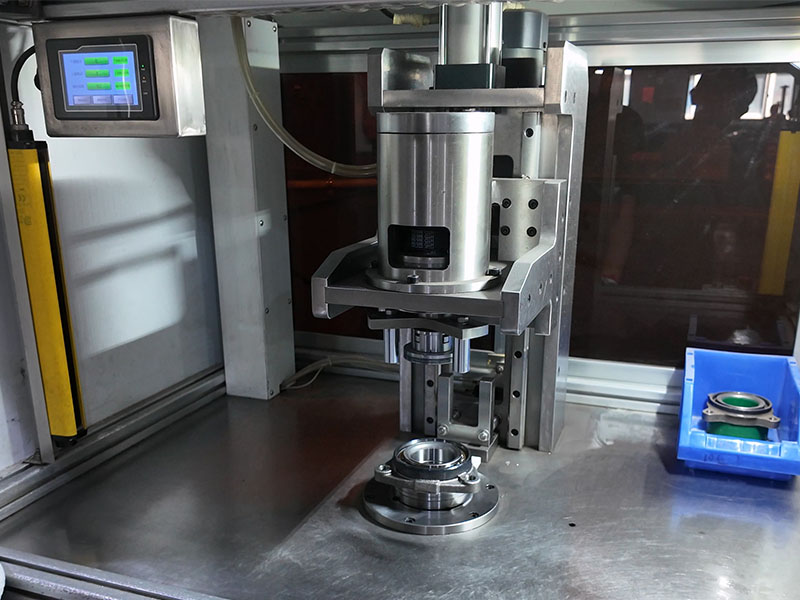
A front wheel bearing and hub assembly is a pre-assembled, maintenance-free unit that mounts to the steering knuckle and supports the wheel. Unlike older press-in bearings, this integrated design simplifies replacement and improves reliability. The assembly includes several key components:
- Hub flange: The bolted surface to which the wheel and brake rotor attach.
- Bearing assembly: Typically double-row angular contact ball bearings or tapered roller bearings that manage radial and axial loads.
- Mounting interface: A precision-machined surface and bolt holes for secure attachment to the steering knuckle.
- ABS sensor ring (encoder): A magnetic or toothed ring that works with the vehicle’s ABS sensor to monitor wheel speed.
Why Is the Front Wheel Hub Assembly Critical for Vehicle Safety?
The front wheel hub assembly plays a direct role in vehicle safety by maintaining correct wheel geometry, supporting the vehicle’s weight, and allowing smooth rotation. Failure of this component can lead to several hazardous conditions:
- Excessive bearing wear causes vibration and noise that distracts the driver and indicates structural degradation.
- Misaligned steering makes the vehicle difficult to control, especially during cornering or emergency maneuvers.
- ABS ring damage leading to brake system malfunction, including loss of anti-lock braking or traction control.
- Uneven tire wear due to wheel wobble or tilt, which reduces tire life and can cause sudden traction loss.
How Long Does a Front Wheel Bearing and Hub Assembly Last?
Under normal driving conditions on paved roads, a front wheel bearing and hub assembly typically lasts between 100,000 to 150,000 kilometers (approximately 60,000 to 93,000 miles).
Ways to extend bearing lifespan include:
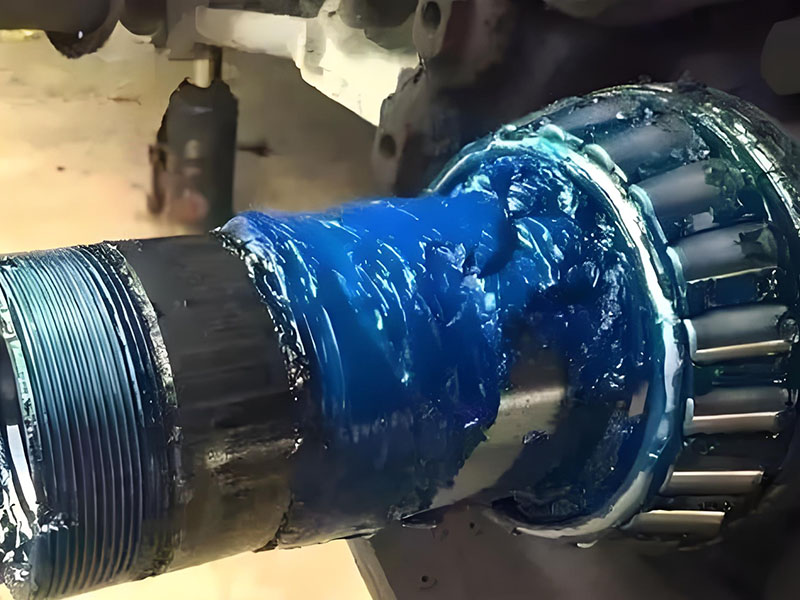
- Choosing sealed assemblies with high-temperature, high-load grease
- Avoiding excessive wheel loads or oversized tires that increase leverage on the bearing
- Replacing in pairs (left and right) for balanced wear on the same axle
- Performing routine inspections every 48,000 kilometers (30,000 miles)
Common Signs of Front Wheel Bearing and Hub Assembly Failure
Recognizing early failure signs allows for timely replacement before secondary damage occurs. Common indicators include:
- Abnormal driving noise: A grinding, growling, or roaring sound that changes with wheel speed (not engine RPM). Clicking when turning may indicate a damaged bearing race.
- Steering wheel vibration: Noticeable shaking that worsens as vehicle speed increases, often accompanied by a loose steering feel.
- ABS warning light: Illumination of the ABS or traction control light due to a damaged encoder ring or erratic wheel speed signal.
- Uneven tire wear: Feathering, scalloping, or cupping on the tire tread, particularly on one side of the front axle.
- Pulling to one side: The vehicle drifts left or right while driving on a straight, level road, indicating wheel misalignment from bearing wear.
What Causes Front Wheel Hub Assembly Failure?
Several mechanical and environmental factors contribute to premature failure:
- Impact or shock load: Driving over potholes, speed bumps at high speed, or curbing a wheel can dent bearing races or crack the flange.
- Contamination: Water, road salt, sand, or dirt penetrating bearing seals leads to corrosion and abrasive wear.
- Improper torque or installation: Over-tightening the axle nut preloads the bearing excessively, while under-tightening allows movement. Both cause rapid failure.
- Overheating and lubrication failure: High-speed driving, dragging brakes, or low-quality grease degrades lubrication, leading to metal-to-metal contact.
- Poor material quality: Bearings made from low-grade steel or with insufficient heat treatment fail earlier.
Types of Bearings Used in Front Wheel Hub Assemblies
Different vehicle applications require different bearing designs. The table below summarizes the most common types.
| Type | Description | Typical Application |
| Double-row angular contact ball bearings | Two rows of balls arranged to handle both radial loads (vehicle weight) and axial loads (cornering forces). | Passenger cars, sedans, crossovers (CUVs) |
| Tapered roller bearings | Tapered rollers and races designed for high combined loads. Require precise preload. | Heavy-duty trucks, vans, older SUVs |
| Third-generation unit bearings | Fully integrated hub, bearing, flange, and ABS encoder. Sealed and maintenance-free. | Most modern passenger vehicles (2010+) |
Front vs. Rear Hub Assemblies: Key Differences
While front and rear assemblies may look similar, they are designed for different loads and functions. The table below highlights the main distinctions.
| Feature | Front Hub Assembly | Rear Hub Assembly |
| Function | Supports steering and braking | Primarily supports rotation (non-steering) |
| Load | Radial + high axial load (during turning) | Mainly radial load |
| Complexity | Often includes integrated ABS sensor and flange | Simpler design, may use separate bearing |
| Failure rate | Higher (due to steering and higher loads) | Lower |
| Replacement cost | Higher (more complex design and labor) | Lower |
Front and rear assemblies are typically not interchangeable due to differences in load capacity, flange offset, ABS encoder type, and mounting bolt pattern.
Technical Specifications and Installation Considerations
Key specifications for selecting a front wheel hub assembly include: vehicle make, model, and year; number of bolt holes and bolt circle diameter; ABS sensor type (active vs. passive); wheel speed encoder ring tooth count; and flange offset.
Proper mounting torque is critical. The axle nut must be tightened to the manufacturer’s specified value using a calibrated torque wrench. Under-torquing allows movement; over-torquing preloads the bearing and causes premature failure.
Frequently Asked Questions (FAQ)
How much does it cost to replace a hub assembly on a front wheel bearing?
Part costs typically range from $60 to $300 USD depending on the vehicle brand and part quality. Labor costs add approximately $100 to $200 USD. Total replacement cost per wheel generally falls between $160 and $500 USD. Prices vary by region and service provider.
Can I drive with a bad front wheel bearing?
Short-distance, low-speed driving to a repair shop may be possible, but continued driving is not recommended. A severely failed bearing can cause wheel detachment, loss of steering control, or brake system failure.
How to purchase the best-priced front wheel hub assembly?
The “best price” balances cost with quality. Compare specifications such as bearing type, ABS encoder material, and seal design. Avoid unbranded or lowest-price options that may use inferior steel or grease. Purchasing from established manufacturers or verified distributors typically provides better long-term value.
Is a four-wheel alignment necessary after replacing the front wheel hub assembly?
Not automatically. Replacing the hub assembly itself does not change alignment angles unless the steering knuckle or suspension components were removed. However, if the vehicle pulls to one side or shows uneven tire wear after replacement, a four-wheel alignment is recommended.
Do driving habits affect the lifespan of the front wheel hub assembly?
Yes. Frequent driving on rough or unpaved roads, high-speed cornering, hitting potholes or curbs, and carrying excessive loads all accelerate bearing wear. Normal highway driving extends lifespan.
Is the mounting torque of the front wheel hub assembly important?
Yes, critically. The axle nut must be tightened to the vehicle manufacturer’s specified torque using a calibrated torque wrench. Incorrect torque—either too low or too high—is a leading cause of premature bearing failure.
What are the key specifications for selecting the front wheel hub assembly?
Key specifications include: vehicle make, model, and year; number of bolt holes and bolt circle diameter; ABS sensor type (active Hall-effect vs. passive magnetic); wheel speed encoder ring tooth count; flange offset and pilot diameter; and load rating.
How difficult is it to replace the front wheel hub assembly yourself?
Moderate to high difficulty. Requires specialized tools: a large torque wrench (up to 250 Nm or more), impact-rated sockets, a puller or slide hammer, and penetrating oil for rusted components. Vehicles in salt-belt regions may require a hydraulic press. Inexperienced DIYers should consider professional replacement.
Conclusion
The front wheel bearing and hub assembly is a safety-critical component that supports the vehicle’s weight, enables smooth wheel rotation, and works with the ABS system. Under normal conditions, it lasts between 100,000 and 150,000 kilometers. Recognizing early failure signs—such as grinding noise, steering vibration, or an illuminated ABS light—allows for timely replacement. Proper installation, including correct axle nut torque, is as important as the quality of the part itself. Understanding the front wheel bearing and hub assembly—its construction, lifespan, failure signs, and selection criteria—helps vehicle owners and service professionals make informed decisions that prioritize safety and reliability.