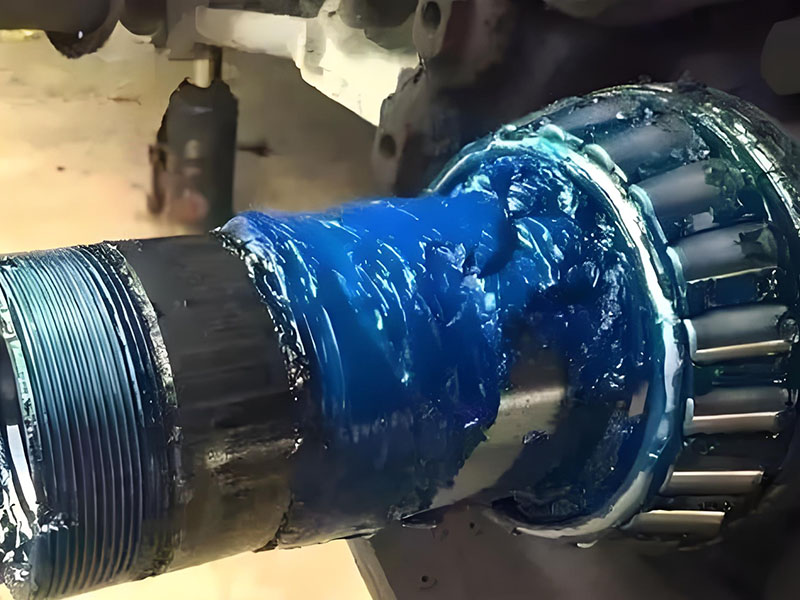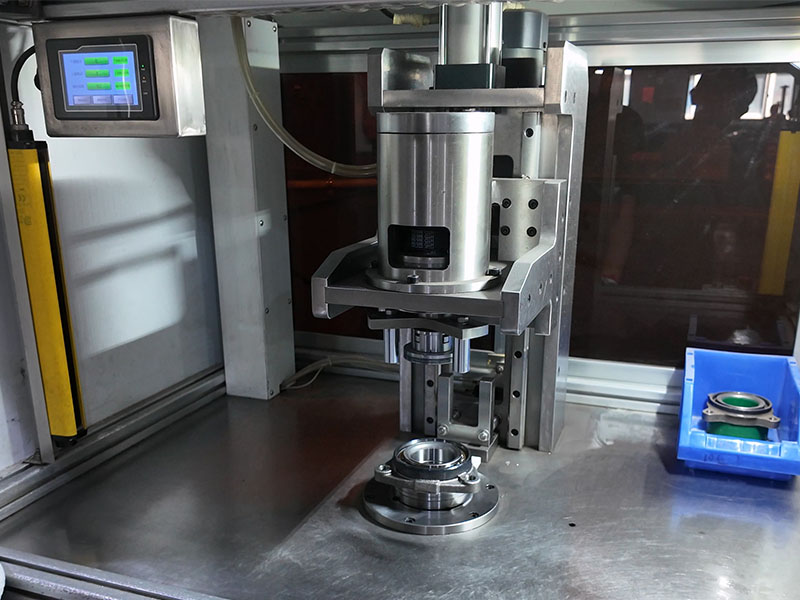
Caster wheel bearings are essential components that enable smooth rotation and rolling of casters on equipment such as industrial carts, medical devices, office chairs, and material handling equipment. Selecting the correct bearing size, type, and material directly affects load capacity, operational life, and maintenance frequency. DUHUI will provide practical information on measuring, choosing, and replacing caster wheel bearings based on engineering standards and manufacturing experience.
What Are Caster Wheel Bearings?
A caster wheel bearing is a mechanical element installed inside the wheel hub or at the swivel section of a caster. Its primary functions are to reduce friction between rotating and stationary parts, support radial and axial loads, and maintain alignment. Common configurations include single-row ball bearings, double-row ball bearings, tapered roller bearings, and plain bearings. Understanding the role of caster wheel bearings helps in making informed replacement or specification decisions.
How to Determine Caster Wheel Bearing Size by Direct Measurement
The size of a caster wheel bearing is defined by three key measurements, typically expressed in millimeters (mm) or inches:
- Inner Diameter (ID) – The diameter of the hole that fits onto the axle or shaft.
- Outer Diameter (OD) – The diameter of the bearing’s outer ring that fits into the wheel hub.
- Width (W) – The thickness of the bearing from one side to the other.
To measure an existing bearing, use a digital caliper. Place the caliper jaws across the inner ring for ID, across the outer ring for OD, and along the side for width. Record each value to the nearest 0.01 mm. If no old bearing is available, measure the axle diameter (this gives ID) and the wheel hub bore diameter (this gives OD). The width should match the hub cavity depth.
How to Identify the Correct Bearing Size from Caster Measurements
When the original bearing is missing or unreadable, you can determine the required bearing size by measuring four key dimensions of the caster assembly. These measurements help match standard bearing series or guide custom orders.
Measuring Bolt Hole Spacing
On casters where the wheel is attached through a bolt hole pattern (less common for single-wheel casters, but relevant for dual-wheel or certain industrial designs), measure the center-to-center distance between mounting holes. This spacing correlates with the wheel hub’s internal geometry and can indicate the bearing’s outer diameter or width.
Measuring Wheel Size
The overall wheel diameter (e.g., 100 mm, 125 mm, 200 mm) directly influences the bearing’s load rating. Larger wheels typically use bearings with larger OD and wider width to distribute loads. As a general reference:
- Wheels under 75 mm diameter often use bearings such as 608 (ID 8 mm, OD 22 mm, W 7 mm) or plain bushings.
- Wheels 100–150 mm often use 6200 series (e.g., 6202: ID 15 mm, OD 35 mm, W 11 mm).
- Wheels above 150 mm may require 6300 series or double-row ball bearings.
Measuring the wheel diameter helps narrow down the likely bearing series.
Measuring the Swivel Radius
The swivel radius is the horizontal distance from the swivel axis center to the outermost edge of the wheel. While this dimension does not directly determine bearing ID/OD, it affects the thrust bearing or raceway design in the swivel section. A larger swivel radius creates higher torque on the swivel bearing, which may require a larger thrust bearing or a hardened raceway. When replacing a swivel bearing, measure the swivel radius to verify that the new bearing can handle the resulting moment load.
Measuring Overall Height
Overall caster height (from mounting plate top to wheel bottom) relates to the wheel diameter and fork geometry. This measurement indirectly confirms the wheel size, which as noted above guides bearing size selection. If the overall height deviates from standard values for a given wheel diameter, the fork may have an unusual offset that could affect bearing alignment. Always compare measured height with the manufacturer’s specification.
By combining these four measurements—bolt hole spacing (if applicable), wheel diameter, swivel radius, and overall height—you can often determine the correct bearing size even without an existing sample. For precision applications, contacting a bearing manufacturer with these measurements allows for accurate cross-referencing.
Types of Caster Wheel Bearings
Different bearing types offer distinct performance characteristics. The most common types used in caster wheels are:
- Ball Bearings – Consist of steel balls between inner and outer rings. Suitable for moderate loads and speeds. Provide low rolling resistance.
- Roller Bearings – Use cylindrical rollers. Higher load capacity than ball bearings of similar size. Often used in heavy-duty industrial casters.
- Delrin Bearings – Made from acetal resin (POM). Self-lubricating, corrosion-resistant, and quiet. Limited to light loads and low speeds.
- Plain Bearings (Sleeve Bearings) – Simple cylindrical sleeves, often made of bronze, plastic, or sintered metal. Low cost but higher friction.
- Tapered Roller Bearings – Handle combined radial and thrust loads. Common in heavy-duty swivel casters.
- Thrust Bearings – Specifically designed for axial loads. Used in the swivel section of casters to support vertical load while allowing rotation.
Roller Bearings vs. Delrin Bearings
| Feature | Roller Bearings | Delrin Bearings |
| Material | Steel (chrome steel, carbon steel, stainless steel) | Delrin (POM plastic) |
| Load | High; suitable for heavy-duty applications | Low; for light-duty applications |
| Friction | Low rolling friction | Higher friction; suited for low-speed, high-precision use |
| Lifespan | Long, especially with proper lubrication | Shorter, but adequate in clean, low-load environments |
| Corrosion Resistance | Poor without coating or stainless steel | Excellent; resistant to moisture and chemicals |
| Noise | Can be higher at high speeds | Typically quieter |
| Cost | Higher | Lower |
| Temperature Range | Wide (typically -20°C to +120°C) | Narrower (typically -30°C to +80°C) |
| Typical Applications | Heavy machinery, automotive, industrial equipment | Medical devices, office chairs, light-duty carts |
Materials Used in Caster Wheel Bearings
The material of the bearing rings and rolling elements influences strength, corrosion resistance, and cost.
- Carbon Steel – Economical and strong. Low corrosion resistance; requires grease or plating. Common in indoor, dry environments.
- Bearing Steel (e.g., GCr15/52100) – High hardness and wear resistance. Used for precision ball and roller bearings. Needs protection from moisture.
- Stainless Steel (e.g., 440C, 304) – Excellent corrosion resistance. Suitable for food processing, medical, or outdoor applications.
- Galvanized Steel – Carbon steel with zinc coating. Moderate corrosion protection at lower cost than stainless.
- Plastic / Nylon – For plain bearings or Delrin types. Lightweight, silent, and corrosion-proof. Limited load capacity.
How to Choose the Right Caster Wheel Bearing
Selecting appropriate caster wheel bearings requires evaluating four primary factors:
Load-Bearing Capacity
Calculate the maximum load per caster. Divide total equipment weight by the number of casters, then add a safety factor (typically 1.2–1.5). Choose a bearing whose dynamic load rating exceeds this value.
Operating Speed
For manual push carts (speeds below 5 km/h), most bearing types work. For powered tow lines or high-speed applications (e.g., airport baggage conveyors), ball or roller bearings with proper lubrication are necessary.
Environment
- Dry, clean indoor: Carbon steel or standard bearing steel.
- Humid, wet, or washdown: Stainless steel or plastic bearings.
- Dusty or abrasive: Sealed bearings (e.g., 2RS rubber seals) to prevent contamination.
- Chemical exposure: Delrin or stainless steel.
Cost
Plain bearings and Delrin bearings have lower initial cost. Ball bearings offer a balance of performance and price. Roller and stainless steel bearings are higher cost but longer lasting in demanding conditions.
How to Replace Caster Wheel Bearings
Replacing worn or damaged caster wheel bearings restores smooth rolling and prevents uneven wear on the wheel and swivel. Follow these steps.
Tools and Materials Needed
- New bearings (correct ID/OD/width)
- Screwdriver or Allen key (for axle bolts)
- Wrench or pliers
- Hammer and punch (or bearing removal tool)
- Grease (lithium-based or general-purpose)
- Rag or paper towels
- Safety glasses and gloves
Replacement Steps
1.Remove the Wheel
Loosen and remove the axle bolt or nut. Slide the wheel off the caster fork.
2.Remove Old Bearings
Use a punch and hammer to tap the bearing out from the opposite side. Apply even force around the outer ring. Alternatively, use a bearing puller.
3.Clean and Inspect
Wipe the wheel hub bore and axle clean. Check for cracks or deformation in the wheel hub. If damaged, replace the wheel.
4.Apply Grease
Spread a thin layer of grease on the inside of the hub bore and on the new bearing outer rings.
5.Install New Bearings
Press the new bearing into the hub by hand, then tap gently with a punch on the outer ring until seated. Do not hit the inner ring.
6.Reassemble the Wheel
Slide the wheel back onto the axle. Apply a small amount of grease to the axle if needed. Tighten the axle bolt to the manufacturer’s torque specification (do not overtighten – the wheel must spin freely).
7.Reattach the Caster
Mount the caster back to the equipment. Spin the wheel to check for smooth rotation.
8.Test the Caster
Push the equipment a short distance. Listen for grinding or unusual noise. If present, recheck installation.
Safety Tips
- Wear safety glasses when hammering bearings.
- Dispose of old bearings as scrap metal (recycle where possible).
- Check wheel alignment after replacement to avoid side loading.
Frequently Asked Questions (FAQ)
1. Where is the caster wheel bearing installed?
Caster wheel bearings are installed inside the wheel hub, between the wheel and the axle. Some casters also have bearings in the swivel section (thrust bearings or raceways).
2. What are the functions of a caster wheel bearing?
They reduce friction, support radial and axial loads, maintain wheel alignment, and extend the service life of the caster.
3. What are the differences between ball bearings and roller bearings in caster wheels?
Ball bearings handle moderate loads with lower friction at higher speeds. Roller bearings support heavier loads but may have slightly higher rolling resistance. Neither is universally “better”; selection depends on load and speed requirements.
4. What are lubrication-free caster wheel bearings?
These are bearings that do not require periodic greasing. Examples include sealed ball bearings (with rubber shields) and Delrin or nylon plain bearings. They are convenient but may have a shorter life under heavy loads.
5. What are the different types of seals for caster bearings?
Common seal types:
- ZZ (metal shield) – Low friction, moderate contamination protection.
- 2RS (rubber seal) – Better protection against dust and moisture.
- Open (no seal) – Requires external lubrication; used in clean, low-speed applications.
6. What is the most common ball bearing in a caster wheel?
The most common is a single-row deep groove ball bearing in sizes such as 6200 series (e.g., 6202, 6203) or 6000 series, depending on wheel size. For smaller casters, 608 (skateboard bearing) is also widely used.
7. How to select caster bearings based on environmental conditions?
- Indoors, dry: Carbon steel, open or ZZ seals.
- Outdoors, wet: Stainless steel or galvanized steel, 2RS seals.
- Food/medical: Stainless steel or Delrin, washdown compatible.
- Chemical exposure: Delrin or full stainless steel.
Conclusion
Selecting and maintaining the correct caster wheel bearings ensures reliable equipment mobility, reduces downtime, and lowers total operating costs. Whether replacing worn bearings or specifying bearings for a new caster design, always verify the ID, OD, and width against the wheel hub and axle. For applications where the bearing size is unknown, measuring wheel diameter, swivel radius, overall height, and bolt hole spacing provides a reliable method to identify the correct bearing.