A mysterious hum that grows louder as you accelerate, a subtle vibration in the steering wheel, or an unexplained illuminated warning light on your dashboard—these are all classic signs pointing toward a critical component in distress: the wheel hub assembly. As the vital link between your vehicle and its wheels, the hub assembly works tirelessly on every journey, bearing the vehicle’s full weight and enabling smooth, safe rotation. But when it starts to fail, it can compromise handling, safety, and lead to costly repairs. DUHUI will explain everything you need to know about wheel hub failure, helping you identify, understand, and prevent it.
What is a Wheel Hub Assembly?
Before diving into failure, it’s essential to understand what a wheel hub assembly is. It’s a pre-assembled, unitized component that mounts the wheel to the vehicle’s axle or suspension. More than just a simple metal disc, a modern hub assembly is an engineered package that typically includes:
- The Wheel Bearings: Precision-ground bearings that allow the wheel to rotate with minimal friction .
- The Hub: The part to which the wheel is bolted.
- A Mounting Flange: This attaches the entire assembly to the steering knuckle or suspension.
- An Integrated ABS Sensor: In most modern vehicles, the wheel speed sensor is built directly into the hub assembly to monitor rotation for anti-lock brakes and stability control .
- Protective Seals: These keep lubrication in and contaminants like water and dirt out .
Its core functions are to support the entire weight of the vehicle, provide a precise mounting point for the wheel and brake rotor, and ensure free rotation while maintaining a clean seal against the elements .
6 Critical Symptoms of Wheel Hub Assembly Failure
Recognizing the early warning signs is the most effective way to prevent a minor issue from becoming a major safety hazard. Here are the most common symptoms of a bad wheel hub:
1. Abnormal Noises (Grinding, Humming, or Roaring)
This is the most prevalent symptom. A failing wheel bearing inside the hub will produce a distinct noise. It often starts as a low hum and can progress to a loud grinding or roaring sound that changes with vehicle speed. It may also get louder when turning in a specific direction, indicating which side is affected .
2. Steering Wheel Vibration or Shimmy
Excessive play or wear in the bearing can cause the hub to wobble slightly. This vibration is transmitted through the suspension and is often felt as a shimmy in the steering wheel. In severe cases, the vibration can be felt through the floorboard or seat .
3. Vehicle Pulls to One Side or Feels Loose
A worn hub assembly can cause the wheel to not sit perfectly true, leading the vehicle to pull to the left or right while driving. You might also feel a general looseness or wandering in the steering, especially at lower speeds .
4. Uneven or Accelerated Tire Wear
When a hub assembly has excessive play, it throws off the wheel’s alignment geometry, causing the tire to scrub against the road at an incorrect angle. This leads to uneven wear patterns, such as feathering or cupping, which shortens tire life and affects handling .
5. ABS Warning Light Illuminates
Because many modern hubs integrate the ABS wheel speed sensor, any internal disruption can trigger the system. If the sensor is damaged by heat, debris, or excessive play in the bearing, it will send an erratic signal to the computer, illuminating the ABS or traction control warning light on your dashboard .
6. Visible Wheel Play
If you suspect a problem, you can perform a physical check. With the vehicle safely lifted and supported, grip the tire at the 12 o’clock and 6 o’clock positions and rock it back and forth. Any significant clunking or movement (play) that is not from the steering linkage indicates a worn hub assembly or bearing .
5 Root Causes of Wheel Hub Assembly Failure
Understanding why hubs fail is key to choosing quality parts and practicing good vehicle maintenance.
- Metal Fatigue & Spalling: Like all mechanical parts, hubs have a finite lifespan, typically lasting 85,000 to 100,000 miles under normal conditions . Over time, the constant stress on the bearing surfaces causes microscopic flaking of the metal, known as spalling, which eventually leads to failure .
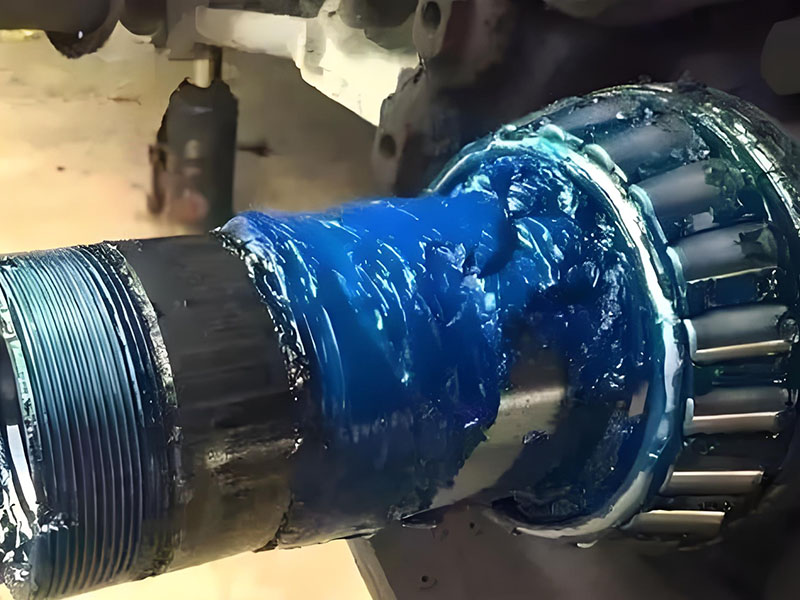
- Lubrication Failure: The bearings inside the hub are packed with specialized grease. If the seals fail and grease leaks out, or if the grease simply breaks down over time from heat, metal-to-metal contact occurs. This generates more heat, accelerates wear, and quickly destroys the bearing .
- Contamination: This is a primary killer of wheel bearings. When the protective seals are damaged by age, debris, or improper installation, water, road salt, dirt, and other contaminants can enter the assembly. This contaminates the grease and causes corrosion and pitting on the precision bearing surfaces .
- Impact Damage (Brinelling): Hitting a severe pothole, a curb, or being in an accident can physically damage the bearings. The force of the impact creates permanent dents on the bearing races, a condition known as brinelling. These dents lead to roughness, noise, and premature failure .
- Improper Installation: Using incorrect tools or procedures during installation is a very common cause of early hub failure. Hammering on the assembly, failing to clean the mounting surface, or—most critically—improper torquing of the axle nut or lug nuts can warp components or set the wrong bearing preload, leading to rapid destruction .
Consequences of Ignoring a Bad Wheel Hub Assembly
Dismissing the early symptoms of hub failure can have severe repercussions. What starts as a minor noise can quickly escalate:
- Complete Wheel Detachment: In the worst-case scenario, a catastrophically failed hub can cause the wheel to separate from the vehicle, leading to a complete loss of control .
- Damage to Surrounding Parts: A wobbling hub puts immense stress on connected components, damaging the constant-velocity (CV) axle, warping the brake rotor, and straining the suspension .
- Compromised Braking Performance: A faulty hub can affect brake rotor alignment and, because the ABS system relies on a good sensor signal, it can lead to improper anti-lock braking function, increasing stopping distances .
- Exponentially Higher Repair Costs: Replacing a single hub assembly is a manageable repair. Ignoring it can lead to a domino effect requiring replacement of axles, brake components, and tires, costing significantly more.
How to Replace a Wheel Hub Assembly
Note: Replacing a wheel hub assembly requires mechanical skill and specialized tools. The following is a general overview; always consult your vehicle’s specific service manual and use proper safety equipment.
- Safety First: Loosen the lug nuts while the vehicle is on the ground. Then, safely lift the vehicle with a jack and securely support it on jack stands. Never work under a vehicle supported only by a jack .
- Remove the Wheel: Fully remove the lug nuts and take off the wheel .
- Remove Brake Components: Remove the brake caliper (support it with a wire; don’t let it hang by the hose) and the brake rotor to access the hub assembly .
- Remove the Old Hub Assembly: This typically involves removing the large central axle nut and several bolts securing the hub to the steering knuckle. Penetrating oil can help loosen rusted bolts .
- Clean and Prepare: Before installing the new hub, meticulously clean the mounting surface on the knuckle. Any rust, dirt, or debris here will cause the new hub to sit improperly, leading to vibration and premature failure .
- Install the New Hub Assembly: Position the new DUHUI hub and hand-tighten the mounting bolts. Then, use a calibrated torque wrench to tighten every bolt to the exact specification provided by the vehicle manufacturer. This step is critical .
- Reassemble: Reinstall the brake rotor and caliper. Clean the wheel mounting surface before refitting the wheel.
- Test Drive: Lower the vehicle and tighten the lug nuts to the correct specification in a star pattern. Take a careful test drive, listening for the noise that prompted the repair.
Preventive Maintenance: Extending the Life of Your Hubs
While modern sealed hub assemblies are largely maintenance-free, you can still extend their life with good practices.
- Regular Inspections: Pay attention to new noises or vibrations. During tire rotations, a mechanic can check for play in the hub .
- Avoid Impacts: Be mindful of road conditions. Slow down for potholes and avoid slamming into curbs, which can cause internal brinelling damage
- Precision Torque is Everything: Whether installing a new hub or just putting a wheel back on, always use a torque wrench. This ensures the hub isn’t distorted and the wheel is held securely. Never use an impact wrench for final tightening .
Conclusion
Your vehicle’s wheel hub assembly is a critical safety component that works hard every mile. By understanding the symptoms of failure—from subtle noises to changes in handling—you can address problems early, ensuring your safety and avoiding costly damage down the road.
For automotive professionals and distributors seeking reliable, high-performance replacement parts, DUHUI Bearing offers a comprehensive range of precision-engineered wheel hub assemblies. Our components are manufactured to meet or exceed OE standards, providing the durability and trust your business requires.