Wheel bearings are the critical interface between a vehicle’s suspension and the wheel, designed to manage radial and thrust loads with minimal friction . They are fundamental to safe handling, stable braking, and smooth rolling performance. When a wheel bearing begins to fail, it compromises more than just comfort—it poses a direct safety risk, potentially leading to wheel separation if ignored . For automotive professionals, accurate troubleshooting is not just about fixing a noise; it’s about identifying the root cause to ensure a safe and lasting repair. DUHUI will provide a deep dive into the symptoms, underlying failure modes, and professional diagnostic steps for wheel bearings, helping you turn a common complaint into a definitive and profitable solution.
Common Symptoms of Wheel Bearings Failure
A failing wheel bearing rarely goes completely unnoticed, but its symptoms can sometimes be mistaken for other issues. Recognizing the specific clues is the first step in an accurate diagnosis.
Unusual Tire Wear Patterns
A worn wheel bearing introduces excessive play in the wheel assembly. This can cause the tire to “wobble” slightly at speed, leading to uneven tire wear patterns such as scalloping or cupping on the tread . While misalignment is a common cause of tire wear, bearing-related wear should be suspected if the pattern is accompanied by other symptoms like noise or looseness.
Vehicle Handling Irregularities: Looseness, Wandering, and Vibration
As internal clearances increase, the driver may feel a vague or “loose” sensation in the steering. The vehicle might wander or require constant steering correction. Vibration is another key indicator; a growling bearing can transmit a low-frequency vibration through the chassis, while severe damage may cause a noticeable shake in the steering wheel that varies with vehicle speed .
Audible Clues: Humming, Growling, and Grinding
The most classic symptom of a bad wheel bearing is a cyclic humming, growling, or rumbling noise that changes in proportion to vehicle speed . Unlike engine noise, it persists even when coasting in neutral. A useful technique to confirm bearing noise is the “load test”: if the noise gets louder when turning right, the left-side bearings are under more load and likely at fault, and vice versa .
Main Failure Modes and Causes of Wheel Bearings
Understanding why a bearing failed is just as important as knowing that it failed. The international standard ISO 15243 classifies rolling bearing failures, providing a framework for identifying root causes and preventing repeat failures .
Rolling Contact Fatigue (Flaking/Spalling)
This is the natural wear-out mechanism. Over tens of thousands of miles, repeated stress cycles cause micro-cracks to form beneath the surface of the races. These cracks eventually propagate to the surface, causing pieces of metal to flake away—a process known as spalling or flaking . This results in the rough, growling sensation felt during driving.
Mechanical Damage (Indentation from Impact)
Not all failures are due to age. A severe impact, such as hitting a pothole or curb, can cause Brinelling—permanent dents in the races created by the rollers or balls under extreme force . Similarly, contamination from dirt or metal debris can roll through the bearing, creating indentations that lead to premature surface-originating fatigue and noise .
Corrosion and Contamination
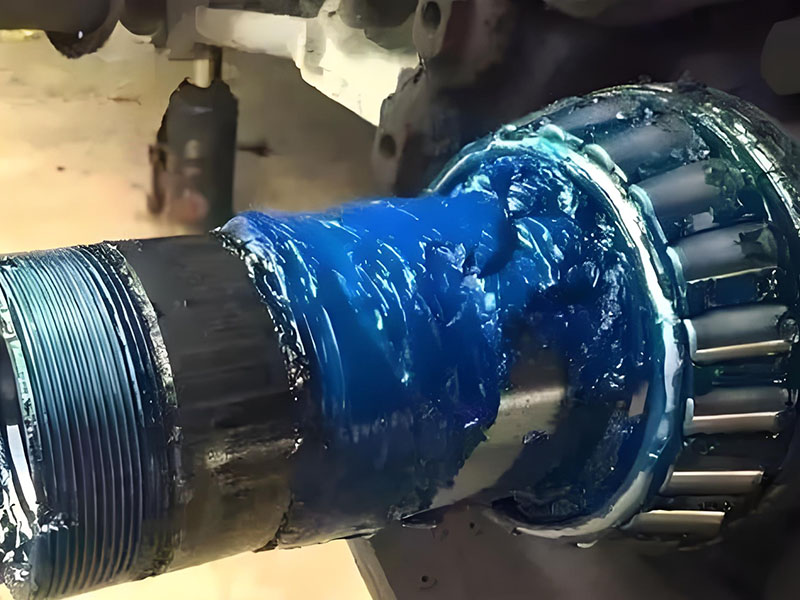
Water is a bearing’s enemy. If the seals are compromised, moisture and road grit can enter the bearing . This leads to rust (corrosion) on the highly polished surfaces and acts as an abrasive, wearing down the rollers and races. This contamination drastically shortens bearing life and is a common consequence of aggressive pressure-washing directly at the hub .
Poor Lubrication and Overheating (Thermal Damage)
Lubrication is essential for separating moving parts. If lubricant degrades or leaks out, metal-to-metal contact occurs. The resulting friction generates intense heat, leading to discoloration (blueing) of components and, in severe cases, adhesive wear where materials transfer from one surface to another . A case study on transmission bearings showed that inadequate lubrication can cause instantaneous high temperatures, creating a brittle “secondary quench” layer that leads to rapid failure .
Professional Troubleshooting: A Step-by-Step Diagnostic Workflow
Armed with knowledge of symptoms and causes, a systematic approach ensures an accurate fix the first time.
Dynamic Assessment: The Road Test
- Listen: Find a quiet, safe road. Bring the vehicle up to speed and listen for the characteristic hum or growl.
- Load: Perform a series of gentle left and right swerves. If the noise peaks during a right turn, the suspect bearing is on the left side .
- Differentiate: Lightly apply the brakes. If the noise changes or stops, the issue may be brake-related rather than a bearing . If the noise is constant and doesn’t change with steering, suspect tire noise .
Static Inspection: The Lift Test
- Safety First: Raise the vehicle and securely support it on jack stands.
- Play Check: Grasp the tire at the 12 and 6 o’clock positions and attempt to rock it. Excessive movement (play) indicates wear in the bearing . Repeat at the 9 and 3 o’clock positions. For sealed hub units, there should ideally be no perceptible play .
- Rotation Check: Spin the wheel freely. Listen for any grinding, roughness, or dragging sounds. The rotation should be smooth and quiet .
Visual Confirmation
- Inspect the area around the hub for signs of grease leakage—this indicates a failed seal .
- Check the condition of the ABS sensor wiring and the tone ring (if visible) for damage, which can trigger warning lights even if the bearing isn’t noisy yet .
- Examine the axle nut. If it appears loose or was not replaced during a recent repair, incorrect pre-load may have destroyed the new bearing prematurely .
Conclusion
Successfully troubleshooting wheel bearing failures requires moving beyond the symptoms to understand the underlying mechanics. Whether the culprit is fatigue, impact damage, or contamination, a precise diagnosis ensures vehicle safety and customer satisfaction. However, the diagnostic process is only as good as the part that is installed. Using inferior bearings often leads to comebacks, as they lack the material quality and heat treatment necessary to resist common failure modes like Brinelling from impacts .
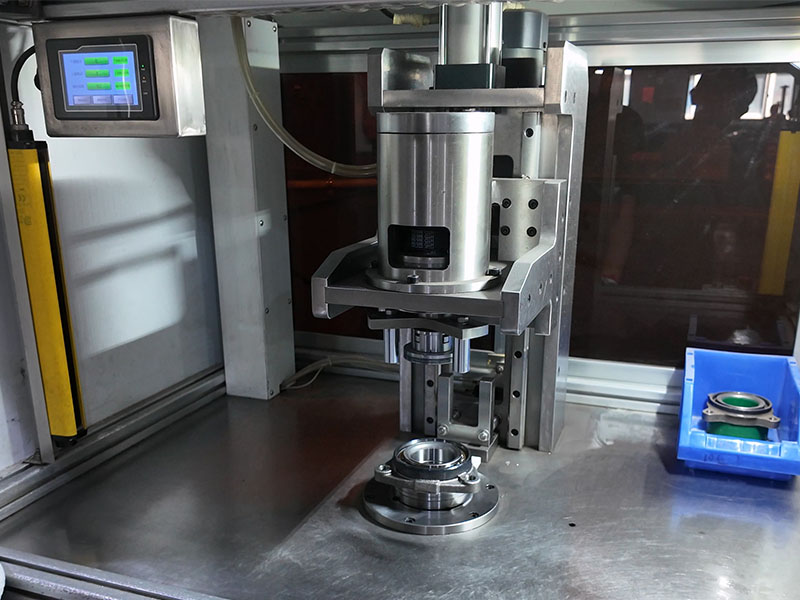
At DUHUI Bearing, we understand the demands placed on modern vehicles. Our wheel bearings are manufactured with stringent quality controls, utilizing premium materials and advanced heat-treating processes to ensure long-lasting performance and reliability.