Double row deep groove ball bearings are a specific type of rolling-element bearing designed to support high radial loads and moderate bidirectional axial loads within a compact axial space. Unlike their single-row counterparts, these bearings feature two rows of balls sharing a common inner and outer raceway, offering increased load capacity and rigidity. DUHUI will provide a technical overview of their design, preloading requirements, applications, maintenance, and selection criteria for engineers and maintenance professionals. What makes them different from single-row bearings, and do they always need preloading? The following sections provide detailed answers.
What is a Double Row Deep Groove Ball Bearing?
A double row deep groove ball bearing is a bearing unit with two parallel raceways on both the inner and outer rings. The deep, uninterrupted grooves allow the balls to maintain contact even under combined loads.
- Structural Design: The double-row configuration packs more rolling elements than a single-row design of similar width. This provides higher load-carrying capacity while maintaining the ability to accommodate slight misalignments.
- Operating Principles: These bearings primarily support radial forces. However, due to the deep grooves, they can also manage axial loads from either direction, effectively acting as a simple locating bearing unit.
- Materials and Manufacturing: Standard rings and balls are made of high-carbon chrome steel (e.g., GCr15/52100) for hardness and wear resistance. For corrosive environments, stainless steel (440C) is used. For high-speed or electrically insulating applications, ceramic balls (silicon nitride) paired with steel rings are an option.
Do Double Row Deep Groove Ball Bearings Need Preloading?
The requirement for preload depends entirely on the application. Preload is the application of a constant axial or radial force to eliminate internal clearance.
Why Preload is Applied: Preload removes internal clearance,increasing stiffness, reducing operational noise and vibration, and improving rotational precision. It is critical in machine tool spindles or precision rotating tables.
How to Apply Preload:
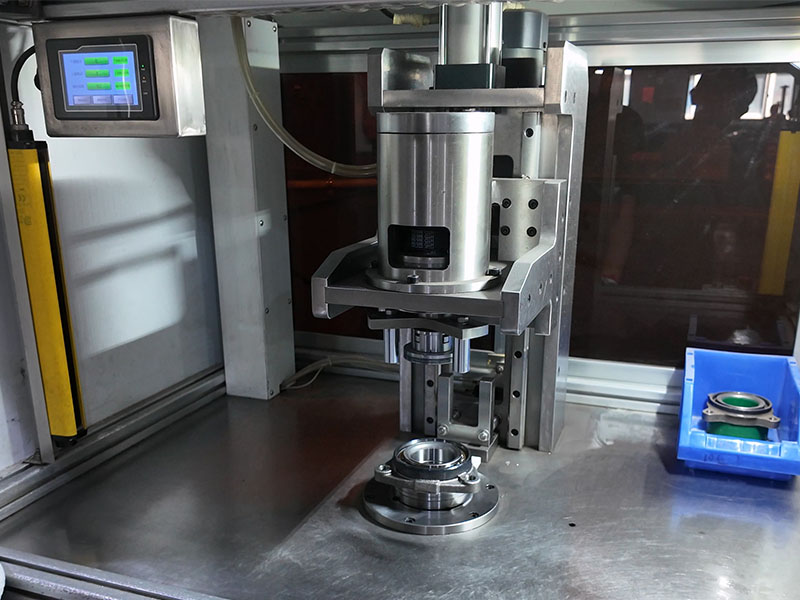
- Direct Preloading: Applying a measured axial force during assembly (e.g., using springs or torque-controlled fasteners).
- Built-in Preload: Using bearings specifically manufactured with a negative internal clearance (often designated as “universal fit” bearings).
- Preload Devices: External mechanisms like wave springs or spacer rings.
Benefits of Preloading:Enhanced rigidity, improved load distribution among balls, and reduced risk of skidding at high speeds.
When Preload is Not Required or Pre-set:For many standard applications—such as electric motors, agricultural equipment, and most wheel hubs—preload is not applied by the end user. In these cases, the bearing is designed with a standard radial clearance (CN) or is preloaded by the original equipment manufacturer (OEM) during assembly. Applying additional preload in these scenarios could cause overheating and premature failure.
Key Applications of Double Row Deep Groove Ball Bearings
Due to their high load capacity and compact width, these bearings are specified in various industries:
- Automotive Industry: Widely used in wheel hubs (as hub units), transmission shafts, and alternator pulleys where space is limited but load requirements are high.
- Industrial Machinery: Found in machine tool spindles (precision version), conveyor rollers (heavy load), and pumps/compressors (reliability).
- Electric Motors: Used in high-efficiency motors (IE3/IE4) where reduced vibration and consistent rotor support are necessary.
- Railroad Equipment: Applied in railway axle boxes and traction motors, where they withstand heavy rolling loads and track-induced shocks.
- Agricultural Equipment: Tractors, harvesters, and balers often use sealed double row bearings to resist contamination from dirt and moisture while managing intermittent heavy loads.
How to Maintain Double Row Deep Groove Ball Bearings to Extend Service Life
Proper maintenance is critical for achieving the calculated L10 lifespan.
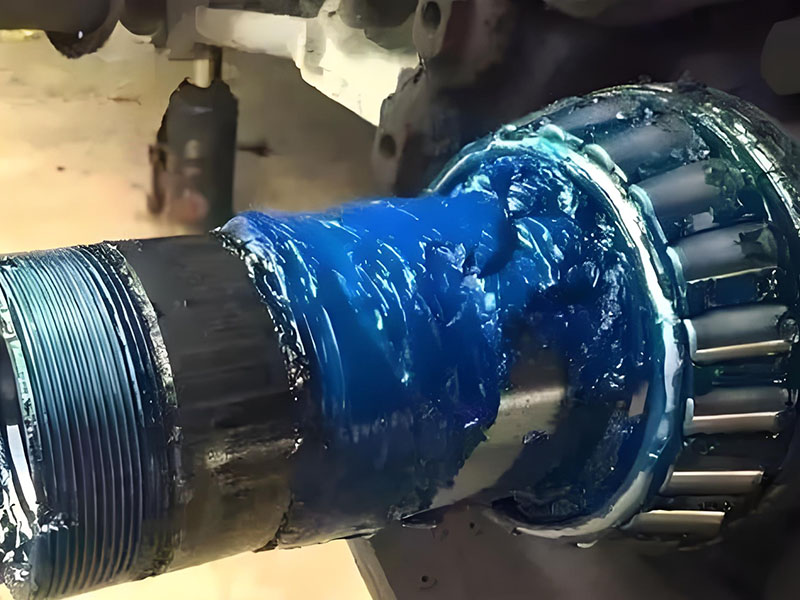
- Lubrication: Select between grease (ease of sealing, lower torque) and oil (better heat dissipation, higher speeds). For grease-lubricated bearings, monitor operating temperature and re-grease at intervals specified by the equipment maker. Over-greasing is a common failure cause.
- Regular Inspections: Use vibration analysis (ISO 10816) and thermography to detect early-stage raceway spalling or lubrication degradation. Unusual audible noise often indicates contamination or clearance loss.
- Sealing Integrity: Verify that contact seals (higher friction, better protection) or non-contact shields (lower friction, for clean environments) are not damaged. Compromised seals allow abrasive particles to enter, causing rapid wear.
Double Row vs. Single Row Deep Groove Ball Bearings: Key Differences
The table below summarizes technical distinctions to guide your selection.
| Feature | Single Row Deep Groove Ball Bearing | Double Row Deep Groove Ball Bearing |
| Structure | Single raceway, simpler design | Two raceways, more balls, compact width |
| Load Capacity | Lower radial/axial capacity | Higher radial + bidirectional axial capacity |
| Rigidity & Precision | Lower rigidity, standard precision | Higher rigidity, suitable for high-precision |
| Space Requirement | Smaller axial space | Similar width for higher capacity |
| Typical Applications | Small motors, home appliances, fans | Automotive hubs, heavy machinery, pumps |
| Cost | Lower | Higher, but TCO may be lower due to longevity |
Key Factors to Consider When Choosing a Double Row Deep Groove Ball Bearing
Selecting the correct bearing requires evaluating several operational parameters:
- Load Requirements: Calculate the equivalent dynamic bearing load (P) based on radial (Fr) and axial (Fa) forces. Double row bearings handle Fa/Fr ratios up to ~0.6 efficiently.
- Speed Requirements: Verify the bearing’s limiting speed (grease or oil) against your machine’s operating speed. Higher speeds may require C3 or C4 internal clearance to prevent heat buildup.
- Lubrication: Determine if grease (most common, 60-80% fill) or oil circulation (for speeds >50% of limit) is more suitable for your duty cycle.
- Budget and Cost-effectiveness: While initial purchase price is higher than single row, double row bearings often reduce system complexity (no need for two separate bearings) and extend maintenance intervals, lowering total cost of ownership (TCO).
Frequently Asked Questions (FAQ)
1. What are the main advantages of double-row deep groove ball bearings?
High load-carrying capacity, good rigidity, robust sealing options, long service life, and the ability to handle combined loads in a compact space.
2. Can double-row deep groove ball bearings handle both radial and axial loads?
Yes. Their deep groove design enables them to accommodate significant axial loads from both directions simultaneously with a large radial load.
3. What are the signs that a double-row deep groove ball bearing needs replacement?
Unusual vibration or noise (e.g., spalling frequencies in FFT spectra), excessive temperature rise (>70°C above ambient), visible rust or pitting on inspection, and degraded lubricant containing metal particles.
4. Can double-row deep groove ball bearings be used in high-temperature environments?
Standard steel bearings (52100) operate reliably from -30°C to +150°C. For sustained temperatures above 150°C, specify heat-stabilized rings (200°C) or use ceramic hybrid bearings. The common operational range of 60-80°C is typical but not a limit.
5. How to select the clearance of a double row deep groove ball bearing?
Common grades: CN (Normal) for standard thermal conditions; C3 for higher speeds or >70°C operating temperature; C4 for extreme speed or large thermal gradients. Always consult the manufacturer’s thermal compensation guide.
6. What are the lubrication methods for double row deep groove ball bearings?
Grease lubrication (most common, using lithium or polyurea base) and oil lubrication (oil bath, circulating, or oil-air mist for very high speeds).
7. What are the key precautions when installing double row deep groove ball bearings?
Strictly prohibit striking the rings directly; apply press force only to the interference-fit ring.
Ensure proper alignment to avoid edge loading.
Check axial clamping force to prevent unintended preload.
8. What are the common failure modes of double row deep groove ball bearings?
Fatigue spalling (normal end-of-life)
Overheating discoloration (often due to excessive preload or lubrication failure)
Installation damage (brinelling from hammer strikes)
Contamination wear (abrasive particles entering through failed seals)
Cage fracture (shock load or high acceleration)
9. What is the typical lifespan of a double row deep groove ball bearing?
Calculated as L10 life (90% reliability under given load and speed). With proper lubrication, alignment, and contamination control, many industrial applications achieve 30,000 to 50,000 operating hours before fatigue spalling occurs.