
Basic Structure
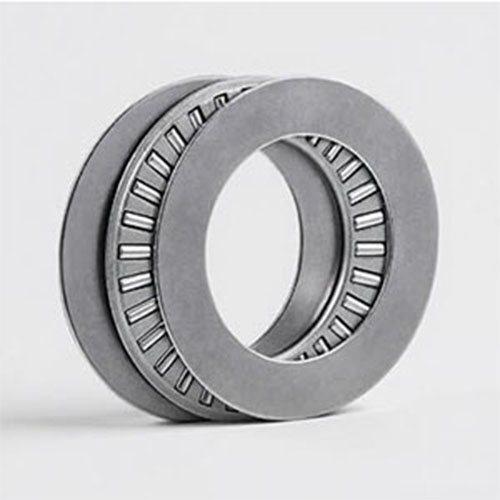
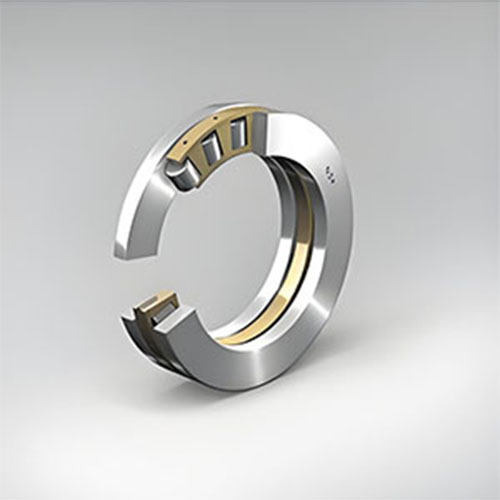
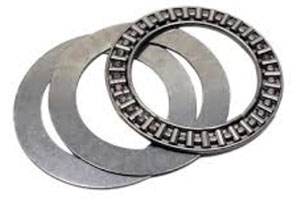
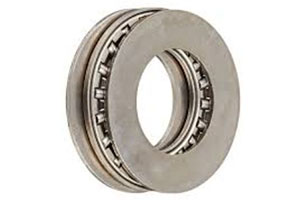
A thrust roller bearing consists of a shaft washer, a housing washer and a roller-and-cage assembly. The shaft washer fits tightly on the rotating shaft. The housing washer sits loosely in the housing bore. Rolling elements – cylindrical, tapered, spherical or needle rollers – transmit axial force between the two washers. This line-contact design reduces friction while supporting high compressive loads. The separable construction allows independent mounting of each component. Typical applications include vertical shafts, gearbox locating positions and press tools.
Technical Advantages
- High axial load capacity – Roller line contact distributes force over a larger area than ball designs. Suitable for heavy industrial thrust loads.
- Separable assembly – Shaft washer, housing washer and roller cage can be mounted separately. Maintenance and replacement are simplified.
- Multiple roller geometries – Cylindrical for pure axial loads, tapered for combined loads, spherical for misalignment, needle for compact spaces.
- Space-efficient construction – Thrust needle roller bearings achieve high stiffness in axial spaces as thin as 2 millimeters.
- Rigid axial positioning – Minimal elastic deformation under load. Provides precise shaft location in gearboxes and machine tools.
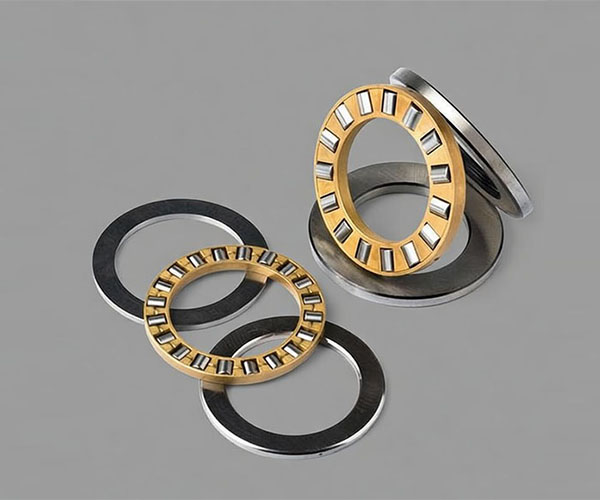
Four Thrust Roller Bearing Types Comparison Overview
Thrust roller bearings are specified where axial forces dominate. Heavy industrial gearboxes, vertical pumps, mining equipment, marine thrust blocks and automotive transmissions all rely on these components. The aftermarket offers four main configurations: thrust cylindrical roller bearings, thrust tapered roller bearings, thrust spherical roller bearings and thrust needle roller bearings. Each type differs in load capacity, speed capability, alignment tolerance and radial load accommodation.
Thrust cylindrical roller bearings (series 811, 812, 893, 894) use cylindrical rollers arranged between flat washers. This geometry provides high axial stiffness for unidirectional thrust loads. Standard designs do not accept radial loads. The simple roller shape enables consistent manufacturing precision. These bearings are installed in gearbox shaft locating positions, extruder screw thrust assemblies and vertical pump rotors.
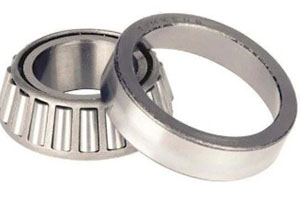
Thrust tapered roller bearings (90000 type, 350000 type) incorporate tapered rollers and conical raceways. This design supports combined axial and radial loads. The taper angle determines the ratio of axial to radial capacity. Typical applications include heavy vehicle differentials, cross-shaft assemblies and industrial gearboxes where a moderate radial component exists alongside the dominant axial force. Their limiting speed is slightly above that of cylindrical thrust bearings.
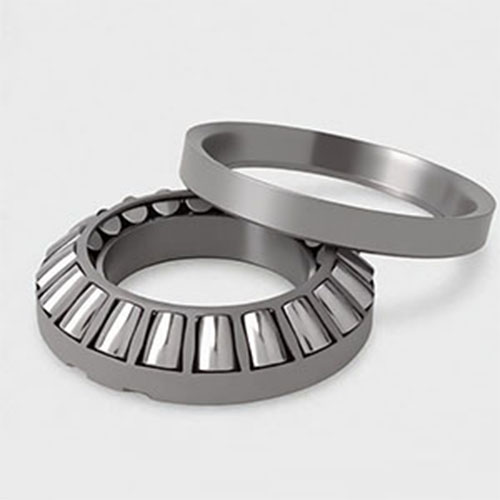
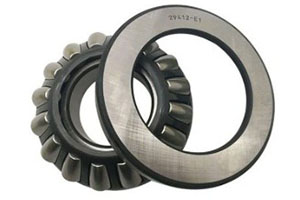
Thrust spherical roller bearings (29000 series, 292, 293, 294) feature asymmetrical spherical rollers that run on a spherical housing washer. This construction provides self-aligning capability, compensating for shaft deflection or housing misalignment up to 1.5 to 2.5 degrees depending on the series. These bearings accept the highest axial loads among all thrust roller types. They can also accommodate a radial load component up to 55 percent of the applied axial load. Wind turbine main shafts, cone crushers, injection molding machines and hydroelectric turbines are common applications.
Thrust needle roller bearings (AXK, AS, AZK, LS series) offer the most compact solution. Needle rollers achieve high load capacity in minimal axial space. Many designs require hardened and ground adjacent surfaces to serve as raceways. Automatic transmissions, torque converters, power steering pumps and motorcycle clutch mechanisms frequently use these bearings. Combined types such as NKX and NKXR integrate radial needle bearings with thrust bearings for bidirectional load support.
Type Comparison Table
| Comparison Dimension | Cylindrical Thrust Roller | Tapered Thrust Roller | Spherical Thrust Roller | Needle Thrust Roller |
| Load Capacity | High | Very High | Extremely High | Medium-High |
| Limiting Speed | Lowest | Slightly Higher | Low | Low |
| Self-Aligning Ability | None | None | Yes (1.5°–2.5°) | None |
| Radial Load Capacity | None | TTF type: moderate | Up to 55% of axial load | None |
| Typical Series | 811 / 812 / 893 / 894 | 90000 / 350000 | 292 / 293 / 294 | AXK / AS / AZK / LS |
| Cage Material | Brass / Steel / PA66 | Brass / Steel | Brass / Steel | Pressed steel / Plastic |
Selection Criteria and Installation Notes
Load magnitude and direction – Calculate the maximum axial load. Determine whether the load is unidirectional or bidirectional. Select a bearing type whose load rating matches the requirement.
Speed requirements – Thrust cylindrical and tapered bearings operate best at low to medium speeds. For higher speeds, oil circulation lubrication is recommended.
Lubrication method – Oil lubrication is standard for most thrust roller bearings. Grease lubrication is acceptable for low-speed, intermittent duty cycles.
Environmental conditions – Consider temperature, humidity and contamination. Spherical thrust roller bearings accommodate thermal expansion and shaft bending better than other types.
Minimum axial preload – Roller thrust bearings require a minimum axial load to maintain rolling contact. Spring preloading must be added if the actual load falls below this threshold.
Types and Series
DUHUI Bearing manufactures thrust roller bearings to ISO 104 and DIN 616 dimensional standards. The following series are stocked for aftermarket replacement in heavy machinery, automotive transmissions, industrial gearboxes and hydraulic systems. Each series listing includes key dimensional characteristics and typical applications.
- Thrust Roller Bearing Types
- Thrust Tapered Roller Bearing Series
- Thrust Spherical Roller Bearing Series
- Thrust Cylindrical Roller Bearing Series
- Thrust Needle Roller Bearing Series
Thrust Roller Bearing Types
Selecting the correct thrust roller bearing requires understanding how each type handles load direction, space constraints, alignment needs and speed expectations. The following four configurations cover the majority of industrial axial load applications.
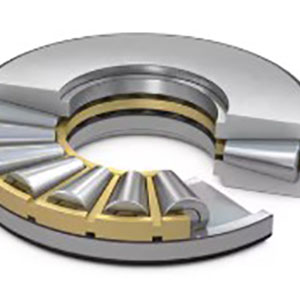
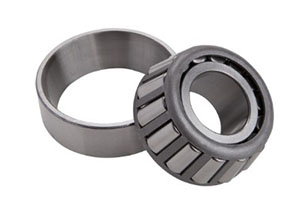
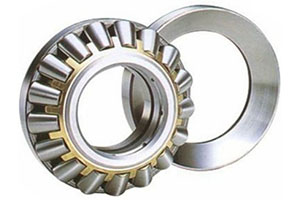
Thrust tapered roller bearing combines high axial load capacity with moderate radial load accommodation. Conical raceways and tapered rollers provide rigid positioning. Suitable for heavy vehicle differentials and industrial gearboxes.
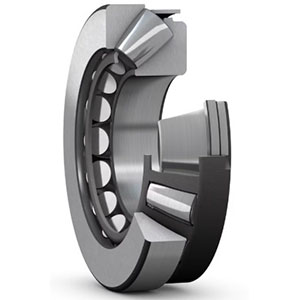
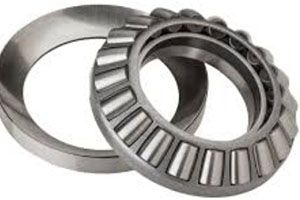
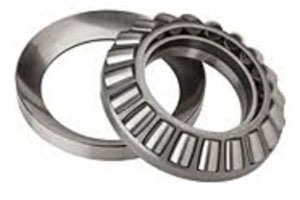
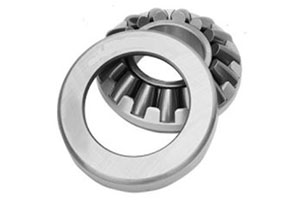
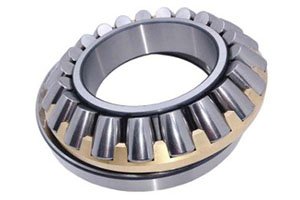
Thrust spherical roller bearing offers self-aligning capability that compensates for shaft deflection and housing misalignment. Asymmetrical spherical rollers maximize contact area. Ideal for wind turbines, cone crushers and hydroelectric stations.
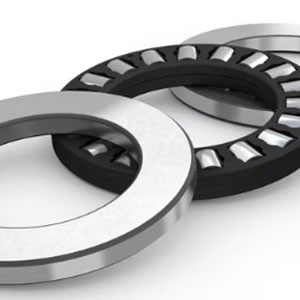
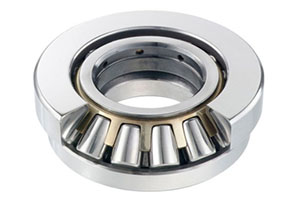
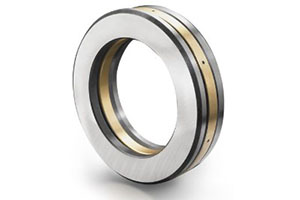
Thrust cylindrical roller bearing provides pure axial load handling with the highest stiffness-to-height ratio among thrust bearings. Cylindrical rollers create line contact for heavy unidirectional thrust. Common in gearbox locating positions and vertical pumps.
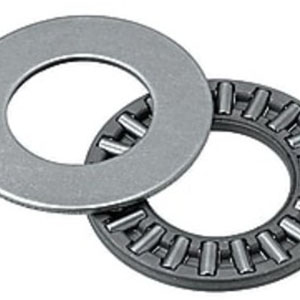
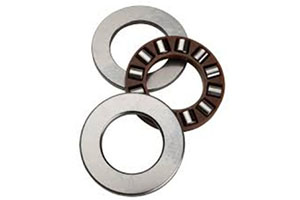
Thrust needle roller bearing features an extremely compact cross-section with height as low as 2 millimeters. Needle rollers achieve high load density. Often used without separate washers, relying on hardened adjacent surfaces as raceways.
Thrust Tapered Roller Bearing Series
These thrust tapered roller bearing series cover dimensions found in Chinese heavy machinery, European trucks and North American off-highway equipment. All series conform to international interchangeability standards, allowing direct replacement of OEM components without modification.
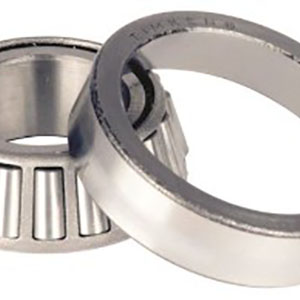
2578/2523 series – Inch series for cross-shaft installations. This thrust tapered roller bearing uses inch dimensions common in North American equipment. Suitable for cross-shaft assemblies and heavy on-highway vehicle gearboxes.
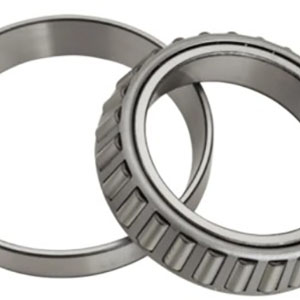
33000 series – Light medium metric bearing. For moderate axial loads in automotive differentials and industrial gearboxes. Provides balance between load capacity and speed capability. Lightweight construction.
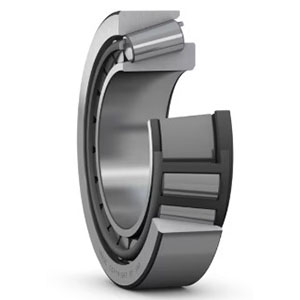
32900 series – Thin-section thrust tapered bearing. Designed for limited axial space. Used in boat engine reverse gears and light vehicle transmissions. Reduced cross-section without significant loss of axial load capacity.
Thrust Spherical Roller Bearing Series
These thrust spherical roller bearing series provide increasing load capacity and misalignment tolerance. All accept radial loads up to 55 percent of the axial load. The self-aligning feature compensates for shaft bending and housing deflection, extending bearing life in demanding applications.
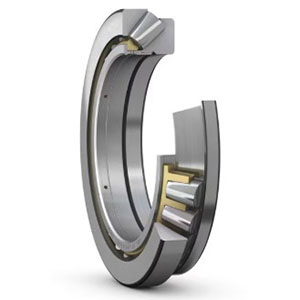
292 series – Light spherical roller thrust bearing. This thrust spherical roller bearing handles high axial loads with moderate misalignment up to 1.5 degrees. Suitable for vertical shafts in pumps and fans.
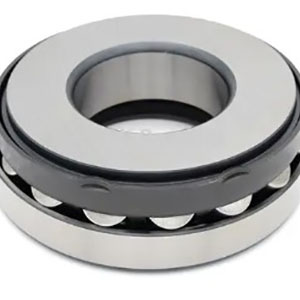
293 series – Heavy spherical roller thrust bearing. Higher dynamic load rating compared to 292 series. Accepts radial loads and misalignment up to 2 degrees. Standard in mining cone crusher main shafts.
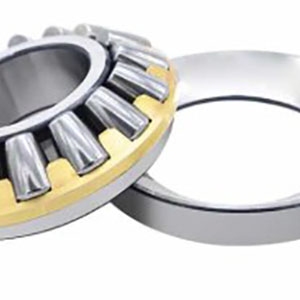
294 series – Extra-heavy spherical roller thrust bearing. Highest load capacity in the spherical thrust bearing family. E-cage design reduces heat generation. Used in steel mills and hydraulic presses.
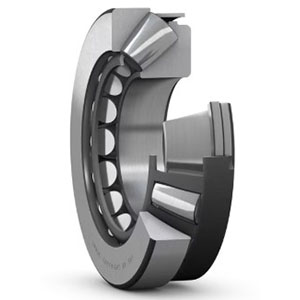
29300E series – E-type higher capacity bearing. Optimized raceway profiles retain oil film under shock loads. Higher dynamic and static capacities than standard 293 series. For heavy-duty vertical applications.
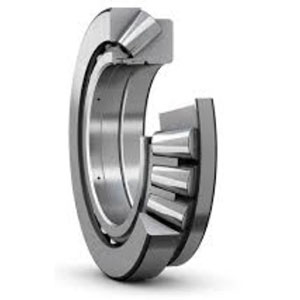
29400E series – Extreme-performance spherical bearing. E-design with reduced roller-end stress and optimized internal contours. For challenging environments including forging presses and large hydro turbines.
Thrust Cylindrical Roller Bearing Series
These thrust cylindrical roller bearing series are available with brass, steel or PA66 cages. The separable design allows independent mounting of shaft washers, housing washers and roller assemblies. Suitable for unidirectional axial loads in gearboxes, pumps and presses.
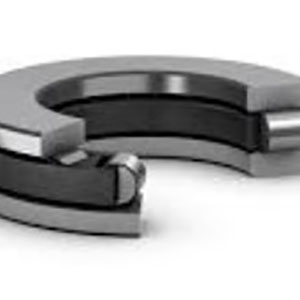
811 series – Light cylindrical thrust bearing. High axial stiffness in a thin profile. This thrust cylindrical roller bearing uses a separable design. For moderate axial loads in gearbox shaft locations.
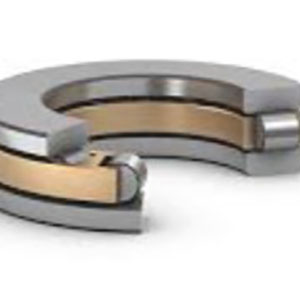
812 series – Medium-heavy cylindrical thrust bearing. Larger outer diameter than 811 series for higher capacity. Used in heavy gearbox locating positions and extruder screw thrust assemblies.
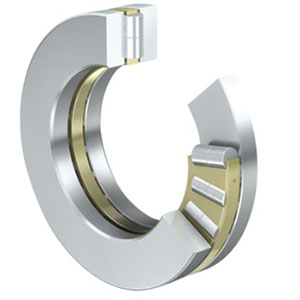
894 series – Extra-heavy cylindrical thrust bearing. Thin cross-section relative to load capacity. This thrust cylindrical roller bearing handles extreme axial loads in hydraulic presses.
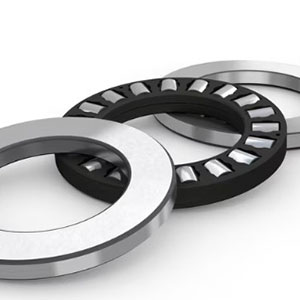
81200 series – Metric heavy series with brass cage. Machined brass cage withstands temperatures up to 150°C. For industrial applications including steel plant gearboxes.
Thrust Needle Roller Bearing Series
These thrust needle roller bearing series have cross-section heights of 2 to 3 millimeters. High stiffness relative to axial space makes them ideal for automatic transmissions and torque converters. Many designs require hardened adjacent surfaces to serve as raceways.
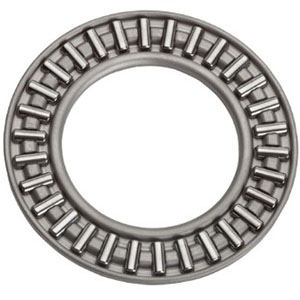
AXK series – Needle roller and cage assembly. This thrust needle roller bearing uses adjacent shaft and housing shoulders as raceways. Must be paired with hardened washers unless mating surfaces are through-hardened.
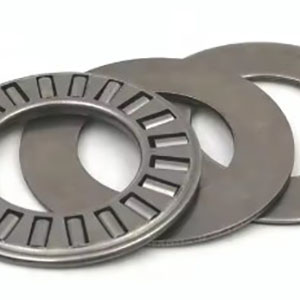
AZK series – Complete bearing with integral washers. Fully assembled thrust needle roller bearing with both washers included. No separate raceway washers required. Used in automatic transmissions.
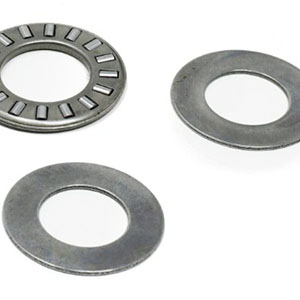
LS series – Single-direction needle thrust bearing. Consists of a cage-guided needle set and two hardened steel washers assembled as a unit. Pre-adjusted for easy installation.
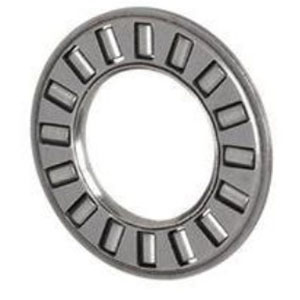
AXW series – Complete bearing with integrated washers. Manufacturer-provided washers attached to the roller assembly. No separate washer needed compared to plain AXK. Simplifies inventory.
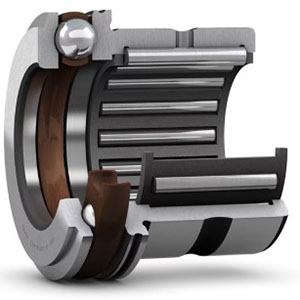
NKX series – Combined needle/thrust ball bearing. Provides radial support from needle rollers plus axial thrust capacity from an integrated thrust ball bearing. Same envelope as radial needle bearing.
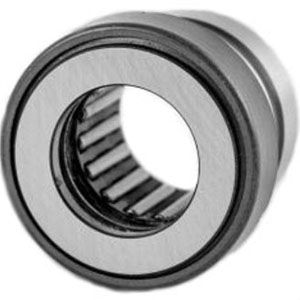
NKXR series – Combined needle/cylindrical thrust bearing. Based on 811 series thrust bearings. Provides radial needle bearing with bidirectional thrust capacity. For applications requiring both radial location and axial thrust.
Other Roller Bearing Types
The following radial and combined-load bearing types complement thrust roller bearings for complete drivetrain solutions. These bearing categories are frequently used alongside thrust bearings in gearboxes, wheel ends and industrial machinery.
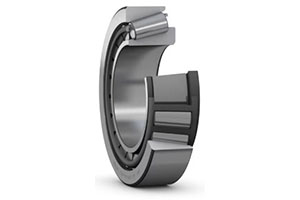
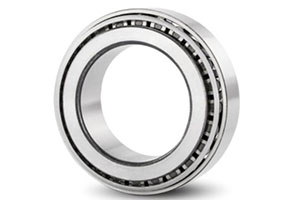
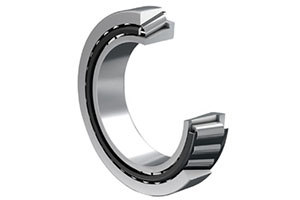
Single-row and double-row configurations for combined radial and axial loads. Used in automotive wheel hubs, gearboxes and conveyor rollers. Conical raceways provide high rigidity.
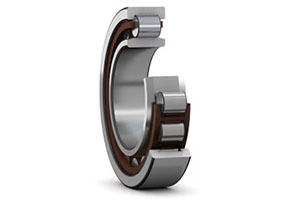
NU, NJ, NUP and N series for high radial loads. Separable design simplifies mounting. Suitable for electric motor shafts and gearbox rotating elements.
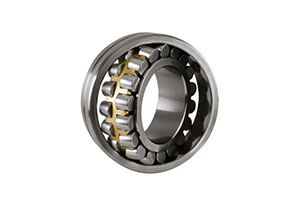
Self-aligning radial bearing with two rows of symmetrical rollers. Accommodates heavy radial loads plus some axial load. Ideal for conveyors and vibrating screens.
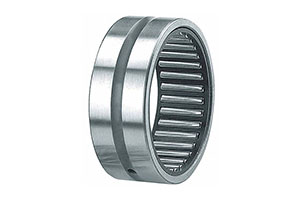
Drawn cup and machined types for high radial load density in compact envelopes. Used in connecting rods, rocker arm pivots and automatic transmission planetary gears.
Industry Applications
Thrust roller bearings are specified where axial forces dominate. The following sections describe specific use cases for each bearing type across major industrial sectors.

Thrust spherical roller bearings from 293 and 294 series support cone crusher main shafts. High impact resistance and misalignment tolerance are required.
Thrust spherical roller bearings (292 series) accommodate blade-induced axial thrust plus shaft bending. Self-aligning design compensates for tower deflection.
Thrust cylindrical and spherical bearings (894 and 294 series) handle propeller thrust in main shafts. Large bore diameters accommodate shaft sizes up to 400 mm.
Thrust tapered roller bearings (33000 and 32900 series) position pinion shafts and differential side gears. Moderate radial component is accommodated.
Thrust cylindrical and spherical bearings (894 and 294E series) support screw thrust and platen movements. High static load capacity prevents plastic deformation.

Thrust cylindrical roller bearings (812 and 893 series) handle impeller axial thrust. Oil bath lubrication ensures continuous operation at moderate speeds.
Comparison Guides
These internal articles help readers select the correct thrust roller bearing type. Comparisons address load capacity, speed, alignment tolerance and application suitability. Each article provides technical data to support informed bearing selection.
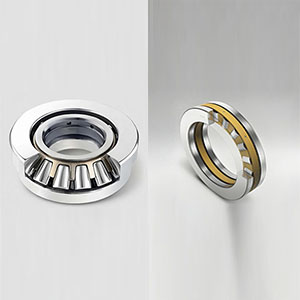
Tapered thrust bearings accept combined axial and radial loads, making them suitable for gearboxes and differentials where radial forces coexist. Cylindrical thrust bearings are limited to pure axial loads only, offering higher stiffness in pure thrust applications. Tapered types run at slightly higher speeds but require more precise alignment. The choice depends on whether radial load accommodation is needed.
For more details, please read“Thrust Tapered Roller Bearing vs. Thrust Cylindrical Roller Bearing”
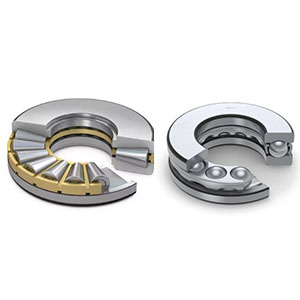
Thrust ball bearings suit higher speeds but lower loads. Thrust roller bearings handle heavier axial loads at lower speeds with greater rigidity. Roller designs also accommodate moderate radial components. For applications with pure axial loads and limited space, roller bearings are often the preferred choice over ball bearings due to their higher load density and longer fatigue life under heavy loads.
For more details, please read“Thrust Ball Bearing vs. Thrust Roller Bearing”
Related Products
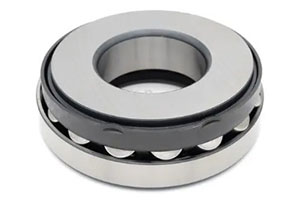
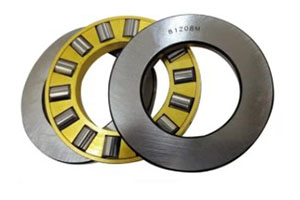
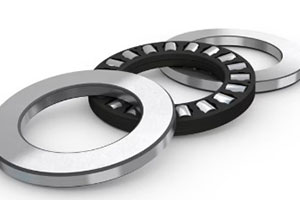
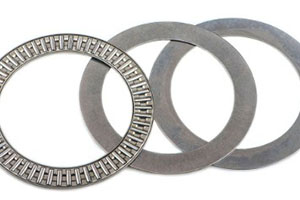
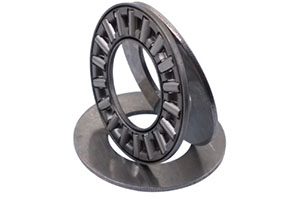
The following thrust roller bearing models are frequently ordered for heavy trucks, mining equipment, gearboxes and industrial drives. Each listing includes dimensions and typical applications.
Installation Procedure and Failure Diagnosis for Thrust Roller Bearings
Correct installation of thrust roller bearings directly determines service life. Because these bearings have a separable construction – shaft washer, housing washer and roller cage are separate components – the mounting procedure differs from radial bearings.
Critical mounting rule – Assembly force must never pass through the rolling elements. When press-fitting a shaft washer onto a shaft, force application must be only to the shaft washer face. When pressing a housing washer into a bore, force application must be only to the housing washer face. Tools with flat, parallel surfaces are required. Pneumatic or hydraulic presses are preferred over impact tools such as hammers.
Pre-alignment check – Before mounting, verify that the shaft shoulder and housing bore face are perpendicular to the rotation axis. For cylindrical and tapered thrust bearings, even a small misalignment causes edge loading and premature fatigue. Spherical thrust bearings tolerate some misalignment up to the specified limits (1.5 to 2.5 degrees depending on series).
Contamination prevention – If dynamic balancing is required after bearing installation, protect the bearing interior from metal chips and abrasive dust. Complete balancing before bearing mounting whenever possible. Alternatively, temporarily seal the bearing assembly during the balancing process.
Grease quantity control – Excess grease in the housing can migrate along the shaft and enter the bearing interior, causing churning, overheating and lubricant degradation. For grease-lubricated thrust bearings, fill only the internal space of the bearing plus a thin coating on the housing. Do not pack the entire housing cavity.
Chemical corrosion risk – In electric motors and generators, insulating varnish used on stator windings may release corrosive compounds during curing. These compounds can attack bearing steel, causing a failure mode sometimes called varnish corrosion or acidic vapor corrosion. Allow complete curing and adequate ventilation before installing bearings in such equipment.
Common Failure Modes and Diagnosis
| Fault Type | Main Symptoms | Primary Causes | Inspection Method |
| Housing washer deformation | Localized heating, uneven contact marks | Soft washer material, poor flatness or parallelism | Check flatness on surface plate; measure axial runout |
| Lubrication starvation | Temperature rise, scoring on roller ends and ribs | Viscosity too low at operating temperature; insufficient flow | Check oil viscosity and flow rate; inspect cage |
| Edge loading and micropitting | Local spalling on roller or raceway edges | Shaft misalignment or excessive load concentration | Measure alignment; check load distribution |
| Fatigue spalling | Flaking or spalling on raceways or rollers | Cyclic overload; service life exceeded | Calculate L10 life; compare with operating hours |
The four main types are thrust cylindrical roller bearings (811, 812, 893, 894 series), thrust tapered roller bearings (90000 type, 350000 type), thrust spherical roller bearings (292, 293, 294 series) and thrust needle roller bearings (AXK, AS, AZK, LS series). Each type suits different load magnitudes, speed ranges and space constraints.
It depends on the bearing type. Standard thrust cylindrical roller bearings have zero radial load capacity. Thrust needle roller bearings also lack radial capacity. Thrust tapered roller bearings can accommodate a moderate radial component, especially TTF designs without a housing rib. Thrust spherical roller bearings accept radial loads up to approximately 55 percent of the applied axial load.
For 29000 series asymmetrical spherical roller bearings, with equivalent static load P0a ≤ 0.05 C0a and the shaft washer rotating, permissible misalignment is: 292 series – 1.5 degrees, 293 series – 2.0 degrees, 294 series – 2.5 degrees. The allowable angle decreases as the load increases. Thrust cylindrical and tapered roller bearings permit no misalignment.
Common series include 811 and 812 (for example, 81115 and 81215). These separable bearings accommodate unidirectional axial loads with minor shocks. They function for single-direction axial positioning. Suitable for low-speed machinery requiring unidirectional thrust. Cages are available in brass, solid steel or glass fiber reinforced polyamide (PA66).
Thrust tapered roller bearings provide an axially compact configuration and accommodate very high axial loads. They resist shock loads and offer high rigidity. Their load capacity exceeds that of thrust cylindrical roller bearings, with lower relative sliding, but the limiting speed is lower. Common applications include heavy machine tools, high-power marine gearboxes, oil drilling rigs and vertical motors.
Lubricant selection significantly affects bearing life. Thrust needle roller bearings and other types typically use oil lubrication. Grease is acceptable for low-speed conditions. Maintenance intervals depend on operating conditions such as speed, temperature, environment and bearing size. Sealed bearings under normal conditions do not require frequent relubrication.
Thrust roller bearings are separable: shaft washer, housing washer and roller-cage assembly mount independently. The most critical requirement is to never transmit mounting force through the rolling elements. Force must be applied to the face of the ring that has an interference fit. Use dedicated mounting tools and avoid hammering. During press-fitting, the upper and lower tools must remain parallel to prevent tilting. The housing washer must be free to self-center.
Single-direction and double-direction thrust tapered roller bearings use different designation systems. TT type bearings use a single-direction design with shaft washers centered by a shaft rib; the fixing ring has a flat configuration. The 90000 type thrust tapered bearings, 80000 type thrust cylindrical bearings and AXK type thrust needle bearings conform to international dimensional standards and are interchangeable with major brand products. When the actual load falls below the minimum required axial load, spring preloading is necessary.
TT type bearings have a flat housing washer and a shaft washer with a tapered raceway and an integral rib. This rib design precisely guides the shaft radially. In rolling mill applications, TT type thrust bearings are often combined with multi-row cylindrical roller bearings. This configuration handles heavy thrust and shock loads. The housing washer requires only a sleeve guide to prevent raceway displacement and roller protrusion.