With multiple sealing options available—open bearings, ZZ bearings, and 2RS bearings—how do you determine which type delivers the optimal balance of protection, speed, and maintenance for your specific application? Understanding the key differences between open, ZZ, and 2RS bearings is essential for selecting the right bearing seal type based on friction, contamination resistance, and maintenance needs. This guide compares open bearings, ZZ bearings (metal shielded), and 2RS bearings (rubber sealed) across design, performance, and typical bearing applications.
What Are Open Bearings?
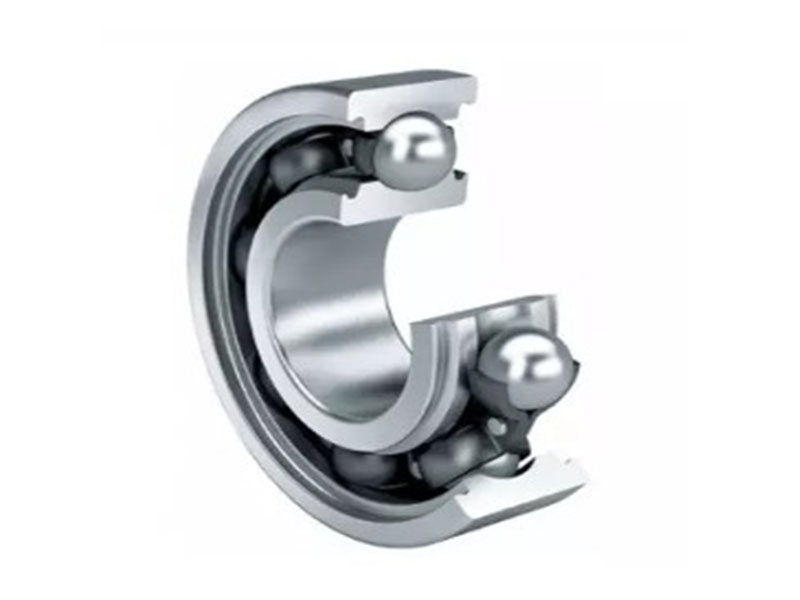
Open bearings have no seals or shields on either side. The internal components—balls, cage, and raceways—remain fully exposed. This design makes them the most basic form of ball bearings, typically used in applications where regular maintenance and dedicated lubrication systems are already in place. An open bearing offers the lowest friction among all bearing types, which is critical for high-speed machinery.
Key features of open bearings:
- No seals or shields; internal components are exposed.
- Minimal friction ensures smooth, efficient rotation.
- Easy to lubricate, clean, and inspect.
- Generally the most cost-effective bearing option.
Best suited for: Environments with minimal contamination where regular lubrication and maintenance are feasible. Applications requiring high rotational speeds or precise speed control also benefit from the low-friction characteristics of open bearings.
Common applications of open bearings:
- High-speed industrial equipment
- Laboratory equipment
- Clean room applications
- Machinery with oil bath or forced lubrication systems
What Are ZZ Bearings? (Metal Shielded)
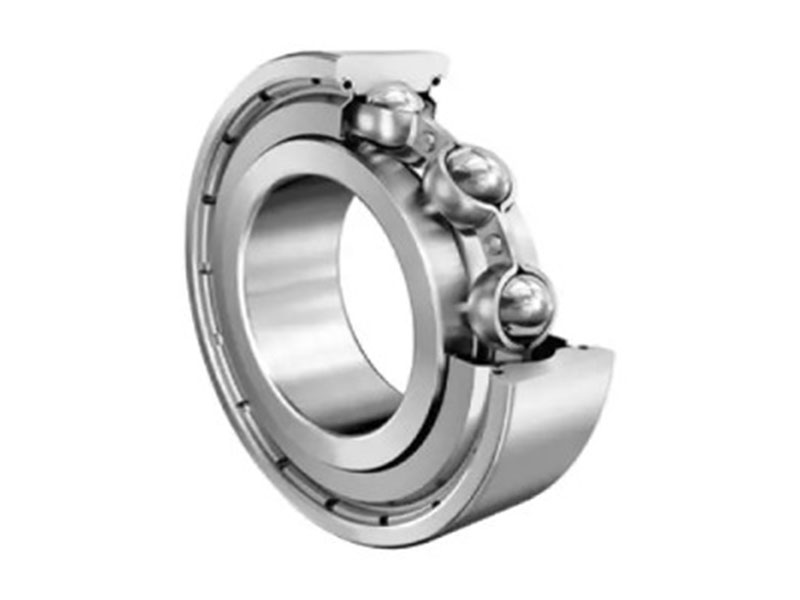
ZZ bearings are equipped with metal shields on both sides. The designation “ZZ” indicates double-sided metal shielding, while a single “Z” denotes a shield on one side only. A ZZ bearing is one of the most widely used bearing types in industrial applications because it balances protection and low friction.
Key features of ZZ bearings:
- Metal shields on both sides block dust and larger debris.
- Non-contact design (small gap between shield and inner ring) keeps friction low, making the ZZ bearing suitable for high-speed operation.
- Pre-lubricated; retains grease effectively.
- Better temperature stability than rubber seals.
Best suited for: Industrial machinery where light to moderate contamination may occur. ZZ bearings are ideal for dry, low-moisture environments where minimal maintenance is desired but moderate protection against dirt is sufficient.
Common applications of ZZ bearings:
- Electric motors (the most common ZZ bearing application)
- Industrial fans and blowers
- Agricultural equipment (less harsh conditions)
- Power tools and light machinery
- Conveyors and rollers in relatively clean settings
What Are 2RS Bearings? (Rubber Sealed)
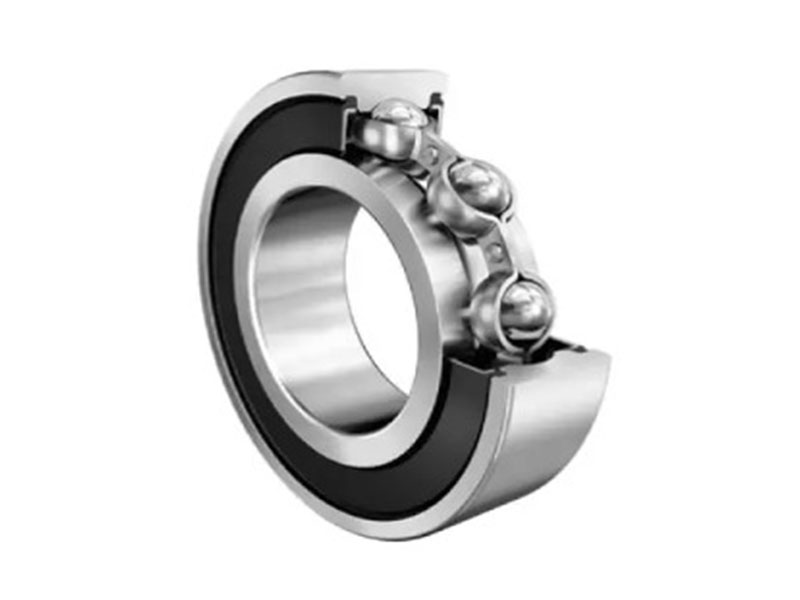
2RS bearings use rubber seals on both sides. The “2RS” designation indicates double-sided rubber seals, while “RS” (or “R” in some systems) denotes a single seal. A 2RS bearing provides superior protection against contaminants, making it the preferred sealing type for harsh environments.
Key features of 2RS bearings:
- Rubber seals on both sides offer excellent protection from dust, moisture, and liquids.
- Contact seals create a tight barrier that retains lubricant and blocks contaminants.
- Pre-lubricated and typically sealed for life (maintenance-free).
- Higher frictional torque than shielded or open bearings, resulting in lower maximum speed ratings compared to a ZZ bearing.
Best suited for: Harsh or wet environments where contamination is a significant concern. 2RS bearings are also ideal for hard-to-reach installations where regular maintenance is difficult or impractical.
Common applications of 2RS bearings:
- Skateboards, rollerblades, and bicycles
- Automotive applications (wheels, alternators, pumps)
- Agricultural machinery exposed to outdoor conditions
- Heavy industrial machinery in dusty environments
- Mining equipment
Open vs ZZ vs 2RS Bearings: Summary Comparison
To better understand the distinctions among these three bearing types, consider how they differ across four critical performance dimensions:
Friction and speed. Open bearings offer the lowest friction and highest speed potential due to the absence of any enclosure. A ZZ bearing provides low friction thanks to its non-contact metal shields, making it suitable for high-speed operation. In contrast, a 2RS bearing has increased friction from contact seals, which reduces its maximum speed capability compared to a ZZ bearing. This difference in friction is noticeable—spinning a shielded bearing and a sealed bearing by hand reveals how freely they rotate.
Contamination protection. Open bearings are highly vulnerable to dust, moisture, and debris and should only be used in controlled environments. ZZ bearings offer moderate protection against larger particles but are ineffective against fine dust, moisture, and liquids. 2RS bearings provide superior contamination protection, blocking most solid particles and liquids, making them ideal for harsh conditions. When selecting a bearing, consider the level of contamination in your operating environment.
Lubrication and maintenance. Open bearings require external lubrication systems and regular maintenance. ZZ bearings retain grease effectively through their shields, though occasional maintenance may still be beneficial. Rubber seals on a 2RS bearing retain lubricant for the bearing’s service life and are generally maintenance-free. For applications where maintenance access is limited, a 2RS bearing is often the best choice.
Cost considerations. Open bearings are typically the most economical bearing option. ZZ bearings represent a moderate cost increase for moderate protection. 2RS bearings command the highest price, justified by their superior sealing performance and reduced maintenance requirements over the bearing’s service life.
Which Bearing Should You Choose?
Selection by protection level:
- Choose an open bearing for clean, controlled environments where regular maintenance is possible and maximum speed is required.
- Choose a ZZ bearing for dry industrial settings with moderate dust exposure where some protection is needed but high-speed capability must be maintained.
- Choose a 2RS bearing for harsh, wet, or highly contaminated environments where maximum protection is essential and maintenance access is limited.
Selection by speed requirement:
- Open bearings: suitable for extremely high-speed applications.
- ZZ bearings: high-speed capable, with metal shield design allowing higher speed ratings than sealed bearings.
- 2RS bearings: moderate to high speed; the friction from contact seals reduces the maximum permissible speed compared to a ZZ bearing.
Selection by maintenance access:
- Open bearings: best when regular relubrication is already part of the equipment’s maintenance schedule.
- ZZ bearings: suitable for applications where occasional maintenance is acceptable.
- 2RS bearings: ideal for hard-to-reach locations where maintenance is impractical; these bearings are lubricated for life.
Frequently Asked Questions (FAQs)
Q1: Can I replace a ZZ bearing with a 2RS bearing?
A1: In many cases, yes—provided the bearing dimensions (bore, outer diameter, width) match. However, a 2RS bearing has higher friction and lower speed ratings than a ZZ bearing due to its contact seals. Check your application’s speed and operating temperature requirements before substituting.
Q2: Which bearing type is best for electric motors?
A2: ZZ bearings are the most common choice for electric motors. The metal shields provide adequate protection against dust while retaining grease, and the low-friction, non-contact design supports the higher speeds typical of motor applications. A 2RS bearing may be too restrictive for high-speed motor operation.
Q3: Can a 2RS bearing be used for high-speed applications?
A3: Yes, but with caution. A 2RS bearing can operate at moderate to relatively high speeds, but its contact seals create friction that limits maximum speed compared to a ZZ bearing or an open bearing. For very high-speed applications, a ZZ bearing or open bearing is preferred.
Q4: Do ZZ bearings need maintenance?
A4: ZZ bearings are pre-lubricated and require less frequent maintenance than open bearings. However, they are not fully sealed for life. In demanding or extended-duty applications, periodic inspection and regreasing may extend the service life of a ZZ bearing.
Q5: What does the suffix “2RS” mean on a bearing?
A5: “2RS” indicates the bearing has rubber seals on both sides. The “2” denotes two sides (double), “R” stands for rubber, and “S” for seal. A single “RS” (or “R” in some systems) indicates a rubber seal on one side only.
Selecting the right bearing seal type directly impacts equipment performance, service life, and maintenance costs. By evaluating your specific operating environment, speed requirements, and maintenance capabilities, you can confidently choose between open bearings, ZZ bearings, and 2RS bearings for your application. For detailed technical data sheets or assistance with selecting the optimal bearing for your equipment, contact DUHUI Bearing’s engineering support team with your application specifications.