Turbocharger ball bearings are a critical component in modern forced induction systems, directly influencing response time, efficiency, and durability. Whether you are upgrading a performance engine or maintaining an OEM turbocharger, understanding these bearings helps you make informed decisions.
DUHUI will cover the working principles, specifications, material differences, advantages, and practical selection criteria for turbocharger ball bearings.
What Are Turbocharger Ball Bearings and How Do They Work?
A turbocharger uses exhaust gas to spin a turbine, which drives a compressor wheel that forces more air into the engine. Between the rotating shaft and the housing, bearings are required to reduce friction and support radial and axial loads.
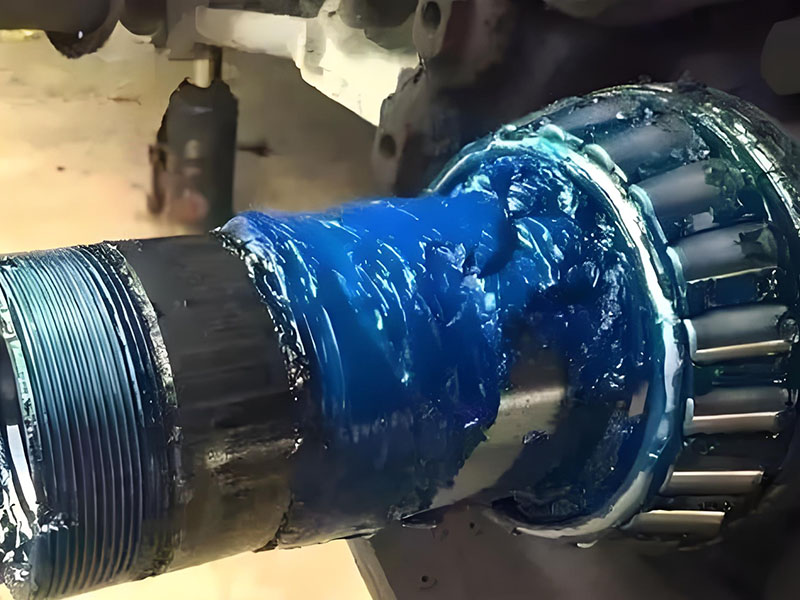
Turbocharger ball bearings are rolling-element bearings that use small metal or ceramic balls to separate the inner and outer rings. Unlike plain journal bearings that rely on a film of oil, ball bearings provide direct rolling contact, significantly reducing friction during startup and low oil flow conditions.
In a typical ball bearing turbocharger, the bearing cartridge contains two sets of ball bearings — one for radial load and one for axial load. They are usually pre-lubricated and require less oil volume than journal bearings.
Why Turbocharger Specifications Matter for Bearing Selection
Turbocharger specifications directly affect bearing performance and lifespan. Choosing the wrong bearing type for a given specification can lead to premature wear, oil starvation, or shaft imbalance. Key specifications such as boost pressure, turbine size, and A/R ratio determine the rotational speed and thermal load that the bearings must withstand.
Therefore, when selecting or replacing turbocharger ball bearings, always refer to the manufacturer’s specification sheet.
Key Turbocharger Specifications Explained
Understanding these specifications helps you match bearings to the turbocharger:
- Compressor and Turbine Size – Larger wheels generate more airflow but increase inertia, requiring bearings with higher load capacity.
- A/R Ratio (Area/Radius Ratio) – Affects boost response and top-end flow; ball bearings can compensate for a slightly mismatched A/R by reducing lag.
- Trim – The ratio of inducer to exducer diameters influences efficiency range.
- Maximum Boost Pressure – Higher boost increases thrust loads, demanding stronger ball bearing materials (e.g., ceramic).
- Compressor Map – Shows airflow and efficiency islands; bearing friction contributes to overall efficiency.
- Bearing Type – Journal bearings are hydrodynamic; ball bearings are rolling-element. This is the most critical choice for performance and reliability.
Materials and Types of Ball Bearings for Turbochargers
Turbocharger ball bearings are manufactured from different materials, each with distinct trade-offs.
Steel Ball Bearings
- Made from chrome steel (e.g., GCr15) or similar high-carbon chromium steel.
- Cost-effective and durable under normal operating temperatures (up to ~150°C continuous).
- Commonly used in OEM and aftermarket turbochargers.
- Susceptible to corrosion if oil degrades.
Ceramic Ball Bearings
- Balls are made from silicon nitride (Si₃N₄).
- Approximately 40% lighter than steel, reducing centrifugal force and allowing higher rotational speeds.
- Excellent heat resistance (up to 800°C+).
- Lower thermal expansion, maintaining clearances under high temperatures.
- More expensive, often used in racing or high-boost applications.
Cage Materials
- Steel cages: strong but heavier.
- PEEK (polyetheretherketone) or polymer cages: lighter, lower friction, and better oil compatibility.
Selecting between steel and ceramic depends on your operating temperature, budget, and speed requirements.
Ball Bearings vs. Journal Bearings: A Technical Comparison
| Feature | Journal Bearing | Ball Bearing |
| Friction at start | High (needs oil film) | Low (rolling contact) |
| Oil flow required | High | Low (approx. 50% less) |
| Spool time | Slower | Faster (reduced lag) |
| Load | Good at high speed | Excellent for radial & axial |
| Heat tolerance | Moderate (oil dependent) | High (especially ceramic) |
| Service life | Shorter at high boost | Longer under proper conditions |
In summary, turbocharger ball bearings offer superior transient response and reliability, while journal bearings remain a lower-cost solution for moderate applications.
Key Advantages of Ball Bearing Turbochargers
Ball bearing turbochargers provide measurable benefits over journal bearing designs:
- Reduced friction and faster spool-up – Less rotational resistance allows the turbine wheel to accelerate more quickly.
- Higher efficiency at high speeds – Rolling elements generate less parasitic loss.
- Lower oil dependence – Require less oil volume and pressure, reducing the risk of oil starvation.
- Improved durability and longevity – Better resistance to contamination and partial oil flow.
- Enhanced load handling – Support both radial and axial loads more effectively.
- Greater heat resistance – Ceramic variants withstand extreme exhaust temperatures.
- Improved fuel efficiency and emissions – Faster boost response reduces engine pumping losses.
Common Applications of Ball Bearing Turbochargers
Ball bearing turbos are found in:
- High-performance automotive engines – Aftermarket upgrades for sports cars, drift, and track vehicles.
- Aerospace applications – Light aircraft piston engines and small turbine engines.
- Diesel and industrial engines – Heavy-duty trucks, generators, and marine engines where reliability is critical.
How to Match a Turbocharger to Your Engine
Proper matching ensures that the turbocharger ball bearings operate within their design limits. Consider three factors:
- Engine size and RPM range – A small engine with a high redline needs a fast-spooling turbo with low inertia bearings (ceramic balls recommended).
- Power goals – Higher power targets require larger turbos, which in turn need bearings with higher load ratings.
- Intended use – Street driving favors quick response (ball bearings); track use may prioritize peak power; towing or off-road demands durability.
Signs of Worn Turbo Bearings and When to Replace Them
Turbocharger ball bearings eventually wear out. Common indicators include:
- Abnormal noise – Whining, grinding, or rattling from the turbo area.
- Vibration – Shaft play (axial or radial) exceeds manufacturer specs.
- Oil leaks – Worn seals often follow bearing failure.
- Exceeding rated lifespan – Typically 80,000 to 100,000 kilometers for performance turbos; racing applications may require earlier replacement.
Visual inspection: remove the intake pipe and check shaft movement. Excessive side-to-side or in-out play indicates bearing replacement is needed.
How to Select the Right Turbocharger Ball Bearings
Follow these steps to choose suitable bearings:
- Define your goals – Street, track, or daily driving? Each demands different bearing characteristics.
- Research specifications – Compare steel vs. ceramic, cage materials, and load ratings.
- Consult experts – Turbo rebuilders or bearing manufacturers (like DUHUI Bearing) can provide technical data.
- Do not ignore ECU tuning – A ball bearing turbo changes boost response; the engine management system must be recalibrated.
- Plan for future upgrades – If you intend to increase boost later, choose bearings with a safety margin (e.g., ceramic balls).
Turbocharger Upgrades: Supporting Mods to Consider
Installing a ball bearing turbocharger often requires complementary modifications:
- Supporting mods – Larger fuel injectors, high-flow air filter, upgraded fuel pump.
- Tuning – Custom ECU calibration to optimize air-fuel ratios and ignition timing.
- Exhaust system – Less restrictive downpipe and cat-back exhaust reduce backpressure.
- Maintenance – Use high-quality synthetic oil and change it at shorter intervals (e.g., every 5,000 km for track use).
Glossary of Common Turbocharger Terms
- Boost threshold – The engine RPM at which the turbo begins to produce positive pressure.
- Turbo lag – Delay between throttle application and boost delivery; ball bearings reduce this.
- Wastegate – Valve that diverts exhaust gas to limit boost pressure.
- Blow-off valve (BOV) – Releases pressure in the intake tract when the throttle closes.
- Intercooler – Heat exchanger that cools compressed air before it enters the engine.
Frequently Asked Questions
1. What’s the difference between journal bearing and ball bearing turbochargers?
See Section 5 for a detailed comparison table. In short, ball bearings offer lower friction and faster spool.
2. How does ceramic ball bearing turbo technology work?
Ceramic balls (silicon nitride) are lighter and more heat-resistant than steel, reducing centrifugal force and allowing higher shaft speeds with less friction.
3. Ceramic vs. steel ball bearings – which is better?
Steel is cost-effective and durable for most street applications. Ceramic is superior for high-temperature, high-RPM racing environments but comes at a higher price.
4. Are ceramic ball bearings worth upgrading to?
Yes, if you regularly operate at high boost pressures (>25 psi) or track the car. For daily driving, high-quality steel bearings are usually sufficient.
5. Do ball bearing turbochargers require special oil?
Not necessarily, but high-quality synthetic oil (e.g., 5W-40 or 10W-60 depending on application) is strongly recommended to prevent coking and ensure long life.
6. Can I retrofit ball bearings into an existing turbocharger?
Yes, but it depends on the turbo housing and shaft design. Consult a specialist to determine if a ball bearing cartridge is available for your turbo model.
7. What’s the difference between single and twin turbos?
A single turbo uses one turbocharger; twin-turbo setups use two (parallel or sequential) to reduce lag or increase top-end power.
8. Can I put any turbo on my engine?
No. The turbo must be matched to engine displacement, power goals, and vehicle usage. Incorrect matching can cause lag, surge, or engine damage.
9. How to choose the right turbocharger ball bearings?
Refer to Section 10 (selection tips) and consider material, load rating, and intended operating temperature.
Conclusion
Turbocharger ball bearings are a proven upgrade for faster response, higher efficiency, and longer service life compared to traditional journal bearings. Understanding key specifications, material choices (steel vs. ceramic), and proper matching to your engine ensures optimal performance. Regular inspection for noise, vibration, or oil leaks helps avoid catastrophic turbo failure.