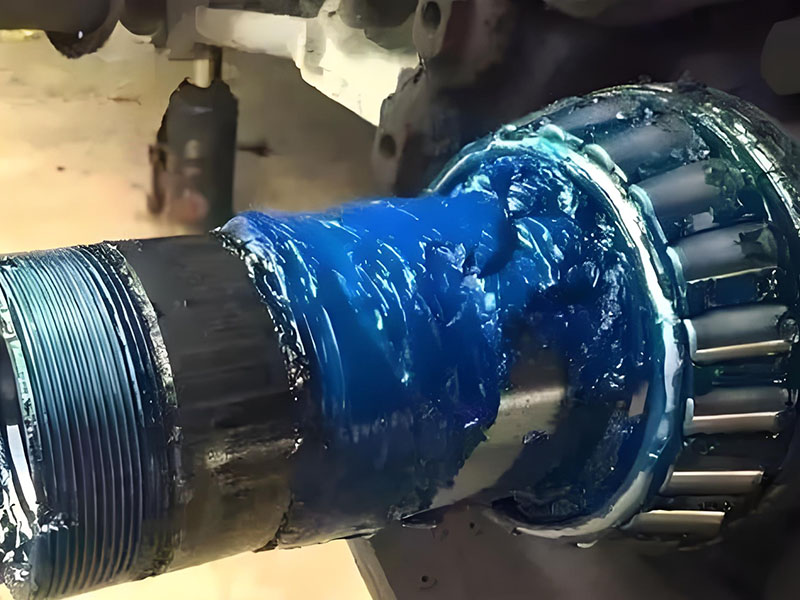
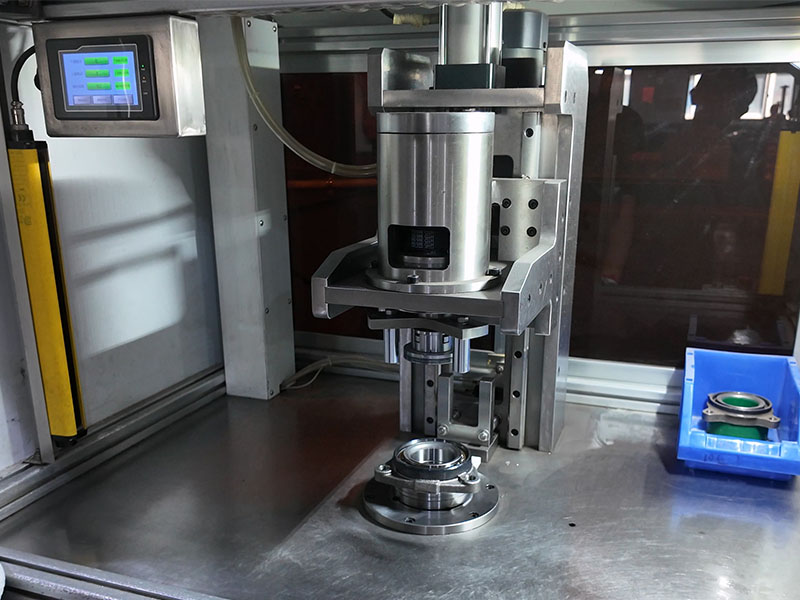
In mechanical power transmission and bulk material handling, the term “hanger bearing” frequently appears in specifications for screw conveyors and long-span rotating shafts. But what exactly is a hanger bearing, and how does it differ from ordinary bearings? DUHUI will provide a technical explanation of hanger bearings, including their structure, types, materials, applications, selection criteria, and answers to common engineering questions.
What is a hanger bearing?
A hanger bearing is a type of plain bearing (sliding bearing) designed to support the intermediate shaft of a screw conveyor, belt conveyor, or similar long-shaft equipment. Unlike pillow block bearings that are mounted on a fixed base, a hanger bearing is suspended from the top cover or trough of the conveyor. This hanging configuration prevents the shaft from sagging under its own weight and the load of conveyed material, reduces vibration, and maintains alignment of screw flighting over extended distances (typically every 5 to 7 meters).
The fundamental difference between a hanger bearing and an ordinary bearing lies in the installation method and functional positioning. Ordinary bearings are base-mounted and used for short shafts or end supports, while hanger bearings are suspended at mid-span positions, allowing continuous support without obstructing material flow.
Structure of a hanger bearing
A hanger bearing consists of five main components that work together to support the shaft while minimizing friction:
- Bearing housing: The outer casing that encloses the liner and attaches to the mounting bracket. It protects internal parts from dust and impact.
- Bearing liner: The replaceable or fixed sliding surface that contacts the rotating shaft. Liners are made from low-friction, wear-resistant materials.
- Seals: Elastomeric or labyrinth seals that prevent ingress of dust, moisture, or conveyed material.
- Lubrication device: Grease fittings (zerks), oil ports, or a self-lubricating mechanism to reduce friction and heat.
- Mounting bracket: A steel structure that connects the housing to the conveyor trough cover or overhead support beam.
Types of hanger bearings
Most hanger bearings are plain bearings (sliding bearings) rather than rolling element bearings. The plain bearing design accommodates minor shaft misalignment and absorbs shock loads better in dusty or abrasive environments. Based on liner material and construction, hanger bearings are classified into the following types:
| Type | Main features | Typical applications |
| Polymer liner type | Lightweight, self-lubricating, corrosion-resistant, FDA-grade options available | Grain elevators, fertilizer plants, food processing |
| Bronze alloy liner type | High load capacity, wear-resistant, operates up to 300°C | Mining conveyors, cement mills, steel plants |
| Replaceable liner type | Only the liner is replaced; housing remains in place; reduces downtime | Continuous 24/7 operations (e.g., power plants) |
| Solid bearing (no liner) | One-piece cast construction; low cost; simple structure | Light-load, short-distance, or low-speed conveyors |
| Flanged connection type | Bolted flange mounting; strong alignment; secure installation | Medium-to-long distance screw conveyors |
For most industrial applications, replaceable liner types or polymer liner types offer the best balance of performance and maintenance cost.
Materials used in hanger bearings
Material selection directly affects bearing life, maintenance intervals, and compatibility with the conveyed material.
Bearing housing materials
- Gray cast iron (ASTM A48 Class 30): General-purpose, cost-effective for dry, non-corrosive environments.
- Ductile cast iron (ASTM A536): Higher strength and impact resistance; suitable for heavy loads.
- Carbon steel (AISI 1045): For high-temperature or high-impact applications.
- Stainless steel (304 or 316): Required in food, pharmaceutical, or corrosive chemical environments.
Bearing liner materials
- UHMWPE (ultra-high molecular weight polyethylene): Self-lubricating, low friction, excellent abrasion resistance. Common in grain and fertilizer handling.
- Nylon 6/6: Good mechanical strength, moderate temperature resistance (up to 120°C).
- PTFE (polytetrafluoroethylene): Very low friction, chemically inert, but lower load capacity.
- Bronze alloys (SAE 660, C93200): High load capacity, good heat dissipation, used in mining and cement.
- Graphite-impregnated composites: Maintenance-free, operates in dry or high-temperature conditions.
- Ceramic coatings: Extreme abrasion resistance for sand, slag, or highly abrasive minerals.
When selecting materials, always verify chemical compatibility with the conveyed product. For example, bronze liners should not be used with acidic fertilizers, and some plastics may swell in contact with certain oils.
What are hanger bearings used for?
Main functions of hanger bearings
- Preventing shaft sagging or misalignment in long screw conveyors
- Reducing shaft wobble and vibration, improving operational smoothness
- Extending system life by minimizing localized wear on the shaft
- Ensuring safe operation under heavy loads and preventing mid-system failures
Main applications of hanger bearings
- Bulk material handling systems: Screw conveyors, belt conveyors, bucket elevators, auger systems
- Mining and quarrying: Ore, coal, sand, and gravel conveyors in high-wear environments
- Agriculture and grain elevators: Screw lift systems inside silos, feed conveyors
- Cement and concrete mixing equipment: Heavy-load, dust-intensive conveyors for clinker, fly ash, and aggregates
- Food processing: Where FDA-grade stainless steel or polymer liners are required for sanitary conditions
How to select a hanger bearing
Proper selection requires evaluating the following parameters:
Dimensional parameters
- Shaft diameter (d) : Determines the bearing bore size.
- Hanger center height (H) : Distance from trough cover to shaft centerline; must match existing conveyor design.
- Mounting hole spacing : Bolt pattern on the hanger bracket.
- Radial load : Weight of the shaft plus the radial force from material movement.
- PV value (pressure × velocity) : A design limit for plain bearings. Exceeding the PV value causes overheating and rapid wear.
Environmental conditions
- Temperature : Standard bearings operate from –30°C to 80°C. Bronze or graphite liners can handle up to 300°C.
- Dust concentration : Heavy dust requires high-quality seals (labyrinth or double-lip).
- Moisture or washdown : Stainless steel housings and sealed bearings for wet environments.
- Corrosive chemicals : Select housing and liner materials resistant to the specific chemical.
- Grease lubrication : Most common; requires periodic regreasing via fittings.
- Oil lubrication : For higher speeds or temperatures; uses oil bath or wick feed.
- Self-lubricating : Maintenance-free liners (e.g., UHMWPE, graphite composites); suitable for inaccessible locations.
Material compatibility
Ensure the liner material does not react with or contaminate the conveyed material (e.g., FDA-approved polymers for food, stainless steel for pharmaceuticals).
Frequently asked questions (FAQs)
What is the fundamental difference between hanger bearings and ordinary bearings?
The essential difference lies in the installation method and functional positioning. Ordinary bearings (e.g., pillow blocks) are mounted on a fixed base or frame and support the ends of shafts. Hanger bearings are suspended from above and support intermediate points along a long shaft, such as in screw conveyors, to prevent sagging and maintain alignment.
What is a hanger bearing in a screw conveyor?
In screw conveyors, the hanger bearing is a key component installed at the center hanger position to support the long intermediate shaft and ensure stable rotation.
Key functions include:
- Supporting the mid-section of the shaft to prevent bending and wobbling
- Reducing friction and improving conveying efficiency
- Extending equipment lifespan and reducing failure rates
- Ensuring proper alignment and smooth rotation of the screw blades
Why is the seal of a hanger bearing so crucial?
Hanger bearings are often used in dusty, humid, or material-contact environments. Seal failure allows abrasive particles, moisture, or fine powders to enter the bearing cavity, causing rapid liner wear, shaft scoring, and eventual seizure. In most field failures, seal deterioration is the root cause.
How to determine the shaft diameter and mounting dimensions of a hanger bearing?
The following parameters need to be specified during selection:
- Shaft diameter (d) – determines bearing bore size
- Hanger center height (H) – distance from trough cover to shaft centerline
- Mounting hole distance – bolt pattern on the hanger bracket
- Shaft fit – clearance or interference fit as per manufacturer recommendations
How to determine if a hanger bearing needs replacement?
Replace immediately if the following signs appear:
- Abnormal noise – grinding, squealing, or knocking sounds
- Journal wear – visible scoring or grooving on the shaft surface
- Excessive clearance – shaft movement exceeding 2–3 mm radially
- Abnormal temperature – housing feels too hot to touch (>70°C)
- Seal failure – visible material ingress or lubricant leakage
What are some common mistakes in selecting hanger bearings?
- Ignoring the installation center height and hanger bracket strength – leads to misalignment or bracket deformation
- Improper lubrication – over-greasing causes overheating; under-greasing accelerates wear
- Selecting a liner material incompatible with the conveyed product (e.g., bronze for acidic fertilizers)
- Using a standard bearing in an environment requiring stainless steel or FDA compliance
- Neglecting shaft surface hardness – soft shafts wear faster with certain liner materials
What are the advantages of using hanger bearings in conveyor systems?
- Effectively distributes load along multiple support points
- Reduces friction and wear on both shaft and trough
- Improves system operating efficiency by maintaining alignment
- Absorbs shock and vibration from irregular material flow
- Reduces maintenance requirements with replaceable liners
- Highly adaptable – available in various materials for different environments (food, mining, chemical)
Conclusion
A hanger bearing is a specialized plain bearing used to support intermediate shafts in screw conveyors, belt conveyors, and other long-span material handling equipment. Its hanging design, replaceable liners, and robust seals distinguish it from ordinary base-mounted bearings. Proper selection requires evaluating shaft diameter, center height, load, speed, environmental conditions (temperature, dust, moisture, corrosion), lubrication method, and material compatibility with the conveyed product. Regular inspection of seals, lubrication status, and liner wear ensures reliable operation and extends equipment life.